




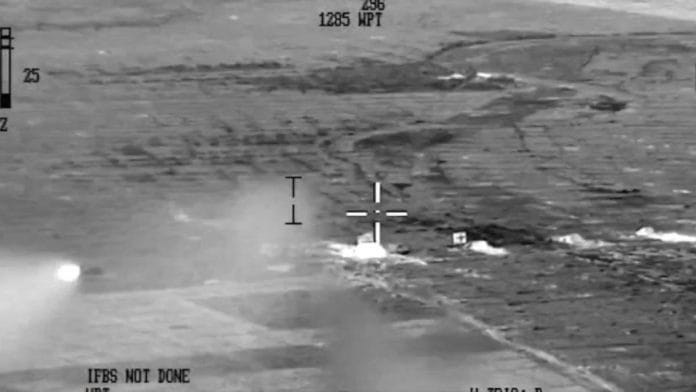

In Operation Sindoor, the 88-hour high-intensity conflict, India inflicted a psychological defeat on Pakistan and reimposed its punitive deterrent. There is no scope for decisive wars among nuclear-weapon-armed states. Conflict must remain below the nuclear threshold, which is perceived in terms of existential threat, major territorial loss, or destruction of critical military and economic potential.
By the same token, it is emotional romanticism to split hairs by measuring victory by the extent of damage caused. The measure of victory is to create psychological paralysis through a faster OODA (Observation – Orientation – Decision – Action) Cycle up the escalatory ladder, as a result of which the adversary, despite its military potential, cannot respond. This was achieved in the early hours of 10 May, when the Indian Air Force (IAF) could strike at will across the entire length and breadth of Pakistan, and the adversary’s air force and air defence could not respond or retaliate.
The problem with psychological defeat is that even the defeated side can perceive and sell the idea of victory. And with military potential being largely intact, the defeated side feels it can reverse the tables in the next round. Hence, the probability of Operation Sindoor 2 remains high. Both sides have imbibed the lessons of Operation Sindoor, are studying the Iran War, and restudying the Ukraine War, in which asymmetric strategy has denied victory to the superior adversary. Consequently, both sides are busy upgrading their military potential—incrementally for the immediate and reformationally for the long term.
I visualise two scenarios. At present, India’s deterrent remains imposed, as is evident from the fact that Pakistan’s terrorism-driven proxy war is at its lowest ebb ever. However, a black swan event in India or Pakistan driven by non-state actors can trigger a conflict. Pakistan-based terrorist organisations are a law unto themselves, and even a “no war no peace” scenario does not suit them. They can trigger India’s response as per its “new normal”.
Pakistan is battling insurgencies by the Balochistan Liberation Army and other organisations in Balochistan, and by the Tehrik-e-Taliban Pakistan in Khyber-Pakhtunkhwa, where violence spills over to the hinterland. Islamabad blames India for supposedly abetting the insurgents. A major incident can trigger a preemptive conflict initiated by Pakistan. In this scenario, the pattern of conflict would be a more intense version of Operation Sindoor, with a better operational strategy but existing capabilities. The second scenario would be in a time frame of five years, by which time both sides would have inducted better technologies and refined their operational strategies.
Lessons India must learn
At the strategic level, India must formally and clearly spell out its National Security Strategy and the contingent National Defence Policy for the transformation of the armed forces. These must cater for the collusive threat of China and Pakistan. Political security doctrine, spelt out in public speeches of the leadership, must translate into a rational National Security Strategy. No nation can afford to be involved in ‘forever conflicts’ based on the actions of a handful of terrorists.
India must bring clarity to its political and military aims for conflict or war. For Operation Sindoor, the declared political aim had ambiguously focused on punishing the terrorists and their backers implying Pakistan’s military. Unfortunately, the armed forces parroted the same. The more logical political aim should have been to force compellence and reimpose India’s deterrent on Pakistan, while the military aim should have focused on executing controlled, escalatory operations below the nuclear threshold to impose a psychological defeat.
A lack of clarity in political and military aims led to the costly mistake of only focusing on terrorist hubs on the night between 6 and 7 May 2025, without first or at least near simultaneously conducting counter-air operations, of which suppression of air defences is the sine qua non. The result was the loss of an unspecified number of fighter aircraft, which allowed Pakistan to claim victory and parity in the conflict. The basic tenets of military operations cannot be ignored in any conflict.
India requires a much deeper intelligence penetration of its adversary countries, as the Mossad has done in Iran. Imagine the impact of India’s air and drone strikes if it had eliminated the top rung of terrorist leadership in Pakistan, instead of destroying empty buildings in terrorist hubs after giving 15 days’ notice.
A time period of 15 days for strategic decision–making is too long for the “new normal” to be executed. India must keep its options open for a preemptive or preventive operational strategy to achieve surprise. And if forced to react, it must be done within 24-48 hours.
An air campaign with fighter aircraft, missiles, and drones supported by long-range air defence and other force multipliers must be launched as a composite whole and not in a graduated manner, as was done in Operation Sindoor. Imagine a scenario where the IAF first lured the Pakistan Air Force (PAF) into the air through deception and targeted it with long-range air-to-air missiles and air defence systems to send it scurrying to pens, while simultaneously targeting the air defence systems en masse with unmanned aerial systems (UAS) as well as air-to-ground and ground–based missiles. Immediately thereafter, the terrorist hubs, airbases, and command/control centres would have been simultaneously targeted. All of this was practical in a span of 48-72 hours.
It goes without saying that for future wars or conflicts, a transformation of the military is non-negotiable. The shortcomings in the field of multi-domain operations, Intelligence Surveillance and Reconnaissance, electronic/cyber warfare, air refuelling, drone warfare, and ground-based missile systems require urgent attention.
Also read: Al-Qaeda’s new empire rising in Mali. Europe, US, Russia failed to halt its rise
Lessons from Iran War
The Iran War has reinforced the lesson of the Ukraine War: Even the best composite air, missile, and drone campaign cannot impose defeat on a weaker but resilient adversary that adopts an asymmetric warfare strategy to escalate and prolong the conflict, imposing additional costs.
Asymmetric strategies attack vulnerabilities not appreciated and planned for by the adversary and capitalise on limited preparation against the threat. In modern conflict, these strategies exploit cost-effective technologies of drones, ground-based missiles, “mosquito navy” based on speed boats, electronic/cyber warfare, and subterranean warfare.
The weaker adversary escalates the conflict to economic targets, population centres, maritime choke points and shipping, limited ground-based operations, and fourth-generation warfare in hinterlands using terrorists and proxies armed with drones.
Also read: How the Iran War is draining Wall Street tech funding
Contours of Operation Sindoor 2
There is no rigid compartmentalisation between conventional and asymmetric strategies. It is just that nations and militaries get conditioned to fighting wars in a particular way. And anything done differently produces asymmetry, for which the adversary has little or no preparation.
Pakistan cannot match India economically and militarily. Its economy is 10 per cent of India’s, and its defence budget, 13 per cent. The Iran model is tailor-made for Pakistan. It will invest only in select technologies in all domains to match or even better India. It will use them innovatively to impose cost and embarrassment as it did in the air battle on 7 May 2025. Beyond this, it will rely on asymmetric warfare to escalate and prolong the conflict.
Even subcontinental military history is replete with examples. In 1965, Pakistan began the war with Operation Gibraltar by large-scale infiltration of regulars and irregulars into Jammu and Kashmir to seize key terrain and instigate a mass uprising. India’s timely response and escalation to the conventional conflict scuttled the operation. In the 1971 War, Mukti Bahini played a significant role before and during India’s lightning campaign.
The likely contours of Operation Sindoor 2 will certainly see a high-end conventional air, missile, and drone campaign with each side trying to do all it did in 2025 with higher tempo, depth, and lethality. The high-intensity campaign will extend to the sea. India will seek control of the Arabian Sea and a blockade of ports and maritime trade, and Pakistan will strive for sea denial. In parallel with the high-technology-driven conventional strategy, both sides will unleash their asymmetric strategy in all domains without front lines. Such an asymmetric campaign may precede conventional operations as part of progressive escalation, or it may follow the latter to neutralise the gains. I foresee limited ground operations in Jammu and Kashmir as an intrinsic part of Operation Sindoor 2. The advantage is that asymmetric operations can easily be kept below the nuclear threshold.
The irony is hard to miss. The asymmetric trigger for Operation Sindoor will become enmeshed with the conflict itself at a much larger scale in Operation Sindoor 2. And it will engulf the whole of the nation. The echoes of a limited war, without major ground operations, can be heard loud and clear.
Lt Gen H S Panag PVSM, AVSM (R) served in the Indian Army for 40 years. He was GOC in C Northern Command and Central Command. Post retirement, he was Member of Armed Forces Tribunal. Views are personal.
(Edited by Prasanna Bachchhav)
In my humble opinion, India must do the following in 2nd phase of Operation Sindoor:
– First India must destroy Pakistan”s air power capability.
– Simultaneously India must destroy all missile launching facilities, drones facilities and any other air power. Indir must rule over Pakistan air.
– Indian navy must destroy or send Pakistan’s submarines so far off India’s coast to make these incapacitated.
– India must destroy the communication satellite used by Pakistan.
– The nuclear facilities must be incapacitated or moved out of Pakistan.
– India must capture a few areas in Sindh, a few strategic heights in POK and Gilgit Baltistan.
– India should give indirect messages to Balochs, Sindhis and KPK’s to get full autonomy from Pakistan so that only Punjabi dominated areas become real Pakistan.
– After all these steps are achieved, India must do the following for next 1 year:
* Declare that India is in a state of war until all terror infrastructure in Pakistan is destroyed.
* Actively help the Sindhis, Balochs and KPK guys financially, militarily and in other ways so these areas can stabilise.
* Any import of military equipment to Pakistan must be destroyed by India the moment it enters Pakistan.
* India must destroy and eliminate any armed vehicle, equipment, structure, armed terrorists, any person who is armed.
India must force Pakistan’s military to obey the civilian democratic government. Borders between India and Pakistan must be redrawn with India keeping the areas it captured. India should declare ceasefire only after Pakistan agrees for redrawn borders and declare that they will stop harbouring terrorism.