





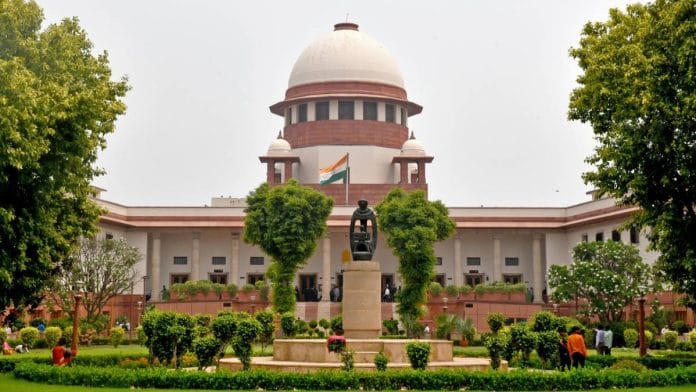


New Delhi: In a significant ruling that clarifies the law on medical negligence, consumer law and tort jurisprudence (legal reasoning behind establishing liability), the Supreme Court held that claims of medical negligence do not automatically end with the death of the doctor, and that the legal heirs of a deceased medical practitioner can be impleaded in such proceedings.
However, the court drew a crucial distinction, ruling that any liability of the legal heirs would be restricted to the estate inherited from the deceased doctor, and would not extend to their personal rights.
The judgment was delivered on 4 May by a Bench of Justices J.K. Maheshwari and Atul S. Chandurkar while deciding appeals arising from a decades-old dispute under the Consumer Protection Act.
The ruling has wide implications for medical negligence litigation, especially in cases that stretch over decades. It ensures that victims are not left without remedy merely because proceedings outlive the alleged wrongdoer, while also protecting the deceased’s families from unlimited personal liability.
Also Read: India’s top students wanted to be doctors. Not anymore
Case background
The case originated in 1990, when a woman undergoing treatment for severe eye pain was operated on by a private doctor, following which she lost vision in one eye.
Her husband filed a consumer complaint in 1997, alleging medical negligence and seeking compensation under the Consumer Protection Act, 1986.
In 2003, the District Consumer Forum (Munger, Bihar) held the doctor negligent and awarded compensation. The decision was, however, overturned in 2005 by the State Consumer Commission, which concluded that the loss of vision was due to glaucoma and that no expert medical evidence had been produced to establish negligence.
The complainant challenged this finding before the National Consumer Disputes Redressal Commission (NCDRC).
While the revision petition was pending, the doctor passed away in 2009, raising a key legal question: Can medical negligence proceedings continue after the doctor’s death, and can his legal heirs be brought on record?
Also Read: From detailed disclosures to bare statements—questions grow over SC collegium’s transparency push
What the Supreme Court held
Rejecting the blanket application of the common law maxim actio personalis moritur cum persona—that a personal right of action dies with the person—the Supreme Court extensively examined the Indian Succession Act, 1925, Order XXII of the CPC, and the Consumer Protection Acts of 1986 and 2019.
The court clearly distinguished between personal and proprietary claims: Personal claims, such as defamation or personal injury claims, abate on death; proprietary rights claims, which involve pecuniary loss or liability attached to the estate, survive death.
Crucially, the court clarified that legal heirs are not personally liable and cannot be compelled to satisfy any award beyond the value of the deceased doctor’s estate.
Applying these principles, the Supreme Court remitted the matter back to the NCDRC for fresh adjudication on the basis of merits. The court emphasised that consumer forums must carefully distinguish between personal claims that do not survive and estate‑based claims that do, and that negligence must still be proved on its merits.
(Edited by Shashank Kishan)
Also Read: For-profit medical colleges are a step forward. Education is defined by outcomes, not ownership