




Gurugram: Two men convicted for a 2020 murder in Gurugram will spend the coming month not behind bars, but inside a hospital ward, tending to patients and the injured, as directed by the Punjab and Haryana High Court while suspending their sentences.
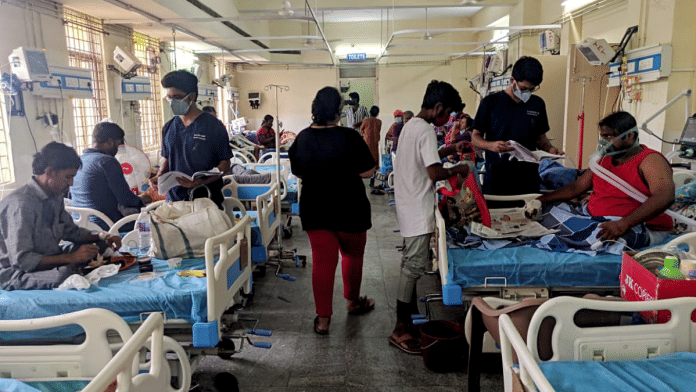
Justices Vinod S. Bhardwaj and Sukhvinder Kaur ordered on 4 August that Naveen alias Bhola and Praveen be released on furnishing heavy security, subject to an unusual rider—one month of community service at Civil Hospital, Gurugram, performing sundry jobs and attending to patients as assigned by the Chief Medical Officer’s office, in different shifts.
The case dates back to 21 February 2020, when an injury was inflicted on the victim Guddu. The man underwent surgery and was discharged from Delhi’s Safdarjung Hospital seven days later. He then travelled to his village in Bihar, where he died more than a month after his discharge. The cause of death was recorded as septicaemia, toxaemia and shock.
Counsel for the appellants argued this timeline itself raised doubt over whether the conviction under Section 302 (murder) of the erstwhile Indian Penal Code (IPC) could hold.
Guddu’s brother had testified that after returning home, Guddu resumed agricultural work and resumed drinking liquor, the defence argued, adding that it affected his recovery and contributed to the septicaemia that eventually killed him.
The death, the counsel contended, was not the direct or immediate result of the original injury, but stemmed from a lack of preventive care afterwards.
Naveen has been in custody for 9 months and 29 days, and Praveen for 1 year, 9 months and 21 days, according to records placed before the court.
The counsel conceded the applicants have some criminal antecedents, but offered, on their behalf, that they be put under strict conditions, including voluntary community service at a government hospital.
Submitting that the custody period undergone was on the lower side, the state counsel did not dispute the delayed timeline of death, the “stable” discharge condition, the septicaemia diagnosis, or the testimony.
The bench allowed both applications, suspending the sentences on a set of conditions: each applicant must furnish heavy security and a surety to the satisfaction of the magistrate; file an affidavit undertaking not to indulge in any criminal offence, with suspension liable to be cancelled if named in any fresh case; and undertake a month of hospital community service, with a compliance report to be sent by the Civil Surgeon’s office.
Any complaint about their conduct or irregular attendance during this service, the court made clear, will be grounds to recall the suspension order.
(Edited by Tony Rai)
Also Read: 70-yr-old dispute finally settled; SC says 1950 is line that decides who owns Gurugram common land