



New Delhi: The Supreme Court has acknowledged that courts should not intervene in the election process once it gets underway, but observed that its hands are not tied when questions are raised on the fairness of the election process.
A bench of justices Joymalya Bagchi and V Mohana Wednesday directed the Andhra Pradesh State Election Commission (SEC) to examine complaints by YSR Congress Party (YSRCP) candidates that they were prevented from filing nominations for the 28 October urban local body elections in the state.
It also asked the poll panel to decide by Thursday whether to extend the nomination deadline where it finds candidates were unable to file papers because of law-and-order problems.
The bench directed the SEC to defer publication of the final candidates’ list, originally due on 22 October, until 25 October.
If the commission extends the nomination period, the SC said, it must provide at least 48 hours to the candidates from the time its decision is published.
The bench also directed the state police chief to ensure protection for candidates and security arrangements, including CCTV coverage, at nomination centres and election offices.
The bench set the matter for next hearing on 27 October, asking the SEC and DGP to submit compliance reports then.
The court said the material placed before it, including representations and video clips, made out a “prima facie case” for these directions.
However, the court observed this is not a finding that every allegation is proved, but the SEC must examine complaints and supporting evidence individually.
Also read: What’s the counterweight to ECI? A Supreme Court of not-yets, not-nows, not-heres
What triggered the YSRCP plea
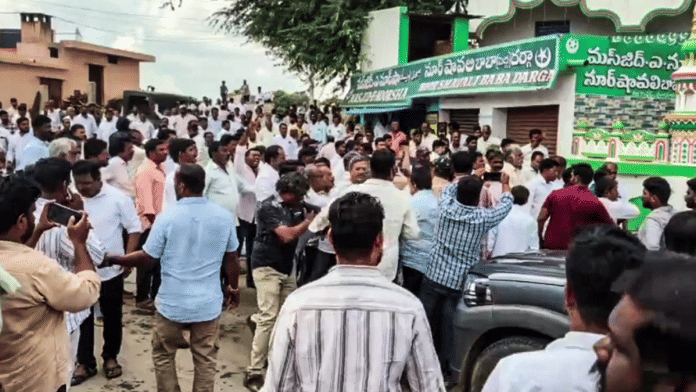
Over the past few days, clashes between the supporters of the rival political parties, and allegations of obstructing candidates from filing nomination papers have been reported in parts of Andhra Pradesh. Media outlets reported clashes between workers of the YSRCP and ruling TDP in Punganur, where sticks and stones were used.
YSRCP MP P V Midhun Reddy alleged his convoy was attacked on 15th October Complaints before the court also referred to Punganur, Rayachoti, Kadapa and Tirupati.
The YSRCP approached the Supreme Court on 19 October after the Andhra Pradesh High Court declined to extend the deadline for filing nomination papers beyond 19 October. The party alleged that their candidates were assaulted, their papers torn or not accepted, while some of them were entirely stopped from reaching election offices.
Its counsel, senior advocate Maninder Singh, said nearly two-thirds of its candidates had been prevented from filing nominations in 19 urban local bodies. The state government disputed the party’s account, alleging that YSRCP workers had themselves engaged in violence.
SEC, state dispute YSRCP’s allegations
Appearing for the State Election Commission (SEC), Senior advocate K Parameshwar told the bench that the commission had issued orders for police protection and that these had been complied with. He also questioned the timing of the YSRCP’s request for an extension, while maintaining that complaints of obstruction would be examined on their merits.
Senior advocate Siddharth Luthra, appearing for the Andhra Pradesh government, disputed the YSRCP’s allegations and accused its members of perpetrating violence.
He also alleged that people had been brought from Punjab at Rayachoti with weapons to disrupt the polls. Luthra also provided some video clips of violence being purportedly committed by YSRCP members.
Why the court intervened
The bench acknowledged the principle that courts generally avoid intervening once an election process is underway, leaving its conduct to the election authority, but said judicial review remained possible where the fairness of participation itself was in question.
“Free and fair election is a basic structure of the Constitution,” the court observed, adding that the right to participate by filing nominations is a facet of that process.
The power of constitutional courts to review the process, it said, “cannot be said to be wholly nugatory” when material raises concerns about candidates being hindered from filing papers.
The bench stressed that it was not taking over the SEC’s role. The commission must assess whether each complaint is genuine and decide where an extension is warranted.
Justice Bagchi asked the SEC’s counsel to consider extending the deadline by a day. When counsel said election management fell within the commission’s domain, the judge said the court was not issuing a mandamus to run the election.
The order follows the High Court’s 18 October refusal to grant YSRCP a one-day extension, holding that such a direction would interfere with the election process. The Supreme Court has left the substantive decision with the SEC, while requiring it to act promptly on the evidence.
The immediate question is not whether nominations will reopen across the state, but whether the SEC finds credible, location-specific evidence that candidates were kept from filing papers. Where it does, the additional window must be at least 48 hours. The commission’s decision and compliance report will be before the bench on October 27.
(Edited by Ajeet Tiwari)
Also read: CEC selection can’t rest on goodwill of the majority. Apply merit, seniority & transparency