



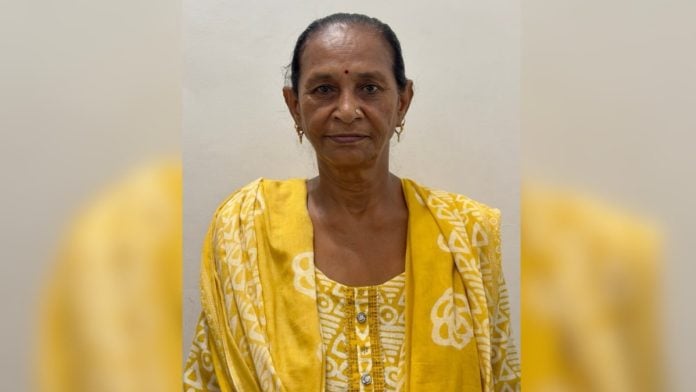
New Delhi: At 63, Sumitra has finally won the battle she began in 1990, when she was denied a job at an Indian Oil Corporation (IOC) LPG bottling plant in Karnal because she was a woman. But there is little triumph in a victory that has come after nearly four decades of litigation and after her working years are over.
The Supreme Court has now ruled in her favour, holding that she was denied employment on the ground of her gender and awarding her Rs 12 lakh in compensation. For Sumitra, the order is a recognition of the discrimination she spent decades fighting, but the compensation offers little consolation.
“I respect the Supreme Court’s decision and am grateful that the court recognised the discrimination I faced. However, I cannot say that I am fully satisfied with the compensation awarded,” Sumitra told ThePrint over the phone from her residence in Panipat.
She said her faith in the judicial system is what kept her going through the years. “Despite the delays and setbacks, I never lost hope that justice would eventually prevail. That faith is what gave me the courage to continue the fight and approach the highest court,” she added.
The matter began in 1989 when IOC started the recruitment process for appointments at its LPG bottling plant in Karnal, offering a daily wage of Rs 34. Sumitra registered with the Employment Exchange and was among 49 candidates shortlisted for selection. After the interview, she was told that an appointment letter would be issued to her. It never came.
Sumitra maintains that she had successfully completed the selection process, had qualifications that ranked among the best of those interviewed and had the recommendation of the deputy commissioner. Yet her name was left out of the final list.
The reason, she alleged, was neither merit nor qualification, eligibility or lack of recommendation, but simply that she was a woman. Crucially, candidates were not told before appointments were made that women would not be employed at the bottling plant.
During the proceedings, the Supreme Court was told that the authorities may not have considered Sumitra suitable because the job involved manually lifting LPG cylinders and included night shifts. On Thursday, the bench led by Justice Aravind Kumar rejected the rationale.
“You denied her appointment just because she is a lady? This is disrespect to womanhood… We are from India, and every day we say we respect women and that she is a goddess… Day in, day out they lift gas cylinders in their house. When men are not there, it is she who will change the gas cylinder,” the court observed.
The court described the denial of employment as “an affront to womanhood” by a government undertaking and declined a request from IOC’s counsel to settle the matter through mediation. Since Sumitra reached retirement age, making an employment remedy impractical, the bench awarded her Rs 12 lakh as compensation for the discrimination and the decades-long legal battle.
“This battle began in 1989 and has ended only now, after nearly four decades. Today, I have reached retirement age, and have lost the opportunity to build the career I had rightfully earned. Given the years of hardship and the opportunities denied to me, I had hoped for a higher compensation amount, or at the very least, some consideration of the retirement benefits I would have received had I been allowed to serve,” Sumitra told ThePrint.
Despite her struggles, Sumitra, who is from the Scheduled Castes (SC) community, said her belief in equality was another reason she persisted. “In today’s age, all are equal and men and women both deserve equal opportunities. No one should be denied employment simply because of their gender. I am happy that the judgment reaffirms this principle.”
The legal battle over the years
Sumitra first approached a trial court in Karnal in 1990, filing a civil suit seeking redressal in the matter. During cross-examination, it emerged that the recruitment process had not excluded women. However, the evidence showed that she was denied appointment because the work involved working odd hours alongside male employees.
A witness produced by IOC also admitted that had there been a larger number of women workers at the establishment, Sumitra would have been offered the position.
In 1993, the trial court held that the denial of employment was based solely on gender and directed the IOC to absorb her in a suitable post, such as a peon or an administrative position.
The litigation, however, did not end there. The matter moved through higher judicial forums, with the nature and extent of relief becoming the central issue.
Later that year, a district judge in Karnal reversed the civil court’s decision, holding that Sumitra had no enforceable right to appointment merely because she had been interviewed. The court said the IOC was free to assess her suitability and decide against her selection. It also held that the trial court had erred in directing her appointment to posts for which she had neither applied nor sought relief.
The matter then reached the Punjab and Haryana High Court in 1993, where it remained pending for more than three decades.
“What began as a dispute over a daily-wage employment opportunity turned into a prolonged legal battle, with the passage of time significantly diminishing the practical value of any eventual relief,” Sumitra said.
In its final decision last year, the High Court dismissed her claim. It observed that she had no legal right to appointment and that the engagement in question was on a daily-wage basis rather than against a sanctioned post. After more than 30 years of litigation, the court declined to interfere with the IOC’s decision to not appoint her.
The matter finally reached the Supreme Court this year. By then, Sumitra had crossed the age at which a normal employment remedy could meaningfully restore what she had lost. The question before the court was therefore no longer simply whether she should have been given the job, but what form justice could take after nearly four decades.
The Supreme Court ultimately chose monetary compensation over appointment, bringing to a close a legal battle that had begun in 1990.
“The Supreme Court has restored my dignity by accepting the fact that I was denied what I deserved only because I was a woman,” Sumitra said. But the judgment, she added, could not restore the years she lost. “I lost out due to the prolonged litigation and this amount cannot substitute for a career that I unjustly lost. The job denied meant decades of missed earnings and personal fulfilment,” said the 63-year-old, describing the litigation as an emotionally complex journey.
(Edited by Chingkheinganbi Mayengbam)
Also Read: The Kashi Math dispute: Not your average guru vs shishya court battle