







This is the sixth anniversary week of the big change in the status of Jammu and Kashmir. As we know, the first constitutional changes, which made Article 370 sort of inoperative —not abrogated, but inoperative —took place on 5 and 6 August. That also similarly ended Article 35A. And then on 9 August, the State Reorganisation Act was brought in, whereby Jammu and Kashmir was split into two Union Territories, Ladakh and Jammu and Kashmir. That status continues.
When the changes were carried out, most Opposition parties actually walked out, including the Congress. The Aam Aadmi Party (AAP) backed the move; the Congress staged a walkout in Lok Sabha and voted against it in the Rajya Sabha. Most other Opposition parties distanced themselves from the move.
It is also a fact that Dr Manmohan Singh had said that the Congress is only opposed to the way this was brought in not to what was done; that it was brought in all of a sudden, without debate, in Parliament. Obviously, the Kashmiri political parties, the National Conference and Peoples Democratic Party, which used to be the Bharatiya Janata Party’s (BJP) partner in the state government until 2018, opposed it. They still remain committed to the position that they want not just statehood for Jammu and Kashmir, but restoration of the earlier constitutional status, which was a special dispensation under the Indian Constitution, as provided for in Article 370, and which was always called a temporary provision.
That said, now the Congress has also come out; the party spokesperson has said that what happened six years back was a black deed. And the spokesperson has also said that we want restoration of statehood to Kashmir, and not just statehood, but everything else that gave Kashmiris their special status in the sense of their rights over their land, resources, jobs, opportunities; add it all up, and it means special status. To be fair, the spokesman has not asked for the return of Article 370.
A page from history: That said, it’s a good opportunity to tell the story of where Congress belongs in this debate, and where it should. Let’s get started with this facsimile, or screenshot as is said these days, of the front page of The Statesman, the venerable daily that used to be one of India’s premier papers, and was taken most seriously for its government coverage.
That is the front page of The Statesman on 28 November 1963. Look at that front page. What does the lead story say? The lead story says, ‘Integration of Kashmir complete, special status wearing off. Nehru explains position’. On 27 November 1963, that is 63 years back, Nehru stood up, and he said the special status was now wearing off, Kashmir was already fully integrated, and the process was on. Now think about where Kashmir was, where Jammu and Kashmir was at that point, vis-a-vis India.
At that point, Jammu and Kashmir still had a very special status. Its administrative and political head was not called chief minister, but prime minister; its constitutional head was not called governor, but Sadr-e-Riyasat, like the president of the state. That was a well-defined special status.
Now what does Nehru say on 27 November 1963? He said that integration is more or less complete, and special status, or Article 370, is going through a process of gradual erosion. The expression used later in the Hindi part of the debate is ghiste ghis raha hai, meaning gradual erosion. I will read through some parts of that really fascinating debate also, because the good thing about Parliament is that everything is archived. After all the expunctions and things, everything is edited and archived, and Parliament’s archives are beautiful. That is our finest guide to where we have come from and also shows where we are headed. So today, let’s think about the Congress position on the same subject 63 years ago.
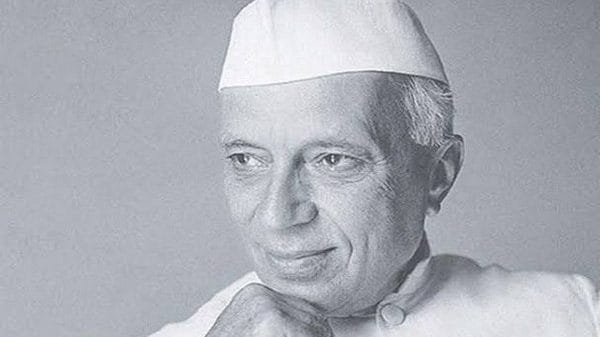
It so happens that on the same day, a person who posts anonymously on social media platform with the handle ‘Indian History Pics’ sent me the picture of this facsimile or screenshot from The Statesman. This person keeps track of archives, old postage stamps, old articles. He’s got a very fine mind and a very sharp eye.
Worst of times: Let’s first see what the situation was in November 1963 when this debate took place. First of all, India had just lost a war with China. We were in a very bad way; the national morale was down. Nehru’s health was declining rapidly. Just a week before this debate, a terrible helicopter crash had taken place in Jammu and Kashmir in the Poonch area: an Indian Air Force helicopter crash had killed five top officers. It is since that crash, in fact, that the rules stipulate no two senior officers should travel in the same helicopter.
In the same day’s paper that I have displayed to you, you can see the second lead on the right side is that defence minister Y.B Chavan is going to make a statement in parliament about this helicopter crash which had taken place the previous week. That was one more immediate crisis.
Pakistan and China had just settled their ‘border’. They were allies like this. In Jammu and Kashmir, the chief minister was the prime minister, and the governor was called the Sadr-e-Riyasat. The other important thing which would surprise people today is the fact that the Lok Sabha members from Jammu and Kashmir were not elected in Jammu and Kashmir. They were nominated by the Jammu and Kashmir Assembly and sent to Delhi. So that was one more question. When will Jammu and Kashmir start electing its own MPs? All of this was constitutional work in progress because in 1952, with the Nehru-Sheikh Abdullah accord, the special status given to Kashmir was really special. That was the original Article 370, and it’s because Sheikh Abdullah wanted to consummate it as it was written in letter but not probably in spirit because Nehru had never intended to give that kind of autonomy or choices to Jammu and Kashmir, given the security situation and the standing threat from Pakistan.
In 1953, Sheikh Abdullah was arrested. Bakshi Ghulam Muhammad became prime minister. Since then, the Central government has taken many steps to weaken Article 370.
Also Read: Pakistan has no locus standi—MEA on Sharif, Dar’s Article 370 abrogation remarks
Special trouble: Some sections of the Opposition, particularly the Bharatiya Jana Sangh, which is the parent of the BJP, were very keen that this special status be ended immediately. Shyama Prasad Mukherjee was leading that campaign and went to Kashmir in May 1953. He was taken into police custody, taken first to the Central Jail in Srinagar, then shifted with two companions to a cottage outside the city. That is where his condition worsened, and he died on 23 June. Atal Bihari Vajpayee later claimed that Shyama Prasad Mukherjee’s death was a conspiracy by hatched by Jawaharlal Nehru, something that the BJP believes in deeply even now.
The special status Jammu and Kashmir was a politically divisive issue, and every party was committed to it being a temporary provision and that it should go. The only difference was some wanted it to end quickly, others wanted it to wear away slowly, or as Nehru said, ghis ke khatam ho jayegi, that is let it go away through gradual erosion.
Nehru also said that he would not use the power of the Indian Parliament to abrogate this, but would rather wait for the Jammu and Kashmir Assembly and government to make that request. He would have thought that in the course of time he would get that done. Remember 1962, however: with the war against China, a state of Emergency had been imposed in the country since 26 October 1962, and it continued till 10 January 1968. Why? Because just after the China war came the tension with Pakistan: a war-like situation between March and the end of September in 1965. March was when the trailer to the big war in the Rann of Kutch started. Then you had a crisis in Kashmir that the Pakistanis started by sending the infiltrators of Operation Gibraltar, and then full-fledged war. The crisis period continued.
It was also in the same period that the Moi-e-Muqaddas incident took place in Srinagar. That incident was that the prophet’s holy relic, Moi-e-Muqaddas, a strand of the hair of the Prophet, that had apparently gone missing. That cause massive protests and generated lots of anger; the Pakistanis were playing mischief on the ground with that.
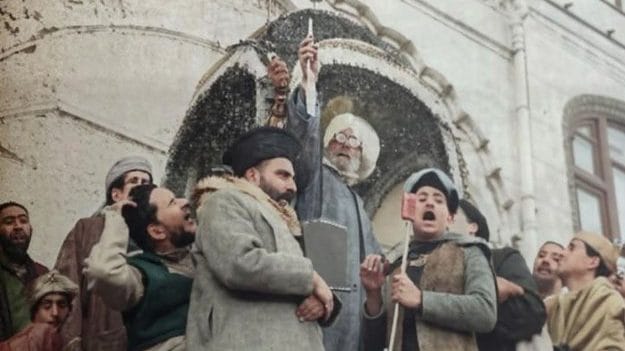
Nehru had to deal with this crisis as well. That took some doing: the relic was reported missing on 27 December, and was recovered on 4 January. Islamic scholars and clergymen of repute came together to examine it, and certified that this was truly the same relic. This was a crisis period for India, between 1962 and going up to the war in 1965, and then the sudden death of Lal Bahadur Shastri at Tashkent, and then the insurgencies in Nagaland, Mizoram etc. That’s how this state of Emergency continued.
The election question: So the question was, when will Jammu and Kashmir start holding elections for the Lok Sabha, because that was seen to be one more step towards Jammu and Kashmir’s fuller integration with the Indian Union. That had been waiting; in fact, even in the Parliament debate considered here it was said that the Emergency should be ended, and then this election could be held, and then Jammu and Kashmir will start electing MPs directly instead of nominating them. In fact, one of the MPs, S.N. Banerjee, an Independent affiliated to the Communist Party of India, was a very well-known trade union leader elected from Kanpur. Those were days when the Left was very powerful in Kanpur, and the unions were strong too in that industrial city
We know what militant trade unionism did to industry in Kanpur; everything got reduced to an empty, desolate shed in the course of time. It was almost like sets, multiple sets from that film Sahib Bibi Aur Ghulam, meaning the empire is gone and all that is left is a wreck. Banerjee also asked the question; he said, suppose the state of Emergency continues for 10 years, will that mean that Jammu and Kashmir will still not be electing their own MPs to the Lok Sabha?
Now, see this front page again. It’s a fascinating front page. One, you see the story from Jawaharlal Nehru in Parliament. Then you see on the other side the discussion on this horrible helicopter crash. In that helicopter crash, two lieutenant generals, Bikram Singh and Daulat Singh, died. Also Air Vice Marshal Pinto, the crew and a brigadier. You can also see what’s in the middle. That picture is from the Thumba rocket launch centre of what in the course of time became the Indian Space Research Organisation. And the three men standing there are Homi Bhabha, who headed the Atomic Energy Commission, and Vikram Sarabhai, and the third person with them is a civil servant, a bureaucrat, R. Shroff, who it appears played a key role in the NASA-India cooperation for rocket launch. That is the epochal period of history, which this just one half of a front page of the Statesman of 28 November 1963 tells us about.
Also Read: Ambedkar wanted State Socialism in India. Nehru made it State Capitalism: VB Karnik
Brick by brick: Now what does Nehru say? He said I would rather allow the process of erosion to go on than take the initiative to repeal Article 370. So he wasn’t saying I will not repeal Article 370. He was saying let it die a natural death. Such an initiative, he said, should normally come from the government and people of Kashmir.
Then people who were impatient. Again, that cut across party lines, like it did for Hari Vishnu Kamath of the Praja Socialist Party. It had split in 1955, with Ram Manohar Lohia going with the faction that became the Samyukta Socialist Party. Kamath was the one pushing for change. Prakash Vir Shastri was an Independent, formally joining the Bharatiya Jana Sangh only in 1974.
And also, as we go along, there will be L.M. Singhvi, the father of Abhishek Manu Singhvi. He was then an independent MP from Jodhpur. He also was raising questions, and, hold your breath, among people who really wanted change was Renu Chakravartty of the Communist Party of India. She was an MP from the Communist Party of India.
The Communist Party then was one party. It was in 1964, and this was the after-effect of the war with China when the Communist Party of India did not know where they belonged, whether to go with the national cause against China or be with the great revolutionary power in the world, that they split. Renu Chakravartty, at this point, was an MP of the united Communist Party, and she said that this change should take place because, given Article 370, many of our progressive and fair labour laws are not implemented in Jammu and Kashmir. So left, right and centre, all had the same demand that the special status of Jammu and Kashmir should go, and that it should be integrated fully with the Indian Union.
House talk: Now come to the Lok Sabha proceedings of November 27, 1963: some of it is in Hindi, some in English, and I can see one MP, S. Kandappan, who keeps on saying, why is everything in Hindi? Somebody should also say in English what’s been said in Hindi. So Nehru also repeats in English what he said in Hindi. Then Minister of State for Home Affairs Ramchandra Martand Hajarnavis says that many changes are already taking place; a presidential order has been issued under Article 370. These presidential orders were issued under powers given by Article 370 to make constitutional changes or basically extend Central laws and rules as well as the reach of the Constitution to Jammu and Kashmir.
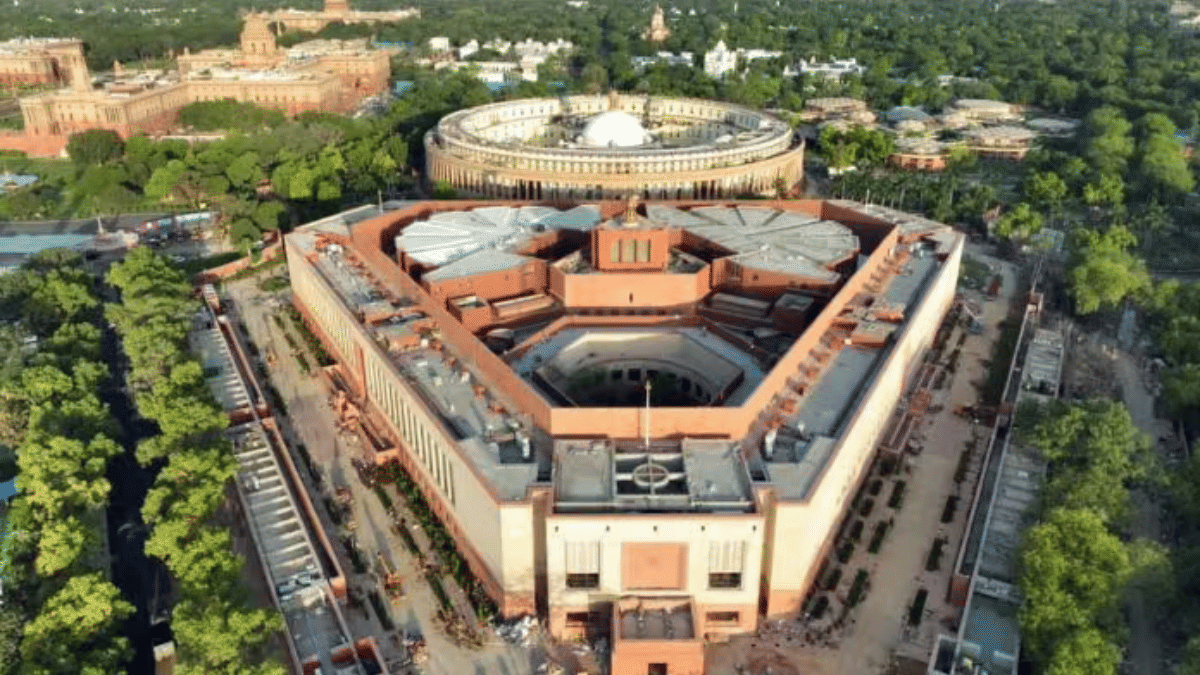
Hajarnavis said a presidential order under Article 370 was issued on 25 September 1963, applying the Jammu and Kashmir state Entry 26 of the Concurrent List III in the 7th Schedule in respect of legal and medical professions. That means legal and medical professions were brought under Central laws and rules. Then he said a proposal to apply Jammu and Kashmir Entry 24 of the Concurrent List in so far as it relates to welfare of labour and coal mining industry is under consideration. And then he says Jammu and Kashmir soon enough will elect its own member of parliament. It’s also been decided that the Sadr-e-Riyasat and Prime Minister of Jammu and Kashmir should be designated as Governor and Chief Minister respectively.
This happened one-and-a-half years later, on 30 March 1965. How it happened was a bit dramatic, however. It happened as a consequence of an amendment to the Jammu and Kashmir Constitution, the 6th amendment. The incumbent Sadr-e-Riyasat and prime minister instantly became Governor and Chief Minister. Dr Karan Singh was around, and so was Ghulam Mohammed Sadiq. Their designations changed on 30 March 1965. The constitutional amendment, however, was finally done 10 days later, on 10 April 1965. I jumped six months from the Lok Sabha debate to give you context, so as also to understand how dramatically and how fast things were moving, but everybody was moving in the same direction. That is the full integration of Jammu and Kashmir and the end of special status, either through abrogation or through slow attrition as Nehru preferred.
But this is something that I described after the Modi government made these constitutional changes: what Congress governments had been trying to do through a process of slow halal over six decades the Modi government finished in one blow like a jhatka. But everybody was moving in the same direction.
In the debate, Hari Vishnu Kamath asked a question about whether the Centre was reluctant to bring about these changes, that is if the Centre was hesitant to fully integrate Jammu and Kashmir. Gulzarilal Nanda, who was then home minister—he also officiated as prime minister a couple of times because two prime ministers died in office, Nehru and Shastri— said there is no question of either reluctance or resistance to the extent that public opinion, as the honourable member pointed out, favours the movement in that direction. It will certainly be reflected in the attitude of the government. What this means is public opinion wanted the integration, and this will happen. And because Kamath asked a supplementary question, saying that Pakistan is protesting about all our moves on integrating Kashmir. Nanda then said that is perfectly true. That is the latter part of the question. Jammu and Kashmir is completely and fully integrated with and is part of India. Therefore, no other question arises. Nobody else has to say anything about this matter
Also Reads: J&K statehood just a matter of time—‘Naya Kashmir’ first has to resolve complex issues
Nehru draws the line: And then this goes on, and Nehru comes in at some point because Prakash Vir Shastri asks his question in Hindi, and he is being a little snarky too. And he starts his question with “when the Prime Minister went for a vacation to Kashmir”. Then he says, you had said while meeting a delegation that Article 370 is now going away by attrition, that it will not be relevant anymore. That’s my interpretation, but that’s what he means. He says Bakshi Ghulam Mohammad, who till the other day was the Prime Minister of Kashmir—Khwaja Shams-ud-Din took over but wasn’t there for a very long time, after whom came G.M. Sadiq, the man who went from prime minister to chief minister—says Article 370 is permanent, and with this is tied the fate of Kashmir.
What does Nehru say? He says what Bakshi Ghulam Mohammad said at various points of time cannot be answered without looking at it carefully, so I cannot answer that. As far as I am concerned, he has indicated that Article 370 should go away in course of time. And things are changing slowly in any case.
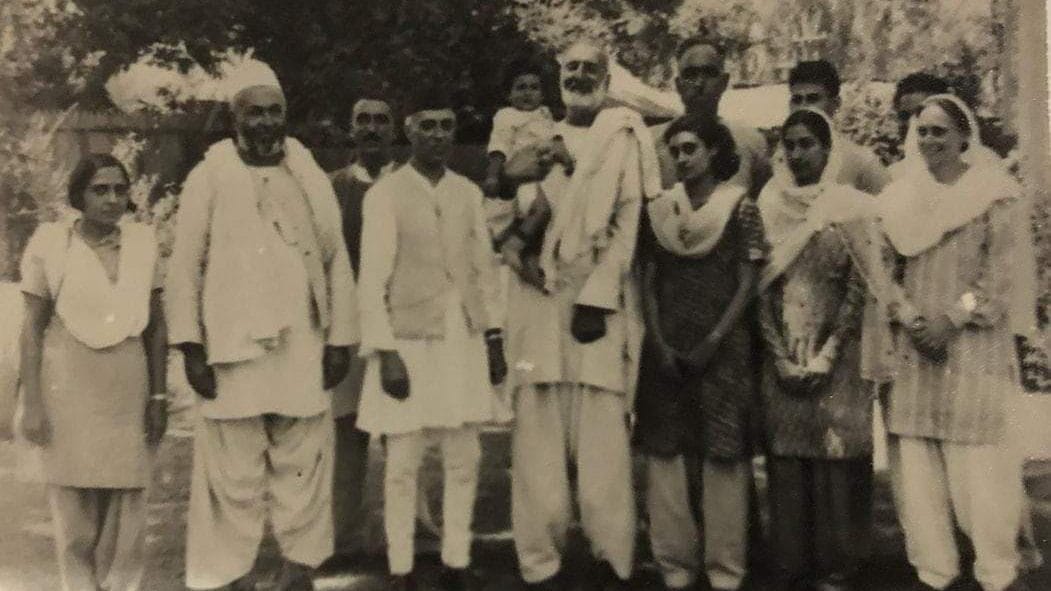
Then Nehru says that a couple of things that Bakshi Ghulam Mohammad has said can have some relevance; they can be different. For example, a person not a resident of Kashmir doesn’t have the authority or right to buy land in Kashmir. My personal view, Nehru says, that this is a very good policy. Everybody should not have the right to buy property there because if this goes on, it will cause Kashmir a great deal of damage. This has nothing to do with Article 370. A couple of these issues are old, and Kashmir needs protection where any change can hurt it, just as we have given protection to many other different parts of India. For example, NEFA, the North East Frontier Agency, what used to be the name for Arunachal Pradesh those days. These are tribal areas. Then when he answers the same question in English, he says NEFA and many border districts of Assam. These border districts, in the course of time became the states of Mizoram, Nagaland and Meghalaya.
Then the Speaker—at that point of time—Sardar Hukum Singh says, I think you have got answers to your question. He is addressing H.V. Kamath, Prakash Vir Shastri, etc. He says you had asked if the Prime Minister actually said that Article 370 will just wither away with time. The Prime Minister says that is correct, and that it is also a good thing to happen.
Then Nehru speaks in Hindi and English again. In the English part, he says Article 370, as the House will remember, is a part of certain transitional provisional arrangements. He did not say it’s permanent. It is a part so long as it remains so.
But at the same time he has told you it has been eroded. And many things have been done in the last few years which have made the relationship of Kashmir with the Union of India very close. There is no doubt that Kashmir is fully integrated. Not fully, says H. V. Kamath the socialist. Nehru says no. I repeat that it is fully integrated. The fact that there may be some special matters attached to it does not come in the way of integration at all, and I gave as an instance that in Kashmir, citizens of India and others than those of Kashmir are not allowed to buy land or own property. And that’s an old rule, not a new thing. And I think it’s a very good rule which should continue because Kashmir is such a delectable place, Nehru’s words, such a delectable place that many people will buy up all the land there to the misfortune of the people who live there; that is the real reason, and that reason has applied ever since British times and for the last 100 years or more. And then he goes on to add that the House will remember that we have some such restrictions in regard to NEFA and other places; outsiders cannot buy land. This is so even in other districts, the hill districts of Assam; this is to protect them. Again, he says, so we feel I am quoting from Parliament record, so we feel that this process of gradual erosion of Article 370 is going on. Some fresh steps are being taken, and in the next month or two they will be completed. We should allow it to go on. We do not want to take the initiative in this matter and completely put an end to Article 370.
The initiative, we feel, should come from the Kashmir state government and people. We shall gladly agree to that. The process is continuing.
Then P.C. Barua, a Congress MP, he says, “If that is the case, will you—will you seek the opinion of the people of Jammu and Kashmir?” Congress MPs were confused then too.
Nehru says, “Normally an elected Assembly is supposed to represent the people. One does not take a referendum in such a matter.” So Nehru’s got great clarity. It seems as if his legacies have not read up on him or read up on his parliamentary record or his views, so they often seem to lack that same clarity.
Also Read: My sympathy is with the poor policeman surrounded by people: Jawaharlal Nehru
Long and short: Let me give you a very quick summary of how for nearly 70 years, until 2019 when the big change came, Article 370 continued being diluted.
The story starts in 1952 with the Nehru–Sheikh Abdullah Accord. That’s when Kashmir had the most autonomy. Sheikh Abdullah thinks he can consummate it, but the Centre—Nehru—had no such intention of allowing him, and that’s how he was put under house arrest. He was dismissed, and a new prime minister appointed, which was Bakshi Ghulam Mohammad. This happened in 1953.
In 1954, a presidential order is issued under Article 370 called the Constitution (Application to Jammu and Kashmir) Order of 1954. This was the most consequential presidential order of all. This took a large number of the provisions of the Indian Constitution directly to Jammu and Kashmir, but it also gave Jammu and Kashmir a bargain. It gave the Jammu and Kashmir Assembly the power—the power to define who’s a Kashmir resident under Article 35A. But it took Union jurisdiction to more areas in the province. This included the fact that the governor henceforth would be appointed by the Centre and not by the state legislature.
In 1965, further presidential orders came, and these strengthened the application of the Indian Constitution directly. In the same year also came the 6th Amendment to the Kashmir Constitution, which, among other things, also changed the designations of the constitutional head and the executive head from Sadre-Riyasat and prime minister to governor and chief minister.
1975 was the year of the Indira–Sheikh Accord. That’s when Sheikh Abdullah accepted the current arrangement, and he said that constitutional provisions already applicable to Kashmir could not be rolled back. There could be some negotiation about some post-1953 laws, but otherwise all of the Constitution which was now applicable to Kashmir shall continue to be so. That’s how Sheikh Abdullah and the National Conference came back into the national mainstream. Between 1976 and 1986, successive presidential orders were issued expanding the constitutional reach and Union laws to Jammu and Kashmir.
In 1986, another very consequential order was issued, extending Article 249 of the Constitution to Jammu and Kashmir. What that means is that Parliament could now legislate on matters in the State List in Jammu and Kashmir in the national interest. It had to be based on a resolution from the Rajya Sabha, which is the Hall of the States. This reduced the powers of the J&K Assembly greatly.
And then we know what happened. By 1988 or 1989, terrorism had taken off. By 1990, it was a full-fledged emergency. The state was under President’s Rule for a very long time. And then, as history played out, we a turning point on August 5, 2019.
So once again, when the Congress takes a position on this, they have to read up their own history because they need to figure out what the minds of the founders of their party were like—those leaders, Jawaharlal Nehru, Indira Gandhi, whom they swear by and who basically designed the ideology and also nationalism of the Congress party. What did they want? They wanted full integration of Kashmir and no special status except protection of the lands, as is the case in the tribal states and Himachal Pradesh.
Also Read : Munir’s crackdown in PoK polls: Region’s politics, complexities & Pakistan’s ‘Kashmir’ pretense