






A year after Operation Sindoor, this episode of Cut the Clutter looks beyond the chest-thumping to examine how India-Pakistan warfare has fundamentally changed—from boots-on-ground battles to long-range, no-contact precision strikes.
Here’s the full transcript, edited for clarity:
As I’m recording this episode of Cut the Clutter, this is almost exactly a year to the hour from when the Indian Air Force (IAF) sat locked and loaded, with targets already fed into their computers.
Also, the Indian Army was ready across the Line of Control (LoC), with a list of targets across the LoC and into Pakistani Punjab, with its long-range artillery and loitering munitions. These were predetermined targets that both the Army and the Air Force had identified long ago, based on the expectation that a major terror attack would eventually trigger a response.
This time, these targets would be hit without crossing into Pakistan’s airspace or land boundary. The post-Uri strikes, as we know, were across the LoC, so Indian soldiers had gone across into Pakistani territory. Post-Pulwama, the raid on Balakot took place when the Mirages went quite deep inside Pakistani mainland.
This time, the idea was to do everything from within Indian territory, using predetermined targets. So this was the moment when everything was locked and loaded, and then delivered in the intervening night of 6 and 7 May, around 2 a.m., give or take a few minutes.
I was still awake when I received messages from my office carrying videos from Pakistan— first from Bahawalpur, showing missiles striking the Jaish-e-Mohammed (JeM) headquarters, and later from Muridke as well. The Army released official images the next day, while Pakistani statements and reactions also began pouring in.
An anniversary is a time when people observe events. Some celebrate them. Some make claims. Some claims get exaggerated, particularly on the Pakistani side. An anniversary is an occasion for both sides to talk up their own stories. I’m sure the Pakistanis are also making claims.
That, however, is not what we are talking about. Non-serious people make claims, hold celebrations, and mark anniversaries in commemoration. Serious people reflect on the lessons of a conflict, particularly when that conflict was just one more chapter in the ongoing India-Pakistan situation, and the next one is always around the corner.
This conflict did not settle anything. The 1971 war was decisive. It had the Pakistanis surrender in the East. Ninety-three thousand prisoners were taken, and Pakistan was broken into two. A new republic came into being. Even then, it did not bring everlasting peace. It brought peace for about 14 or 15 years.
By 1984–85, with trouble rising in Punjab, the Pakistanis were ready again. By 1989, they had added Kashmir to Punjab, and since then we’ve been dealing with that situation.
The crisis with Pakistan, the persistent war-like situation between the two countries, is not going to go away. And whatever happened in Operation Sindoor, this was not a long-term deterrent. What Operation Sindoor did was tell the Pakistanis that there is now a new normal: if you do something major in India, there will be a reprisal delivered in Pakistani territory. Then you deal with the consequences.
That principle was established after Pulwama, but Operation Sindoor established it far more decisively.
That said, if we presume that another crisis is around the corner, and I’m not being alarmist, I’m not saying it will happen tomorrow, or in six weeks, six months, one year, or two years. But at some point, it will.
In National Interest, I had said earlier that since we became independent, we’ve averaged a major national security crisis involving foreign threats roughly once every seven years. In the last 60 years, it’s been about once every five years. So, we have to remain prepared all the time, and that’s why it’s important to look at the military lessons of Operation Sindoor.
I had written a National Interest piece earlier, on the anniversary of the Pahalgam massacre, about the larger diplomatic, political, and strategic lessons of Pahalgam followed by Operation Sindoor. Now we are looking at purely military lessons. You can call them tactical, but what is tactical in an 87-hour battle is also strategic. In something that lasts three, four, or five days, everything can become strategic because ultimately India’s idea is deterrence, not a full-fledged war with Pakistan.
In fact, India would be quite happy if Pakistan left us alone and focused on whatever newfound glory it sees in the Middle East—protecting Saudi Arabia, fighting the Afghans, or flattering the Americans. India would be quite happy if Pakistan looked westwards.
But, it is unlikely to do that, because the Pakistan Army sustains its dominance by keeping tensions with India alive. That’s why the possibility of another crisis is always present—it can emerge at any time, and India has to remain prepared constantly.
That’s why the larger military lessons of Operation Sindoor have to be listed and revised. I will list some for you. This is by no means definitive or exhaustive. You will also see an article and a video from our defence editor Snehesh Alex Philip, who has talked about many of these aspects. I will share those links as well.
Also Read: The Op Sindoor lessons—not just how to fight wars, but also how not to
The takeaways
Number one: Op Sindoor taught us that warfare with Pakistan has changed fundamentally.
There was a time when we looked at strike corps. Former Chief of the Army Staff General Krishnaswamy Sundarji redefined the idea of warfare with Pakistan through Exercise Brasstacks in 1986-87. He said that for too many decades, the idea was that large armoured formations would move from one side to the other, get stopped at the first ditch-cum-bund or canal, spend the night regrouping, and then try to cross the obstacle the next day.
He said that was too slow. He wanted to cross the ditch-cum-bund on the same day, using mobile warfare along with airborne assault. He talked about crossing obstacles like the Ichhogil Canal in Punjab and pushing rapidly forward, perhaps even reaching Sukkur Barrage on the Indus.
That was an exercise, but the idea was to change the nature of warfare with Pakistan into mobile warfare. For decades afterward, that remained the principle.
That principle has now changed. Why? Because warfare has changed. The instruments of war have changed. And, also because modern warfare is now almost no-contact warfare. This is not warfare where you fix bayonets and assault machine-gun positions. Some of that still happens—as we see between Ukrainians and Russians—but most of the warfare today is non-contact.
The 87-hour battle between India and Pakistan taught us that warfare will increasingly be non-contact and beyond visual range. That is what India has to prepare for.
The first result is that the inhibition over the use of long-range vectors is gone. What did the Pakistanis use? The only success they claim in that 87-hour skirmish is that they hit some Indian jets on the first night. Not as many as they claim. I won’t tell you what I know, but definitely not as many as they claim. Still, I will go by what the Chief of Defence Staff (CDS) said: some aircraft were lost and some tactical errors were made.
Pakistan used very long-range air-to-air missiles. India, on the first night itself, used SCALP and Rampage missiles, which hit Pakistan’s Muridke and Bahawalpur city from a great distance—launched from well inside Indian territory. The Army also used long-range loitering munitions and M777 howitzers with specialised Excalibur guided shells, which can strike accurately at very long ranges.
So the shyness about using long-range weapons were gone.
Even post-Pulwama, during the Balakot strike, the IAF used standoff weapons. But to use them, Indian aircraft still had to go deep inside Pakistan. This time, weapons were available that allowed India to hit almost anything inside Pakistan without crossing the border.
🇮🇳🇵🇰⚡ Operation Sindoor: A Pakistani ballistic missile, believed to be from the Fateh or Shaheen series, was intercepted mid-air over Haryana during May last year before it could reach Delhi. The neutralisation was carried out by an IAF unit stationed at Sirsa, led by Air… pic.twitter.com/Ym2cFH8hwg
— Osint World (@OsiOsint1) May 7, 2026
Pakistan, too, used long-range weapons, including Fatah-1 and possibly Fatah-2 missiles. One of them was intercepted over Haryana’s Sirsa, presumably a Barak-8 system. We all saw that spectacular interception video.
The Pakistanis also carried out what I would call their most audacious strike using JF-17s. On the morning of 10 May 2025, they came within about 100 km of Indian airspace and launched CM-400AKG missiles targeting the S-400 radar near Udhampur.
Pakistan claims it hit the target. It almost certainly did not, because the S-400 is a highly mobile system. It fires and relocates. But the fact remains that Pakistan launched near-hypersonic, radar-seeking missiles from aircraft at significant range and targeted a premium asset. They missed. Credit goes to the IAF for its presence of mind and nerve in that situation.
Then, in the early hours of the 10 May, the IAF launched its major retaliation. At least 13 major Pakistani airbases were hit hard enough for the damage to show up in commercial satellite imagery. The weapons of choice included BrahMos missiles, along with SCALP and Rampage missiles, all long-range systems.
The larger point was that the shyness to use long-range weapons was now over.
One reason is political. A decision has been taken to strike deep into Pakistan, and Islamabad has also decided it will try to strike deep into India. The second reason is that these weapons are now accurate enough for both sides to trust them with specific targets, without excessive fear of collateral damage.
That means long-range vectors will increasingly become the weapons of choice.
Next, what did we see from the Indian side? We saw later pictures of Pakistani airbases. Earlier, we had already seen videos from Bahawalpur, Muridke, and seven terrorist bases in Pakistan and near Sialkot. More importantly, we saw hundreds of projectiles coming in from Pakistan.
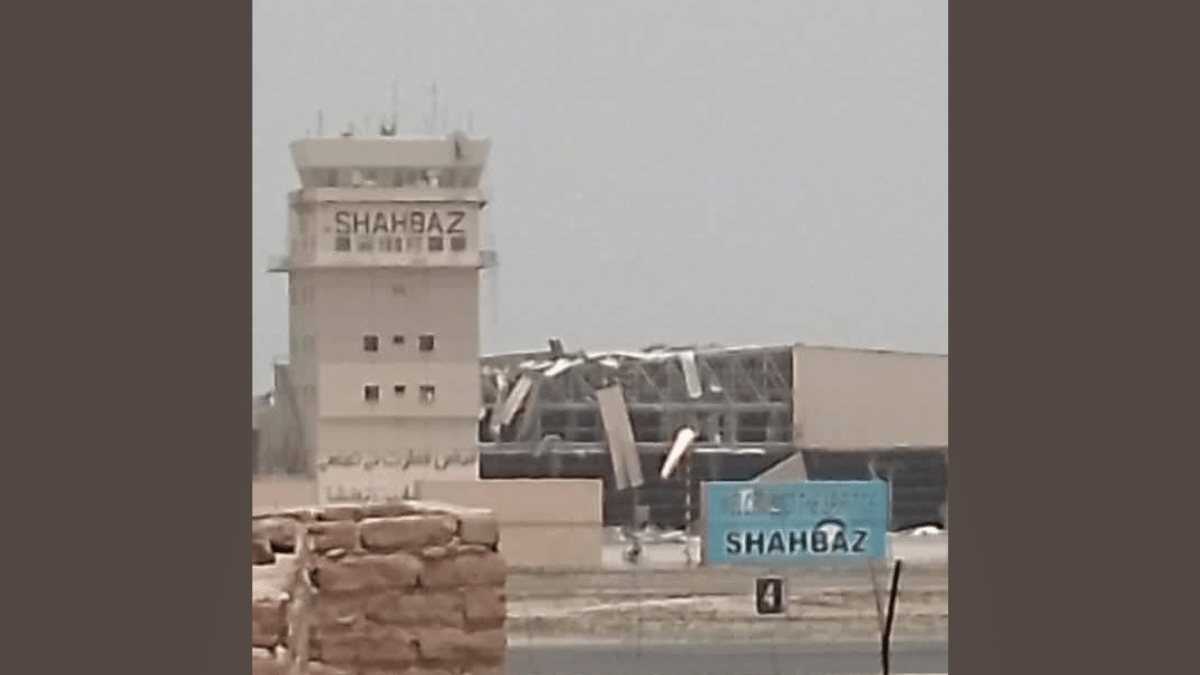
Many were armed drones carrying explosives. Quite a few were reconnaissance drones carrying electronics and AI-enabled systems designed to identify gaps in India’s air defence. Yet across Jammu and Kashmir, Punjab, Rajasthan, and Gujarat, we saw very little actually hit anything significant.
A sick bay was hit in an Army installation in Srinagar. And a minor non-combat installation near Udhampur airstrip was also hit. Otherwise, almost nothing got through.
Why? Because India’s multilayered air defence system, the Integrated Air Command and Control System (IACCS) run by the IAF and the Army’s Akashteer system worked together effectively and intercepted almost everything.
The lesson is clear: in modern warfare, defence is the best offence. Pakistan threw everything it had for two nights and achieved virtually nothing except keeping the people awake. That itself was a win for India.
Going forward, India will have to build deeper layers of defence. Earlier, a defensive depth of around 150 km from the border and the LoC may have been enough. Next time, because drone and missile ranges are increasing, defence will have to go deeper as well.
Pakistan army chief Asim Munir himself has hinted at this, saying India’s geography may not provide immunity next time. We have already seen Iran and Ukraine use drones capable of travelling 2,000 km or more. That means India must prepare for longer-range kamikaze drones and missile threats.
Next point. Joseph Stalin once said during the Second World War, when people kept reminding him that German tanks and aircraft were superior: “Quantity has a quality of its own.” His point was simple: if the Germans had 10 good tanks, he would field 100. The Soviet Union had industrial scale. Ultimately, the Russians defeated Adolf Hitler.
A country like India, with a large industrial base, has to build scale into its military production. We’ve seen this clearly in West Asia. When Iran launched drones and ballistic missiles in large enough numbers, even sophisticated defences struggled. If enough projectiles are fired, some will get through.
American bases in the Gulf were hit by drones, not ballistic missiles. Defences may intercept 498 drones out of 500, but if two get through, they can still cause serious damage and generate images that create a perception of vulnerability. We’ve seen the Americans suffer losses to radar systems, tankers, and high-value aircraft.
The lesson is that quality matters, but quantity matters too—especially in warfare that may continue for days or weeks. The Americans and Israelis had some of the best interceptors in the world, but at one point they were running low on them. War is not cricket, hockey, or football. It doesn’t end after a fixed number of overs or minutes. Both quality and endurance is needed.
Now, we come to the softer, non-kinetic side of warfare, that is the big mantra of modern warfare C4ISR. C4 stands for command, control, communication, and computers; ISR for intelligence, surveillance, and reconnaissance. It is at the heart of modern warfare.
Given Pakistan’s lack of strategic depth, India should ideally be able to map most of Pakistan continuously. But we also have to admit that India should have done much better in expanding military satellite capabilities in recent years. The failure of the last two PSLVs launches was a setback. Even so, India has enough capability to map Pakistan extensively.
At the same time, Pakistan has access not just to its own satellites, but to Chinese satellite systems—including hundreds of low-earth-orbit satellites and numerous geostationary systems. That support was visible during the last conflict. Pakistani officials were reportedly able to warn India about specific vectors being readied for launch because Chinese satellites had detected Indian movements in real time.
So the lesson is two-fold: improve India’s own C4ISR capabilities, and to accept the fact that almost nothing that is moved will be hidden from the Pakistanis going ahead.
Another lesson concerns high-value assets like refuellers, AWACS (Airborne Warning and Control System), and radar systems. Even the Americans struggled to protect these despite their advanced defences. That means dispersal, camouflage, and hardened shelters are now more important than ever.
Limitations & deterrence
The CDS also spoke candidly about tactical mistakes on the first night that led to aircraft losses. That openness is typical of the Indian approach.
Some of those mistakes were tactical. Others were political limitations. India initially tried to maintain the position that this was purely an operation against terrorist organisations, not against the Pakistani military.
That political posture imposed limitations on the IAF. Indian aircraft were not fully configured for air-to-air combat because they were focused on carrying out strikes from standoff range.
Those lessons were quickly learned. By the morning of the 10th, when the IAF launched its major operation, nothing was even fired back effectively. Pakistani radars had largely been suppressed or switched off.
In suppressing enemy air defences, India used guided loitering munitions very effectively. These systems do more than destroy radars. They force the enemy to switch radars off, because once a radar emits signals, the munition can detect and home in on it. India has already ordered more of these radar-seeking loitering munitions from Israel because they proved highly effective.
Finally, I will use a word I’ve practically banned in our newsroom because it gets misused so much: narrative.
It’s one thing to fight a war. It’s another thing to conclude it favourably. And that conclusion has to be favourable not just militarily, but also in terms of international opinion. During Operation Sindoor, Indian communication focused too heavily on domestic audiences and neglected international audiences. That cost India some advantage.
That cannot happen again. The ability to tell your story convincingly to global audiences strengthens your ability to control escalation, de-escalate, and decide when to stop fighting. No country can stop fighting unless it can claim success and say: “We achieved what we set out to achieve.”
This time, India reached that point partly because commercial satellite imagery showed damage to Pakistani airbases, and partly because Pakistan itself requested a ceasefire. But future conflicts may evolve differently.
No war is fought to the finish. That is fantasy—like Zulfikar Ali Bhutto’s “thousand-year war” rhetoric. Real wars are finite. The key question is: who controls the escalation ladder?
One side escalates, the other responds. At some point, one side decides it has done enough and steps back. To do that successfully, you must also be able to tell your story better than we did last time.
International think tanks are already talking about this. Elizabeth Threlkeld, senior fellow and director for South Asia at the Stimson Center in Washington, has written a long piece that paints a picture of the next India-Pakistan conflict. She says it may follow a much faster escalatory cycle and become more difficult for the Americans and others to intervene and bring about a ceasefire.
Partly because this time, US President Donald Trump was so indiscreet in claiming credit for the ceasefire, and partly because the insinuation is always that there is a possibility of a nuclear exchange.
Now, that has been a major strategic issue between India and Pakistan for about 40 years. Pakistan has long told the rest of the world: ‘Come help us settle Kashmir on terms we want, because if there is another war, it will be over Kashmir, it could become nuclear, and the world will suffer the consequences.’
That is the nuclear blackmail Pakistan has used for a very long time. From 1999 onwards, India had managed to shift the global conversation. The fear of nuclear exchange in the subcontinent had increasingly been replaced by global disapproval of Pakistan’s use of cross-border terrorism.
What Pakistan is now trying to do is turn that equation around again. They are saying terrorism is not the issue—the prospect of nuclear war is the issue. That is something Trump has referred to repeatedly, just as he keeps increasing the number of planes supposedly shot down. He never specifies whose planes. I think last time he said 11.
Similarly, he keeps increasing the number of lives he claims to have saved—first 10 million, then 20 million, then 30 million. I think the last number was 35 or 40 million, maybe more.
So the Pakistani strategy of invoking the threat of nuclear exchange is back on the table. That also has to be kept in mind, as India plans the next escalation cycle. Because you can be sure there will be another provocation at some point. I’m not saying tomorrow or the day after, but there will be one. And if I’m proven wrong, all of us will be happy.
At the same time, the best guarantee for peace is to build deterrence.
(Edited by Tony Rai)
Also Read: How Op Sindoor, West Asia war proved satellites are new instruments of war | Cut The Clutter