






Murshidabad/North 24 Paraganas/Silliguri/Cooch Behar: One morning in June, a white flag mounted on a bamboo pole appeared in Jalaluddin Mondal’s field, rising above his 12-ft jute crop. For the former gram pradhan of Charkakmari, a border village in West Bengal’s Murshidabad district, this did not bring peace but a new battle.
He had heard from others that BSF officials had been visiting his paat (jute) fields. The 62-year-old said he knew anyway that “when you live close to the border, boundaries around private property rarely hold ground”.
The day after he noticed the white flag in his field, Jalaluddin received a call from the Block Land and Land Reforms Office (BLRO). “I was told that a kaanta taar would be planted through my fields and I will have to give an NOC (No Objection Certificate),” he told The Print.
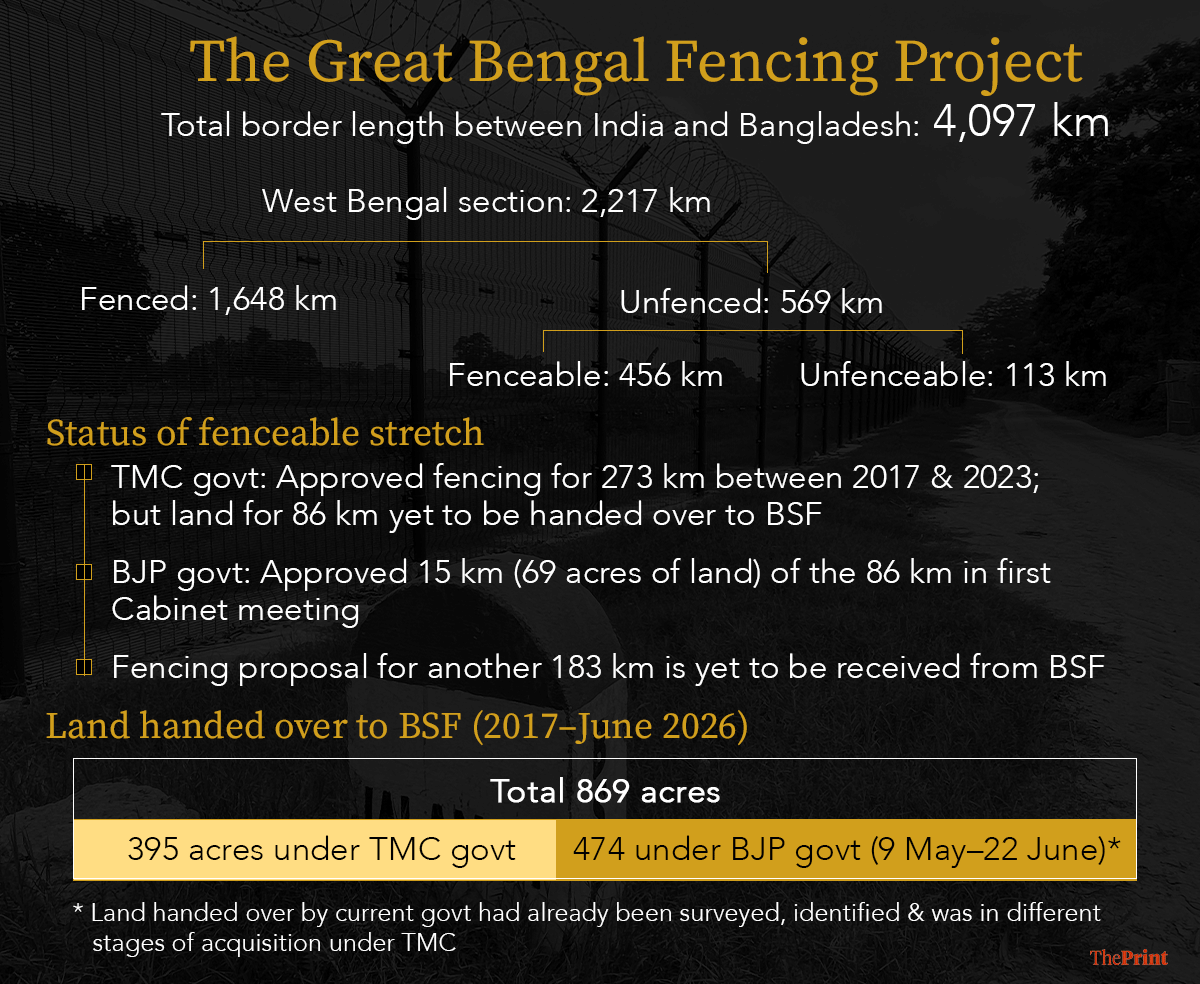
West Bengal shares a more than 2,200 km-long boundary with Bangladesh, of which more than 450 km remains unfenced. This became an election issue, with the BJP promising to expedite fencing if it comes to power. The land acquisition process for fencing has gathered pace since the BJP’s Suvendu Adhikari took over as chief minister on 9 May.
On the ground, authorities have been putting up white flags in stretches marked for fencing, and holding negotiations with land-owners about compensation.
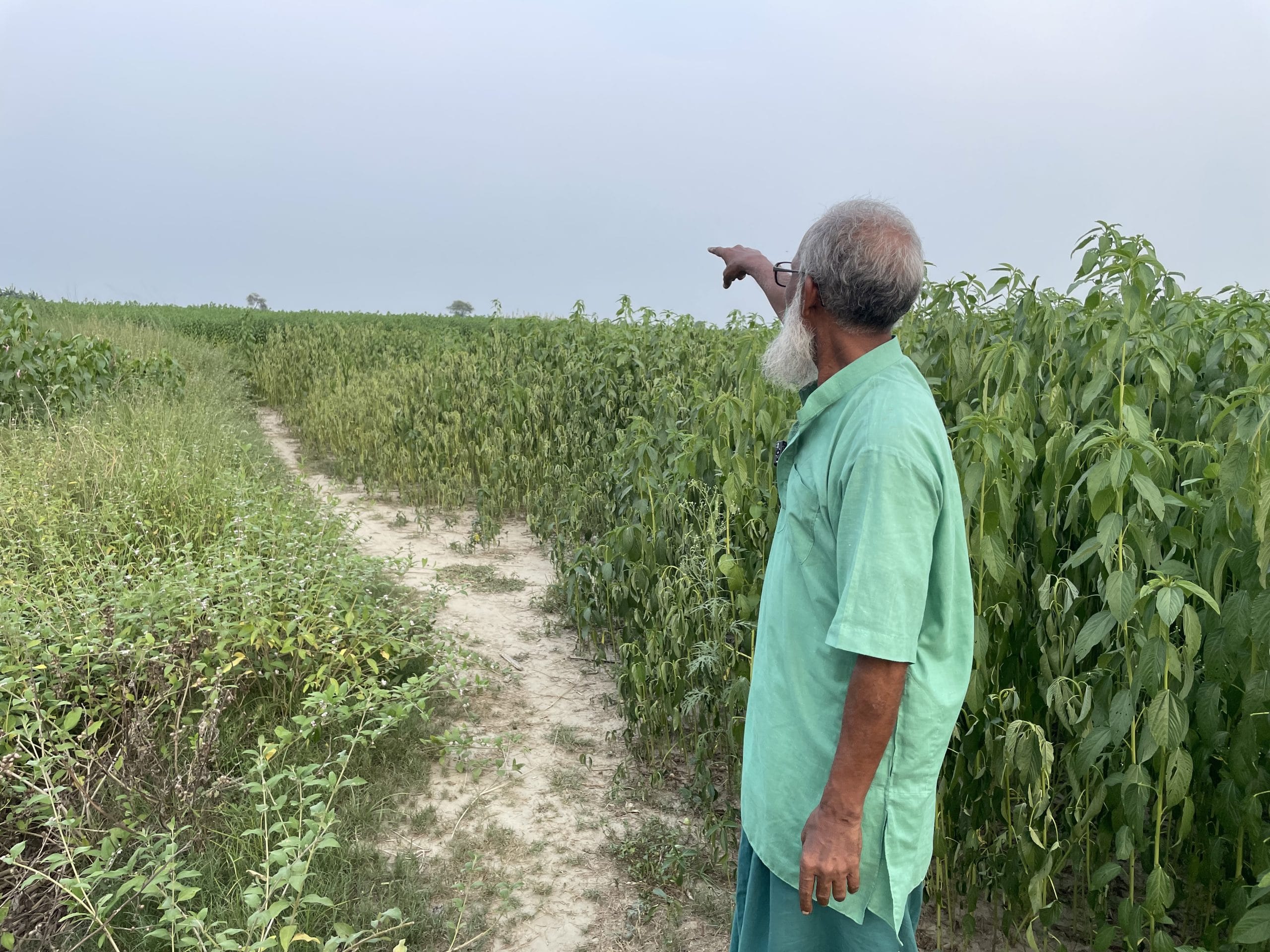
Walking through his field where the paat (jute) grew more than twice his height, Jalaluddin raised his frail arms to point towards the white flag that marks the stretch through which the fence would be built.
“The international border is at least 3 km from this marking,” he told ThePrint, describing how the land that falls between the international border and the fencing becomes unusable for them. “It will not only eat up our fertile fields but also engulf house after house in our villages.”
“Khali security hole hobe, pet ey bhaat thakte hobe toh (security is not enough, we need food on our plates too),” Jalaluddin said, adding that the state government and BSF must follow the 150-yard rule for raising fences.
The 150-yard rule he referred to is the long-standing policy that the fencing along the India–Bangladesh border should, as far as possible, be constructed not more than 150 yards from the border. This ensures a minimum possible area is fenced out.
Following it is hard at times, for various reasons including the nature of the terrain.
A senior BSF official, not wanting to be named, told ThePrint that the decision to fence at least 3 km away from the international border in Charkakmari was made to ensure the frequent flooding does not impact the fence. “If the fence is built close to the border as per the 150-yard rule, it would not last two years, which is why it is being built towards the hinterland.”
“While we are closely working with the villagers impacted due to the fencing project, resettlement and rehabilitation will be closely monitored by the state authorities,” he added.
ThePrint attempted to reach officials of the West Bengal government via calls and texts, but did not receive a response.
Also Read: Why Siliguri Corridor is top priority for Suvendu Adhikari govt. New border nexus brewing
‘Arbitrary’ mapping
Earlier in June, Jalaluddin and others in his Charkakmari and neighbouring villages took to the streets against the “arbitrary” markings on their fields for fencing and construction of BSF security infrastructure.
Similar demonstrations have been taking place across the state’s bordering villages—in some districts, large plots of agricultural land would fall beyond the proposed fencing, while in some cases, entire villages would be fenced out, falling between the fence and the international boundary.
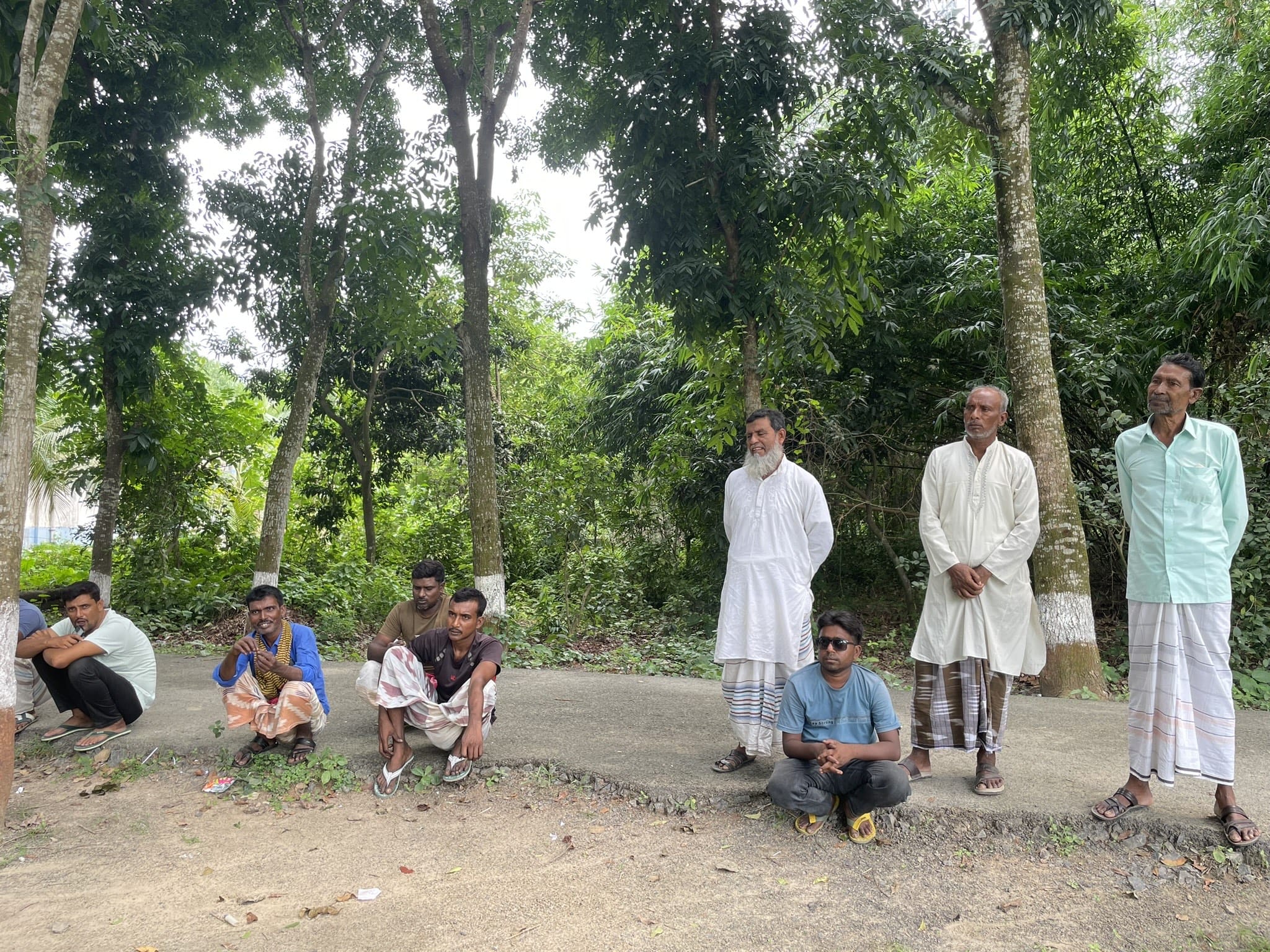
The protesting villagers’ allegations range from the proposed fence being mapped farther into the hinterland than the international border, to inadequate compensation for land parcels and the absence of rehabilitation for those whose homes would fall beyond the proposed fence.
In Murshidabad, there were two separate protests early in June: one for the “arbitrary” mapping of the border fence and another against the construction of a BSF chhawani (camp) in Bhutgarhi maath, an open field often used as a playground.
“All villagers had walked to the state highway, blocked the road and protested against the arbitrariness of the mapping of the fence,” said Abdur Rejjak Molla, one of the protesters.
He told ThePrint the police later lodged an FIR against several protesters, but that has not deterred the villagers.
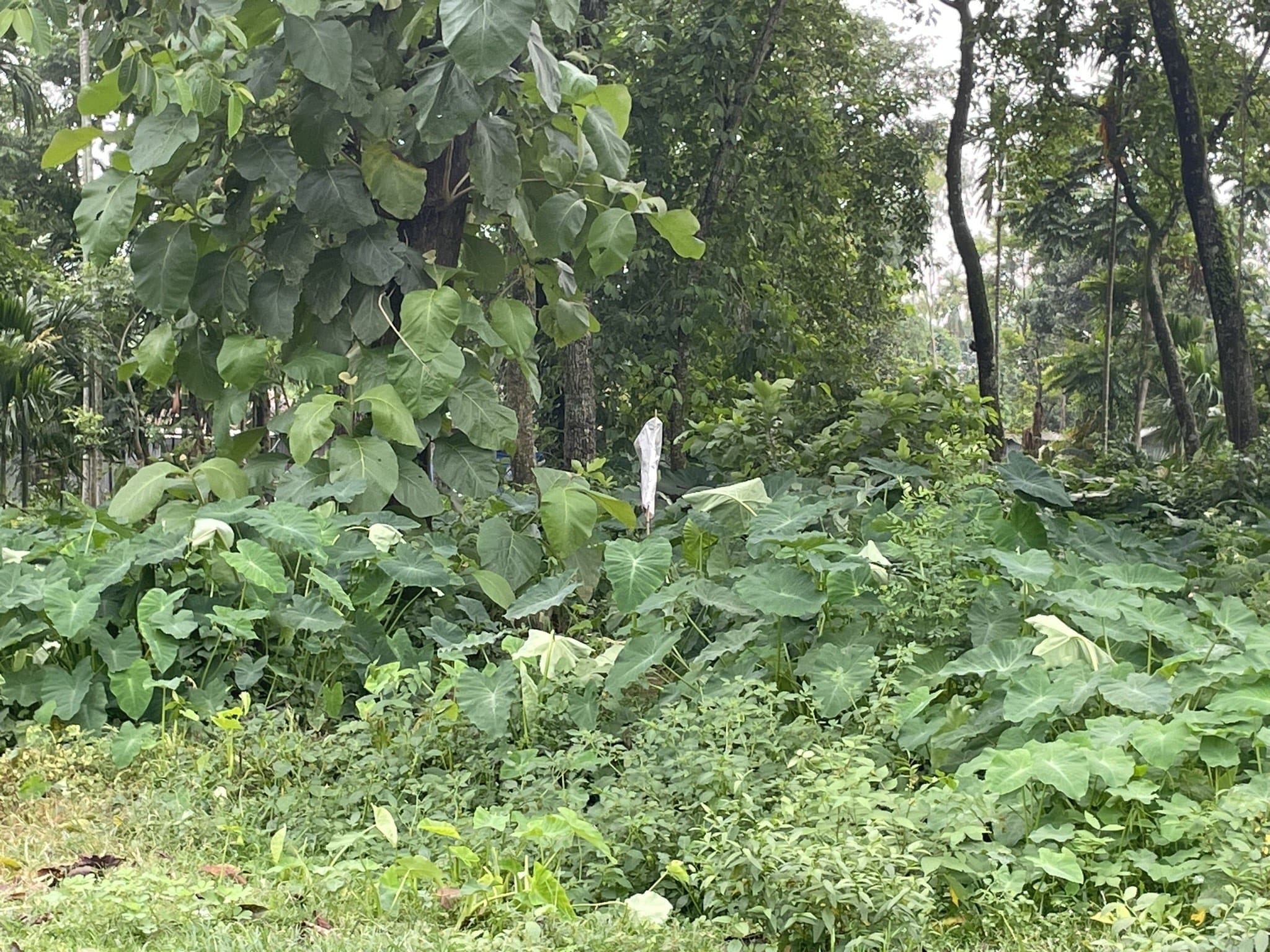
Adding to what Abdur Rejjak said, Jalaluddin claimed the authorities held no consultation before mapping the area. “No meetings were held. We were straight up asked to come with our ownership certificates and informed about the kanta taar.”
Jalaluddin alleged that the farmers whose fields have been marked for acquisition for fencing grow at least three crops and Ekaani (aromatic ginger), that alone earns them a minimum of Rs 5 lakh per bigha.
“Not only that, they have even marked a plot of land amidst our fields in Bhutgarhi maath to build a chhawni. This spot is far away from the border, why should we have to give it up?” asked Jalaluddin. The plot in question is amidst a farm land and marshy patch, where farmers grow jute and dunk them in water.
Asked about protests over the acquisition of Bhutgarhi math, the BSF official quoted earlier said: “The spots for chawnis have already been approved by the MHA, and unlike bordering states like Rajasthan, in West Bengal every other stretch is extremely fertile, so, that can not be a benchmark.”
Fenced out
Over 200 km from Charkakmari, in North 24 Parganas’ Sagarpara block, Sunil Mondal (53) stood outside a pre-British-era Kali temple. Behind him, on the Sonai River, a Border Guard Bangladesh (BGB) patrol boat glided past.
Sunil was born in the Dakshin Trali village. Much like his ancestors, he has worshipped Kali in the village temple. “Bangladesh is across this narrow Sonai River, just a stone’s throw away. Everyone around this village has grown up around these boundary pillars (cement pillars marking the international border),” Sunil said.
He is not against fencing in-principle, but has a practical question. “Where will we go?” He said his house will fall beyond the proposed fencing.
Like him, Isarun Bibi (66) living in Hakimpur Majher village along the Sonai river, was perplexed with the idea of fencing. “My house is right next to the river, and beyond it is Bangladesh. There are (BSF surveillance) cameras around my house leaving us, especially women, with no privacy. If a fence comes up near the house, how will we live?” asked Isarun Bibi.
Like many of her neighbours, Isarun Bibi possesses no land or property apart from her house. Her two sons are migrant workers, and she currently lives with her daughter-in-law.
“At present, the BSF has a checkpost near the hinterland and every time someone comes, they check them, almost stripping them if they sense they are locals. If a fence is constructed near our house, we will need permission to even cross over towards our house,” she added.
Bibi’s next door neighbour Maznur Sardar (38) chimed in to say that while fencing is important, the government needs to rehabilitate each villager.
“A few years ago we were informed that we live on the international border and the fence will go right across my daalan (corridor), so I could never expand my house or even paint it. It has remained a cement structure,” he said.
Maznur still has nothing against fencing, but claimed they were being asked to sign an NOC without being provided any rehabilitation. “Villagers here depend on their day’s earnings, we do not have agriculture land or any property, we will not sign NoC until we are rehabilitated,” he said.
Maznur added that while the central agencies look at all villagers as possible “smugglers”, a BSF checkpost in the village near the Sonai River had remained unmanned since 2022, like many outposts in the region.
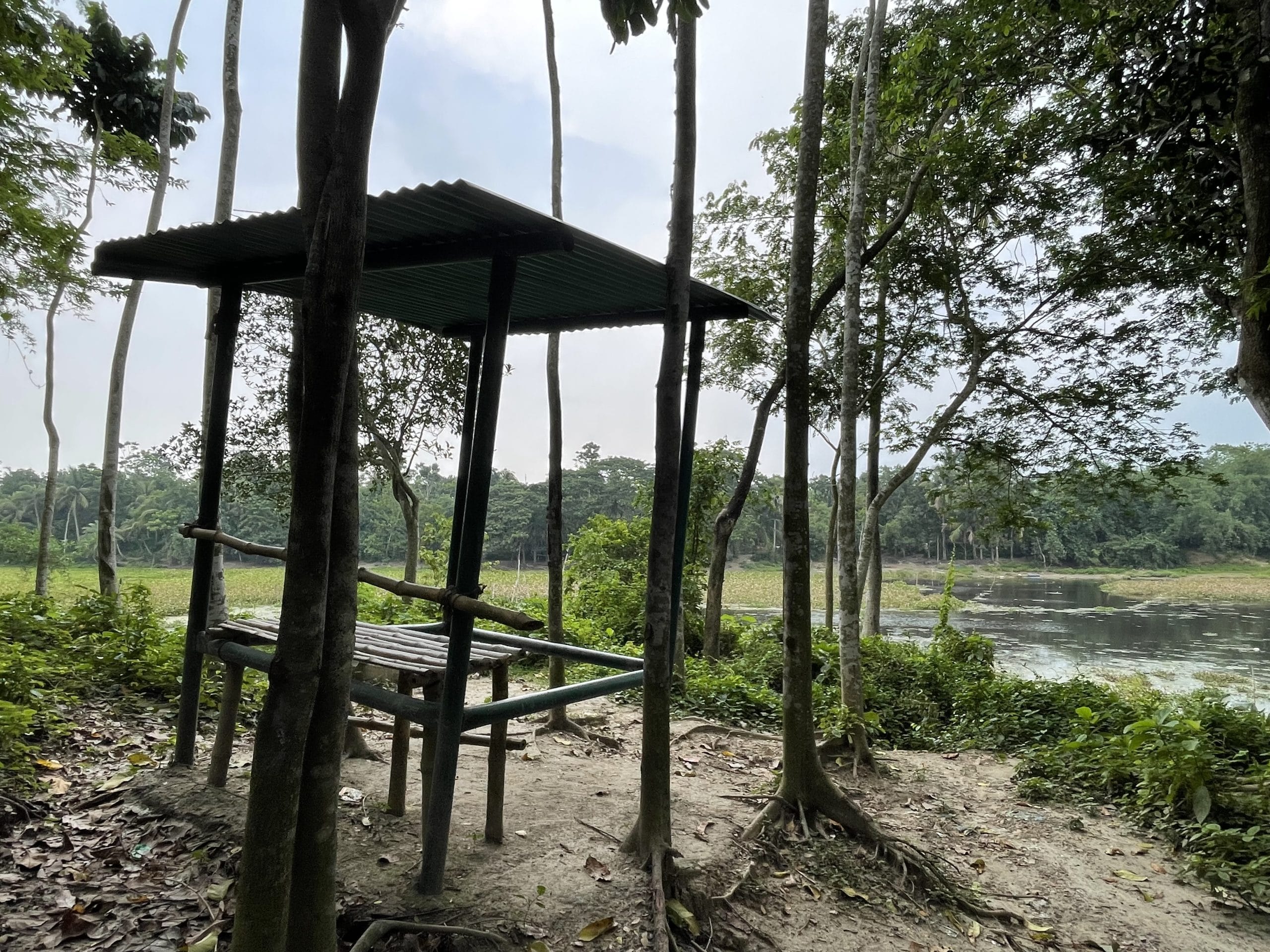
“They suspect we are involved in crossborder crimes like smuggling and facilitating the entrance of Bangladeshi nationals illegally,” he said, adding that “Bangladeshi nationals are illegally entering from Hakimpur border” where the posts are not manned. “Two of my cows were recently stolen because of their absence.”
Bidyut Rajbangshi (21), a fisherman from Hakimpur’s Rajbangshi para (locality), expressed anger over the whole situation. “The authorities want to build a fence and render us homeless but what about utilising the structures that are already present along the border? Why do they not sit in the chhawnis they had built to keep a watch on the border,” he asked.
ThePrint visited several of these villages, and found all the chhawnis vacant. These chhawnis are temporary bamboo and tin structures built along the borders to deter any kind of cross-border movement.
The BSF refuted allegations that the Sonai River was not being patrolled. “We are using different techniques to better monitor the open fence area of Hakimpur to see what works. It is a highly monitored location in the eastern border,” the official quoted earlier told ThePrint.
The mapping of the fence and the notices issued to villagers over the last month, sparked demonstrations and protests in several villages. The BSF officials posted there grew wary of the media and lawyers after some videos from the area were shared widely on social media. When this correspondent visited these areas, the BSF asked whether she was a lawyer or pressperson.
The BSF official said that journalists are not allowed beyond the Hakimpur post for fear that they would “cross over to the other side of the border”, and denied that the mobility of lawyers was restricted in the area.
As part of the protests, villagers from Hakimpur, Tarali, Arshilpi and Amarpur collectively sent a petition to senior officials in the Ministry of Home Affairs, state government, BSF, and state police, about what they called “unlawful procurement of land for border fencing without following procedure of law”.
“The police and local revenue machinery are actively pressuring and coercing vulnerable farmers and local residents into signing informal No Objection Certificates (NOCs) for taking possession of their respective plots of land,” the petition accessed by ThePrint read.
Further, the petition also alleged that in one village, an Integrated Child Development Services (ICDS) centre, a Durga Mandir, a Kali Mandir, and a Satsang Mandir will fall beyond the 150-yard line, while the main water supply tank serving the locality would also get fenced out.
“Similarly, in Booth No. 89, the demarcated fence line encloses two vital River Lift Irrigation (RLI) schemes, a Durga Mandir, a Kali Mandir, the Haridas Mandir, a mosque, a graveyard, and a watchtower, while leaving the primary school and ICDS centre also outside the line,” it read.
If someone goes beyond the fence, they are checked and only allowed to move between 6 am and 6 pm.
Old wound
While a majority of the border length is unfenced in the areas under the BSF’s Southern Frontier in Bengal (North 24 Parganas, Nadia, Murshidabad, Malda, and South 24 Parganas), a comparatively smaller stretch is unfenced in the Northern Frontier (Darjeeling, Jalpaiguri, Uttar Dinajpur and Cooch Behar),
Yet, protests have been taking place in several parts of Jalpaiguri, Silliguri and Cooch Behar districts.
In Jalpaiguri’s South Berubari village, an over six decades-long movement has taken centrestage as CM Adikari set a 45-day deadline for land transfer to BSF.
Speaking to ThePrint, Jagadish Roy Pradhan (71), the chairman of Berubari Protirokha Committee (Resistance Committee), said that just like his ancestors, they too were ready to sacrifice their lives for their land. “Praan diye debo, tobe jomi debo na (We will give our lives but not our land).”
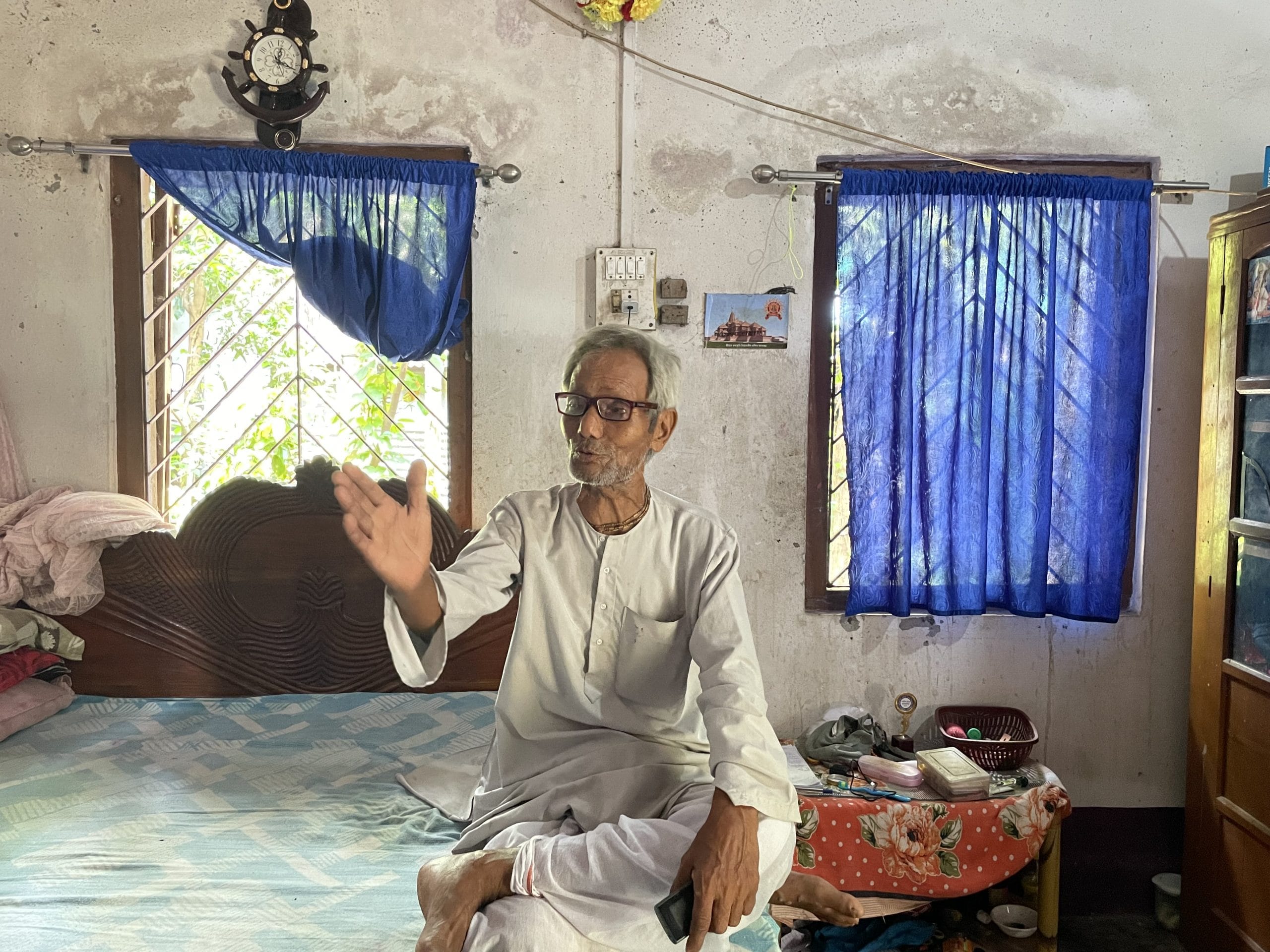
If the central government wants the land, he said, it must first put the villages of Chilahati, Boroshoshi, Naotori-Debottar, Paranigram under South Berubari in north Bengal on the map of India.
“In the 1960s, it was decided that south Berubari would remain with India. We got Indian citizenship, but despite that our land records have Bangladesh on it,” Pradhan said. “It is surprising that the Indian government is asking for our land when it shows Bangladesh on papers. How will they build an Indian fence on Bangladesh land?”
With wrinkled skin and an unsteady gait, Pradhan said none of them mind giving up their land for the country’s security, but only if the government first provides them with proper land records so they can receive compensation.
Over 20 kilometres away from south Berubari, Binod Mondol (55), a resident of Phulkadabri, demonstrated his protest by not attending the meeting called by the BLRO. “We were informed by the BLRO to come to their office and initiate the handing over of the land. I’ve heard that they want to pay us Rs 4 lakh per bigha. Does that rate even work in this economy?” he asked.
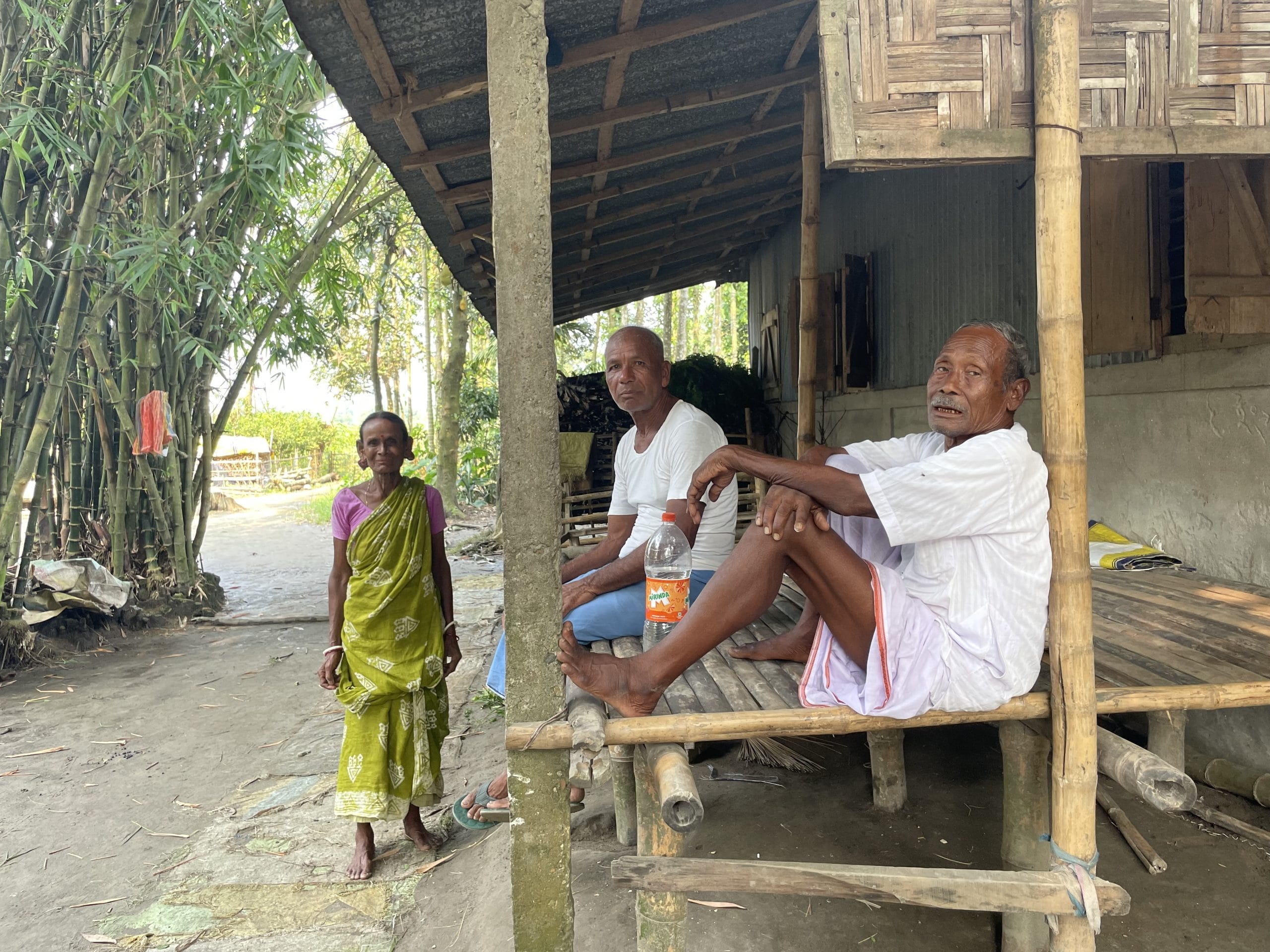
Angered by the low rates, Mondol did not join the BLRO meeting on 24 June. He told ThePrint that he would be losing almost 4 bighas of land.
“I get three crops—paat, tamak, and chaa, ten months a year. It allows me a livelihood every year, now the government is coercing us to accept a one-time payment which is as low as Rs 5 lakh,” Binod said.
He further alleged that the local authorities are coercing the villagers to sign NoC without properly consulting them and not considering any disagreement.
(Edited by Ajeet Tiwari)