


Chennai: The Supreme Court Friday stayed the Madras High Court judgment that permitted lighting of the ceremonial Karthigai Deepam at the Deepathoon, the stone pillar near a dargah atop Thiruparankundram hill in Madurai. The court, however, allowed the lamp to be lit at the disputed spot on 24 November, the day of Karthigai Deepam this year, as a one-time measure.
A decision that both the DMK and the current TVK regime, have opposed and demanded that the lighting at the Deepathoon not be allowed.
A bench of Justices Aravind Kumar and Vipul M. Pancholi clarified that the one-time permission should not be treated as endorsement of any claimed custom of lighting the lamp at that location. It cannot be relied upon as evidence of established practice or used to claim similar rights in future years.
Only authorised representatives of the temple Devasthanam and government officials will be allowed access for the ritual, and the general public will not be permitted. The Court directed authorities to make adequate security arrangements, including possible deployment of the CISF.
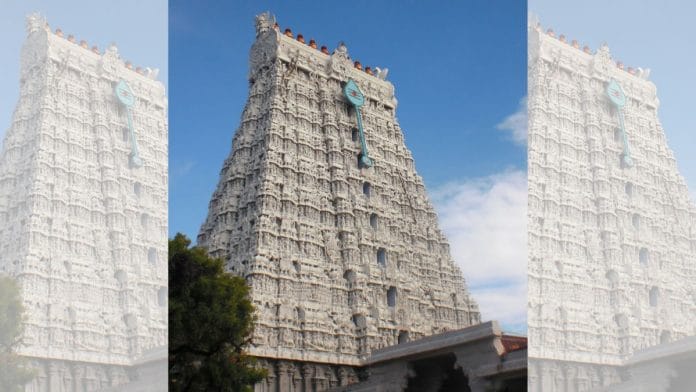
The dispute centres on the Arulmigu Subramaniya Swamy Temple on Thiruparankundram hill, which also houses the Hazarath Sultan Sikkandar Badhusha Avuliya Dargah. For decades, the Karthigai Deepam has been lit at the Deepa Mandapam near the Uchipillaiyar temple on the lower slopes.
However, several Hindu groups and petitioners have been arguing since several decades that the ancient stone pillar or Deepathoon, located about 50 metres from the dargah on temple land, is the traditional or rightful place for the hilltop lamp. They contended that lighting it would not affect the dargah’s rights.
In December 2025, a single judge of the Madras High Court’s Madurai Bench directed that the lamp be lit at the Deepathoon. However, the ritual was not carried out at the Deepathoon on Thiruparankundram hill that year, with police restricting access to the site. Instead, the lamp was lit at the traditional Deepa Mandapam near the Uchipillaiyar temple on the hill’s lower slopes.
In January 2026, a Division Bench upheld the order, dismissing the State’s law-and-order concerns as an “imaginary ghost” that could materialise only if sponsored by the State itself. It also held that the spot belonged to the temple Devasthanam and that lighting the lamp there would not infringe on the rights of the Muslim community.
Why is the Government stance against lighting of the lamp at Deepathoon?
The Tamil Nadu government, under both the DMK and the current TVK regime, has consistently opposed the change and demanded that the lighting at the Deepathoon not be allowed. The TVK government pursued the legal challenge, earlier started by the DMK and said that all survey pillars cannot be considered of religious value. The government filed a Special Leave Petition before the Supreme Court and upheld the traditional practice at Deepa Mandapam. The government emphasised the continuity of established ritual, possible law-and-order implications, and preservation of the long-standing status quo.
In arguments before the Supreme Court, the State maintained that there has never been any established custom, practice or prior claim of lighting the Karthigai Deepam on the summit of the hill or at the stone pillar now described as the Deepathoon. The lamp has been lit only at the Deepa Mandapam for over 150 years, in accordance with the Agamas and the opinion of temple Sthanikars (temple administrator, manager, or senior priest in South Indian Hindu temples), it said.
The government cited several historical records, including a 1996 High Court order confirming the traditional location. It also mentioned that attempts to light the lamp at the pillar were resisted on grounds of custom and peace. The government also stated that the site has a history of communal tension, and that the High Court effectively created a new practice through a writ petition rather than a proper suit establishing custom. The State also opposed broader demands for the Archaeological Survey of India to take over the living temple and permanent 24-hour lighting.
DMK, under then-Chief Minister M.K. Stalin, defended the government’s stand as safeguarding the temple’s traditions rather than yielding to political pressure. He said personal faith should not bow to politics, and emphasised that the lamp was lit at the customary place, and accused opponents of creating divisions for political gain. DMK leaders described law-and-order concerns as legitimate and argued that changing long-settled practice risked communal friction.
The AIADMK, however, criticised successive governments for resisting the High Court directions. When the DMK was in power, the party accused it of challenging judicial authority and failing to implement the order. It framed the issue as one of upholding the rule of law and protecting religious traditions of devotees. BJP leaders have accused the TVK of following the DMK’s “minority vote-bank” approach by obstructing Hindu religious practices on temple-owned land.
The DMK and TVK have repeatedly emphasised preserving the 150-year-plus settled custom at the Deepa Mandapam rather than introducing what they call a new or unproven practice at a sensitive shared site. DMK leaders have earlier stated that lighting of the lamp would be an attempt to communalise a historically shared space for political mobilisation.
The stance of the government against the lighting of the lamp at the Deepathoon is also based on apprehension of communal tension given the proximity of the dargah and the hill’s history and the principle that temple rituals should be decided by the Devasthanam and HR&CE according to Agamas, not by external pressure or court-mandated innovation via writ petitions.
(Edited by Anupama Yadav)
Also Read: TVK minister, masked & undercover, finds Tiruchendur temple staff seeking bribes for ‘speed darshan’