



The film Satluj was released on Zee5 and then pulled within 48 hours, making it a bigger story. Available to whoever wants, it’s being seen more than would have been the case otherwise. And now it’s been politicised fully.
The Shiromani Akali Dal, Sukhbir Singh Badal’s party, has decided to show it in every part of the state, every village, to show “the excesses and inhuman activities of the Congress government or the police under the Congress government in Punjab” during those years. The Satluj saga has become a story in its own right.
A movie is not a documentary. It gives you a very digested, shortened version of what happened in a period. Think Zero Dark Thirty, for example, a film on the killing of Osama bin Laden. A film also often gives you its own understanding of a particular situation or a development. That is why it becomes that much more important to understand the perspective.
Dark age: Now to understand where this film is coming from or the protagonist, Jaswant Singh Khalra, who headed the Shiromani Akali Dal human rights cell, and is played by Diljit Dosanjh.
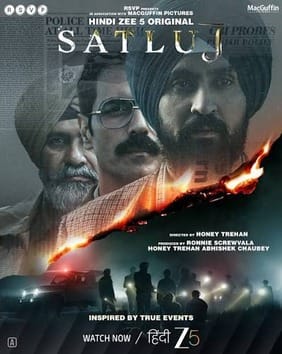
There is zero doubt that Khalra was kidnapped by the police, not arrested, around the 5th or 6th of September 1995. One would think that terrorism was over in Punjab by 1995. It was, in fact; by 1994 terrorism was over in Punjab and fatalities in all three categories—civilians, terrorists and police—had declined to almost nothing.
How then did this action take place? There were two reasons: One, that Khalra was running a campaign to collect details from some cremation grounds, all in the old Amritsar district area.
At that point, police chief KPS Gill had also created what were called police districts. These had only a Senior Superintendent or Superintendent of Police in charge; the police pretty much controlled those districts. These were the worst terror-affected districts in Punjab. The civilian magistracy had minimal control in these districts.
Khalra was collecting data on cremation of unidentified bodies from these police stations and extrapolating it to arrive at a number of those killed illegally and cremated as unidentified bodies. Khalra and his researchers collected data from three municipal crematoria in Amritsar, Majitha and Tarn Taran, the hotbed of militancy in that era. The number they added up was 2,059 unidentified bodies brought by the police to be cremated.
They multiplied this by the number of other prominent crematoria in the state and arrived at the number of 25,000. Finally, when the National Human Rights Commission (NHRC) was sent to investigate, they were given a list of 2,097 such bodies. The NHRC then concluded that 109 of these had died in police custody.
The police may have said that some were sick or tried to escape or whatever, but the commission said, we are not fixing any culpability but saying that since 109 of these died in police custody, the state is vicariously responsible and must pay compensation. That was paid.
The date matters: Why does this date, 5-6 September, become important? First, the police were irritated with Khalra over his campaign, and apprehended trouble for some—or many—of them. Second, 31 August was the suicide bomb attack on then chief minister Beant Singh. People talk about KPS Gill, and how he fought terrorism in Punjab, but he would not have been able to do it but for Beant Singh, who became chief minister after elections in 1992. Beant Singh was a very powerful chief minister, ranking high in the Congress even in his death.
His grandson, Ravneet Singh Bittu left the Congress Party and is now a prominent member of the Bharatiya Janata Party (BJP), a minister of state until recently. He is now back in Punjab, probably preparing to contest the state elections or lead a section of the party there because the BJP now has high expectations in Punjab, the one state where it hasn’t mattered though it’s not been quite as immaterial as, say, in Tamil Nadu and Kerala. In the past, it was in power in partnership with the Shiromani Akali Dal, but got almost nothing when it contested by itself.
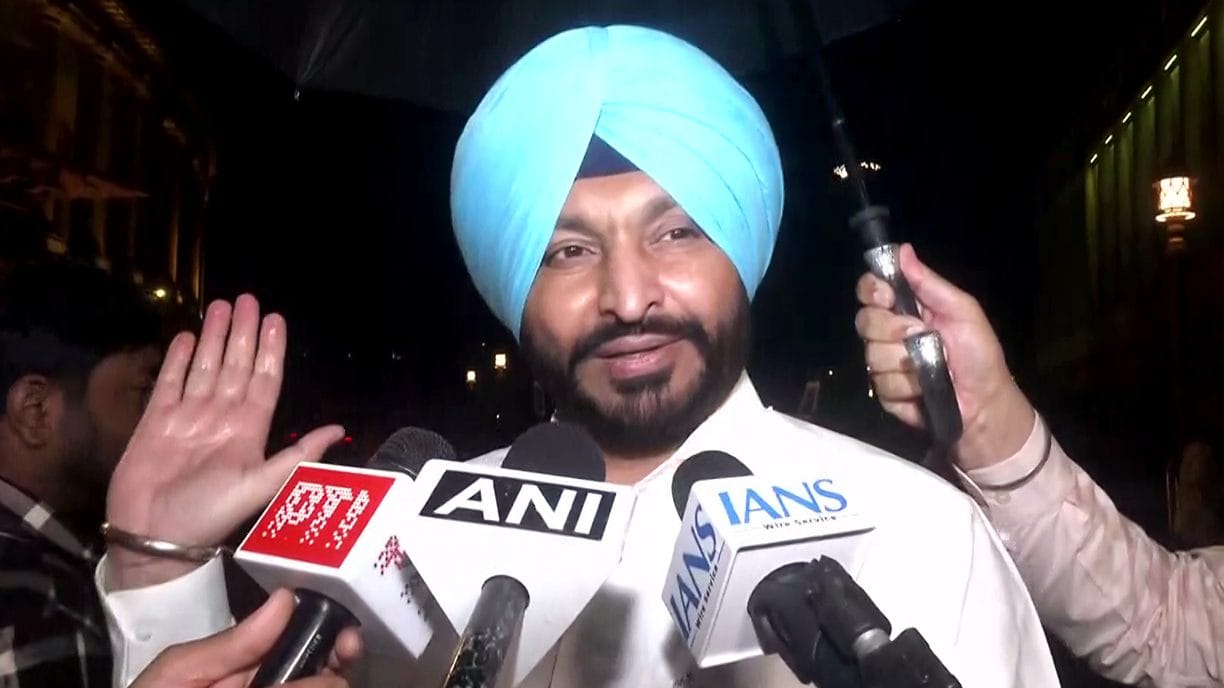
Now they hope to make an impact there, at least establish a sizable foothold. And one of the leaders who’s going to be helping them do that is the grandson of the same Sardar Beant Singh.
Aftermath of an assassination: Within five days of Beant Singh’s assassination, the police picked up Khalra. The same night his wife Paramjit Kaur Khalra prepared a habeas corpus petition; by 9 September, she had filed it in the Supreme Court. Before that, however, on 6 September, Gurcharan Singh Tohra, a prominent Akali leader and long-time president of the Shiromani Gurdwara Prabandhak Committee (SGPC), had sent a telegram to Justice Kuldip Singh, an eminent judge of Supreme Court. Justice Kuldip Singh said the next day that this telegram is being accepted as a habeas corpus petition.
Paramjit Kaur’s petition was combined with this, and the court ordered a Central Bureau of Investigation (CBI) inquiry. The CBI submitted a report a few months later, and the investigation and the trial process started. By 2007, the trial process was done, and a Special CBI court convicted eight of the accused officers and handed them life imprisonment.
A Supreme Court bench of Justices P. Sathasivam and B. S. Chauhan confirmed this. So, and again, there’s zero doubt that Khalra was arrested illegally. He was beaten up, tortured, the body thrown into a canal.
The CBI put all the evidence together, and that’s how these convictions took place. The first story in national media on how Khalra was kidnapped, tortured and killed was broken by The Indian Express on 6 May 1996. by Satinder Bains. Kanwar Sandhu was then resident editor of Indian Express in Chandigarh. Who was the editor? You might want to Google it.
Cover to cover: Where did this unholy situation rise from? Nothing happens in a vacuum. This was at the tail-end of terrorism or militancy in Punjab, which had a nasty peak in 1990-1991. Those were the days I was travelling in Punjab often, covering it from the ground. At that time, I was working with India Today. Kanwar Sandhu was our correspondent in Chandigarh; we even shared some bylines.
The best book on Punjab’s decade of terror is Turmoil in Punjab, Before and After Blue Star: An Insider’s Story by Ramesh Inder Singh, a former civil servant. It’s the most factual, the best archived, the best documented, also the most dispassionate account, and the most honest and brutal a book can be, particularly when written by somebody who belongs to that state and who has served there as a senior government official.
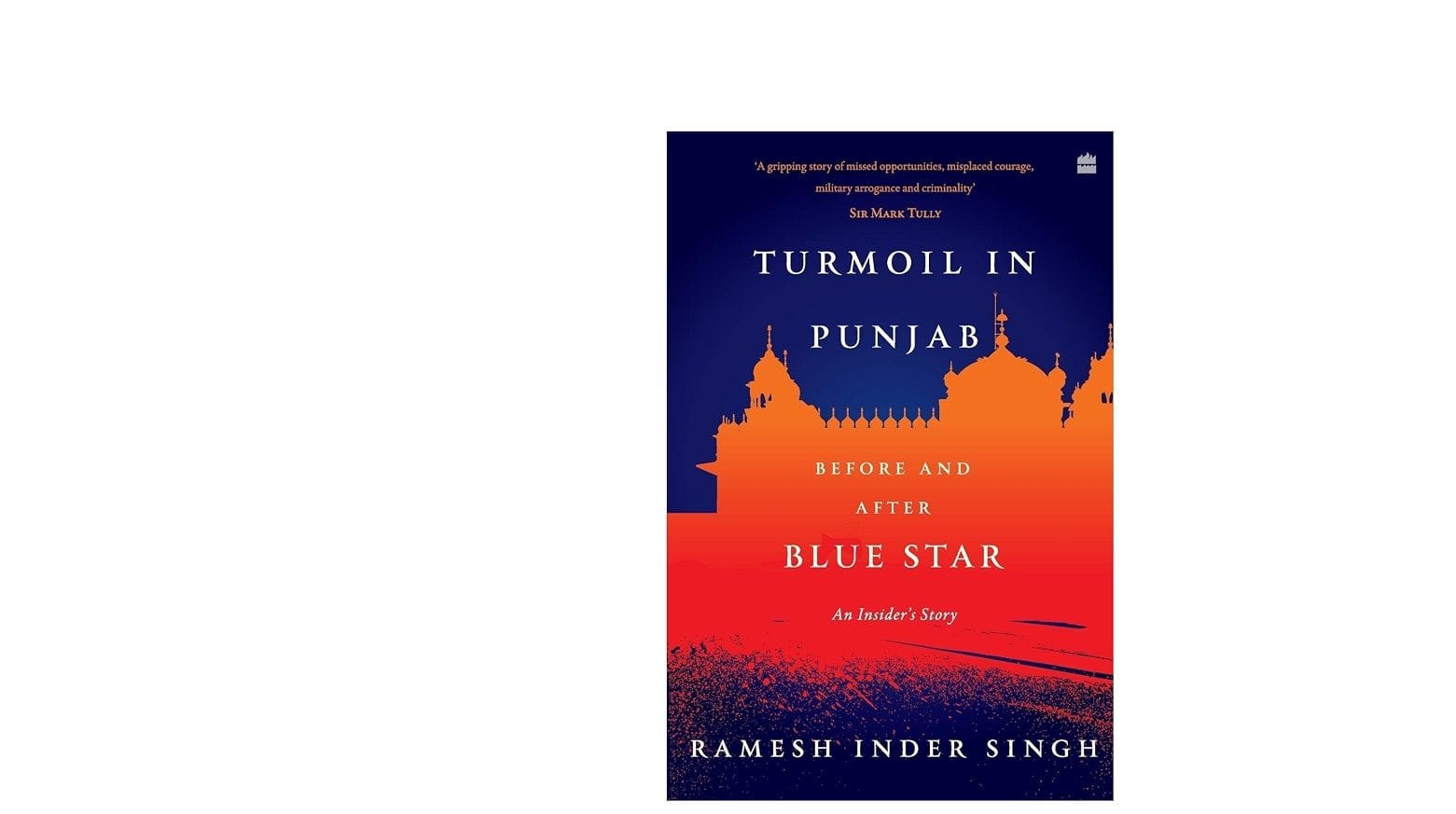
Ramesh Inder Singh was the Deputy Commissioner of Amritsar when Operation Blue Star took place. In time, he became the Chief Secretary of Punjab and retired from that position. Much later, he wrote this book that we owe him a debt of gratitude for.
Years to the ground: What was the worst year in Punjab? Most think 1984, the year of Operation Blue Star. Look at the numbers, however. One can go as far back as 1981, when the first terror attacks took place but let’s start with 1987. Gill had not yet taken over; he was from the Assam cadre, and had been brought into Punjab to help. He became police chief of Punjab in 1988.
In 1987, no fewer than 910 civilians, 95 security personnel and 328 terrorists were killed. The next year, by when the Rajiv Gandhi government had weakened considerably, it was 1,949 civilians, 110 security personnel and 373 terrorists. Gill was brought in as Director General of Police; in 1989, 1,168 civilians, and 201 security forces personnel were killed. So one number went down by about 60 per cent and that for security forces nearly doubled. The fight had been joined, and over 700 terrorists eliminated.
In 1990, things got really bad. That’s the year when India had got its only prime minister who was weak on national security: V.P. Singh. His innings, mercifully, was short. He started by appointing Mufti Mohammad Sayeed as his home minister whose own beginning featured the kidnapping of his daughter Rubaiya Saeed by separatists in Kashmir.
The government immediately made a deal with separatists to get her freed. This kind of start, when the home minister’s daughter is kidnapped, and the government makes a deal with militants was the worst possible beginning for the V.P. Singh government, also because the Akali Dal was supporting them.
Militancy resurgent: Things began to get really bad in Punjab. The year 1990 saw 2,467 civilians killed, a doubling over the previous year. Security forces lost 476 personnel, and 1,320 terrorists were killed. Punjab was a battle zone.
Gill was still DGP of Punjab, but by this time the Akalis wanted him out. By the end of 1990, he was removed, when Chandrashekhar became Prime Minister.
Chandrashekhar always believed in negotiation, and the first demand he faced was Gill’s ouster. That winter, December 1990, I made a long tour of Punjab, documenting how bad the situation had become.
I was accompanied by Prashant Panjiar, the photographer who was my fellow traveller on many, many, such assignments. It was really cold in Khem Karan, the border village known for its graveyard of Pakistani battle tanks. We reached really early, the idea being to get out as early as possible because in those days militants controlled everything after dark. Tagging along was Robert Nickelsberg, world-famous photographer then working for Time.
Those who travelled in Punjab those days suffered both humiliation and fear, the latter of being stopped by armed militants on the highways and being asked to explain our identities. Once they were convinced you were journalists and not from Punjab but from outside, they would usually let you go.
Also Read: ‘Shocked’, ‘shameless’, raised fists—how people reacted to Zee5 pulling Satluj
Rule of Fear: In Punjab, even radios and cassette players went quiet after dark; the terror groups had decreed all music to be illegal, decadent, and blasphemous, much like the Taliban in Afghanistan today. Even the dogs were quiet in Punjab in those days. Many had been shot or poisoned, because the militants were concerned by their barking at night. People feared being shot just because of their dog growling or barking at something in the night; militants were apt to shoot owners of dogs as well.
This was the kind of fear that had frozen Punjab completely into a sense of resignation with the rule of the gun. The story we wrote was headlined ‘Rule of the Gun’, and was published in the issue of 15 January 1991. We had then noted that there was no functioning government, only the police and terrorists, both groups with violence on their minds and armed to the teeth.
One could make peace with militants, who would often come calling at night, sometimes through the main door, sometimes by scaling walls. One did not shout for help but cooked for them, or paid up when they sent you a note to pay, what was called Dasvandh.
Dasvandh is a traditional Sikh religious offering just like Zakat in Islam; one is supposed to pay a tenth of all income to the community. If terrorists ask, you pay.
The terrorists went after education at this stage; they wanted to enforce a new curriculum in schools that included a ban on the national anthem and Hindi, and even skirts and trousers. Nirmal Kanta, the headmistress of a government school at Rajpura near Patiala, not far from Chandigarh, sought a few weeks for her largely poor children from this industrial belt to change over to salwar-kameez. She got two bullets in her belly. All this was before the Taliban was even born.
Even in Panjab University, women were supposed to wear only salwar-kameez: no sarees, jeans, skirts or dresses. No cutting of hair, or plucking eyebrows, lipstick, or bindi was allowed. Defiance was met with punishment. One young woman had her jeans torn, another had her two plaits chopped off, and one wearing a salwar of semi-transparent material was taken to a shop and given money to buy a ‘proper’ salwar. Some people did resist, however. There was one woman who said, what have my jeans got to do with their Khalistan?
Media muzzled: The other facet was the use of media personnel by both security agencies and militants which destroyed the credibility of real journalists, because either could then suspect you of being an agent. In one case, a smart girl called Jasleen Kaur posed as a journalist of a Delhi-based Hindi magazine to lure out a Left activist. The least told story of Punjab militancy is that the Left activists in the villages were in the forefront of the fight against militancy.
One Hardev Singh Babbu, a Leftist worker from a sizable village called Harsha Chhina near Amritsar who had escaped three attempts on his life already, was charmed by this journalist who had come from Delhi. She said, Will you come to Jammu for a story on the Kashmir problem? Babbu agreed, and a day later his severed head was found at the gate of his village community centre. It was just hung there as a warning to everybody; the rest of him was never found.
That’s why after sunset when strange people with AK-47s stopped your car on the highway and said, who are you, you’d say, we are journalists and show them your cards, but still be fearful and unsure about what would happen.
In schools, teachers were being taught the new language of militancy, and journalists were the most significant target. That was because cultural change is what the terrorists wanted, and the second was a change in the messaging; we were told that we cannot use the term terrorists.
We’d have to call them militants. Or Kharkus or even Khalistani Mujahideen. Another thing that came up was that every militant’s name had to be prefixed with Bhai or Sardar, and Shaheed if dead. Doordarshan was told to stop broadcasting in Hindi. Even for the popular film music show Chitrahaar, Doordarshan stations had to run Punjabi subtitles
Here’s a few paras from Ramesh Inder Singh’s book. This is page 408.
Also Read: What’s happening with Satluj—Security threats, IT rules, and an internal committee
“In new practice, spashti karans or explanations surfaced. The print media would print these spashti karans of citizens threatened by the militants for alleged misdemeanours or violations of the code of conduct enforced by them. The threatened individuals and organizations would explain their conduct or seek militants’ forgiveness by placing advertisements in newspapers. The media became a mode of communication between the terrorists and the terrorised. It suited the militants who got publicity and the newspapers which earned revenue from advertisements.”
This was almost like the media earning blood money by publishing apologies and explanations from people who had been put on the hit list by terrorists. Then he goes on to explain how the media was also forced to publish free announcements of bhog ceremonies for every dead terrorist who they had to call militant or kharku. Even The Tribune, otherwise a neutral English daily, suffered. When they declined to carry a bhog advertisement of an A-category terrorist, two gun-wielding men walked into the office of editor-in-chief B.N. Narayanan, on 14 June 1990 and threatened him. The Tribune capitulated; terrorists’ edicts, codes of conduct, bhog obituaries, bandh calls, warnings and spashti karans became a regular feature.
Ramesh Inder Singh says the media capitulation was complete with the episode of Jinda and Sukha, the assassins of General A.S. Vaidya.
General Vaidya was Army Chief when Operation Blue Star took place. After retirement, he was living in Pune; one afternoon he was in his Maruti 800 with a police gunman, when Jinda and Sukha shot him and the gunman and the driver. These two wrote a 21-page note explaining where they were coming from, why they did what they did, what their beliefs were.
This was their defence, and militants told all the media in Punjab to carry this. What does Ramesh Inder Singh tell us? He says the media capitulation was complete when the 21-page letter was circulated by news agencies UNI and PTI on 26 July 1990, and published in full or part by national dailies. In Chandigarh, he says, Punjabi Tribune carried the entire text of the letter covering about three pages, that’s three broadsheet pages, while its sister publications, The Tribune and Dainik Tribune in Hindi published an abridged version.
Narayanan, the editor-in-chief of The Tribune, still had 14 June fresh in his mind when he fell in line on fresh threats and published the entire text of the 21-page letter on July 28, 1990. The Dainik Tribune, the Hindi paper which had continued to defy the warning also succumbed on 30 July and published the entire letter with an apology on its front page for the delay.
Ramesh Inder Singh tell more of this story.
“On 22 November 1990, the Panthic Committee’s Sohan Singh issued an elaborate code of conduct with a threat to inflict memorable punishment on journalists who violated it. The court prohibited the media from using the term terrorists.
“A succession of other codes followed. On 1 December 1990, the Panthic Committee issued the language code that enforced the use of Punjabi in the state. Any non-compliance was punished by the militants.”
“On 6 December 1990, AK Talib, the handicapped station director of All India Radio, who was home on leave for his daughter’s marriage, was shot dead, for not using Punjabi everywhere, and daring to use Hindi here and there. Later, one Harminder Singh Happy, a terrorist, was arrested by the Gurdaspur Police and he confessed to the murder. The police wanted his confessional statement to be captured on camera to telecast it. But the Doordarshan camera crew did not dare to turn up.
“M.L. Manchanda, station director of All India Radio at Patiala was next to be killed. Terrified, the radio station complied with the militant edict and discontinued its Hindi news bulletin and shifted its Hindi broadcasts to the Rohtak station in Haryana.
“Suddenly, the Doordarshan women announcers started wearing salwar kameez, covering their heads with dupattas and speaking in chaste Punjabi.”
He goes on to say how the journalists were attacked. There was history before Google. Worst affected, he says, was the Hind Samachar group of newspapers. They also have Punjab Kesari. On 18 July 1990, the van carrying its newspapers to Ferozepur was ambushed near Jagraon and all its five occupants, were killed. Its editorial staffers, vendors, agents and hawkers, some 44 in all, were killed. These included the founder Lala Jagat Narain and his son Romesh Chandra. Such was the fear that the state government under President’s Rule announced they were not going to give any ads to Hindi newspapers.
That’s when in the Press Relations Committee, Ramesh Inder Singh notes, somebody, a member of the committee, said, “Khalistan aa gaya hai (Khalistan has arrived)’, taunting the governor. Ramesh Inder Singh also tells us of how officers stopped giving any typed notes in English.
They replaced their English typewriters with Gurmukhi typewriters. And then he concludes, strange as it may appear, that most of the codes and edicts issued in the name of panthic committees and well-known militants were in fact the handiwork of overgrown intellectuals sitting in cities like Chandigarh. These notes were usually hand-delivered to newspaper offices and very often to journalists’ homes as well.
A press council report later noted what newsmen found particularly disturbing: threats to their wives and children, whose names, ages, schools and classes might sometimes be mentioned to suggest that their movements were known. This was also a period when government was actually run by these groups. Your deputy commissioner could do nothing for you or if deputy commissioner was not doing anything for you, you just went to the militant linked to your village and your stuff would get done.
A land dispute? There were Khalsa courts that would give you instant justice.
At that point, the average lifespan of a militant or terrorist was three years. Later, it became much less. In fact, KPS Gill used to say that militancy in Punjab will die, terrorism will die when the lifespan or survivance as they call it, of an A-category terrorist, becomes less than six months.
Peak militancy: This point, 1990-1991, was the peak of terrorism in Punjab. At that point, they were still living long enough, some escaping to Pakistan as well. There was no shortage of recruits at that point. In fact, even if a terrorist was killed, three more would come up because it was also very profitable to pick up the gun because you could enjoy the power. If you wanted to make money, you could make a lot of money.
KPS Gill had told me then what it is that makes these people terrorists. Love of a good gun, a good fight and abhorrence of surrender because they like to fight, he had said. We sensed that defiance in villages in Punjab when we travelled. I remember quoting a man called Kartar Singh at the bhog of Kewal Singh, a prominent militant killed just a couple of days earlier in village Duhal Kohona on the border. He said, Do you know about Mir Mannu, the Muslim governor of Lahore who massacred the Sikhs? You know what we Sikhs used to say? Mannu is the sickle that chops us and we are grateful to him because we are his crop, we are his harvest. We are grateful to him because the faster he chops us, the faster we multiply.
Sudden death: That is how this crisis peaked in 1991, the worst year in Punjab’s history. The government changed in Delhi, P.V. Narasimha Rao took over in the summer of that year. Meanwhile, Rajiv Gandhi had been assassinated by Liberation Tigers of Tamil Eelam. In November that year, Rao brought in KPS Gill. Almost all prominent militants in this period got killed in course of time.
They got killed, they got caught, very few got caught and tried. The only ones who survived from that period are the ones who went to Pakistan. One of them, Paramjit Singh Panjwar of Khalistan Commando Force, was killed on 6 May 2023. It’s a story that we are more familiar with because it’s more recent. He was killed by two unidentified gunmen on a motorcycle. His bodyguard was injured.
A few more still live on in Pakistan. All the rest are gone. In the course of time, I will also relate a more detailed story of how this fight against terror was rejoined towards the end of 1991 and what methods were used.
How did terror die in Punjab so dramatically by end 1993? Once again, the basic figures help. Again, to give the number some perspective, unidentified bodies are routinely brought to crematoria all across India. In 2011, for example, all across India, 37,193 unidentified bodies were brought for cremation by police forces across the country.
In 2014, the number was 35,215. Of these 35,215, Punjab accounted for 966, long after terrorism ended in the state. In 2011, the number was 37,193 for India, of which 1,004 were from Punjab. In that year, Delhi itself saw 2,748 unidentified bodies brought for cremation. Maharashtra topped the country with 6,313.
If you take the number of civilians killed in Punjab, the peak was 1991, with 2,591 after 2,467 in 1990, 1,518 in 1992, 48 in 1993, and 2 in 1994. That is how dramatically terrorism ended in Punjab. How that happened is a story for another day.