





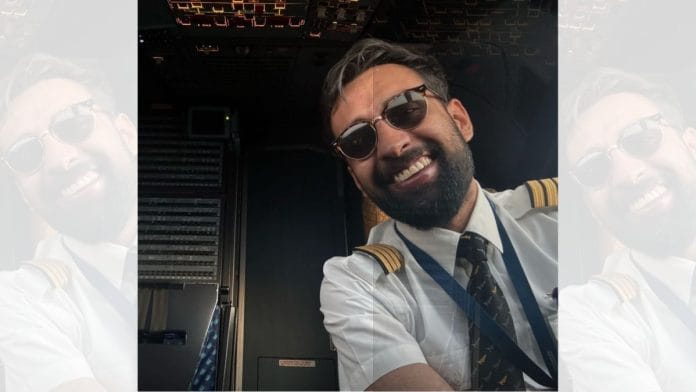

New Delhi: Air India has sacked Sudeep Vashistha, the pilot-in-command of the Phuket-Delhi flight that plunged hundreds of feet on 4 August leaving several passengers injured, after he tested positive for a psychoactive substance.
The termination comes after the Aircraft Accident Investigation Bureau (AAIB) released its preliminary report on the incident. The report stated that the Air India Airbus A320 lost pressure in all three of its hydraulic systems within seconds. It also flagged that the pilot had tested positive for a psychoactive substance in both the initial and confirmatory tests—which it called a serious safety concern.
The report did not link the positive drug test to the altitude incident.
“Safety remains Air India’s highest priority. The Pilot-in-Command of the Phuket-Delhi flight tested positive for a psychoactive substance. In line with Air India’s zero-tolerance approach to violation of safety, fitness or regulatory requirements, the pilot’s employment has been terminated with immediate effect,” Air India announced on X.
Following the incident, the airline started mandatory drug testing for all its pilots.
“We acknowledge the release of the preliminary report by the Aircraft Accident Investigation Bureau (AAIB) and continue to extend our full cooperation to the investigation, including providing access to all relevant operational, maintenance and technical records,” the airline had said Friday morning after the AAIB report was released.
The preliminary report had also recommended that the Directorate General of Civil Aviation (DGCA) take appropriate action to prevent abuse of psychoactive substances.
What happened on 4 August?
On 4 August, Air India AI-2379 from Phuket to Delhi, which was carrying 145 people, suddenly plunged mid-air, at a time when the seat belt signs were off.
According to the AAIB report, the aircraft was cruising at 36,000 feet when it recorded low pressure in all three of its hydraulic systems.
The autopilot disconnected, and flight control warnings pinged. The aircraft initially climbed around 372 feet and later descended around 292 feet from its assigned level.
The hydraulic systems recovered within seconds. The pilots continued to Delhi and informed Air Traffic Control (ATC) that medical assistance would be required after landing. The aircraft landed in Delhi and was taxied to its parking bay.
Twenty passengers and four cabin crew members received medical assistance after landing. Twenty were treated for minor injuries and discharged, while four people with serious injuries were hospitalised.
The aircraft also suffered damage inside the cabin, including to ceiling panels, overhead bins, passenger-service units, emergency-exit equipment, lighting and lavatory fittings.
Investigators are still examining why the hydraulic systems showed low pressure almost all at once.
Airbus experts inspected the aircraft between August 13 and 15. The flight-data recorder and cockpit-voice recorder were recovered. Hydraulic components and fluid samples were also collected for examination.
(Edited by Nivedita Patil)