



New Delhi: The Air India Airbus A320 that suffered an altitude upset on a Phuket-Delhi flight lost pressure in all three of its hydraulic systems within seconds, according to the Aircraft Accident Investigation Bureau (AAIB) preliminary report released Friday.
It also found that the captain tested ‘non negative’ for a psycho-active substance in both the initial and confirmatory tests, a finding the investigators have flagged as a serious safety concern. The report, however, does not say what substance was detected.
Taking note of the psycho-active substance test, the AAIB has recommended that the Directorate General of Civil Aviation (DGCA) take appropriate action to prevent abuse of psycho-active substances.
The report does not link the findings, and does not say the captain’s test result caused the hydraulic failure or altitude change. The findings are preliminary and do not establish the incident’s final cause.
On 4 August, the AI-2379 flight was flying from Phuket to New Delhi with 145 people when it recorded low pressure in the Green hydraulic system at around 4.02 UTC (9:32 IST). Within seconds, the Blue and Yellow systems also showed low pressure.
A failure in one system does not normally mean the aircraft loses control, as the other systems can continue to provide hydraulic power. In this case, all three systems showed low pressure within seconds of each other.
The autopilot disconnected and flight-control warnings appeared. A stall warning sounded for about two seconds. The aircraft then climbed around 372 feet and later descended around 292 feet from its assigned level of 36,000 feet.
The co-pilot was flying the aircraft when the problem occurred. The captain then took over. The hydraulic systems recovered within seconds, with the Blue system recovering first, followed by the Yellow and Green systems. The flight controls also returned to normal.
The pilots continued to Delhi rather than diverting, with the Delhi ATC (Air Traffic Control) being informed that medical assistance would be required after landing. The aircraft landed at Delhi safely and taxied to its parking bay.
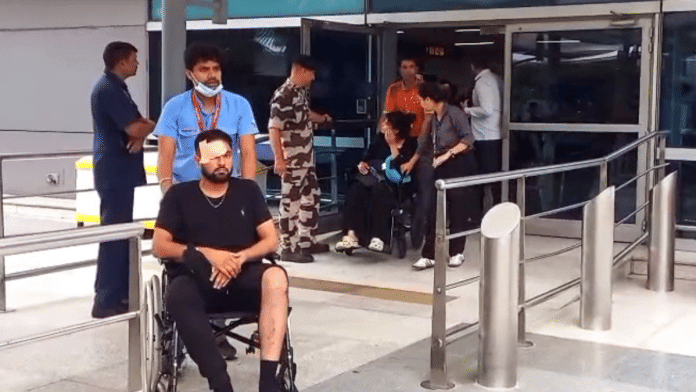
The seat-belt signs were off at the time of the incident. Twenty passengers and four cabin crew members were given medical assistance after landing. While 20 were treated for minor injuries and discharged, the remaining four with serious injuries were hospitalised.
The aircraft suffered damage inside the cabin, including damage to ceiling panels, overhead bins, passenger-service units, emergency-exit equipment, lighting and lavatory fittings.
Investigators are now examining why the three hydraulic systems showed problems within seconds of each other. The aircraft had a PTU (Power Transfer Unit)-related item deferred under the Minimum Equipment List before the flight. The preliminary report, however, does not say that this was the cause of the hydraulic failure.
Data from the flight-data recorder and cockpit-voice recorder have been downloaded, while hydraulic components and fluid samples collected for examination. Airbus experts inspected the aircraft between 13 and 15 August.
(Edited by Tony Rai)