



Mumbai: In 2009, when the film Slumdog Millionaire swept the Academy Awards, Garib Nagar, a settlement in Mumbai, became famous overnight. It’s where director Danny Boyle spent considerable time shooting scenes that depicted life in the slums of urban India. The child actor who played one of the main characters was also cast from the shanties here.
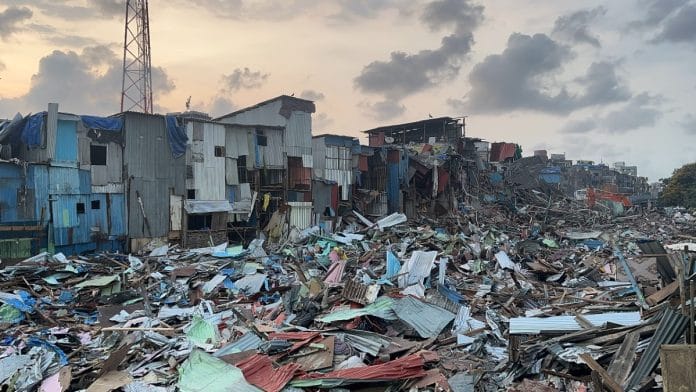
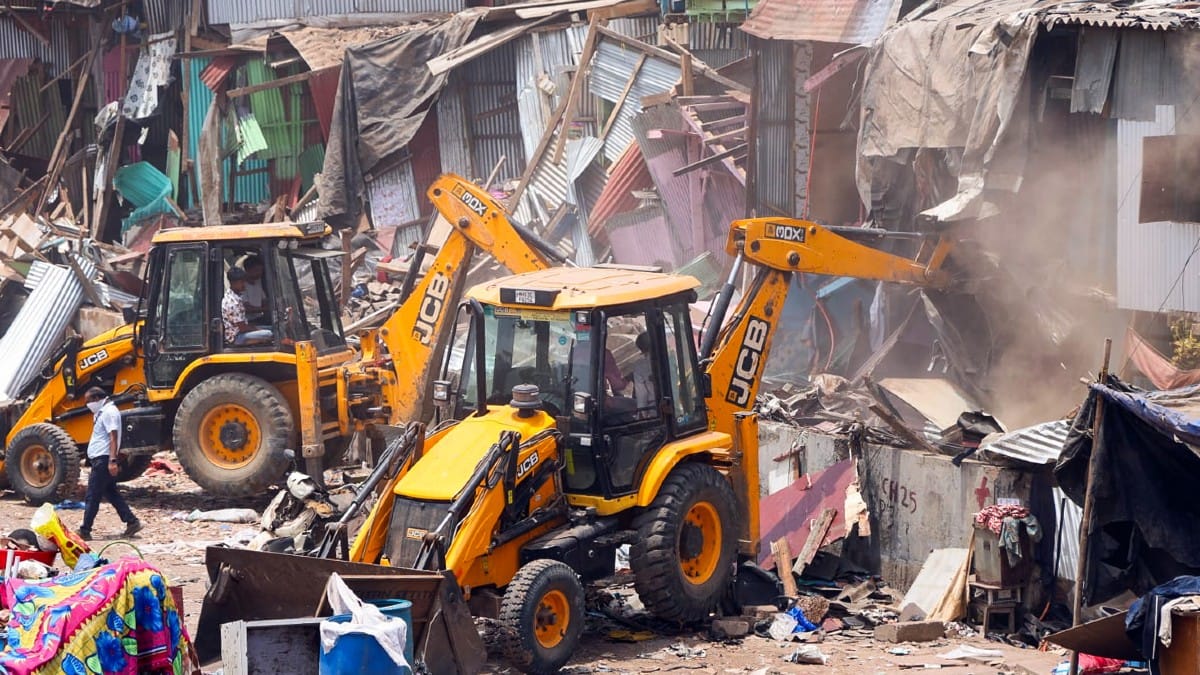
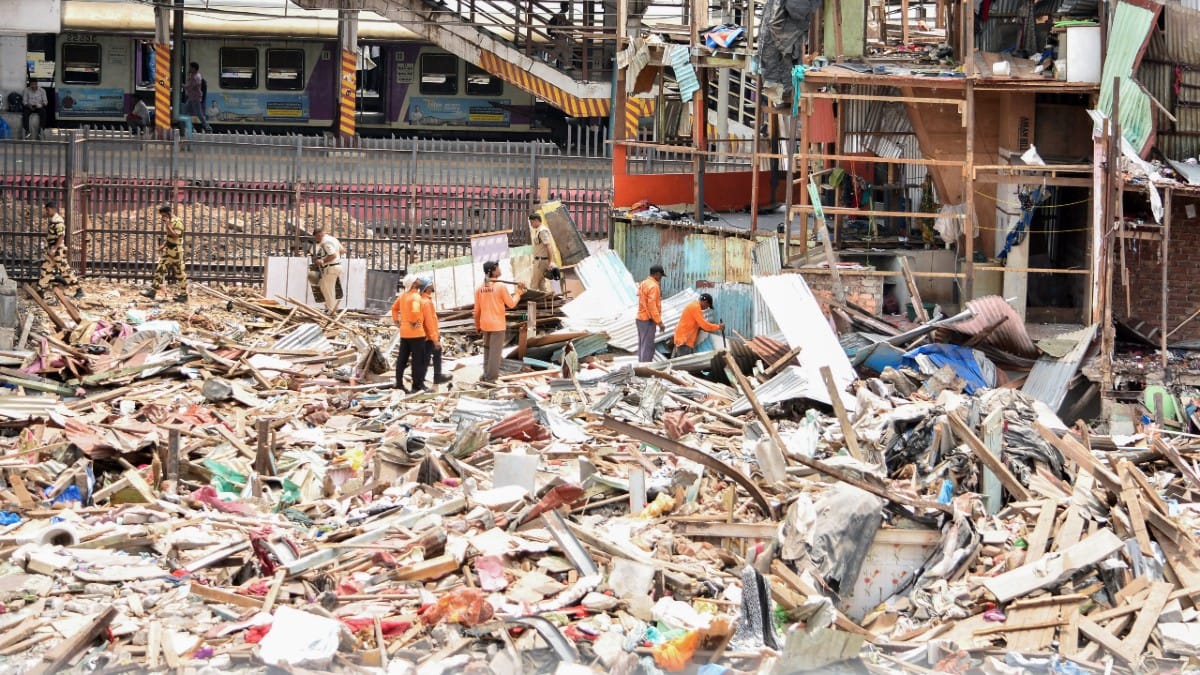
Last week, Garib Nagar was almost wiped off the city’s map when Western Railway demolished all but a hundred structures, which were deemed to be legal. The authority cleared about 500 structures spread over 5,200 square metres around Bandra station.
The land had always belonged to Western Railway, and it had been trying to clear the encroachment here since the 1980s. A Bombay HC order dated 29 April 2026 eventually paved the way for last week’s demolition drive—the biggest by Western Railway so far.
This prime land, right next to the Bandra station and terminus, is worth at least Rs 6,000 crore going by current circle rates.
The Western Railway, which caters to lakhs of commuters on a daily basis, plans to use the land for a much-needed infrastructure upgrade, involving the Integrated Railway Complex. The plan includes upgrading both the Bandra Railway Station’s east side frequented by local commuters as well as the Bandra Terminus which caters to outstation travellers.
Garib Nagar was situated between the two, making it difficult not only for commuters to travel from one station to the other but also leading to traffic snarls during peak hour.

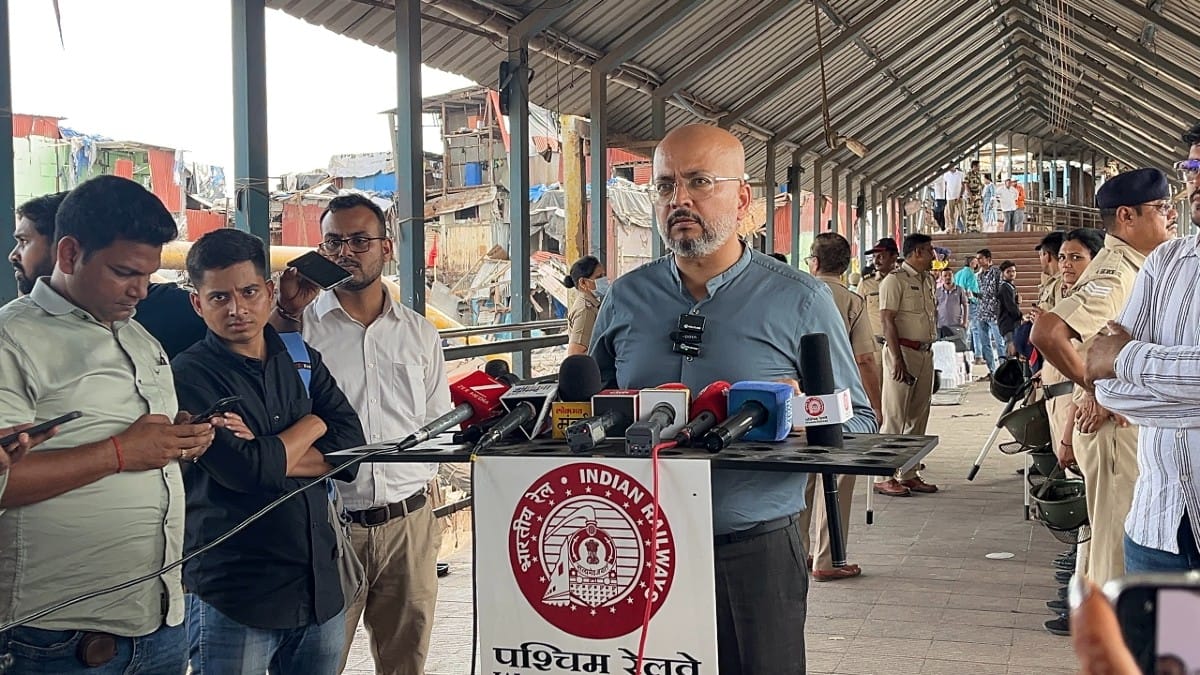
Vineet Abhishek, chief PRO at Western Railway, told ThePrint, “The reclaimed land is expected to become part of larger infrastructure plans around Bandra station, including projects linked to suburban rail capacity expansion and future station redevelopment.”
Adding, “Such projects are essential to easing congestion and improving commuter movement through one of Mumbai’s busiest transit nodes.” Abhishek said the plan is to have more passenger amenities, vehicle lanes, pick-up and drop points and parking outside the east exit just as it is on the west side. Once upgraded, Bandra Terminus will also have more access roads, platforms, train holding spaces and elevated roads for commuters.
But, for displaced residents of Garib Nagar, with the monsoon approaching, no alternative arrangements have been made as yet.
“The [High Court] judgment does not include anything on rehabilitation responsibilities. We have retained the 100 hutments as stated by the court. We will only move to take those down after the state government finds suitable land for the rehabilitation of the residents of those 100 hutments,” said Abhishek. While the five-day demolition drive that began on 19 May is being viewed as a step to free up space for a much-needed infrastructural upgrade, criticism of how the exercise was managed has been piling up from various quarters.
Maharashtra Congress spokesperson Sachin Sawant told ThePrint, “Throughout the drive, they did not look at those people as humans. They [BJP] only look at them with a microscope of religion and opportunistic politics.”
Congress MP from Mumbai North Central and four-time MLA from Dharavi, Varsha Gaikwad, has written to CM Devendra Fadnavis and Railway Minister Ashwini Vaishnaw, requesting rehabilitation of Garib Nagar’s displaced slum dwellers following the demolition drive. In her letter dated 22 May 2026, she wrote: “A balanced human-centric approach is vital to balance infrastructure growth, railway safety and citizen welfare.”
To chalk out a rehabilitation mechanism for displaced residents, she requested the formation of “an immediate joint coordination committee” comprising officials from Western Railway, Maharashtra government and the Brihanmumbai Municipal Corporation (BMC).
She also asked the government to “ensure a rehabilitation plan; offer a definitive, transparent rehabilitation and alternative housing blueprint to all affected, eligible families before they are structurally displaced”.
Wrote to the Railway Minister @AshwiniVaishnaw ji and the Chief Minister @Dev_Fadnavis regarding the rehabilitation of Garib Nagar residents. While development of infrastructure is necessary, have asked for a humane approach and co-ordination among state and central agencies to… pic.twitter.com/kbgCYXPxNx
— Prof. Varsha Eknath Gaikwad (@VarshaEGaikwad) May 25, 2026
Pankaj Joshi, principal director of the non-profit Urban Centre Mumbai, said “the issue is that this particular slum has been kind of demolished in parts every time and has been tricky because there have been multiple fires on this site”.
“Every time there is a fire, the settlement has grown further and taller,” he told ThePrint.
Joshi emphasised that the move was necessary for the ease of daily commuter and traffic movement in the area.
“Bandra East, once you get out, that is like a gateway to BKC, the richest financial district in India. It’s chaotic and messy outside the station and it is extremely difficult to reach BKC and the Bandra Terminus. This was definitely required and it is long due that, the railway station premises need to be better planned and commuting issues better handled,” he said.
He, however, concurred that authorities could have counselled the displaced dwellers and informed them in advance about the seriousness of the demolition drive this time around.
“The communities usually think that the demolition notice is just a threat and they are not going to act on it. The political leaders and the slum lords kept on assuring them that nothing is going to happen. One thing they should have done is counsel them before going ahead with demolition or let them know this is serious. They are not just giving notices and dragging this thing. I think somewhere they didn’t expect that this would happen,” he said.
Garib Nagar is the quintessential example of slum proliferation on public land in Mumbai.
The settlement took root with just a few houses in the 1960s, and mushroomed into a vast, dense maze of multi-storied houses, tin roofs, tarpaulin sheets, narrow staircases, and tightly-packed homes, at times built one over the other.
Political patronage helped residents get basic living facilities—running water, drainage, streetlights—but the same patronage ensured that the public land on which the slum stood remained unavailable for public use, even as the settlement continued to mushroom.
Also Read: Mumbai: A Bandra demolition, and the city failing its poor
Garib Nagar: A settlement is born
The early inhabitants of Garib Nagar were migrants who came to Mumbai in search of work.
Families from Uttar Pradesh, Bihar, Karnataka, Maharashtra and other states began settling down in the area decades ago, drawn by employment opportunities around Bandra, Khar, Mahim and later the rapidly expanding Bandra-Kurla Complex (BKC).
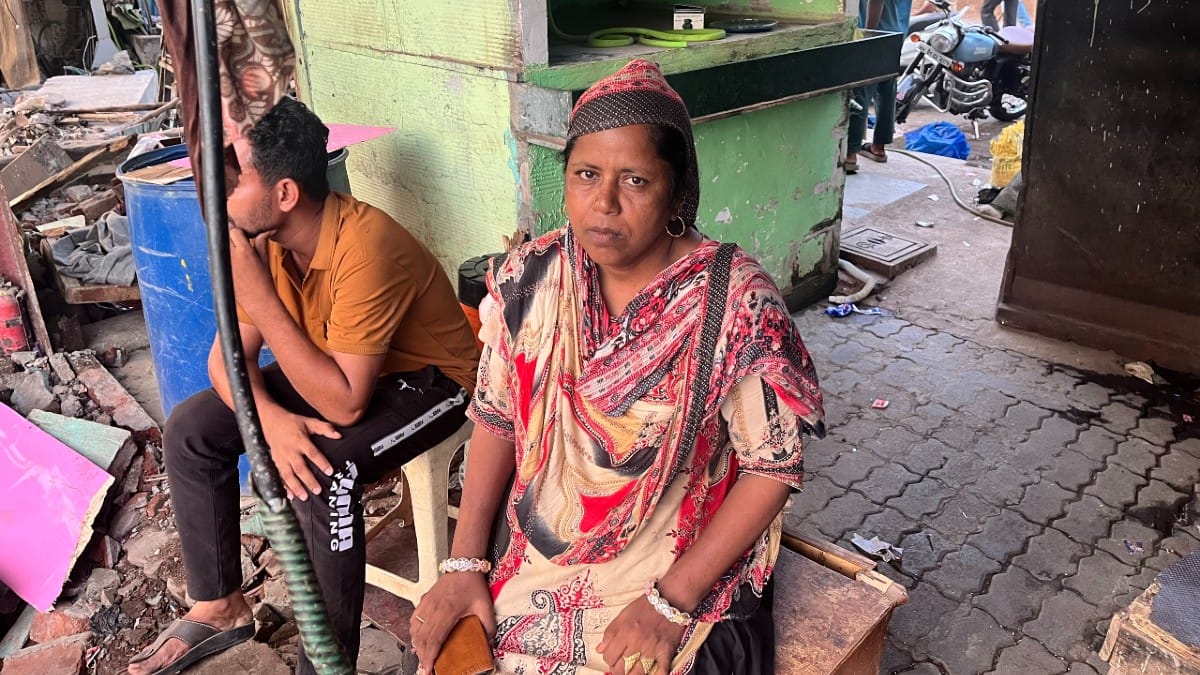
“My father came here from Uttar Pradesh in the 1970s. He worked as a labourer and built this house little by little. I was born here, my children were born here. Now they are telling us we do not belong here. That we are illegal,” said Aasiya Bano, whose home in Garib Nagar was demolished during the five-day drive. Like her family, most residents here began as daily wage workers, construction labourers, drivers, domestic workers, hawkers and small traders. Their temporary shanties gradually turned into brick-and-concrete structures.
Sometime in the 1980s, actor and former Congress MP Sunil Dutt, who enjoyed immense loyalty from the slum dwellers in Bandra’s Nargis Dutt Nagar, Garib Nagar, Behrampada and so on, infamously laid down before a bulldozer, attempting to halt a demolition drive.
“We started with a hut made of tin sheets. Every few years, when we saved some money, we improved it. First a brick wall, then a concrete roof, then another room upstairs for the children,” Bano told ThePrint. “Everything we earned in Mumbai went into this house.”
The settlement’s location was central to its survival—less than a km from Bandra station, with the BKC, major hospitals, schools and commercial hubs all within easy reach.
“If you are poor, location is everything,” said Salim Qureshi, a resident of Garib Nagar and general secretary of the Garib Nagar Rahiwasi Welfare Sangh Society, who has been helping residents affected by the demolition. “Most people here worked nearby. Some walked to work. Others spent only a few rupees travelling. Moving them far away means taking away their livelihood too,” Qureshi told ThePrint.
In the last two decades, other than Slumdog Millionaire, Garib Nagar made the national news on two occasions. The first was a fire in 2011, during which Rubina Ali, who played the role of Latika in the Oscar-winning film, lost her home along with hundreds of others; the second was another fire in 2017, which also gutted hundreds of hutments.
The 2011 fire left 11 people injured and affected more than 3,000 residents, with nearly 2,000 shanties gutted. Residents at the time suspected sabotage amid redevelopment pressures and disputes but the exact cause of the blaze was never conclusively established.
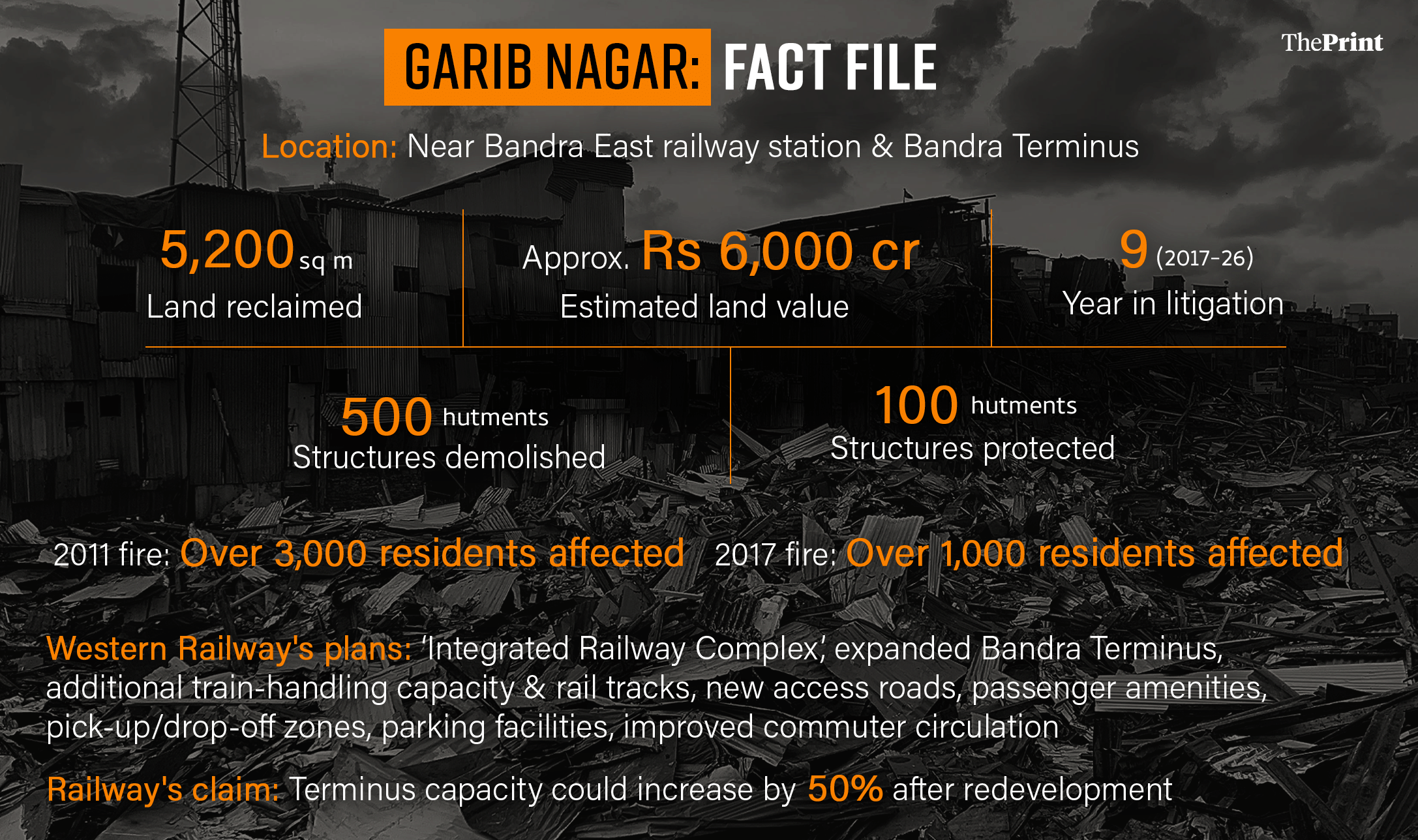
The 2017 fire broke out while the BMC was carrying out a Bombay HC-mandated demolition drive against structures built along the protected Tansa pipeline corridor. As demolition teams entered the settlement, a blaze erupted and rapidly spread through the densely-packed slum. Residents blamed the demolition, while civic officials alleged the fire may have been deliberately started to disrupt the exercise. Despite the destruction, authorities resumed the demolition drive shortly afterwards, making the incident one of the most contentious episodes in Garib Nagar’s protracted battle with eviction.
The political patronage
Garib Nagar falls within the Vandre East (Bandra East) Assembly segment, which for decades was seen to be associated with the Congress through the political influence of actor-turned-politician Sunil Dutt and later his daughter Priya Dutt, besides Baba Siddique.
While there is little evidence of a formal Congress-led movement specifically for voting rights in Garib Nagar, Salim Qureshi said leaders like Sunil Dutt were instrumental in bringing the settlement into the political mainstream. “I don’t know exactly when voter ID and ration cards were made available here, but Dutt sahab had a huge part to play in putting us on the map and giving us at least some kind of recognition,” he said.
“Not only did he give his wife’s name to a settlement in Bandra which is since called Nargis Dutt Nagar but he also gave the name Garib Nagar to this area,” Qureshi added.
Shiv Sena spokesperson Krishna Hegde, who was previously the Congress MLA from Vile Parle and considered close to Sunil and Priya Dutt, said while senior Dutt did not establish the slums himself, he supported the poor and resolved their issues when they came to him.
“He never went against court orders and such, while supporting the poor. He stood by them as his duty to his constituents as an elected representative. Also, Bandra East was not the only area under his purview. He was also responsible for Bandra West, Santacruz, Vile Parle and Andheri…he was a goodwill ambassador for a reason,” Hegde told ThePrint.
ThePrint reached Priya Dutt for comment via text message but had not received a response by the time of publication. This report will be updated if and when a response is received.
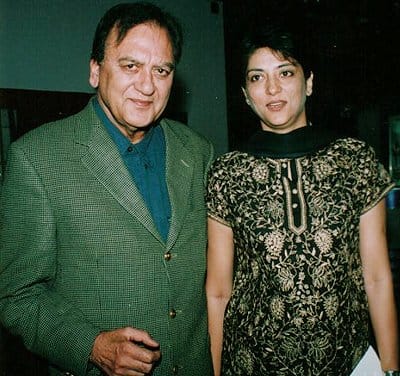
Qureshi, now 47, said Sunil Dutt did everything in his power to protect the interests of slum residents in this part of Mumbai. “In the 1980s and 1990s, Dutt sahab on numerous occasions protected us from losing our land. In the 1980s, when the area was cleared by authorities, Dutt sahab sat on hunger strike and made sure we got our homes back.”
Qureshi also noted that in the 1990s during another such demolition drive by the Western Railway, “Dutt sahab actually laid down in front of one of the JCBs to stop the demolition.”
Adding, “This was not for our votes, this was because he understood that the people here have nowhere else to go. It was humanity.”
While Dutt’s political activism may have helped the Congress cultivate a voter base here, party leaders maintain that the mushrooming of such settlements cannot be attributed squarely to political patronage.
Maharashtra Congress general secretary Dhananjay Shinde told ThePrint, “Sunil Dutt sahab died in 2005. BJP came to power in 2014 and now has a triple engine government. In 25 years after the demise of Sunil Dutt, the encroachments must have increased. How can that be attributed to the party? He did what he did out of the goodness of his heart and for the people of his constituency. The BJP giving it a political colour now is very wrong.”
Hegde echoed this opinion, reiterating that Sunil Dutt died in 2005. “You can see that the slums must have grown between 2005 and 2025-26. So, was Dutt Saab responsible for that? Were there no authorities for the last 20 years? Why did they turn a blind eye?”
On their part, residents claimed their allegiance lay with the Congress for a long time but that might be changing. “Most MPs and MLAs we have voted for were from Congress. And recently, candidates from Shiv Sena, Ajit dada’s NCP have also won support from here. So, there is a mix of people, but mostly people have voted for Congress,” Qureshi said.
Also Read: The politicians who built Delhi’s Wazirpur slum. Its jhuggi to JCB story
A decade-long legal battle
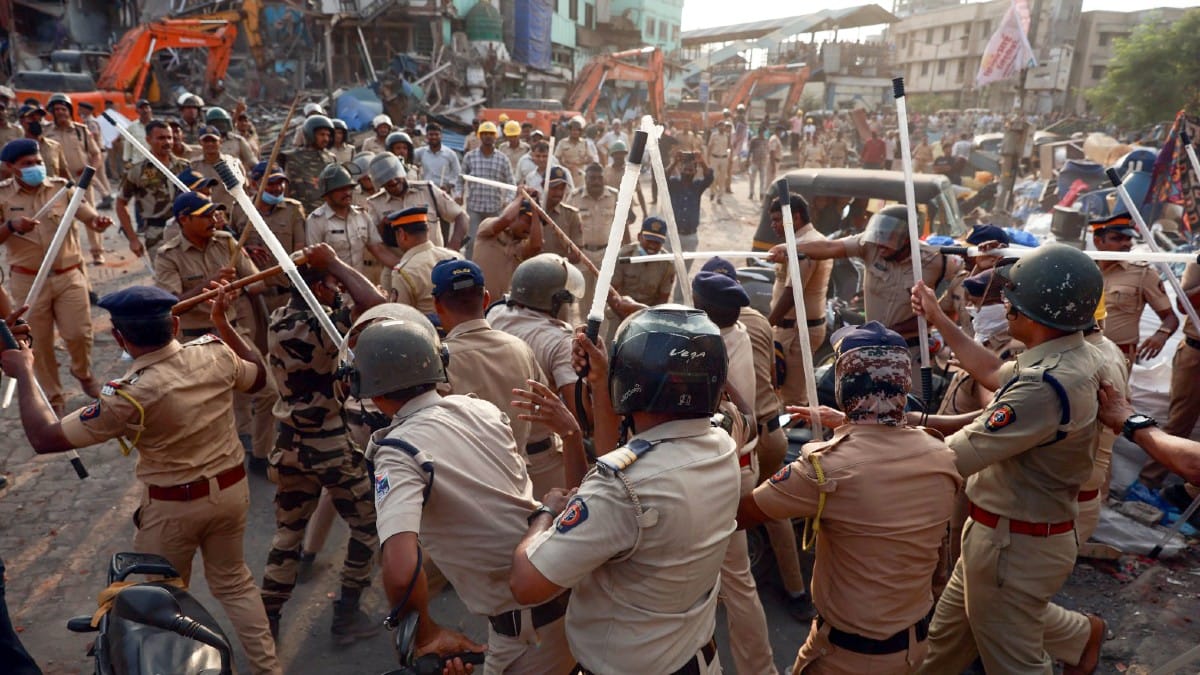
In the latest instance, resistance to the demolition drive escalated on day-2 (20 May), after authorities razed ‘Faisane Mustafa Garib Nawas’ Masjid and ‘Masjid-e-Inaam’, triggering protests. Police force had to be deployed in large numbers amid stone pelting by protesters, and retaliatory lathi-charge by the police. At least 10 suffered injuries, including protesters, two RPF personnel and one Mumbai police constable. Officials maintained that the two structures in question stood on railways land and were also illegal.
Asiya Bano, who lived right next to Masjid-e-Inaam said, “I have lived here for 40 years. The Garib Nawas Masjid has been here for almost 70-80 years while the Inaam Masjid has been here since before my time. The masjids were not to be part of the demolition drive.
“Do not look at it as just a religious monument, it is our place of worship. Of course, people would get emotional watching them being broken down.”
The demolition drive, however, did not land up at their doorstep overnight.
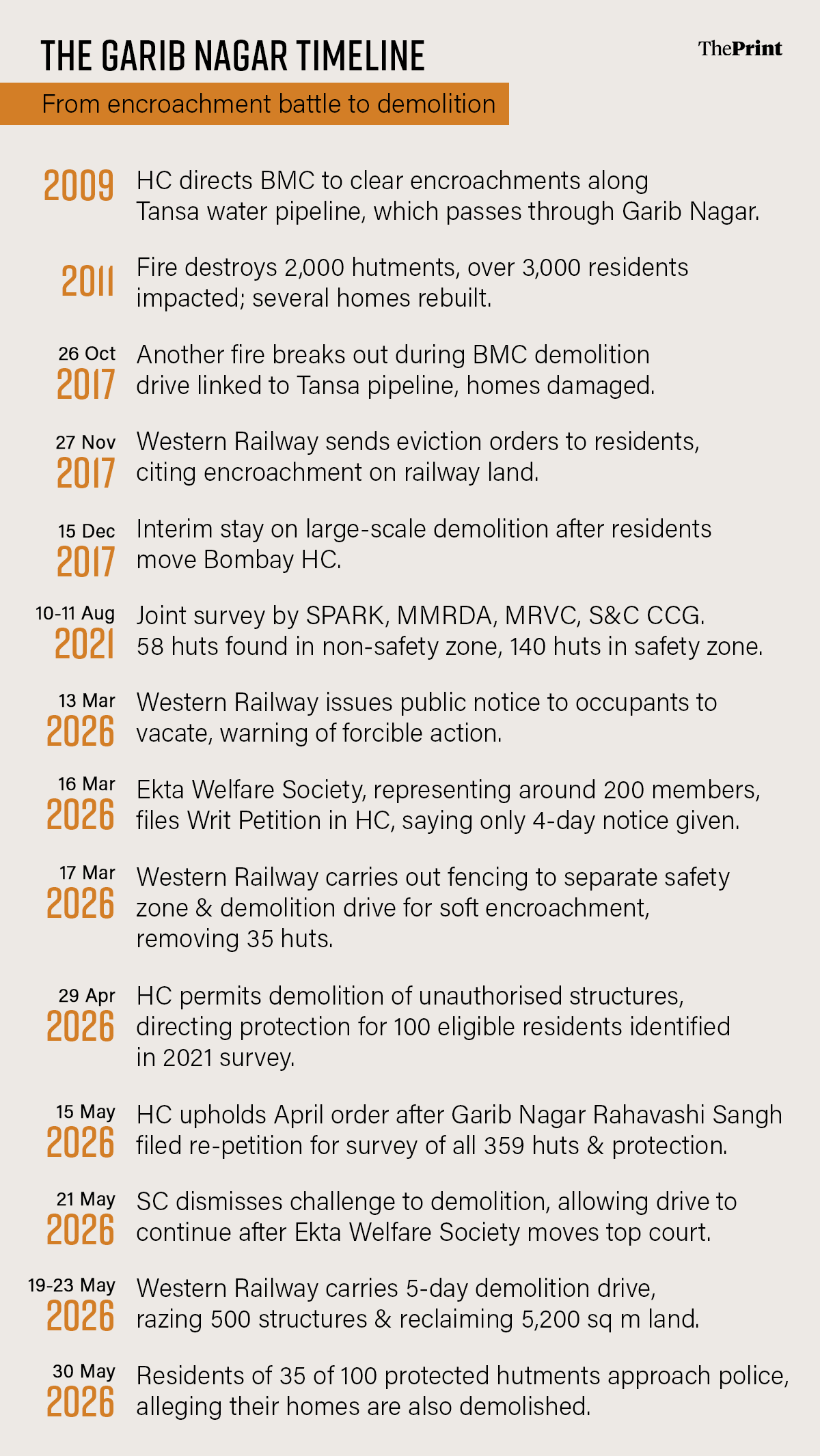
Western Railway’s efforts to remove encroachments in Garib Nagar date back several years and were tied to larger expansion plans in the Bandra corridor. Railway authorities have consistently maintained that the settlement is on railway property and poses operational and safety concerns because of its proximity to tracks and planned infrastructure projects.
The Bombay HC had in 2009 directed the BMC to remove encroachments along the Tansa water corridor which also passed through Garib Nagar because settlements built directly above the pipelines posed risks to both residents and the water network.
The fire on 26 October 2017 broke out while the BMC was conducting an anti-encroachment exercise in accordance with this High Court order.
What began as a lower-category fire quickly escalated into a Level IV (major) fire within hours. This prompted Western Railway to issue evacuation notices to resident groups including Garib Nagar Rahavashi Sangh and Ekta Welfare Society on 27 November 2017.
Residents challenged the action before the Bombay HC, which granted them interim protection in December 2017, effectively stalling large-scale demolition efforts for years.
The matter remained entangled in litigation as competing claims emerged over rehabilitation, land ownership, and survey processes.
A major development came in August 2021, when a joint survey involving railways authorities and infrastructure agencies was conducted in connection with the proposed sixth railway line and related projects.
It identified structures that could potentially qualify for rehabilitation and others located within railways safety zones. Those findings later became central to court proceedings.
The turning point came this year when the Bombay HC permitted Western Railway to begin removing unauthorised structures while directing authorities to protect residents found eligible through the 2021 survey.
“As far as the demolition drive of all the unauthorised and illegal structures by the Railway is concerned, we permit the Railway Authorities to continue with their demolition drive. However the interest of slum dwellers identified as eligible from the first survey dated 10th August, 2021 and second survey dated 11th August 2021 must be adequately protected,” the order stated.
Attempts to halt the exercise ultimately failed. On 21 May, the Supreme Court dismissed a Special Leave Petition (SLP) challenging the demolition drive, effectively allowing the anti-encroachment exercise to continue. Abhishek, CPRO of Western Railways, termed the top court’s decision “an affirmation that the operation was legally valid”.
He added, “The land always belonged to the railways, what began with smaller hutments that were not coming in our way, ended up with over 600 hutments spread across the area. That is encroachment on railway land which is completely unauthorised and illegal.”
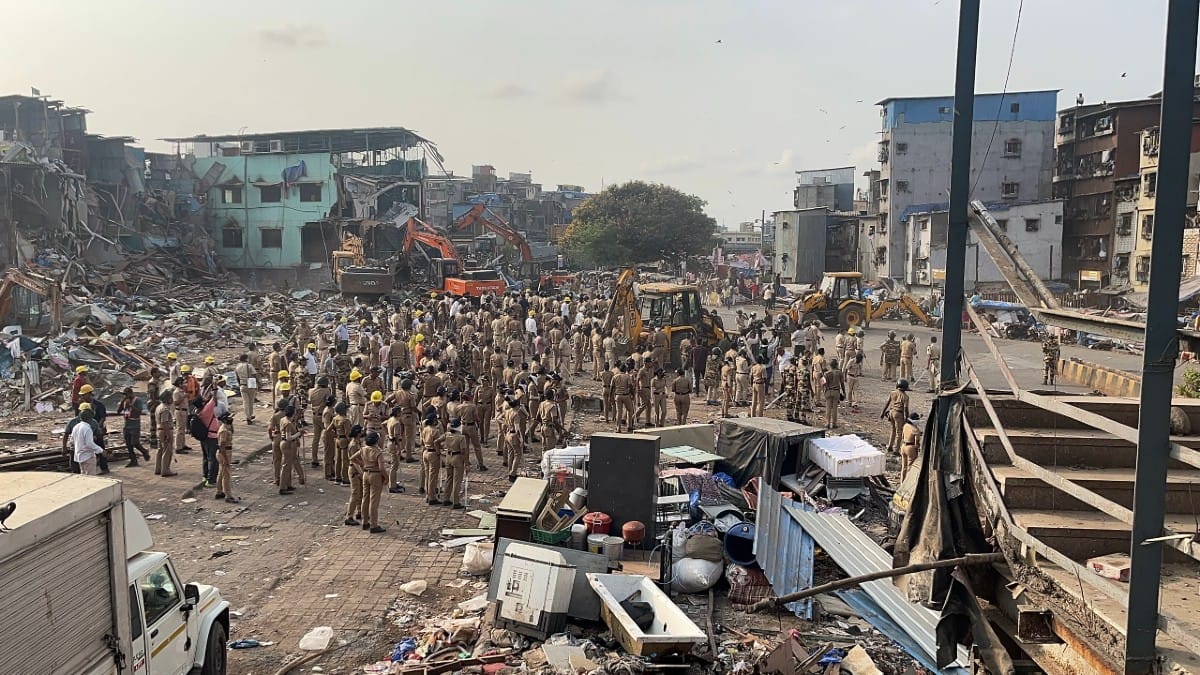
Armed with judicial backing, Western Railway launched the five-day demolition drive, deploying hundreds of police and RPF personnel. By the end, authorities said approximately 500 structures had been removed and reclaimed land would immediately be secured through fencing and concrete work to prevent fresh encroachments.
On 25 May, a day after the drive in Garib Nagar ended, Western Railway cleared nearly 1,500 sq m of encroached railway land between Goregaon and Malad stations, demolishing 36 permanent and 24 temporary structures along the eastern side of the corridor near Chincholi Phatak, Haji Bapu Road, Dhobi Ghat, and Govind Nagar in Malad East.
The drive followed a 26 February 2026 Bombay HC order in which it declined to protect the occupants, observing that they had failed to establish ownership, tenancy or any enforceable rights over the railway land, and permitted authorities to proceed.
Back in Garib Nagar, Salim Qureshi said the immediate challenge was helping displaced families find shelter and basic necessities. “We are trying to help people in every way possible. Many families have suddenly lost their homes and belongings. Right now, they need food, documents, temporary shelter and support,” he said. Qureshi owns a garment shop, among the 100 protected hutments in Garib Nagar. He also lived here but his house was demolished and he now lives with his family in the neighbourhood on rent.
Qureshi’s father relocated to Mumbai in the 1970s and settled in Garib Nagar. Qureshi was born here in 1979. His mother too was born here and his maternal grandparents lived in Garib Nagar all their lives.
“The spread of settlements here back then was not that much but people from all over the country were coming to the ‘city of dreams’ to look for work. So did my father,” he said.
Qureshi had been living next to the Masjid-e-Inaam. “At the time of the demolition, I was preparing for a second appeal at the Supreme Court against the anti-encroachment drive, which, as we know now, was rejected. There is no other legal remedy for us now,” he said.
He also pointed out that while 100 hutments were deemed legal by the survey and were to be protected during the demolition drive, 30-35 of those hutments were also demolished. The residents now plan to file a complaint at the Nirmal Nagar police station in Bandra.
‘Life wasn’t easy but it was still home ’
Residents ThePrint spoke to acknowledged that life in Garib Nagar was far from comfortable—entire families often squeezed into single-room homes; shared toilets served dozens of households; water supply was only during fixed hours; and every monsoon brought fears of flooding and leaking roofs.
“We had one room for seven people,” said Asiya Bano. “The toilets were shared, water would come only at certain hours and every monsoon we worried about flooding. But, it was still our home.”
For many like her, the settlement offered something increasingly rare in Mumbai: a support system built over generations. The narrow lanes were lined with grocery stores, tailoring units, tea stalls and eateries, while neighbours relied on one another for loans, childcare, jobs and help during emergencies. Families celebrated festivals and weddings together, bonds residents said became especially important during the pandemic. “Our children grew up together. We celebrated Eid, weddings together and helped each other during Covid,” said 65-year-old Abdul Rashid. “People outside saw a slum. We saw a neighbourhood.”
That sense of permanence was shattered when demolition squads first arrived on 19 May.
Beyond the loss of homes, residents said the destruction severed social networks that had taken decades to build. “They have taken our homes. What hurts more is that they have broken apart a neighbourhood that took generations to build,” Rashid said.
Nazneen Ansari, 35, whose husband Waseem works as a labourer with a furniture house, said displaced families have little clarity about where to go from here. She now lives with her husband on the street facing the rubble left behind by the demolition.
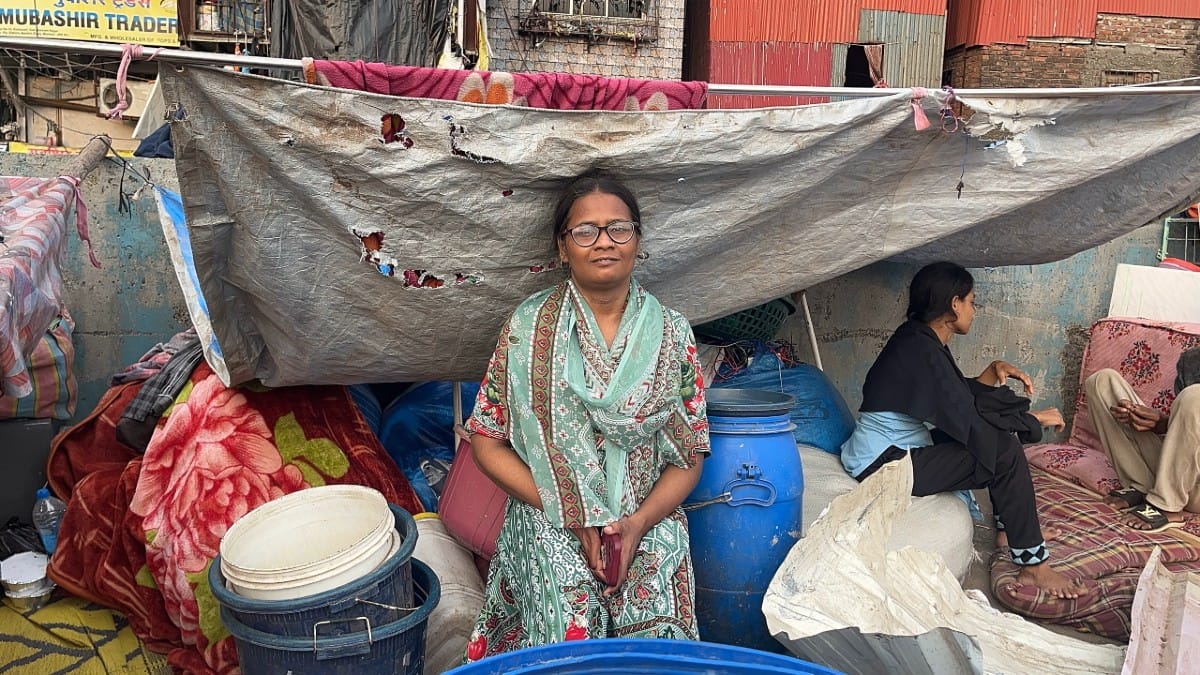
Nazneen, who is differently-abled, said her husband had to manage the shifting all by himself. “We don’t have anywhere else to go. No family in the city. We ended up leaving our house and setting up on the opposite street. We don’t know where to go from here.”
Asiya faces a similar predicament. She now lives under a railway foot-over-bridge with her children. “We take turns sleeping to keep an eye out on our belongings. It pains my heart to watch my girls sleeping in the open with no shelter. What else can I even do right now?”
(Edited by Amrtansh Arora)
Also Read: 50,000+ flats built for Delhi’s poor have no takers. It’s an ivory tower-sized national waste