






New Delhi: The year 2017 began on a troubled note for both the Centre and then Raman Singh-led BJP government in Chhattisgarh. Criticism was mounting. In the eye of the storm was the then Bastar police chief, owing to his run-ins with journalists and rights activists.
Chhattisgarh government wanted a change in leadership and approach, without easing pressure on the Maoists. It was against this backdrop that The state’s security apparatus called an emergency meeting at the police HQ. Those present included then additional chief secretary (home) B.V.R Subrahmanyam, DGP A.N. Upadhyay, and SDG (anti-Naxal ops) D.M. Awasthi.
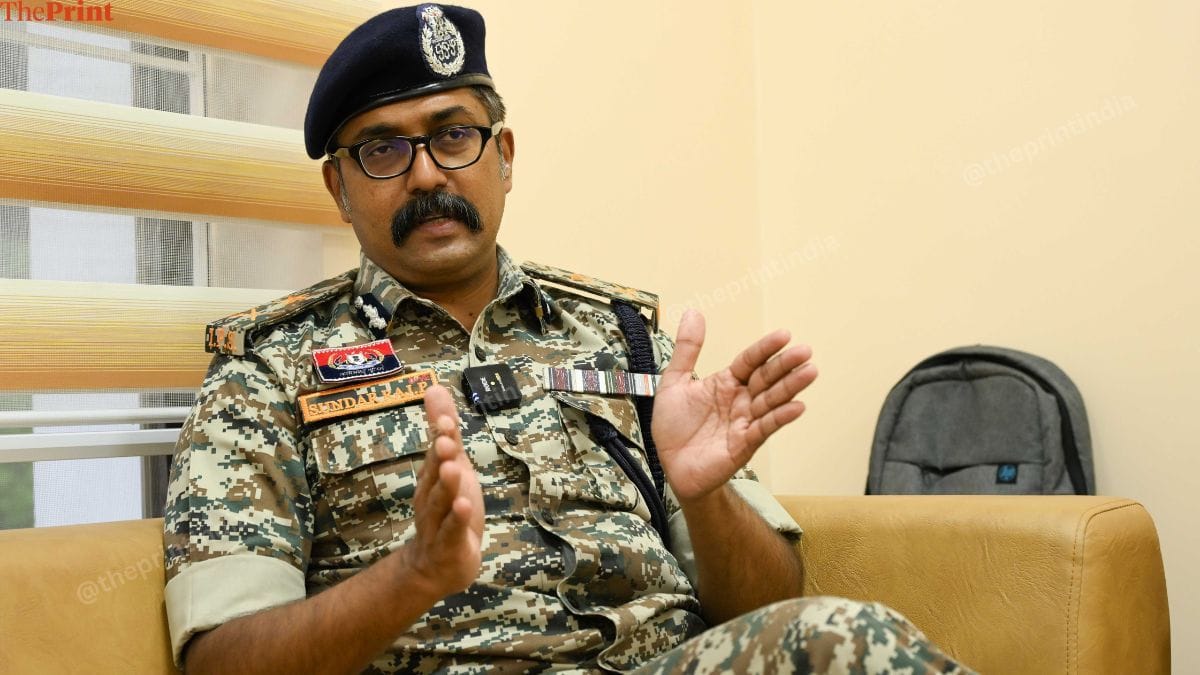
The trio zeroed in on IPS officer Sundarraj Pattilingam, who had worked as DIG in South Bastar and with the Special Intelligence Branch (SIB), both critical components in the fight against Left Wing Extremism (LWE). The Chhattisgarh cadre IPS officer of the 2003 batch was known in bureaucratic circles as a “tough man” who didn’t respond to scrutiny with a “combative approach”.
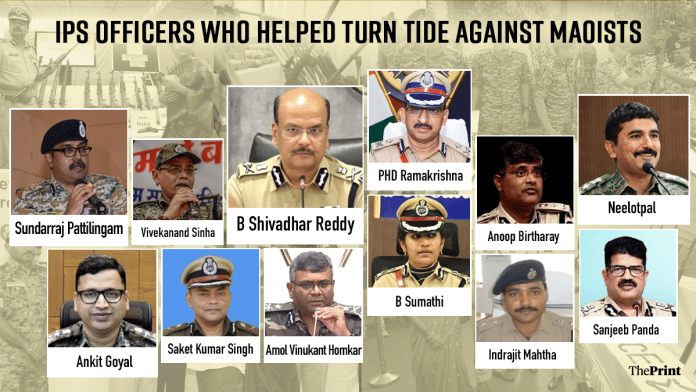
Pattilingam, whose operational tactics were later emulated across the ‘Red Corridor’, was among the dozen IPS officers who provided security forces with strategic advantage—either by gathering and disseminating intelligence, or by using their experience from prior postings in LWE-affected areas to turn the tables on the Maoists.
By the time of his appointment, Pattilingam had charge of Bastar police before IPS Vivekanand Sinha took over as IG in April 2017. Sinha moved on to become ADG (ANO) in 2019, vacating the post of IG (Bastar), which Sundarraj has held since.
Both officers were felicitated by Union Home Minister Amit Shah in Jagdalpur last month as he formally declared the end of Maoism in India. Shah also heaped praise on officers deployed across LWE-affected states, namely Telangana, Andhra Pradesh, Chhattisgarh, Odisha, Maharashtra, Jharkhand, Bihar, and Madhya Pradesh for dismantling the Maoist movement, either through encounters or by facilitating the surrender of Maoist cadres.
ThePrint looks at some of their stories and how they played key roles in drawing the curtains of armed Maoism in India.
Also Read: From ‘jal, jungle, jameen’ to jobs: Surrendered Maoists seek new lives with state rehabilitation
Career intel officers
Until September 2016, when he was shunted by then K. Chandrashekar Rao-led TRS government, retired IPS officer Battula Shivadhar Reddy was known as a man of action.
Born in Rangareddy district and brought up in Hyderabad, Reddy was a law graduate from Osmania University who donned the uniform in 1994. In his 30 years of active police service, he spent more than 16 years in departments or districts directly impacted by Left Wing Extremism (LWE).
He started his career as Assistant SP in three LWE-infested sub-divisions of Visakhapatnam police district. After promotion, he worked with Greyhounds, the state’s elite anti-Maoist force. He later also worked as police chief of Nalgonda, Srikakulam and Guntur, LWE-affected districts in undivided Andhra Pradesh at the time.
By the time Telangana was carved out of Andhra Pradesh in 2014, Reddy had risen through the ranks, having served in the SIB, both as SP and then DIG-rank officer. The first KCR government appointed him chief of intelligence in 2014, a position he held until September 2016. When the Congress came to power in Telangana in 2023, Reddy was appointed intelligence chief with ADG rank. Later that same month, he was joined by another seasoned officer, Badugula Sumathi. Having joined the service as DSP in 2001, Sumathi had an impeccable track record of gathering and analysing intelligence.
Both career intelligence officers, they forged a partnership behind the scenes to locate and convince topmost Maoist cadres to lay down arms and join the mainstream.

Between 2024—when Shah first spoke of the March 2026 deadline to make India ‘Naxal-mukt’ during an internal discussion—and April this year, when Reddy hung up his boots, and Sumathi moved to a regular police posting, 820 Maoist cadres including four central committee members and 22 state committee members had surrendered in Telangana.
While the duo of Reddy and Sumathi is credited with facilitating surrenders of top Maoist cadres, Sumathi’s batchmate and counterpart in Andhra Pradesh, P.H.D. Ramakrishna, is seen as the man who worked behind the scenes, gathering intelligence and ensuring quick dissemination of information between sister agencies and state police forces.
Having joined the force alongside Sumathi, Ramakrishna has been heading Andhra Pradesh SIB since August 2024. Prior to this, he was DSP for nearly four years (2003-2007) with postings in Nalgonda, Warangal, and East Godavari districts—all LWE-affected at the time.
Sumathi and Ramakrishna were also part of the Andhra Pradesh Counter Intelligence cell that busted several modules of the Indian Mujahideen between 2010 and 2013.
Both were promoted to IPS in 2010 with effect from 2006.
It was during Ramakrishna’s tenure as Guntur SP in 2014 that security forces carried out a major operation which forced the disintegration and near-displacement of Maoist cadres from the state. The scale of this operation was matched by another carried out just last year when security forces eliminated central committee member Madvi Hidma.
‘Circular motion’ strategy: Reclaiming Bastar
Sundarraj returned to Bastar as IG after a brief stint at SIB, with his predecessor, Vivekanand, helming affairs in Raipur as ADG (ANO/SIB) from November 2021 onwards.
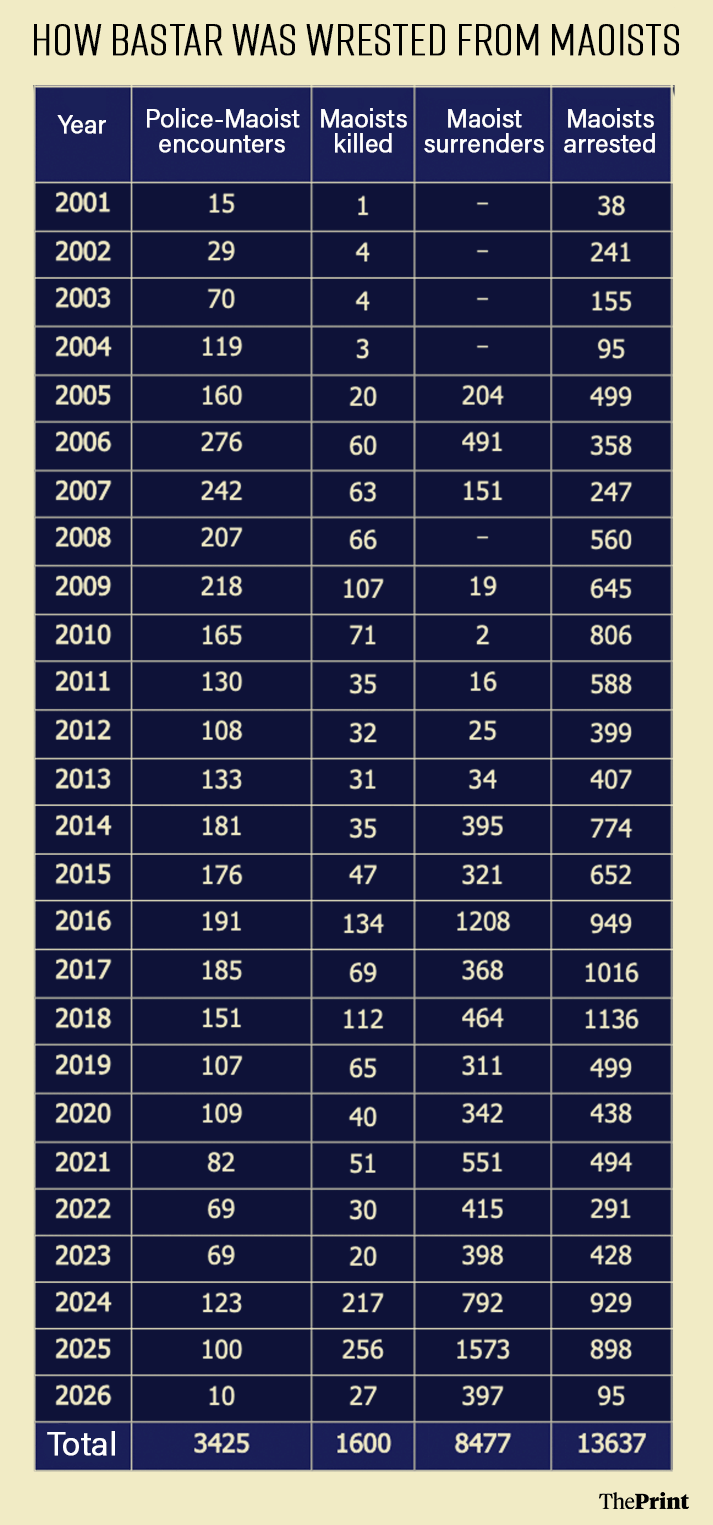
Over the next few years, security forces, including the central armed police forces (CAPFs), had scattered engagements with Maoists in Bastar, with intermittent success. The tide began to turn in 2024 when 217 Maoists were killed in encounters with security forces, compared to 20 the previous year. Surrenders also jumped nearly twofold to 792 from 398.
Sources in Chhattisgarh Police told ThePrint that the “free hand” given to Sundarraj by both Chhattisgarh government and Ministry of Home Affairs (MHA), coupled with behind-the-scenes efforts by Vivekanand-led SIB, altered the course of the fight against Maoists.
A Chhattisgarh cadre officer of the 1996 batch, Vivekanand is an alumnus of the Delhi University. From Bihar’s Samastipur, he started his policing career from the epicentre of LWE violence in Chhattisgarh, as SP (Dantewada) from 2001 to 2003. He was DIG (SIB) before returning to Bastar as IG in 2017 and then heading state police’s ANO wing.
Vivekanand looks back at his tenure in Dantewada as a building block.
He told ThePrint, “Those years in Dantewada became the foundation of my later responsibilities in Bastar and eventually as ADGP. The experiences gained there helped me immensely in understanding operational realities, planning anti-Naxal strategies, understanding the psyche of the force and leading men in the most difficult situations.
“When I look back now, I feel immense satisfaction. Had I wasted those difficult years complaining about my posting or feeling defeated by circumstances, perhaps I would never have had the opportunity to contribute meaningfully to the anti-Naxal movement.”
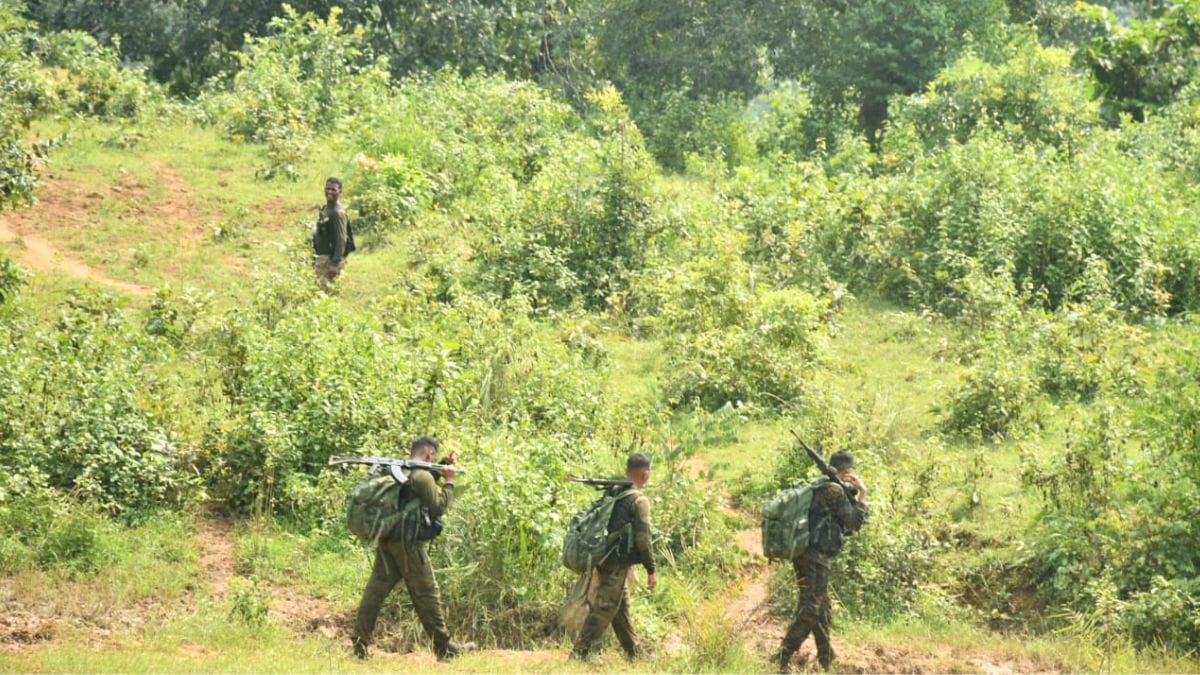
Sundarraj, on the other hand, has been in Bastar without pause since November 2021. His ‘circular motion cut-off’ strategy, under which security forces would encircle an area, acting on a tip-off, is believed to have played a major role in tipping the scales in Bastar.
“The first cordon was led by the DRG (District Reserve Guard), the strike force, with the CAPF dominating the entire area to ensure no escape route for Maoist cadres and leaders. This was introduced by Sundarraj, and the result is for everyone to see,” said an officer currently posted with the ANO department in a neighbouring state.
The officer, who did not wish to be named, explained that in the event of an ambush or exchange of fire with security forces, Maoist cadres would engage the forces, allowing the leaders to escape. “The circular strategy plugged this gap, and it resulted in the encounter of so many top leaders who were far from the grasp of forces earlier,” the officer said.
This strategy was emulated by security forces in other LWE-affected states.
Also Read: Messengers for security forces, a listening ear to Maoists—Bastar journalists acted as ‘bridge’
Engineer who sealed off Gadchiroli for Maoists
In November 2021, nearly three years before the tide began to turn across the ‘Red Corridor’, Maharashtra police and C-60 commandos delivered a body blow to the Maoists—central committee member Milind Teltumbde was killed in an encounter in Gadchiroli, led by ASP (ops) Somay Munde and SP Ankit Goyal. Shortly after this, Goyal was promoted as DIG (Gadchiroli range), and 2014-batch IPS officer Neelotpal was appointed in his place.
Before coming to Gadchiroli, about a thousand km from the capital Mumbai, Neelotpal was a DCP in the Mumbai Crime Branch, a coveted post for young IPS officers in the state.
A mechanical engineer, he worked at an HPCL refinery in Visakhapatnam for three years before joining the service in 2014. His tenure in Gadchiroli saw forces set up 11 forward operating bases (FOBs) to plug a security vacuum spanning nearly 3,000 km.
During his time in Gadchiroli, Neelotpal also sealed off all transit points Maoists used to escape the crackdown in neighbouring Chhattisgarh, including those along Abujhmad.
Between October 2022 and 22 April this year, when he was transferred as Kolhapur SP, the Gadchiroli police effected 157 surrenders and 84 arrests of Maoist cadres.
Another 50, including several Maoist leaders, were killed during this period.
Neelotpal’s team also worked closely with the district’s sole functional factory to facilitate the rehabilitation and reintegration of surrendered Maoist cadres into society.
IITian who made Odisha no-go area for Maoists
Sanjeeb Panda was a man under immense pressure in the summer of 2009.
Posted as DIG in Odisha’s Koraput, he had to answer for Maoists targeting police checkposts, and a mine run by the PSU NALCO to loot explosives. The killings of another 10 personnel in Koraput the next summer added to the pressure.
For the 1994-batch IPS officer, this was his second posting in his home state where he found himself directly in the line of LWE fire.
Maoists had infiltrated into Odisha’s forests as early as the 1980s after a crackdown by security forces in neighbouring Andhra Pradesh following the formation of Greyhounds.
But, Panda relied on his experience of having served in LWE-affected districts to make much of Odisha a no-go area for Maoist cadres.
At a press conference last month, he said eight of the nine LWE-affected districts in Odisha have been rid of armed Maoism. Maoist cadres have been brought down to single digits and that too only in Kandhamal, which again is only a matter of time, he said.
With a B.Tech from IIT Madras and an M.Tech from IIT Delhi, Panda was posted in LWE-affected districts fairly early in his career, serving as SP (Rayagada) from 1998 to 2000.
Panda rose through the ranks and held key posts in crucial departments, including the Special Intelligence Wing (SIW), tasked with gathering and disseminating intelligence about the presence and movement of Maoist cadres. He also served as Odisha’s Intelligence chief for two years (2022-2024), before returning to head both ANO and SIW of the state police.
His team, comprising DIG Akhileshwar Singh and, earlier, Kanwar Vishal Singh, gained a reputation for effective intelligence gathering and prompt information sharing.
Quartet of 1st-gen IPS officers in Jharkhand
With other states under the shadow of the ‘Red Corridor’ largely free of Maoist presence, all eyes are now on Jharkhand, where Misir Besra, the last surviving central committee member, has taken shelter.
Besra has continued to evade security forces despite appeals from family members and fellow comrades to surrender. But, beyond Besra, the Maoist movement in Jharkhand is on its last legs, and much of the credit is given to a quartet of IPS officers. These include Anoop Birtharay and Indrajeet Mahatha, IG and DIG respectively of the Odisha Special Task Force (STF), along with their predecessors Amol Vinukant Homkar and Saket Kumar Singh.
An IPS officer of 2002 batch, Singh is IG (CRPF) in Ranchi and played a key role in coordinating deployment of CoBRA commandos and Jaguar force in Jharkhand’s jungles.
An IITian, Singh is a first-generation police officer. Before moving on to central deputation, he held several postings in LWE-affected districts—ranging from SP in the STF to DIG in Palamu, Bokaro, and Chaibasa ranges. From these active policing roles, he came to STF and was later promoted to IG (ops), overseeing all operations in the state.
He was succeeded by Homkar as IG (ops). It was during Homkar’s tenure that Jharkhand police arrested politburo member Prashant Bose and tracked down central committee member Prayag Manjhi last year.
Between March 2021 and May 2025, when Homkar was at the helm of affairs, 51 Maoists were killed in encounters with security forces, and more than 1,600 laid down arms.
Like his predecessor, Homkar was an engineer who studied mechanical engineering at Sangli’s Walchand Institute of Technology. He moved on to deputation with the CRPF and is currently serving as IG in the Jammu sector. Over the last year, much of the behind-the-scenes planning in Jharkhand was carried out by the duo of Birtharay and Mahtha.
A graduate from the University of Allahabad, Birtharay pursued a Master’s degree from JNU before joining the service. His exposure to LWE-affected areas came early on, with postings in Ghatshila, Simdega, Chatra, and Latehar, where he worked as SP.
Like him, his deputy Mahatha was earlier posted as an SP in West Singhbhum, then Palamu and Seraikela Kharsawan—once considered Maoist strongholds. Mahatha has been with the Jharkhand STF since July 2023.
Their mission now is to track down Besra, the last surviving central committee member, and close the book on Left Wing Extremism in India for good.
(Edited by Amrtansh Arora)
Also Read: Surrender, eliminate, develop: Fall of the Red Corridor, ending 6 decades of Maoist insurgency
Why do you emphasize that some are IITians for this successful operation? Others could have done it too.