





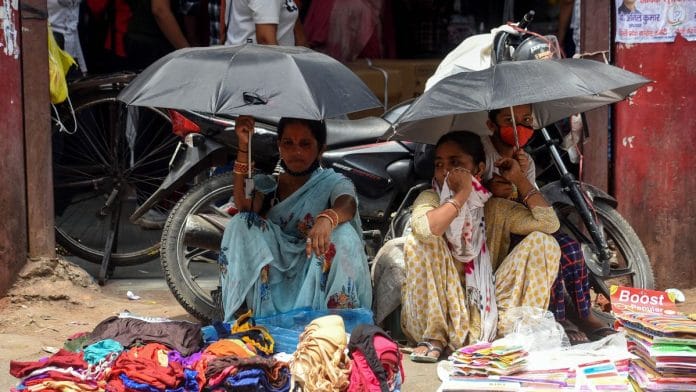


New Delhi: Seizures of goods, harassment and the constant fear of eviction. Delhi’s street vendors have existed in a limbo. Surveys have been conducted to register them, court orders have been issued, and Parliamentary has passed a law, but the institution meant to represent, regulate, and protect vendors—the Town Vending Committee (TVC)—never fully came into being.
That, however, could soon change. On 19 May, the Municipal Corporation of Delhi (MCD informed the High Court that TVC elections would be held by 30 June, and the committees constituted by the end of July.
The proposed elections would mark the culmination of over two decades of attempts to regulate and manage the tens of thousands of street vendors—“the oil to the city’s engine”.
It has been a journey marked by jurisdictional disputes, apparent executive dysfunction and years of delay. Delhi’s attempts to regulate street vending predate the Street Vendors Act passed by the Congress-led UPA government in 2014.
In 2004, spearheaded by then-MCD Commissioner Rakesh Mehta, the city adopted the National Policy on Urban Street Vendors, and began accepting applications from vendors for registration.
More than one lakh vendors across the city applied. Town vending committees were constituted under the policy framework, though members were nominated rather than elected. The city was to be divided into ‘vending’ and ‘no-vending’ zones, with vendors given space to ply their trade, protected from eviction.
But implementation soon stalled. Mehta was transferred in 2005, and political will drained out. While the survey technically finished in 2007, the process had fizzled out.
“The MCD, which had taken applications from more than a lakh street vendors, was not doing anything about them,” recalls veteran activist Arbind Singh, founder of the National Association of Street Vendors of India (NASVI). “The applications were lying in offices and rotting.”
The 2012 trifurcation of the MCD did not help the matter either. Responsibility was now divided, and confusion over vending zones further stalled the implementation of the policy. The issue of New Delhi, under the newly-created NDMC, threw another spanner into the works.
Frustration eventually fuelled demands for a national law. Parliament responded with the Street Vendors (Protection of Livelihood and Regulation of Street Vending) Act, 2014, creating a legal framework for conducting surveys, granting vending certificates and democratically constituted TVCs.
Yet, Delhi again struggled with the implementation of the Act. When the city government, then led by the Aam Aadmi Party, moved to create TVCs in the years after the Act was passed, they relied on an electoral list derived from the 2007 survey.
“Some vendors on the list had died in the meantime,” said Singh. “Others had left Delhi.”
In light of the outdated nature of the survey, the resulting TVCs were assigned one principal task: complete a fresh survey and prepare the ground for future TVC elections. Their lack of true authority, however, meant that many vendor issues remained in abeyance while the surveys dragged on.
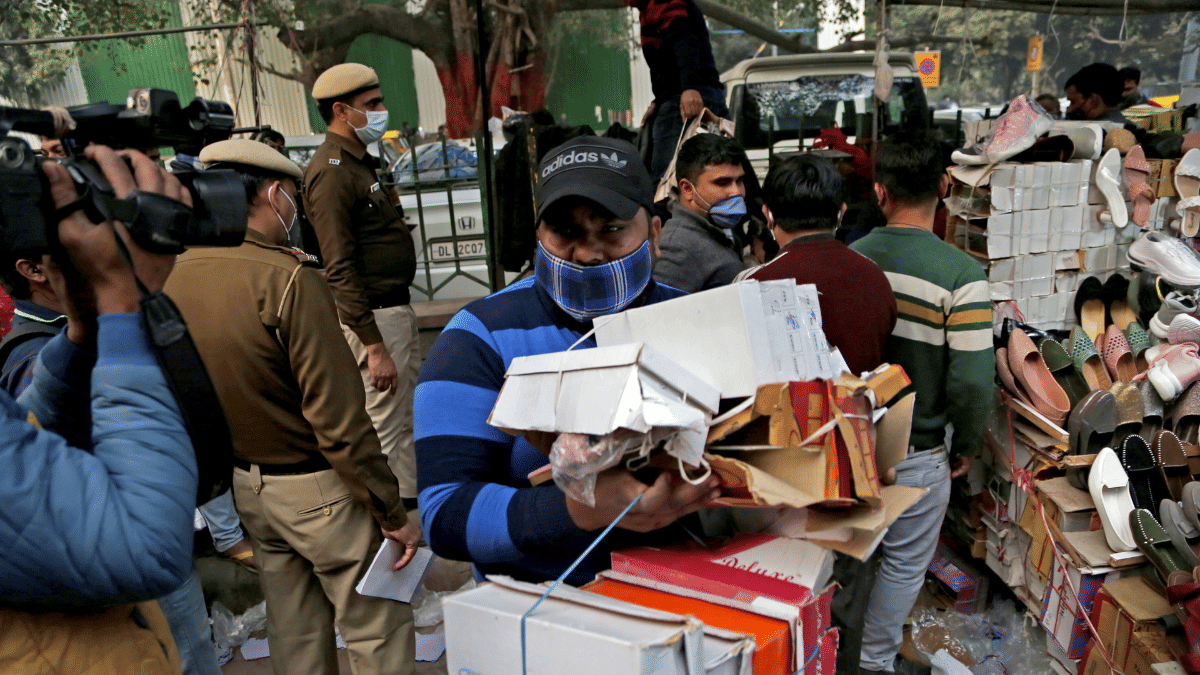
“The biggest stumbling block over the last few years has been the fact that the existing TVCs were interim, provisional. The TVCs were effectively toothless – their mandate was just the survey,” said urban researcher Aravind Unni, who has studied the implementation of the Street Vendors Act in New Delhi. “The street vendors themselves were not part of the engagement.”
When these provisional TVCs were constituted, Unni was nominated to the committee responsible for the New Delhi zone. He recalls frustration at the committee’s inability to actually address the issues that often cropped up.
“I remember cases where vendors had passed away for some reason, and their street vending rights had to be passed on to their families. No decisions could be taken on these matters apart from the survey itself. Nothing could be engaged from a TVC perspective.”
More delays came from the uniquely layered nature of governance in the national capital. “The AAP was at the state level, there were things at the central level. You also had corporations at the local level. There was this governance conflict at a political level that was playing out.” explained Unni.
For years, the process crawled. Another survey was conducted in 2021-2022. Based on its results, the MCD began issuing “provisional Certificates of Vending”. Another phase was carried out last year.
In December last year, Minister of State for Housing & Urban Affairs Tokan Sahu told Rajya Sabha, in response to a question, that no specific vending zones had yet been identified in Delhi, and that the second phase of the survey was in the process of implementation. No timeline was given for the election of the TVCs.
ThePrint has reached out to the MCD’s Central Licensing & Enforcement Cell over email, and to several zonal officers over text messages, seeking comment. The report will be updated if and when they respond.
Vendors, in the meanwhile, have been turning to another forum of complaints—the courts. Vendor eviction cases are reaching courts in Delhi, often all the way to the High Court, in increasing numbers. “That was the idea of getting a law. If they don’t implement it, then we can go to the courts.” said Singh.
Courts, in turn, have pressured governments and municipalities to implement the act and allow the TVCs to become the forum of first recourse for dispute redressal.
But such delays and administrative inertia are not limited to Delhi. Mumbai’s municipal corporation held TVC elections last year, with results finally declared this March, after court pressure. In April, the Bombay High Court ordered the state to complete the election process in other cities within four months.
In March, the Allahabad High Court ordered authorities in Uttar Pradesh not to evict any vendors until surveys were completed and TVCs elected.
“Court cases are getting piled up. Courts hope TVCs will reduce the burden on them.” said Unni.
Over the last week, the newly-elected BJP government of West Bengal has begun a mass demolition drive targeted at hawkers and vendors, including at Kolkata’s famous Mullick Ghat flower market.
Delhi’s vendors, meanwhile, hope that the TVCs will prove a buffer that can protect them from similar action.
Seeking protection on the street
To some vendors in the national capital, the TVCs could not come soon enough. For years, Sanjay has been selling bel sharbat from his modest handcart at Karol Bagh. On 5 June, NDMC officials came to his cart, told him he was putting up his cart in an unauthorised manner, and confiscated all his material.
He attempted to show them his provisional certificate of vending, but they allegedly ignored it. This was not Sanjay’s first brush with officialdom.
In previous incidents, he’s often had to fill out a challan and pay a fine for the return of his goods. This time, he managed to get NASVI’s support and have his goods returned.
The Delhi High Court has forbidden the removal of any vendors with provisional CoVs until the TVCs were duly elected. Still, vendor associations like NASVI have complained of continued evictions and harassment by the authorities.
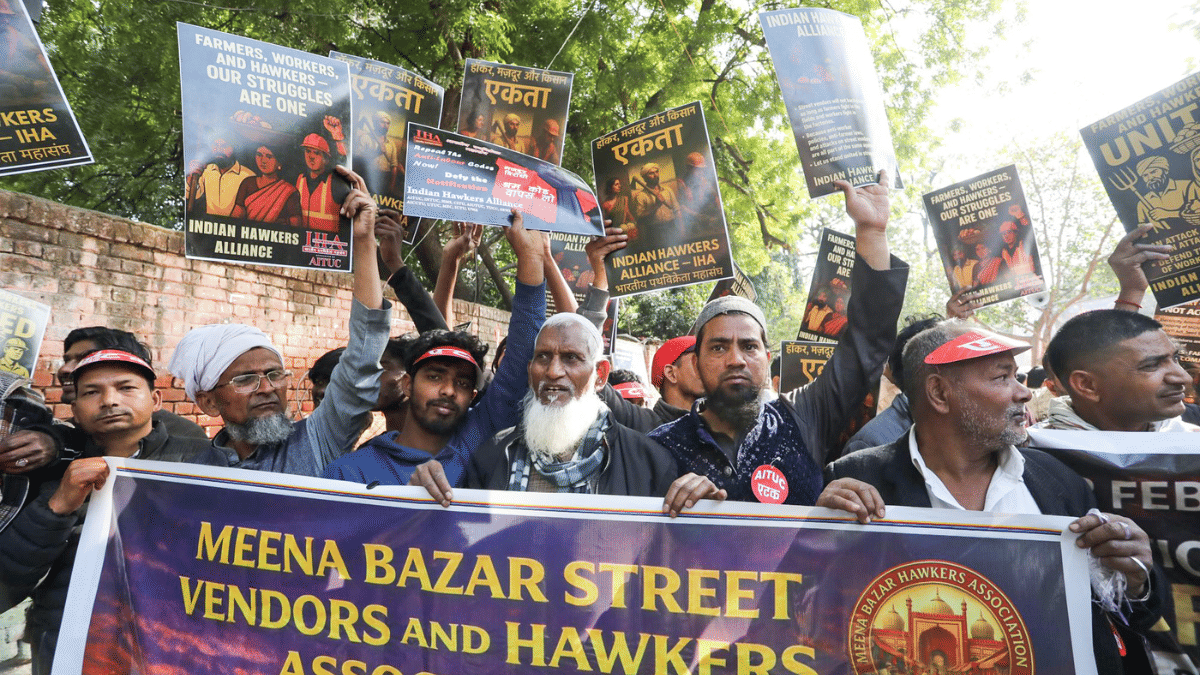
Sunil Kumar Mishra, Sanjay’s fellow Karol Bagh vendor who plans to stand for TVC elections, is optimistic about their ability to prevent further incidents. “Too often, it happens that they confiscate Rs 10,000 worth of goods on some pretext, then give back only 5,000. If I’m elected, I’ll make sure they provide a seizure memo listing every single item before they can take anything – and they’ll have to give it all back.”
Who counts as a vendor
According to the 2014 Act, the vendor-members of the TVCs will be elected by registered vendors in each committee’s zone of responsibility.
“As per the Street Vendors Act 2014 and the rules framed by the Delhi government, there has to be an election to these Town Vending Committees,” said Singh. “Every committee has 12 elected members from (among) the street vendors. Four have to be women and two have to be from Scheduled Castes.”
The remaining members will come from the government, police, NGOs, market associations, and local citizenry.
Officials have begun preparing electoral rolls across Delhi’s zones, but disagreements remain over who should be included. Vendor organisations say the voter lists are expected to include three categories: vendors who already possess Certificates of Vending (CoVs), vendors shortlisted for certificates following recent surveys, and holders of older tehbazari licences (a hawking and vending licence) which predate the entire TVC process.
“Tehbazari holders are not certificate holders. Candidates cannot be outside the Street Vendors Act of 2014,” said Singh. “That is going to be a bone of contention.”
The methodology of the survey itself has come under criticism. “Street vending happens in different layers, especially in more populated zones. The survey-takers assumed they could go one time in the morning and get everything done, but it doesn’t work like that.” said Unni, who was privy to the survey’s methodology as a TVC member.
“Mobile vendors have been completely left out. The weekly markets have not been covered well.”
Unni estimated that, in the worst case, the survey may have covered only half of all eligible vendors. In its initial survey in 2021-2022, MCD identified slightly over 60,000 vendors in the city. Meanwhile, Singh believes there are actually about 130,000 in total.
Some vendors, though, think the most important thing is to constitute the TVCs without further delays. “We’ll do another survey after the election, and get everyone who was left out.” said Mishra, the would-be candidate. “Then surveys will be conducted every five years at least.”
Democracy on the street
The biggest difference vendors hope for is inclusion of their voice in the management of vendors.
Under the Street Vendors Act, TVCs are responsible for identifying vending zones, recommending welfare measures, overseeing surveys, facilitating access to credit and social-security schemes, and mediating disputes between vendors and municipal authorities. Many of these functions were previously carried out by municipal officials.
“Under the Act, the TVC is the fulcrum, the owner. It has the authority.” said Singh. “The major problem with the previous government (AAP govt) was that they had not devolved any power to the Town Vending Committees.”
Yet, the committees will have to navigate more than disputes between vendors and the government. Conflicts between street vendors and brick-and-mortar traders have shaped many of Delhi’s market districts for decades.
In May, traders in Sarojini Nagar shut shop to protest the proposed placement of street vendors in the area. “Sarojini Nagar Market is already congested,” said Ashok Randhawa, the head of a market association, in a statement on May 14.
Singh, on the other hand, believes that vendors and traders complement each other. “They don’t realize street vendors are the biggest crowd-pullers in our country,” he said. “Take any market—Karol Bagh, Lajpat Nagar, Sarojini Nagar. People also go because of the vendors. I believe every city has got space for every one of us.”
‘Oil to city’s engine’
For Unni, the elections are less a conclusion than a new beginning, a chance for the city to shed the baggage of two decades of stalled policies and start afresh. “Everything that happened before the Act (2014)—the old surveys, the old categories—that’s history,” he said. “Unfortunately, it keeps coming into discourse and it keeps coming into practice.”
The challenge now, he argues, is to move beyond those provisional arrangements and finally implement the law as it was intended.
The stakes extend beyond the vendors themselves. Street vendors provide affordable food, clothing and everyday goods to lakhs of Delhi residents, while helping define the character of many of the city’s best-known markets.
“They really service the whole city,” Unni said. “They are the oil to the city’s engine.”
He strikes a cautionary note, saying that the larger challenge will be translating legal protections into realities on the ground. “The speed of decision-making has now been faster,” he said. “But whether the street vendors will get their vending zones, whether the survey will be done properly, and so forth—that’s anyone’s guess.”
Singh added, “I always see a half a glass of water as half-filled, not half-empty.”
“The TVCs have to play a very effective role. Municipal corporations do not have the habit of democratic consultation. That’s why TVCs are taking time to come into shape. This one will be very different.”
(Edited by Ajeet Tiwari)
“Oil to cities engines” ?? Something which is responsible for litter on my street is considered “oil to cities engines” ? No most of these vendors are illegal. My footpaths are occupied by you guys. You don’t even pay taxes on so many occasions. No you are not a positive on our cities.
The only street food I accept are ones who located in designated area with a lot of spaces, like Khau Gali in Mumbai.