



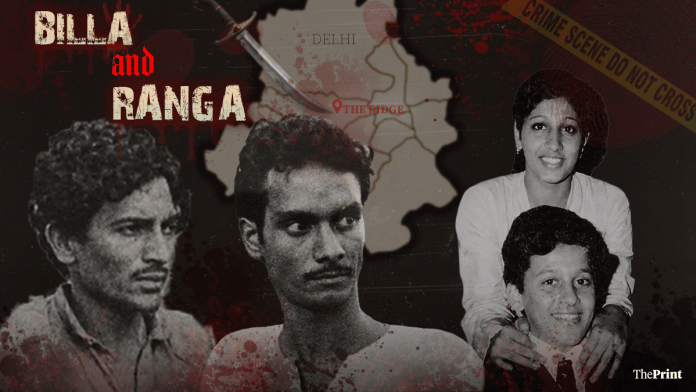
New Delhi: A radio broadcast in an unfamiliar voice, a stolen Fiat car, two dead children, a photograph and a fingerprint.
In the late 1970s, two men committed a brutal crime that left the national capital rattled—setting off a tidal wave of fear that washed over not just Delhi, but the whole country. It was no ordinary case—be it with respect to the seriousness of the crime or the attention that the investigation subsequently received.
For Delhiites of the time, the abduction and cold-blooded murder of Geeta and Sanjay Chopra by Ranga and Billa changed their perception of safety.
On 26 August, 1978, Jasbir Singh or ‘Billa’ and Kuljeet Singh or ‘Ranga’ abducted the teenaged siblings on the pretext of giving them a lift, with the intention of robbing them. On realising that they were the children of a Naval officer, they decided to kill them. They were arrested about two weeks later after an extensive manhunt and investigation, where ordinary people and forensic clues played a crucial role. The two were eventually sentenced to death by a trial court in early 1979, a sentence which was upheld by the Delhi High Court in November that year. They were executed in January 1982.
In an era of no internet or 24-hour news, few crimes had grabbed as many eyeballs as this case. People witnessed it all unravel in horror via newspapers & DD News broadcasts. The anguish poured out onto the streets—much like it did in 2012, when a 22-year-old woman was gangraped in a moving bus.
Headlines were dramatic. ‘Delhi murder rocks Parliament’, read one in The Indian Express, dated 31 August, 1978.
The ripples persist. The trauma lives on in not just newspaper archives, but also films, OTT series, books and podcasts. The recently released Prime Video web series Raakh is loosely based on the Billa-Ranga case. It has also found mentions in 2025 Netflix series Black Warrant, and an episode of Sony’s Crime Patrol.
Multiple books, like Sudeep Chakravarti’s Fallen City: A Double Murder, Political Insanity, and Delhi’s Descent from Grace, Sunil Gupta and Sunetra Choudhury’s Black Warrant (on which the Netflix series is based), and Adesh Kumar Singh’s Ranga Billa, have been written over decades. Sunil Gupta was a superintendent at Tihar Jail and was present when Billa and Ranga were executed.
The case has been taught over decades as a criminal case study in schools, colleges, and for police training. It has been the subject of several research papers and studies.
Billa and Ranga are long gone. What remains now are their black and white pictures—in police custody, exiting the court, staring at the cameras—and Delhi’s fear of taking a lift from a stranger.
Also Read: A fiancée, her lover, and a 400-ft gorge: How a trekking accident turned into Pune fort murder case
The radio broadcast
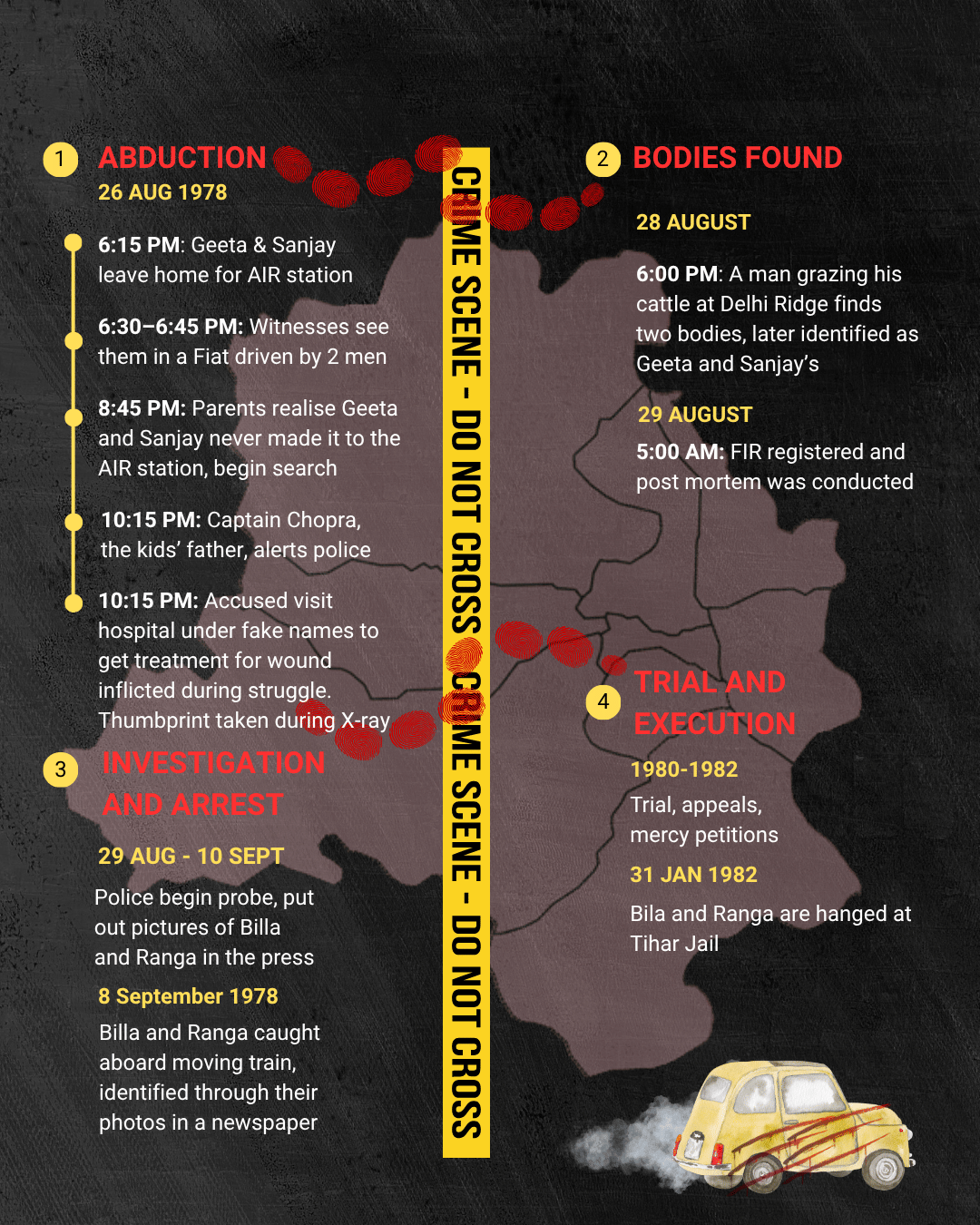
On 26 August, 1978, Geeta, the 16-year-old daughter of Indian Navy Captain Madan Mohan Chopra, was supposed to participate in the 8 pm broadcast of All India Radio’s Yuva Vani programme. Geeta Chopra and her 14-year-old brother Sanjay Chopra left from their family residence in Services Officers Enclave in Delhi’s Dhaula Kuan at 6.15 pm to reach the radio station at Parliament Street at 7 pm. Their father Captain Chopra was supposed to pick them up from the gate of the radio station at 9 pm after the broadcast.
Geeta Chopra was a second-year student at Jesus and Mary College, while Sanjay Chopra was a class 10 student at Modern School.
At 8 pm, when their parents tuned in, they heard a different female voice on the radio—not Geeta’s. Surprised, they assumed that either the programme schedule had changed or that they were not tuned in to the right station.
At 8.45 pm, Captain Chopra left on his scooter to bring the children home, but could not find them at the gate. On asking around, he found out that Geeta and Sanjay had never made it to the radio station that evening. They did not come back home either.
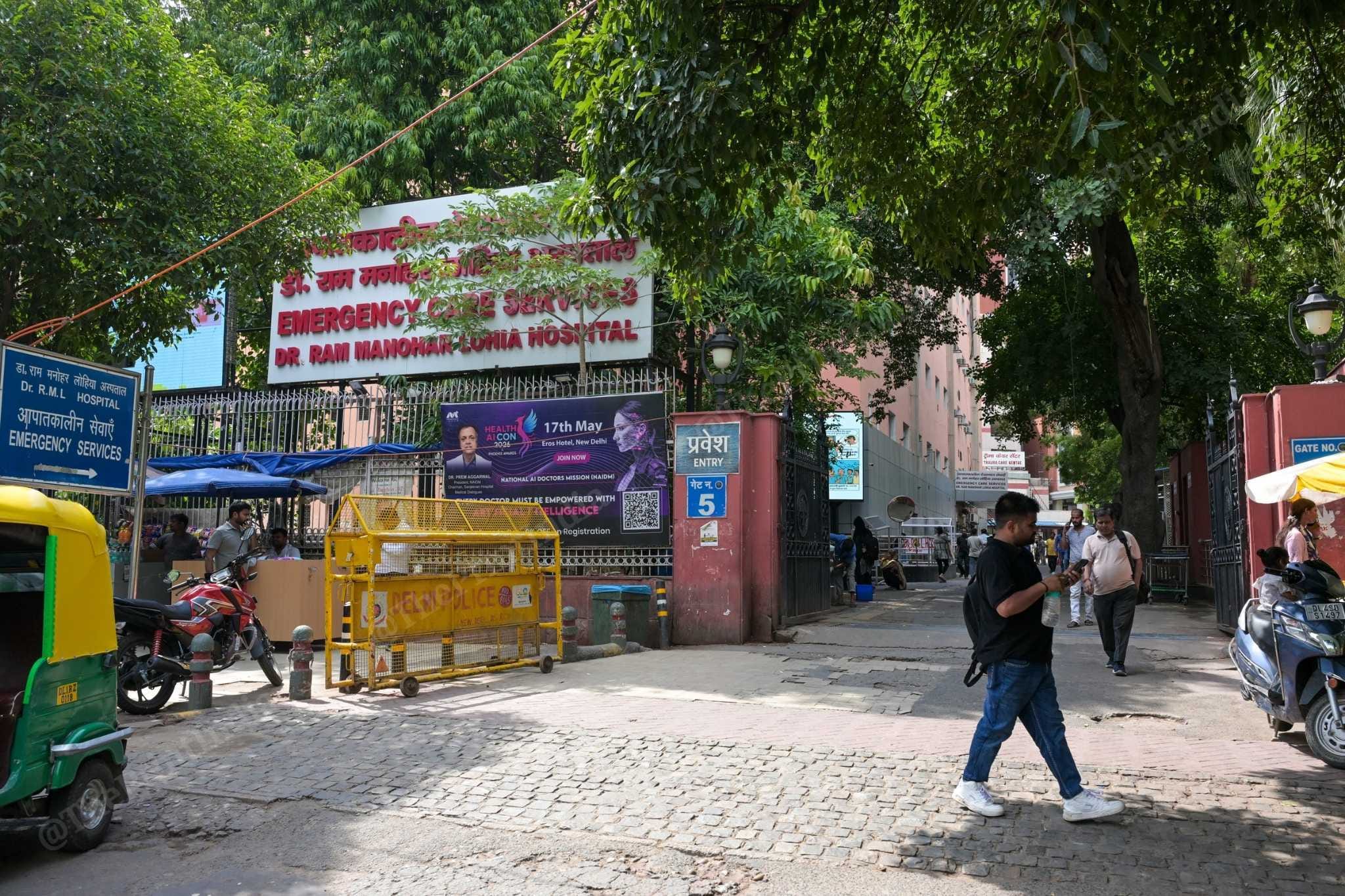
The officer was quick to reach out to the police. At 10.15 pm, he called the PCR and gave a description of the children. He also went to the Willingdon Hospital—now known as Dr Ram Manohar Lohia Hospital—and Parliament Street Police Station to find out if the children were involved in some accident. He then went to the Dhaula Kuan police-post to lodge a report.
But even before Captain Chopra and his wife had discovered that their children were in danger, a frantic attempt to save them was unfolding on the streets of central Delhi.
At 6.30 pm, one Bhagwan Dass was driving past the Gole Daak Khana on his scooter from Bangla Sahib Gurudwara, when he spotted a mustard-coloured Fiat parked near Yog Ashram. As he heard desperate cries for help from inside the vehicle, he rushed towards it. He saw a young girl pulling the driver’s hair, while a boy fought the passenger beside him. But before Dass could reach the car, it sped away.
Dass’s PCR report at 6.44 pm was relayed to Mandir Marg Police Station, and handed over to the sub-inspector at 7.05 pm. But by the time the SI, along with a constable, reached the spot, there was no one to be found.
Dass’s report said that a woman was calling for help from inside a Fiat car, registered “MRK 8930”. He would later depose in court that he had actually reported the registration number as “HRK”, and not “MRK”. The car’s actual registration number was HRK 8930.
And Dass was not the only one who witnessed the tragedy unfold that evening. Inderjeet Singh Noata, then a young junior engineer with the Delhi Development Authority, was on his way back home, when he noticed that a boy and a girl sitting on the rear seat of the car were struggling with the driver and the person next to him. He sped up the scooter to get closer to the car. He shouted, “Kya ho gaya hai (what happened).” The boy looked at him through the rear glass screen and showed his bleeding right shoulder, waving his hands and calling for help. Singh tried to chase the car, but eventually lost sight of it.
He rushed to Rajender Nagar Police Station to file a report at 6.45 pm. But no one batted an eye. The officers instead argued that the case did not fall in the station’s territorial jurisdiction.
The aftermath
The outrage was instantaneous, with a wave of anger gripping the national capital for months after the incident.
When the news of the Chopra sibling’s abduction appeared in papers the next morning, people were horrified. Calls for strict and quick action grew louder by the hour.
A headline in The Indian Express on 28 August read: “Award for clue to brother-sister recovery”. The then police commissioner, J.N. Chaturvedi—who passed away in 2018—had announced a Rs 2,000 reward for anyone with an input.
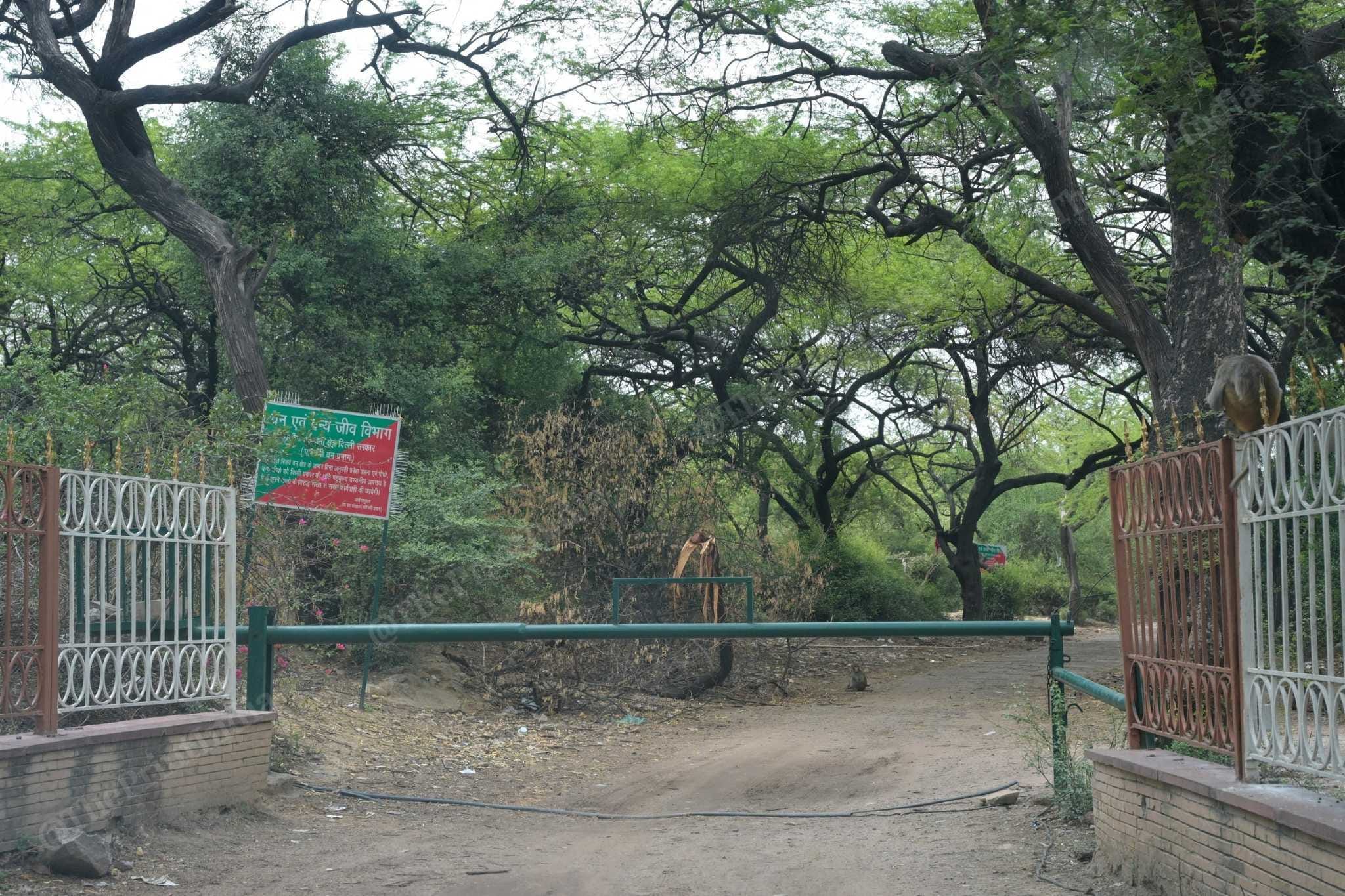
On the midnight of 28 August, 1978, cattle-grazer Dhani Ram alerted a patrolling head constable after spotting two dead bodies in the dense jungle of the Upper Ridge. By dawn, Captain Chopra and his wife stood in the brushwood devastated on identifying Geeta and Sanjay’s severely decomposed remains.
A front-page report in The Indian Express (30 August, 1978), with the headline “Kidnapped children found murdered”, had a hand-drawn map of the Ridge, detailing where the bodies were found.
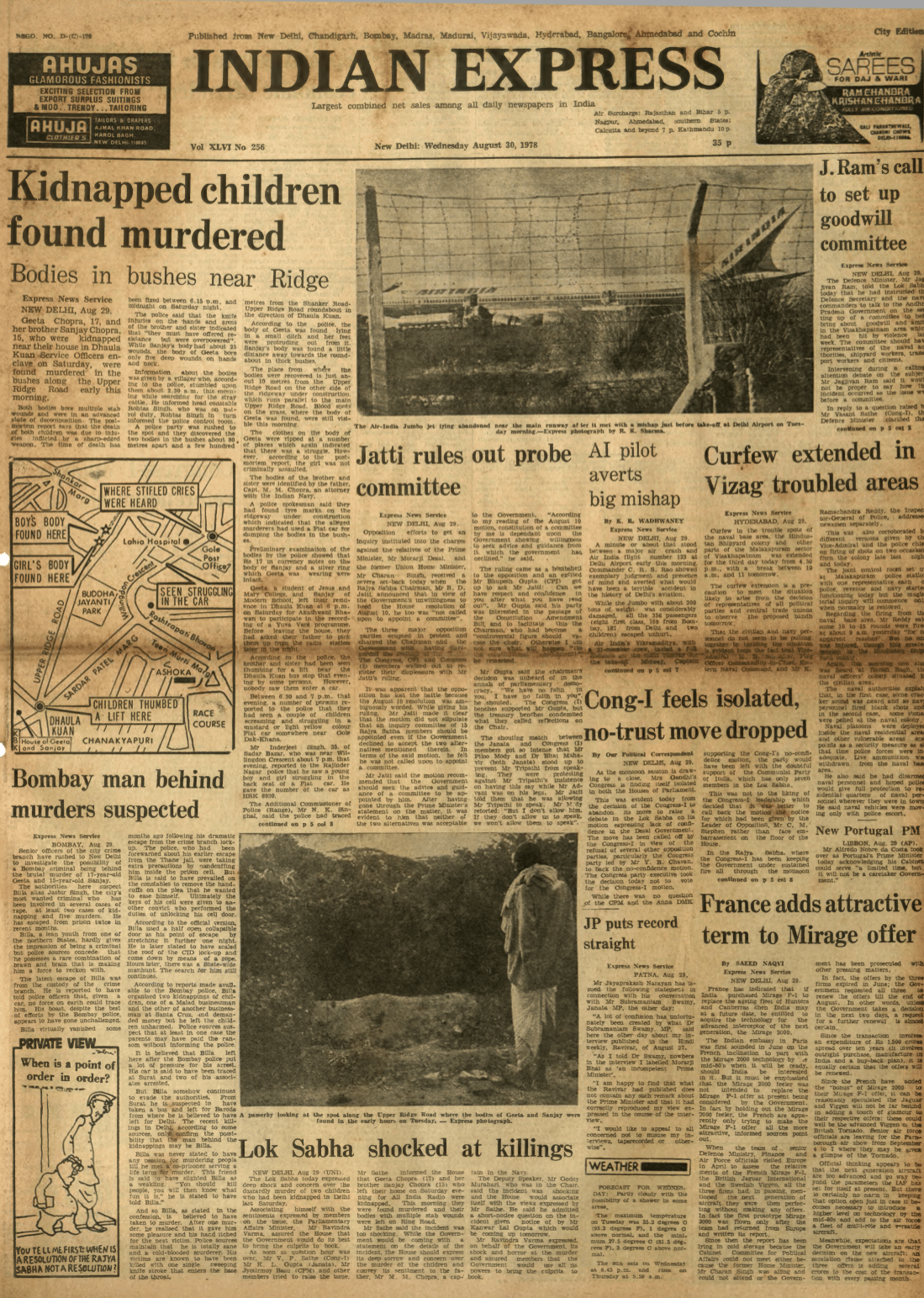
The subsequent post-mortem examination recorded Geeta Chopra’s cause of death as a massive four-inch incision wound to the upper neck that had completely fractured her lower jaw and severed all major blood vessels. She also bore defensive deep cuts to her wrists and fingers. Sanjay’s body had 21 distinct incised wounds.
But forensic examination later revealed that the Chopra siblings did fight back. During the struggle, Sanjay had apparently struck one of the assailants on the forehead with a blunt object.
For Raju Ramachandran, senior advocate in the Supreme Court and former Additional Solicitor General, who had begun legal practice in 1976, witnessing the story unravel through the reports in newspapers was an intense experience.
“Back in those days, newspapers came in the morning, and a few in the evening, or news would be broadcast on AIR or DD News. When the case came to light, every phone call we received, we would speak about it. Delhi had changed…for all of us…for people of all classes,” he tells ThePrint.
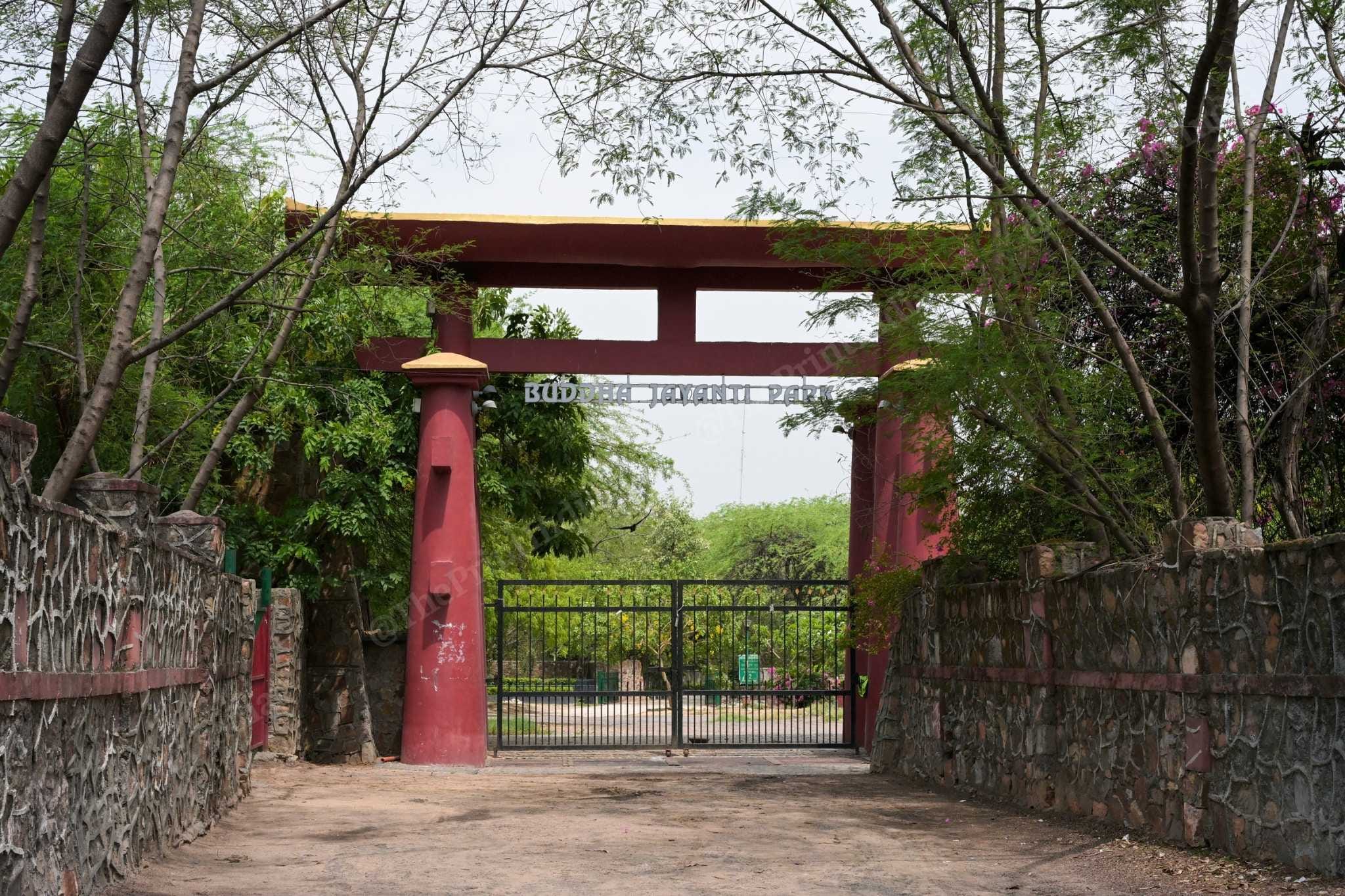
Ramachandran grew up closer to the Budhha Jayanti Park, where the bodies were found. His father was a railway officer. “This is where I had grown up. It was a frequent school picnic spot. Concerts happened here. It was a place I visited that suddenly symbolised national shame. It was unsafe,” he recalls.
The Indian Express reporter Raju Santhanam, who was closely tracking the case at the time, was one of Ramachandran’s closest friends. “Raju was my classmate. He got photographs of the accused, which led to their arrest, and he made a mark in investigative journalism. Raju was closely associated with the case.”
Back then, there was sobriety in coverage, he says.
Ramachandran himself represented 1993 Mumbai blasts convict Yakub Memon and 2008 Mumbai terror attack convict Ajmal Kasab in court, both of whom were eventually executed.
As a young crime reporter at The Indian Express Mumbai Bureau, Santhanam was tracking the Billa Ranga case from there through STD calls and daily police station visits. “There were no press releases back then, no WhatsApp messages. Reporting was different. When I got Billa and Ranga’s photo, after they had fled upon committing crime in Mumbai, I sent it to the Express team in Delhi. Both Delhi reporters and Delhi Police were clueless. The crime and who they were unfolded slowly with time. It shocked the country,” he tells ThePrint.
He recalls how newspapers were the primary source of information for most people, and every time the DD News broadcast came on, people would be glued to the screens. “Everybody wanted to know what Billa and Ranga were up to.”
After the Chopra siblings’ murder, the public took to the streets. Rajpath and India Gate were once open for people to stage protests. This was September 1978.
As the crowds grew bigger, the agitation reached the corridors of University of Delhi. Retired IPS officer Rajan Bhagat was only 17, when the student union that he was a member of decided to join the protests.
“This was our Gen Z protest. It was similar to the protests that happened during the Nirbhaya case in 2012. We were young and angry. This protest gathered people from almost all 30-40 DU colleges back then. People showed up in large numbers. We stood there despite any fear,” he recalls.
Bhagat did not know at the time that a few years later, he would be on the other end of the protest, wearing khaki and containing protesters.
“Back then, we had no mobiles. The only way to organise protests was to reach college. We would then stop DTC buses on the roads, students would be packed, and we would reach the spot, shouting slogans,” he recalls.
Recounting one such protest, Bhagat says, “To pacify the agitation, SHO Baljeet Singh—who later became my superior when I joined the force—along with Atal Bihari Vajpayee, stood on his gypsy to address the crowd. He promised the youth that the government would arrest the perpetrators and justice would be served. Things got so serious that he was stoned and struck on the forehead, causing him to bleed profusely.” Vajpayee, the then foreign minister in the Morarji Desai cabinet, was present at the protest site.
Tear gas shells and water canons were used to disperse off the crowd. Bhagat and his friends took shelter at the National Museum. He did not tell his father, also a police officer, about the incident as he was a strict parent.
But Bhagat’s agitation led him to V.P. Gupta, the investigating officer in the case. “I, too, later joined the Crime Branch, where V.P. Gupta was stationed.”
Now 66, Bhagat says that at the Delhi Police Academy, where young officers come for training, the first thing they see are key cases solved by Delhi Police. And right beside the case files of Indira Gandhi and Mahatma Gandhi’s assassinations, lies the Billa-Ranga case.
‘Vinod’ & ‘Harbhajan’
While all hell was breaking loose in the city—from the panicked search for the Chopra siblings to the protests that followed the discovery of their deaths—Billa and Ranga were parallely making every conceivable effort to evade justice.
After abandoning the mustard-coloured Fiat, the duo went into hiding. They kept moving through cheap lodges and guest houses in Delhi and Agra. They were even intercepted by police a few times, but managed to escape every time. They repeatedly moved locations as soon as local landlords, doctors or police would become suspicious.
But the trail of clues that would eventually lead to their arrest began taking shape on the night of the crime itself.
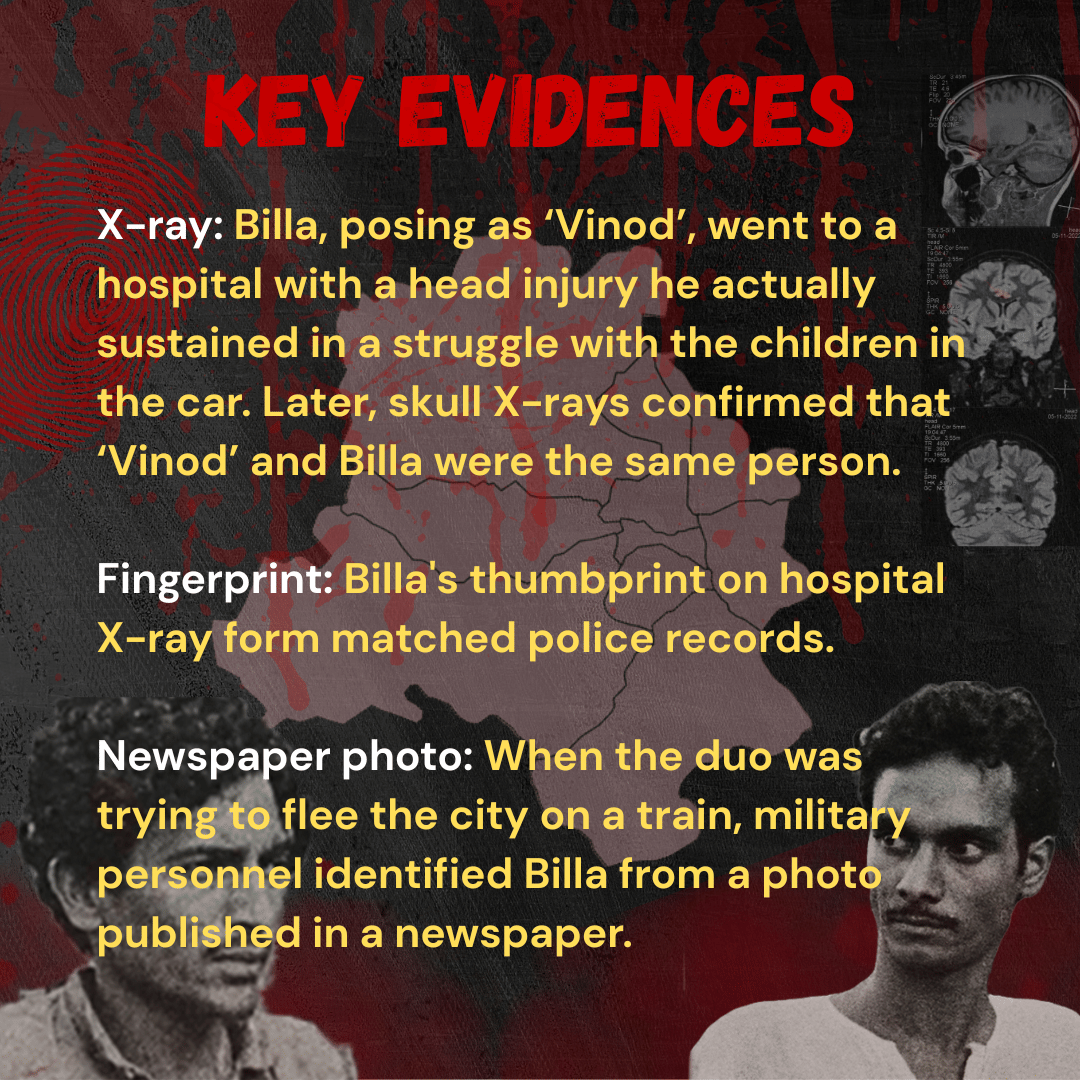
At about 10.15 pm on 26 August, Billa—injured amid the skirmish with the kids—walked into Willingdon Hospital, identifying himself as ‘Vinod’, to seek emergency care for a clean five-inch laceration on his forehead. Ranga was with him. He called himself ‘Harbhajan Singh’.
Since it was a medico-legal case, Ranbir Singh, constable on duty at the hospital, questioned him about the injury. ‘Vinod’ told him that two-three persons had snatched his watch and injured him on Bangla Saheb Marg near Kali Mandir. The constable also interrogated ‘Harbhajan’, who claimed that he had brought ‘Vinod’ in his car, registered “DHT 280”, from the spot of the incident.
The constable informed Mandir Marg Police Station. ‘Vinod’ and ‘Harbhajan’ were asked to take the police to the said spot. Upon inspection, the police found no signs of struggle or any bloodstains. The two men were asked to report to the police station, but they never showed up. The addresses they had submitted were also found to be wrong.
However, Billa’s hospital visit would later prove crucial. While examining him, Dr Yasmin Imam, the assistant casualty medical officer, had ordered a skull X-ray and taken ‘Vinod’s’ left thumbprint onto the X-ray authorisation. This thumbprint and the X-ray would go on to become a connecting link in the case.
A photograph in the paper
On the night of 8 September, 1978, Lance Naiks Gurtej Singh and A. V. Shetty were travelling in a railway compartment in the Kalka Mail—now known as Netaji Express—along with other military personnel. As the train approached Jamuna Bridge, before arriving at Agra City railway station, and slowed down a bit, two civilians came in.
“They were told not to enter the compartment since that was for military personnel only. One of the civilians told the Lance Naiks that they also belonged to the military. They were asked to show their identity cards,” read the case diary as mentioned in the Delhi High Court order.
But it soon became clear to the soldiers that the two were lying. On the hunch that they were thieves or robbers, both Lance Naiks immediately caught hold of them. Incidentally, Lance Naik Shetty was carrying Hindi newspaper Nav Yug, which had Billa’s photos. One look at the photo, and he knew who they were. Within seconds of confrontation, they admitted. Billa and Ranga had finally been caught.
When the train arrived in Delhi hours later, the military personnel handed them over to the police. They were arrested, after what is still seen as a historic manhunt.
Forensics was key to the entire investigation. A fingerprint expert matched the thumbprint on the X-ray slip with Billa’s specimen prints upon arrest. He was also made to undergo an X-ray of the skull, which proved that Billa and ‘Vinod’ were the same person.
It was Dr V.N. Sehgal, ex-director of CBI’s Central Forensic Science Laboratory, who managed to piece all key evidence together. Sehgal passed away in 2022. A family member tells ThePrint, “I had grown up listening to all the stories of how key evidence like fingerprints were collected and matched, at a time when scientific evidence was difficult to trace.”
Sehgal was also part of Interpol and travelled worldwide for his forensic research. He was involved in the investigation of cases like the assassinations of Indira Gandhi and Rajiv Gandhi, and the 1993 Bombay blasts.
ACP Ved Prakash trained under the case’s IO V.P. Gupta as a young officer at the Delhi Police Training Academy in 1984. “Gupta sir spoke about this case at length. Back then, there were no CCTVs, call details, or digital footprints. Scientific evidence wasn’t being recorded so much. But in this case, when the police recorded the fingerprint, it led to their grounds of conviction,” Prakash recalls.
He even remembers visiting the crime spot years later with Gupta during his training. “The ridge has changed a lot. A police post came up. There are CCTVs, walls that can’t be scaled. Every time I cross the ridge, it brings back haunting memories. It remains fresh all your life.”
ACP Prakash assisted in the 2012 Nirbhaya rape case probe.
The confession
The confessions of both Ranga and Billa exposed them not as desperate thieves, but as seasoned criminals.
Billa was “quite an expert in lifting cars”, the court had noted, adding that he was wanted by Bombay Police for the murder of two Arabs. The two were jointly wanted in five cases in Bombay. The two had escaped to Delhi with the “intention to commit robberies”. They were clever enough to arm themselves with kirpans and fictitious car number plates, according to the court order.
“…On 26 August while moving in Connaught Place I had a talk with Ranga and asked him that we will start committing robberies in the houses here as well as in the manner in which it was done at Bombay. I told him that we will now provide a lift to someone in our car and then we would commit robbery (sic),” Billa confessed to the police.
The high court said in its 1979 order that they were “desperadoes who have no compunction in killing”. “Finding that it was hazardous to loot the kidnapped children’s father who was a Naval Officer and might use his revolver effectively, the appellants decided to do away with them in order to escape identification,” the court said.
Sanjay Chopra was hacked to death by them with kirpans. There were as many as 21 injuries over various parts of his body. Then they raped Geeta Chopra, killed her and threw her body in the bushes. “Evidently the appellants had a fiendish sadistic pleasure in committing the crime,” court further said.
The Delhi High Court, however, also said that “the lives of the two children could have been saved if the police had acted promptly”. Upholding the trial court’s order sentencing Billa and Ranga to death, the high court added, “Indeed, to award any other sentence except death sentence will amount to complete failure of justice.”
The execution
“Billa Ranga to hang”: Hindustan Times had first reported on 9 December, 1980—a Page 1 story.
The news stories linked to Billa and Ranga were all front-page reports. “Fresh merch plea by Ranga,” The Indian Express had headlined a report on 27 January, 1982, when Ranga had sent a fresh petition to the President seeking to do some hard work in the jail, and requesting to delink his case from that of Billa.
Journalist Prakash Patra had freshly graduated from Delhi’s Indian Institute of Mass Communication, and was only 22 when he joined National Herald in 1980. Hailing from Bhubaneshwar, he had seen how the Billa-Ranga case had unfolded.
While Patra had not covered the case himself, he managed to seek permission from the L-G office and the Home Secretary to interview the convicts. Ranga refused, but Billa agreed for a media interview. Prabha Dutt, chief reporter of the Hindustan Times, had already moved the Supreme Court for permission to interview them.
The date of the execution was not shared with the media, but reporters managed to get details, thanks to their sources in Tihar jail.
“I was curious, and also nervous. Who is Billa? What does he look like? How is his voice? I wanted to know,” Patra tells ThePrint.
He was not the only one. He, along with other journalists, like Dutt, Usha Rai, Prabha Dutt and Vinod Sharma, stood in front of a cell, separated by an iron grill, to interview Billa on 30 January, 1982.
“After months of waiting, we saw Billa. He was sleeping, and had woken up. He was lean. When we began talking, all he said was: ‘I have not done anything.’ It sounded like a monologue. In Punjabi, he said, ‘Rabb (God) knows I am not the killer.’ Prabha Dutt dominated the interview. Back then, there was a lot of scepticism that they were framed by the state, because somebody had to be blamed,” Patra recalls.
By the time Patra’s report from the interview was published, Billa and Ranga had been executed.
Tihar’s former jailer Sunil Gupta was just 23 at the time. On the midnight of 31 January, 1982, Ranga and Billa walked to the gallows in complete silence with around 20 prison officials present. Despite the January chill, Gupta remembers sweating and feeling nervous. As a young superintendent, it was the first time Gupta was witnessing an execution.
Decades later, the scene remains etched in his memory. “Ranga shouted, ‘Jo bole so nihal, sat sri akal.’ Billa was quiet. He cried while black hoods were pulled over their faces,” Gupta recalls.
When the executioners pulled the level, the duo fell into the 15-foot well below. Billa—medium-built—died immediately. Ranga was thin and still had a pulse for two hours after he was hanged. Eventually, a jail employee pulled his legs from below and tightened the rope around his neck, leading to his death.
Gupta had joined the prison in 1981. He had read about the Billa Ranga case in papers, and was terrified to meet them.
“I would tell myself to remain calm. When I met Billa, he was humorous. He would say ‘Billa khush’ to make people laugh,” he says, adding Billa would often tease Ranga, who wouldn’t talk. “The two were put together at times. Sometimes they would fight. Billa would often blame Ranga for how they ended up in prison. He would tell us how their plan was to extort money, but it was Ranga who preyed on the woman.”
The trauma lives on
It was years later, in 2006, when advocate Ramachandran’s wife—who is now no more—had met Madan Mohan Chopra. “My wife and Mr Chopra were on the Board of Education at DPS. The first time she met him, she was moved by the fact that he was a serene person,” Ramachandran says. “It was his sense of stoicism in the face of such a monumental tragedy, and how he had devoted his life to good and social causes. Those meetings with Mr Chopra deeply influenced my late wife…”
Criminal psychologist Rajat Mitra was a student at the time of the case, and later worked with the Chopra family for a victimology project. “The Chopra abductions shattered Delhi’s innocence overnight, permanently altering the city’s relationship with public safety,” he says. For a generation of residents, the casual culture of “taking a lift” vanished instantly as fear took over.
Mitra’s sister was a professor at Geeta’s college. He recalls that the campus was paralysed by trauma. “Even in broad daylight, students feared to walk. Permanent police pickets were stationed.”
Decades later, in 2001, when he was commissioning a victimology project, he met Madan Mohan Chopra. “He remained frozen in grief…mentally exhausted by a society that initially offered scrutiny, instead of compassion.”
(Edited by Mannat Chugh)
Also Read: Aftermath of a dowry death: For families left behind, legal limbo, depleting savings, ‘compromise’
What Ms. Samridhi Tewari quite cleverly brushes under the carpet is that Ranga was quite evidently a Khalistani.
Billa was more humane than Ranga – who took the lead in raping the girl and murdering the children.
This case gave the nation a glimpse into how the average Khalistani mind works. Unfortunately., one can always expect ThePrint to cover up inconvenient parts of the news.