





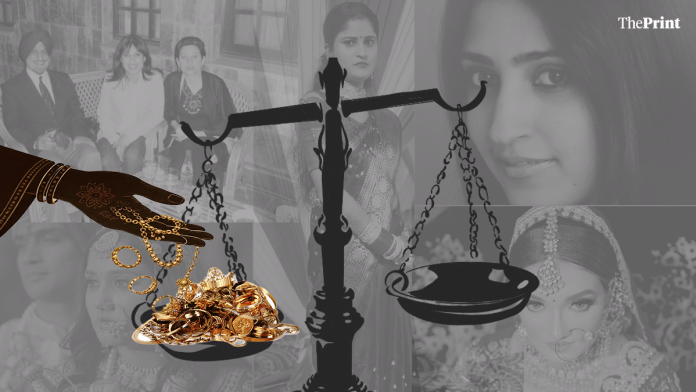

New Delhi: Bharti Singh and Anissia Batra came from different backgrounds. Bharti’s father is a farmer in Uttarakhand, Chandigarh-born Anissa did her schooling from Lawrence School, Lovedale. Her father retired as a major general. But in death, the two women shared a common link—battered married lives with trauma shadowing them till the end.
A grieving Heera Singh relies on his Kisan Credit Card—used to take loans for farming needs—to fund bus trips from Nainital to Delhi and meet legal costs as he attends court hearings against his son-in-law’s family. Bharti, 23, was strangled to death just 52 days after her marriage in April 2021.
Similarly, Karan Batra and his family have been doing the rounds of courts for the past eight years as they seek justice for Anissia. His air-hostess sister, 39, had jumped to her death in July 2018.
The two women are not the last to fall prey to the dark, societal ill of dowry that exists despite a strict ban and its criminalisation over six decades ago.
If anything, the cases of Twisha Sharma (Bhopal), Deepika Nagar (Greater Noida), Palak Rajak (Gwalior), Lakshmi Priya (Bengaluru) and several others reinforce the truth of its existence, perhaps in more sinister ways.


In most cases, while the media spotlight initially brings focus to the gravity of the offence, the subsequent legal fight, the mental and physical battle as they pick up the pieces, is a lonely one for the grieving families left behind. Only a few manage to secure some headway in their struggles.
ThePrint traces a few such cases, including Bharti’s and Anissia’s, that have been on a long road to justice.
Also Read: Twisha Sharma ‘dowry death’ case: Why MP HC junked ex-judge Giribala Singh’s anticipatory bail
Never-ending demands: Washing machine, AC, TV, sofa, gold
Back in 2021, the Nainital family of Heera Singh were elated as Bharti’s marriage was fixed with Kuldeep Singh Rana from south Delhi’s Maidan Garhi. The marriage took place 26 April that year.
None, however, saw the pain of the father. The 58-year-old spent his life savings to gift gold ornaments and home appliances to Bharti’s in-laws.
“Her in-laws demanded a washing machine, air cooler, television, double bed, wardrobe, sofa set, dressing table, bedding, and a complete set of kitchen utensils, nath, maang teeka (traditional jewellery) earrings, armlets, waist chains, and other ornaments. I drained my life savings to buy every single item…,” Heera told ThePrint.
Even that was not enough. Kuldeep allegedly demanded a car as well as the transfer of his father-in-law’s plot in his name. “After a final refusal, Kuldeep threatened me: ‘you will never see your daughter’s face again’,” the father recalled.
The next morning of 17 June, 2021, Heera got the dreaded call. Bharti was no more. A case was registered. The matter went to court. Kuldeep remains behind bars.
Ajay Kumar Yadav, the lawyer who represented Kuldeep Singh Rana, told ThePrint that the case is currently at trial stage. “The family members have secured bail, Rana continues to be imprisoned.”
Defending the dead
The past two weeks have brought back painful memories for Karan Batra. The Twisha Sharma case invariably reminds him of his sister.
Anissia got married to investment banker Mayank Singhvi, a Delhi resident, on 23 February 2016. Two years on, she ended her life in the upscale Panchsheel Park.
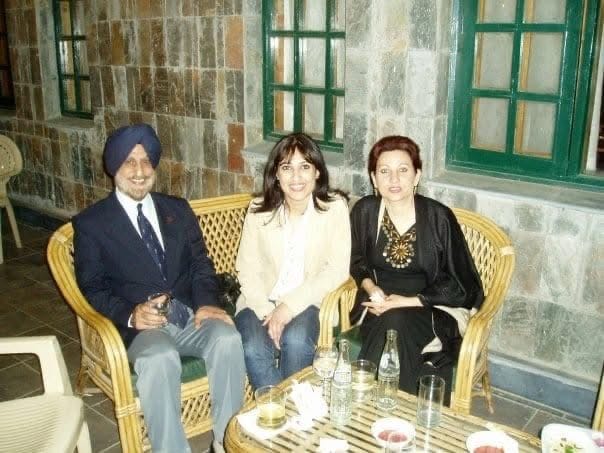
Before her suicide, Anissia had informed her mother that her in-laws were demanding dowry and had been torturing her right from the start.
“We continue to struggle and fight for her. There is this constant overarching stress, fear. The point with dowry deaths is that families receive no closure. In these last eight years, we have been to the court more than 100 times. But, if you ask me, is there closure yet, I will not be able to answer,” Karan told ThePrint.

He added: “My parents travel to Delhi for every court hearing. The dates keep getting pushed. The accused family has delayed the cross-examination, and the delay has been for far too long.”
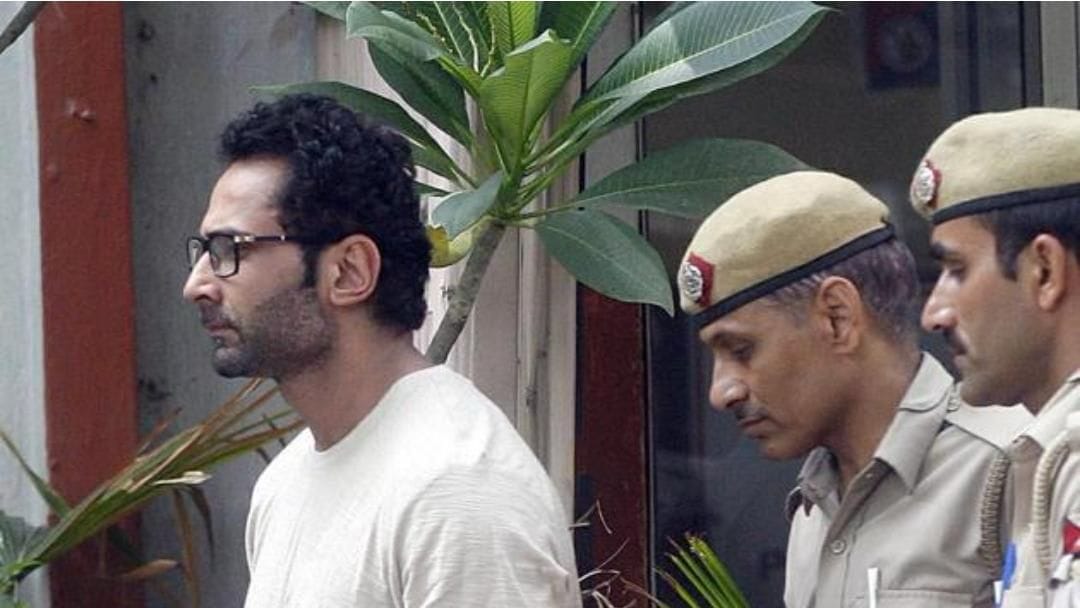
For the past seven years, Mayank has been out on bail. Currently, the statements of Anissia’s family members are being recorded.
Anissia’s brother Karan said that the trial court dropped Section 304B (dowry death) of the erstwhile Indian Penal Code (IPC) against Mayank’s family. “We and the state have appealed against it in the high vcourt immediately after that. That matter is still ongoing but moving very slowly.”
The Batra family, he added, meanwhile, has been served with multiple defamation notices from Mayank and his relatives.
“The court hearings are a difficult space to be in. Especially when you have to hear how your child was traumatised, how they were abused,” Karan admitted.
Drawing parallel with the Twisha Sharma case, he said that he and his parents also fought against “a very powerful family, and none of us is backing down”.
“The suicide, followed by character assassination of women who are not there to defend themselves. Families being pushed to answer every question. Eyeballs, traction, TRPs…we have been on the other side of the story, and it has been equally traumatising,” Karan added.
ThePrint reached senior advocate Abhishek Manu Singhvi, the lead counsel for Mayank, via WhatsApp regarding the case. This report will be updated once a response is received.
Slow rise in conviction rate
Social activist Shabnam Hashmi, who works with women who face dowry harassment through her non-profit initiative Pehchan, called the system “insensitive, patriarchal, anti-woman”.
“The system includes everybody—the police, lawyers, courts,” she said, adding that dowry cases, where an immediate FIR is mandatory upon the filing of a police complaint, now see cases registered only after an initial investigation. “This opens space to manipulate evidence, or bribery.”
Hashmi further said that women’s police stations have been helpful, but the officers need to be sensitised. “And, most importantly, families need to stop saying ‘Samaj kya kahega? (What will the society say?)’” she said. “Stop sermonising. Dowry cases have become worse in these last few decades.”
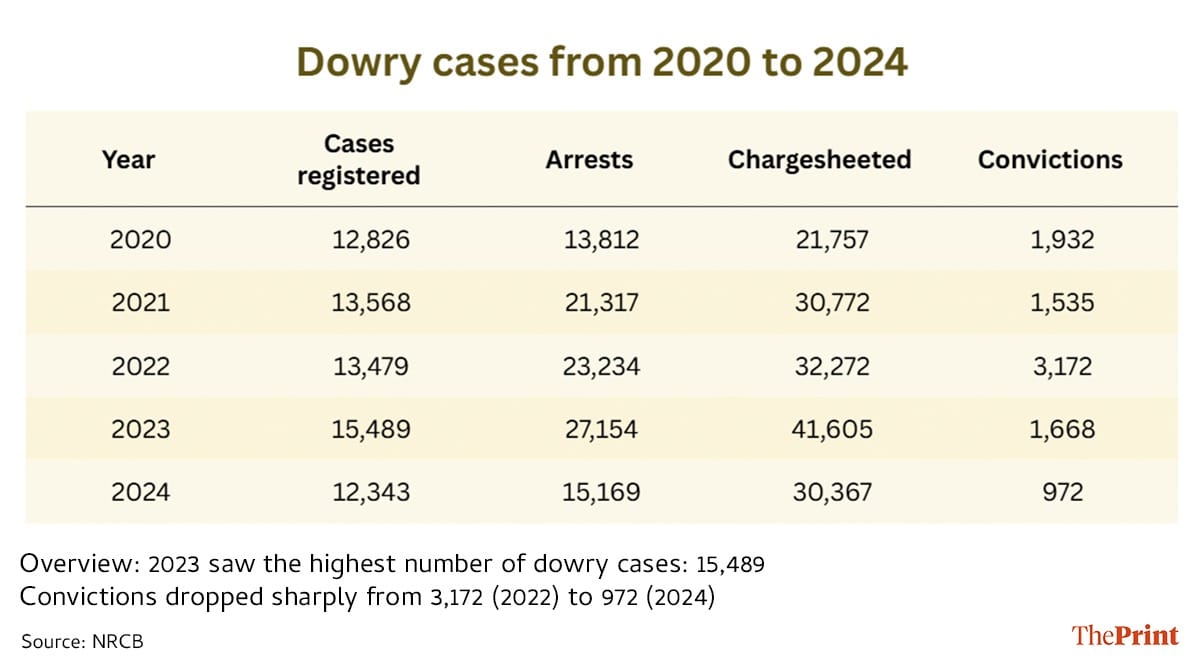
In 2020, India registered 12,826 cases under the Dowry Prohibition Act, 13,812 people were arrested, 21,757 were chargesheeted, but only 1,932 people were convicted, according to National Crime Records Bureau (NCRB) data.
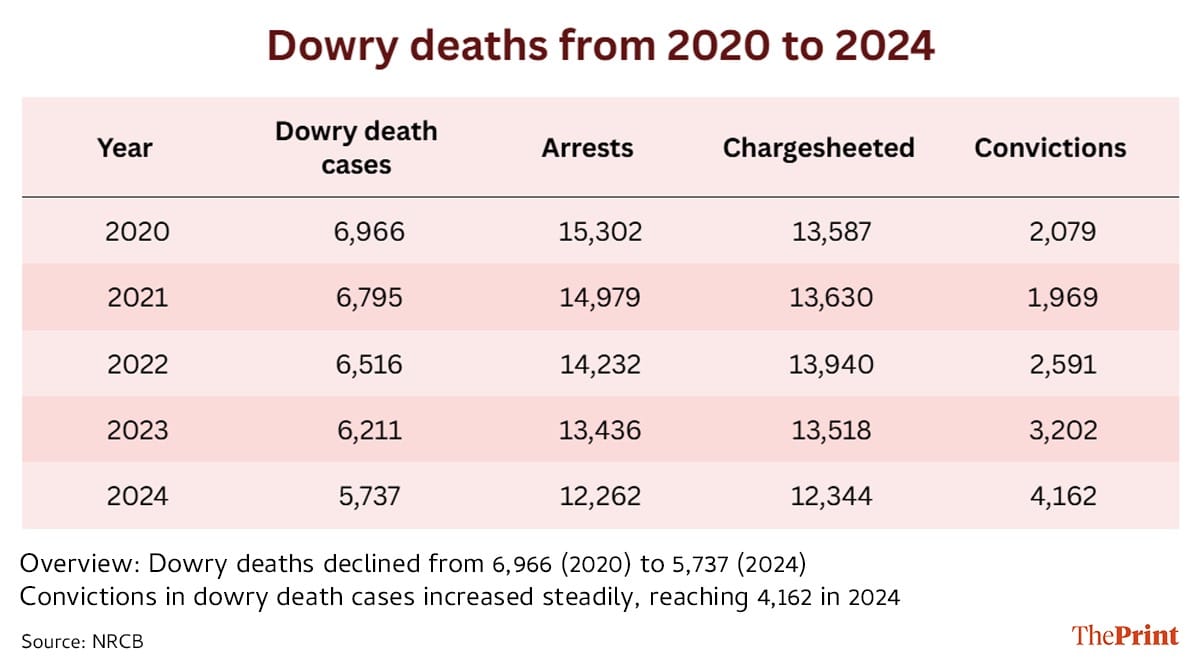
Barring 2024, there has been a steady rise (see box) in arrests and chargesheets over the years.
As for dowry deaths, the year 2020 saw a record 6,966 such cases, 15,302 arrests, 13,587 chargesheets, and 2,079 convictions. While dowry deaths and arrests have come down year-on-year (see box), convictions peaked in 2024 (4,162).
A senior Delhi Police officer said that as per the law, if a woman is found dead under unnatural conditions within seven years of marriage, a statement is recorded before the sub-divisional magistrate, and a case is registered if the woman’s family files a dowry harassment complaint.
Currently, the Indian law follows the seven-year timeframe to decide on dowry deaths. Anything beyond this period is not considered for the category linked to dowry harassment by in-laws.
However, he said that one challenge the police face is proving the harassment charges. “Criminality has evolved over the years. Earlier, there were cases where women were set ablaze, or were poisoned to death. That has changed now. If a woman kills herself now, it is difficult to determine the pressure angle in suicide. Now, people manage to collect digital evidence, such as voice and video recordings, WhatsApp messages that can prove harassment, but that happens rarely.”
“Not every victim has access to technology, or the awareness, or the mental well-being to keep evidence.”
The officer said, as the society evolves, norms change as well. “Circumstances matter a lot in dowry suicides.”
The conviction rate is low unlike in murder or homicidal cases, where it is possible to prove the allegations, he explained. “In suicide, it is challenging to determine the thoughts of the woman. There can be evidence to prove physical torture, but proving mental torture is the challenge. The circumstances are different, for different people.”
Living the trauma
And then, there is a separate category altogether—the women who somehow survive the ordeal, are left scarred for life.
A month after her marriage in 2011, Kavita (name changed) found out her husband was an alcoholic. He would often return inebriated and humiliate her, she said. “I would often come to my parents’ house, feeling scared of my husband and his relatives.”
Kavita was set ablaze by her husband and in-laws in September 2022 for not paying dowry. Her upper torso is completely burnt. Two surgeries later, she struggles to move her neck. Her feet remain completely swollen. The 35-year-old has been advised against going out in the sun.
“After the attack, I was hospitalised for a long time. But, I know I will fight this in court. What happened to me should not happen with anybody. His intention was to burn and kill me, but I managed to escape. Since I am alive, I will make sure I secure justice,” she told ThePrint.
Since 2022, she and her brother have been doing rounds of the Karkardooma court. “The police and court’s intervention ensured that I got a different house, and I did. But, ever since my husband came out on bail, he has been threatening me and my children.”
It is tiring, and equally traumatising to go through the same narrative, questions again and again in the court, she admitted. “Sometimes, it feels disgusting to talk about these things. I can’t normalise it, even four years later. I have two children, and I can’t even tell them anything…”
When fighting a criminal case, Kavita said, courage alone is not enough. “Resources and understanding of law (are needed).”
Urvi Mohan, an advocate practising at the Delhi High Court, told ThePrint that society focuses on “sanctity of marriage”.
So, the first time, when a woman faces a problem in marriage, the approach is not to contact police, courts, or the family. “This is part of the social conditioning. This is a systemic fight, where the idea is to give one more chance.”
Mohan said in an urbanised society, the demands for dowry and the subsequent harassment are, sometimes, not done brazenly. “It is done by depriving the women of their basic rights, by creating a hostile environment, ensuring there is no financial support…” This, she said, puts the initial onus on a woman to prove the alleged crime.
‘Compromise’
Social activist Meena Devi, who has worked with Sehjani Shikha Kendra, has seen closely how families have responded to dowry deaths. Her organisation works on cases pertaining to violence against women.
Instances of dowry, she said, have increased over the years in villages. “People have demands. These demands are met,” she said, adding that it has become an unsaid rule. And, she said, people are well-aware that it is a criminal offence.
And, if in a scenario, a woman is dead, most families don’t want to report to the police, she revealed. “If families decide to fight, it stays in court for 1-1.5 years. Then, they reach a compromise. They know their daughter will be left behind with a child. So, farm land, money, whatever works, is agreed upon. All this to ensure the child’s future is safe.”
This ‘samjhauta (compromise)’, the activist said, happens within communities, and through the interventions of panchayats.
“Women are considered ‘paraya dhan (other’s wealth)’, and women of all age groups and relations are part of this systemic problem. Nobody is allowed to raise their voice,” Devi told ThePrint. “In our society, women can be anything they want, but they can’t have the power to decide. Our women don’t have value…”
Compromise, sometimes, is the only situation left for some, said Mamta Aharwar, a resident of Lalitpur in Uttar Pradesh. Her husband’s sister Beena died after years of harassment by in-laws, she alleged.
Born to Dalit parents, Beena completed her BA and was in the last year of B.Ed, preparing to become a school teacher. She was married off to Sonu, a private school teacher, in 2021. Her father-in-law is a government school teacher.
“For our family, it was a privilege to have Beena married into an educated family. Little did we know that they would end up killing her,” Mamta claimed.
The family, she said, had somehow collected over Rs 7 lakh to give as dowry. “Their (Sonu’s) family would taunt, abuse and misbehave with Beena. We gave them Rs 2.5 lakh cash, a Pulsar bike, gold chain and ring, but they wanted two acres land. She was still thrashed,” Mamta alleged.
Beena complained multiple times, sought refuge at home, only to be sent back to her in-laws “to mend her relationship with them”. The cycle ended in 2025, when Beena, Mamta said, gulped down phenyl.
Hashmi is of the opinion that in cases like Beena’s, wherein rural families are involved, “compromises” are struck because they have neither the means nor the awareness given that most of them are uneducated.
Mamta conceded that no complaint was filed, “to avoid badnami”. A “compromise” was reached, where Sonu’s family agreed to give Rs 5 lakh cash, and a one-room house.
Sonu has remarried, and his life is back to normal in Lalitpur. Only Mamta is left fuming at her sister-in-law’s tragic end.
(Edited by Tony Rai)
Also Read: Can in-laws be prosecuted for asking woman to ‘adjust’? What SC said in dowry-domestic violence case