


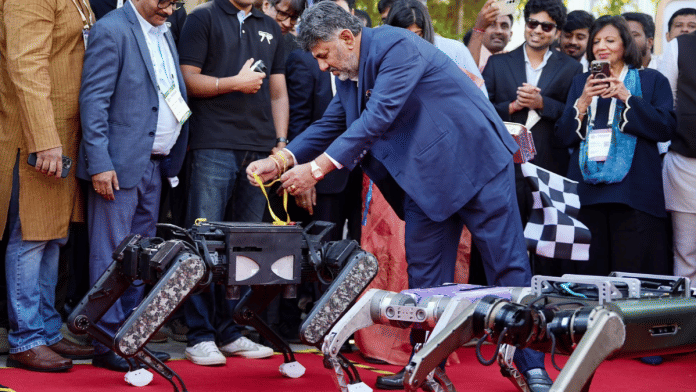
Bengaluru: The three-day Bengaluru Tech Summit concluded on Thursday with investment commitments worth Rs 1,050 crore for Karnataka-based deeptech companies, more than double the Rs 400 crore announced at the 2025 edition.
The commitments include investments from venture capital (VC) firms as well as initiatives by the Karnataka government. “At Future Makers Conclave 2025, the Government of Karnataka and VCs came together to disburse Rs 400 crore towards AI and DeepTech startups. This year’s investment announcements of approximately Rs 1,050 crore involving 24 VCs further reflect the increasing scale of investor participation and the growing ambition of Karnataka’s deeptech ecosystem,” the state government said in a statement.
The latest figures add to Bengaluru’s record of attracting $85 billion in investments since 2010, reinforcing its position as one of the world’s leading innovation hubs.
Biocon founder Kiran Mazumdar-Shaw described the summit as a “stellar success”, saying this year’s edition showcased “cutting edge technologies that are being developed right here in Namma Bengaluru and across Karnataka”.
@blrtechsummit was a stellar success. This time it showcased cutting edge technologies that are being developed right here in Namma Bengaluru and across Karnataka. Under the visionary leadership of CM @DKShivakumar and the dynamic leadership of IT/BT & Home Min @PriyankKharge our…
— Kiran Mazumdar-Shaw (@kiranshaw) November 19, 2026
According to state IT Minister Priyank Kharge, Bengaluru accounts for 47 percent of India’s startup funding inflows. He added that the city was strengthening its position as the country’s AI capital, accounting for 36.3 per cent of India’s domestic AI startup funding and hosting 71 per cent of the country’s AI and deeptech unicorns established since 2023.
“From AI and deeptech to biotechnology, robotics and semiconductors, Karnataka is focused on creating opportunities for startups, researchers, industry and talent, while strengthening global partnerships and ensuring that innovation translates into economic growth, jobs and meaningful societal impact,” Kharge said.
Bengaluru continues to set the pace for India's innovation economy!
At #BengaluruTechSummit2026, we released the 5th edition of the Bengaluru Innovation Report, prepared by ecosystem partners 3one4 Capital, with data from Tracxn.
Karnataka's leadership across the innovation… pic.twitter.com/p2x0OLpuvl
— Priyank Kharge / ಪ್ರಿಯಾಂಕ್ ಖರ್ಗೆ (@PriyankKharge) November 19, 2026
According to the state government, Bengaluru has been home to 1,556 deeptech startups since 2010, of which 1,319 remain active and funded. Together, these companies have raised $3.77 billion. Of the city’s 799 domestic AI startups, 764 are active and funded.
Kharge also said women-led deeptech and AI companies had attracted $323.65 million in funding.
The summit also saw the release of the Bengaluru Innovation Report, a document mapping the city’s technology ecosystem. It was prepared by ecosystem partner 3one4 Capital, using data from Tracxn.
Bengaluru has consistently attracted a significant share of venture capital inflows into India, supported by a diverse technology ecosystem spanning deeptech, information technology, biotechnology, aerospace and e-commerce.
The city is also home to 57 unicorns—startups valued at more than $1 billion—and 212 companies on the verge of reaching that valuation.
“Bengaluru startups reach unicorn status in about six years and exit in about 8.2 years, well ahead of the global average of 11.1 years, and 52 percent of AIF (alternative investment funds) capital now comes from domestic investors. That is the patient capital deeptech needs,” said Prashant Prakash, Chairman of Startup Vision Group, Government of Karnataka.
Karnataka is home to nearly 30 per cent of India’s AI startups, while Bengaluru accounts for 44 per cent of the country’s senior AI leadership-related global capability centre (GCC) job postings, according to the state government. The state hosts 1,088 of India’s 2,117 GCCs, accounting for 51 per cent of the total. This includes 320 of the 506 GCCs established by Global 2000 companies.
The state’s influence in the global AI ecosystem is also reflected in the Karnataka-origin executives leading major technology companies worldwide. OpenAI’s Sachin Katti was born in Belagavi, while Rahul Patil, an alumnus of Bengaluru’s PESIT, was appointed chief technology officer at Anthropic. Amar Subramanya, Apple’s vice-president of AI, is an alumnus of Bangalore University.
(Edited by Chingkheinganbi Mayengbam)
Also Read: What’s driving Bengaluru’s real estate market? Not affordability