



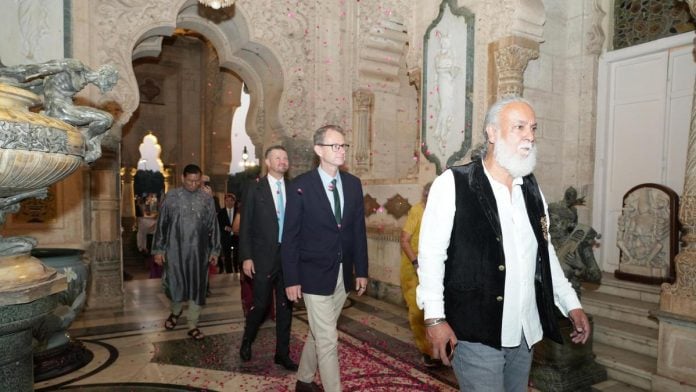
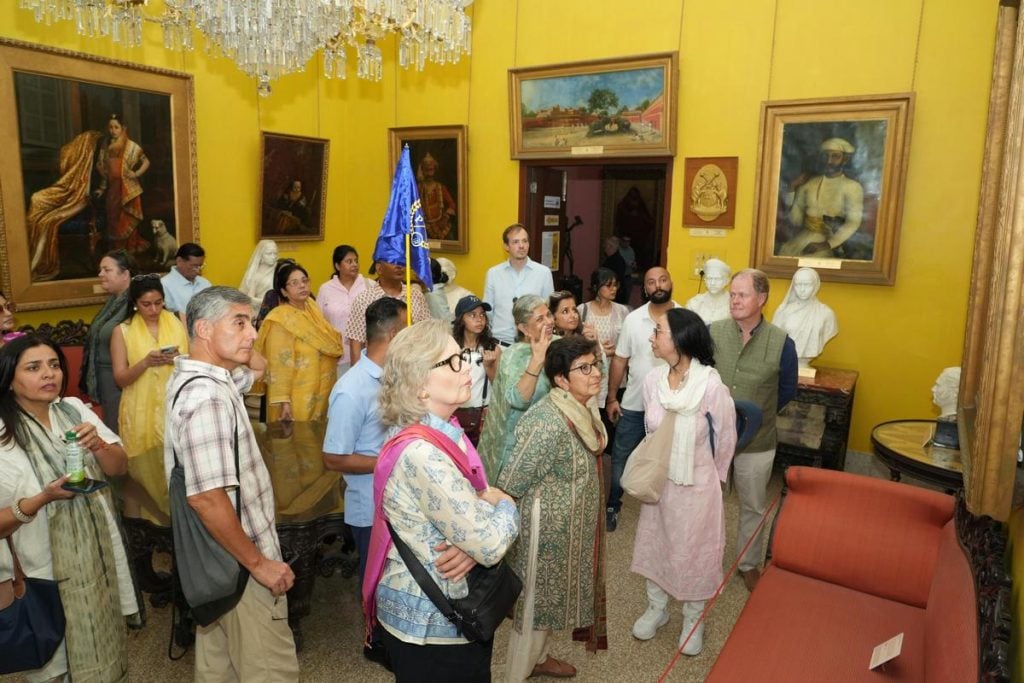
Vadodara: Rose petals rained down on delegates from Switzerland, Ukraine, Austria, Italy and more as they walked through the grand halls of Lukshmi Vilas Palace in Vadodara. Three musicians played the tabla, harmonium and shehnai nearby.
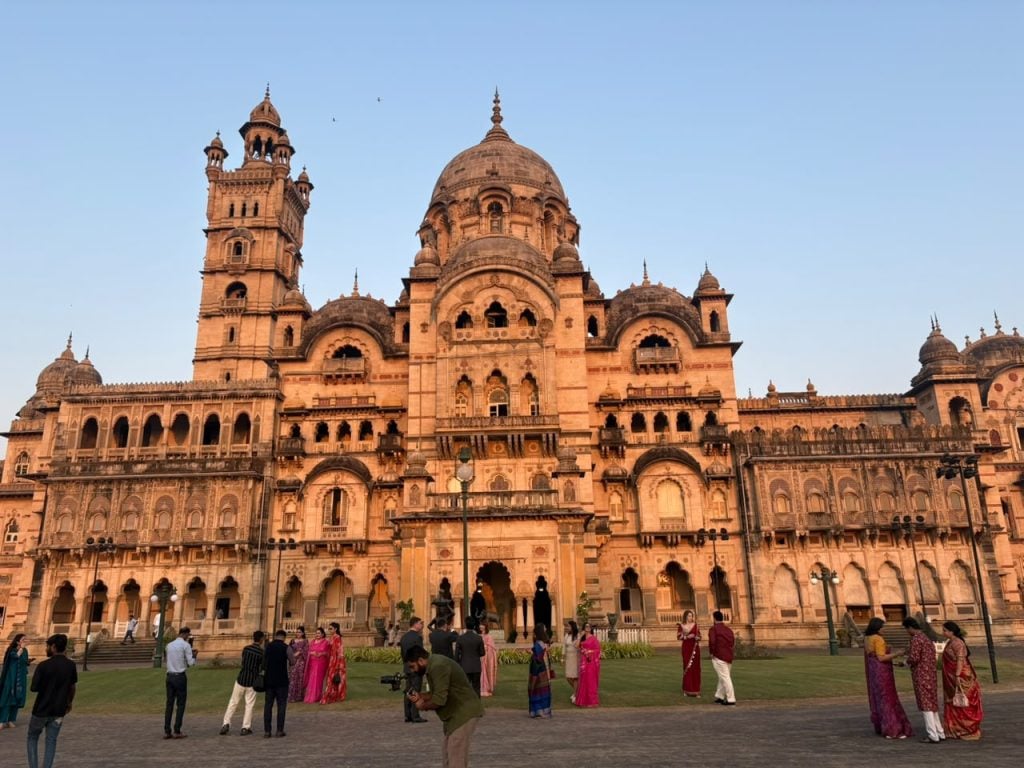
Much like the gathering, the palace blended influences from across continents: Belgian stained glass, Italian Carrara marble and intricate Indian stone carvings. Inside the rooms, the guests gazed at paintings of Saraswati, Krishna and royal durbars by Raja Ravi Varma, one of the artists patronised by Maharaja Sayajirao Gaekwad III.
For Vadodara, it was a chance to use its royal Indo-European legacy to court foreign diplomats and put itself on the global soft diplomacy map.
What had brought the 150 international delegates, including ambassadors from over 30 countries, to Vadodara was Aikyam 2026, a cultural festival organised by Sopaan, an organisation that works to link India’s heritage with the rest of the world. From 10 to 11 October, diplomats from Peru, Spain, the UK, Italy, Sweden, Poland and other countries mingled with art patrons, experts, corporate leaders, media professionals, influencers and members of royal families from across India. Panel discussions, heritage tours to sites such as Jami Masjid in Champaner and even a Garba celebration were part of the programme geared toward rediscovering cultural links between Vadodara and Europe.
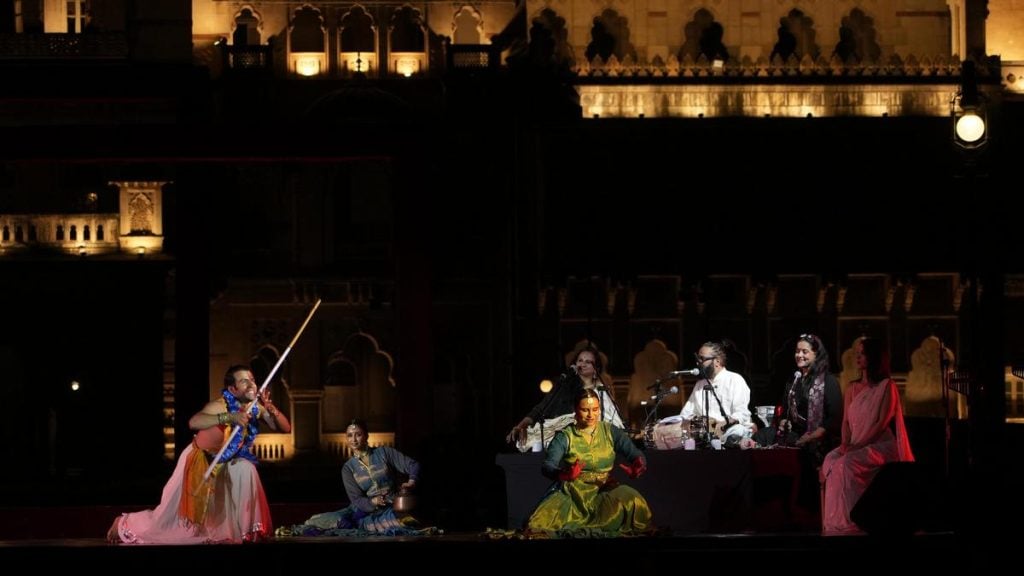
The event also featured a discussion on Vadodara’s art scene at the FGI Auditorium, a talk by writer and popular historian Manu S. Pillai on Raja Ravi Varma’s links with the city, and Myth Made Manifest (Anubhooti), a theatrical presentation inspired by the female protagonists in Ravi Varma’s paintings.
“What we are trying to do is bring people from across continents together, with their diverse cultures. Baroda is an ideal place for this because it has long drawn intellectuals and artists from across India. Raja Ravi Varma, who came from Kerala, made Baroda his home and created masterpieces that brought together European styles and Indian inspiration,” said Monika Mohta, director of Sopaan and retired Indian Foreign Service officer. A former Indian ambassador to Switzerland, Sweden and Poland, she founded the organisation with her son Siddhaant Mohta.
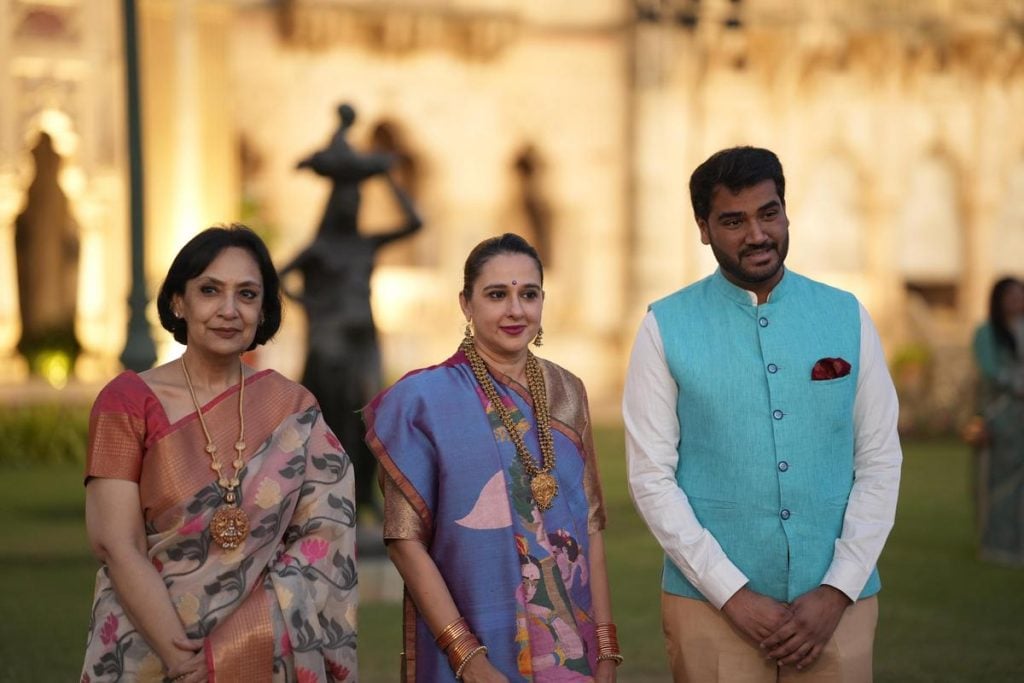
The festival had the backing of Gujarat Tourism, Incredible India, Vadodara MP Hemang Joshi, Federation of Gujarat Industries, the European Union Delegation to India and several local organisations, including the Vadodara Municipal Corporation and Baroda Heritage Trust. Ten European embassies in India also partnered with Sopaan.
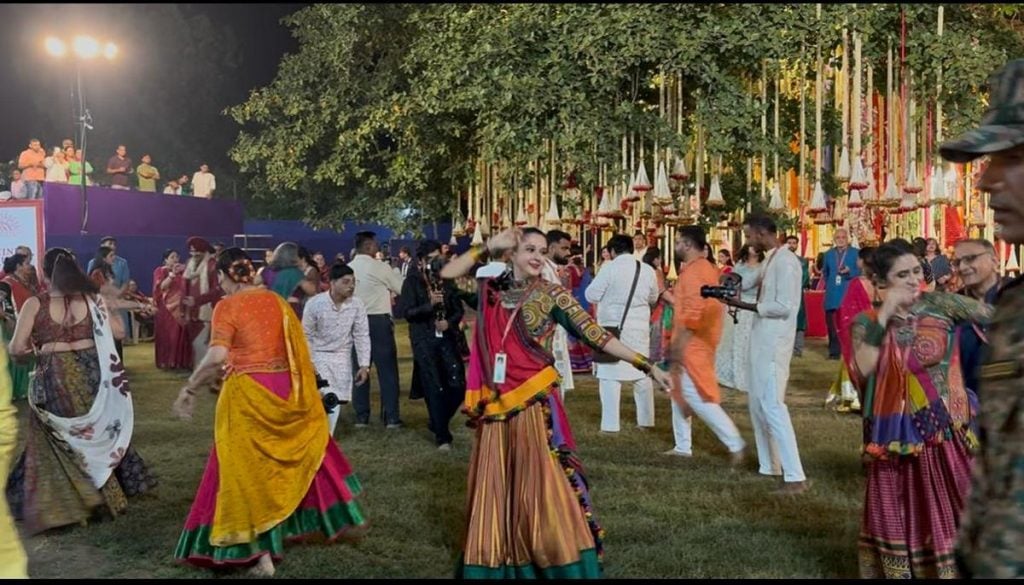
Dressed in a traditional Gujarati ghagra-choli, the titular Maharani Radhikaraje Gaekwad herself joined the Garba celebration at the palace, where thousands gathered to dance.
“We speak of a vision that brought together tradition and modernity, India and the world and royal patronage with public progress,” she said at the festival.
Vadodara now wants a bigger audience for its palaces, royal art collections and centuries of history. The city does not even figure among Gujarat’s list of 10 most-visited destinations, which is dominated by pilgrimage centres such as Ambaji, Dakor, Dwarka and Somnath. Even for these top 10 destinations taken together, foreign tourist visits numbered just 16 lakh in 2025, up from 14.7 lakh in 2024.
The Baroda Maharaja whose legacy arguably looms largest in the city is Sayajirao Gaekwad III, who ruled for 64 years until 1939 and turned Baroda into an epicentre of the arts. It is this history that is being seen as the key to Vadodara’s international appeal.
“Maharaja Sayajirao, through his long, wonderful leadership here in Baroda, saw off the British in the most amazing way, taking great things from the West, but absolutely asserting the value and importance of all local traditions,” said Deborah Swallow, an art historian and former director of the Courtauld Institute of Art in London. “That tradition is being beautifully followed here today in Baroda. The royal family, working alongside all the other agencies and government institutions… is really working together to do something which is going to be very striking and will add to the great future of Baroda.”
Also Read: Amber Fort’s mural makeover — X-rays, UV light & Rs 2.32 cr to undo botched repairs
A world tour in a durbar
At the palace, retired IAS officer and conservationist Ranjit Singh stopped before a sculpture of Ustad Faiyaz Khan, one of the great names of Hindustani classical music.
“Maharaja Sayajirao Gaekwad III was one of the great patrons of art among the princely states of his time. He patronised Raja Ravi Varma, provided him with a home in the palace compound and acquired works for both the public museum and the palace collection,” Singh said. “He also patronised music. Ustad Faiyaz Khan was at his court, along with musicians such as Abdul Karim Khan.”
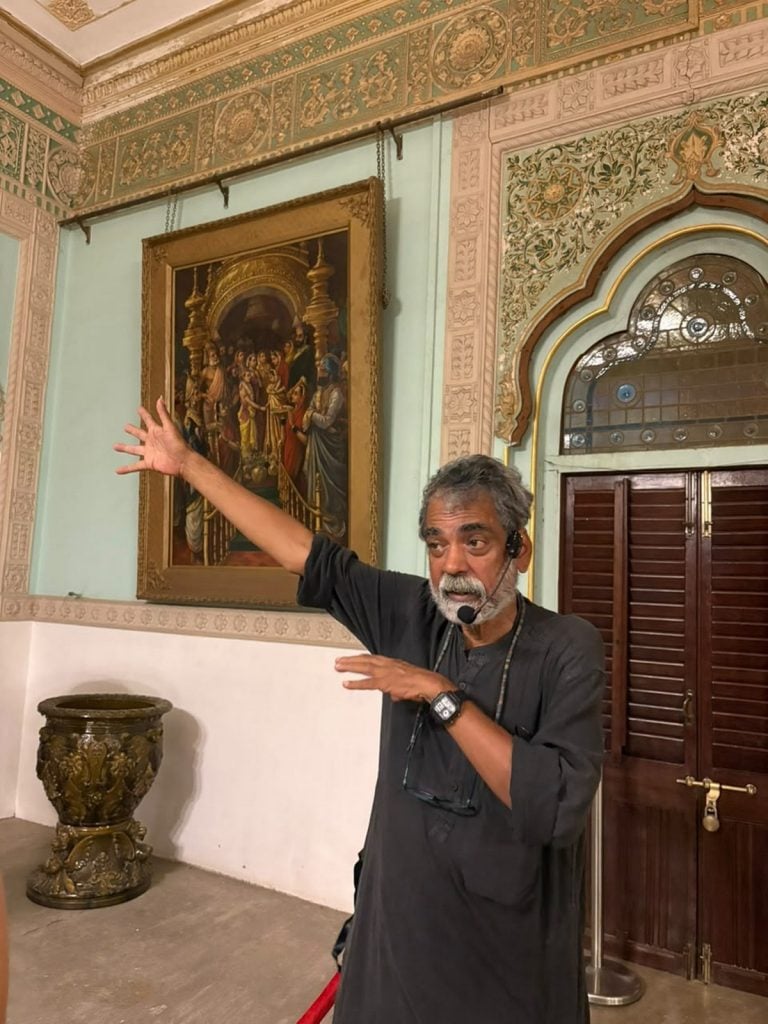
Sculptures of musicians, painters and Indian saints are displayed across the palace. There’s art even in the glass panels at the palace. One guest pointed to a stained-glass rendering of Ravi Varma’s Yashoda and Krishna. The original painting sold for Rs 167.2 crore at auction earlier this year.
The Durbar Hall, used for royal ceremonies, is a world tour in one room. It has Murano glasswork from Italy, a Mughal-patterned lacquered ceiling crafted by specialists from Italy, silver-plated crystal chandeliers from England, Venetian flooring and Belgian stained-glass windows depicting Hindu mythology. The palace also had elevators, one of them hand-operated, and punkahs, large ceiling fans fitted with pulleys.
“I have visited several temples and palaces, but this place feels especially rich in history and culture. There is something very positive about being here,” a guest from Italy said.
Beyond the palace, Sayajirao Gaekwad left his mark on the city through public infrastructure, education and industry. He expanded India’s first narrow-gauge railway, built a gravity-based water supply system, and established institutions such as Baroda College in 1881, Kala Bhavan in 1890 and the College of Indian Music, or Gayan Shala, in 1886. He also supported the region’s textile industry.
His second wife, Maharani Chimnabai II, was a strong advocate for women’s education and rights. A hunter and writer, she co-authored a book titled The Position of Women in Indian Life in 1911. She later became the first president of the All India Women’s Conference in 1927.
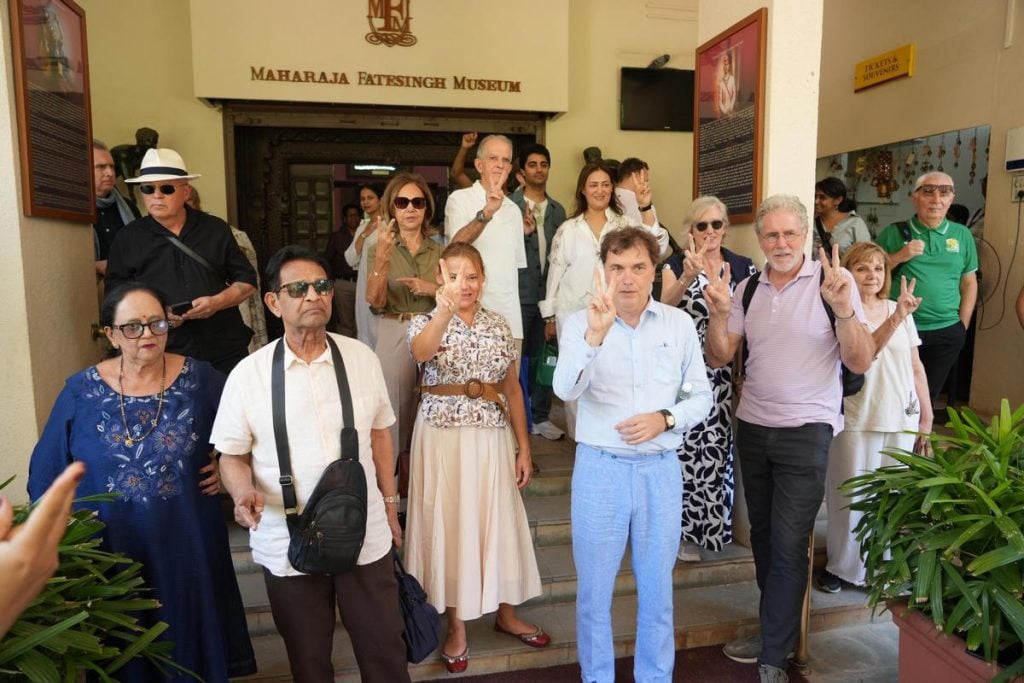
“When Sayajirao sought to promote women’s education, he began within the royal household, ensuring that his wife received an education before extending the initiative more widely. Baroda introduced compulsory primary education experimentally in 1893 in a rural area before implementing it across the state in 1906,” said Manda Hingurao, curator and secretary of the Maharaja Fatehsingh Museum.
Baroda beyond borders
At its height, the princely state of Baroda sprawled well beyond present-day Vadodara, with territories in central and northern Gujarat as well as Saurashtra. It had close links with trading centres such as Surat, Bharuch and Ahmedabad. Textiles, indigo, silk, carpets and agricultural produce were an important part of its economy.
But it was under Sayajirao Gaekwad III that the princely state—ruled by the Gaekwads from 1721 until 1949—acquired an internationalist sensibility in everything from the arts to science, education and administration. This was aided in no small part by the Maharaja’s overseas travels—28 trips by some counts—to Europe, North America, Africa and the Middle East.
“He observed institutions, administration, science, technology and education and brought specialists to Baroda to help adapt useful ideas to local needs. But he did not just seek to reproduce European art in India. The more interesting ambition was to learn from the world while building a state rooted in its own society,” Gaekwad said.
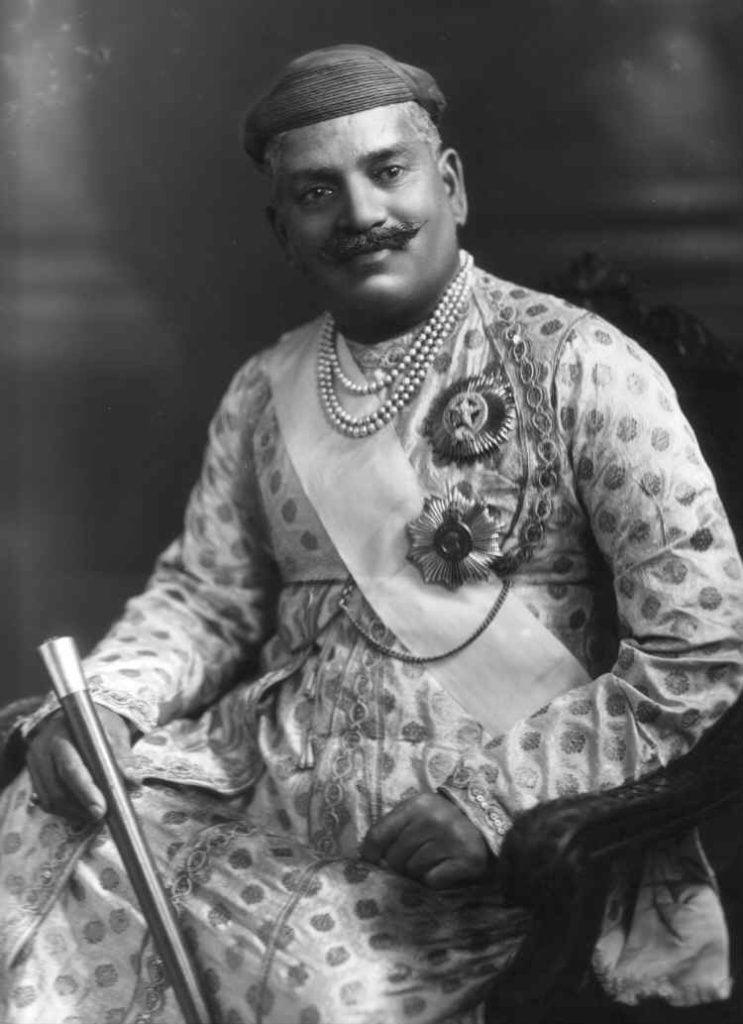
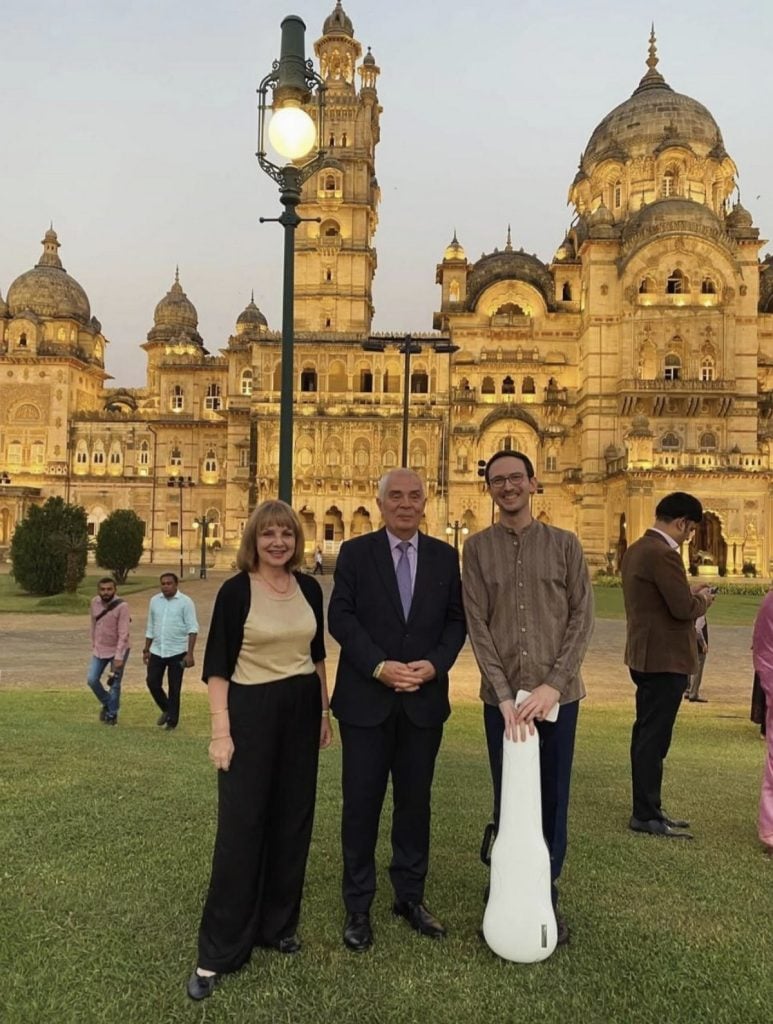
The Maharaja’s vision can still be seen in Vadodara’s architecture. Its Indo-Saracenic buildings combined Indian and Islamic forms with European influences. Architect Charles Mant designed Lukshmi Vilas Palace, which Robert Chisholm completed in 1890.
Hingurao said the palace was initially designed by Major Charles Mant, who feared his calculations were wrong and the structure would not stand. He died by suicide, after which Chisholm took over and completed the palace over 12 years.
The palace brings together Rajasthani, Maratha, Gothic and Islamic elements.
“So, this is all blended, but because of the size, there are no stylistic hazards,” Hingurao said.
Also Read: Kolkata came late to India’s cocktail party. Now fine spirits meet fish sauce & khajur gur
Garba, galleries, Gaekwads
The festival is not the end of Vadodara’s bid for cultural heft. The Gaekwad family now plans to expand the Maharaja Fatehsingh Museum, adding a modern storage facility for more than 40,000 objects from the royal collection, new galleries, an interpretation centre, an auditorium and visitor facilities.
The family also plans to take its art beyond Baroda. Radhikaraje Gaekwad, custodian of the royal collection, said Raja Ravi Varma’s paintings would be exhibited in India and abroad. The works, kept at Lukshmi Vilas Palace and the Maharaja Fatehsingh Museum, form one of the largest private collections of his original paintings. Yet they have been largely out of sight for years.
Gaekwad said they were last exhibited abroad at London’s Victoria and Albert Museum about a decade ago, and in India at Mumbai’s National Gallery of Modern Art around 20 years ago.
The idea, according to Siddhaant Mohta, director of Sopaan, is to move beyond familiar accounts of royal history and monuments.
“Heritage is not just about preserving the past. It is about keeping traditions alive, creating new cultural connections and giving people compelling reasons to experience a place first-hand,” he said.
Those ‘first-hand experiences’ were on offer at the royal Garba celebration.
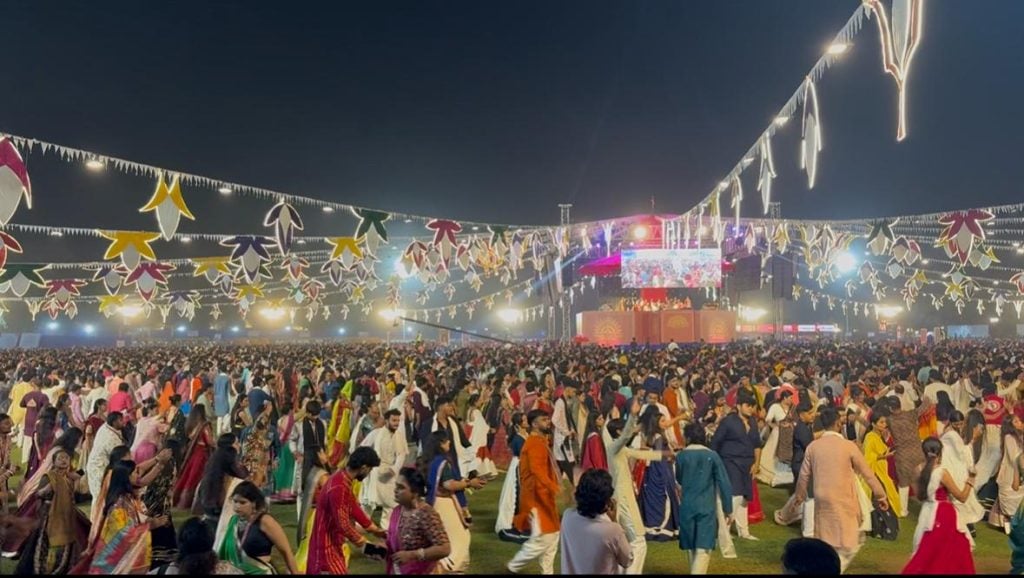
The foreign delegates largely followed the event’s dress code: women arrived in saris, lehengas and ghagra-cholis, while some of the men wore kurtas and others formal suits. The enthusiasm had begun even before they reached the palace. On the bus, one delegate listened to Garba songs as an Indian fellow passenger taught him the hand movements.
At the palace, thousands danced in circles. Delegates filmed the spectacle on their phones; some joined in and tried to learn the steps themselves.
“I can’t believe how amazing this is. Thousands of people are dancing together, doing the same steps and having the best time. It is so much fun to be here,” said Alison Barrett, director of the British Council in India, dressed in a pink beaded sari.
Swedish art patron Niclas Forsman stood at the edge of the crowd in a formal suit, smiling almost in disbelief as he watched the Garba unfold in front of him.
“I am overwhelmed. It’s like a fairy tale, seeing the colours and the people,” he said.
(Edited by Asavari Singh)