







New Delhi: For the past 60 days, Shagufta has been shuttling between her house in Shaheen Bagh and Old Delhi, holding a bundle of photocopied documents and records that are nearly half-a-century old. The 50-year-old moves from one booth to another, searching for her parents’ names in the 2002 electoral roll. Her parents are no longer alive but today, they hold the key to completing a process that has consumed her daily life.
The Special Intensive Revision (SIR) exercise, launched by the Election Commission to update electoral rolls, has begun in Delhi. However, the process has been shrouded in confusion and misinformation, causing anxiety among citizens.
The process requires an existing voter to show that the names of their parents or grandparents appear in the reference 2002 electoral rolls. But it is not as simple as it seems.
Beyond the lack of clarity surrounding the process, people like Shagufta are also grappling with a constant stream of rumours. Outside SIR booths and photocopy shops in Delhi’s Shaheen Bagh area, people wait with folders clutched to their chests, and discuss what might happen if the process is not completed on time. From the crowd’s chatter, a few voices stand out: “Muslims will be sent to Bangladesh or Pakistan”; “Hindus won’t face any problem”; “Detention centres will be built for those whose names are removed from the voter list”; “We have lived here our whole lives, and now we have to prove we belong.”
In 2019-20, Shaheen Bagh was the epicentre of one of the biggest women-led movements against the Citizenship Amendment Act (CAA). Nearly six years later, its residents are scrambling for documents that can save them from disenfranchisement.
Also Read | Delhi SIR: Enumeration forms distributed to 93% voters; over 7% forms digitised so far
Generations caught up in SIR
Shagufta’s struggle does not end with her. Inside her home, two generations are caught up in the SIR exercise. As she searches her parents’ Old Delhi neighbourhood for decades-old records that show her parents voted in 2002, her husband is rummaging for the same in his hometown in Saharanpur, Uttar Pradesh. Meanwhile, their 18-year-old daughter anxiously waits for her first voter ID, hoping it arrives before the 29 July deadline to submit the enumeration form.
For Shagufta’s sister-in-law, who lost her husband and recently returned from Dubai, the process is more complicated than others.
“Two generations of my family are facing different sets of problems while filling out a single form,” said Shafugta, and added that not just her family but everyone going through the process is frustrated, exhausted, and has been struggling for months.
“We don’t know what problem SIR is going to solve for the country, but it has definitely created a great deal of chaos in everyone’s life,” she said.
Shagufta, who participated in the Shaheen Bagh protests that demanded the repeal of CAA and the National Register of Citizens (NRC), said the SIR exercise is different. “During the 2019 protest, we stood up for the students who were beaten up and for our community. But this feels different.The SIR process is like the census, but one where we are struggling to ensure our names are not removed from electoral rolls,” said Shagufta.
Confusion, rumours and fear
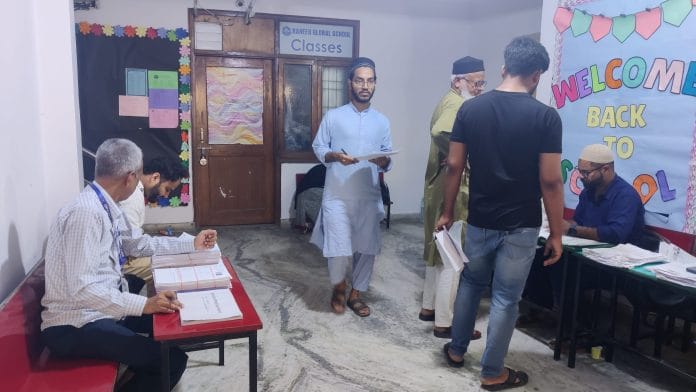
In Shaheen Bagh’s F Block, the premises of the Rafeeq Global School undergoes a transformation every afternoon. Shortly after 2 pm, the school turns into a makeshift camp to carry out the SIR exercise until 7pm. Three Booth Level Officers (BLOs) arrive, carrying bundles of forms. Volunteers arrange plastic tables and chairs in the school compound.
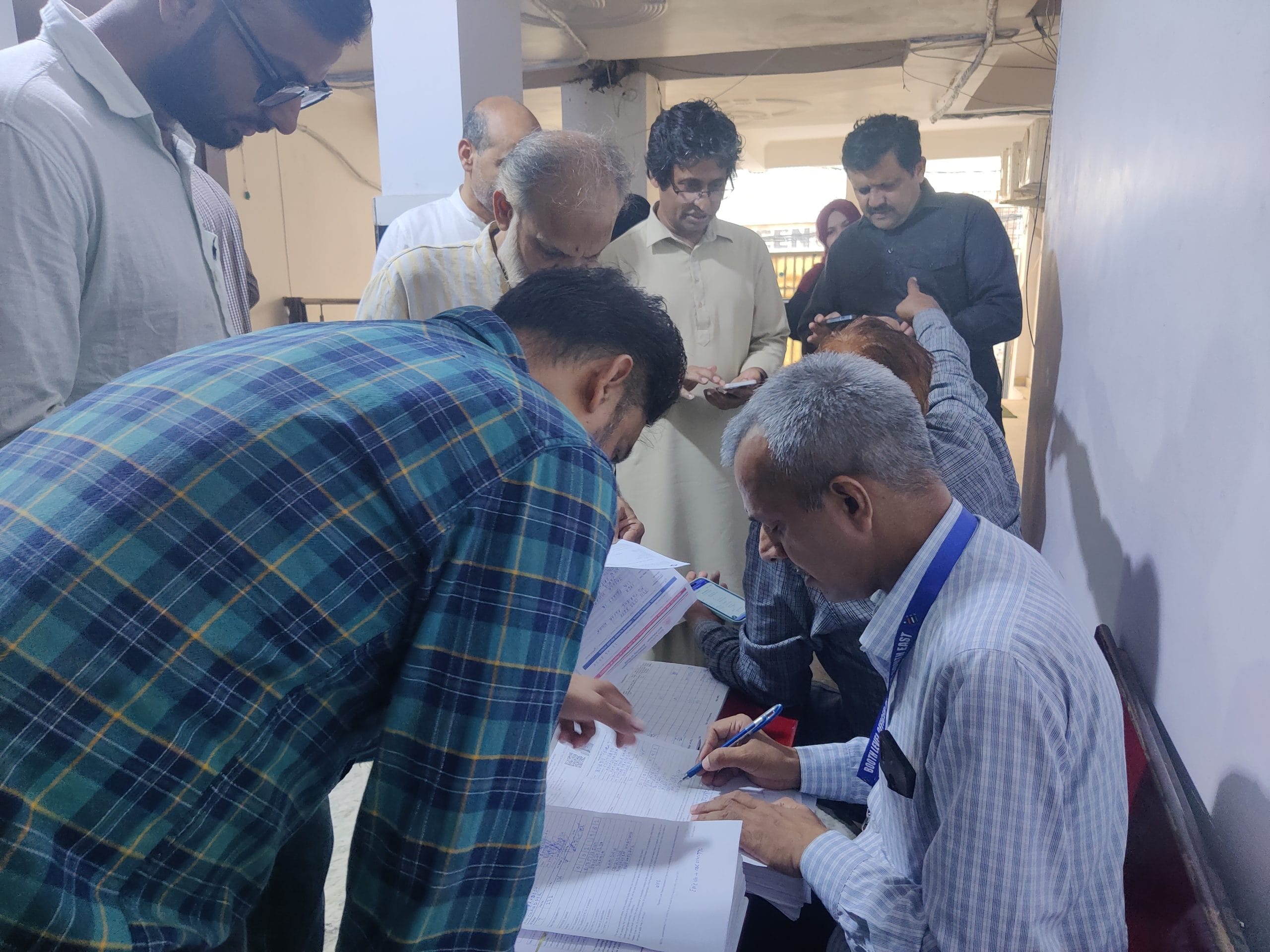
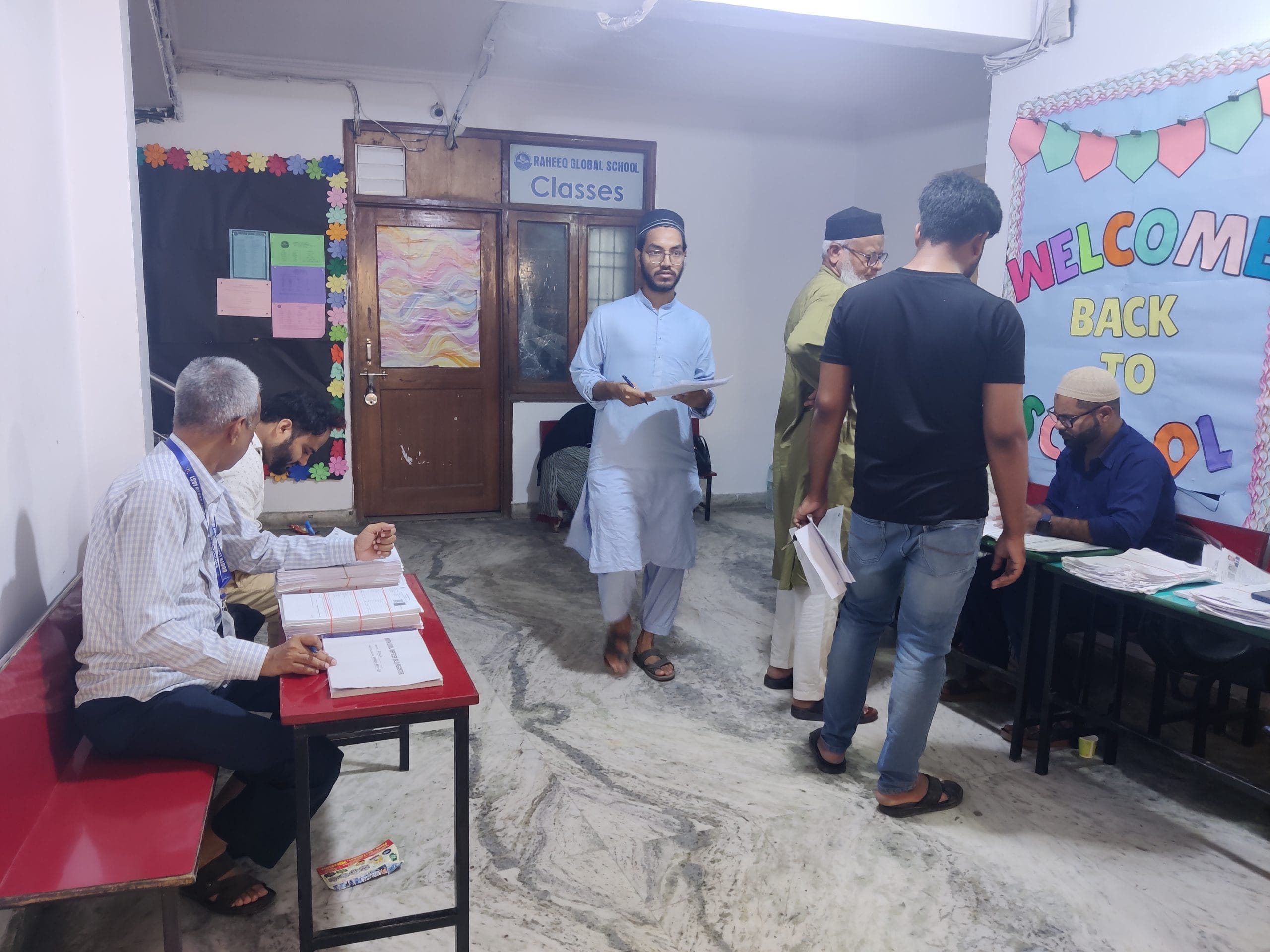
Within minutes, the courtyard fills with people. Some carry a bunch of documents in old, punch folders, others scroll through scanned copies of certificates on their phones. As elderly residents make enquiries, their younger family members oscillate between desks in an attempt to understand how to fill the form correctly in one go.
Soon the camp is brimming with conversations — residents are throwing one query after another and BLOs are answering their questions. A few residents, exhausted by the long wait and the gruelling heat, use the very forms they are submitting to fan themselves, as the queue inches forward.
“We just want to complete this process as soon as possible,” said 40-year-old Tanvir Fatima, carefully filling in her grandmother’s details while sitting on a bench. “People can say whatever they want, but Muslims don’t have the privilege of losing their voting rights. We cannot afford to take that risk.”
Sitting on a bench outside the camp, Fatima fans herself with a handkerchief. Next to her, lay folders stuffed with Aadhaar cards, voter IDs, birth certificates, and passport-sized photographs of her and her family members. Around her, there are murmurs of detention centres, deportation and deletion of names from the electoral rolls.
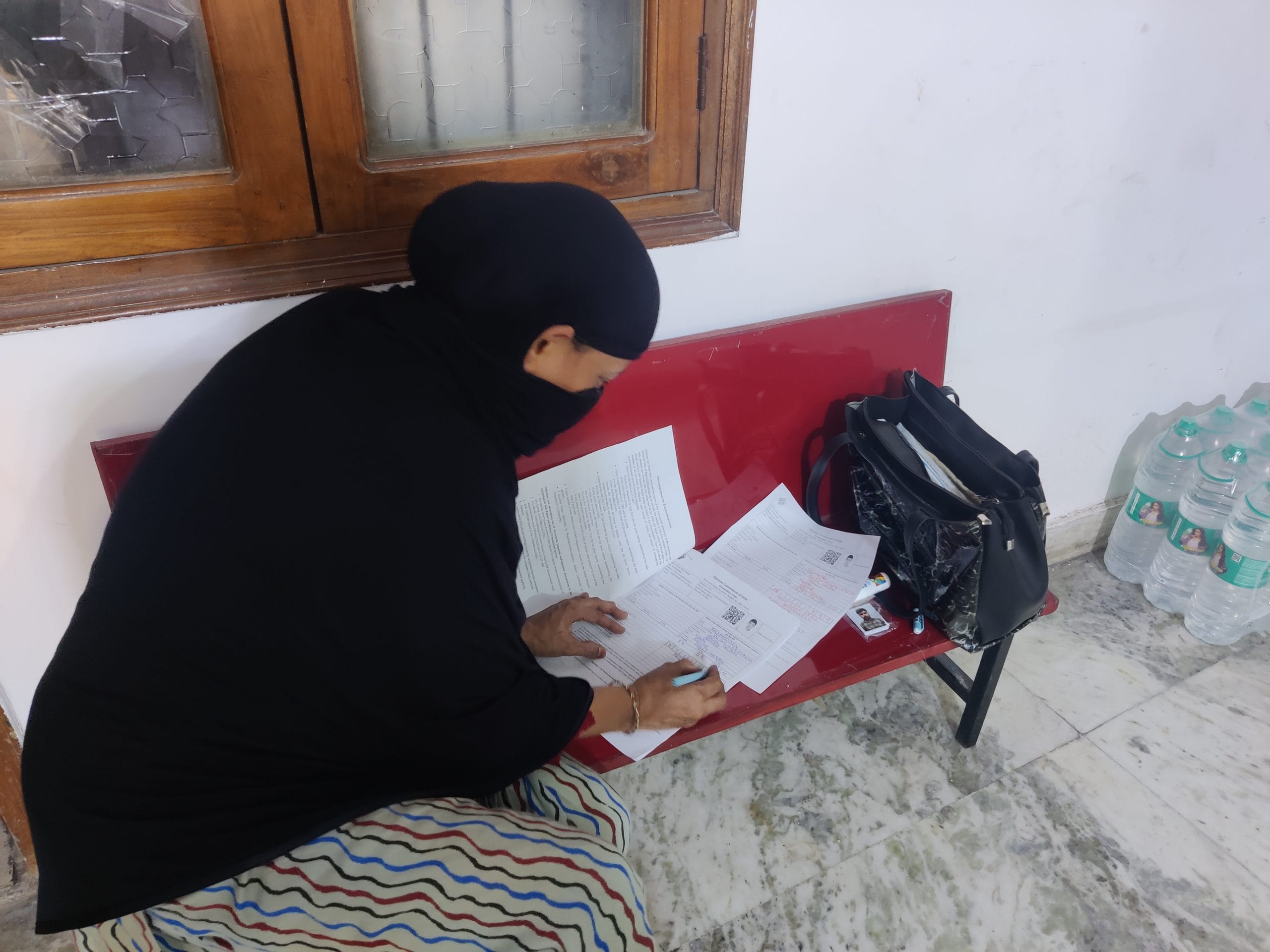
“Everyone else in my family has already submitted their forms. I’m the only one left because it took me roughly 15 days to procure the required documents,” said Fatima, carefully pasting a passport-sized photograph onto her application.
Fatima had not been able to find her parents’ names in the 2002 electoral list and hence, she had to resort to locating her late maternal grandmother’s records from Meerut in Uttar Pradesh. Fatima’s relatives in Meerut visited the concerned BLO, collected all of her late grandmother’s documents — including the 2002 electoral roll which has her name, her voter ID, Aadhaar card, and photocopies of the family’s ration card.
“People keep telling me that if I don’t submit it on time, I’ll be sent to a detention centre. I don’t know if it’s true, but hearing it every day is frightening,” said Fatima.
The quest for documents
Amid the confusion and rumours, 53-year-old Tariq Khan sits at the corner of the school staircase, with his folder of documents. Unlike many others, Khan had expected the process to be straightforward for him and his family. His father was a central government officer who worked in the Department of Telecommunications (DoT). This, Khan assumed, would make tracing his family’s records relatively easy. However, he was unable to find his parents’ names in the reference electoral roll, despite checking online.
“I thought I would travel to my hometown in Patna, collect my late parents’ and grandparents’ documents, and complete the enumeration form. But when I reached there, I ran into the biggest problem,” Khan said.
Khan not only met the concerned BLO, but also the village panchayat head and former neighbours to seek help in locating the required records. After searching for more than a week, he returned empty-handed.
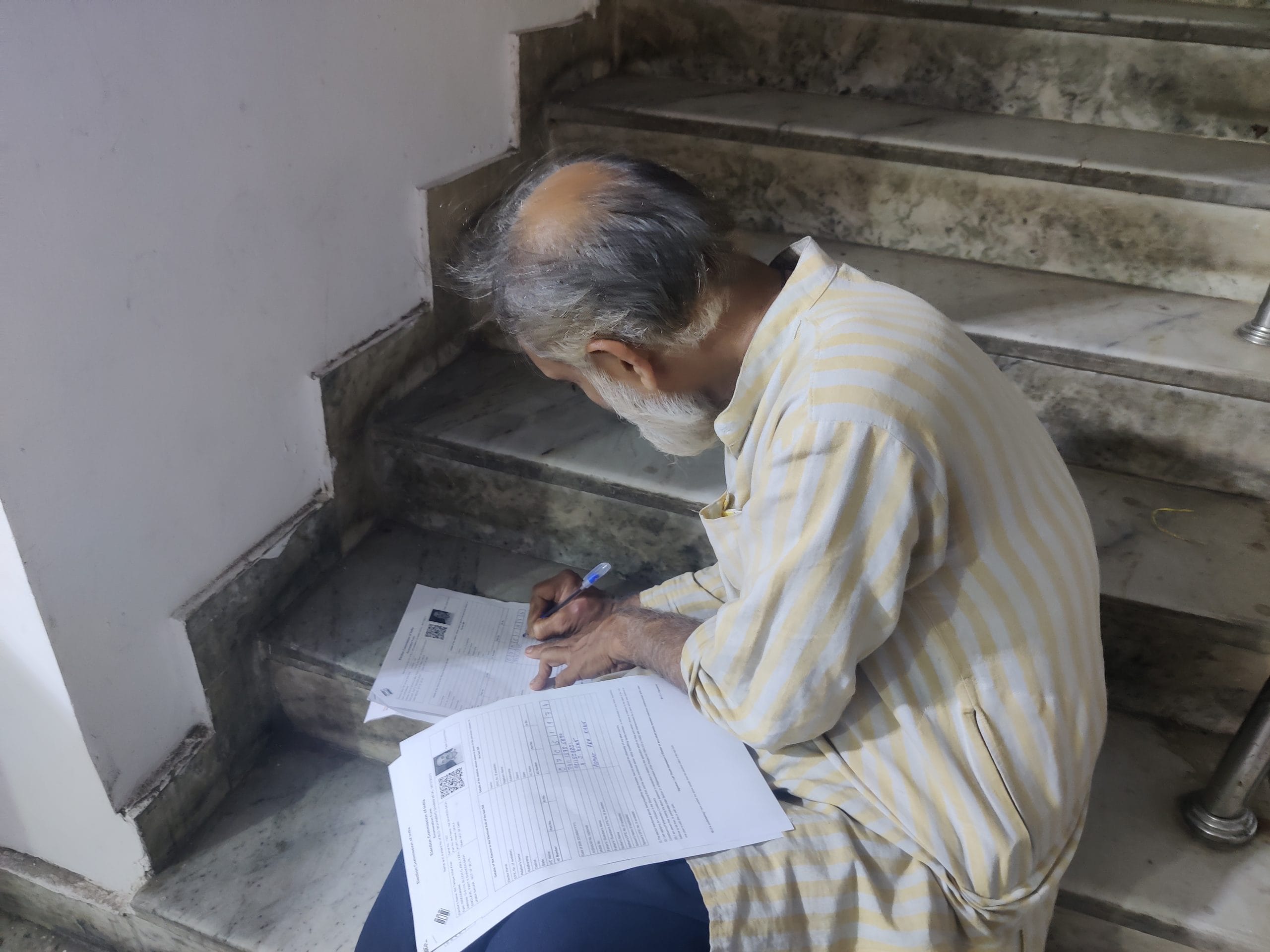
Khan spent the next week meeting different BLOs in his locality, trying to find a way out from the situation he found himself in.
“After running from pillar to post for 15 days and missing work in the process, I finally learnt about the self-declaration option,” he said. The provision allows applicants to submit the form if they can trace their own name in the 2022 electoral roll. But this is subject to further scrutiny.
“My father was a central government employee, yet I couldn’t find his name on the electoral roll. I had to travel from one state to another just to fill a single form. If this is what I’m facing, you can imagine what others are going through,” said Khan furiously, pointing to the crowd waiting in long queues.
SIR is tough on BLOs too
As residents navigate the ambiguity surrounding the SIR process, they throw breathless, anxious questions at BLOs: “My husband lives in Dubai. Can I collect and fill the form on his behalf?”; “Which column do I need to fill my own information?”; “Who is my BLO, and where can I get my form?”; “Can I use my maternal grandmother’s documents?”; “I filled the form incorrectly. Can I get another one?”
The questions keep flowing in an endless stream. While most BLOs get annoyed answering the same set of questions again and again, few address these queries patiently.
BLOs are the Election Commission’s field-level officials responsible for updating electoral rolls. They usually work as government school teachers, Anganwadi workers, panchayat staff or other government officers, who are assigned election duties in addition to their regular jobs.
Afzal, for instance, is a librarian at Jamia Millia Islamia University. He has been carrying out BLO duties at F Block in Shaheen Bagh for the past three months. As part of the SIR exercise, Afzal completes his door-to-door visits from 9 am to 1 pm, offers his afternoon namaz, and then sits at the camp until late evening to help residents with the process.
“The entire exercise requires us to make door-to-door visits and distribute forms, but it is not as simple as it sounds. Sometimes people do not open the door, sometimes they are not home, and other times, families have shifted years ago,” Afzal said, explaining the need to set up camps after their morning rounds. These camps allow people who missed the home visits to submit forms or clarify any doubts they have.
In the camp at Block F, Afzal sits without a fan on a plastic chair along the school corridor. The table in front of him is covered with stacks of forms. He endures Delhi’s muggy weather, even as residents crowd him with their queries.
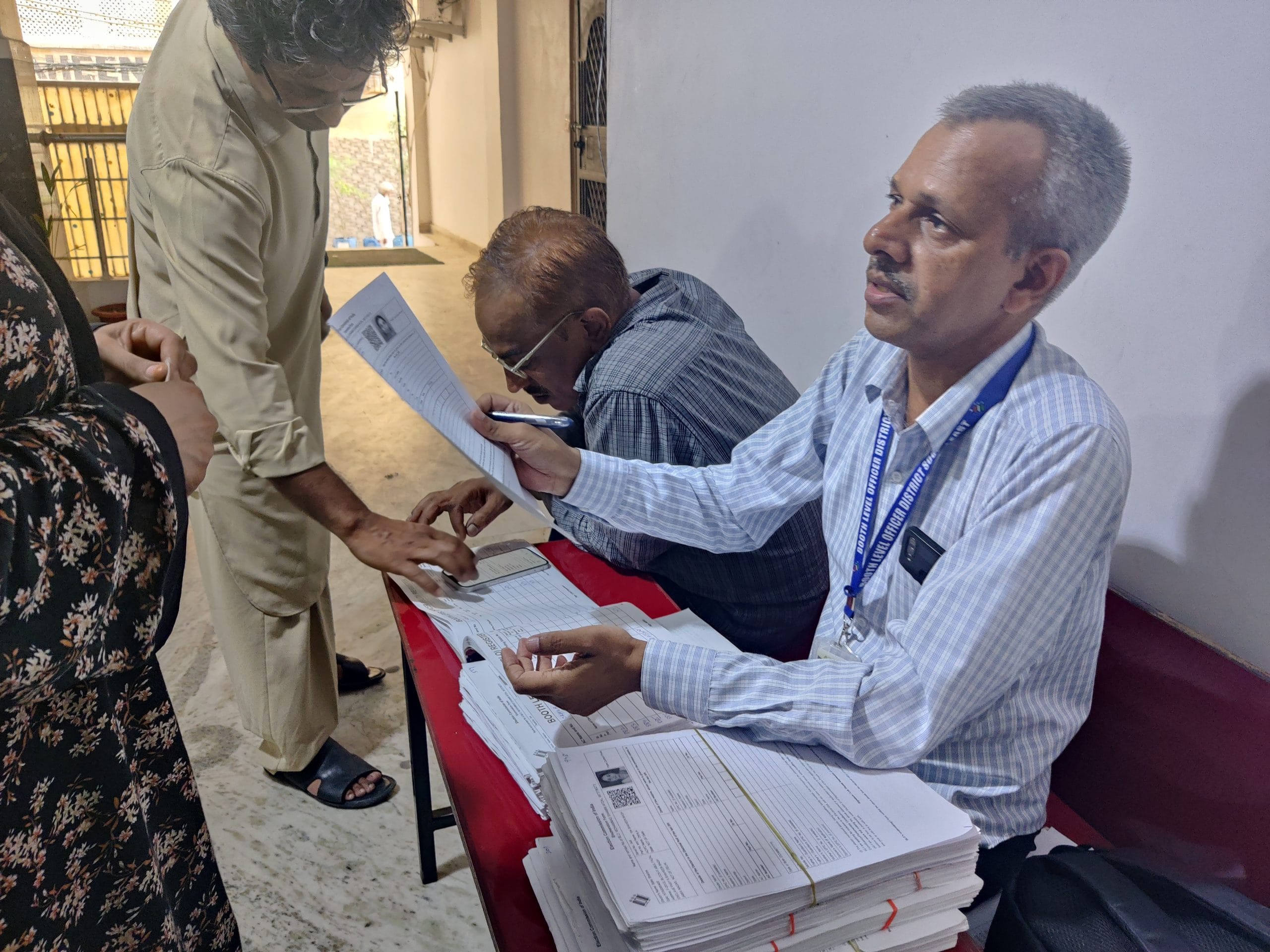
Afzal’s routine reflects the additional responsibilities carried out by many BLOs, who often work beyond their assigned hours. Residents from neighbouring booths also approach him because of his calm and patient approach.
“I know my BLO is someone else, but I needed some clarity so I came to him,” said a resident of Abul Fazal Enclave, about 2.5 kilometres away from Shaheen Bagh, as he showed his form to Afzal for verification.
Afzal’s work does not end with his field duties. After he returns home, he continues to process the forms digitally. Each form he collects must be scanned and uploaded through a mobile app.
“One form takes around 15 to 20 minutes to digitise. If there is a technical glitch, however, we have to repeat the entire process from scratch,” he said, describing how BLOs face long hours and difficult conditions.
Political parties too appoint representatives or Booth Level Agents (BLAs) to help out during the electoral revision process. Afzal pointed out, however, that they don’t actively participate in the process. “Either BLAs don’t show up altogether or they just come for a few minutes to mark their presence. Nobody wants to work in this heat and rain,” he said.
Roughly 20 kilometres away, in Old Delhi, a few BLOs have come up with their own methods to reach out to more residents. They have started evening camps from 9 pm to 11 pm to accommodate people who are unavailable during the day.
“During daytime visits, many people are away at work or the concerned family member is not available. So, we sit at a designated place near a temple at night, and ask people to come after finishing their work and collect their forms,” said a BLO from Old Delhi, requesting anonymity. He added that the night camps have started attracting more residents.
Yet, many residents are having to skip their work to complete the paperwork. Shafugta, who runs a beauty parlour from her home to support her family, has had to shut down her business for the past two months as she has been occupied with arranging the necessary documents.
“I will think about restarting my work only after everything is completed and every member of my family has submitted their forms,” she said.
(Edited by Aakriti Handa)