





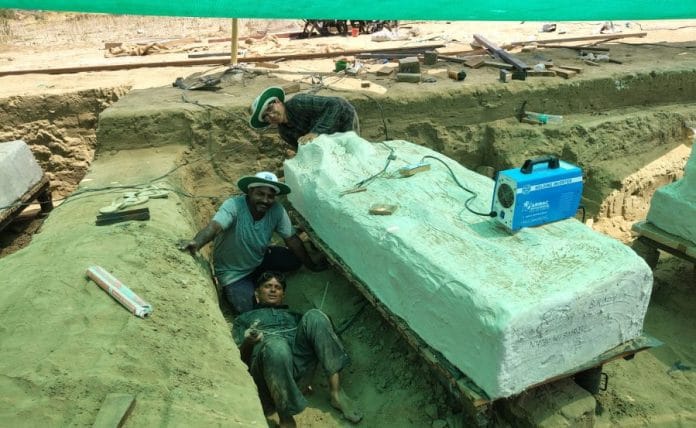


Baghpat: The Harappan dead don’t give up their secrets easily. At Rakhigarhi, the sprawling Harappan metropolis in Haryana, archaeologists recently encountered a problem that no manual could neatly solve – lifting the millenia old skeletons.
With its 165-year-old institutional legacy, the Archaeological Survey of India (ASI), had an army of archaeologists, conservators and tonnes of experience. What it lacked was someone with the rare experience of moving ancient human remains from the ground without damaging them.
Buried beneath the trenches in Rakhigarhi were eight fragile 4,000-year-old Harappan-era skeletons. Excavating them was one challenge, lifting them intact was another. The ASI team did what field archaeology rarely admits to – they outsourced the miracle.
In May, the call went out to 49-year-old Tahir Hussain in Sinauli, a village in Uttar Pradesh’s Baghpat district. A graduate in English literature from Meerut’s Chaudhary Charan Singh University, Hussain has no formal training in archaeology but among archaeologists he is known for something unusual – a steady pair of hands.
“We called Hussain and his team to lift the skeleton, so that these can be sent to the Anthropological Survey of India, Kolkata. His team has done this type of work before and knows how to do it,” said Manoj Saxena, archaeologist and director of Rakhigarhi excavation.
ASI has handed over three complete human skeletons along with skeletal fragments recovered from other burials to the Anthropological Survey of India.
“The findings from the Rakhigarhi remains are expected to contribute substantially to understanding the origins, health, mobility, and biological history of one of the world’s earliest urban civilisations,” reads the Culture Ministry statement on 22 June.
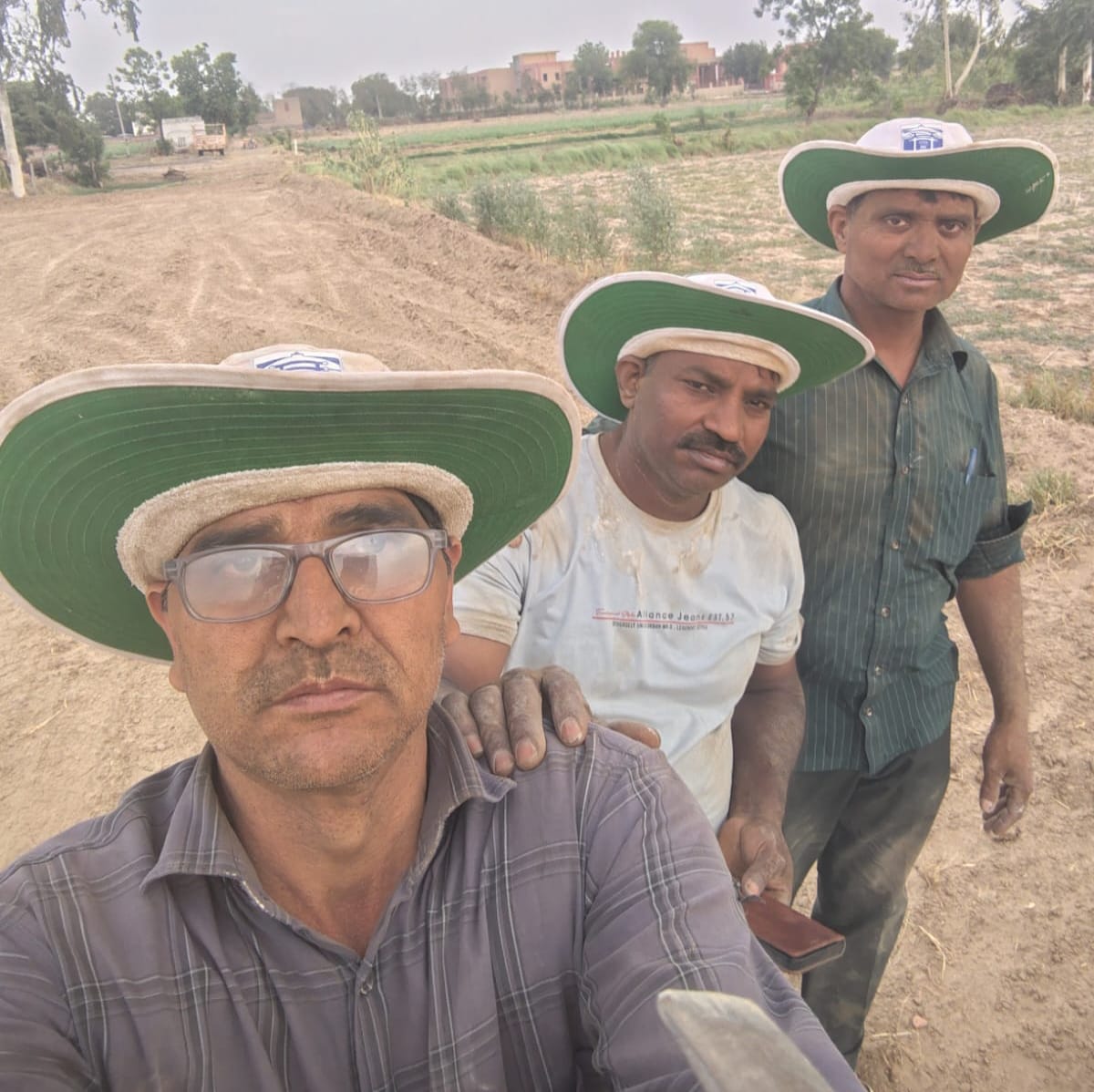
ASI’s excavation codes don’t teach how to lift a skeleton from soil. For all its institutional heft, the ASI often relies on a parallel workforce that exists outside archaeology’s formal ranks. Across excavation sites, local craftsmen, mechanics, carpenters and self-taught enthusiasts quietly solve problems that textbooks and training manuals do not. That’s where men like Tahir Hussain come in – a toolmaker who became one of ASI’s most trusted hands for lifting fragile burials and preserving excavated antiquities.
From the cemetery of Sinauli to the sprawling site of Rakhigarhi, his unlikely journey reveals how some of India’s most important archaeological discoveries have depended on expertise learned in workshops and fields rather than classrooms.
For decades, engineers, teachers, fishermen, and local villagers have been ASI’s unsung warriors who without formal training have braved rugged terrain. In Tahir’s four-member team, all have different profiles – tool maker, carpenter, soil lifter and an archaeologist. All come with prior experience. It started with 2005 excavation at Sinauli and then again in 2018 after a gap of 12 years.
This time in Rakhigarhi, the assignment was equally delicate.
“Eight Harappan skeletons, one mound, and absolutely no room for error. The remains could crumble with one wrong movement,” Hussain recalled, sitting at his shop, Bharat Tools, in the congested lanes of Baraut, 7 km from the iconic Sinauli site.
Also read: ASI digging Balirajgarh 4th time. Why Ancient Bihar is important to Modi govt
A delicate process
In the last week of May, Hussain was dealing with customers at his tool shop in Baraut when his phone rang.
On the other end was archaeologist Deepak Kumar.
“We need you for lifting skeletons. Jaldi se aa jayiye (come quickly),” Kumar told him. The call came from Rakhigarhi, about 150 km away from where he resides.
Within hours, Hussain began assembling his team. He called Samoon and Sunil Jani, friends from Sinauli who were also busy with their regular work. What makes them a team is their passion for archaeology. Soon, the three were on a bus to Rakhigarhi.
When they arrived at Mound No. 7, the challenge waiting for them was formidable. Several burials had been unearthed, but only four skeletons were intact enough to be lifted. The rest had already fragmented over centuries underground.
ASI officials decided to preserve and remove the four complete skeletons along with two burial offerings – a storage jar and a set of goblets.
Yet the bigger challenge lay beneath their feet. Unlike Sinauli’s compact soil, Rakhigarhi sits close to the paleochannels of the ancient Drishadvati river. The soil here is sandy and loose, making it far more difficult to lift a burial in one piece.
“Our entire process depends on how much support the soil can provide to the skeleton,” Hussain told ThePrint after returning from the site on 9 June.
Before touching a single burial, the team spent hours discussing the soil condition, determining the width of wooden planks that would eventually support the ancient remains.
“Only then did the painstaking work begin,” said Hussain.
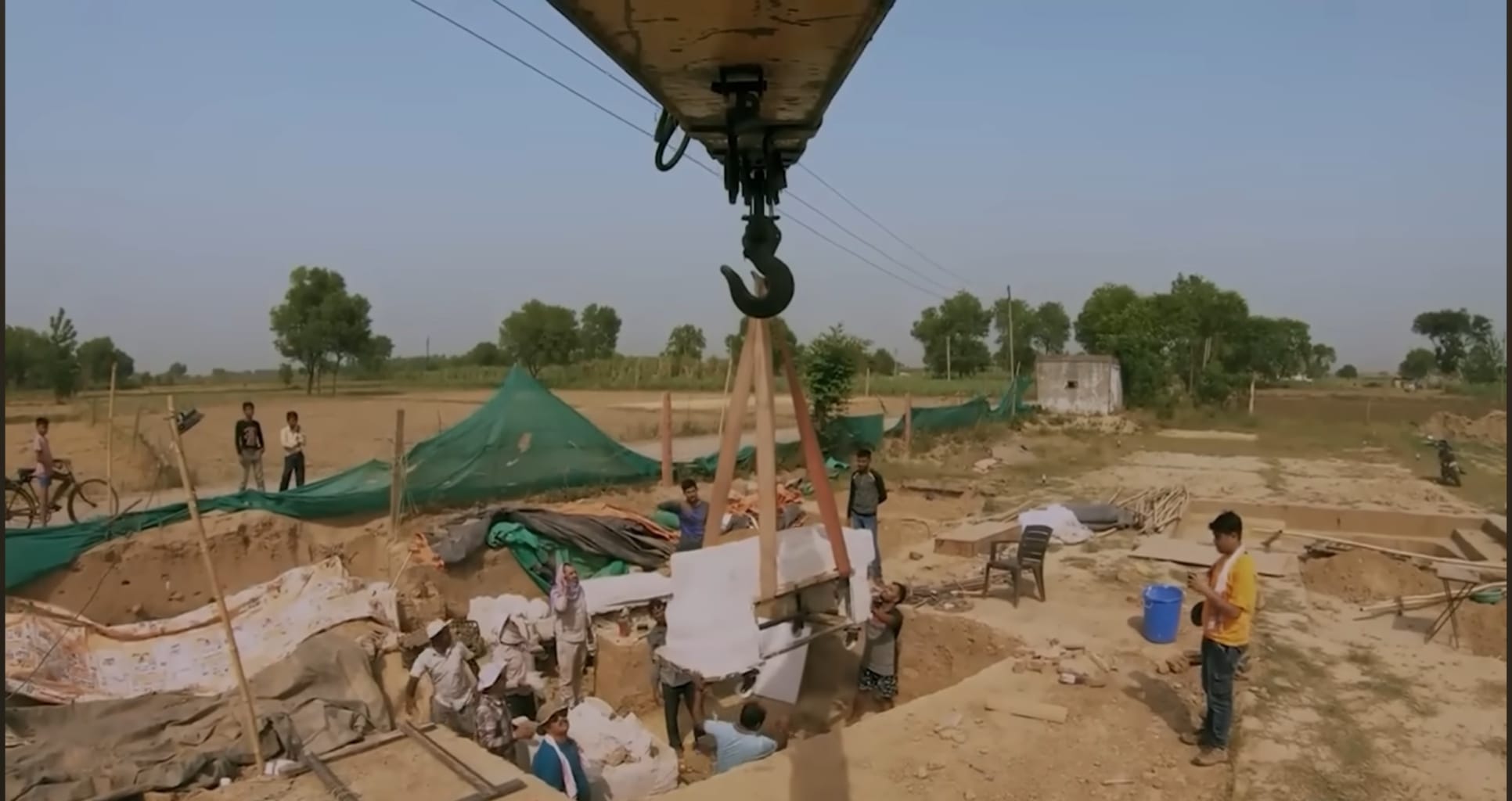
The exposed surface of each skeleton was first covered with bubble sheets and sealed with a layer of Plaster of Paris (PoP). Hussain’s team then carefully removed three to four feet of surrounding soil. The sides were reinforced with jute sacks and additional layers of PoP.
Using jacks, the entire block was slowly raised while the underside was stabilised with more plaster. Finally, a crane lifted the reinforced structure allowing it to be transported safely without disturbing the skeleton inside.
For Hussain and his team, the work is less of a profession than passion.
“We have no archaeological background. We all have our established business but we are fully dedicated to the work. For us, archaeology is a passion, and there is nothing better than living out one’s passion,” said Sunil Jani, a carpenter, sitting at his shop in his village, adding that it’s a team effort.
The operation succeeds because each member brings a different skill, according to archaeologist Deepak Kumar.
Kumar said Tahir understands soil compactness. Samoon specialises in fabricating iron frames for burials. Sunil is a carpenter who builds wooden support boxes.
“Our only goal is to lift an antiquity without causing any damage. It’s an extremely delicate and difficult task,” said Kumar, an alum of ASI’s Institute of Archaeology.
Also read: Inside the secret makeover of Nalanda Museum. India’s tryst with pride & pain
Tryst with archaeology
Hussain’s tryst with archaeology started when a scene from 1993 film Jurassic Park ended up inspiring him. In the movie, the excavators unearthed the skeleton of a Velociraptor using brushes.
“I never forget the short excavation scene, which brought my interest towards archaeology,” he recalled.
Hussain was born in 1977 in Sinauli village in a tool-makers family, decades before the village got international attention. The whole archaeology world was unaware of the civilisation beneath Sinuali.
But Hussain was interested in reading about other civilisations of Egypt, Mesopotamia and often visited the National Museum in Delhi where he was first exposed to the antiquities of the Harappan civilisation.
In 2004, when his cousin Samoon was working in the field, he found some artefacts from the site. In the evening, Hussain got to know about this and visited Samoon.
“When I saw the pottery, it was the same which I saw in the National Museum. No one in the village knows its importance except me. I told my wife dekhna ab is gaon me kuch bada hone wala hai,” said Hussain, adding that he could not sleep whole night.
The next morning, he rushed to the Dainik Jagran’s office and soon, the news appeared in the local daily about the chance discovery of some pottery vessels and human skeletal remains from Sinauli.
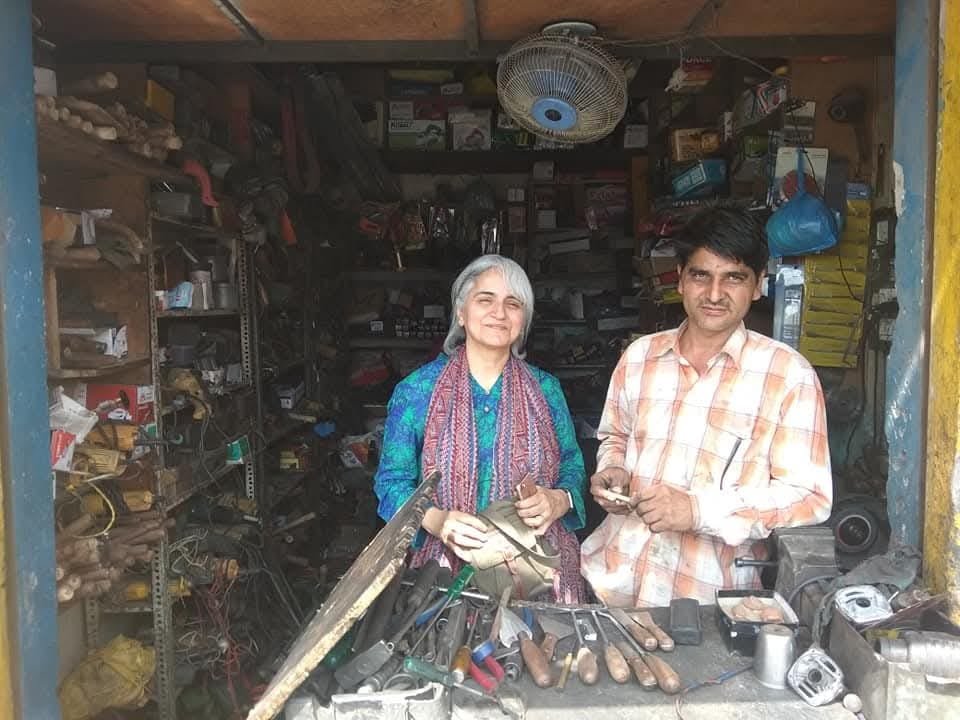
Hussain didn’t stop there. He rushed to Delhi and met archeologist D.V. Sharma who would later excavate the site for the first time.
“This (news) prompted us to inspect the site,” wrote DV Sharma in a paper titled Excavations at Sanauli 2005-06 : A Harappan Necropolis in the Upper Ganga-Yamuna Doab.
A year after the news break, in August 2005, excavation started and Hussain worked as a labour for ASI. There he met Milan Chawley, a junior archeologist who asked him for a sharp knife that would not lose its edge.
“As I have the background of tool making, for the first time I have made a knife in carbide metal for Chawley and then pickaxe for DV Sharma that was used in the first Sinauli excavation,” said Hussain.
The excavation that went on for a year yielded 116 burials and majority of them were extended burials with complete skeletal remains.
That was Hussain’s first exposure with skeletons.
Also read: An IAS officer is bringing a golden era in Haryana archaeology. Narnaul is the crown jewel
A long wait
For the next encounter with skeletons, Hussain had to wait for 12 years. In the meantime, he visited ASI’s headquarters requesting officials to start excavation in Sinauli. But it couldn’t happen.
“In 2005, it was proved that Sinauli is not an ordinary site but a historic one. But ASI did not pay attention to this for a long time,” said Hussain.
DV Sharma in his paper mentioned that never before a site like Sanauli was found and excavated in India.
“Based on archaeological evidence unearthed at Sanauli, it seems that the material culture of Sanauli was the eastern regional manifestation of the Harappan Civilisation in the upper Ganga-Yamuna doab,” the paper noted.
In 2018, Sanjay Manjul and archaeologist Arvin Manjul started digging at Barnawa, a site 26km from Sinauli. Hussain claimed he repeatedly visited Barnawa and requested Manjul to dig Sinauli.
Later, Manjul took a trench in Sanauli and discovered a number of burials from the site including a chariot. During the excavation, Hussain met archaeologist Vinay Kumar Roy, who suggested him to make archaeological tools for ASI.
“Roy pushed me to make tools. He suggested to me the shape and size of the tools. That was the turning point in my life,” Hussain claimed. However, Roy refused to comment on these claims.
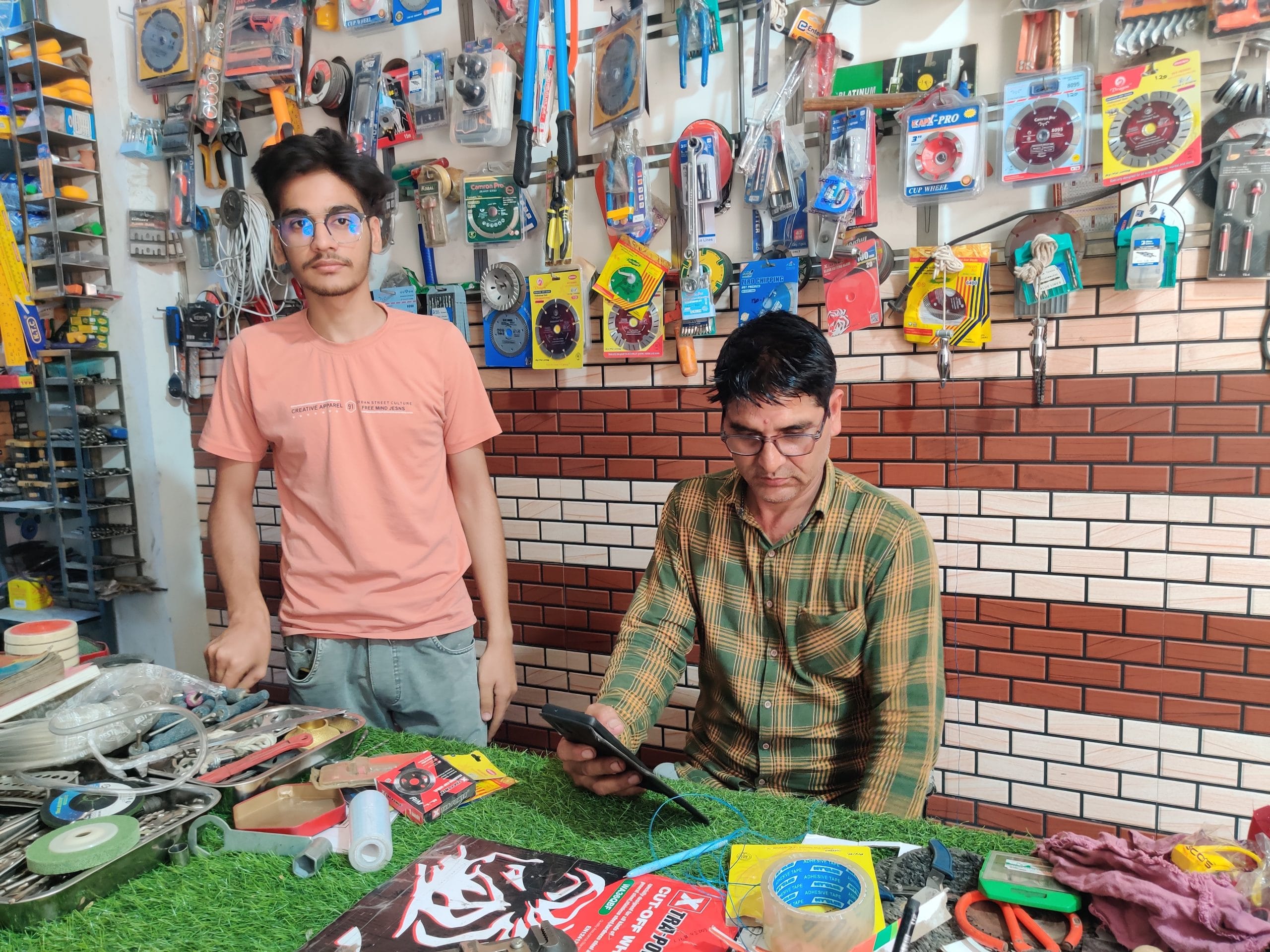
Manjul’s team unearthed coffins, copper shields and chariots dating back to the second millennium BCE. According to him, the community at Sinauli was distinct from the Harappan civilisation.
“The Yamuna belt has a different kind of culture, and 90 per cent of the things in Sinauli are indigenous. Harappan imprint on Sinauli culture is only about a meagre 10 per cent,” said Manjul in 2023 at Delhi’s National Museum.
For lifting the burials, again Hussain’s team was called. The task was a little easy at Sinauli as the soil compactness is high there.
Over two decades, Hussain has evolved from a curious villager fascinated by archaeology into ASI’s go-to man for some of its most delicate operations, becoming an unlikely bridge between India’s ancient dead and the scientists trying to understand them.
“The burial was unique, so we did not want to sacrifice it, instead, we planned to lift it. An experiment of this nature had never been conducted at an excavated site before. It was in a fragile state, making the lifting process a challenging task in itself,” said Manjul in a 2021 Discovery documentary titled Secrets of Sinauli.
Manjul said that we developed innovative ideas during the lifting process.
“We wrapped the burial in bandages from all sides to keep the soil compact,” said Manjul.
Also read: ASI’s ghost campus in Noida—grand new Rs 289-cr facility, 15 students, no faculty
ASI’s tool maker
Sitting in his shop in Baraut on a hot sunny day, Hussain was going through a list of tools. The order had come from the ASI’s Aurangabad Circle — 16 excavation tools, including scrapers, excavation scales and specialised nails.
Over the years, he has emerged as the ASI’s supplier for such equipment. Every excavation season, before archaeologists break ground, Hussain gets calls from different ASI circles across the country, each with a different demand.
“Since 2018 I have been supplying tools to ASI for excavations. Whatever the excavators need, I try to make. Today, my tools are being used to unearth India’s past,” said Hussain.
Hussain had never trained as a toolmaker for archaeology. He learned by listening to archaeologists, understanding their problems and then experimenting in his workshop.
“I had no experience in making archaeological tools but as per the instructions and demands of ASI, I have tried to manufacture them,” said Hussain.
Soon, his tools were travelling far beyond western Uttar Pradesh. Orders came from ASI circles in Hyderabad, Nagpur and Kolkata. Institutions such as Banaras Hindu University and Deccan College also approached him. Among those who sought his help was underwater archaeologist Alok Tripathi, for whom Hussain supplied tools used in explorations linked to Dwarka.
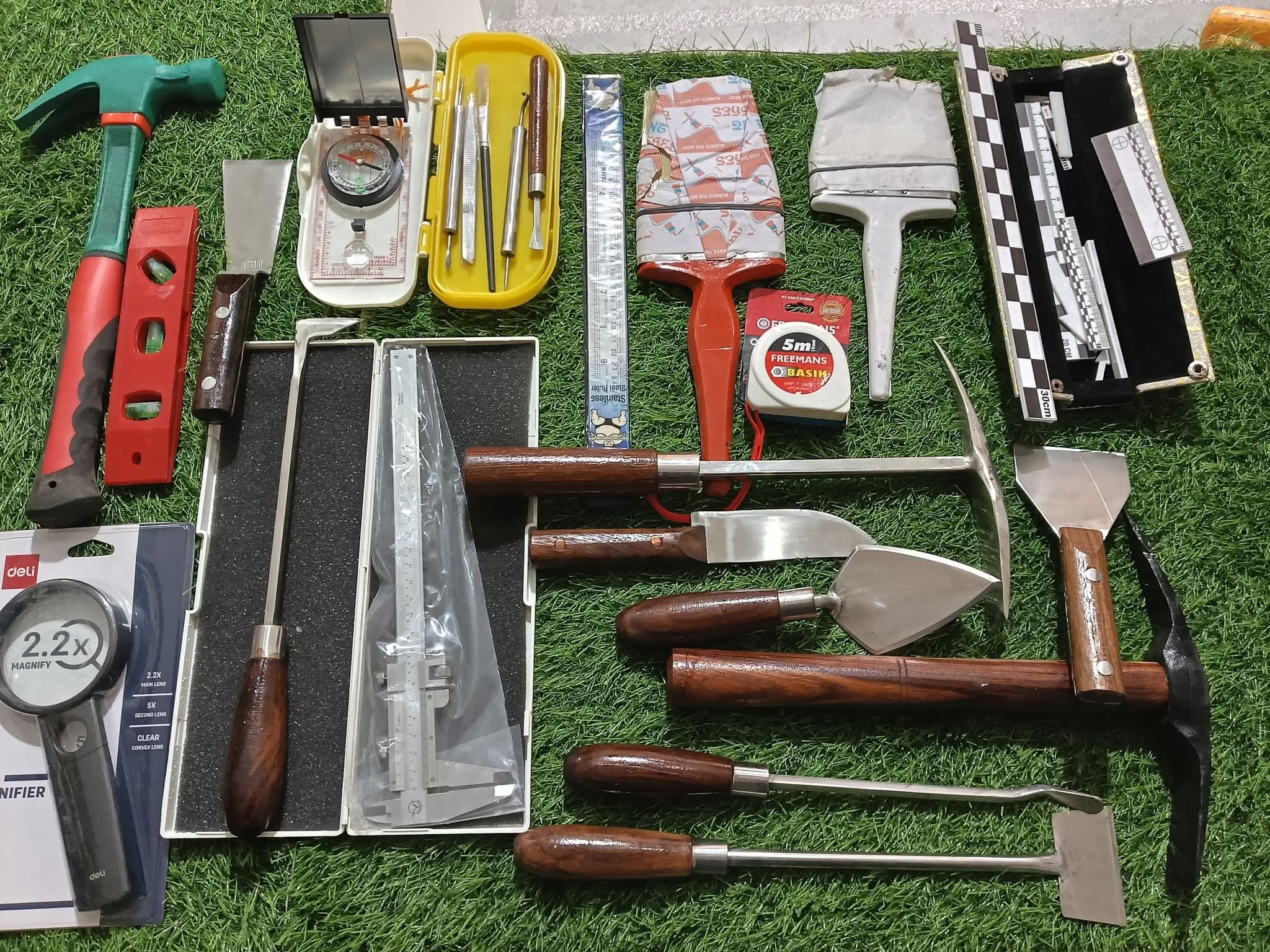
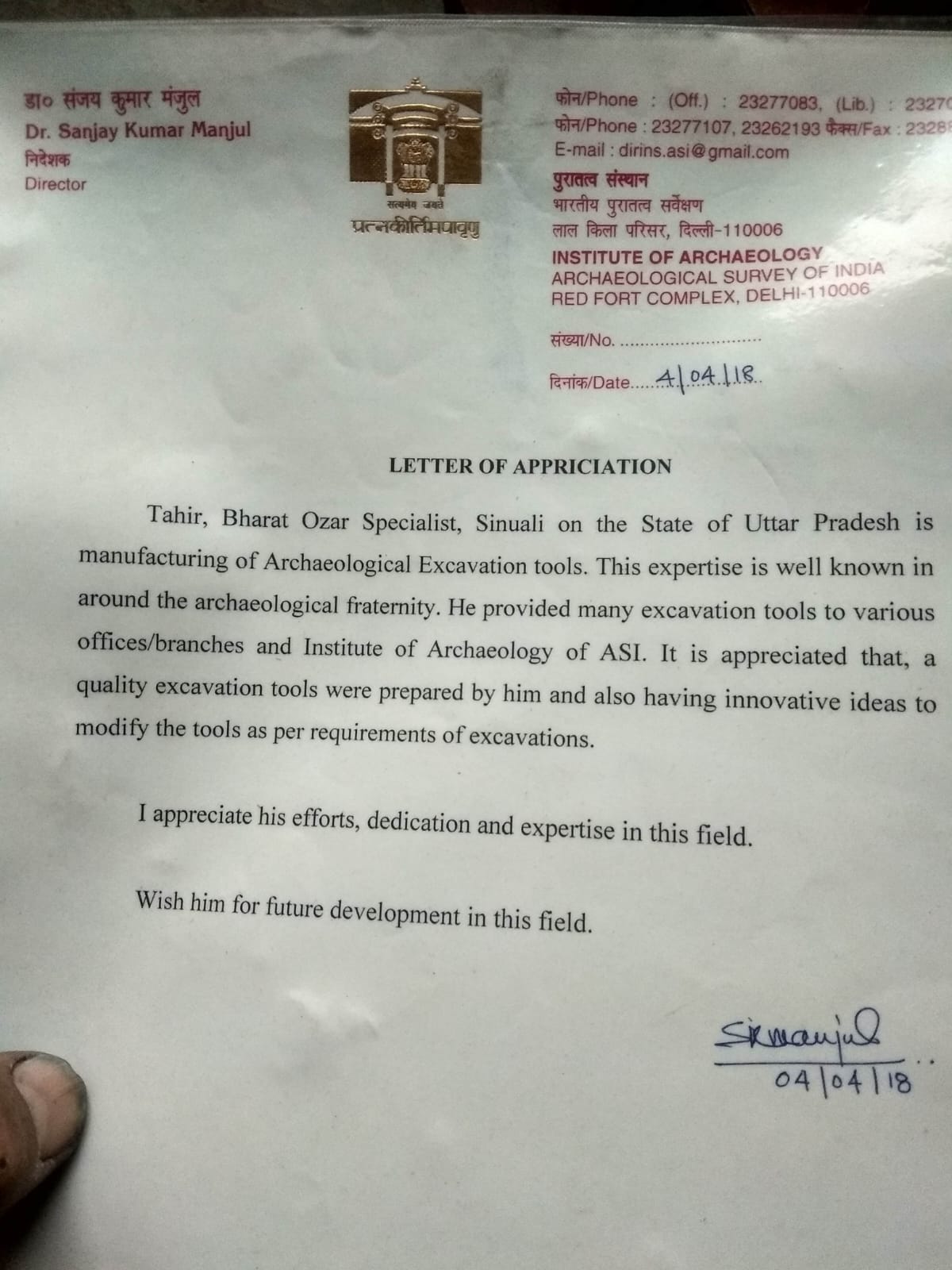
For his tool making work, archaeologist Sanjay Manjul and VN Prabhakar gave him a letter of appreciation in 2018.
“This expertise is well known in the archaeological fraternity. It is appreciated that quality excavation tools were prepared by him and also having innovative ideas to modify the tools as per requirements of excavation,” reads a letter of appreciation dated April 2018 and signed by Manjul. ThePrint has access to this letter.
Hussain has also been visited by historians curious about his workshop. Nayanjot Lahiri and Upinder Singh have visited him in Baraut. Hussain smiled while trying to remember Singh’s name.
“Manmohan Singh ji ki beti ka call aaya tha,” said Hussain as he couldn’t recall Singh’s name. She asked me about the story of Sinauli and how I discovered the site by chance.
His work has even found its way to Bollywood. Some of the tools crafted in his workshop were used during the making of the 2022 film Ram Setu starring Akshay Kumar.
Hussain also featured for a few seconds in the Discovery documentary on Sinauli where he showed the excavation site.
And the assignments keep coming. Before coming back to Sinauli from Rakhigarhi, he got a new assignment from ASI, now at another Harappan site.
When ASI Director General Yadubir Singh Rawat visited the site, excavation director Manoj Saxena introduced Tahir Hussain to him.
“They have been called in from Sinauli to lift the skeletons,” Saxena told the DG, introducing Hussain to the ASI Director.
“Vey good,” said Rawat, recalled Hussain, adding that he told his ASI fellows to use me at iconic Dholavira site in coming months.
(Edited by Anurag Chaubey)