



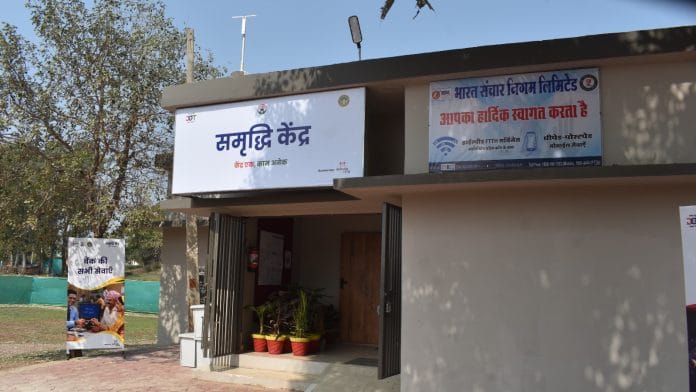
New Delhi: India’s public Wi-Fi ambitions are facing an uncomfortable question: what happens to the idea of free Wi-Fi as a public common good when a country’s telecom industry becomes too successful at delivering cheap mobile internet?
Just two decades ago, many chief ministers promised free public Wi-Fi. It appeared utopian. More importantly, it sounded possible. The shelf life of that digital revolution appears to be over now.
Six years after the launch of the Prime Minister Wi-Fi Access Network Interface (PM-WANI) scheme, India has built roughly 4.1 lakh public Wi-Fi hotspots—barely a fraction of the 1 crore envisioned for 2022 under the National Digital Communications Policy (NDCP) 2018. Now, the Telecom Regulatory Authority of India (TRAI) is questioning the very idea and asking whether the entire model needs a reset. India has already skipped several steps, and public Wi-Fi is now a stale idea for many.
“Historic PM-WANI (Wi-Fi Access Network Interface) scheme… will revolutionise the tech world and significantly improve WiFi availability across the length and breath of India. It will further ‘Ease of Doing Business’ and ‘Ease of Living. The scheme would enable our small shopkeepers to provide WiFi service. This will boost incomes as well as ensure our youth gets seamless internet connectivity. It will also strengthen our Digital India mission,” Prime Minister Narendra Modi had posted on X when the scheme was launched.
In its consultation paper on the proliferation of public Wi-Fi networks, released in April this year, TRAI has sought views on the future of India’s public Wi-Fi ecosystem. The regulatory authority is effectively asking whether PM-WANI needs a reset at all—from the way it is financed to how users authenticate, roam, and pay.
The paper reads less like a progress review and more like a diagnosis. It asks whether the current framework can provide “revenue certainty and long-term sustainability” for operators, whether hotspot deployment should be government-funded, and what changes are needed to make users actually connect. The questions point to a larger reality: PM-WANI was built for a country struggling to get online. By the time it arrived, India already was. While the country’s digital transformation accelerated on the back of some of the world’s cheapest mobile data, its public Wi-Fi ecosystem never quite took off.
Yet, for some of the people who helped shape the idea, the story of PM-WANI is about more than missed deployment targets.
“Not many people in this country can afford a Rs 200 plan,” said former TRAI chairman Ram Sewak Sharma, who helped design the framework that would eventually become PM-WANI. “What has happened in families these days? You have online classes, online books. Every child needs gigabytes of bandwidth. Where do they get it from? How do they pay for it?”
For Sharma, public Wi-Fi was never simply about creating hotspots. It was conceived as a low-cost alternative to mobile data, allowing internet access to be sold in small, affordable “sachets” to people who could not afford monthly plans.
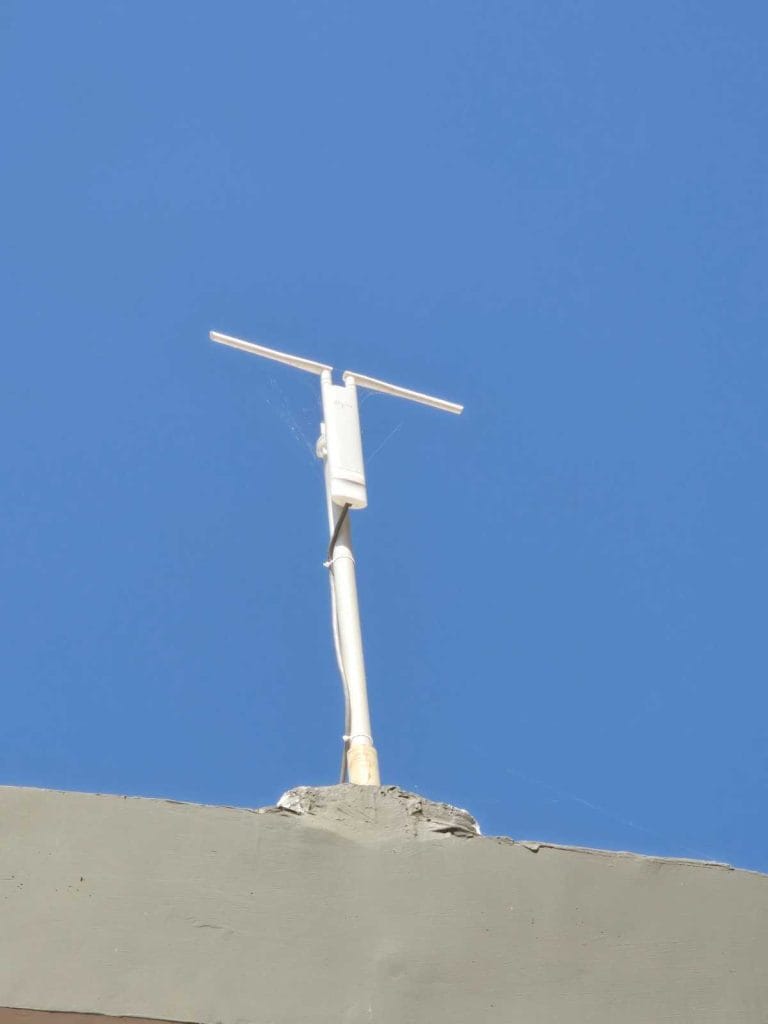
When PM-WANI was launched, it was envisioned as a grassroots internet revolution. Inspired by India’s once widespread public call offices (PCOs), the scheme sought to turn neighbourhood shops, tea stalls, and cafés into providers of affordable internet. Through a decentralised network of Public Data Offices (PDOs), small entrepreneurs would buy bandwidth from licensed telecom operators and internet service providers (ISPs) and sell low-cost Wi-Fi packs to users.
The vision fit neatly into the government’s broader Digital India programme. As everything from welfare delivery and education to payments and identity verification moved online, public Wi-Fi was expected to become a crucial layer of digital infrastructure, extending connectivity to underserved communities.
The idea was simple. In the 1990s, corner shops equipped with pay phones became a lifeline for families and migrant workers long before personal telephones became commonplace. PM-WANI attempted to recreate that model for the internet age, replacing voice calls with Wi-Fi connectivity and PCO owners with PDOs.
Six years later, the promise remains largely unrealised.
Historic PM-WANI (Wi-Fi Access Network Interface) scheme that has been cleared by the Cabinet today will revolutionise the tech world and significantly improve WiFi availability across the length and breath of India. It will further ‘Ease of Doing Business’ and ‘Ease of Living.’
— Narendra Modi (@narendramodi) December 9, 2020
Conceived in 2016, stalled for years
The idea behind public Wi-Fi in India predates PM-WANI’s launch. According to Sharma, discussions around expanding broadband access began in 2015-16. To design it, he brought in his former UIDAI colleague Pramod Varma, who had also served as the chief architect for Aadhaar.
At the time, India was grappling with call drops and quality-of-service concerns, while mobile data remained expensive.
“Data was as costly as Rs 274 per GB. Today, it is Rs 7 per GB, the cheapest in the world,” Sharma said.
The idea was to use de-licensed Wi-Fi spectrum to complement telecom networks and make internet access available in small, affordable quantities. Existing hotspots at airports and hotels involved cumbersome authentication processes, Sharma said. TRAI therefore proposed an interoperable architecture in which users would need to authenticate themselves only once and could then connect seamlessly across networks.
“All those digital public infrastructure concepts were actually applied,” he recalled. The framework was tested between multiple players before then Telecom minister Manoj Sinha launched a pilot project in Bengaluru in 2017. TRAI submitted its recommendations to the Department of Telecommunications (DoT) the same year.
The low penetration rate, primarily restricted by backhaul costs, led to a situation where, six years down the line, we achieved less than five per cent of the original target.
—Prasanto K Roy, digital policy expert
According to Sharma, the proposal remained stuck for nearly three years because telecom operators were unhappy with the idea and exercised considerable influence within the DoT. He claimed that the deadlock was eventually broken after PM Modi intervened, following which the Union Cabinet approved the PM-WANI framework in 2020. However, Sharma believes momentum was lost soon afterward. The Covid-19 pandemic disrupted implementation and, in his view, the DoT never showed much interest in actively promoting the scheme.
Also read: Parvati Valley built a music, rave and drug economy. Now it doesn’t know where it’s headed
The country that skipped Wi-Fi
While public Wi-Fi was viewed as an important tool for expanding internet access when the idea first emerged, India’s digital landscape had changed dramatically by the time PM-WANI was launched in 2020.
“Right from the early 2000s, when Wi-Fi became available, it was very clear that Wi-Fi was going to be an important pathway to make last-mile internet connectivity universally available,” technology commentator and digital policy expert Prasanto K Roy told ThePrint.
But the emergence of 3G and 4G, followed by the rollout of 5G, transformed the market. By the time PM-WANI was officially launched, mobile broadband had already become widespread.
“The landscape had completely shifted. We already had widespread 4G access, and then 5G came two or three years later,” he said.
Unlike many countries where internet access evolved from fixed broadband and Wi-Fi networks to mobile connectivity, India ended up skipping a stage. Cheap smartphones and some of the world’s lowest mobile data tariffs put internet access directly into people’s pockets, leaving little incentive to search for public hotspots.
At Rs 7.87 per GB as of December 2025, mobile data had become so affordable that internet access was increasingly treated as a utility rather than a scarce resource.
“A decade ago, if I went to a hotel anywhere in the country, Wi-Fi was an absolute must-have feature that I would explicitly request,” Roy said. “Today, I don’t even ask for Wi-Fi details because it’s easier to just turn on a mobile hotspot.”
According to Roy, PM-WANI’s underwhelming performance reflects a combination of changing consumer behaviour and the economics of the scheme itself.
“The low penetration rate, primarily restricted by backhaul costs, led to a situation where, six years down the line, we achieved less than five per cent of the original target,” Roy said. Out of the 4.1 lakh hotspots deployed, he added, not all may currently be operational.
In many ways, PM-WANI became a victim of the very digital revolution it hoped to accelerate.
‘The economics were fundamentally broken’
The assumptions underpinning the PM-WANI model were detached from reality.
“The framework was set up assuming local shopkeepers and micro-entrepreneurs would sign up as PDOs, but the economics were fundamentally broken from the start,” Roy said.
The DoT had originally estimated annual broadband costs of around Rs 6,000 to 7,000 for small operators. In practice, however, many Public Data Office Aggregator (PDOAs) found themselves being treated as commercial entities and charged commercial leased-line rates by telecom operators rather than ordinary retail broadband prices.
“This inflated their input costs almost 100 times,” Roy said.
Micro-entrepreneurs, he argued, could never recover those costs by selling data satchets worth Rs 5 or Rs 10.
“Financially, the model was a dead duck. The underlying paper economics were completely disconnected from reality,” he said, adding that the scheme was never managed or reviewed with the urgency of a national mission.
The PDOs could have been useful in 2G-3G era of mobile services… However, it was implemented in 2020s when 4G data was ubiquitous, data costs were around Rs. 10 per GB.
—Statement by Reliance Jio
TRAI now questioning the model
Six years after PM-WANI’s launch, even the regulator that designed India’s public Wi-Fi architecture is asking whether India needs a new way of designing that dream, taking into account where the country’s telecom reach is today.
In its consultation paper, TRAI notes that India had only around 4.1 lakh PM-WANI hotspots as of April 2026. The paper also looks at how other countries have used public Wi-Fi as a complement to mobile broadband, suggesting that India’s challenge is not whether public Wi-Fi has value, but where and how it can still work.
“Despite this clear policy intent and multiple forms of deployment, actual rollout has remained below envisaged targets, largely due to challenges related to last-mile connectivity, availability of backhaul, coordination across implementing agencies, commercial sustainability, and uneven demand-side readiness,” the paper said.
It also points to the need for stronger participation from state governments, local bodies, and private entities, while asking whether the existing model can support a viable ecosystem at scale.
TRAI officials told ThePrint that the authority is currently analysing stakeholder responses and will subsequently make recommendations to the central government, which will take the final call.
“The aim is to create a broad set of options that could cater to India’s varied connectivity requirements,” an official said.
Also read: How Mehrauli went from cheap real estate & haunted houses to Delhi elite’s hottest party spot
Telcos had little incentive
One of the fundamental problems with PM-WANI lay in the incentives of the telecom industry itself. At its heart, there appeared to be somewhat of a conflict of interest. Telecom operators were expected to provide the backhaul for public Wi-Fi while simultaneously competing against it through their own mobile data businesses.
According to Roy, operators viewed a large-scale rollout of retail-priced public Wi-Fi as a threat on two fronts. The first was what he described as “bandwidth arbitrage”. Retail broadband plans are priced on the assumption that a household will consume only a fraction of the available bandwidth. But if a shopkeeper uses that same connection to serve dozens of customers, telecom operators feared it would effectively amount to an unregulated expansion of commercial internet services.
The second concern was the prospect of operators cannibalising their own mobile data revenues. As a result, telecom companies had little commercial incentive to make backhaul connectivity affordable.
Either you provide a better service, or a cheaper service. If neither is available, then why will people buy it?
—Osama Manzar, founder, Digital Empowerment Foundation
Their submissions to TRAI’s consultation paper broadly reflected this view. The Cellular Operators Association of India (COAI), Bharti Airtel, Vodafone Idea, and Reliance Jio argued that India differs fundamentally from countries where public Wi-Fi has become an important connectivity layer because affordable mobile broadband has already emerged as the primary means of internet access.
While agreeing that public Wi-Fi still has a role in places such as railway stations, bus terminals, and stadiums, Reliance Jio argued that the PM-WANI model was introduced after market conditions had already changed. Jio’s sharpest criticism concerned the model itself.
“The PDOs could have been useful in 2G-3G era of mobile services,” Jio wrote. “However, it was implemented in 2020s when 4G data was ubiquitous, data costs were around Rs. 10 per GB.”
COAI took a strong position, arguing that “Public Wi-Fi has lost its relevance”. According to the industry body, consumers prefer mobile data because of its “cost-effectiveness, convenience, and enhanced security”. Its statement pointed to the growth of broadband subscribers from 13.7 crore in 2015 to more than 100 crore in 2025 and argued that the case for large-scale public Wi-Fi expansion has been “significantly weakened”.
Vodafone Idea and Bharti Airtel similarly argued that India is an overwhelmingly mobile-first market where cheap data has already shaped consumer behaviour. In their view, weak public Wi-Fi adoption reflects user preferences rather than regulatory shortcomings.
Death by friction
At Lajpat Nagar Market in Delhi, PM-WANI appeared to be everywhere and nowhere at once. According to the PM-WANI hotspot map, hundreds of hotspots were clustered across the market, some supposedly located just a few metres away. But on the ground, local shopkeepers said they knew little or nothing about the network. While the app continued to display nearby hotspots, finding a functioning connection proved far more difficult.
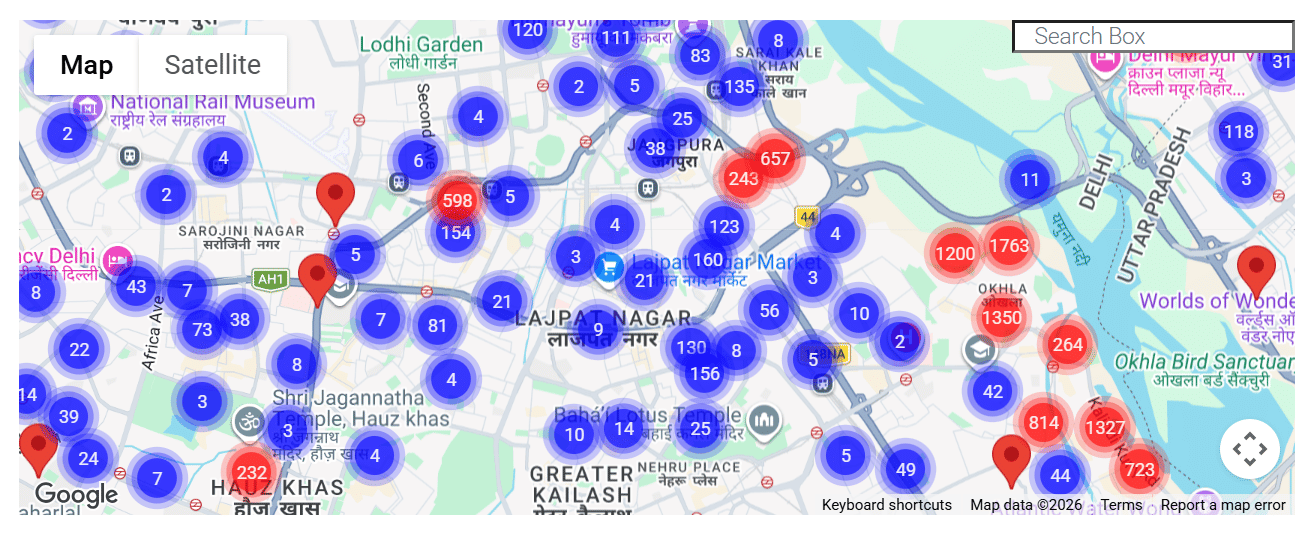
Even before a user gets online, the process involves several steps: downloading the PM-WANI app, completing a one-time mobile verification, purchasing a data pack, and then connecting to the hotspot. Locating an accessible hotspot can itself become a challenge—in stark contrast to the ease of simply switching on mobile data.
“Globally, if you travel to parts of Europe or China, you can seamlessly connect to free public Wi-Fi on buses or in marketplaces,” Roy said.
In India, however, public Wi-Fi has long been accompanied by mandatory OTP verification and compliance requirements, which is a problem for those without a local SIM. Ironically, Roy argued, the very people who stand to benefit most from public Wi-Fi—travellers, migrants, and occasional users—face the greatest barriers to accessing it, even at airports and railway stations.
The issue has persisted despite the original PM-WANI architecture being designed around interoperability and seamless access. TRAI is now examining technologies such as Passpoint and OpenRoaming to replicate a cellular-like experience, allowing users to connect automatically without repeated authentication.
But at a time when mobile internet is abundant and inexpensive, every additional step required to access public Wi-Fi becomes another reason not to use it.
For former TRAI chairman Ram Sewak Sharma, the stakes extend beyond connectivity. He sees PM-WANI as a potential counterweight to an increasingly concentrated telecom market dominated by Reliance Jio and Bharti Airtel.
‘Connectivity is not the product’
Public Wi-Fi succeeds when people need it for something else. For Osama Manzar, founder of Digital Empowerment Foundation (DEF), that is the flaw at the heart of PM-WANI.
“You cannot sell connectivity in isolation,” Manzar said. “Connectivity itself is not the selling product. It is a catalysing product or an additional product—it becomes the infrastructure that enables other services.”
In the places where PDOs were expected to operate, people already had access to mobile internet.
“So either you provide a better service, or a cheaper service. If neither is available, then why will people buy it?” he said.
Manzar added that Wi-Fi works best when it is embedded within a larger ecosystem. Drawing a comparison with cafés, where internet access is bundled into the price of coffee, he said connectivity should function as an enabler rather than the end product. DEF, which has deployed PM-WANI networks in remote areas, used connectivity to support Aadhaar centres, Common Service Centres, banking correspondent outlets, and other social enterprises.
“Those services cannot function without connectivity. So we provide it as an inbuilt component,” he said.
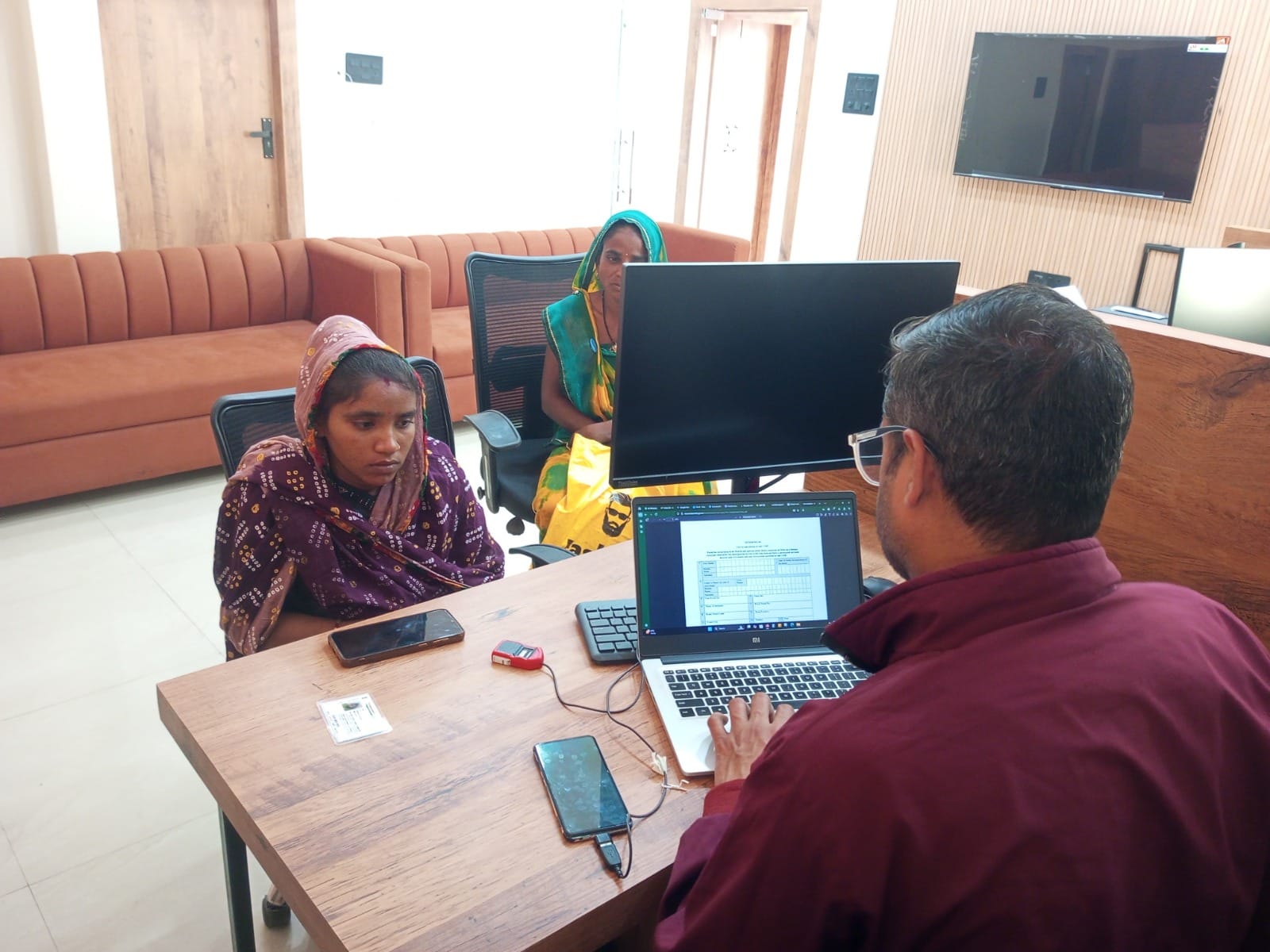
That distinction, according to Manzar, explains why some deployments survived while many commercial models struggled.
The institutions PM-WANI overlooked
Instead of attempting to recreate the PCO model, Manzar said, PM-WANI should have anchored around institutions that already serve communities.
Schools, Panchayat buildings, district libraries, colleges, self-help groups, and health centres could have acted as anchor institutions and PDOAs.
“They should have said, ‘You need this for yourself. Why don’t you become PDOAs?’ If you are only creating internet, but there is no ecosystem to use that internet, then internet will not thrive. Infrastructure and the institution itself will not thrive,” Manzar said.
The challenge for PDOAs was threefold.
The first was capital. “They needed enough money to sustain losses over a long period. Like startups, they were becoming hyperlocal ISPs. Most of them simply did not have that kind of financial capacity,” Manzar said.
The second was access to backhaul connectivity itself. Large ISPs, he said, were also hesitant to support the model because they feared losing their own customers.
The third challenge was scale. In many rural areas and tier-3 and tier-4 towns, operators simply did not have enough users concentrated in one place to make the economics work.
“For PDOAs to succeed, there must be highly concentrated pockets of customers. That was not the case in most rural areas and tier-3 and tier-4 towns,” he said.
As a result, both PDOs and PDOAs struggled to generate sustainable revenues. According to Manzar, bandwidth often became more expensive in villages than in cities, defeating the purpose of the scheme.
Also read: On Delhi’s pavements, women sleep in shifts. Survival leaves little room for rest
The missing marriage between BharatNet and PM-WANI
Despite their shared objective of expanding digital access, BharatNet and PM-WANI largely evolved as parallel projects. Launched in 2012, BharatNet has extended fibre connectivity to around 2.5 lakh Gram Panchayats. Unlike PM-WANI, which relies on private telecom operators for backhaul, BharatNet provides a state-owned fibre backbone that could have served as a natural foundation for public Wi-Fi.
Sharma argued that PM-WANI’s relevance has only increased with the expansion of BharatNet. By his estimate, BharatNet cost roughly Rs 42,000 crore—far more than the approximately Rs 8,000 crore spent on Aadhaar—but the rate of return on investment is zero.
He argued that BharatNet’s fibre backbone should have been paired with PM-WANI’s last-mile architecture to create a nationwide public internet network.
“You can have a marriage between BharatNet and PM-WANI,” he said.
Manzar raised a similar question: If PM-WANI was conceived as a government-backed framework for last-mile internet access, why were BharatNet and BSNL not more deeply integrated into the model from the outset? According to him, Bharat Broadband Network Limited (BBNL), which was established to extend connectivity to Gram Panchayats, should have been a natural partner for PM-WANI.
“Wherever we used PM-WANI, we first used BSNL. It worked better than Airtel because Airtel was not even available in many of those places,” he said. Today, DEF uses a combination of BSNL and Airtel depending on local conditions.
The larger issue remains unanswered. Even as thousands of crores were invested in extending fibre to rural India, the ecosystem needed to deliver that connectivity to end users never fully materialised.
Should PM-WANI still be saved?
For PM-WANI, the challenge is no longer connecting Indians to the internet. It is finding a reason for them to use public Wi-Fi at all. Roy said some progress has already been made. Recent tariff regulations, he noted, were intended to prevent ISPs from charging excessive leased-line rates to PDOs.
“While this is still a premium for a small shopkeeper, it eliminates the 50-to-100-times cost barrier of commercial leased lines,” he said.
For Sharma, the stakes extend beyond connectivity. He sees PM-WANI as a potential counterweight to an increasingly concentrated telecom market dominated by Reliance Jio and Bharti Airtel.
“Otherwise, we have two operators, Airtel and Jio, and they are effectively a duopoly. They will keep on raising prices,” he said.
(Edited by Prasanna Bachchhav)