



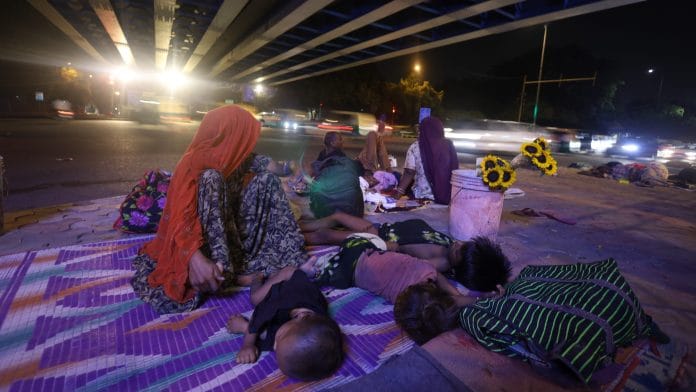
New Delhi: Beneath the crescent moon of Muharram, which shines brighter than the streetlights of Delhi 6, Renu, Sama and Ruprani remain awake long after midnight. They talk softly and fan their children to help them sleep comfortably. After spending two months away from the capital, they have returned.
“This is the ideal time to beg on the streets,” Renu said.
The women have made their way to the Jama Masjid area, relying on alms during the Muharram season. After being turned away from a shelter home, they rented plastic cots, where three or four bodies, made lean by years of hardship, curl up together through the night.
“We take turns to sleep, sometimes we do not get proper sleep, fearing some intoxicated men will try to harass our children or us,” said Renu.
The fear is not unfounded. This week, a 29-year-old man abducted an 11-year-old homeless girl sleeping on a pavement in South Delhi’s Mehrauli and raped and murdered her, throwing her body in a forest in Gurugram. For the more than 32,000 homeless women living on Delhi’s streets and in its overcrowded shelters, sleep is shaped by the threat of sexual violence. Mothers wake repeatedly through the night, choose sleeping spots after checking for CCTV cameras and petrol pumps, and rely on companions, relatives and even stray dogs for a sense of security.
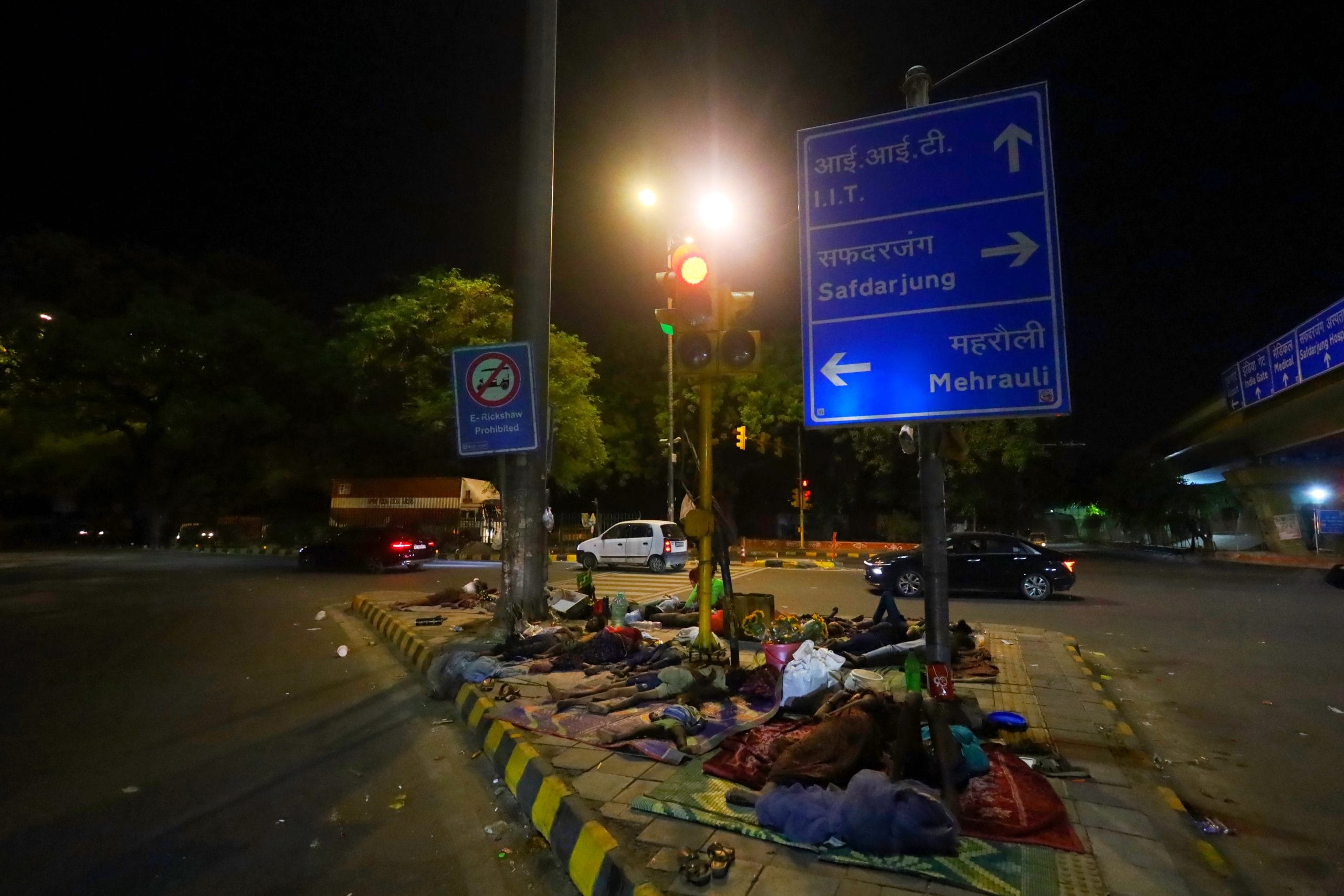
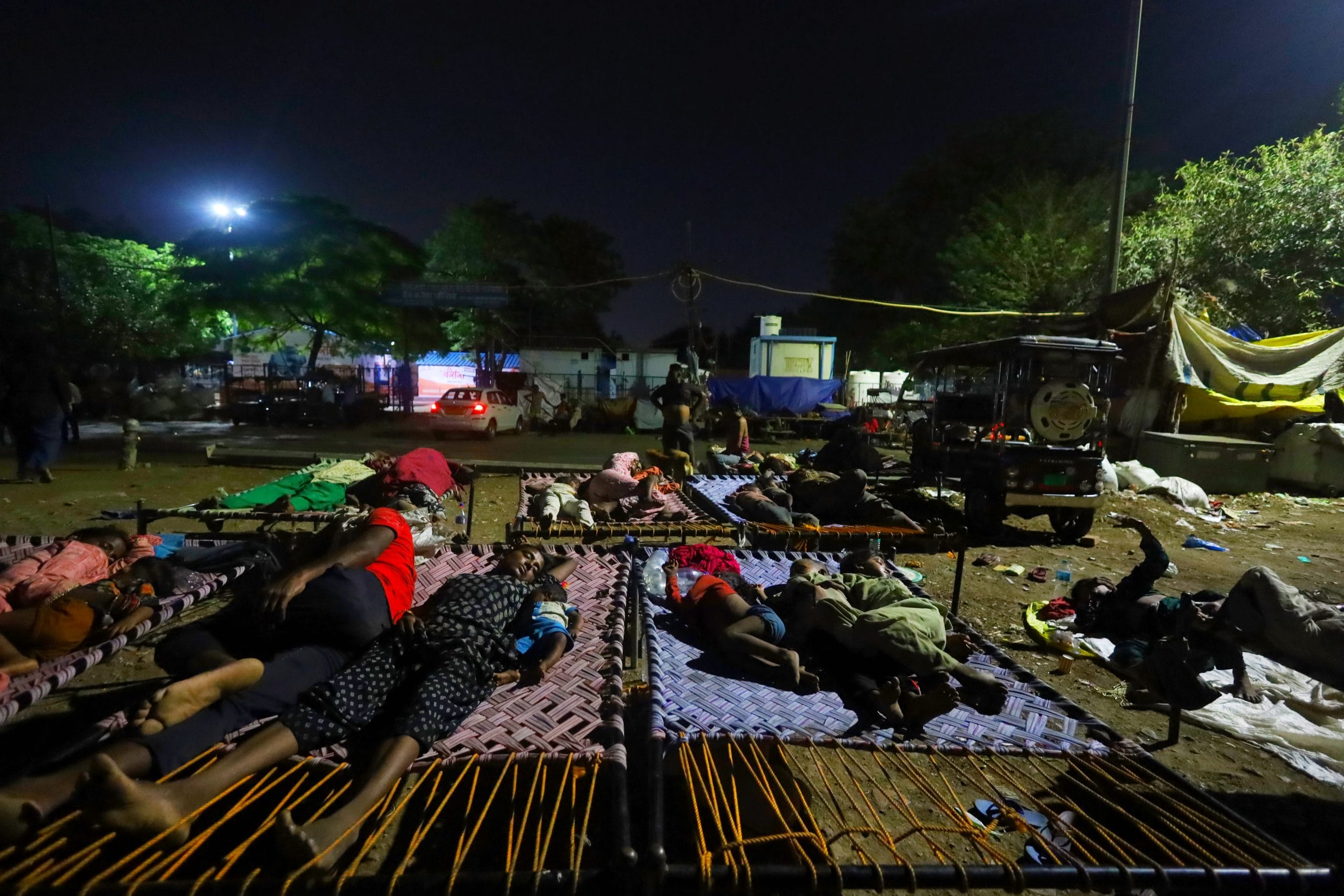
There are more than three lakh homeless people in Delhi. Shelter homes accommodate fewer than 20,000 people, leaving many families to sleep on footpaths and in open spaces. A State Level Shelter Monitoring Committee survey counted more than 1.5 lakh people sleeping on the streets.
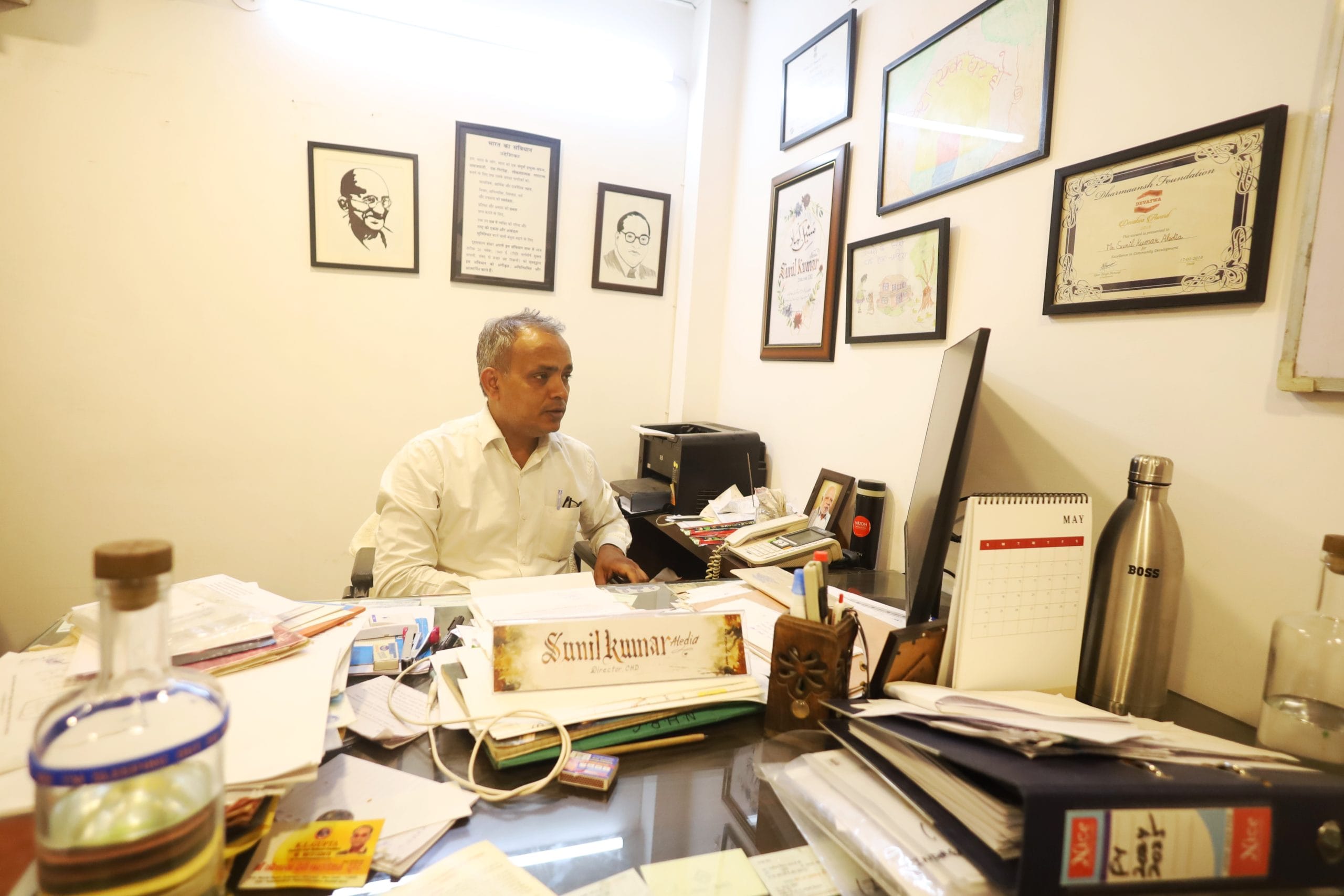
“Delhi has the highest number of shelter homes in India, but their condition is among the worst,” said Sunil Kumar Aledia, executive director of the Centre for Holistic Development. “There are around 202 shelters in the city, including permanent buildings and portable cabins, yet only 21 are designated for women. This gap itself tells the story of how inadequate the system is.”
From the IIT flyover intersection to Old Delhi, pavements and public spaces turn into sleeping quarters after nightfall. ThePrint visited settlements near Jama Masjid, Nehru Place, IIT, Hauz Khas, Munirka, Sarai Kale Khan, Bangla Sahib and Red Fort, and found no evidence of any formal relocation of homeless families.
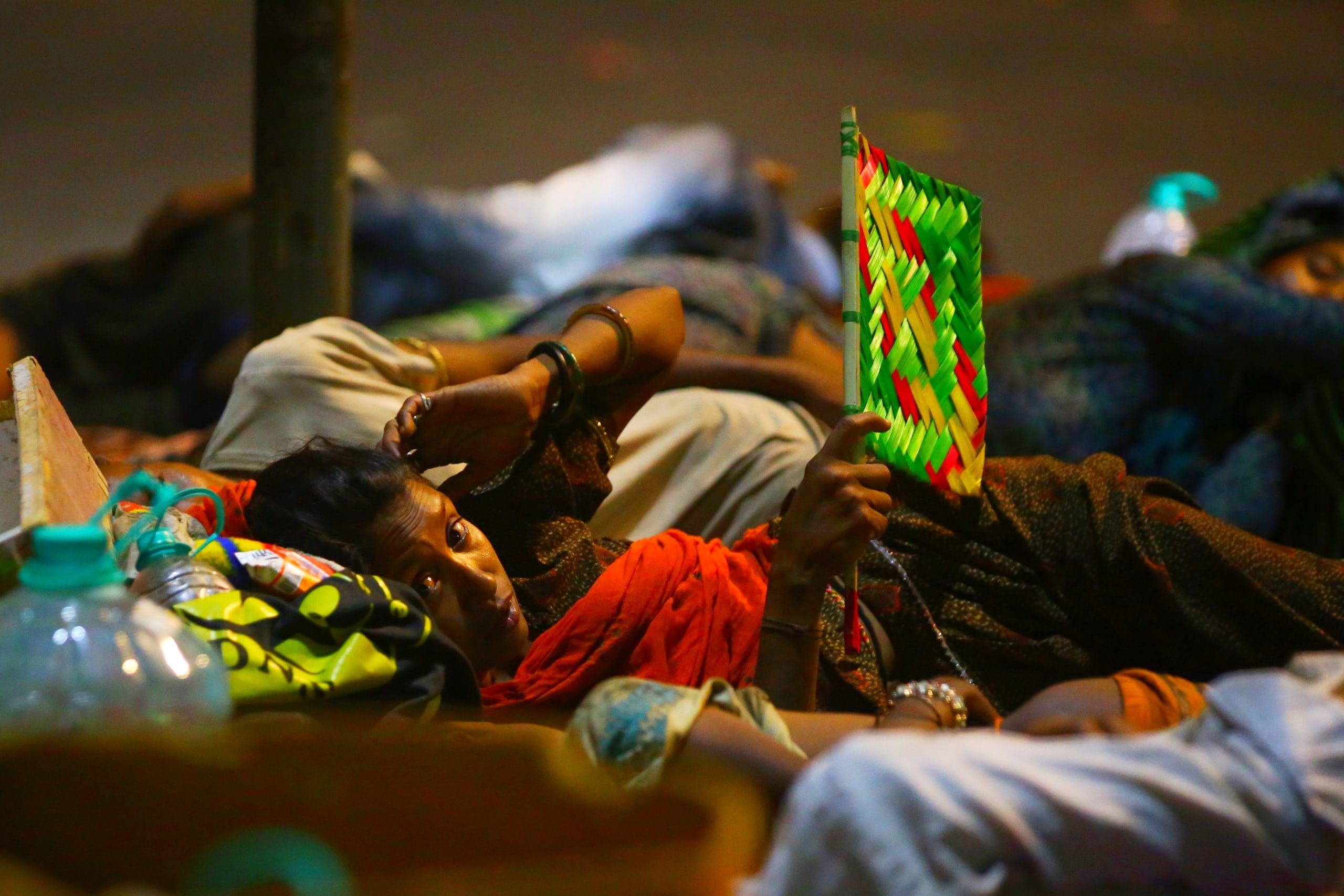
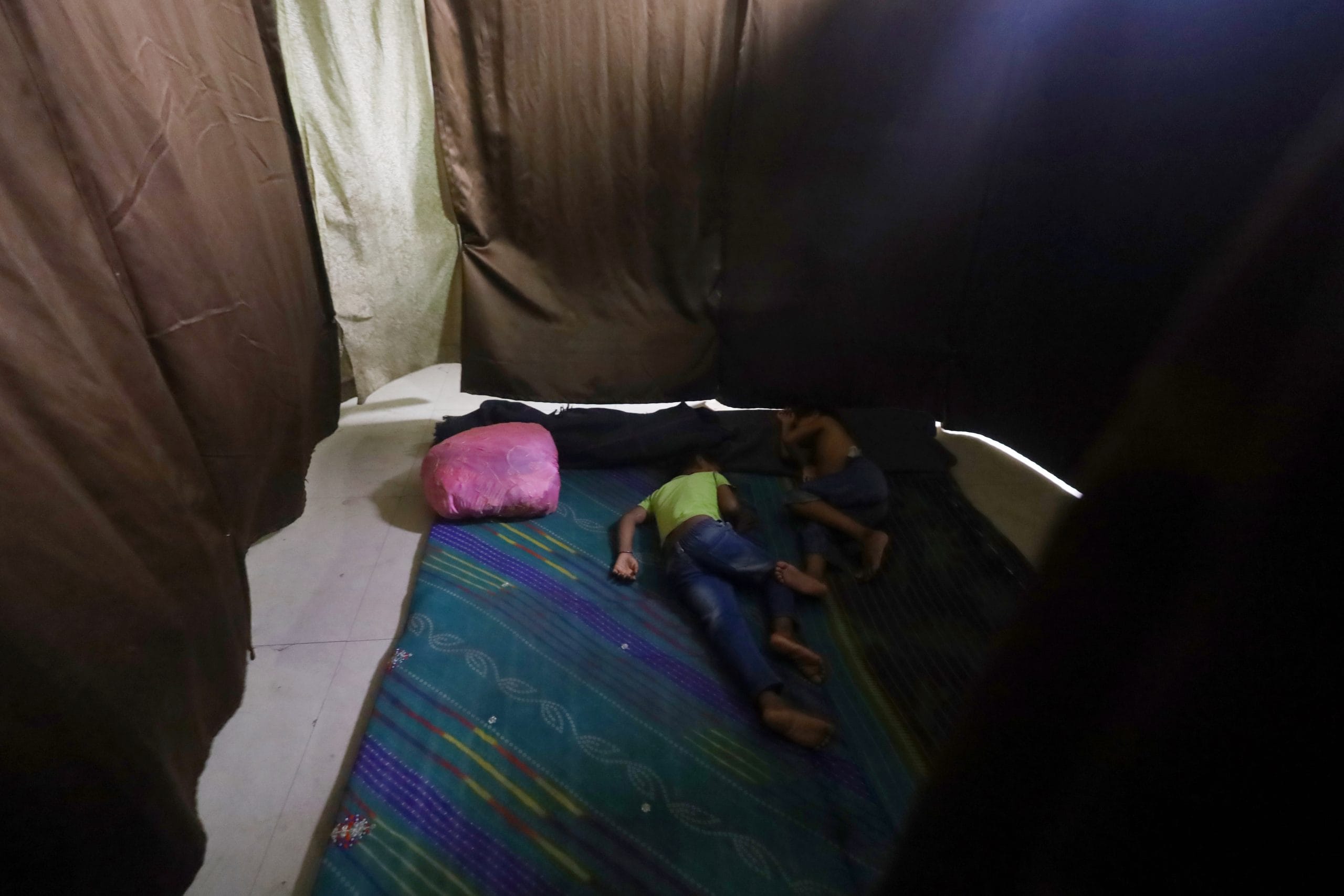
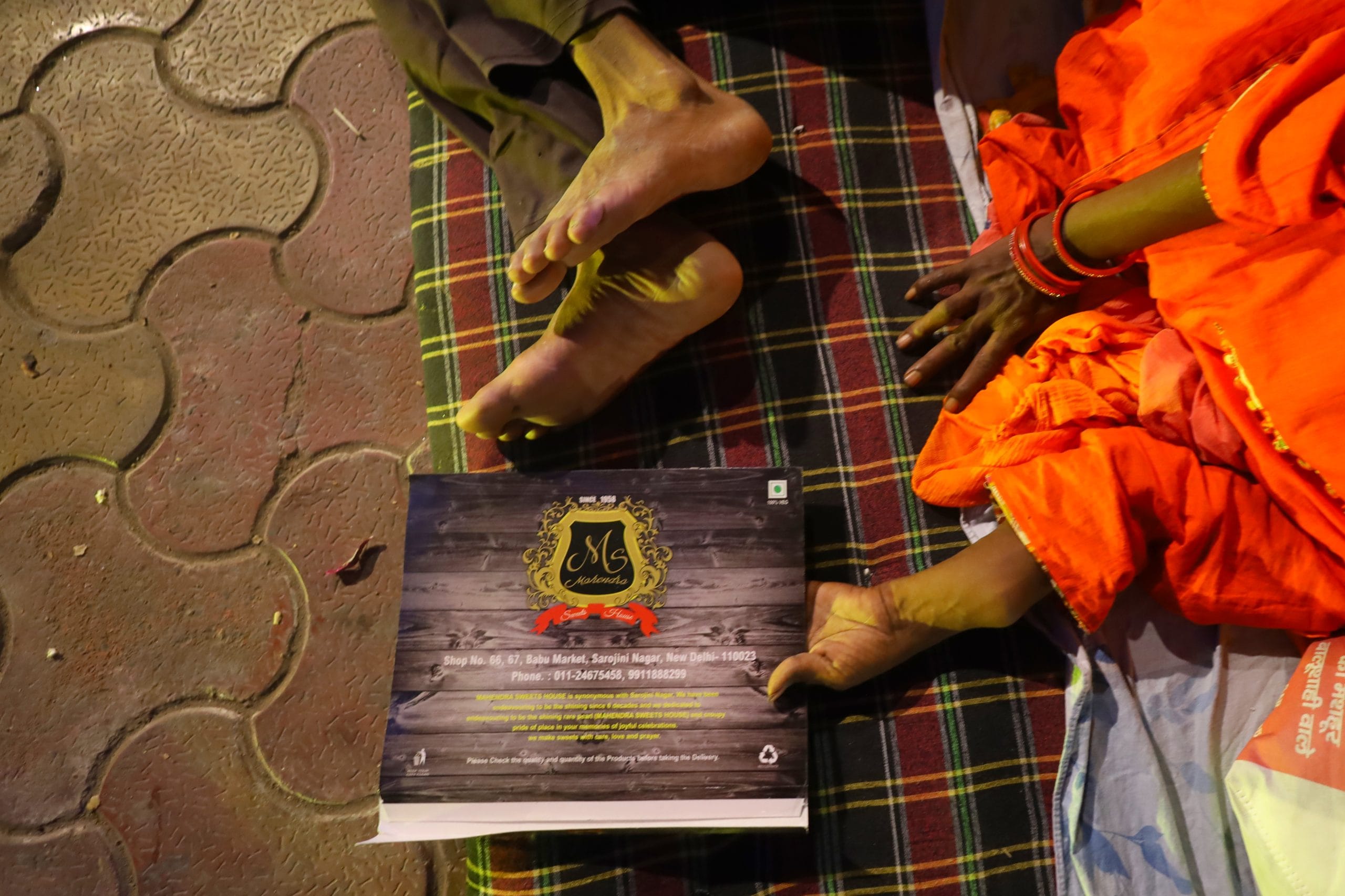
The streets are their colonies, where they live temporarily until they have money to feed their families back in the village. But these colonies have their own issues: internal fights, concerns about women’s safety, and the lack of a sound night’s sleep.
“The safety and security of women in shelter homes are not monitored regularly. There are no timely audits and very little accountability,” Aledia said. “Sexual violence and other forms of violence affect the most vulnerable people living on the streets the most. But often such incidents are reported only when there is immense pressure; many cases remain invisible.”
For Renu, Sama and Ruprani, those concerns shape every night in Delhi before they board a train back to Lajgunj in Uttar Pradesh.
Colourful flyovers, vertical gardens
Night on the pavement is disrupted by the flashing white lights of passing SUVs. Sound sleep is a paradox on the streets.
Rameshi’s husband and the oldest child are still on the streets selling sunflowers. The other three try to sleep beside a green plastic tub filled with fresh flowers. They are migrant labourers, travelling between their village and the streets of Delhi.
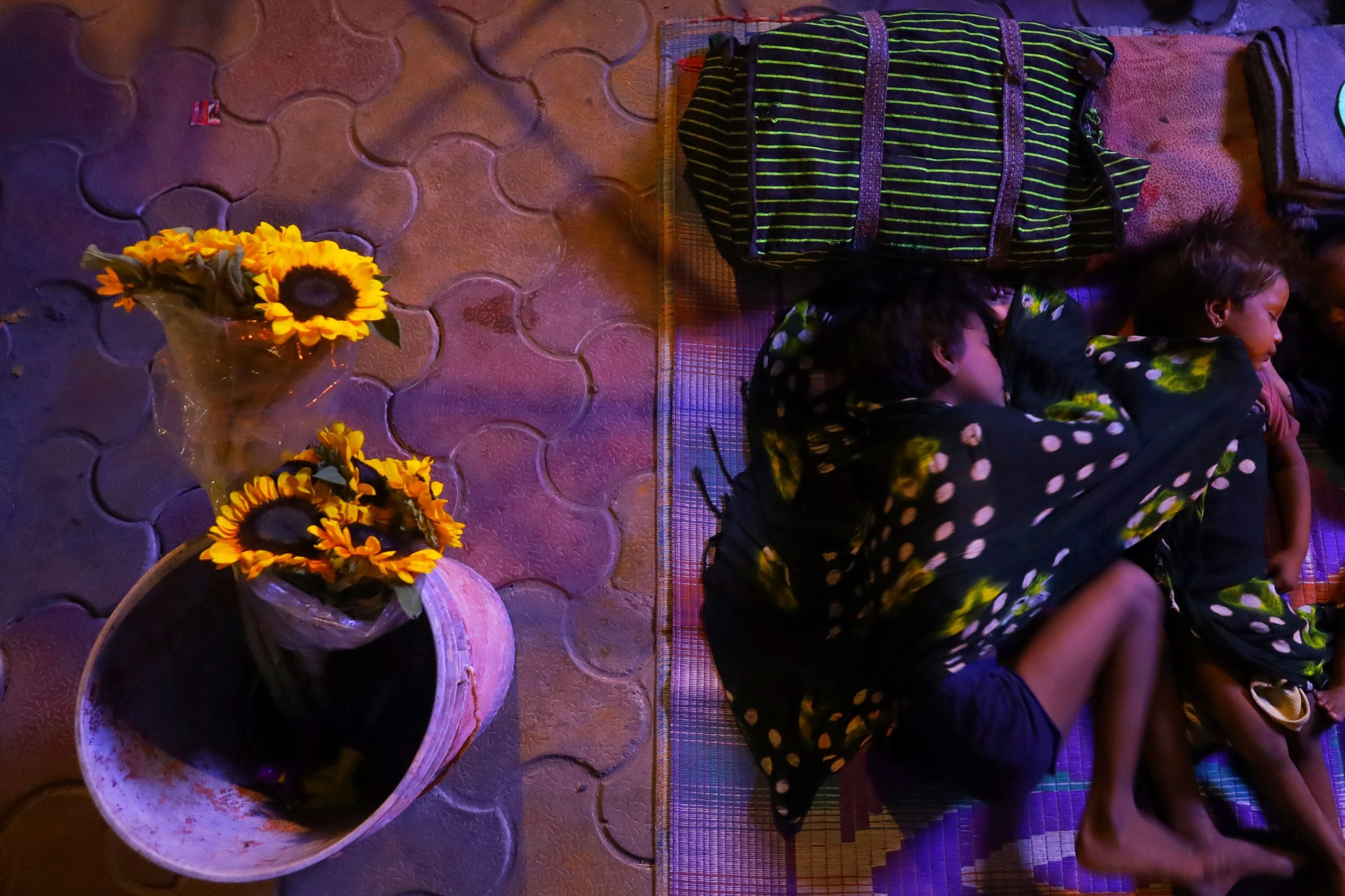
Ten years ago, Rameshi came to Delhi with her husband from Rajasthan. After arriving in the unknown city, the couple decided against renting a room. Even shelter from Delhi’s harsh weather felt like an expenditure they could not justify.
“We thought we could save some money,” she said.
Rameshi and her husband were told about a shelter home near Munirka. It was their first stop after reaching Delhi. Two days later, they were back outside.
“We stayed at the shelter home for only a day or two and then came back. There are too many people there, and many of them are addicts. They drink, they fight, and they don’t let anyone live in peace,” said Rameshi.
She still remembers a fight that turned violent.
“What if my child gets hurt?” she said.
The shelter home carried a bigger risk than just conflict. A 143-page report by the Tata Institute of Social Sciences, commissioned by the Delhi Commission for Women under the previous Arvind Kejriwal government, found “grave instances of sexual and physical abuse” in around 14 facilities. The report noted abuse carried out “in the guise of punishment”, beatings, denial of food, throwing of hot water and insertion of chilli powder in private parts. Most of the facilities flagged were individually run.
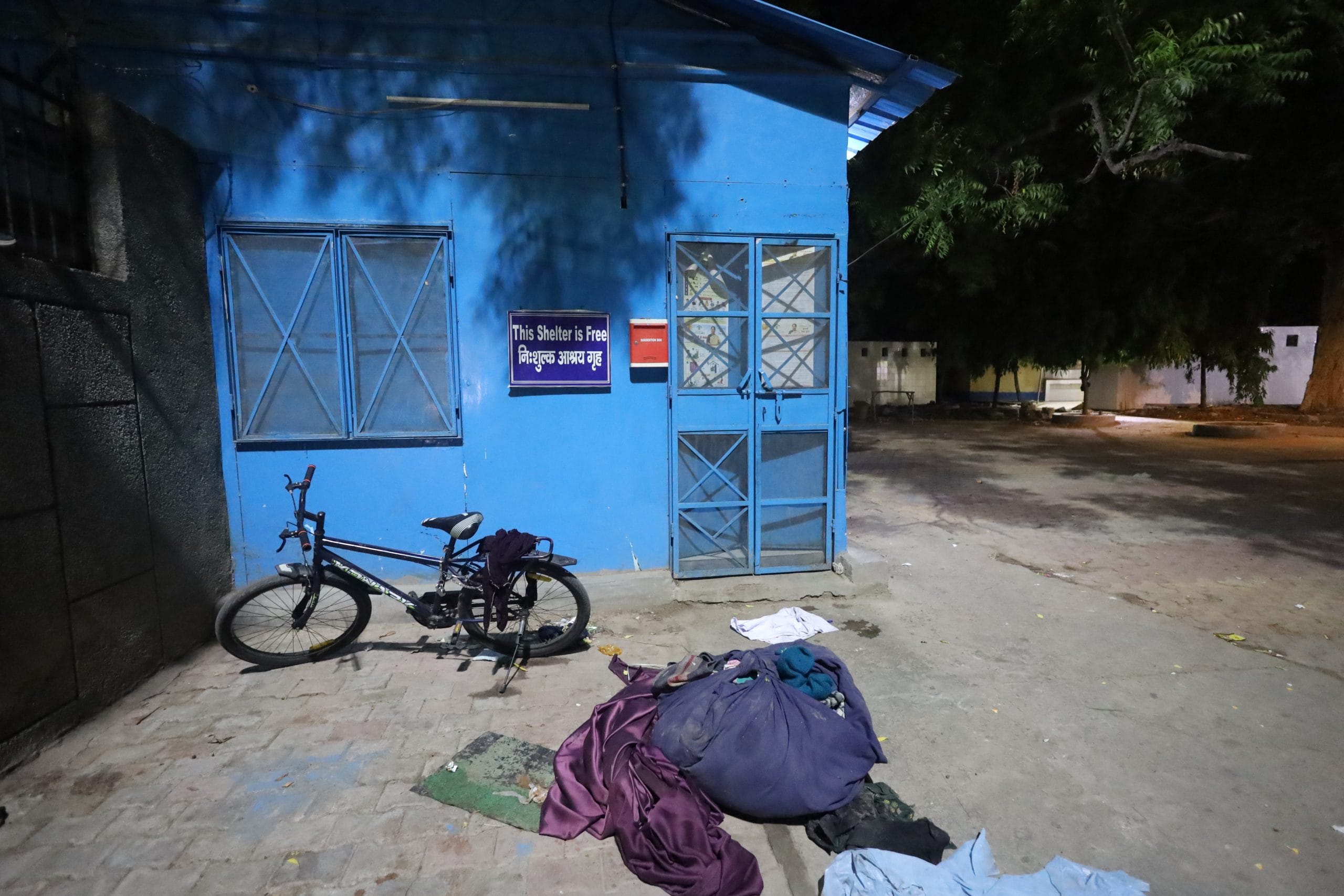
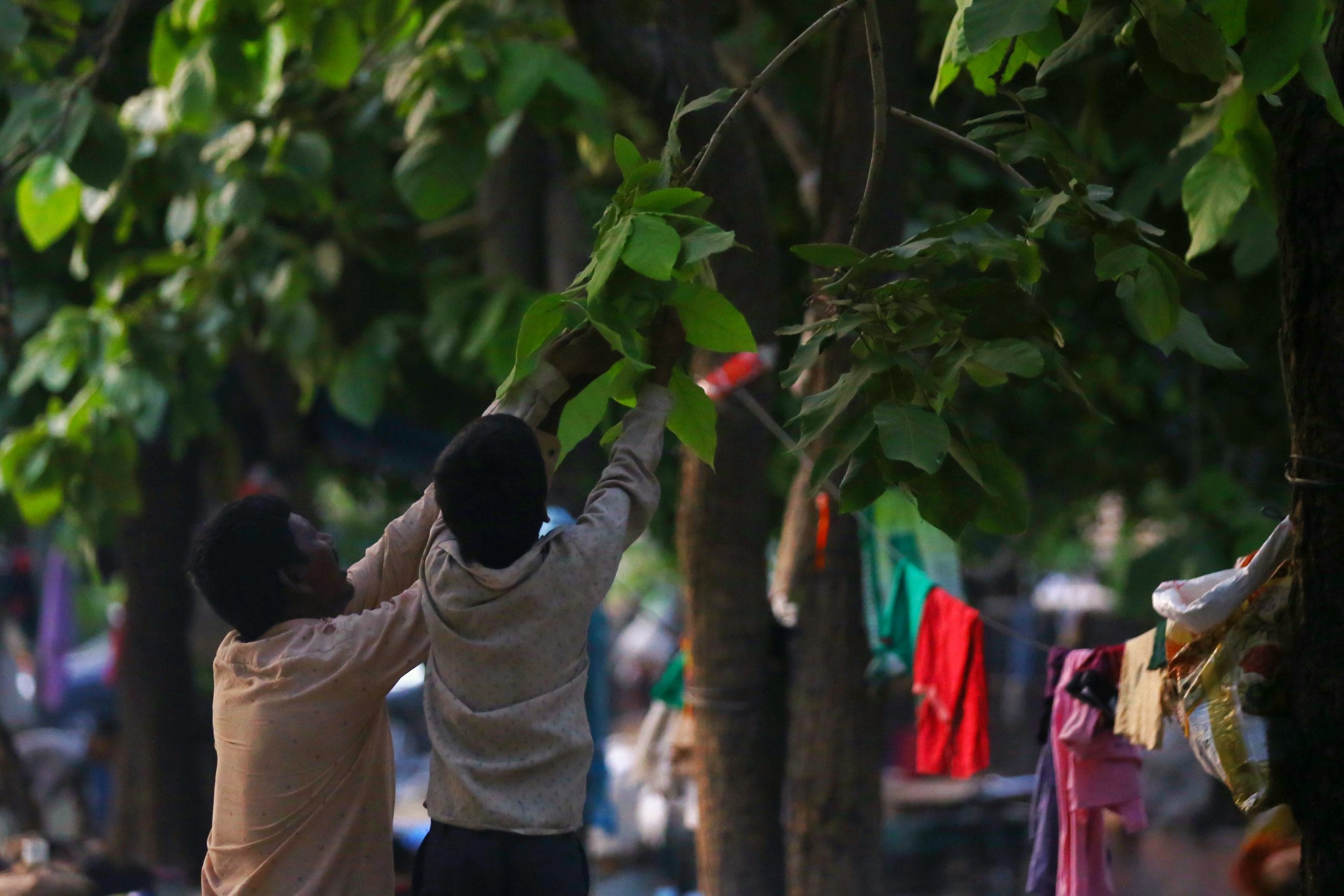
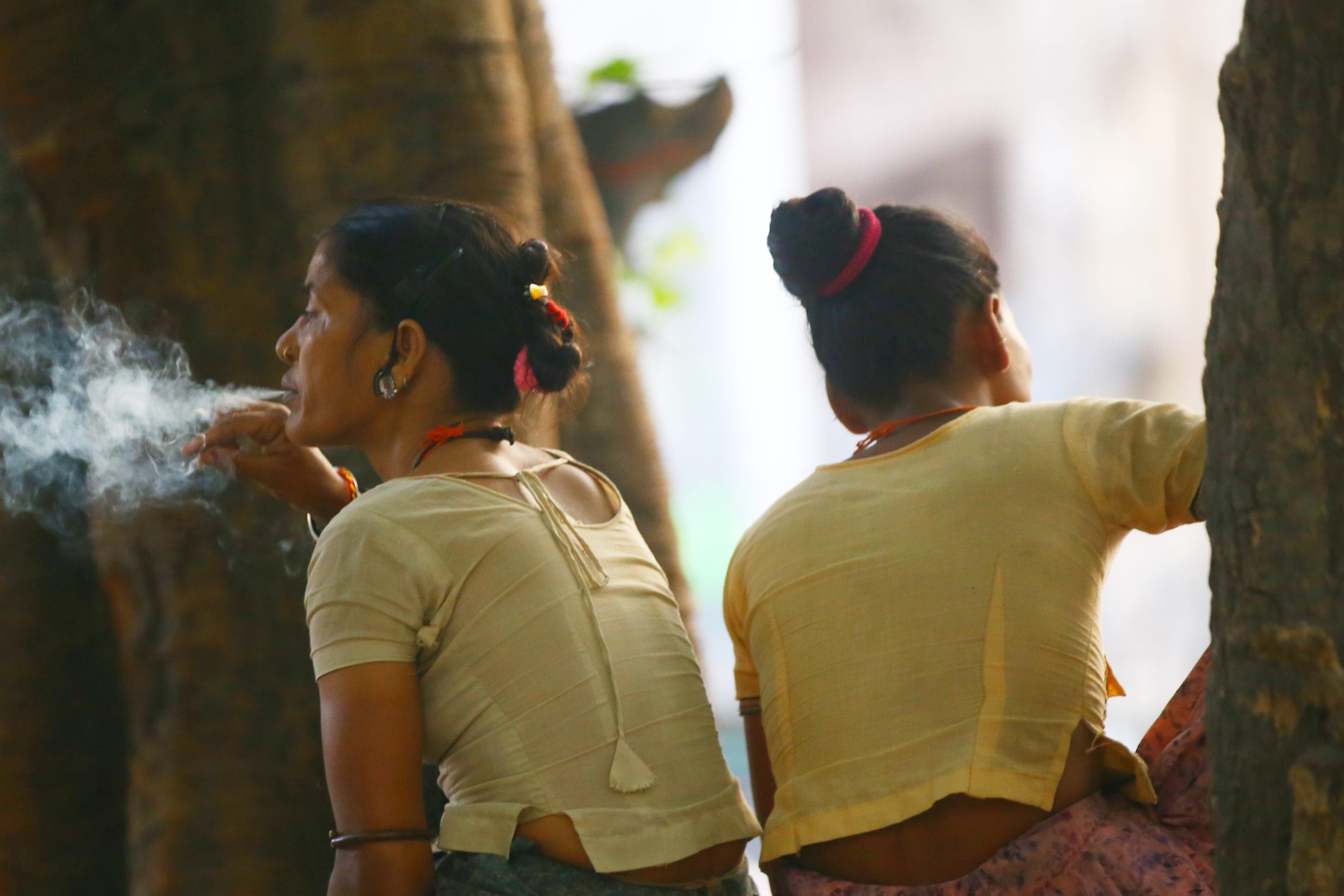
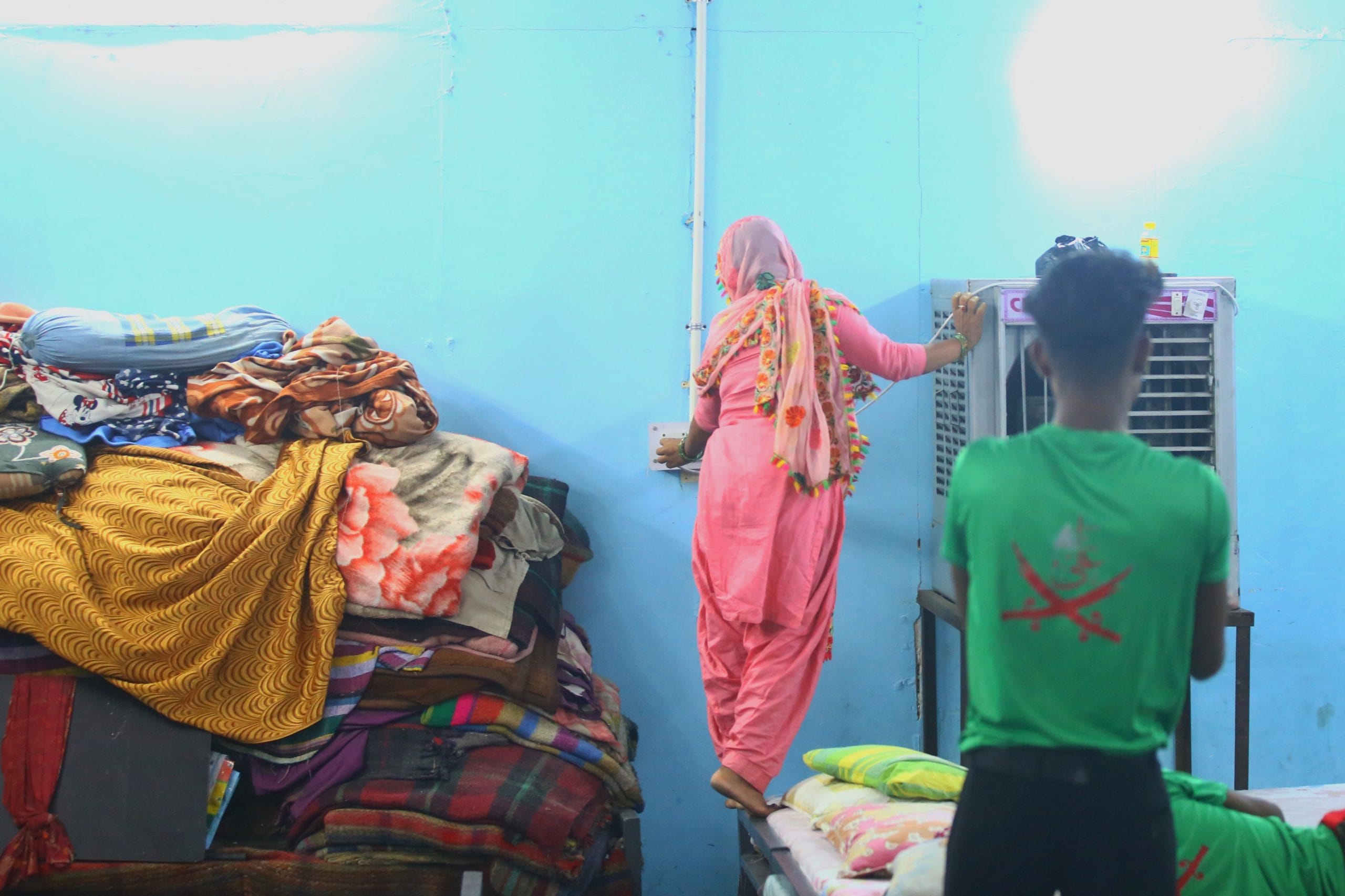
Shelter homes follow strict rules: doors are locked at night, new residents must register their details with a keeper, and information is shared across WhatsApp groups maintained by shelter staff. Two workers cover morning and night shifts. But Aledia, who has worked with homeless communities in Delhi for two decades, says these systems offer little protection for women who face violence.
“When women from homeless communities file complaints of rape, sexual assault or missing persons, many cases do not receive adequate attention,” he said. There was no noticeable change attention after the Mehrauli case either, he added.
For Rameshi, the streets in comparison felt like the lesser danger.
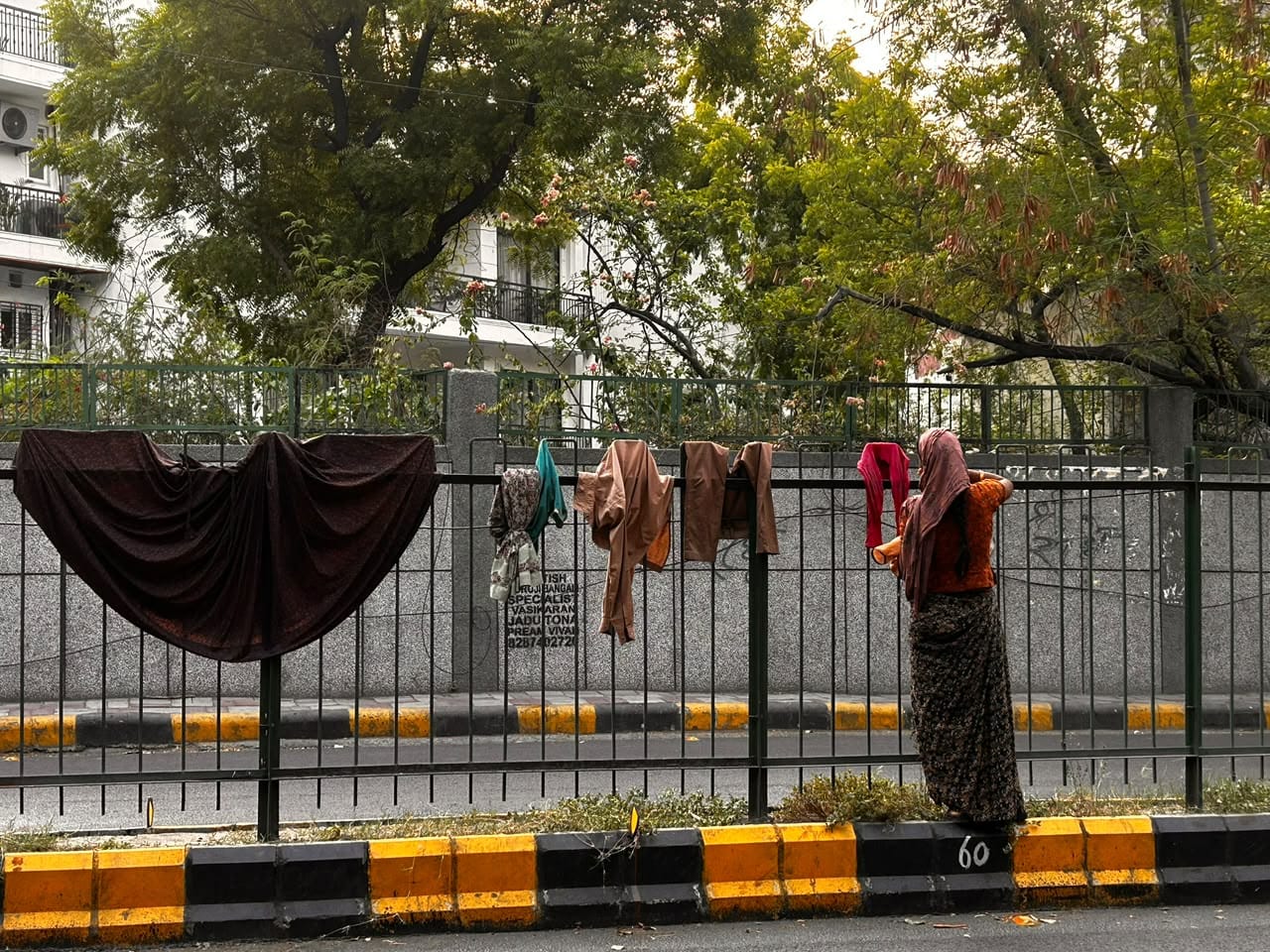
Today, she sleeps beneath a colourful flyover surrounded by vertical gardens on one side and traffic corridors on the other.
“Where else should we go? This is our home now.”
Cooking under watchful eyes
While Rameshi returned to the pavement, Anjali — known to her neighbours as Tanjila — decided to stay.
It has been more than a decade since she moved into a shelter home. Over the years, the shelter has become a community.
But the growing family has become a concern. They share three beds now in a room smaller than the lobby of a corporate office. Two beds for sleeping; one repurposed as a dining table, utensils arranged on top for dinner. Her husband is getting impatient. Today’s menu is chicken and rice — a cheaper meal for a family of six.
The shelter does not allow cooking inside. Meals are provided twice a day while cars keep arriving to drop off food. Most of it is vegetarian. Anjali’s family wants protein.
Behind the SITM bus station in RK Puram, she and the other women have built makeshift chulhas because “gas is so expensive”. They cook between 4 and 5pm, when they have returned from work and the crowds have thinned.
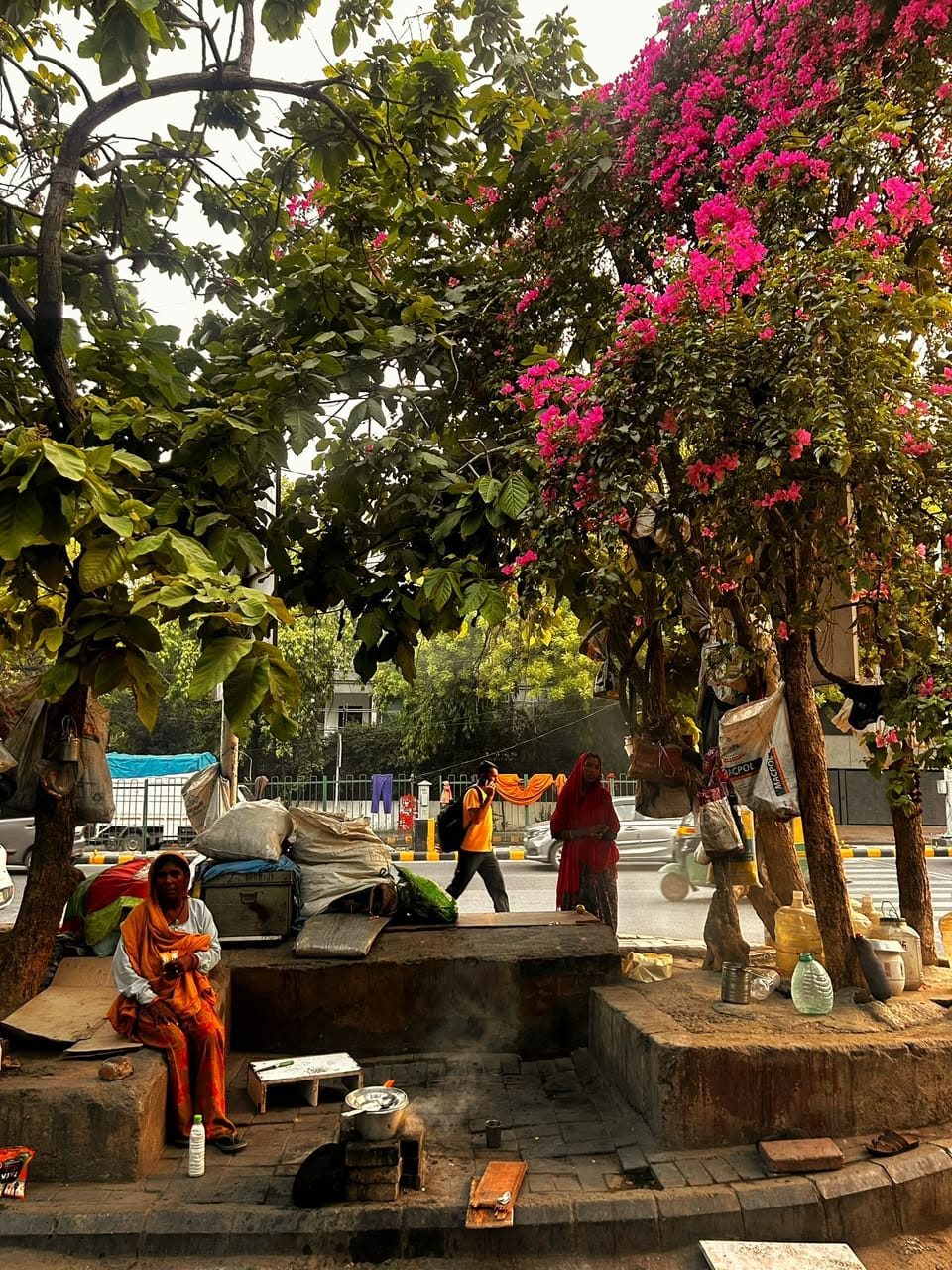
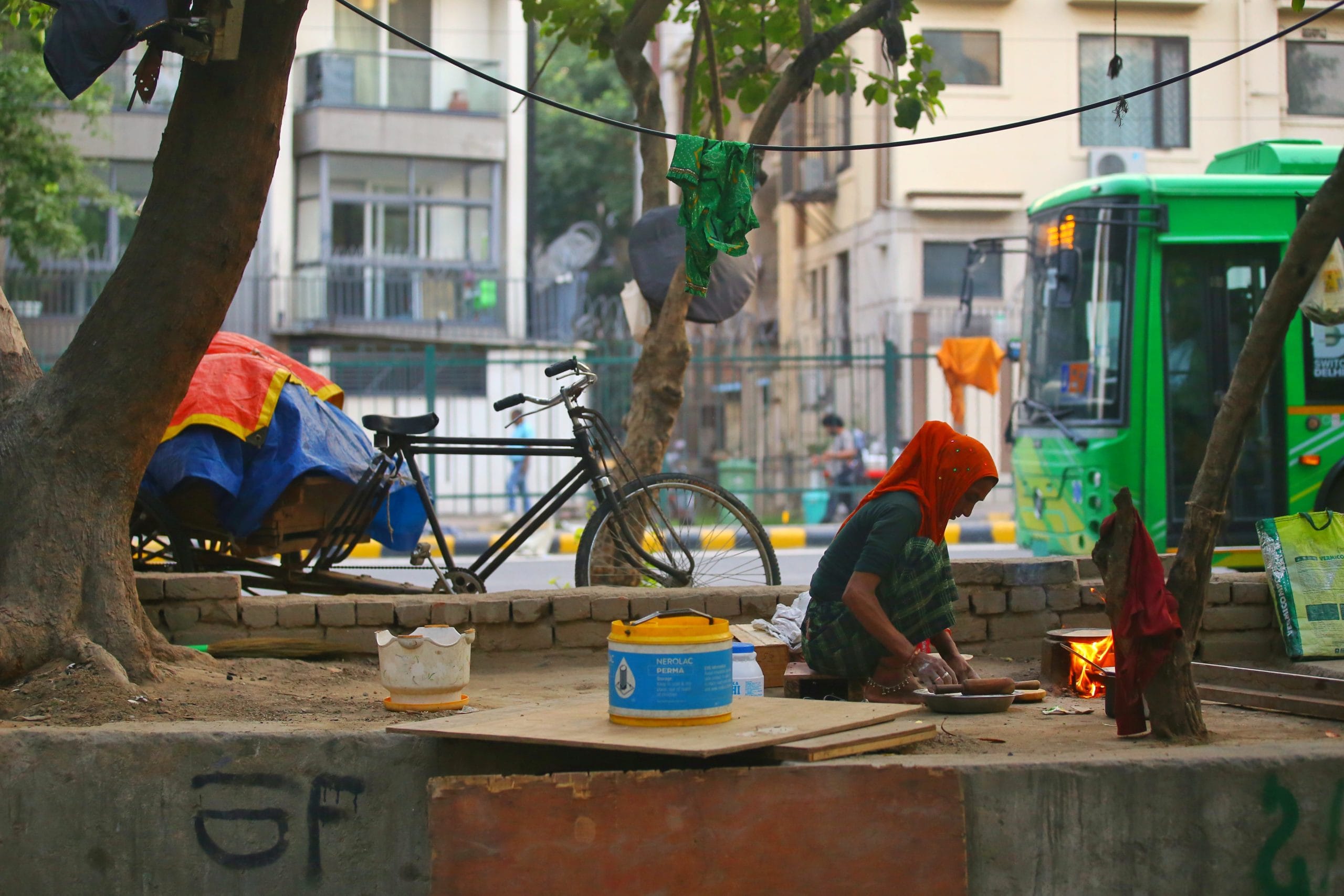
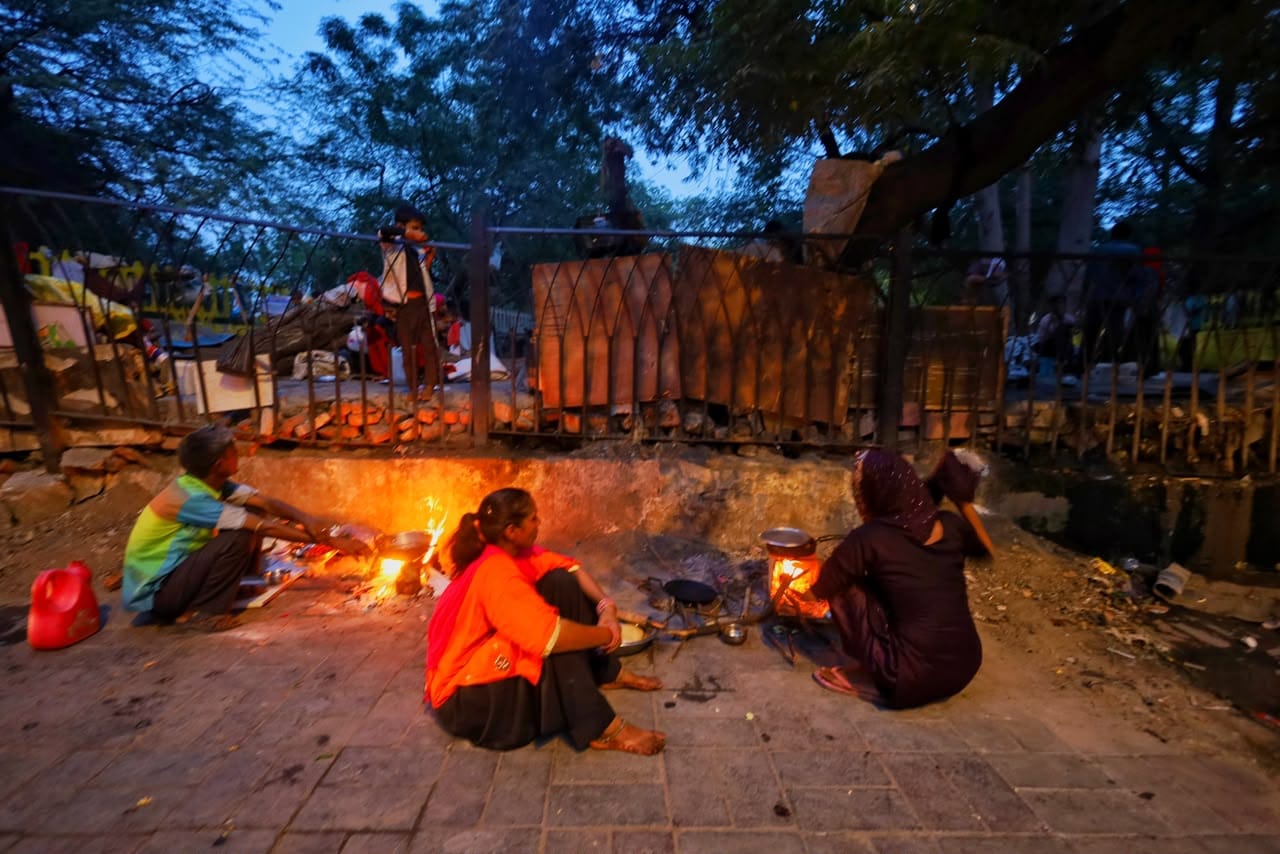
“We have been asking authorities to let us cook here,” Anjali said. “If we get delayed, it becomes difficult. The bus station gets crowded and people look at us with disgust.”
Anjali works as a domestic helper in the middle-class homes of Shahpur Jat. The family earns around Rs 20,000 a month — enough, for now, to keep their children in school. She wants them to study, something she could not do. The family would eventually like to move into a nearby slum.
“We want to shift there,” she said. “But we are scared. There are so many illegal activities going on there.”
The cycle of poverty and perseverance
Every year, Renu returns to Delhi to beg with nearly 20 members of her extended family, most of them women. They travel from Lajgunj in Uttar Pradesh during the months when alms are easier to collect. When the season ends, they return to the village, where they work on farmers’ fields. Money earned there is spent on living for the next few months. This cycle has held for 35-year-old Renu, who belongs to the Bedia Dalit community in Uttar Pradesh, her entire adult life.
Like many homeless families in Delhi, she and her family also move within the city. During summer, they leave the spaces beneath flyovers and spread out towards intersections, petrol pumps and road dividers where the nights are cooler. Winter brings them back to temporary shelters before they return to the pavement again.
This Muharram season, she had hoped to find space in a shelter home near Jama Masjid. But that was not an option.
“Jo hamesha wahan rehti hain, humein andar nahin rehne deti. Unhone kabza kar ke rakha hai (The women who have always stayed there don’t let us in. They have taken over the shelter).”
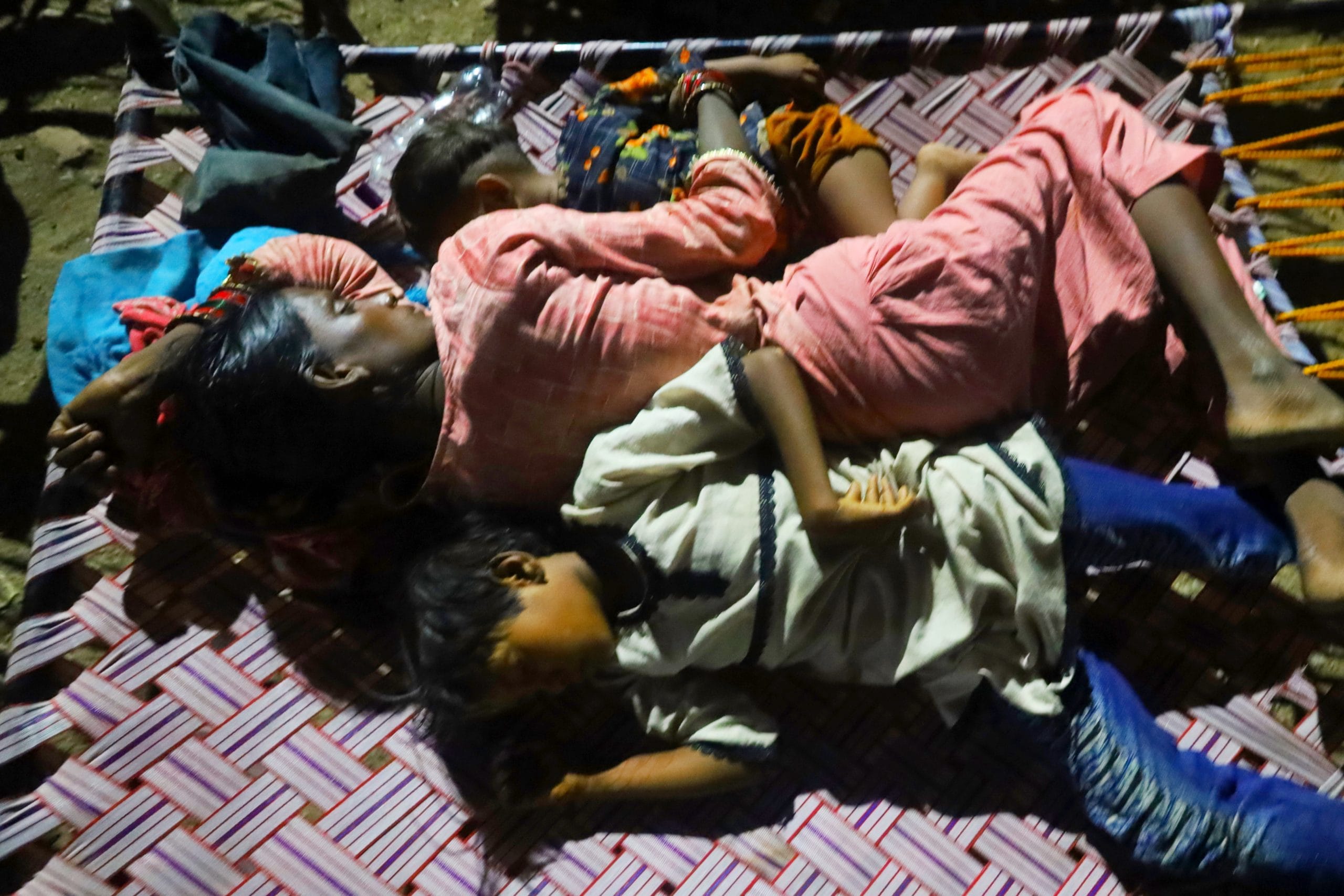
Now her family rents one cot for three people for Rs 30 a day. To reduce the cost, two adults share one cot, paying Rs 15 each. A bed meant for one person becomes sleeping space for two adults and a child — despite a government shelter standing just across the road. Newcomers are often discouraged and harassed by long-term residents who have established their own informal rules, several women told ThePrint.
A study by the Centre for Holistic Development, conducted across 22 shelters in eight districts of Delhi between February and September 2025, found homelessness among women shaped by poverty, violence and systemic neglect. Among the 190 women surveyed, nearly 36 per cent had been homeless for six months to two years, nearly 14 per cent had spent over five years without stable housing, and around 16 per cent belonged to families experiencing homelessness across generations.
Sunita was brought to the pavement near Nehru Place soon after she was born. Her great-grandparents had migrated from Tonk in Rajasthan in search of work. The generations that followed remained.
“Our lives started here, and they will end on this footpath.”
She is now 35 years old and the mother of six children. The eldest one is married. The youngest has dropped out of school and now accompanies her on Delhi’s pavements. The money she and her husband earn through daily-wage labour is sent back to the village to pay for the education of the younger children.
“Dukh sukh yahi dekh lia (All the joys and sorrows have been experienced here),” she said, as she ran after her sister’s toddler.
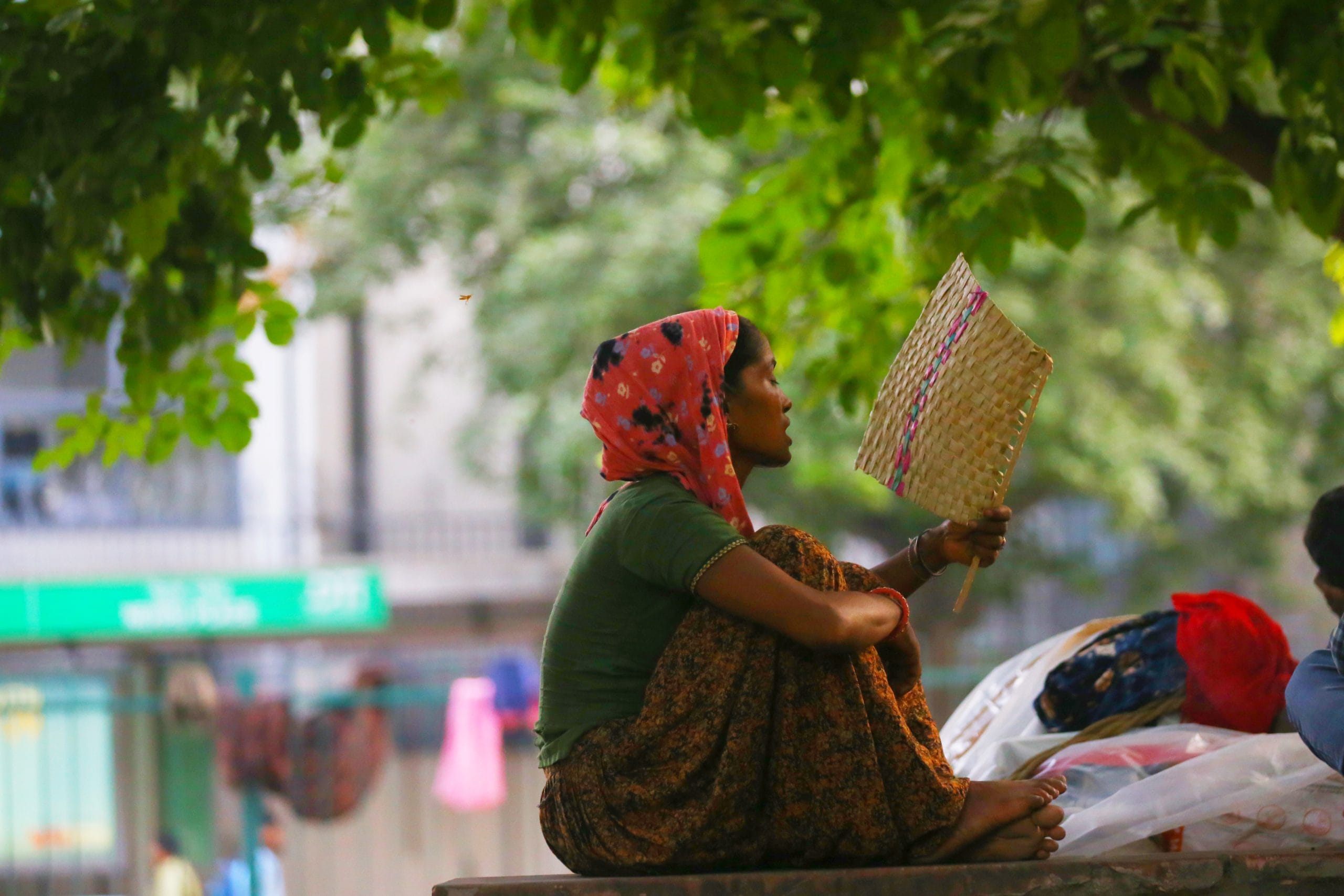
Families like Sunita’s have stayed in the same neighbourhoods for decades, even as they shift between nearby pavements, parks and intersections depending on the season. Around the Red Fort, for instance, some families have gradually moved inside the public parks and open spaces nearby.
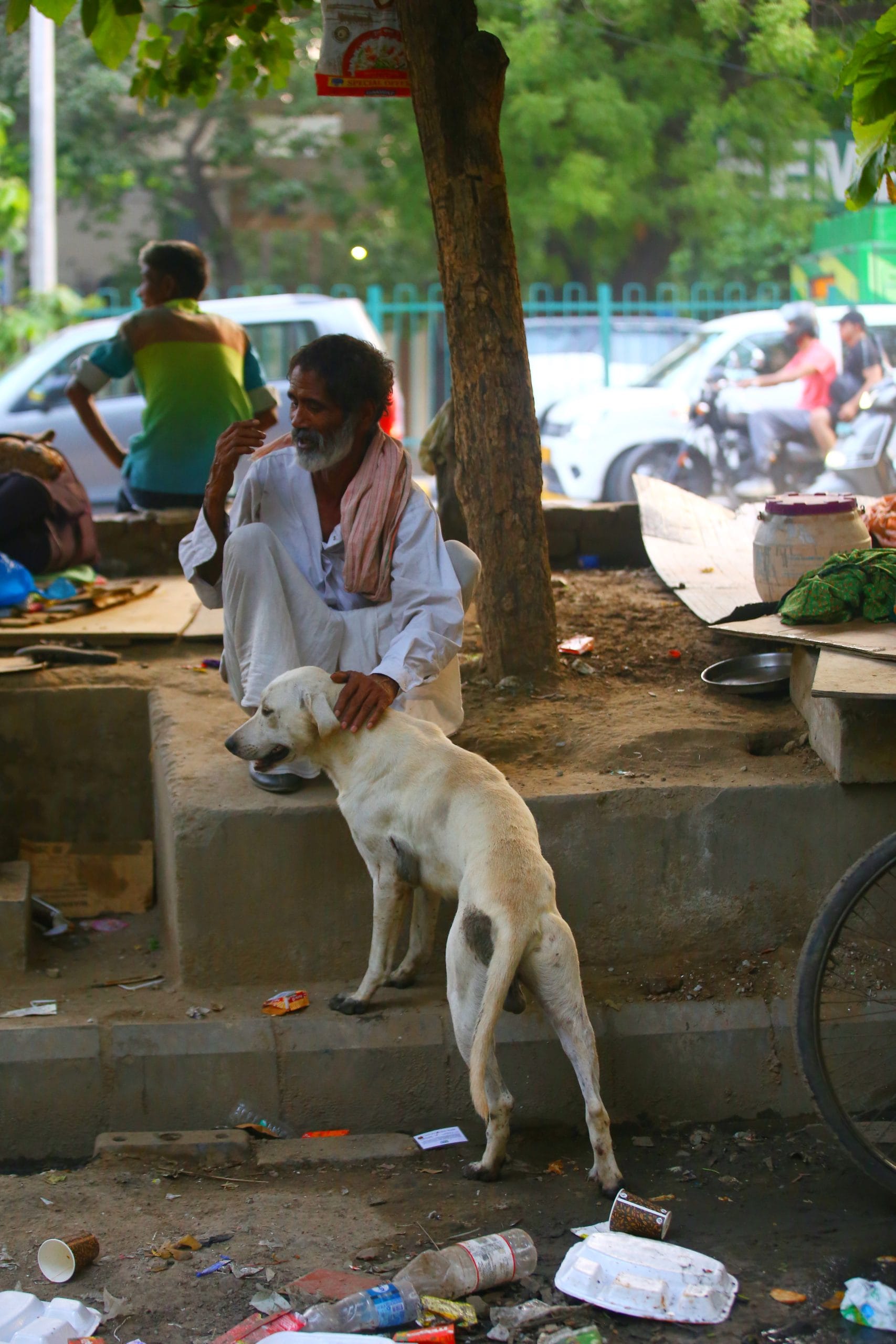
Twenty-six-year-old Kali sleeps a few metres away. Survival on the footpaths means relying on companions for protection. At night, she sleeps beside stray dogs, believing their presence offers a layer of security the streets otherwise do not.
“We sleep with the dogs because we are scared someone might take away our children,” she said. “It also keeps drunk men and drug addicts from sleeping next to us.”
Raju and Saju, two abandoned white dogs, have become part of the neighbourhood.
“We give them milk, Parle G and sometimes a few pieces of chicken,” said Radha Kishan, a 60-year-old man who has lived on the pavement since before the Nehru Place metro station was built. “The dogs do not bite, but bark whenever they sense anything fishy. They are our protectors.”
A routine before every night
When Delhi’s homeless women choose a place to sleep, they carry out their own assessment of safety. They look for CCTV cameras, petrol pumps that remain open through the night, roadside lighting and the presence of security guards.
Safety also depends on their own routines. Families sleep in groups. Older women remain awake after midnight. Children are kept close. Phones stay beneath pillows. Bags and utensils are tied together before everyone goes to sleep.
The women sleeping on Delhi’s pavements said the Mehrauli case hasn’t changed the way the city functioned around them. They said there were no additional police patrols or new security measures. Their nightly routines remain the same.
For Renu, those routines begin after everyone else has fallen asleep. Her mother hums softly into the night. The song is familiar. She has sung it every year the family has come to Delhi.
Renu listens while keeping an eye on the children sleeping beside her.
“Inki beti aur bahu so rahe hain, toh ye kaise so jayengi (How can she sleep while her daughter and daughter-in-law lie asleep)?” she said.
(Edited by Prashant Dixit)