





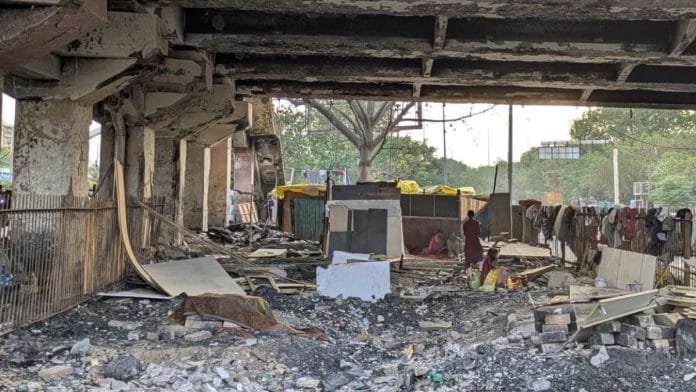


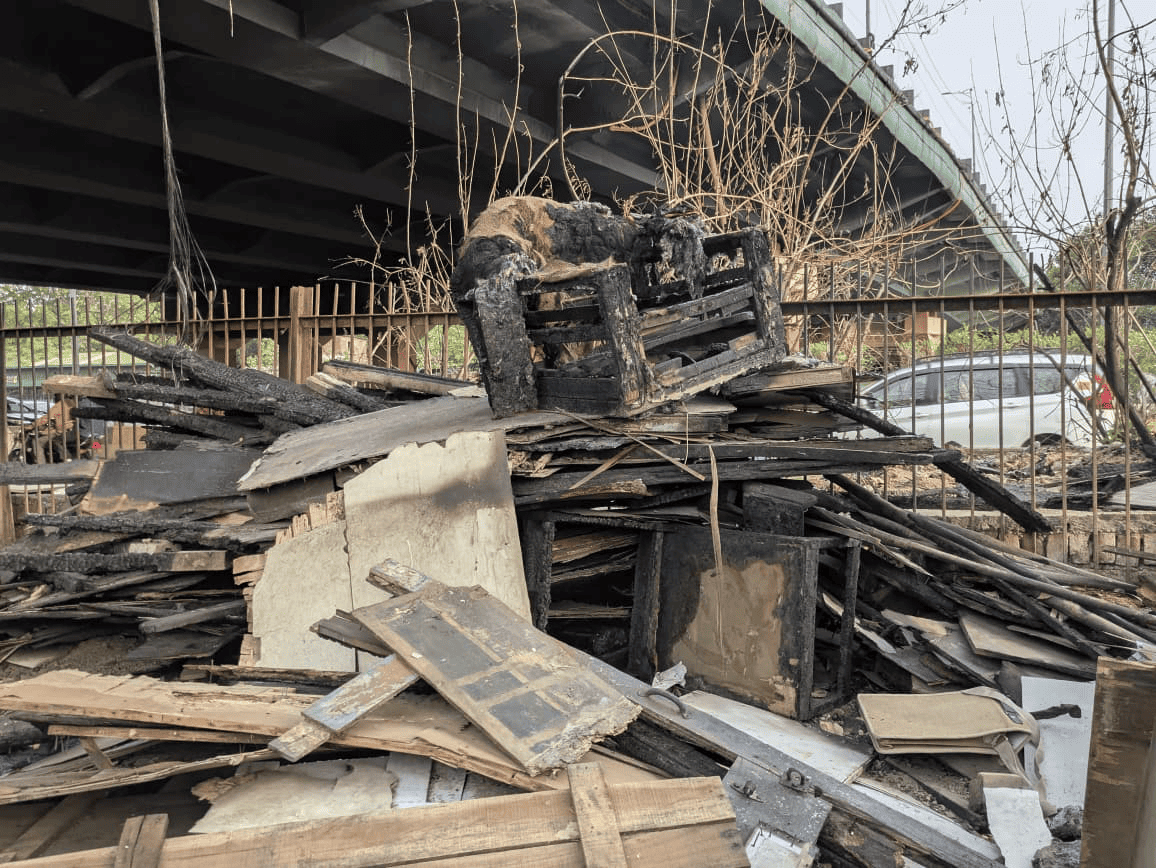
New Delhi: A fire broke out on 20 May at Viklang Basti, an informal settlement housing persons with disabilities. The fire, which began due to an LPG cylinder leak, spread rapidly through the makeshift woodwork houses and led to some residents losing all their personal belongings — including disability aid such as wheelchairs, crutches, disability scooters, e-rickshaws.
According to the local residents, out of the roughly 85-90 houses in the basti under the Sewa Nagar Flyover in Southeast Delhi, around 27 were completely destroyed, directly impacting 21 persons with disabilities.
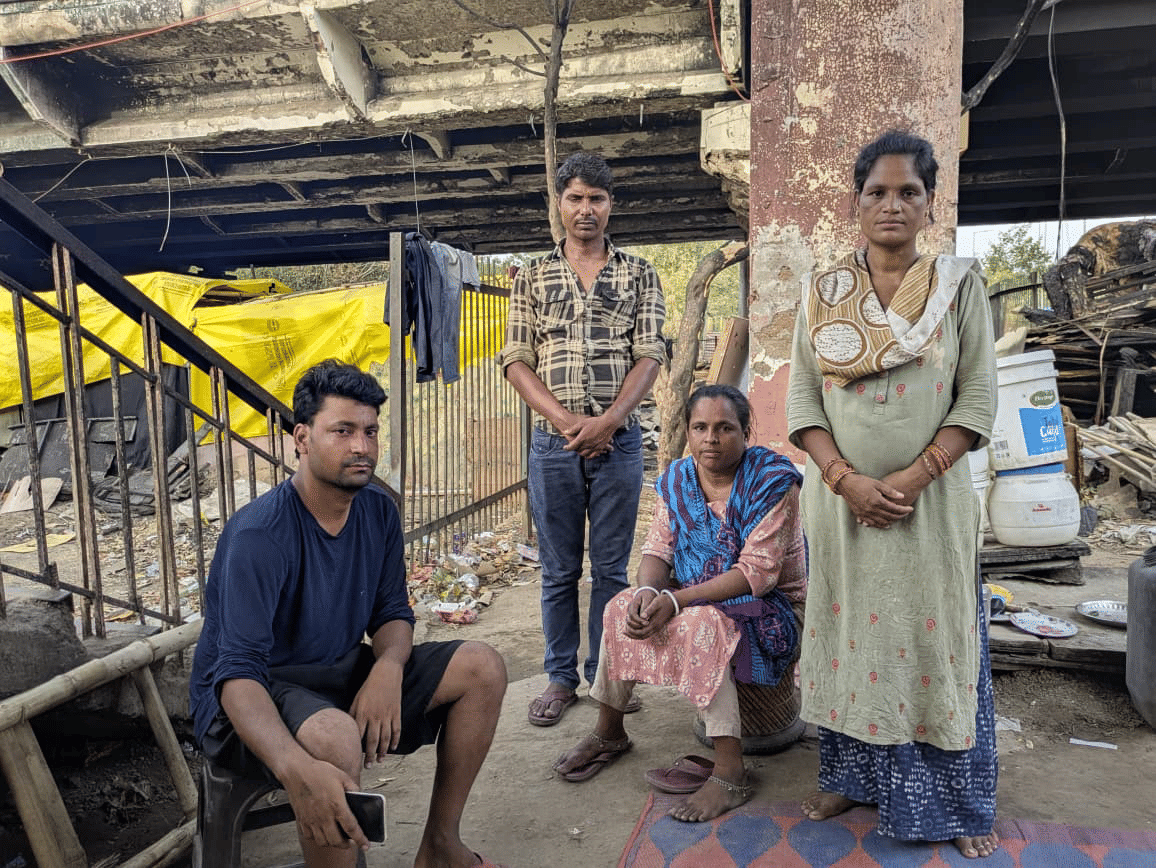
“He was born in the house,” said Dev Roy, a 27-year-old resident of the basti, cradling his 10-month-old son in his arms, while talking about the sentimental value of his now-scorched home. Roy, like many other residents, lost identity proofs in the fire, including his Aadhaar card and PAN card. The fire also claimed the last living memory of his deceased brother, as well as the photos and death certificate of his parents.
The once–lively basti now looked like a charred wasteland, a mere reminder of what once used to be. The houses that people had built over the years, using scraps of plywood and cardboard, were reduced to ruble. Everything they owned — furniture, clothing, utensils, books — was now debris and ash littering the ground.
‘All gone in an instant’
The fire rendered persons with disabilities living in the area particularly vulnerable. Not only were their houses burned but their mobility assistance devices were also destroyed.
Viklang Basti, which literally translates to slum for the disabled, was originally a settlement of over 50 persons with disabilities, and their families. It was demolished by the central government ahead of the 2010 Commonwealth Games — one of the numerous evictions carried out at that time. Reports suggest that the inhabitants of the camp, which was razed down on 10 January 2009, had proof of its existence since 1998. The present-day informal settlement, which houses over 100 people, is the last remnant of the erstwhile colony for persons with disabilities. The residents now once more fear being displaced ahead of impending fire damage repair work.
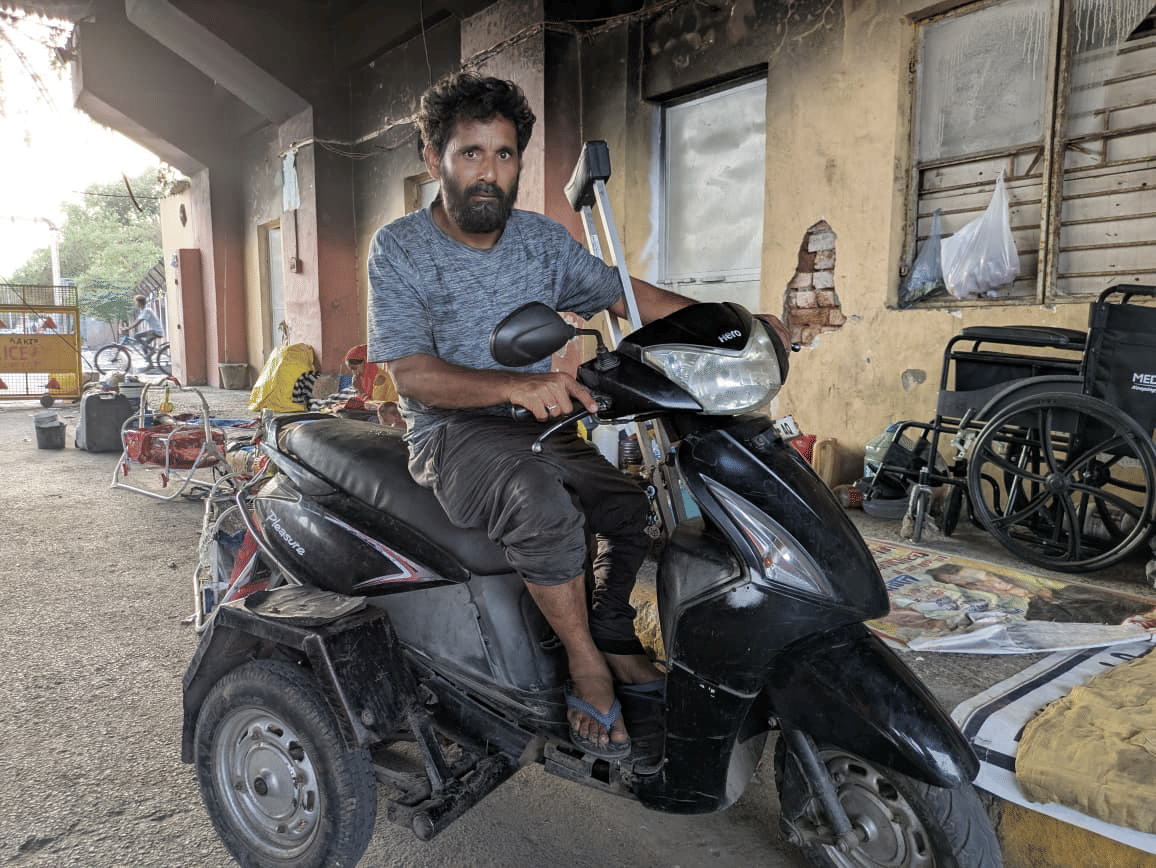
Mohammad Gulzar has been a resident of the settlement since he lost his job in 2016. He suffered paralysis in both legs due to Polio in childhood, and owns a small stall that sells confectionery items such as chips, water bottles, and soft drinks.
“All of my stock was inside the house when it burnt down. I have been without work since,” said Gulzar. His 13-year-old son, Arif, has been admitted to Safdarjung Hospital since the fire broke out. He suspects that Arif’s fever resulted from the trauma of the incident.
Gulzar explained that the fire started in his neighbour Pooja’s home and quickly engulfed the other surrounding areas. Pooja, people said, sustained burns on her arms and face. While people rushed to extinguish the fire, electrical short circuits and wooden structures fueled it further.
“It might not seem like much, but it was home,” said Roy, looking at photos of the settlement from before the fire. He had been living in the shelter with his wife, Kusum, and their three children for nearly seven years. Kusum’s parents and sisters also lived in the area, but have temporarily moved back to their hometown in Bihar, unable to regain their footing since.
“We had 100 rupees on the day of the fire, so we rationed 50 for our food and the other 50 for the infant’s milk. Even before the milk could boil, everything we held dear, everything we owned, was all gone in an instant,” said Kusum, questioning where to turn for help.
Also read: The city of kebabs and nawabs, Lucknow is the new party capital
Community outreach
In the absence of official support, Gulzar turned to local NGOs, stepping up as a community leader.
He shares a long-standing relationship with Sheikh Akbar Ali, co-founder and programme coordinator of Basti Suraksha Manch, a community-based network supporting informal settlements. Even after losing his phone and all his contacts in the fire, Gulzar still remembered Ali’s number from the last time when Basti Suraksha Manch came to their aid. He reached out to him immediately.
Following the fire, Basti Suraksha Manch provided the affected residents with rations, clothing, tarpaulins, and other relief material.
“We had formed a network during the lockdown, which we named ‘Delhi Relief Fund.’ The group steps up for donations in times of need,” said Ali. Support groups formed during the pandemic have consistently provided support to the local communities.
Himanshi Aggarwal
Ali further connected Gulzar to Astha, a cross-disability community-based NGO working primarily with children with disabilities. Established in 1993, the organisation’s primary focus is on rehabilitation, education, and early intervention for children with disabilities; but they pivot to emergency relief when required.
Since their primary relief efforts during the pandemic, they have maintained a relationship with the community, providing rations or administrative support in registration for Unique Disability ID (UDID) cards. After the fire, the NGO worked to mobilise community support to further provide the residents with relief material.
Pratik Aggarwal, executive director of Astha, recalled the scene:
“In the fire, all these companions’ wheels, their cots, their food, stoves, children’s belongings, everything was burnt.” The NGO noted that roughly 30 families were affected, with more than 50 per cent being disabled. As of yet, they have provided 18 wheelchairs in total (eight initially, followed by another 10), and are in the process of procuring another 12. They have also provided the local residents with charpais (cots), tarpaulins for shelter, and 30 days worth of rations.
“The donations made are all garnered through community outreach. Aasra, a mobility aid company, has donated 10 of the wheelchairs, while the others have been bought by citizen support,” said Aggarwal, explaining their process.
The members of both Aastha and Basti Suraksha Manch share a close contact with the basti, and have come to their rescue on multiple occasions.
“Community-based NGOs have provided us the support that governments have failed to,” said Gulzar.
(Edited by Aamaan Alam Khan)