



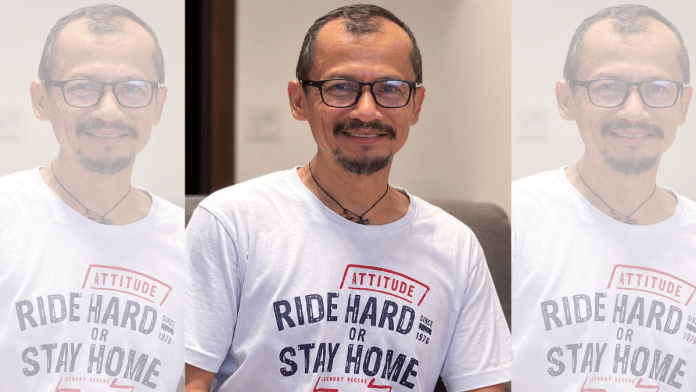

New Delhi: At around 11.30 pm Sunday, Chongtham Vikram Singh stepped out of his third-floor home in southeast Delhi to throw out garbage. A few minutes later, the 55-year-old musician was frantically running from a group of men he had confronted outside over noise and loud music. A neighbour heard him shout, “Thong hango” — open the door. But before Vikram could reach safety, the group caught up with him in the corridor and allegedly beat him up in front of his family.
“I was afraid. I couldn’t do anything,” the neighbour said.
The building’s CCTV would later show the men making their way down the staircase. About 10 minutes later, Vikram’s 20-year-old son Yaiphaba rushed him to Okhla’s Holy Family Hospital in a critical condition. He died hours later.
Vikram’s death comes months after the fatal assault on 24-year-old Tripura student Anjel Chakma in Dehradun and more than a decade after the killing of Arunachal Pradesh student Nido Tania in Delhi. In both cases, allegations of racial abuse became central to the public outrage around the deaths; police in Dehradun, however, later said their investigation had found no evidence of a racial motive in Chakma’s case.
In Vikram’s case, the Delhi Police have registered a murder case and arrested seven men and caught a juvenile; police have so far described the confrontation as stemming from noise and nuisance outside his home, rather than establishing a racial motive.
Kilokari village, where hundreds of Northeastern people live, was home to Imphal-native Vikram, his wife and son for over two decades. For Northeastern residents in Delhi, his death has reopened an old wound — that violence, casual prejudice and racial stereotyping can make even a city they have lived in for years feel conditional. And that even old neighbours may remain apathetic bystanders when an assault takes place.
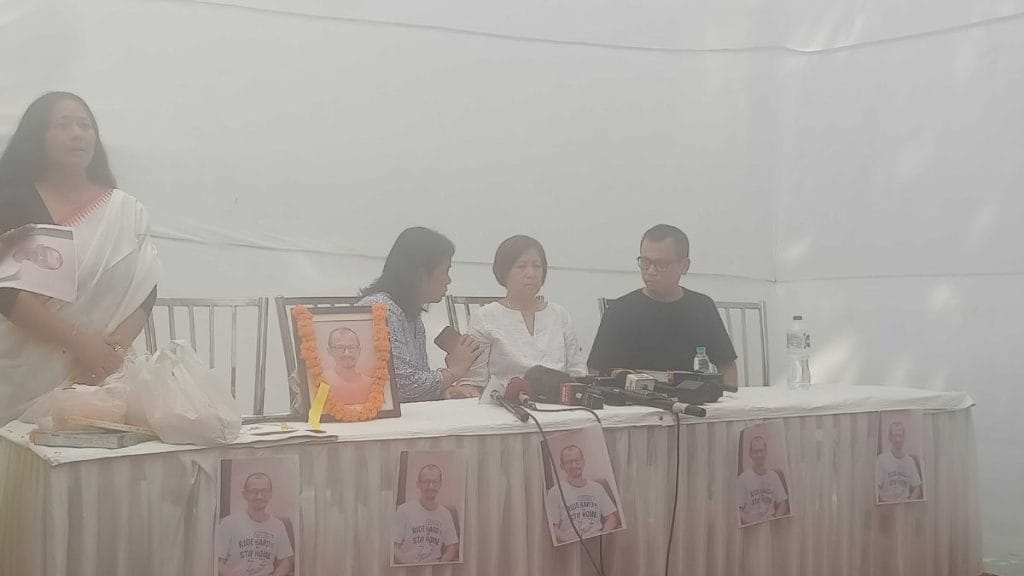
At a press conference held by the family on Tuesday at the Manipur House, Vinalakshmi Nepram, founder member of the North East India Forum Against Racism warned against racial attacks on people from Manipur.
“Is this what the Prime Minister says of a developed India where citizens from Manipur and North East India are safe?” she said. “You touch another brother, another sister and Manipur will wage war against India, if this is what you are telling us to do.”
Eight men followed him
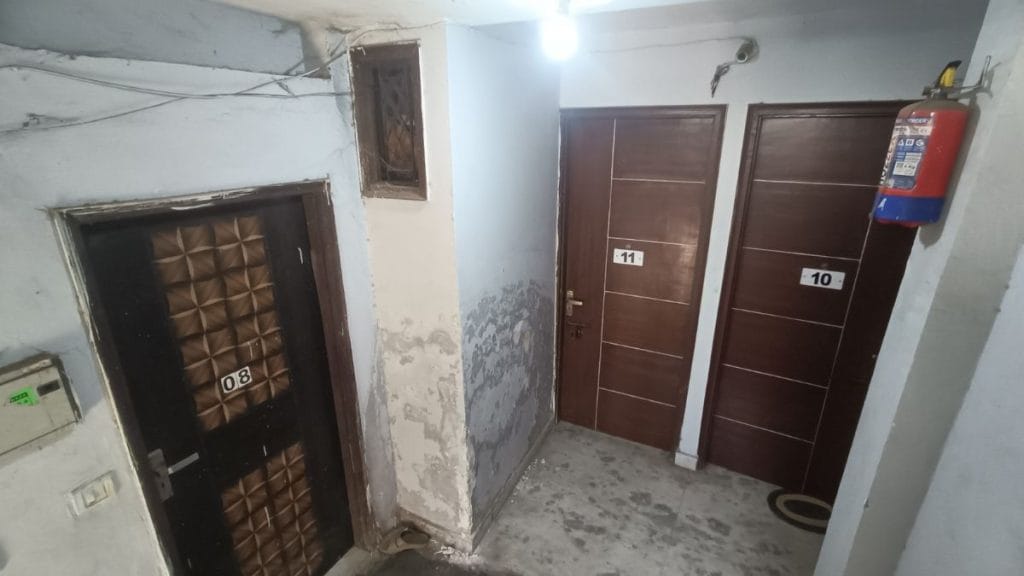
The CCTV footage from Vikram’s building captures the final minutes of a life he had spent nearly two decades building in Delhi.
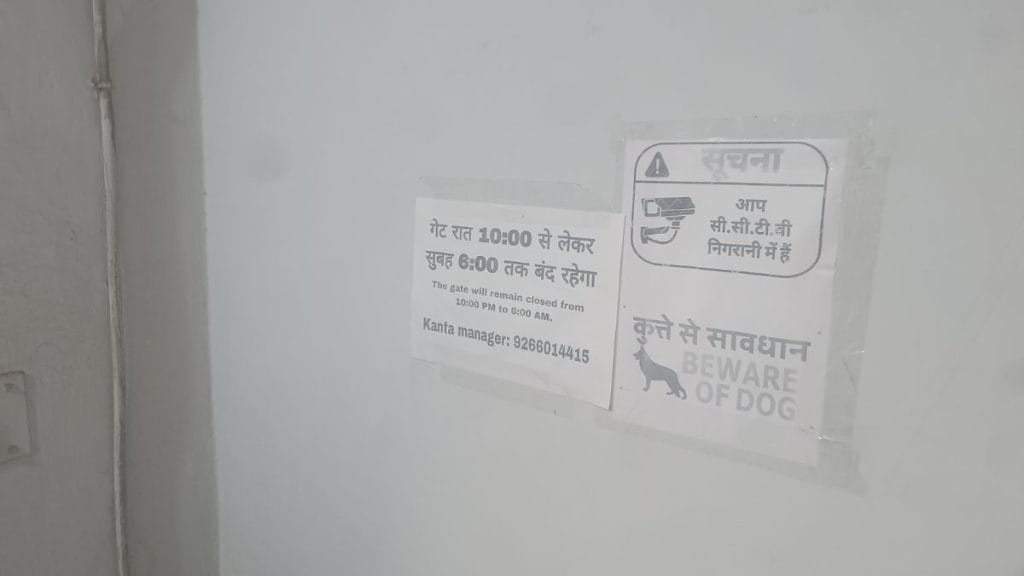
A poster pasted on the wall instructs residents to keep the building gate shut between 10 pm and 6 am. But on Sunday night, the doors were open as Vikram ran towards his third-floor home. Vikram had stepped out, like routine, to take the trash out and objected to loud music played by a few noisy men outside a shuttered dhaba. The confrontation soon turned into an altercation.
According to eye-witnesses, eight men followed him inside the building.
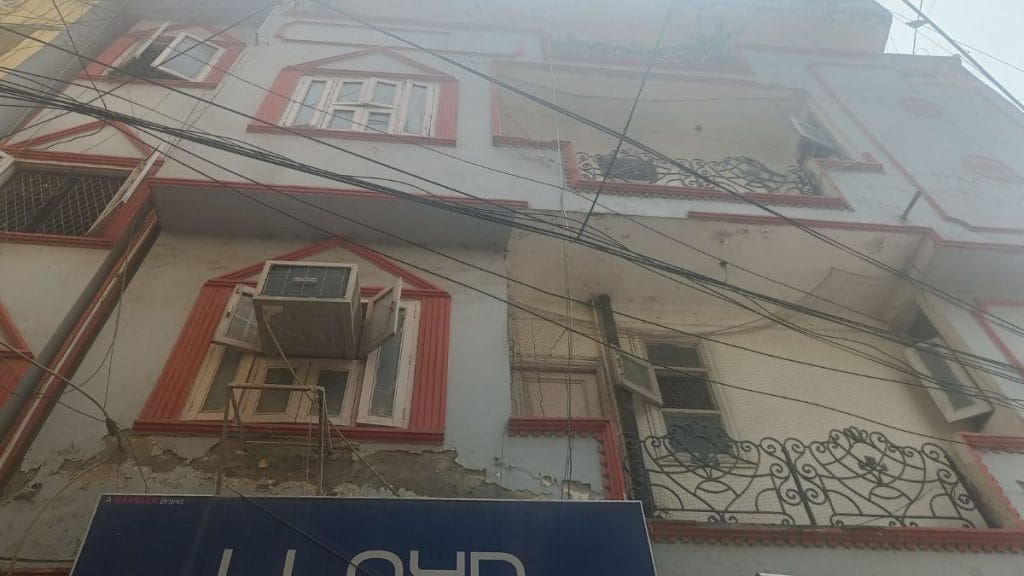
The building has four rooms on the third floor. Vikram, who belonged to the Meitei community lived in one with his family.
The shops surrounding the building — a medical store, electrical shop and optical store — had mostly shut by 10 pm. A shopkeeper whose premises adjoin Vikram’s home said he learnt about the assault only the next morning.
“He had been living here for several years. Nothing like this had happened before. He was a soft-spoken man,” he said, requesting anonymity.
That night, however, residents heard shouting from the staircase.
Vikram’s family stood helplessly as the attack continued. Vikram was taken to the hospital after the assaulters fled.
“Doctors found that his blood pressure had fallen and his condition was very critical. After a few hours, he died of his injuries,” said H Nanao, Vikram’s close friend.
Yaiphaba, a law student, later filed a complaint with the police, saying he heard his father shouting outside the house and then saw four or five men kicking and punching him.
Delhi Police registered a case soon after and eight accused are in custody, according to police.
The accused have been identified as Bharat Kumar, 19, and Pramod, 26, who worked as food delivery workers at Saini Dhaba; Ramzan Khan, 22, a delivery worker at New Choudhary Dhaba; Deepanshu, 21, and Mohan Vishwakarma, 32, who worked in packaging at Saini Dhaba; Vijay, 36, a delivery worker at Annapurna Dhaba; and Mannu, 26, who worked at a Diamond Pizza kiosk.
A musician’s life
Before Delhi became home, music was Vikram’s haven. He grew up in Imphal in a family where music was a way of life. His mother, Chongtham Kamala, was a celebrated Manipuri playback and classical singer associated with All India Radio and with films including Matamgi Manipur (1972), the first full-length Manipuri feature film.
Vikram began performing for All India Radio while still in school.
“He was interested in music from childhood. Music was all around him,” said Nanao.
Vikram learnt to play the guitar when he was in Class 10. By the early 1980s, he was the lead guitarist of Phoenix, one of Manipur’s better-known rock bands. He later played with Ultra Vires and Eastern Dark.
“He inherited music, but he experimented with it and tried to make his own music unique,” Nanao recalled.
Then, in the early 2000s, Vikram moved to Delhi to start something of his own. He taught guitar, established a music school and also taught at the Delhi School of Music. He remained connected to the Manipuri community and worked on Rock’n’Roots Projects, collaborating with Rajasthani folk singer Mame Khan.
“The family is artistic and well-known in Manipur,” said Michael Ionam, one of the neighbours of Vikram back in Imphal. “He used to play Hindustani classical and Jazz and was a versatile artist.”
For nearly two decades, Kilokari had been home to Vikram and his family.
Now, his family has moved temporarily to Manipur House. Nanao said Vikram’s body is expected to be taken to Imphal by tomorrow evening, where his last rites will be performed.
Also Read: Manipur guitarist beaten to death outside Delhi home for protesting loud music; 8 dhaba workers held
‘We are not outsiders’
By Monday evening, the question of what happened to Vikram had moved beyond Kilokari.
Members of Manipuri associations and Northeast student groups gathered outside Sunlight Colony police station, chanting “We are Indians” and “We want protection”. Protests, candle light marches, and demonstrations followed in Delhi as members of the community questioned the safety of Northeastern residents in the capital.
𝐓𝐡𝐢𝐬 𝐢𝐬 𝐓𝐡𝐞 𝐋𝐚𝐰 𝐀𝐧𝐝 𝐎𝐫𝐝𝐞𝐫 𝐨𝐟 𝐓𝐡𝐞 𝐍𝐚𝐭𝐢𝐨𝐧𝐚𝐥 𝐂𝐚𝐩𝐢𝐭𝐚𝐥 𝐍𝐨𝐰.
Chongtham Vikram Singh, a Manipuri Musician and Music Teacher, was beaten to death in the Ashram area of Kilokari, South Delhi.
His "Crime": He Objected to Loud Shouting and… pic.twitter.com/1Ngcpich7L
— তন্ময় l T͞anmoy l (@tanmoyofc) September 8, 2026
At the press conference today, Vikram’s wife had an appeal.
“We are not seeking revenge, we are seeking justice,” Jyotsana, who works in an MNC, said. “Please ensure a fair investigation and hold those accountable.”
Vinalakshmi Nepram also questioned the treatment of Manipuris in the country.
“Is this the India that we want to live in? Where citizens cannot live a life of peace with his family?” she asked. “Are we enemies of this country? What about Article 21, the Right to Life?”
Former Manipur chief minister N Biren Singh described Vikram’s death as a loss to his family, the music fraternity and the people of Manipur.
“His invaluable contribution to music will always be remembered. His untimely passing is a great loss to his family, the music fraternity, and the people of Manipur,” he wrote on X.
Congress leader Rahul Gandhi framed the killing as a question of safety for Northeastern families living in Delhi.
“After many such incidents, every Northeast family in Delhi is asking the same question today — are we safe here?” he wrote on X, asking what the Union home ministry and Delhi Police were doing to address what he called “growing lawlessness”.
The Meitei Heritage Society described Vikram’s death as part of what it called a “deeply disturbing pattern” of violence and discrimination against people from the Northeast in Delhi-NCR.
For Nanao, the significance of Vikram’s death lies beyond the immediate circumstances of the assault.
“When we go down to South India, there is no safety issue with us. But North India is not safe for us,” he said.
He says Vikram’s death reflects a larger problem faced by people from the Northeast.
“Who is accountable for this? This did not happen overnight,” he said. “For the past few years, we have been attacked more often.”
India, Nanao said, may be one of the world’s oldest civilisations, but people from different parts of the country still struggle to feel equally at home.
Then, he paused to make an obvious point.
“Manipur is also in India. We are not outsiders,” he said. “The city where Vikram built his second life is where it ended.”
(Edited by Stela Dey)