



New Delhi: Abdul Bari gasped for breath as he ran through a narrow lane in Onkar Nagar’s Block B, chased by a group of Hindu men. Bari’s crime: sharing CCTV footage with the family of two Hindu women who alleged harassment by a group of young Hindu men. In a neighbourhood already on edge, an act of kindness became a trigger.
“I shared the footage because a woman was being harassed. That’s all I did. But now I’m the one being chased. It feels like I’m being targeted for being a Muslim in the clash between two Hindu families,” Bari said, recounting the night of 14 April.
Tri Nagar has been in the spotlight after some Hindu residents in Gali No 3 began keeping pigs in the locality. The move was seen by Muslim families as a way to pressure them to leave. The walls of the bylanes were soon plastered with posters of Varaha, the third incarnation of the Hindu deity Vishnu.
As tensions escalated and instances of violence were reported, security personnel were deployed in the area. And after the pigs died in mysterious circumstances, allegations and counter-allegations circulated online. Hindu families claimed Muslims killed the pigs, while Muslim residents said it was Hindus who killed the animals.
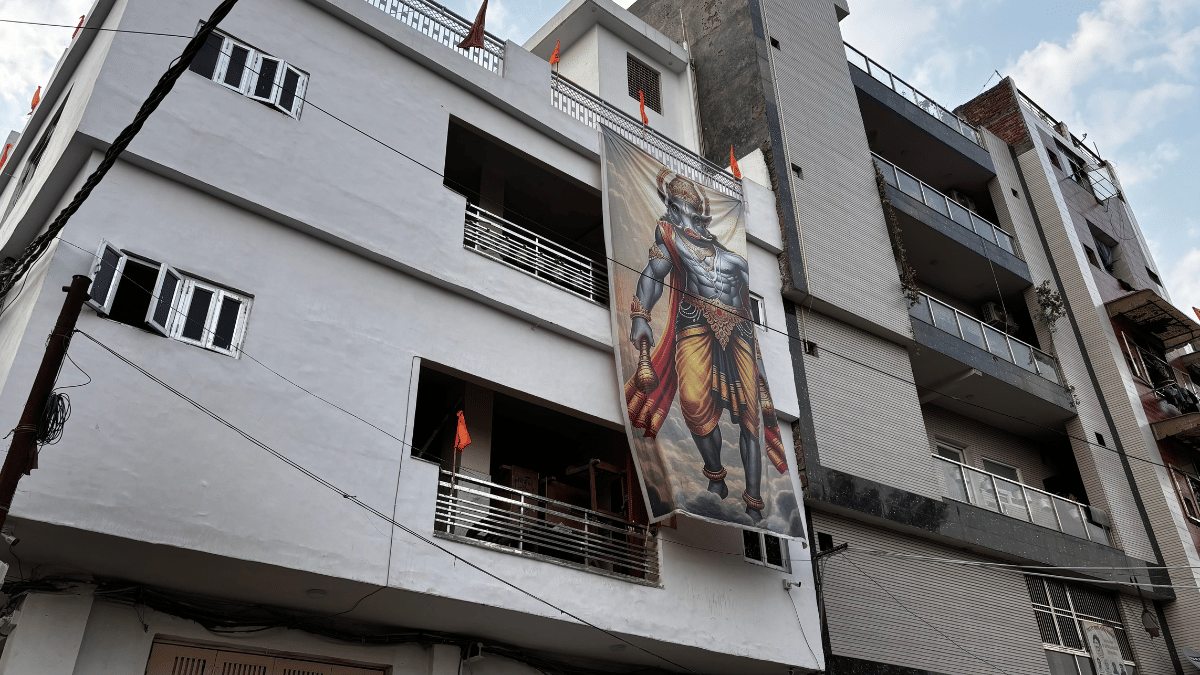
Twelve-foot posters of Varaha still hang outside the homes of RWA president Tarun Dhiman and general secretary cum joint secretary Sachin Sharma, with smaller versions visible on the walls of several Hindu households.
Just as tensions appeared to ease, another flashpoint emerged. This time, two Hindu women alleged harassment.
The two women who filed the harassment complaint said they were visiting their aunt in Onkar Nagar ahead of their weddings. The situation escalated when the aunt asked the boys—identified as Yash Sharma, Aradhya Sharma, Kushal Sharma, and Ayush Sharma—to get down from her scooty, parked outside her home.
While the men initially stepped aside, the women allege, they soon began hurling abuses at them and their aunt.
In a complaint filed by them and accessed by ThePrint, the women allege that this was not an isolated episode, but part of repeated harassment. They say the men had been troubling them for some time, using abusive language and making obscene remarks.
“They are not scared of the consequences, because they have support from above,” said the brother of the women.
Bari, who was present at the site, offered CCTV footage from one of his cameras to help the family establish facts. However, it soon became a showdown between Bari, Dhiman and Sharma.
Religious fault lines between Hindu and Muslim communities in Delhi’s Tri Nagar have been steadily hardening over the past year and a half. According to Muslim residents and some Hindu families, the hostility is part of a larger pattern. While it may look like a neighbourhood dispute on the surface, recent incidents point to a deeper, structural aggression toward Muslims.
“It is no more subtle. They almost seem proud of their hatred and the way they express it. They teach their children, and ensure that this unease remains,” said Amaan Ali, who has lived in the area for over two decades, adding that he no longer feels safe.
Other Muslim families echo the fear. Many claim to have lived in the neighbourhood longer than some of the Hindu families, yet they are constantly asked to prove their identity and ‘loyalty’.
‘Delhi will be purified’
The recent viral video of Bari being chased is one example of how tensions have played out, but residents say the situation is more complex.
“It is about demography. We won’t let it change this time. We Hindus have moved out for far too long. This time, we will be the ones who make them leave,” said Dhiman, seated in his home, as others nodded.
The group accused the Muslim residents of creating trouble and disturbances, intimidating children, and harassing women.
For Ali, moving within Onkar Nagar—from Block C to Block B—was a necessity. The family was growing and needed more space. He said the property was acquired through legal means, with documents to prove it.
When they shifted in 2022, the family members weren’t anticipating trouble. And for a while, life went on as usual. Then things began to change.
The turning point, residents say, came with a sudden shift in the RWA. In 2023, members Vinod Khari, Parveen Jain, Amit Garg, Vijay Mittal, and Pratap Singh Bhati were removed, allegedly without due process, and a new body took charge.
“This whole thing was sketchy,” said former president Pratap Singh Bhati. “No due process was followed. Before we knew it, we were removed from the RWA and a new one took form with Tarun Dhiman as its head.”
According to Dhiman, the new RWA was established after the previous one failed to maintain order. Sachin Sharma, Ashwini Sharma, and Manish Karbala are members of the new body.
The tensions first became visible during Ramadan 2025, when slogans were raised and videos filmed outside Ali’s home while prayers were being offered inside. A peaceful gathering of 25-30 Muslim men at the home of Asgar Imam Bharti—Ali’s father—soon turned violent as people confronted him over bringing so many men into his house.
Hindu families allege that the festive gathering was intended to provoke tensions. Police were called, and several people were taken to the station in an attempt to resolve the matter. Ali claims that it was his family that was ultimately told not to hold such celebrations again.
He says that was the first time visible markers of their faith—such as wearing skull caps—became a point of conflict.
What followed, he alleges, was a pattern of targeting by members of the RWA. Soon after, his father was served with a legal notice flagging his house as an “illegal construction”. Ali claims that the neighbourhood has hundreds of other houses with similar structural overhangs, yet RWA enforcement appeared selective.
Similar intimidations were at play against Abdul Bari, who bought his house in 2025 in Gali no 3 of Onkar Nagar.
“The original Hindu owner never wanted to sell his house. Bari, along with the property dealer, duped the man and got the property under his name,” alleged Kumar.
Being one of the few Muslim families owning property in a predominantly Hindu neighbourhood, Bari said, the harassment escalated. His house was allegedly singled out for demolition notices multiple times.
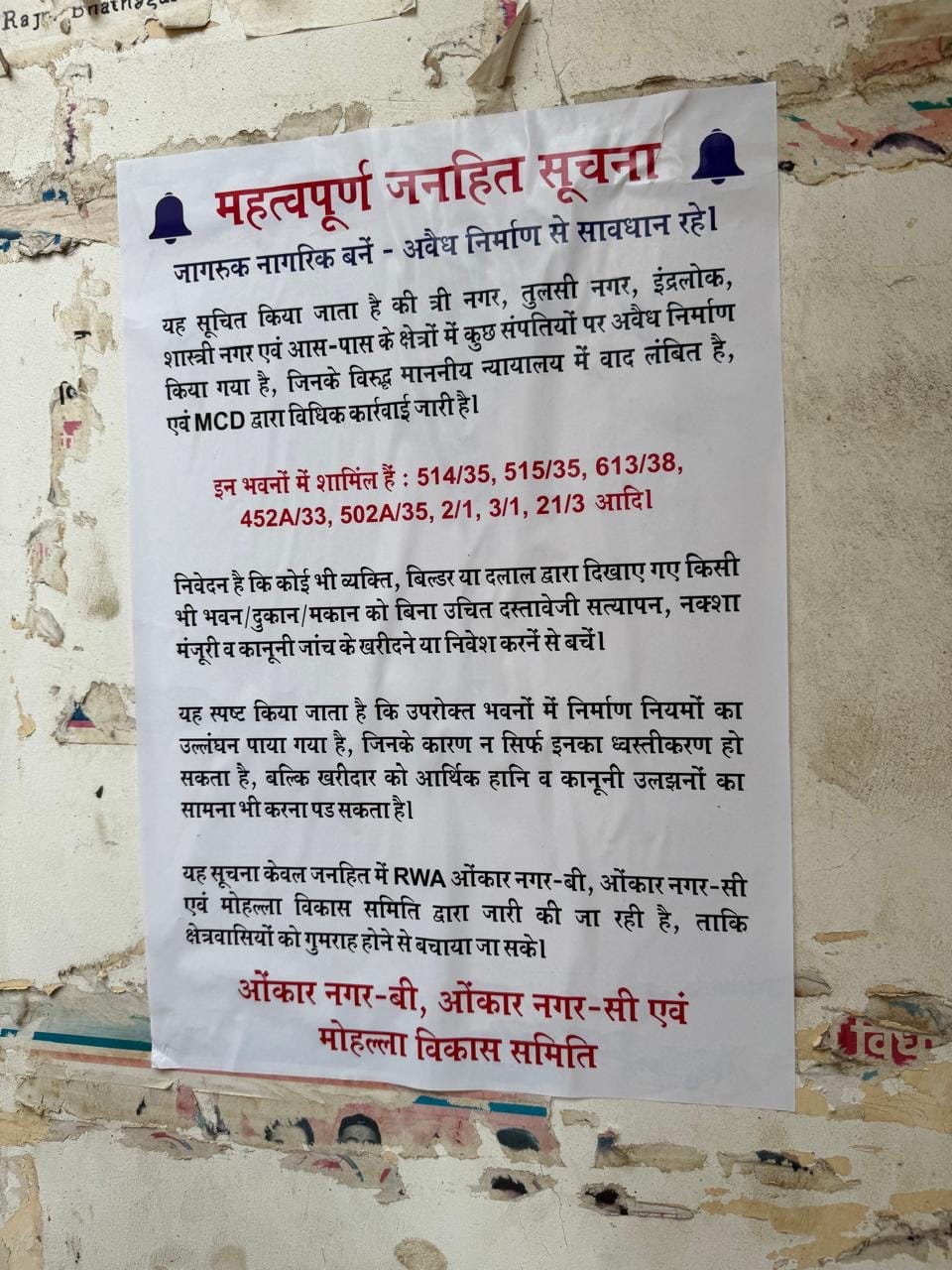
Notices concerning ‘illegal constructions’ were issued to several other Muslim families in the area. To intensify pressure, posters were displayed listing house numbers against which cases had been registered and advising the public to refrain from engaging in any property transactions with residents of those homes.
By mid-2025, Bari added, the harassment took a more psychological turn, with some Hindu families in the colony parading pigs in front of his home and referring to them with names such as “Sultan” and “Abdul”.
The Hindu families now boast that this is to make the Muslims feel uncomfortable and ultimately make them leave the locality.
One video, now with over 30 lakh views on Instagram, shows a man saying, “Pigs will roam in every lane, and there will be a temple in every lane. Delhi will be purified. And all these people will leave,” a man said in a video, smiling at the camera. The clip has over 30 lakh views on Instagram.
Also read: Foreign universities in India are selling half-baked dreams. ‘Can’t even get you internships’
‘Natural for people to feel defensive’
The weight of the intimidation also lies in numbers, said Leyakat Ali, who lives in the lane facing the new temple. Hindus make up the majority of voters in the area, shaping both local influence and political responses.
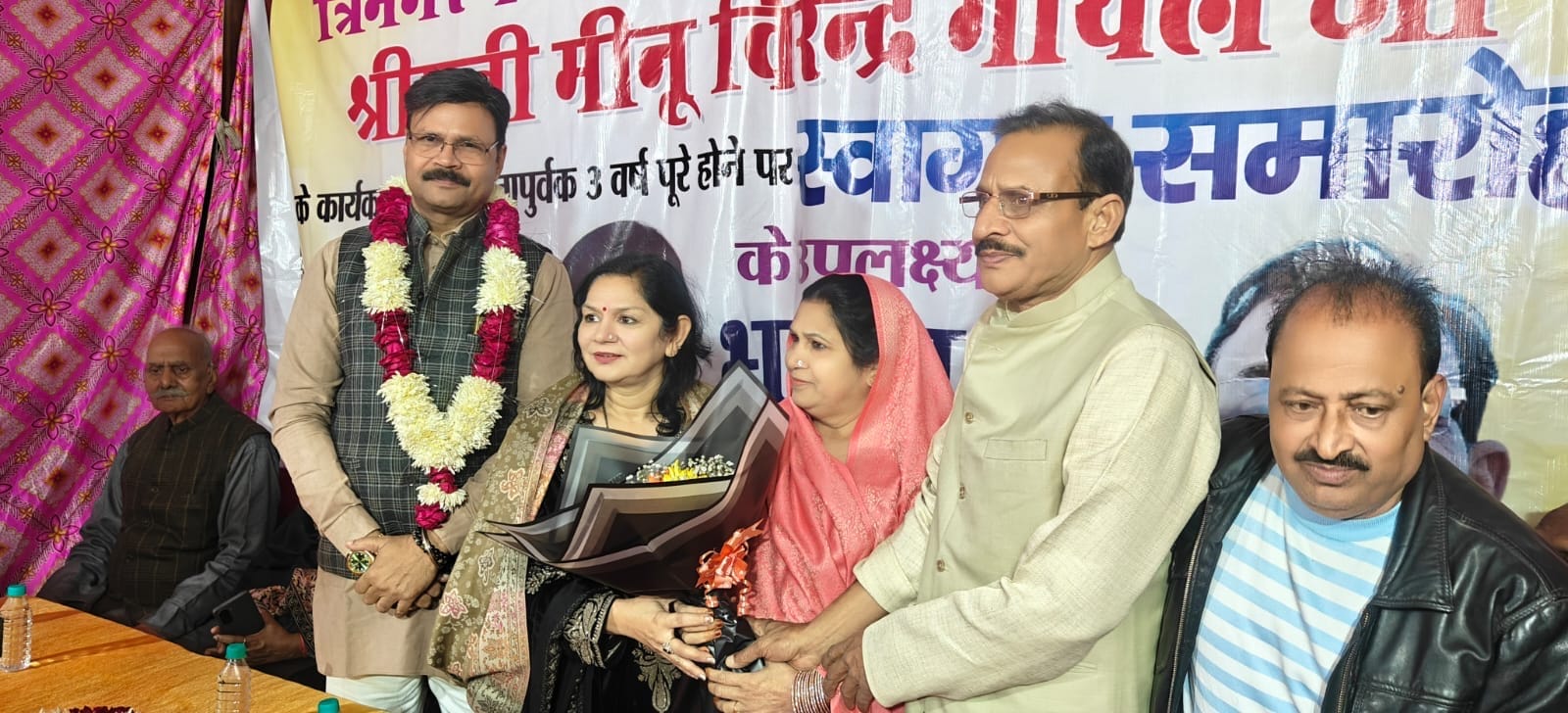
This was made apparent on 23 December 2025, when MCD councillor Meenu Goel attended a community bhandara and blanket distribution ceremony organised by Imam at his home.
While the photo-op went on smoothly, word of her visit spread, and a crowd soon gathered outside the house.
But this time, instead of cornering Imam and his family, residents say the councillor herself was confronted. Videos from the scene show Goel surrounded by RWA members and Hindu families, who questioned her presence at an event hosted by a Muslim.
Men can be heard challenging her, asking whose votes she was seeking, while Goel is seen attempting to placate the crowd.
In another undated clip that later surfaced online, allegedly recorded discreetly, RWA members and Hindu residents appear to be seated inside Goel’s home.
Goel and her husband, Virendra Kumar Goel, are seen trying to calm the group.
As RWA members seek an explanation from Goel for being seen with Imam, Virendra says it is an old matter that happened unintentionally. He adds that, in an attempt to rectify this mistake, posters from the event were removed immediately.
“I’ve only tried to strengthen you. We’ve given the RWA members so many concessions—there will be refreshments, seating arrangements, even a bike. You can use it whenever you want,” Virendra says in the clip.
What transpired behind the scenes remains unclear.
For Goel, the Hindu families were merely expressing their grievances. “We stand with every family of Tri Nagar equally. What happened outside Asgar Imam Bharti’s house is a matter between my Hindu brothers and me,” she said.
She added that demographic change is a genuine concern and that the anxieties of some Hindu families are real. “When you see similar developments happening around you, it’s natural for people to feel concerned and defensive,” she said.
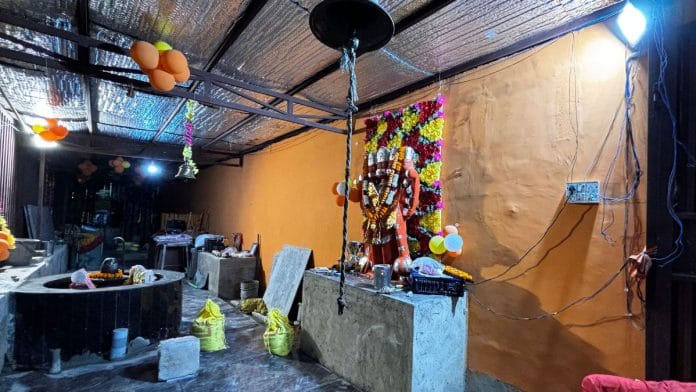
Less than a month later, on 18 January, the foundation stone for the Nyayadhish Panchmukhi Temple was laid. The event was marked with celebration, with Hindu families asserting that the site had once been home to a temple.
Sharma’s mother, who has been vocal about urging Muslims to leave the area, told ThePrint that her cause has backing from several Right–wing organisations.
“We have strong support from groups such as the Bajrang Dal, the Vishwa Hindu Parishad (VHP), and the Hindu Sena,” she said.
For Vishnu Gupta, head of the Hindu Sena, it’s about preventing a ‘Hindu exodus’.
“I don’t think anyone should have a problem with pigs. In fact, I believe every Hindu family in the country should consider keeping them to discourage Muslims from living in their areas. It’s a way to prevent what we see as a Hindu exodus,” Gupta said.
ThePrint reached out to representatives from the VHP and Bajrang Dal but is yet to receive a response.
Not everyone agrees with the new developments in the locality.
In a video posted on 23 March, resident Vaibhav Panchal says the new temple hurts his religious sentiments as it is supposedly built over a sewer.
But the temple, with its makeshift tin roof and marble tiles, continues to flourish. Every day from 5 am to 11 am, loudspeakers blare the Hanuman Chalisa and other bhajans. The evenings follow much the same pattern.
Amaan Ali’s requests to lower the volume have been met with hostility. He adds that the harassment took the form of constant surveillance and verbal abuse directed at anyone who visited their homes.
Also read: ASI’s ghost campus in Noida—grand new Rs 289-cr facility, 15 students, no faculty
‘Small neighbourhood matter’
On 20 February, tensions escalated sharply. According to residents, an altercation between Imam and a few Hindu families that morning quickly spiralled out of control.
The confrontation soon turned into a physical altercation, with CCTV footage showing Manish and a few other residents pulling out sticks from Dhiman’s house.
Police were called to the spot, but residents said no immediate resolution could be reached. Given the severity of the situation and fears of further escalation, Imam later submitted an official complaint to the SHO of Keshav Puram, alleging that his life was under threat.
Imam’s family said that they were advised by some officials to temporarily leave their home and wait for tensions to ease.
“It was a difficult decision, but we feared for our lives. So we sent our father back to our village,” Ali said, adding that he and his brothers also moved in with relatives for safety.
But the fear is no longer limited to isolated incidents or specific festivals. It has widened, the family alleges, to a point where even those indirectly linked to them are being drawn into the fallout.
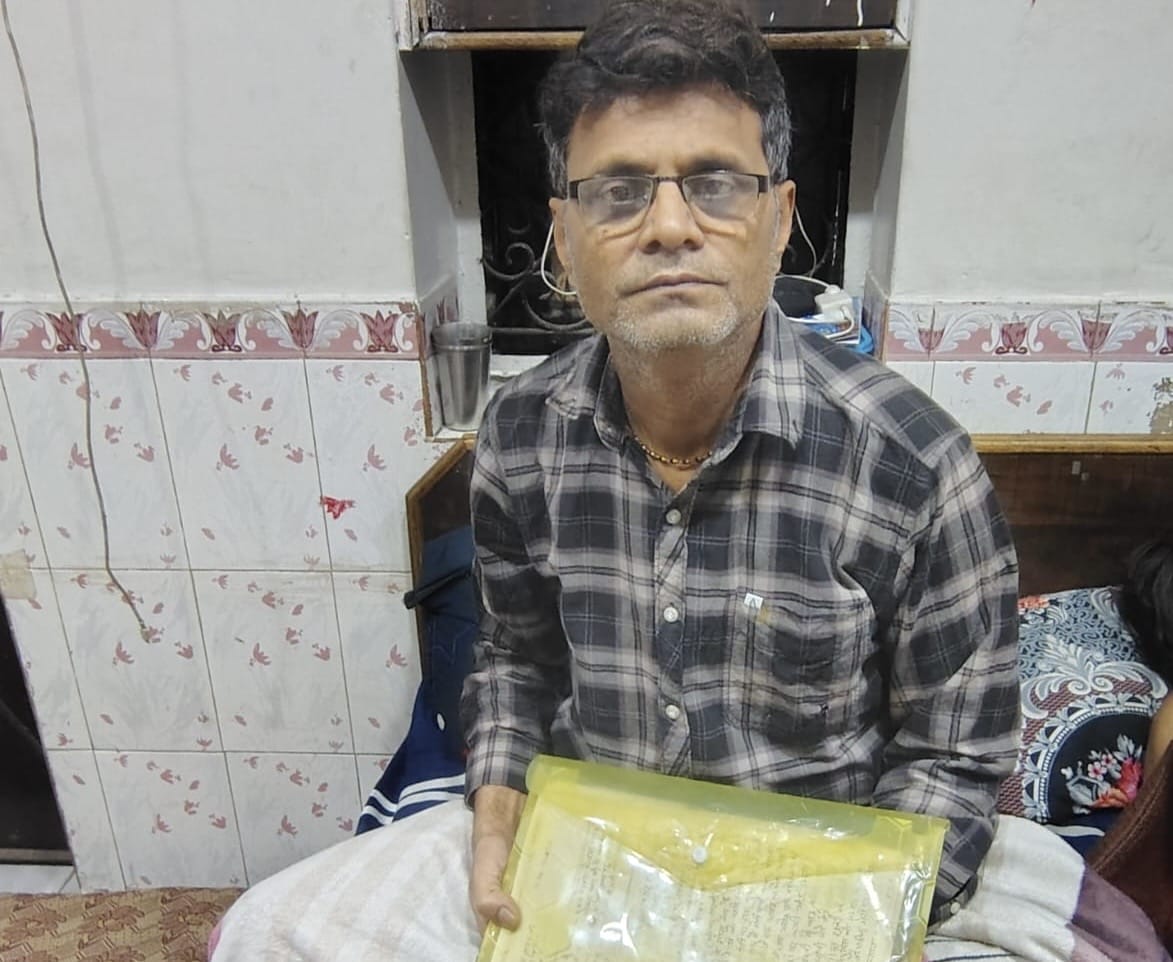
On 21 February, a group allegedly damaged and destroyed the cart of an egg seller. The worker present at the time, Amit, a migrant labourer, said he was not involved in the dispute but was left shaken and asked to stay away from the unfolding tension.
The Hindu residents claimed that the stall was the place where Muslim men harassed women and abused others. The owner of the cart, who was away for a family commitment at the time, insists he has done nothing wrong and is being targeted without reason.
“I have run this business here for 35-40 years. No one ever complained. But overnight, my livelihood was destroyed. For what? I don’t know,” said Subhash Rathore, who supports a family of six, including an ailing mother.
Video clips from the incident show several individuals. The vendor’s family claims to have attached photos and names of these persons in the FIR, yet the police did not include any names. The family also alleges that no concrete action has been taken so far.
They also claim that the FIR registered in the case is vague, with Amit, the migrant worker, listed as the complainant and the accused described only as “unknown persons”.
Despite multiple complaints, including to senior authorities, the family says they are still awaiting action.
The authorities claim that nothing is amiss. “It was a small neighbourhood matter. Few news reports have made it look more serious than it is,” said a senior police official on the condition of anonymity.
But the mood on the ground tells a different story. Even as people sit outside the temple and children play in the lanes, Muslim families say they are forced to normalise an atmosphere of constant scrutiny and suspicion.
Unease, watchful eyes, and the heightened focus on identity and religion continue to shape the fabric of the colony. As media attention dies down, residents claim that events that capture national attention are deliberate and systemic.
“We are being pushed out in a planned way. We are told this on our faces,” a resident said. A charged rhetoric around “jihadis” and “terrorists” has become part of everyday conversation in sections of the neighbourhood.
As families like those of Imam and Bari, who have long held properties in the area, worry about the future, some tenants have already begun leaving. One such tenant, who lived in Bari’s house, left abruptly, saying they could no longer stay in an atmosphere of fear.
“There was too much tension in the air,” they said.
(Edited by Prasanna Bachchhav)
As usual, this write up is wantonly making Hindus the villains. Isn’t that what IS Hinduphobia?