




Gurugram: A 21-year-old student from Delhi had offers from some of India’s top public universities. But the appeal of the brand new University of Southampton Delhi, and the promise of earning an international degree from home, ultimately convinced her father to enrol her there.
“My father was deeply impressed by the government’s push to bring foreign universities to India. Even though I had imagined studying on expansive campuses with long-standing legacies,” said the student.
Now, she finds herself in a two-floor building with barely 300 students and no real university exposure.
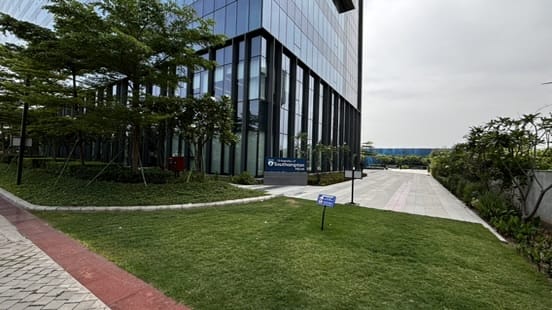
The University of Southampton Delhi became the third operational foreign university in India, joining Deakin University South Asia and the University of Wollongong in GIFT City, Surat. The Southampton campus, inaugurated by Union Education Minister Dharmendra Pradhan and Haryana Chief Minister Nayab Singh Saini in July 2025, is located on the ground and first floors of the International Tech Park, Sector 59, Gurugram.
Southampton Delhi is one of nine UK universities that have received approvals under the National Education Policy (NEP) 2020, after UK Prime Minister Keir Starmer visited India in October 2025.
Addressing a press briefing after the visit, Foreign Secretary Vikram Misri called it a “silent revolution”.
So far, about 30 such institutions, including from the US, the UK, and Australia, have either established campuses or are in the process of setting up one, with many having received Letters of Intent (LoIs).
The process feels completely different from what I was used to in the Indian education system. Classes are far more engaging and interactive, and the lectures don’t stay confined to what’s written in textbooks.
—Vishvam Patel, alumnus of Deakin University South Asia
These foreign universities are entering India at a time when the country’s higher education market is currently valued at Rs 6.2 lakh crore, as per Niti Aayog’s 2025 report. Of the roughly 4.3 crore students in the system, less than 1 per cent make it into India’s premier institutions, such as the Indian Institutes of Technology (IITs), Indian Institutes of Management (IIMs), and National Institutes of Technology (NITs). It is this huge pool of unmet demand that overseas institutions are hoping to target.
“This year especially, with the situation in the Middle East and other uncertainties, we’ve seen parents seriously consider options they wouldn’t have looked at earlier. Ultimately, safety is a major concern,” said Pratibha Jain, founder of the consulting firm EduAbroad.
However, some say these foreign outposts are selling a half-baked dream.
“Students still prefer to study abroad because they want to experience life in a ‘developed’ country,” said an education counsellor from one of India’s largest educational consulting firms, who spoke to ThePrint on the condition of anonymity. “These foreign universities have mainly created an option for middle-class students who can’t afford to go abroad but still want an international degree. Classrooms filled with students from across the world, access to global internships, long-established research labs, and student cultures built over decades remain out of reach,” he added.
Nonetheless, these foreign universities pose a threat to Indian private universities, along with educational consulting firms that earn lakhs by sending students abroad. The changing landscape is democratising elite education in India, where the private universities have long held a monopoly.
Another student, a consistent topper throughout school with achievements extending beyond academics, wanted to experience an Ivy League education in the US. When nothing seemed to be working out, she began preparing for competitive exams, spending long hours in coaching classes. It was there that she first heard about the Gurugram campus of the University of Southampton.
It wasn’t exactly what she had wanted, but it was close enough.
In many ways, it’s a question of return on investment. A BSc course at the University of Southampton is priced at around Rs 80 lakh to Rs 1 crore in the UK and about Rs 40 lakh in India. The difference, while significant, does not necessarily ease the pressure when placed alongside domestic options.
Paying the nearly Rs 40 lakh fee for the BSc (Hons) Business Management programme became easier because of the presidential scholarship. But the excitement of attending the university was dimmed by the lack of campus culture. The shiny, clinical corporate offices surrounding the campus made her feel less like a student and more like part of a management team entrusted with setting up societies and clubs for future batches.
She has gradually settled into the experience. Her days now involve rigorous assignments analysing real firms, group projects, and writing long essays. What the university lacks in extracurriculars, it makes up for with a sharp, uncompromising focus on academics.

A similar pattern is visible at Deakin University. Vishvam Patel, part of the first batch that graduated in March, pointed to a clear shift in how academics are approached compared to what he was used to.
“The process feels completely different from what I was used to in the Indian education system. Classes are far more engaging and interactive, and the lectures don’t stay confined to what’s written in textbooks,” Patel said.
Simulation games, interaction with real-world industry players, and an emphasis on critical thinking are part of the daily classes.
Now, as he steps into his family business in Gujarat, he said that training has made a difference—he finds himself better equipped to deal with real-world challenges.
Also read: ASI’s ghost campus in Noida—grand new Rs 289-cr facility, 15 students, no faculty
Not what Indian market wants?
In the same batch as Patel and taught by the same teachers on the same campus, another MBA student was living an entirely different reality. For him, the 18-month course fell far short of expectations.
The graduate, who now lives in Delhi, said the legacy of Australia’s Deakin University is heavily pushed during the admission process. But once inside, it begins to feel superficial.
“The kind of training we got and what companies here actually look for don’t fully match. You’re taught to think a certain way, but when it comes to hiring, that’s not necessarily what they prioritise,” he said.
The gap shows up most clearly in job interviews, where recruiters tend to prioritise performance in coding rounds, domain-specific knowledge, and internship credentials.
Vatsal, a BTech student aspiring to study abroad for his master’s, fears that the lack of established networks and alumni culture could leave graduates earning 20 to 30 per cent less in their early careers—despite paying fees that are two to three times those of established Indian colleges.
The MBA graduate’s concerns echo the unease in many parents and students exploring these programmes.
“This is one of the first questions families ask us: ‘the brand might be international, but would it actually work in the Indian job market?’” said an education consultant who advises students on overseas and transnational programmes.
In many ways, it’s a question of return on investment. These imported campuses have set up bases in India, but not without a cost.
A BSc course at the University of Southampton is priced at around Rs 80 lakh to Rs 1 crore in the UK and about Rs 40 lakh in India. The difference, while significant, does not necessarily ease the pressure when placed alongside domestic options.
Top Indian institutions—including the private ones—offer comparable degrees at a fraction of the cost, with established placement networks and a longer track record in the domestic job market.
“If you’re spending Rs 20 lakh on a 16-month course and if it can’t even get you an internship, then you have to seriously question the return on it,” the student said.
He is now back in Delhi, and has so far struggled to land any internship, much less a job. He claims many from his batch are in the same position.
With placements uncertain and the experience not quite matching the same abroad, the Indian campuses of foreign universities ultimately fall back on the classroom to stand apart.
Also read: Nagaland’s musicians are finally hitting the big time. ‘Used to get paid in fried rice’
A changing landscape
Indian universities have always relied on rigid structures, theory-heavy syllabi, and a strong focus on exams over practical learning. But the system is now at a turning point.
As many private universities continue to lean on outdated legacy languages such as C++ and generic commerce streams, the gap between what is taught in classrooms and what industries actually need continues to widen.
The India Skills Report 2026 highlights just how much the landscape has shifted. The most sought-after skills today include AI and data analytics, cloud computing, and cybersecurity. These are no longer add-ons.
Around 70 per cent of IT companies and 50 per cent of BFSI (banking, financial services, and insurance) firms have already integrated AI into their recruitment processes. With further growth, India’s IT sector is expected to add around 1,35,000 net new jobs by March 2027.
Tapping into this pool of requirements, Deakin, Southampton, and Wollongong are designing their programmes to match what companies are looking for today. Their courses range from data science, business analytics, and finance to cybersecurity, software engineering, fintech, and AI.
“I am confident that having completed their globally recognised degrees, these graduates are prepared to meet India’s economic, industry, and workforce needs,” said Professor Iain Martin, Deakin Vice-Chancellor, during the graduation ceremony of the first batch in March.
While Martin’s words echoed with confidence, Indian parents and students aren’t completely sold on the idea. To them, enrolling in India-based foreign universities is more like a high-stakes wager: The institutes have no history in the country, and no alumni trail.
Vatsal, a BTech student aspiring to study abroad for his master’s, fears that the lack of established networks and alumni culture could leave graduates earning 20 to 30 per cent less in their early careers—despite paying fees that are two to three times those of established Indian colleges.
“It is just an idea, a promise,” he said.
And it’s an idea that is yet to find its firm footing.
(Edited by Prasanna Bachchhav)
India campuses are just for minting money. People from northern and western India have lots of disposable income and are willing to spend crores on the education of their wards. They want fancy degrees from elite-sounding schools, colleges and universities. They aspire for their children to do their A levels and O levels and are willing to pay through their nose for the same. The same gets reflected in the boom of ‘international’ schools with IB and Cambridge curriculum across all our cities.
Western universities realised that they can make a killing here and, of course, the Modi govt obliged them by allowing them to set up shop here.