





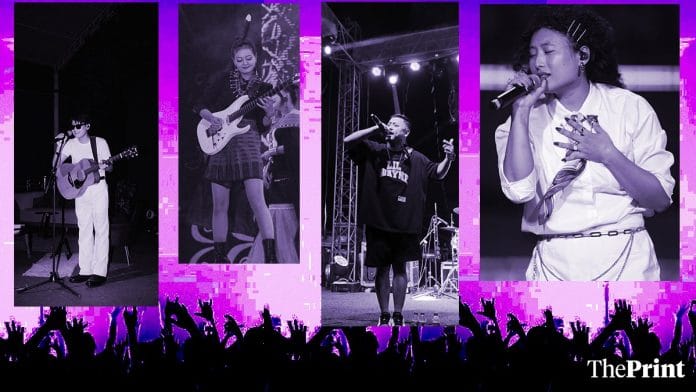


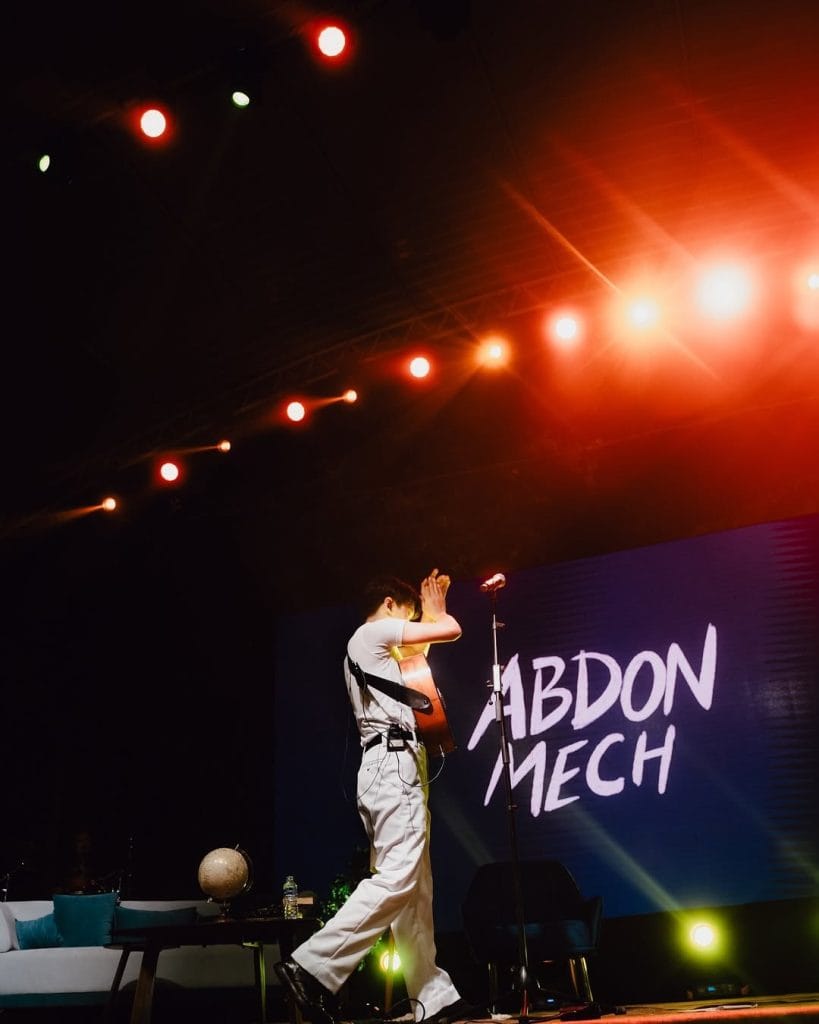
New Delhi: When John Mayer took the stage in Mumbai, around 50,000 fans rushed to hear the Grammy-winning singer perform hits like ‘Slow Dancing in a Burning Room’. But they also got to hear the upbeat Sumi Naga song ‘Noye Lhokuthu Iwu’. Sharing the spotlight, even if briefly as an opener, was Abdon Mech, a 28-year-old singer-songwriter from a small village in Nagaland. It was a high point in what is a long-overdue coming-of-age for music from the state.
Mech’s set at the Mahalaxmi Race Course on 11 February was the kind of moment that is increasingly less of an exception and more of a pattern in Nagaland’s music world.
Last month, Imnainla Jamir, a young guitarist from Mokokchung, became the first Indian woman to be signed on as an ‘endorsing artist’ by top guitar brand Ibanez. In January, pop-rock band Trance Effect broke through as the first Naga act to play at Lollapalooza India, sharing the bill with international performers such as Calum Scott and Yungblud; the band also opened for British rockers Def Leppard’s India kick-off concert in Shillong on 25 March. And the Nagaland Chamber Choir bagged two gold medals at the 12th World Choir Games in Gangneung, South Korea, last July.
While Assam Chief Minister Himanta Biswa Sarma has recently unveiled a ‘Concert Tourism Policy’ — headlined by a Post Malone show in Guwahati last December — and Meghalaya’s Cherry Blossom Festival has grown into an international event featuring stars like The Script and Jason Derulo, Nagaland is finally carving out its own niche in the major league. More than being a stop on international tours, the state is building a creative economy around its own people, well beyond the long-standing Hornbill festival.

The state is finally making just the right amount of noise, not for guns, conflict, or headhunting, but for pure homegrown talent. From indie musicians landing international gigs to choirs winning global competitions and bands entering major festival circuits, Nagaland’s music scene is undergoing a structural shift. What was once dominated by cover culture and small gigs is now being reshaped by original music, growing local demand, private labels, and state-backed support.
Most important of all, say artists, is that audiences are finally showing up, from turning out in numbers at shows to supporting musicians online.
“Nagaland always had good artists, but what has shifted in the last five years or so is the audience coming on board,” said Mech. “Artists like me, Moko Koza, KL Pamei, Imnainla Jamir, and Trance Effect are really blessed to have that audience. You can make the best music in the world, have all the tools you need, but if you don’t have a community backing it, you will get nowhere.”
Also Read: From guns to guitars—Nagaland has changed over the last three decades
Breakout acts, from Kohima to Korea
With his fresh-faced appeal and soft, boyish voice, Mech, now 28, started making music less than a decade ago, but his climb was swift.
His tracks such as ‘Taking My Heart’, ‘Always Be’, and ‘Dopamine’— mostly pop, rock and blues with touches of folk and soul — catapulted him into the spotlight. He’s built a steady online fan base, with around 77,000 followers on YouTube and lakhs of streams on Spotify, including 8.9 lakh for ‘Taking My Heart’ and 1.25 lakh for ‘Noye Lhokuthu Iwu’, the song he performed in Mumbai, and which he describes as ‘indie pop’.
His shot at opening for Mayer came through a direct pitch to BookMyShow, backed by a self-shot video that gained traction online.
“I knew the pitch itself was not going to be enough. So I made this video on how impactful he is for me personally and professionally, posted it on Instagram, and from there my community kind of just took it forward,” said Mech, who is still processing the feeling of opening for his idol.
Born in Thahekhu village, around 50 km from capital Kohima, Mech studied in boarding school and wanted to be a footballer. His pursuit of music happened almost on a whim. He locked himself in his room for almost six months, teaching himself the guitar. And just a few short years later, he was opening for a Mayer crowd.
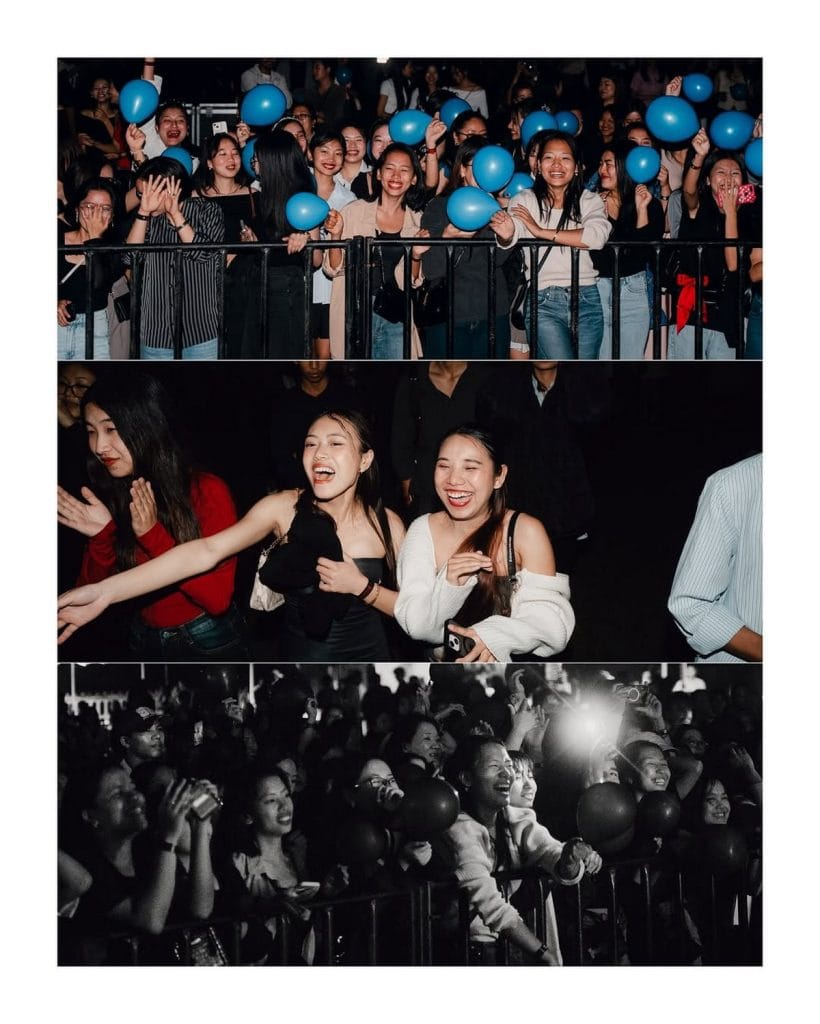
“Playing for a John Mayer audience is very different from playing for a regular audience,” said Mech, who earlier represented India at the prestigious Artisjus Songbook Camp 2025 in Budapest. “You know that 90 per cent of his audience are people who know music. They’re musicians, artists, producers, composers — a really, really musically educated cultured crowd, who can see through your bullshit instantly.”
Nagaland always had good artists, but what has shifted in the last five years or so is the audience coming on board. You can make the best music in the world, have all the tools you need, but if you don’t have a community backing it, you will get nowhere
-Abdon Mech
For the four-member band Trance Effect, the last few months have also been a dream run. On 25 January, the band opened for Linkin Park’s India debut at Lollapalooza in Mumbai, playing original tracks such as ‘More Love’, which has 1.76 lakh streams on Spotify. It was at the Lollapalooza green room where Ashish Hemrajani, CEO of BookMyShow, told vocalist Iuli Yeptho that he wanted the band to open for Def Leppard in Shillong just two months later.
“I was at Lollapalooza as an audience member two years ago, watching the Jonas Brothers perform and it was my dream to be on the stage at the festival,” said Trance Effect drummer Sosang Longkumer. “It was truly magical that it came true in such a short span of time.”
From the band being cobbled together by Yeptho for an inter-college band festival (they were second runners-up), to the current line-up coming together in 2018, they are no longer just a local band. Their international gigs are now managed by Korean label Sound Puzzle, which approached them after watching their performance at the Gwangju Busking World Cup Festival in South Korea, where they made the final list of 32 bands from over 900 entries across 58 countries.
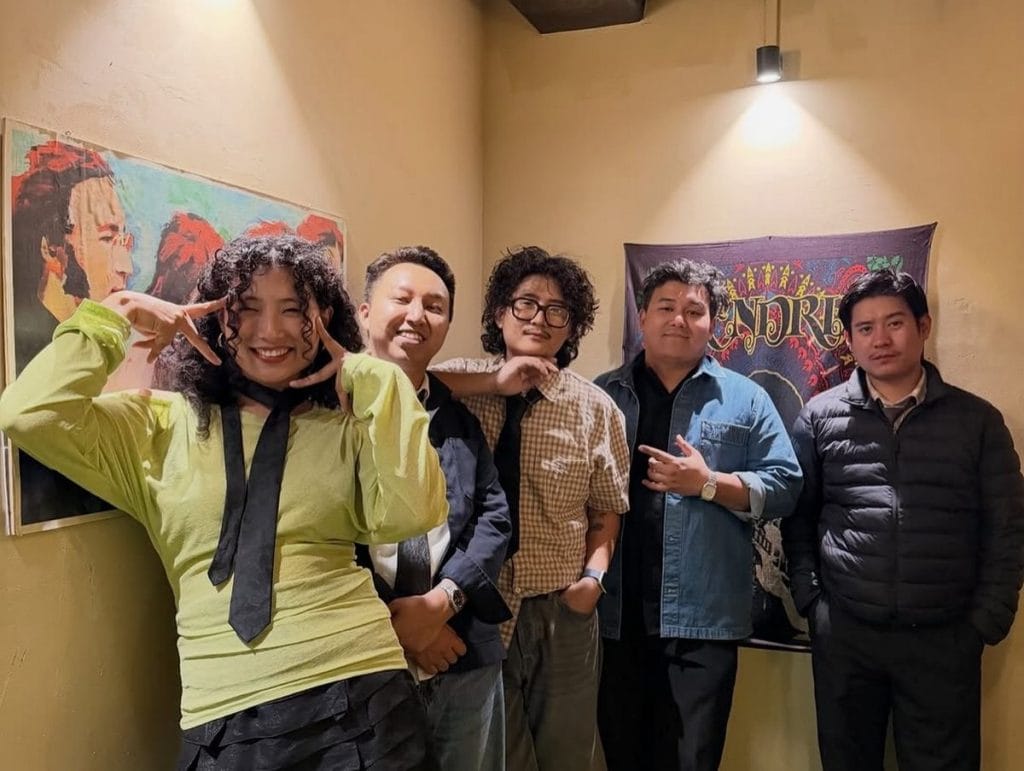
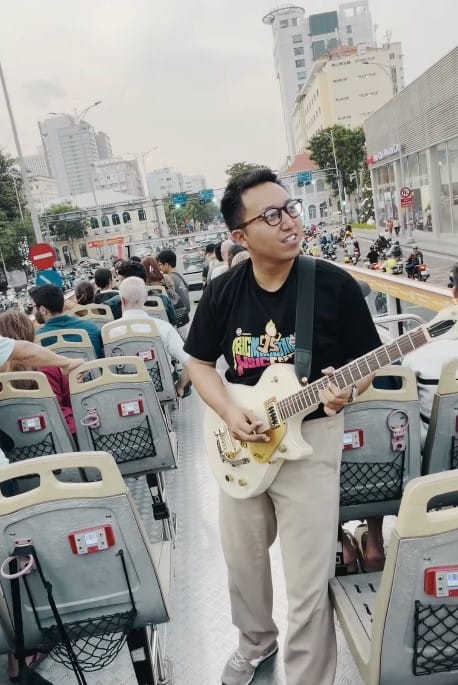
After signing with the label, Trance Effect has performed at the Big Mountain Music Festival, one of Southeast Asia’s largest outdoor music festivals, the HOZO Music Tết Festival in Ho Chi Minh City, and Music Matters Live 2025 in Singapore. They also collaborated with Korean band Mong Doll on the songs ‘Find Me’ and ‘Fighting’.
While it is still a challenge for artists from the Northeast to get gigs in the rest of India, things are changing in cities such as Delhi, Bengaluru, and Pune where there’s a culture of live performances and concerts. At the same time, Naga performers are building a distinct base back home too.
New patrons and a ‘poker millionaire’
With relative peace in Nagaland, café culture has taken off in a big way.
These public spaces for ‘chilling’ were a rarity in the state just five years ago, but now they’ve spawned a new appetite for live entertainment.
“People love to pay 300 bucks to come watch an original act. So, over the last few years we’ve seen a lot of these cafes curating not just gigs, but also original artists, storytellers, and songwriters, which is lovely,” said Mech.
Driven by the star power of artists such as Mech, Jamir, rapper Moko Koza, and policeman-turned-folk-fusion singer Imna Yaden, younger audiences are turning out in droves for music events, and not just in cafes. Band competitions were always popular in the state, but there’s a new glamour attached to them in the age of content creators and celebrity aspirations. They’re also no longer the male-dominated rock fests they used to be, with the rise of bands led by women, such as Trance Effect and Pink Eye.
With events like Rockvival held at Mokokchung and Nagaland World Folk Music Festival held at Khuzama village in Kohima, there is a push for more musical events, with attendees increasing from a few hundreds to thousands now. Even the Hornbill Festival registered a 33 per cent growth in footfalls in 2024.
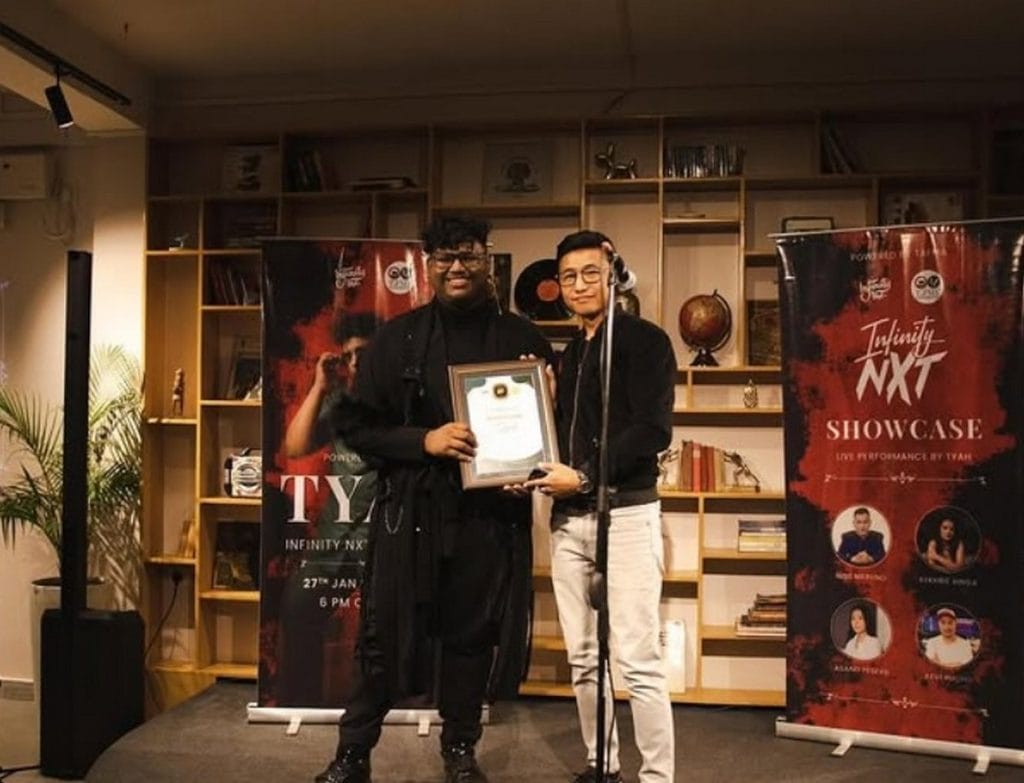
Local record labels are also doing their part. Asalie Peseyie, 41, is now often described as a “poker millionaire” but there was a time when he was a struggling rapper. In 2019, he formed the record label Infinity to promote local talent and “create artists” who have their own unique sound and persona. He wants them to have the kinds of opportunities and support that he did not.
Peseyie began rapping in 2003, well before the era of streaming platforms and YouTube.
“It was a whole different ball game back then and there was not much exposure to genres other than rock, which Nagaland is very famous for. Long story short, I struggled, but I also believe I laid the foundation for hip hop in the state,” said Peseyie, who performed with Jay Sean in Nagaland in 2005.
Upcoming rappers often approach me to ask questions about how to market themselves, or about their music. I was once in their place, seeking advice, and now I am giving it
Infinity started with the basics: making musicians more professional, from remembering lyrics to arriving on time for performances. But it now also pushes artists to come up with original tracks rather than singing covers. Infinity Inc currently has six Naga artists under its label, including Koza, female rapper Kendra, and new talent Savizo. In December last year, it announced a partnership with Caartel Music, under which music by Infinity Inc artists will be distributed by Warner Music Group.
In 2022, Savizo was at loose ends. He had just flunked his high school exam, and, looking for direction, joined Infinity’s mentorship programme. Today, the 21-year-old is covered in the local media as a “rising young rapper from Nagaland”. It’s still an uphill climb, according to him.
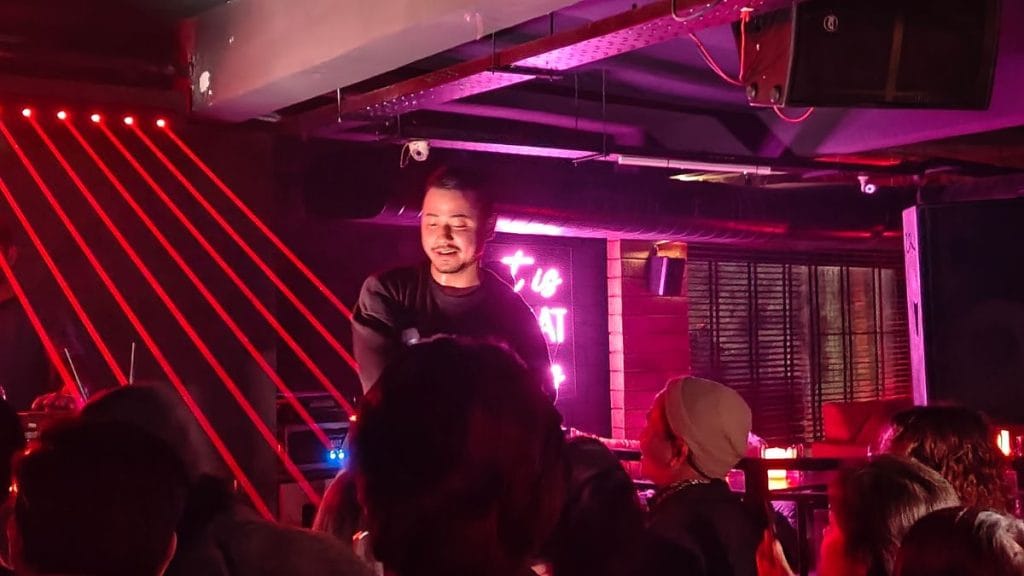
“In Nagaland, a lot of people tend to enjoy band music, rock. When it comes to DJing and hip hop, we’re very sidelined. They just think that we’re entertainment, and it’s not serious music. There is also the craze for singing covers. People who sing covers get paid more and recognised more than those trying to create original songs,” said Savizo.
Nevertheless, musicians of different genres now have a roadmap where they lacked one before, as well as access to mentorship across genres. Koza says he has come a long way with the help of Infinity.
“Upcoming rappers often approach me to ask questions about how to market themselves, or about their music,” said Koza, who famously quit his MBBS to take up rapping. “I was once in their place, seeking advice, and now I am giving it.”
Cracks in Nagaland’s music economy
Nagaland’s music scene has a liquor problem: the lack of it.
The Nagaland Liquor Total Prohibition (NLTP) Act of 1989 was enacted to address social issues related to alcohol abuse — domestic violence, health problems, drunken driving. But the act has had an unintended casualty: the concert economy. Alcohol brands are among the biggest sponsors of music festivals and live events across India, and Nagaland’s prohibition locks the state out of that money.
“This needs to change if we want to host more events, be part of the concert economy, and get more gigs for our talents,” said Peseyie.
While there is growing support for at least a partial lifting of the prohibition to promote tourism and entrepreneurship and thus also create more jobs, the influential Nagaland Baptist Church Council is a firm backer of the ban.
It’s sad but there are times when I have played in gigs just for fried rice. So when I look back at my journey, it feels incredible that we can now earn for food, and not be paid in it
-Temsujungba Jamir, guitarist of Trance Effect
Churches play a big role in shaping the state’s socio-political opinion as well as its cultural space. When it comes to music, this cuts two ways—preventing the ‘lubrication’ of the live music industry while also serving as a pipeline of talent through choirs and music training programmes for children.
“Church choirs play an important role in developing music sensibility,” said Temsujungba Jamir, Trance Effect guitarist. “[Bandmate] Tako Chang and I still play at church.”
Then there’s the thin infrastructure. Nagaland has essentially one concert-grade venue: Unity Plaza at Kisama village, where the Hornbill Festival takes place, with a capacity of around 7,000. It’s not just performers who suffer — event managers, sound engineers, and production crews also need a steady flow of shows to make a living.
Language is a barrier as well. Indians have embraced Korean and Japanese music, but when it comes to songs in regional Indian languages, the walls are higher.
Of late, Nagaland has become more visible in mainstream Indian entertainment, with the latest seasons of Paatal Lok and Family Man both being filmed in the state, but the reach of the music is limited.
Moko Koza has wrestled with the language issue in more ways than one. He started out rapping in English, then switched to Nagamese when he realised his music wasn’t reaching audiences in rural Nagaland. The local crowds have grown, but getting heard outside is still a hard climb— though his song Aladdin did feature on Paatal Lok.
“I have been called twice for MTV Hustle, but they wanted someone who can rap in Hindi, and I am not very well-versed. So I missed out on the opportunity because of just this language barrier,” said Koza. “I hope to make more songs like my Nagamese rap ‘Naga Manu’ and get it out on national and international platforms.”
Mech says the biggest competition is still Bollywood. For him, there’s a “bigger chance” to break into the Southeast Asian market than the Indian mainstream.
“There’s a lot of similarities between communities in those Southeast Asian countries and us. They are very receptive to English music as well, at least more than India,” he said. “I’m not sure about the rest of the states in the Northeast, but Nagaland has been putting in a lot of effort extending relationships across those countries.”
Also Read: Delhi’s Project Otenga pairs Northeast fine dining with mental health. ‘Not a restaurant’
Nagaland’s ‘Look East’ move
Every state has a department to promote and preserve its traditional art and culture, but few take music — of all hues — as seriously as Nagaland.
In 2013, the state formed the Music Task Force under Chief Minister Neiphiu Rio. While the body was expanded in 2019 to include arts, painting, and dance, and renamed the Task Force for Music and Arts (TaFMA), music remained its pulse. That same year, Rio brought in Theja Meru, a musician, to chair TaFMA — a role that until then had been held by politicians.
“I think he wanted somebody from the industry who understands music, who has the network to speed things up,” said Meru. “We’ve been using our networks to the best of our abilities — doing a lot of outreach programmes with corporates, music houses, from Universal to IPRS to YouTube and Spotify.”
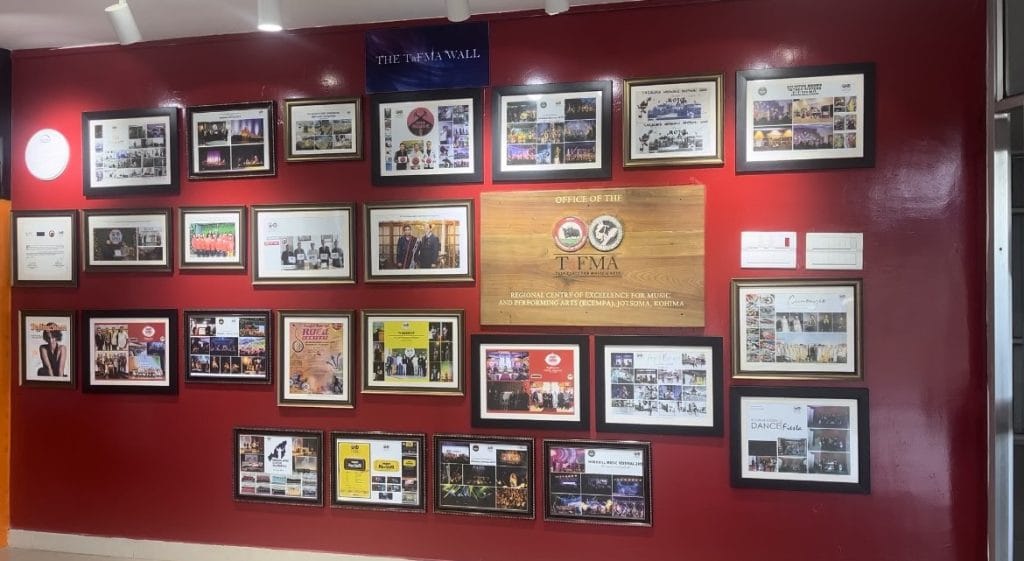
TaFMA has emerged as the catalyst that’s making Nagaland’s music and its exponents visible across India and international markets, be it in concerts, music festivals, choirs, or online. It scouts for talent across Nagaland, including its remote villages and towns, and hosts workshops, seminars, and masterclasses for aspiring musicians and singers.
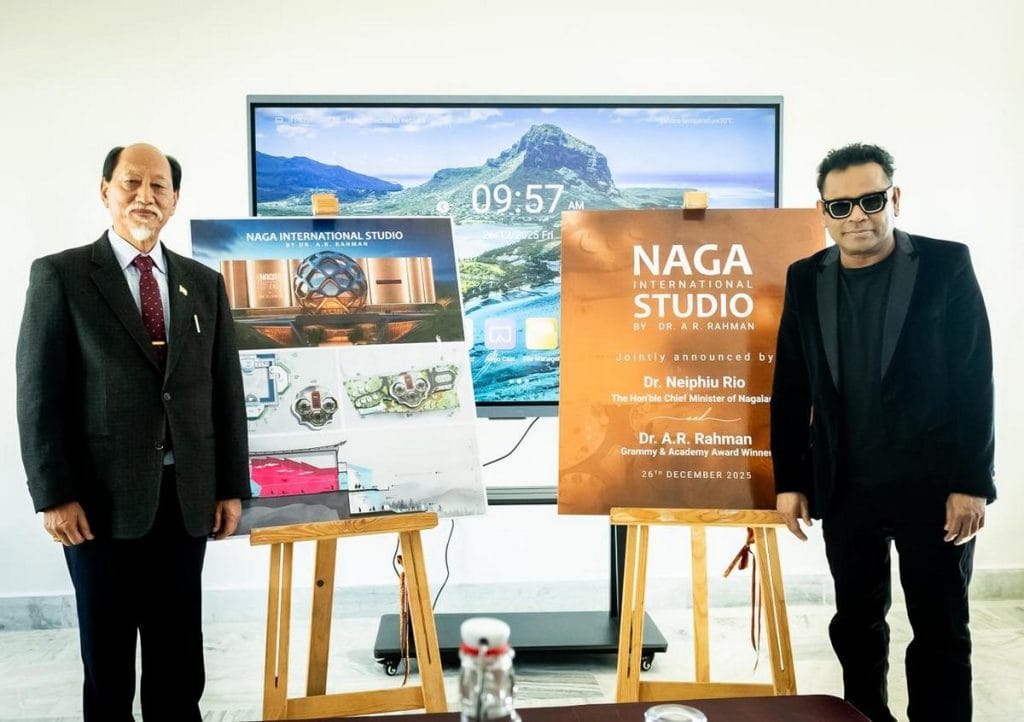
Much of the body’s early momentum came through the Hornbill Festival. After nearly 15 years as a niche cultural event, it has grown into a must-visit festival of the Northeast. In 2019, AR Rahman was invited as chief guest, which started a long association with the state. Following his visit, he initiated a mentorship programme for musicians at the Kohima Orphanage and Destitute Home, bringing them under his Sunshine Orchestra. He went on to produce the documentary Headhunting to Beatboxing: A Musical Renaissance.
On 1 December 2024, the Oscar-winning composer inaugurated the Centre of Excellence for Music & Arts (CEMA). “Nagaland will not be only called as a land of festivals, but also known as a land of music,” Rio said at the time. Rahman was back yet again in December 2025 to announce the launch of the Naga International Studio, an initiative that’s expected to accelerate the arrival of Nagaland talent on the global music map.
A ‘Look East’ policy seems to be at play in Nagaland. Rather than fight for space in a mainland Indian market dominated by Bollywood and Hindi pop, the task force has pivoted to Southeast and East Asia, where cultural affinities run deeper and English-language music has a readier audience. A touring circuit in these parts of the world is being carved out.
We’ve been using our networks to the best of our abilities — doing a lot of outreach programmes with corporates, music houses, from Universal to IPRS to YouTube and Spotify
-Theja Meru, chairperson of TaFMA
TaFMA has secured sponsorships from Toyota and Casio and convinced Spotify to host a ‘Spotify Night’ at the 2025 Hornbill Music Festival. In 2024, Kohima hosted the 4th Asia Music Summit, a move that opened the path for Trance Effect to perform in South Korea. Last year, two Naga bands, Street Stories and K3M, toured Japan, and Trance Effect performed in Vietnam, Singapore, and Thailand. Last July, a 25-member delegation performed folk, fusion, and even a Russian song at the Bharat Mahotsav in Russia. Rio was the Chief Guest at the event held at Moscow’s Manezhnaya Square.
Imnainla Jamir is one of TaFMA’s success stories. The Mokokchung-born guitarist, who trained at the Symphony Academy of Music, had her breakout moment when her electric-guitar rendition of the National Anthem at the 2022 Hornbill Festival went viral. But she also pointed out the need for more musical events.
“Nagaland, especially TaFMA, can consider hosting more music showcases that invite promoters from across the country and abroad, creating opportunities to engage, collaborate, and explore new avenues for growth,” she said.
For now, most musicians in Nagaland still juggle music with other work to make ends meet. Trance Effect guitarist Temsujungba Jamir is frank about how far he’s come.
“It’s sad but there are times when I have played in gigs just for fried rice,” he said. “So when I look back at my journey, it feels incredible that we can now earn for food, and not be paid in it.”
(Edited by Asavari Singh)