





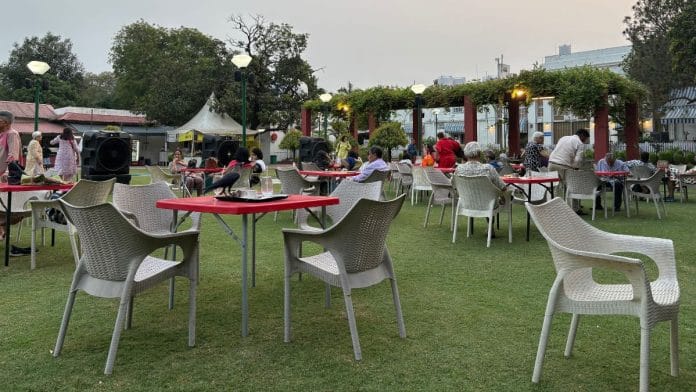

New Delhi: As the eviction ultimatum for the 113-year-old Delhi Gymkhana Club inches closer, hundreds of senior club members are in a dilemma of how to let go of a life and legacy built for more than half a century. The debate is about a place where they spent most of the good old days.
This is where they come for support and family. Many spend the whole day at the club, from breakfast till dinner, including reading the morning newspaper to afternoon siestas to evening walks before playing Bridge. They even watch afternoon TV serials in the ladies’ room. They have their own monthly book club. The bigger draw at the monthly book club meetings is the tea, samosas, and pagodas. The Delhi Gymkhana Club (DGC) has functioned like an extended home for them.
“There are many people who have died here in the club because it was their last wish. They had wished to die while playing tennis and billiards. We have even had deaths on the tennis courts,” said Abhai Varma, who has been a member of the club for more than five decades now.
Like Varma, many senior members structure their entire day around the club. They come for an early game of tennis, head to the swimming pool, play a round of billiards, and then settle into the lawns for tea and conversation with friends and family.
But as the members grow anxious about its fate, they cling more tightly to its rituals, its fading sense of permanence. They are trying really hard to prepare themselves for a farewell. The visits increased as the worry of losing the place multiplied with each passing day.
For many of its members, the battle over the future of the DGC is much more than just a piece of land. Most of the club’s members are senior citizens, including veterans and pensioners, many of whom have spent decades building their social lives around the institution. When the India Habitat Centre emerged as the capital’s fashionable gathering place in the 2000s, younger members often joked that Gymkhana had become a geriatric club.
Yet for its older members, the club remains an emotional and social anchor.
That sentiment now lies in the middle of the controversy after the Centre asked the club to vacate its 27-acre premises for defence and strategic infrastructure purposes. Currently, the club is being run by a government-appointed administrator after the elected General Committee was dissolved and club elections were put on hold.
Today, that legacy, some members said, hangs under a cloud of uncertainty. Across the club’s lawns, corridors and card rooms, the sense of disappointment is palpable.
“It’s a heritage institution. How can they do this?” is a refrain heard repeatedly across the club.
For Varma, DGC has been a constant through every phase of life. Every day, he spends hours in the place where he grew up, built friendships and now hopes to spend whatever years remain. The club has been a constant companion. It is a place where he belongs.
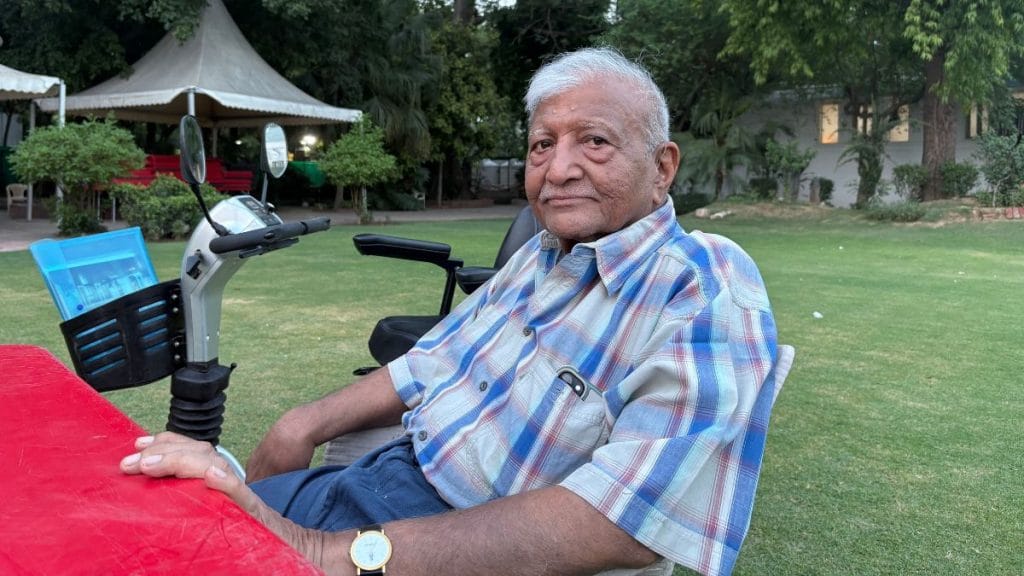
“I’ve spent more time here than in my apartment in East Delhi. This isn’t my second home. It is my home,” said Varma, seated on the French lawn at DGC, among people who have long been part of his everyday life.
‘Everything here is frozen in my mind’
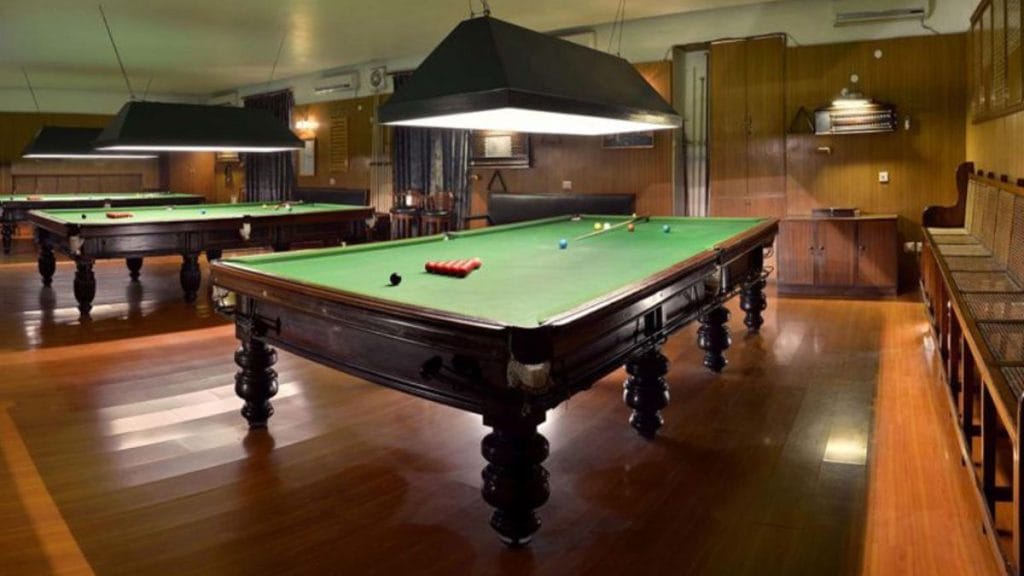
Many senior members structure their entire day around the club. After morning swimming sessions, a round of billiards, and newspapers at the library, members settle into the lawns for tea, while afternoons are often spent over a leisurely lunch, a card game, or a short nap. Some arrive after sunrise and remain until dusk, moving between the card rooms, television lounges, and sports facilities.
Over the years, these routines have become a source of purpose in daily life.
For Varma, who visits the club every day, that sense of continuity is deeply personal. Sitting in the snooker room, he watches the players take their shots, pausing between turns to talk. Watching young players on the tennis courts, he is often reminded of his own youth.
“I was just like that once,” he said.
After suffering a brain stroke in 2022, Varma now moves around the club on an electric mobility scooter. The staff know him by name, greet him warmly and are quick to offer help whenever he needs it.
At 76, Varma lives alone in his apartment, and for him, the club is where much of his life has unfolded. In his younger years, he trained as a commercial pilot and earned his licence in 1972.
But the timing was unfortunate. There were no jobs at that time. With no opportunities in aviation, he joined a private import-export company. Years later, he worked in commodity trading, spent two years in England on assignment, and eventually returned to India to start his own manufacturing unit supplying components to Maruti.
Now retired, he has left all of that behind and closed down his professional life completely.
His father, a doctor, joined the club in 1967, and Varma began using its facilities through his father’s membership. By 1972, at the age of 22, he had secured his own membership.
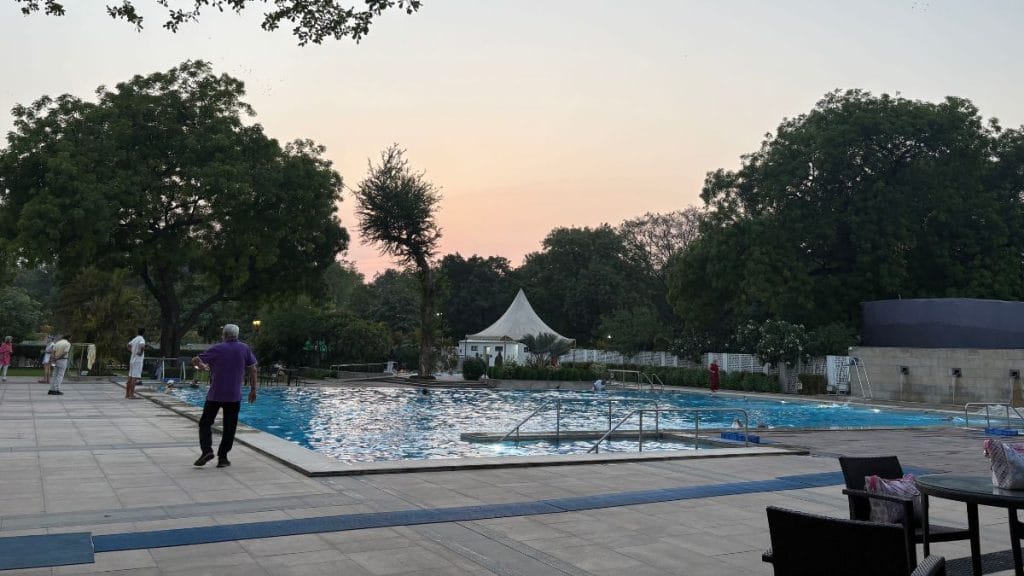
“I joined the club because of the sports facilities it offers, like most of the other members. I played tennis and swimming, and continued until I fell sick. I still walk in the pool sometimes, and my doctors are surprised that I can still do that,” he said.
He recalled a time when legendary players frequently visited the club and young enthusiasts like him had the chance to play alongside them. He said that the quality of tennis was very high in those days. Legendary players such as Narendra Nath, Naresh Kumar, and Ramanathan Krishnan all used to play here.
Varma remained involved in the club’s sporting culture for decades. Looking back, he remembers a place full of energy, friendships and community.
“In the 1970s, the club was flourishing. We were young. We didn’t have money. Everybody’s salary was Rs 500-1,000. So we used to come here and enjoy ourselves because this was the cheapest place—unlike today,” he said.
He finds it difficult to single out any one memorable moment, because for him, this is where he has spent much of his everyday life. The club is part of his daily routine, not somewhere he visits occasionally.
“Everything here is frozen in my mind,” he said.
His personal life is different from that of many of his peers. He never married because the “timing was always wrong.” For him, the club is his support system, a community, and a family.
“Most of the staff know me; they look after me. I’m handicapped now. If I have a problem, I just tell them to call my driver, and I’m taken to the hospital. So it’s more convenient. It’s a club where people are looked after,” he said with a faint smile.
For 70-year-old Sangeeta, the club’s value lies in its people. She said elderly members spend their entire days here because it gives them a routine and a reason to leave their empty, silent homes.
“Many of the older members, some in their late seventies and eighties, come here in the morning and stay until evening. Nothing is happening at home for them. There are often domestic issues, and they prefer to spend their day here. The staff takes very good care of them,” she said.
Many arrive to read newspapers, rest between activities, have lunch with friends and avoid the isolation that often accompanies old age.
Also read: US trade deal is good news for poultry industry. MP soya farmers couldn’t produce enough
Lives lived through the club
For many, the club is more than just a part of their present. It is where their past resides. At a stage in life when many people struggle with loneliness and isolation, the club remains a source of companionship, purpose and comfort. For some members, it has also been a home to the most personal life moments—marriages, friendships, and entire family histories.
Manju, 70, recalled first coming here as a child of 12, long before she met her husband within its premises years later.
“I first started coming to the club when I was around 12,” she said. “Later, after I got married, I continued using it through my husband’s membership–we were part of the same membership.”
At the DGC, the spouse of a deceased member can apply for a Lady Subscriber or surviving spouse card, allowing continued access to the club’s facilities and community.
Manju’s husband was deeply involved in sports and participated in everything the club had to offer.
“This was never a club for us to eat and drink. This has always been a sports club since childhood,” she said.
She recalled how her husband would walk all the way from Shahjahan Road to the club. It was never a place of luxury or status. It was simply where people came to play, exercise and spend time together.
“Even today, even after I lost my husband four and a half years ago, this place still gives me a sense of comfort. Otherwise, if you sit at home, you keep thinking about the same things. The atmosphere here is very different,” she said.
Living alone in Defence Colony, she remains active. She works with special-needs children through an NGO called ‘Four Steps’ and plays tennis at the club four times a week.
Also read: Arinar Black, the young rapper from Bihar who is out to ‘make the system uncomfortable’
Growing unease
The possibility of losing the club has drastically changed its atmosphere.
When news about the club eviction came, Sangeeta’s daughter had come to the club.
“There was no place to park a car. Food was over. Drinks were over. People were so upset,” Sangeeta said.
She said that her father was a member, which was passed down to them, and her children are members now. It’s like passing a generational baton.
“We were born in this club,” she said.
In the evenings at the club’s bar, there is an unusual mood among the regulars. Members greet each other with subdued smiles, their conversations often circle back to the same concern.
“Let’s meet as much as we can now. We don’t know how long the club will remain,” members say softly to each other.
Faces that were always welcoming still are, but there is an added layer of emotion, and every meeting might now feel more significant than before.
Among them is Rajender Singh, a retired senior Army officer and former Director General of Infantry. For him, the club’s value cannot be measured in financial terms.
“Many of the members are gallantry award winners and soldiers who have fought in several wars. I have also served in those wars myself and have been honoured by the country for it,” he said. “So we are not against the government’s genuine security needs. If there is a grave security threat which requires only this land and there is no other option but to take over the club land and all surrounding Type VIII Bungalows of ministers and MPs, then the matter will be different—but that is certainly not the case here; there are many other options.”
A retired Army officer recalled his early days at the club, saying that drinks were once quite expensive and he and his friends would often limit themselves to just one drink, or come after pre-drinking elsewhere.
His friend, sitting beside him over drinks, nodded in agreement and said that alcohol is still expensive at the club and that they rarely order it.
“We are not elite or ultra-rich people. We are just normal individuals who got membership because we applied for it, and we have been taking care of this club ever since,” he said.
Also read: Rare courage to raze illegal mosques, temples for infrastructure—first Gujarat, now Faridabad
Heritage, identity, and contestation
Members said that what is at stake is not just a recreational space but a heritage institution. The club has historical significance, including its connection to some of the country’s most significant moments, including the discussion between Mahatma Gandhi and Lord Irwin that led to the Gandhi-Irwin Pact of 1931.
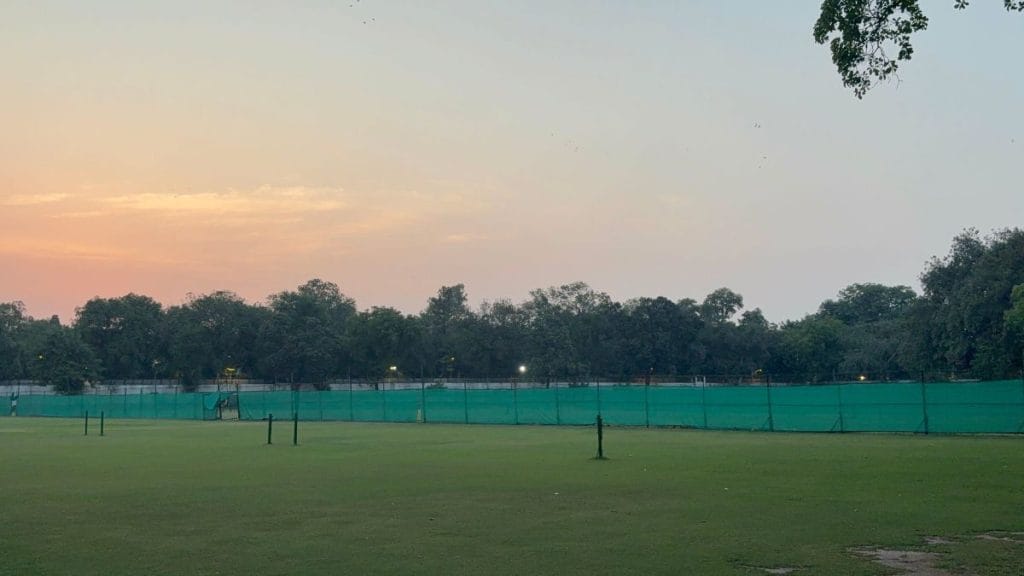
The club also occupies a special place in India’s sporting history. It’s 28 grass tennis courts—second only to All England Lawn Tennis and Croquet Club in number—hosted India’s famous 1966 Davis Cup victory over West Germany, attended by personalities including Dilip Kumar, Saira Banu and then Prime Minister Indira Gandhi.
For many members, it is about losing a place that has sustained generations of their family.
Yet, not all members see the uncertainty through the same emotional lens. For some, the dispute is about what they believe is a misplaced narrative around security and privilege.
“Security reasons are just a cover-up to weaken the case of the petitioners. When the PM’s residence is located elsewhere, what is the security issue? A few years ago, they took over the Aero Club for similar reasons, but that was a minor affair. It is a case of envy and an inferiority complex. Just because many highly placed persons can’t get membership does not mean that the Club is indulging in unfair activities,” said Praveen Davar, former Secretary of the All India Congress Committee (AICC), ex-Army officer, columnist, and author of Freedom Struggle and Beyond.
Davar got the membership under the club’s special category for eminent citizens, typically given for a five-year term. He was a member of the club from 2016 until the Covid-19 pandemic, when he was a member of the National Commission for Minorities.
“This is a place for old people, many of them physically challenged, to relax with their families. Their life span will be reduced with the withdrawal of facilities, many have enjoyed since birth,” he added.
Editor’s note: An earlier version of this article spelled Ramanathan Krishnan’s name incorrectly. The error is regretted.
(Edited by Saptak Datta)
Essentially, it is an all paid vacation for the rich and wealthy. Paid by Indian tax payers.
It is so cute to see all these teary-eyed savarna members losing their so-called priveleges and birth-right entitlements; and the Print writting multiple stories to capture their plights!!!