





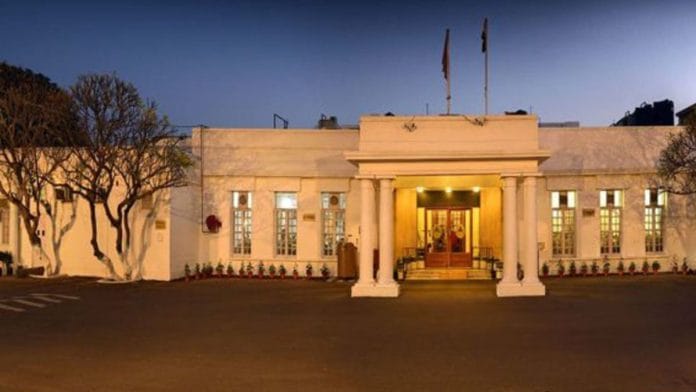

New Delhi: The Delhi Gymkhana Club is home to him. This is where two generations of his family have spent their days. And he is not part of the Delhi elite or the exclusive swish set who get membership at the club.
At 53, he is one of the club’s managers.
“A gardener’s son can be a manager here,” he said, describing how, over the years, he has seen fathers replaced by sons, and grandchildren follow grandparents into the same jobs.
And yet, what has hurt him deeply over the past two weeks is how his workplace, the Delhi Gymkhana Club (DGC), has been portrayed in television debates and public conversations. He can barely recognise the club in these frothing-at-the-mouth tirades.
The club is now being described as ‘aiyashi ka adda’.
The crisis began on 22 May when the Land and Development Office under the Union Ministry of Housing and Urban Affairs ordered the club to vacate its 27.3-acre premises by June 5. The government invoked Clause 4 of the club’s 1928 perpetual lease deed to terminate the lease and order “re-entry and resumption” of the land.
The government states that the highly sensitive strategic zone land is required for national security, defence infrastructure, and public utility projects. It also notes the club owes roughly Rs 47.58 crore in unpaid ground rent dues.
The Delhi High Court, however, made sure that the eviction will not take place forcibly and shall be done after a notice is issued.
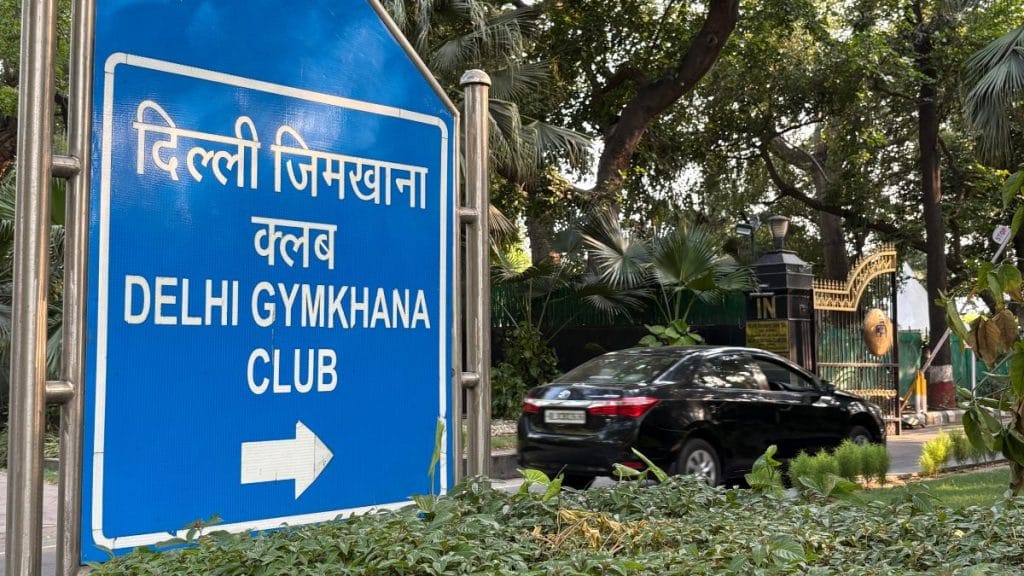
Beyond the public debate and perceptions of privilege lies another reality: nearly 600 employees face immediate job loss. Librarians who spent thirty years among the bookshelves. Gardeners whose fathers worked the same grounds before them. Waiters, room attendants, contract workers and daily-wage staff who built entire lives around the club. Widows who found employment after losing their husbands. Children who grew up, graduated, and entered adulthood on the strength of a club paycheque. For them, the uncertainty is deeply personal.
“We were shocked when the news of eviction came. It felt like a bomb had gone off. We had no warning and no idea how to process what was happening,” said a 50-year-old employee who has worked at the club since 2012.
Some YouTube videos and social media posts have portrayed the DGC as Aiyaashi ka Adda (an elite playground) disconnected from ordinary citizens. One widely shared tweet asked: What matters more—national security or Lutyens’ indulgence? A den of Delhi’s influential elite.
“At this age, where will we get a job? Where will we go at the age of 50?” said a staff member who has spent nearly three decades at the club.
Now hundreds of staff members are troubled with the same questions.
‘Members are like family’
Across the club’s grounds, gardeners trimmed hedges, watered flower beds, and cleared fallen leaves under old trees. Bougainvillaea line the walls, while neem and jamun trees shade the pathways. Many of these workers have spent years caring for these spaces and know them closely.
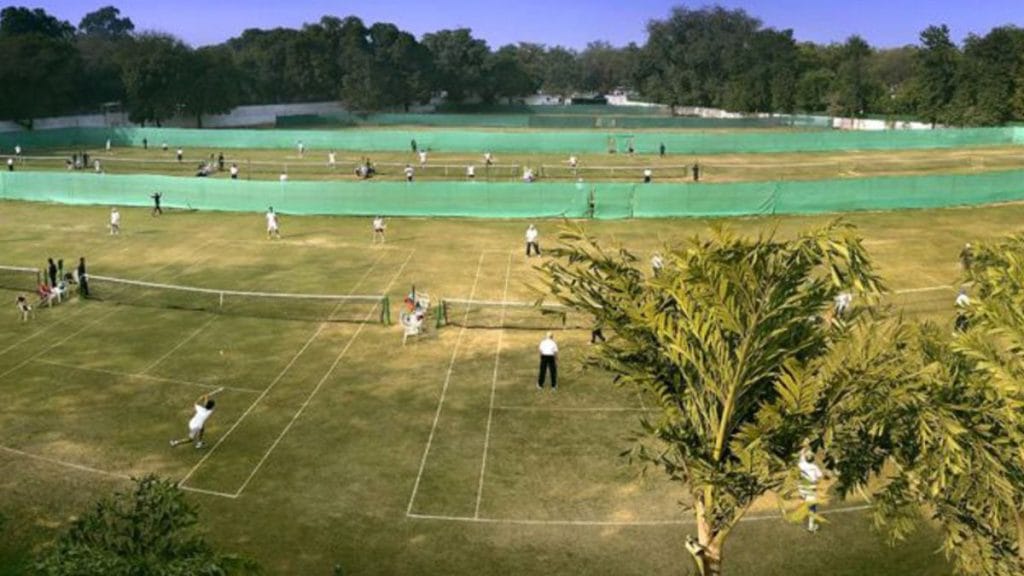
On the tennis courts, the grass is kept short and even, and the lawns are carefully maintained every day. From mowing in the early hours to marking the lines before matches, the work is constant.
“The tennis lawns at Gymkhana Clubs are among the best in Asia. That is why I was deeply concerned at the thought that the club might shut down,” said tennis player and former Lieutenant Governor of Puducherry, Kiran Bedi, in an interview.
For decades, the staff of DGC believed they would retire there. Some arrived as young men and women in their twenties. Others followed parents and grandparents who had worked on the same grounds before them. They raised children on these salaries, paid school fees, cared for ageing parents and built their lives around an institution they thought would always exist.
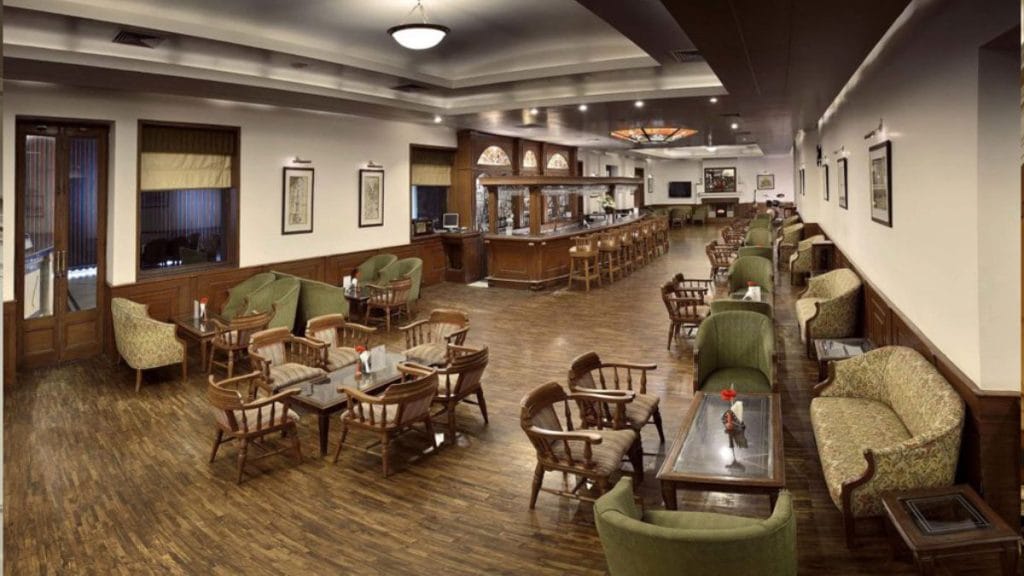
Now 53 years old, he is responsible for a family of seven. Like many others, his livelihood is tied entirely to the club and its members, whose spending keeps the institution running and whose goodwill, he said, often becomes a source of support in difficult times.
He recalled how this relationship became especially important during the Covid-19 pandemic, when salaries were reduced and uncertainty grew. Some members stepped in with financial help, while doctors among them offered medical advice to staff families.
But what has hurt him most, he said, is the way the club is now being described as ‘aiyashi ka adda’ in parts of the public debate now.
“This is a family club. Grandparents come with their granddaughters. I work in the library, and there are members who have never even seen the way out—they just come in, go to the library, and leave. Yet this is what is being shown in the media, that something else happens here,” he said.
He described it as a place built on long-standing relationships between staff and members, many of whom have known each other for years, sometimes even across generations. He said these bonds go well beyond routine service and are part of everyday life at the club.
“A professor of Delhi University conducts English classes for all our children. And Major General PK Saigal comes and tells what your children should do next. He guides the children. What you have to do next. Members have helped a lot. We are like a family,” he said.
Also read: Why a Rs 300-crore luxury housing project is empty in Delhi’s Vasant Kunj
‘We treat the club like a second home’
A senior member of the club, Major Atul Dev, who has been associated with the institution for nearly 60 years, sat in the library surrounded by fellow members. Even in his 80s, he was energetic, often making other members laugh as he spoke.
For him, a gymkhana is a simple idea of shared activity and community. It began with people coming together and gradually grew into something more structured and institutionalised over time.
“We are all members of this club, and we treat it like a second home; we all come here in our leisure, we come here for recreation,” he said.
Turning to the current crisis surrounding the club, he reflected on how the difficulties did not begin recently. According to him, the first signs of trouble emerged in 2016 when complaints were raised about irregularities in membership and management, leading to formal investigations by the Ministry of Corporate Affairs (MCA).
He said a government-appointed committee was set up and spent nearly two years examining the matter. In the probe, the committee had found out that the club was being run in a manner “deeply prejudicial to public interest.”
The report added how the club’s management had converted a public-land asset into a private fiefdom, using an unfair “hereditary” system or “nepotism” to favour their own children while making external applicants wait for up to 35 years.
The probe also exposed that the club was using non-members’ waitlist deposit money.
The case moved from one legal forum to another, including tribunal-level scrutiny, appellate challenges, and Supreme Court interventions over the past decade, Dev said, adding, “Even then, the issue did not settle.”
During this period, the club’s governance structure changed several times. In 2021, a tribunal order suspended the elected committee and placed the institution under an administrator for a few months. This was later replaced by a government-nominated committee of 15 members, although only eight eventually assumed charge.
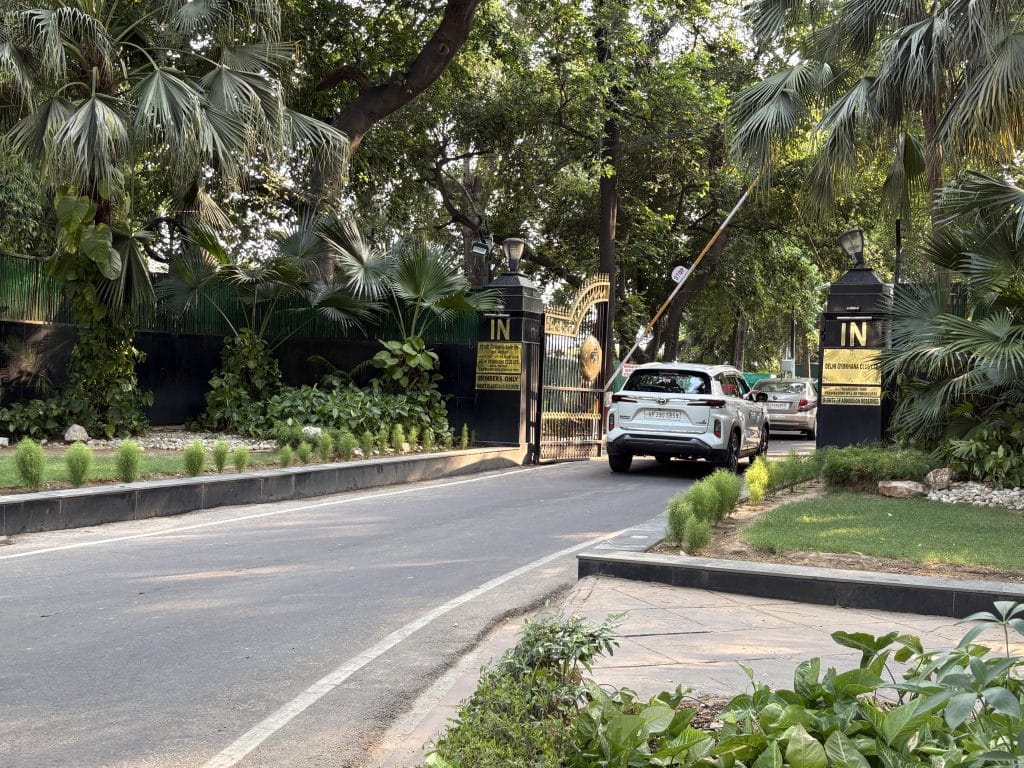
“Ultimately, the eight-member committee has been running the club since roughly February 2024. So that time onward till now, this nominated general committee has been running the club,” Dev said.
He claimed that this committee was given clear directions to complete its mandate within a fixed timeline, including holding elections and restoring an elected governing body. However, those instructions were not followed within the stipulated deadlines, leading to further legal action.
“The committee was supposed to conduct the elections and complete them by 30 June last year. Once the elections were done, they were to hand the club back to the elected committee. They did not comply with that order. Because of this non-compliance, NCLAT issued a contempt notice,” he said.
He added that the prolonged uncertainty has affected the staff, with many expressing dissatisfaction over delayed increments, unpaid benefits, and unresolved employment concerns.
“Staff is unhappy because their extensions have not been granted, their increments have not been given. Some staff went on retirement but were not given their bonuses or retirement benefits,” he said.
Another senior member of the club strongly criticised the government-appointed committee overseeing the club. He alleged that the government had ordered eviction despite having appointed a committee to manage the club raised serious questions about its functioning.
“The government committee had four years to do this work. They have not done it, and they’re busy partying privately with the staff. Quiet parties are happening in cottages here for them,” he alleged.
A major concern he raised was the alleged inaction regarding several audit reports completed before the government-appointed committee took charge. These include audits of membership records, finances, alleged financial irregularities, unnecessary expenditures, and procurement practices.
As an alternative, he proposed replacing the existing committee with a new body drawn from among club members.
“The union should select 30 members, and the government should pick 12 out of those 30, so that they will run the club. They will complete this in the next three months before we get on to other issues,” he said.
When ThePrint reached out to the government-appointed committee, it refused to comment on the matter.
Also read: BMW, Kia, XUV owners are fighting for EV chargers. Green goals vs RWA & red tape
‘Finding another job is difficult’
Alongside the sense of belonging that has defined life inside the club, there is also an uncertain reality that is shaped by changing employment structures and shrinking pathways to permanence. Over the years, many workers say they spent long stretches of their careers hoping for stable, permanent roles that never fully arrived.
One such worker, a 39-year-old daily-wage employee, has been associated with the club since 2016. His connection is not new to his family. His father also worked at the club, in the plumbing department, but under a permanent role that offered far greater security than what he experiences today.
The structure of work has slowly shifted around him. Contractors have changed, systems have been replaced, but the workers have remained in the same place doing the same jobs, year after year.
For him, the uncertainty is personal. His mother suffers from lung-related illness, his father is unwell, and the responsibility of running the household rests entirely on him. He earns around Rs 22,000 a month and has been the sole breadwinner since he joined in 2016.
“We are all in the dark right now. At this age, finding another job is also difficult. We don’t have any plans for the future. The members are fighting a lot for the club, maybe things will get better,” he said.
Yet despite these uncertainties, many workers say they stayed because of something beyond pay or security. For them, the workplace became familiar and personal.
“Not because it paid the highest salaries. Not because it offered the strongest job security. But because it felt like home,” he said.
Alongside them are others who had to step in after personal tragedies. Widows of employees were offered jobs after the deaths of their husbands, allowing families to continue surviving within the same institution.
The 50-year-old employee’s husband, a waiter at the club, died of cancer that same year. A few months later, she was offered a job as a room attendant. Over the next decade, she raised three children on her salary and built her life around the club.
“After my husband died, the club gave me work. I raised all three of my children on this salary. I don’t know any other place in Delhi. I go straight from home to the club and straight back home. If this job goes, I don’t know what will happen,” she said.
Some said the thought of losing this fragile stability is overwhelming, almost too difficult to process. In private conversations, a few admitted they fear being left without anything at all.
“The club became our home, and we are again met with the situation where we will be left with nothing. We are always on the verge of crying,” one worker said to another.
(Edited by Saptak Datta)
This is such a biased article. Shows what’s wrong with this country. Everyone knows that the club resides over prime public land that can be used for greater public use and paid peanuts. Still shamelessly defend it
These so called elite are hiding behind the 600 people who are just severs ………this is what delhi elite is like ……hypocrits justifing there encroaching on 27 k crore land parcel …….expected better . No different from the mazaar culture
bogibheel bridge will destry livlihood of fisherman, don’t do that vs this article : corporatewants to finds a difference between them
This article convinces me to not subscribe to this newsmagazine.
Is this a paid article? This supports an unjustified and anachronistic colonial institution in the Indian capital under the garb of protecting few jobs. This is how few British colonialists kept 300 million Indians down.
I would be surprised if my comment is published!
This is how an indefensible colonial institution can be justified by either naive or corruptible journalist…. Shameful
What a bag full of rubbish you write to justify the indefensible. You are trying to hide behind the livelihood of 600 people while you have deposits exceeding 200 crores in bank. Why not support these people and their families for such time till a new place is allocated and the club shifts there. The club is on a public land then owned by the British. The government can do something better for larger public interest on the huge patch of premium land the club sits on and does nothing for larger public. Just make way for a better public space here and take your elite club to some other place allocated by government. Do not be a cry baby and talk nonsense.
It is a paid article written by a foolish person.