






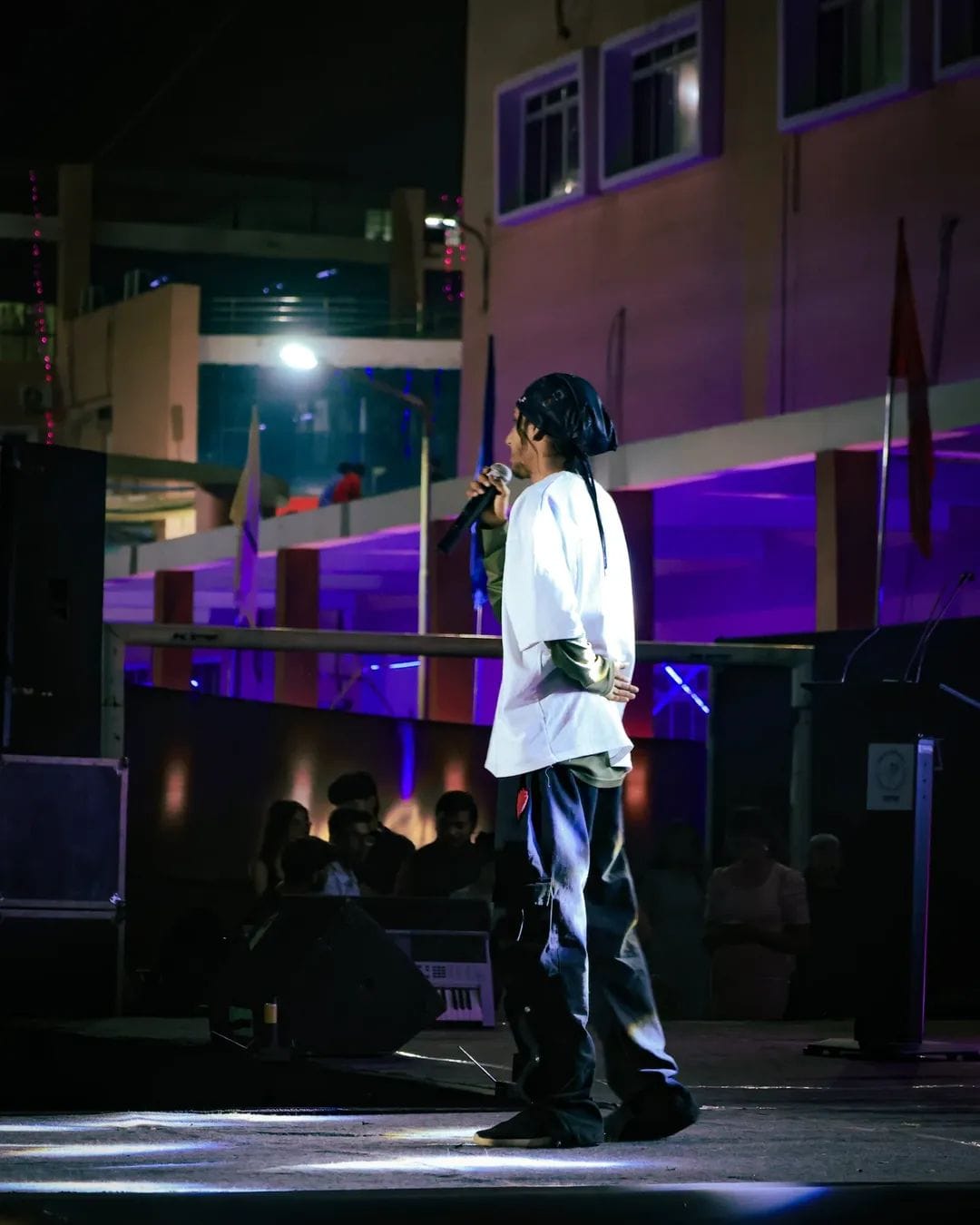
Patna: In December 2025, a rap battle — Hip Hop in the House — was underway in an upscale Patna neighbourhood. Around a dozen rap artists from across the state capital had gathered to perform at Sports’ Up Turf in the Patliputra area. The atmosphere inside the venue shifted when a local city rapper took the stage. As Arinar Black launched into his unreleased track Change, the lights were suddenly turned off and police were called. Change questions the government failure and crippling economy.
For Black, the reaction proved the relevance of his music. The track tears into Bihar’s economic distress, rising drug abuse, government failure and growing religious intolerance. A line from the song lands like a slogan and an accusation at once: ‘Government fails but narrative sells for competitive gains. Bihar, it’s time for change.’
29-year-old Patna-born Harsh Raj aka Arinar Black isn’t any ordinary singer. He is the latest voice from Bihar – often known either for its folk songs or the vulgar Bhojpuri export — whose work questions everything around. And the Eminem-inspired artist raps in English, ensuring his songs get a wider appeal.
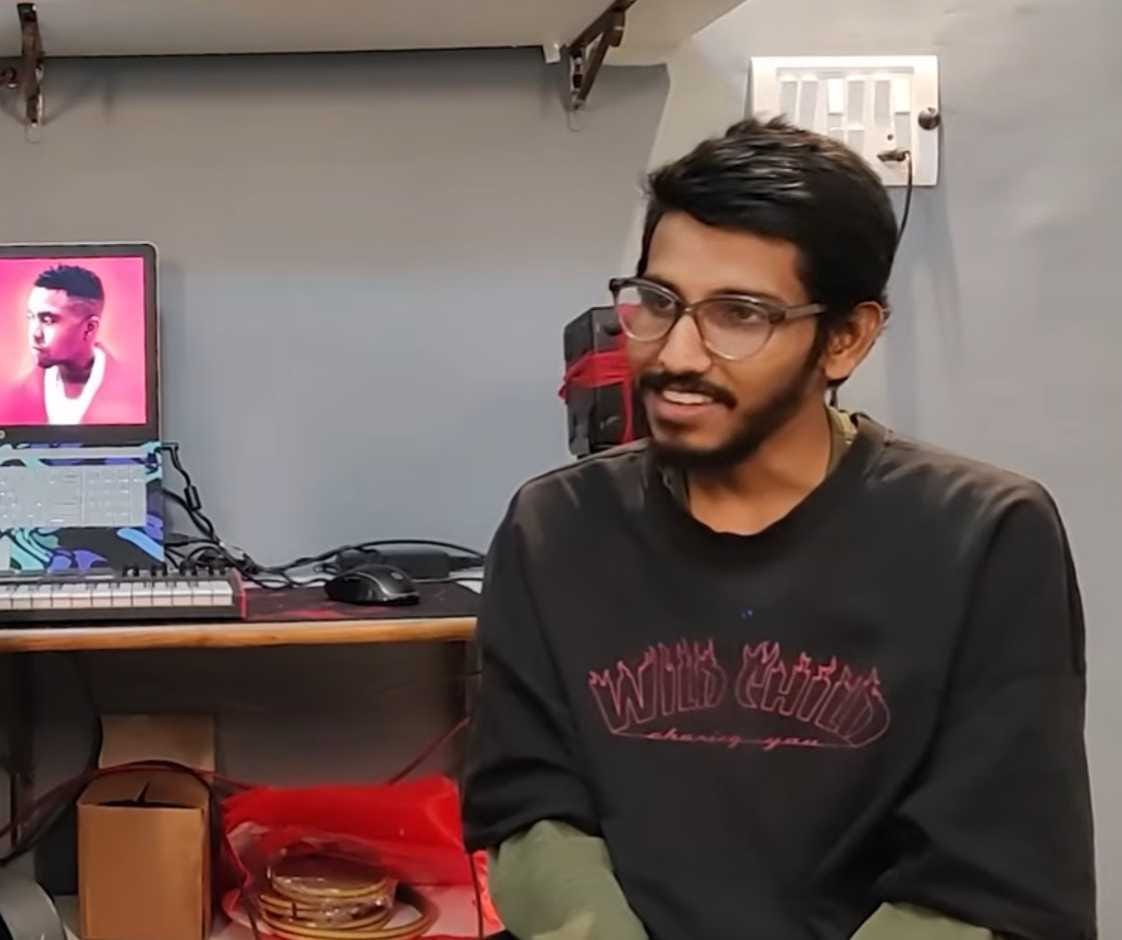
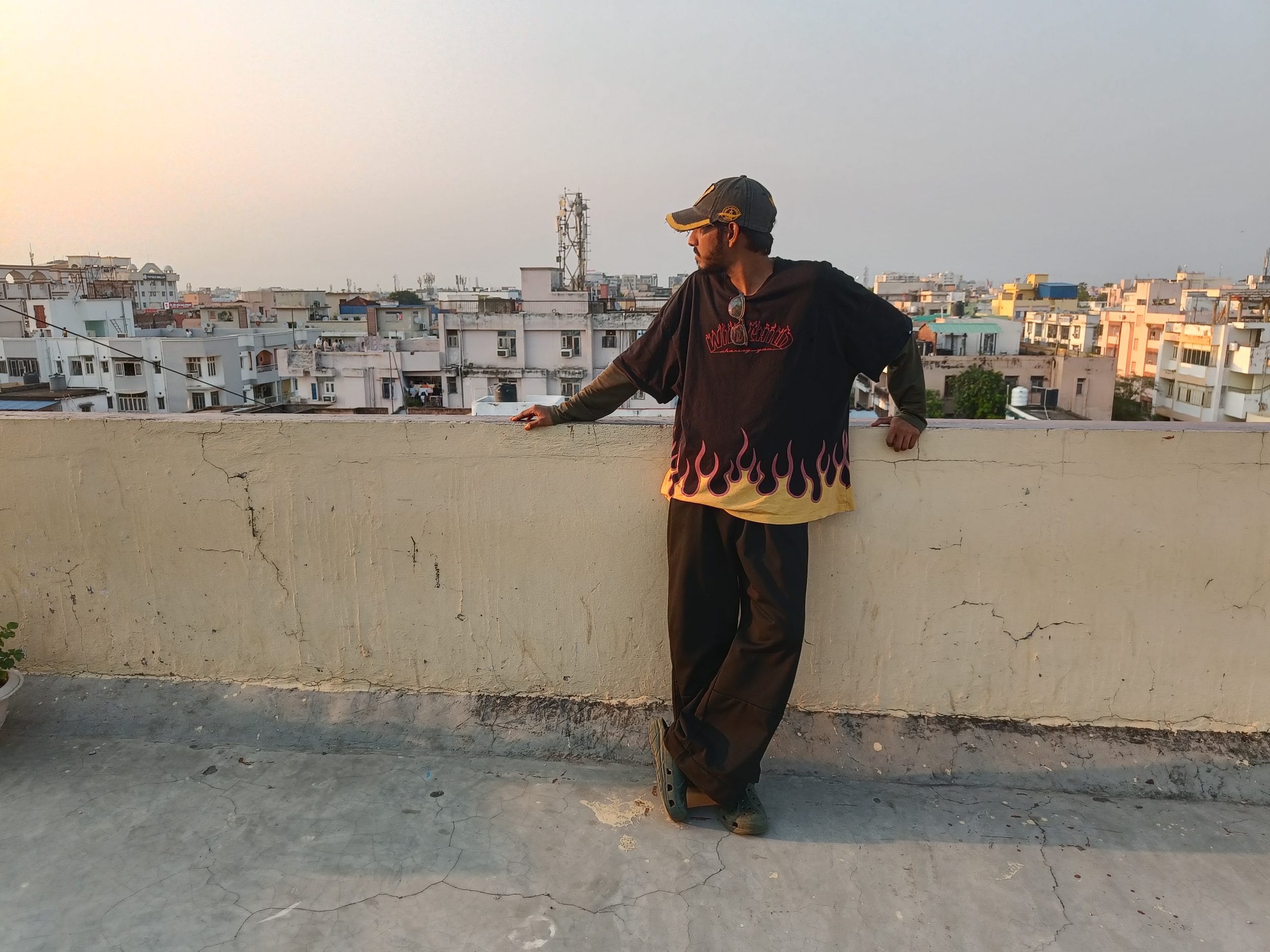
“My songs depict the reality of society and if that reality itself is absurd, then that is precisely what I present,” said Black, wearing a baggy black T-shirt that carries a yellow-color flame with the words ‘Wild Child Chasing You’ written in bold red text.
Arinar’s rap is a counterpoint to the vulgar and hyper-commercial Bhojpuri music industry that has long shaped the state’s image outside its borders. If Bhojpuri’s hyper-commercial music industry thrived on innuendo and virality, Bihar’s underground rap movement is positioning itself as its cultural rebellion – darker, angrier and driven by social commentary rather than spectacle. In the state’s emerging hip-hop landscape, rappers such as Black and Mario are using the format not as entertainment alone but as a form of reportage, protest and self-representation. Bihar’s hip-hop is acting as a vehicle of lived realities – migration, unemployment, corruption, poverty and the frustration of a state long trapped in stereotypes. The attempt is to create an authentic Bihari voice within a global musical form.
Inspired by American rap icons such as Tupac, Eminem and Nash, Arinar Black is pushing boundaries by introducing English rap into a largely Hindi-dominated region. And he owns this change. His Instagram intro says Redefining Indian Hip-hop.
“For us, hip-hop is no longer just performance. It is becoming a protest, identity, saying harsh realities and a way of reclaiming a state long reduced to stereotypes,” said Black, sitting in a small room at a friend’s house in the busy Boring-Canal road that also doubles up as his studios.
Black said Bihar’s songs have always lacked authentic representation and that is something he is wanting to change.
“People never found the social commentary of Bihar through rap. It’s a completely new kind of music which connects people with us,” said Black.
Also read: ASI digging Balirajgarh 4th time. Why Ancient Bihar is important to Modi govt
The themes
In the last six months, Black has released four songs–Degrade, Madness, Change and Jagaao. On YouTube, these songs didn’t do well. But on Instagram, it gets views in millions. That’s where Black’s audience is.
Last year, the Jagaao song was released during the state assembly elections. Shot on the streets of Patna, the rap, which is Black’s most watched track on Instagram, talks about unemployment, EMI and job pressure and hopelessness among youth.
The song was written by Black and his colleague Merio, another rapper from Patna, known in local circles as Rapper Chai Wala.
“Let’s counter the noise. Boys are unemployed, poised to succumb to a 9-5…The dreams are crushed and the trust in the eyes on the verge of demise. I hear protest in the voice…Bihar will keep fighting to survive...Aawaj Uthao Janta ko Jagao,” goes the song that now has 2.7 million views on Instagram.
“I never decide to sit down and write the lyrics. It happens spontaneously. Ideas can come anywhere, you just need to receive them at the right time. Ideas are not exclusive,” said Black.
Prakash, Black’s music producer, says the songs resonate with the listeners living outside Bihar.
“As a producer, the responsibility is to craft the musical arrangement to complement the lyrics – infusing it with elements of chaos, aggression, and agony – thereby allowing a specific emotion to take shape,” said Prakash.
Also read: The rise and fall of Delhi’s Hauz Khas Village
A one-room studio
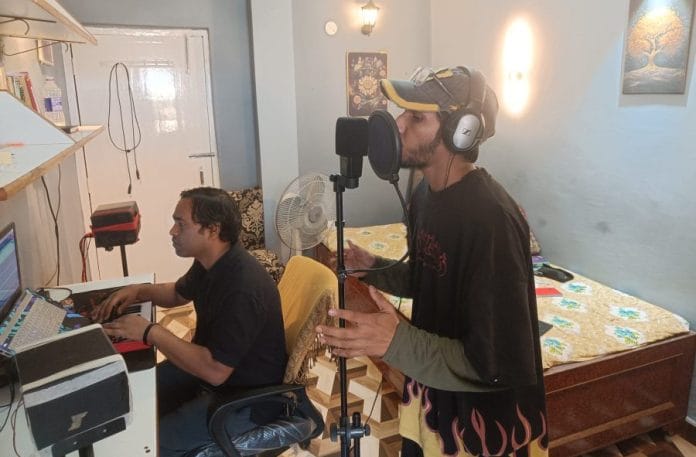
The top-floor room in Boring Canal Road belongs to Aditya Prakash, who has turned it into a recording studio. The set-up is modest – an old HP laptop balanced beside an MPK Mini keyboard, two speakers held together with tape, and a pair of headphones hanging from a mic stand. This is where Black records most of his music.
The tracks are produced on Studio One, an open-source free software. Over the last eight years, he and Black have created around 30 songs together, though only four have been released so far. The duo plan to release more songs over the next 12 months. On 2 June, the teaser of From Bihar, Black’s latest track, was released. In a short clip, he is seen rapping before a large circular ride at a fair. “Intelligence and Jugaad, I come from Bihar,” goes the song. In the Instagram caption, he wrote: Bihar is not a location, It’s the source.”
For them, no two songs are born the same way.
“Sometimes, I create a piece of music first, and Arinar writes lyrics around it. On other occasions, he comes with words and we build the sound later,” said Prakash as one of Black’s unfinished tracks played softly in the background.
Black sat cross-legged on the bed, flipping through a notebook with handwritten lyrics. Almost every page was crowded with crossed-out lines, rewritten verses and scribbled thoughts – all evidence to his careful system of songwriting.
While cheaper technology has made it relatively accessible for the rapper to record the audio, shooting videos is still a challenge.
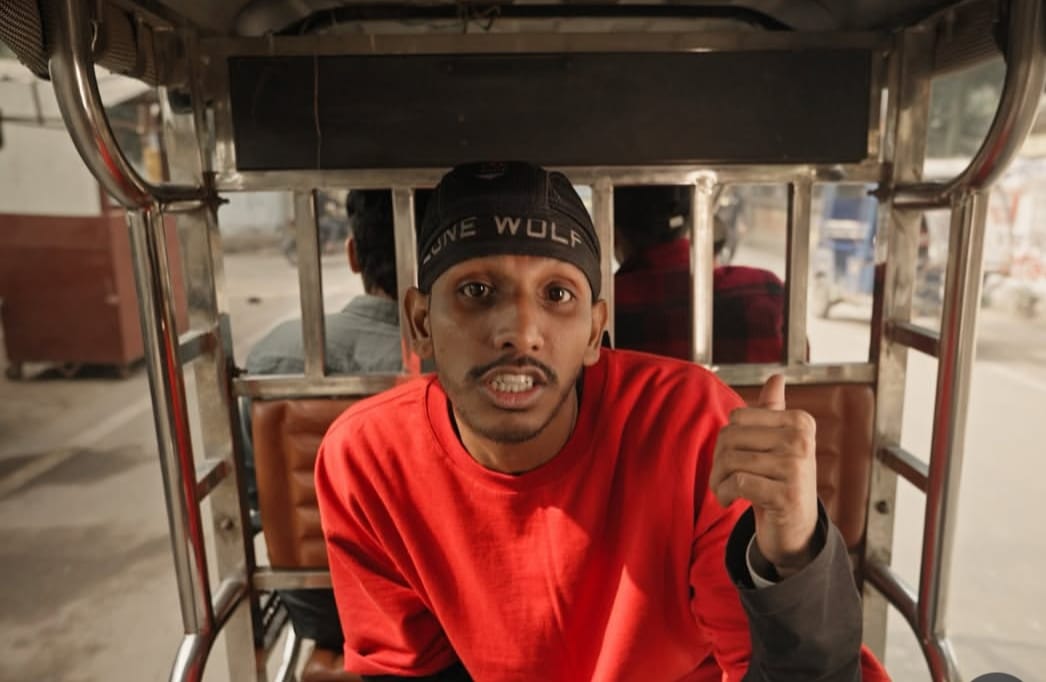
Earlier this year, Black and his small team travelled to Jagdishpur village in Jehanabad to shoot the video of the song Madness, released in April. They spent three days there with minimal equipment and an even smaller budget. Most of the people seen in the video are relatives or friends helping the crew. The song critiques the liquor ban in the state, corruption and lists reason why the state remains neglected.
“Everything happened with jugaad,” Black said with a laugh. “We can’t afford to shoot outside Patna. That’s the reality of small-town artists, even when people appreciate your work.”
Still, he insists limitations have never stopped them from experimenting creatively.
That creativity is especially visible in Change, a three-minute rap layered with political commentary. The track opens with a clip of former Prime Minister Atal Bihari Vajpayee speaking in Parliament about how countries that gained independence alongside India moved ahead while India lagged behind.
Black said the speech was used deliberately.
“What our song wanted to convey, Vajpayee had already set the tone for.”
The lyrics then move into sharp criticism of economic distress, communal politics and inequality. One of the lines reads: Crippling economy’s making a buzz in news and If my identity’s a slur, then come to the ground and see the hues of misery and the government systematic bullying. These blood sucking leeches practice deceit…divide and rule is one policy, disrupt harmony by fear mongering making every religion intolerant.
For Prakash, it is this honesty that draws listeners toward Black’s music.
“And because we hail from Bihar, that Bihari essence in our music comes naturally. It comes from who we are,” said Prakash.
The comment section under his songs on social media is filled with phrases such as “Garda”, “Bawaal” and “Bihar banger”.
Under the song Jagaao on Instagram, a listener said “Can we promote this instead of cheap bhojpuri songs?” Another wrote: “Respect to artist, Arinar Black is not chasing trends, he’s creating his own lane.”
Also read: Gandhi gatecrashes Bajaj’s 100-year celebration. Gives the company a glowing report card
Shaped by his experience
Black did not grow up imagining himself to be a rapper. His childhood was marked by turbulence – family disputes, land conflicts and financial uncertainty. Decades later, those memories would become the raw material for his music.
“The environment I have seen at my house and now, whenever I look back on my childhood, I feel those events have shaped me,” said Black.
Yet, amid the chaos, there were early signs that he might take a different path. While most families pushed their children toward stable careers, some of Black’s relatives chose unconventional professions. His uncles performed nukkad nataks and worked at radio stations.
“Looking at them, I always felt that I would not do a regular job,” he recalled.
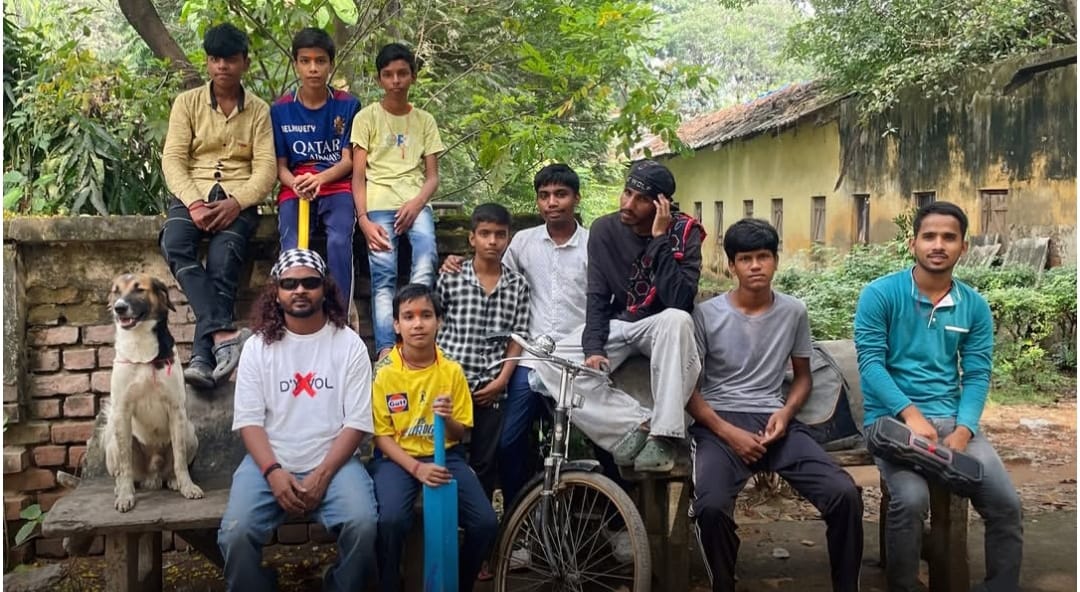
The turning point came in Class X at Kendriya Vidyalaya when a school friend introduced him to Western music, opening a door to an entirely new world.
“Sometimes we bunked classes just to listen to Western music,” he laughed. “It was magical. We were completely bored with Bollywood songs at that time.”
Then came a moment that changed everything. One day, his friend produced a song titled Tell Me Why using the free audio-editing software Audacity and a beat downloaded from YouTube. Black was stunned.
“I knew nothing about music then. But when I heard it, I felt, I can do this too,” he said. Soon, he wrote and recorded his first song, A New Game.
Also read: Diljit Dosanjh’s new song ‘Aroma’ demeans transpeople. Masculinity doesn’t marginalise
An Eminem fan
Like countless rappers across the world, Black idolises Eminem. Even his stage name carries traces of his hero. He took the letters AR from Harsh and Raj, inserted IN in the middle – a nod to Eminem’s own name and created Arinar. And ‘Black’ is his “shout-out to Black people because it’s predominantly their music.”
“He is my god. For years, I copied his style and accent. People around me would say, Ye Eminem ban gaya hai.”
Eventually, he realised imitation had its limits.
To discover his own voice, Black stopped listening to Eminem altogether for nearly four years. Instead, he immersed himself in online rap communities, participating in Facebook rap battles around 2012. With limited internet access at home, he spent seven to eight hours a day at a local cyber cafe, writing verses and competing with rappers from across the country.
Also read: Bashir Badr’s poetry survived riots and politics. Modi to Bhutto, leaders quoted his shayaris
Journalist by day
The pandemic dealt a blow to Black’s family. His father lost his private-sector sales job, forcing Black to search for work and support the family. He spent next two years working for Patna Beats, a local digital news platform, while continuing to make music.
For much of this period, his parents didn’t know how seriously he pursued rap.
Like many young men in Bihar, the sociology graduate from B.N. College Patna tried the ‘safer route’—preparing for government exams. For nearly seven months in 2019, his days revolved around shortcuts, formulas and practice papers for banking exams.
“I was not enjoying it,” he said.
Currently, Black works as a journalist at Jaano Junction, a Patna-based news platform. Journalism pays the bills, but it also feeds his music.
“This job keeps me updated about what’s happening in the world. It helps when I’m writing lyrics,” he said, adding he also reads books to sharpen his art.
Recently, he finished reading How to Rap: The Art & Science of the Hip-Hop MC by Paul Edward. The book is compiled from interviews with 104 notable rappers who provide insights into how they write and perform their lyrics.
“This book helped me learn the journey of rappers. Most come from the middle-class families,” said Black.
Merio, another Patna-based artist who runs a tea stall called Rapper Chai Wala on the Mussalapur Hatt Road, said how Black had shifted the rap scene in the state.
“Arinar Black introduced English rap in a way nobody imagined was possible from Bihar. He broke that perception completely,” said Merio.
“His lyrics are deeply thoughtful. They show a sharp understanding of society.”
Like Black, Merio’s own inspiration came from American hip-hop. He remembers playing American legend Tupac Shakur’s song California Love in loop — and being struck by how deeply the rapper chronicled his own surroundings.
For Merio, that meant turning his attention to Bihar’s realities.
“Since I come from Bihar, I understand the problems here better. That’s why I wrote Janta Ko Jagao (Wake Up the People). We genuinely want to awaken society,” he said.
He paused to express his disappointment.
“Unfortunately, janta abhi bhi soyi hui hai (the public is still asleep).”
Also read: Did Ali Sethi bring qawwali to Hollywood? Fans say Nusrat Fateh Ali Khan did it first
‘Using our freedom of expression’
India is still waking up to rap. The art is a little closer to reality and unsettles some people. The risks that come with it are not hypothetical. Earlier this year, Haryanvi rapper Dhanda Nyoliwala found himself at the centre of controversy over a line from his album Vomit on Paper. The backlash was intense enough for him to alter the lyrics.
“If my Ram had not worn saffron, I swear to God I would have thrashed many fake babas. They make chits and file applications, take private jets wherever they want,” goes a line in the song Vomit on Paper.
Black is aware of the risks that come with questioning the system. In Change, he questions Bihar’s liquor prohibition policy and calls out the discrimination against minorities.
“We are using our freedom of expression to make people aware,” said Black.
For Black, rap is not simply a route to fame or viral numbers. He draws a distinction between artists and content creators, arguing that art must be guided by intent, purpose and a clear approach.
Those principles, he added, are non-negotiable.
“If anyone sacrifices these to please someone, you’re not an artist. Then you’re just a content creator and get views. Art has to make the system uncomfortable,” said Black.
(Edited by Anurag Chaubey)