



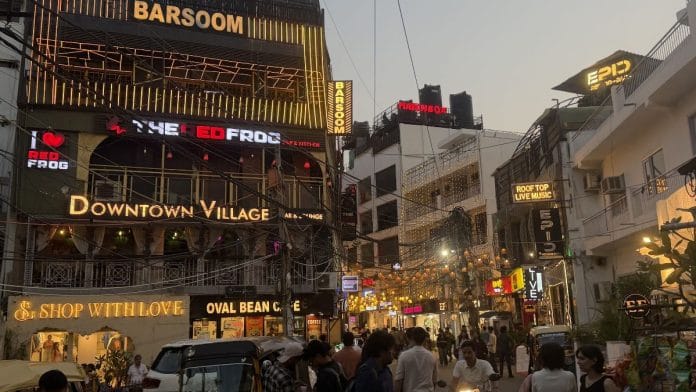
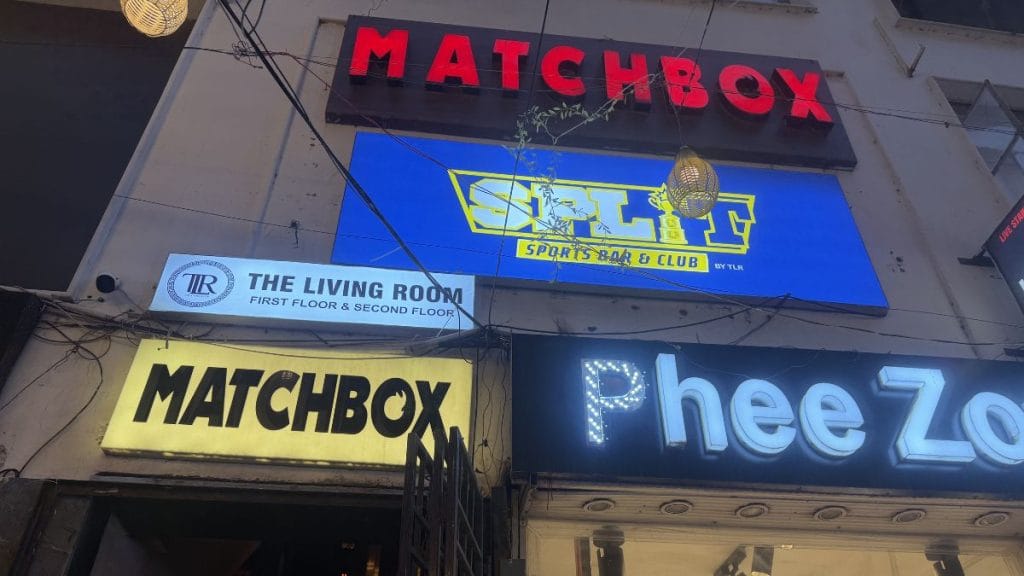
New Delhi: It’s Friday night. A convoy of cabs pulls up outside Hauz Khas Village (HKV) as the market glows with neon lights. Bollywood bangers play and men outside bars pitch offers like Sarojini Nagar. “Two-plus-one, ma’am!”, “Free shots inside”, “Ladies Night.” Some drunk customers are already stumbling out waiting for their Ubers.
It’s a dramatic fall. What was once an exclusive enclave for Delhi’s chic crowd is today a den of drug peddlers, rundown bars, gym-bros, wannabe upstarts, and allegedly, even sex workers.
Four decades ago, HKV was the answer to New York’s Greenwich Village. Ambassadors, Mercedes, BMW and Morris Garages lined its streets as Bollywood superstars like Rekha and Rajesh Khanna along with expats, diplomats, the ladies-who-lunch and the city’s newly wealthy swish set browsed and breezed through the market’s fancy boutiques and bistros. It was the pincode of a confident, globalising India that could embrace the world and also own its rural roots. So it found an escape in a gentrified village in South Delhi.
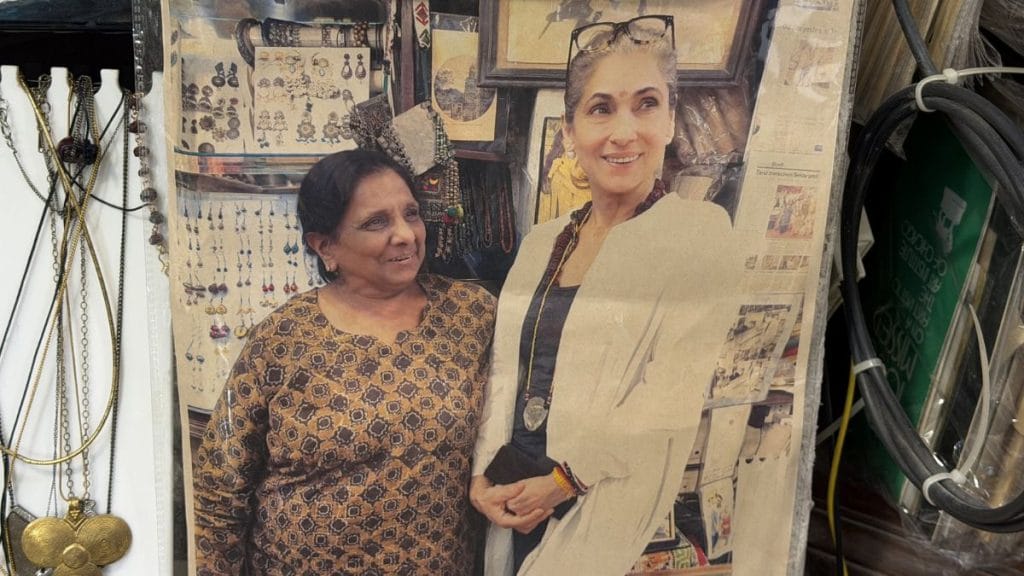
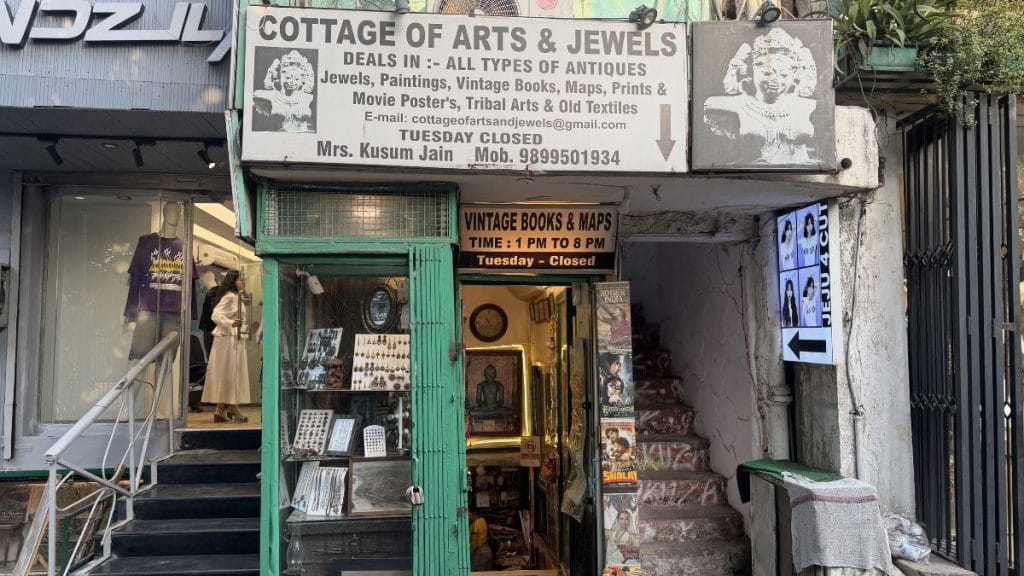
“It was an expensive market built for an exclusive crowd,” said 77-year-old shopkeeper Kusum Jain. Her store, Cottage and Jewels, is among the earliest shops in the area and once attracted some of the biggest names in Bollywood. Photographs of Dimple Kapadia to Arjun Kapoor hang on the walls of the store, but now dust has settled over them.
In the 1990s, the media had already diagnosed HKV with an acute case of pretense. India Today once skewered the lakeside urban enclave in a headline: “snobbery and snobs who take effort to make themselves look ridiculous,” even as it later conceded that the neighbourhood’s culinary landscape offered the “world on a platter.”
By 2011, the global media had arrived to codify its bohemian charm. The Washington Post, in an article dated February 25, 2011, had listed HKV as one of Delhi’s must-visit neighbourhoods.
As recent as 2022, The New York Times called HKV a “rising neighbourhood” with a cutting-edge contemporary art scene.”
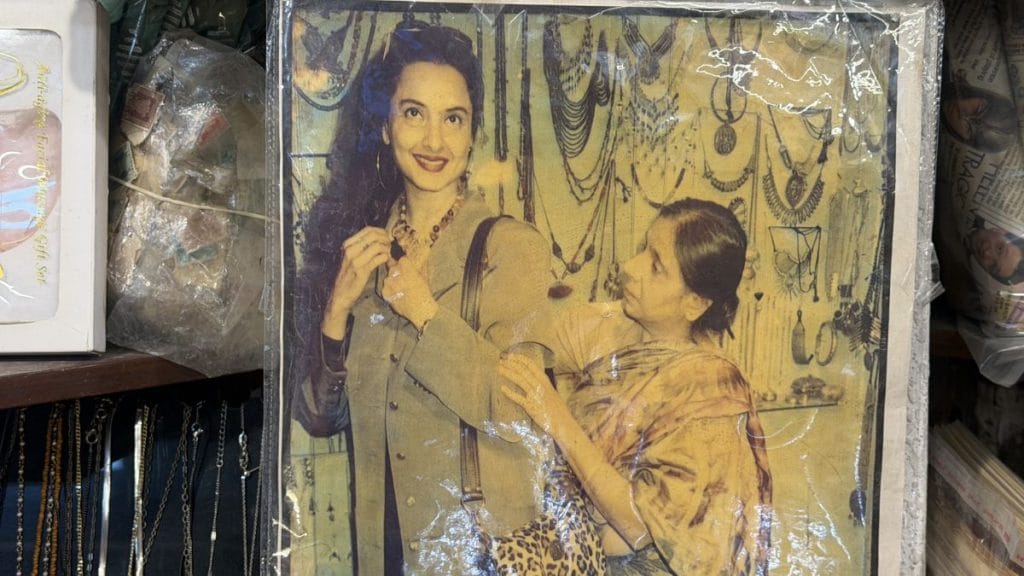
Back in its heyday, HKV sold Delhi’s elite a rare fantasy — luxury wrapped inside a living village, accessible to only a select few.
“We planted that sense of exclusivity and curiosity in their minds and, as we expected, they all came,” Jain said. “HKV became a status symbol. Something you could show off in your elite circles.”
Now, decades later, it is not just shop owners and landlords who say the market has changed for the worse. Even the staff who have spent years working in Hauz Khas Village admit they have witnessed a noticeable shift in the crowd and atmosphere.
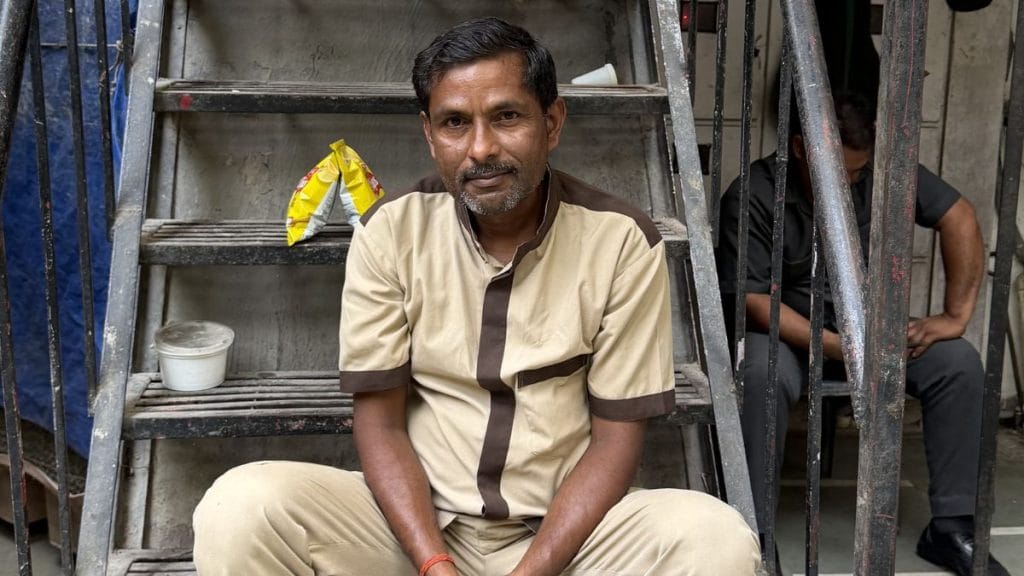
In one of HKV’s bylanes, Suresh scrolls his phone during a break from his regular shift at Naivedyam. He has been working at the south Indian restaurant for a decade and says the difference in the market today is impossible to miss.
“Earlier, really decent people used to come. Now, it’s mostly ‘chirkuts’ who come here,” he said with a smirk.
Booming middle class & glocal dreams
Hauz Khas Village offered Delhi its first night life, which till the 1980s existed behind the doors of five-star hotels. When it began taking shape under the vision of socialite and entrepreneur Bina Ramani and her circle, it became a cultural pocket where fashion, art and nightlife were now a public offering. Everyone wanted a taste.
Some of the most well-known luxury boutiques in Hauz Khas Village during that era included Ogaan, one of the earliest designer stores launched in 1989, which continues to remain a landmark in the area. Other prominent names included Once Upon A Time by Bina Ramani, along with Limelight, and Ishwatam. Residents also recall that actor Padmini Kolhapure also ran a clothing store in the neighbourhood.
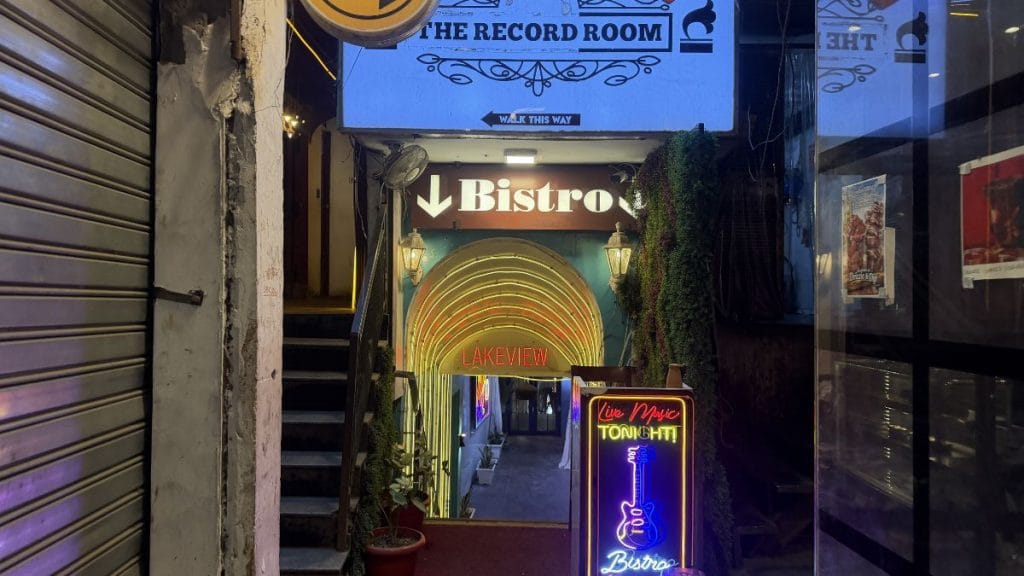
Complementing the boutique culture was a growing cafe and restaurant scene. Places like Bistro became popular hangouts, while Mezzaluna by Ritu Dalmia, who is now widely known for Diva, added to HKV’s growing reputation.
Not many know that Delhi’s prime art gallery DAG, founded by Ashish Anand and now recognised internationally, also began its journey in HKV.
Delhi socialite Dileep Cherian also ran a restaurant called A Touch of Class in HKV. The intimate 12-seater space had an unconventional setting, a glass wall overlooking a toilet shared by two village homes.
“That was the charm of HKV back then. It was bohemian, artistic, and slightly chaotic. It was Delhi stepping into a new cultural era,” Cherian told ThePrint. “You had sophistication and raw village life existing side by side, like class and gobar on the same platter.”
India’s economy was opening up, a new conspicuously consuming middle class was booming, money was beginning to flow, and the world had started paying attention to the country. Yet amid this rush toward modernity, there remained a deep desire to hold on to an Indian identity. Even Hindi cinema of the 1990s echoed that sentiment, balancing global aspirations with pride in all-things-Indian in films such as Phir Bhi Dil Hai Hindustani. Long before “glocal” became a marketing buzzword, it was Hauz Khas Village that became its living expression.
It was an upscale marketplace filled with designer boutiques and cafes, yet it carried the aesthetics of a village. A luxury clothing store would stand beside a charpai where men with white turbans and mustaches smoked hookah. A few steps away, women milked cows in open courtyards. Peacocks wandered across the lanes while hundreds of green parrots crowded the trees. This collision of the urban and the rural was not accidental, it was a carefully curated experience.
Delhi now had its own ‘it’ village. But building a fashionable commercial district inside a village came with troubles the city never fully resolved. Questions around authorisation and regulation have always been around. Over the years, fires broke out, robberies were reported, and incidents of murder and suicide began to stain its glamorous image.
Gradually, the wealthy drifted away from the village they had once helped popularise. Though HKV still remains on the bucket list of Delhiites, today its clientele is very different. The narrow lanes are now crowded with college students and people looking for an affordable night out.
“In just Rs 3,000-4,000, you can shop, eat and drink here,” said an 18-year-old girl, as she clicked photographs of her friend in one of the many graffiti-lined bylanes. They had finished their board examinations the day before and came to the village to celebrate.
“Our seniors told us you get cheap but good food and drinks here,” she said.
And affordability was never what the Hauz Khas Village was known for earlier. Now, exclusivity is out and everyone is in.
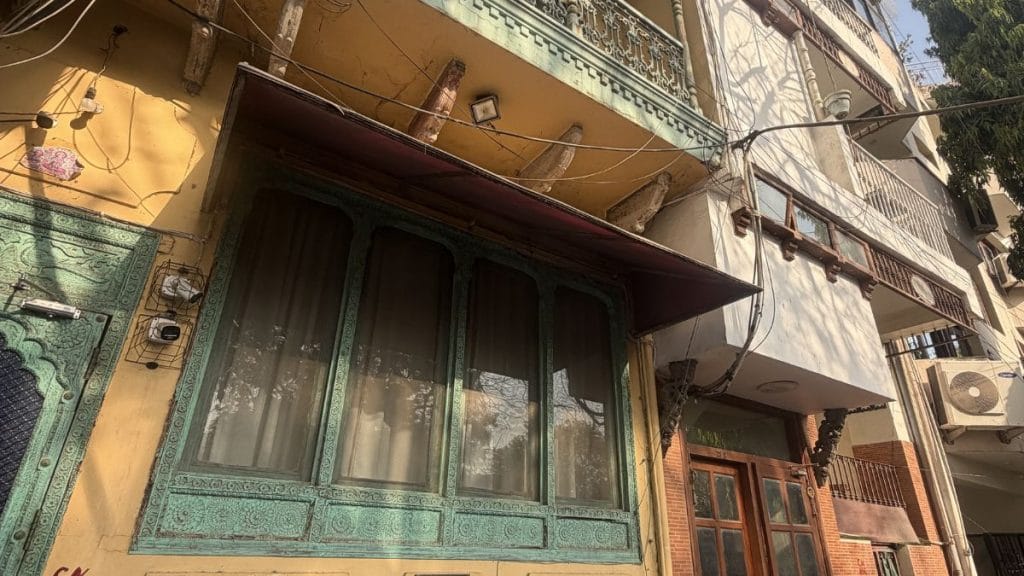
‘Disaster waiting to happen’
The view on Hanuman Mandir road in Hauz Khas Village was unsettling for Sudhir Gouchwal. As the 43-year-old landlord from the village walked through the lane, he noticed a couple sitting outside the temple, drinking beer and kissing. He muttered under his breath and kept walking.
A few moments later, a scout approached him and casually offered him “girls through a spa service.” Already irritated by what he had been witnessing around him, Gouchwal lost his temper and slapped the man. Within minutes, a crowd gathered. Someone in the group recognised him.
“He’s from the village,” a man said while calming the scout down. “At least see who you’re approaching before making such offers.”
Gouchwal is not a fan of the stout culture. According to him it started around 2016, but now it is beyond irritating. He’s even gone to authorities but nothing changed.
“They pay the police,” Gouchwal said.
He says he no longer recognises the neighbourhood he once grew up in. Women once roamed freely in HKV.
Today, he says, the atmosphere has completely changed. Women get harassed in HKV, scouts make them uncomfortable and it’s no longer the ‘safe’ hangout spot it used to be.
Cherian, who ran his restaurant for nearly two years, believes the neighbourhood began declining once commercial success overtook creativity and character.
“When a place becomes too successful, quality inevitably starts slipping. The landlords started chasing quick money,” he said, explaining that he had to shut the restaurant because the landlord had another tenant who was willing to pay more.
The last time Cherian visited HKV was nearly a decade ago, for a meal at Ogaan. For him, HKV has fallen into a “drunkard-like” condition.
“When the place starts getting dominated by flashy ‘wannabe Jaats’ driving around in Pajeros, you know the soul of the neighbourhood is gone,” he added.
The Chowdhary behind HKV’s success
Eight months after opening her first boutique inside the Colonial Raj building, which later became Qutub Colonnade, Bina Ramani was searching for a space large enough to house a workshop. One evening, while driving her Fiat through the narrow roads near Hauz Khas, a mustached man in a white dhoti-kurta stopped her.
“The monument closes at six. Come back tomorrow,” he told her in English, something that caught her by surprise. Ramani explained she was not a tourist and she was looking for a shop.
The man who stopped her was Raghuvir Singh Chowdhary, a respected figure in the village, almost like a sarpanch, known for his “broken English” and “influence among the locals.”
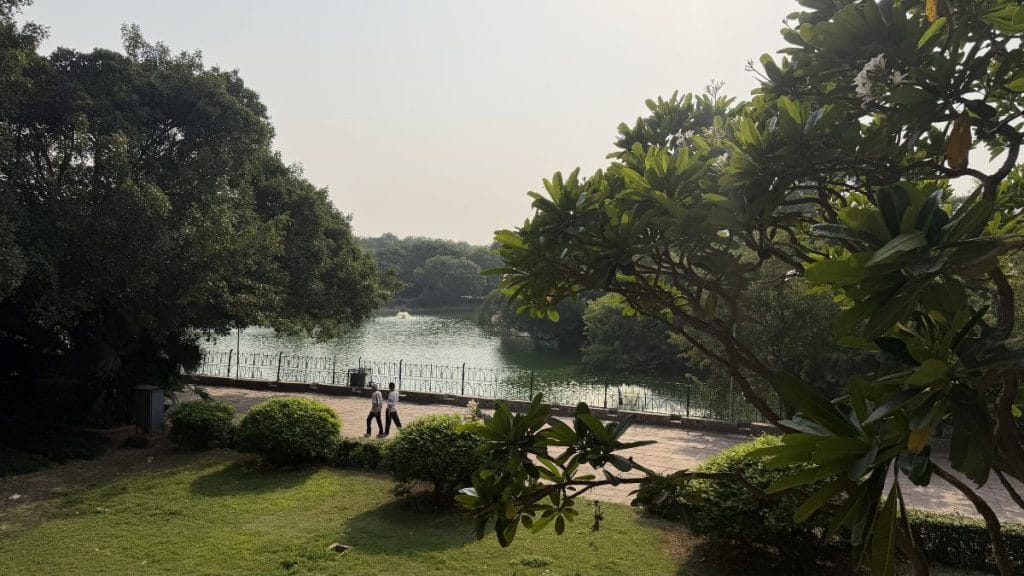
Chowdhary told Ramani about a small space that had been leased out to store sacks of salt for Rs 3,000 a month, but offered it to her for Rs 2,000 instead. As he showed her around the property, moving from one dimly-lit room to another, he finally opened a last wooden door overlooking the lake. For a moment, Ramani said, her “heart stopped.”
Beyond the doorway was the Hauz Khas lake glowing at sunset, the ruins of the medieval monument on one side and thick green trees on the other.
“I had never seen anything more beautiful. That image has stayed with me forever. At that moment, I knew I had to be here,” Ramani recalled, as tears rolled down her face.
Still emotional while recounting the memory, she held up four fingers to explain how she immediately doubled the offered rent, promising Chowdhary Rs 4,000 instead.
Ramani’s early clientele largely consisted of diplomats’ wives who travelled to the village for custom tailoring, as they came with fabric samples, sketches and measurements. For many of them, the area represented a different India, one untouched by the polished formality of fancy hotels and diplomatic circles.
As more visitors began frequenting her workshop, Ramani encouraged women from the village to open a small tea stall serving masala chai to customers.
“I even taught one of them how to make espresso,” she said, laughing at the memory of how quickly the cafe became popular. Together, Ramani and Chowdhary began transforming the village. She introduced many villagers to the idea of opening bank accounts. Some sold their cows, deposited the money into savings accounts and began leasing out the sheds to shopkeepers that Ramani brought in through her network.
“At one point, I forgot I was a designer. I became a real-estate agent instead,” she said.
She began calling everyone she knew, friends, artists, entrepreneurs, investors, anyone who might be interested in opening a store or starting a business. Slowly, HKV grew into a cultural and commercial hub unlike anything Delhi had seen before.
One of these early buyers was Jain, who first rented the shop in 1989, before buying it in 1992.
As the old Shammi Kapoor song ‘Chhupnewale Samne Aa’ (Tumsa Nahi Dekha, 1957) played on a small television set in her shop, in the basement, Jain described the old Hauz Khas as “kora kagaz” (a blank sheet of paper), a place full of untouched possibilities.
“We were meant to lay out a shatranj ki bisat (a planned and balanced chessboard), but somewhere along the way, we all failed. That kora kagaz, (blank canvas), has now turned into something unrecognisable,” Jain said, her eyes heavy with regret.
Young visitors and foreign tourists now walk into her shop, admire the collection for a few moments, ask prices and leave without buying anything.
“Thirty years ago hardly anyone walked out empty-handed. Forget bargaining, people would spend thousands of rupees in a day,” said Jain. “Now, nothing is left.”
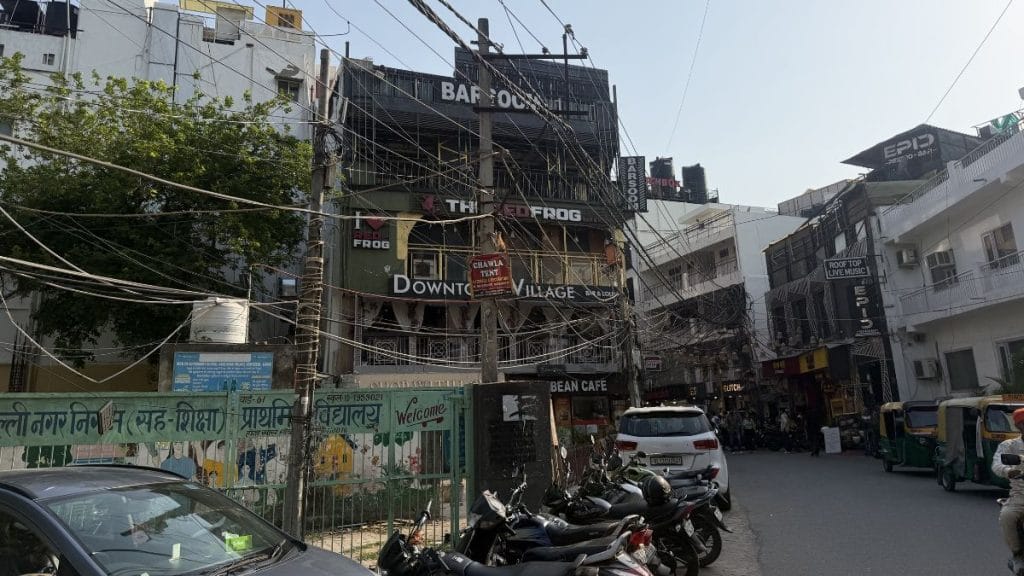
A tangled mess
As one walks through the main lane of the village, tangled electric wires crisscross overhead, alongside decorative lighting strung between bars and restaurants.
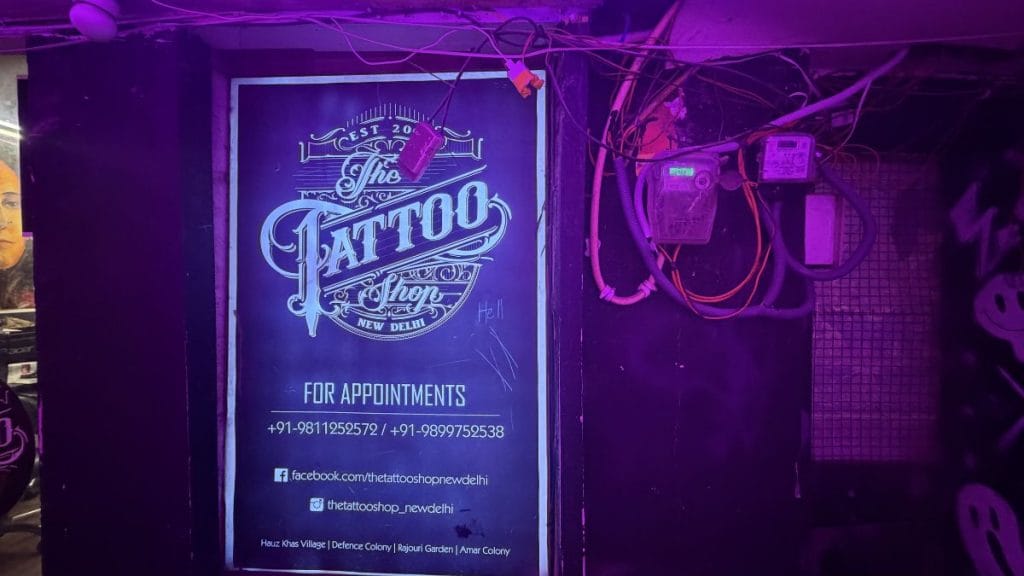
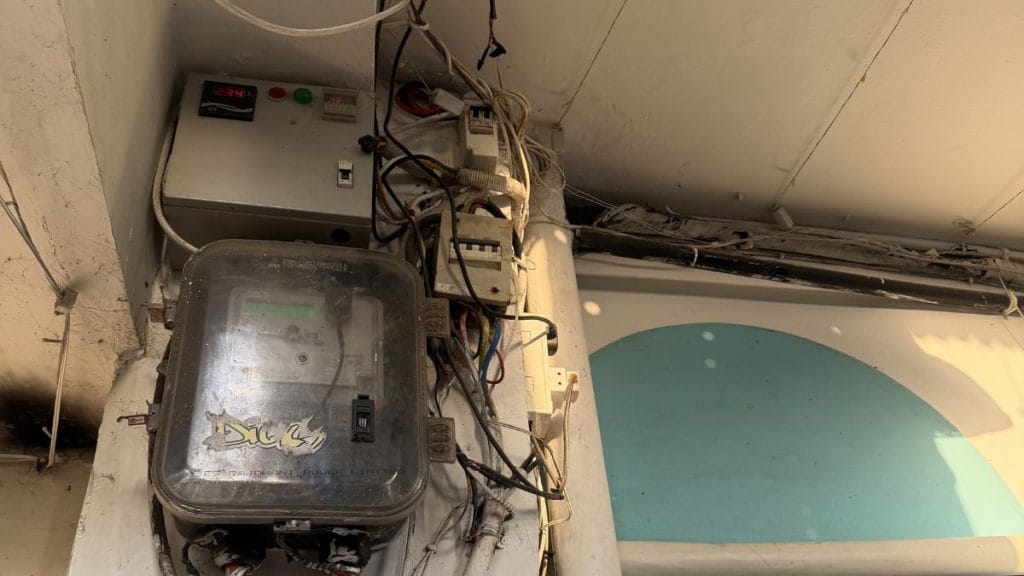
But the situation appears alarming inside the narrow bylanes. The cramped passages barely have enough room for people to walk through, while clusters of exposed wires, overloaded electricity meters, and tangled cables appear at almost every nook and corner.
Several restaurants in Hauz Khas Village are allegedly still operating without proper fire NOCs, raising safety concerns, Gouchwal claims.
“It’s a disaster waiting to happen. A lot of these places are functioning illegally, but because they bring in massive rents for landlords, no one wants to question it,” Gouchwal said.
According to him, the deeper problem lies in poor management and unchecked commercialisation.
“Nobody here really knows how to run a club properly. They don’t even know how to pronounce it. They call it ‘KILAB,” he said.
The pressure to maximise rental income has only worsened overcrowding in HKV.
“If a landlord has a 1,000-square-foot property, instead of leasing it to one tenant, they split it into two smaller outlets to earn double the rent. That makes the entire area even more cramped,” explained Gouchwal, who rented out all three floors of his building in HKV and says he earns close to Rs 20 lakh a month from it.
“Even then, it’s much lower than what many others are making,” he added.
This transformation is also reflected in how HKV has been portrayed in popular culture and media over the years. Once celebrated for its designer boutiques, celebrity hangouts, and vibrant cafe culture, the area frequently featured in films such as Wazir, Tamasha, and 2 States. Even consumer electronics brand boAt was conceptualised and built out of HKV Social, which with its industrial scrap-metal aesthetic, continues to be a popular spot among the crowd.
Parking turned into a nightmare, power supply became unreliable, and many designer boutiques, including Ramani’s group, shut shop and moved to newer luxury hubs like MG Road.
Around 2011-12, the conversation around Hauz Khas Village began changing noticeably. Media coverage that once celebrated its fashion, culture, and café scene started focusing instead on fire safety violations, poorly regulated bars and restaurants, overcrowding, and rising concerns about public safety.
For Gouchwal, that change became personal. He moved to Vasant Kunj in 2017 because he no longer wanted his children to grow up in HKV.
“The days I visit HKV, I myself don’t stay beyond 6pm. Its a sh*tshow after that,” he said. “They have turned it into something unrecognisable. It’s shameful and disappointing.
Also read: Rich Indians don’t just want cooks, nannies & drivers. They’re hiring lifestyle managers now
A village without his Chowdhary
Ask enough old-timers what went wrong with HKV, and many eventually arrive at the same event: Raghuvir Chowdhary’s death.
Part power broker and part peacemaker, Chowdhary helped bridge the gap between local residents and the artists, designers, diplomats and entrepreneurs who began pouring into HKV in the 1980s. Many credit him with making sure the village’s transformation did not descend into chaos.
But after his death in 1992, cracks slowly began to appear.
As younger locals grew older, women visiting the market dressed in shorts or skirts increasingly faced uncomfortable stares and behaviour.
“They would constantly gawk at women and make them uncomfortable. I confronted them many times over it,” Bina Ramani said. “It eventually ruined the experience for visitors.”
Even then, the market managed to hold on to its charm and continued to thrive for years.
The first major blow, according to many residents and business owners, came in 2017 during the large-scale sealing drive, when the Delhi Pollution Control Committee shut down 21 bars and restaurants in the area. Since then, many believe HKV has struggled to fully recover.
In an attempt to pull crowds back, businesses increasingly turned to aggressive discounts, promotions, and street scouts trying to lure customers inside establishments. While footfall and revenues slowly returned, the quality of the crowd deteriorated significantly.
Ramani said she last visited HKV around eight months ago.
“It keeps on getting worse,” she said, before pulling out an old piece she had written after the death of Chowdhary in 1992. In it, she described the tragic incident: Chowdhary had reportedly woken up late at night to relieve himself, accidentally slipped, and fell into a well that had ironically been constructed the very same day.
‘What is Hauz Khas Village without its Chowdhary?’ the final line of her piece read.
“And honestly, over the decades, we have seen that question answer itself,” Ramani said. “HKV became a place full of unrealised potential. It had so much to offer. Every time I visit now, it breaks my heart to see what it has turned into.”
(Edited by Stela Dey)