



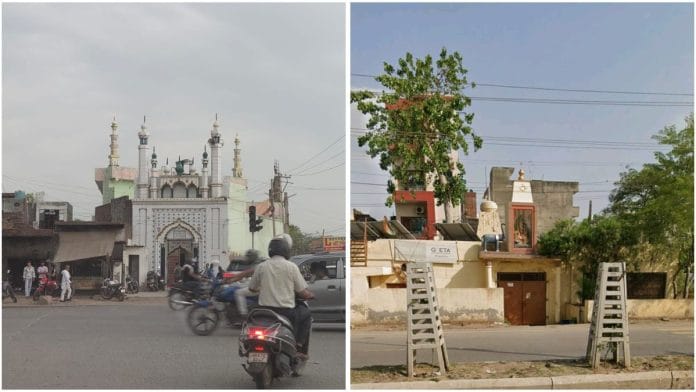
Faridabad: At 11, Haji Majid watched a mosque rise brick by brick. As days passed, its courtyard turned into his playground, its praying hall, his evening classroom, and the colony around it became ‘Masjid Chowk’. Seven decades later, at 81, the same mosque was torn down overnight, reduced to rubble for being an encroachment.
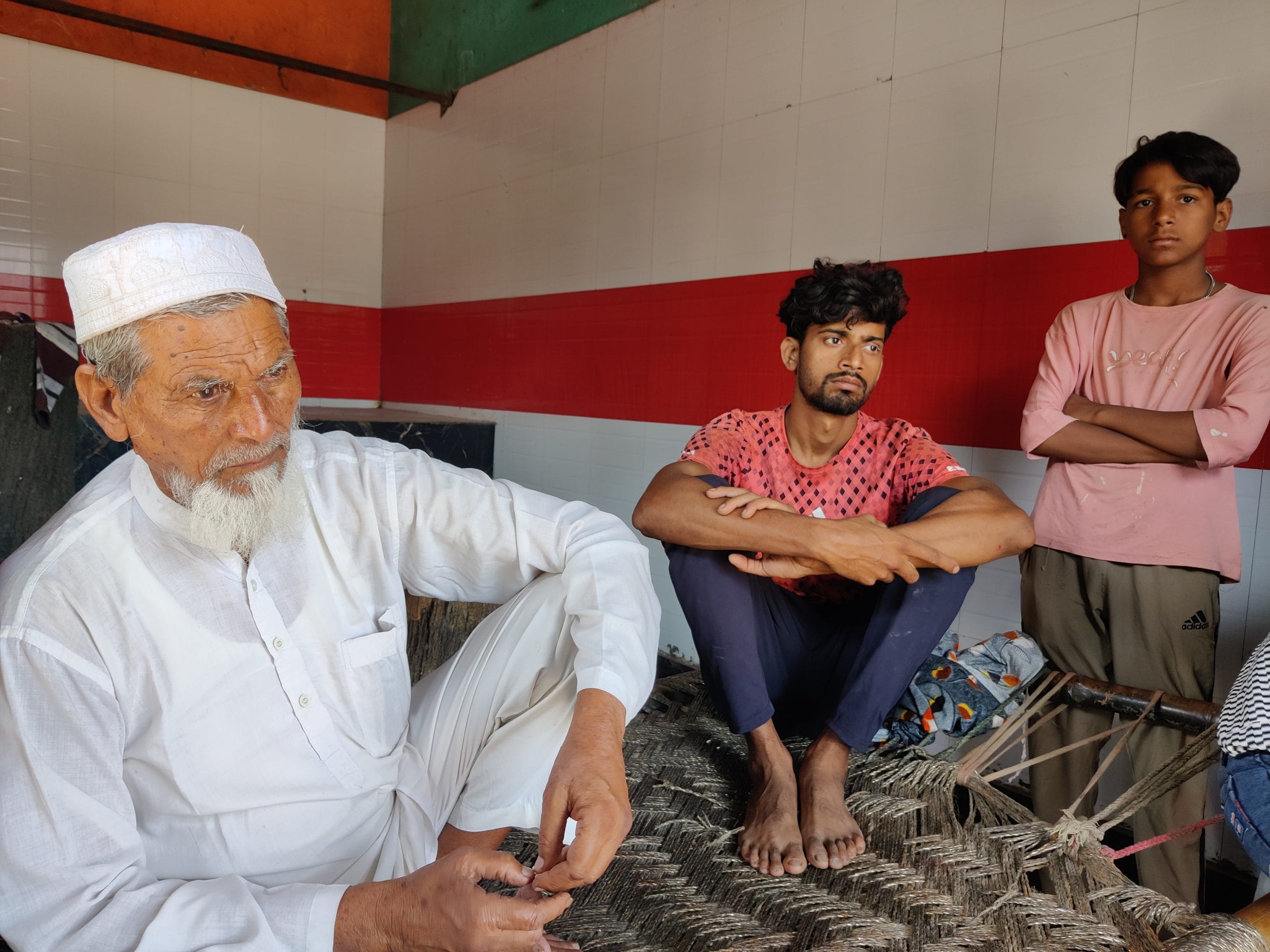
“They demolished the mosque and laid a road overnight. They didn’t let us take out our Quran, Hadith, air conditioners or anything else,” said Majid, his eyes brimming with tears as he stared at the ruins of his lost childhood.
But the mosque wasn’t the only structure demolished in this locality by the Municipal Corporation of Faridabad. About a kilometre away, a temple met the same fate. The similarities, however, ended there. While the mosque stood in the middle of a cluster of slums that had grown over decades on roughly 60 acres of disputed land and was home to nearly one lakh people, the Shiv temple stood outside a gated neighbourhood. When the bulldozers came, half a dozen shops and houses surrounding the mosque were also brought down. Before the demolition, MCF officials had shifted the deity to another temple.
This is reminiscent of the Gujarat government under Chief Minister Narendra Modi, which routinely demolished religious structures in a non-partisan manner – both temples and mosques – to make way for infrastructure improvement. Back then, VHP leaders such as Pravin Togadia protested the razing of temples.
Nearly two decades later, Faridabad demolished two religious structures – a mosque and a temple – to clear the path for the alignment of the upcoming Gurugram-Faridabad-Noida Namo Bharat Regional Rapid Transit System (RRTS) corridor.
The demolition, carried out by the MCF in the New Industrial Township on 29 May, happened under heavy police deployment and an internet blackout. The road on which these two structures stood was a major congestion point, routinely clogged by heavy traffic. After the demolition, it has paved way for elevated flyovers, with the project pegged as one that will transform Faridabad.
“Those travelling between Gurugram and Faridabad have to pass through three key stretches – the Bata flyover, Neelam flyover, and Badkhal flyover,” Badkhal MLA Dhanesh Adlakha told reporters. “With these elevated flyovers, traffic will ease. This will change the face of NIT, turning it into a posh area.”
What unfolded in Faridabad reflects a recurring pattern in India’s urban expansion: infrastructure projects often clash with places of worship and livelihoods. Very few administrations have been able to weather the pushback, especially when the Opposition positions the actions as anti-religion or anti-poor. Last month, in Gujarat’s Rajkot, public unrest followed after several religious structures were demolished in an overnight operation. Rajkot Municipal Corporation had called it necessary for traffic management.
Such collisions of infrastructure with religious structures often end up in courtrooms. In 2025, the Supreme Court cleared the way for the partial demolition of a 400-year old mosque in Ahmedabad, declining to interfere with a Gujarat High Court order. The high court had dismissed the Mansa Masjid Trust’s plea for a stay on the road-widening project, allowing the Ahmedabad Municipal Corporation (AMC) to proceed with the demolition in “larger public interest”.
At its heart, experts say, the problem is one of urban planning and lack of governance. Officials look away for years, and even decades, as illegal encroachments rise. Then, they are unable to manage the anger that erupts when demolitions become a necessity. Demands for relocations come up causing more drain on the state exchequers.
In 2021, a demolition in Faridabad’s Khori village left more than one lakh people homeless. But the problem wasn’t religious structures; it was the Aravalli forest land. The Supreme Court intervened after residents filed PILs seeking rehabilitation. The process of providing accommodation, however, is still ongoing. “The environment must prevail over other rights and forests must be preserved,” the Supreme Court said in its order.
In most cases, senior advocate Sanjay Hegde says courts tend to exercise restraint in the interest of the larger public good. “When there are large-scale demolitions, courts do sometimes step in. But in cases where there is no land title and where the land is required for the greater public good. Courts tend to keep their hands off,” he said.
When Gujarat bulldozed temples
Faridabad is not the first place where infrastructure development has collided with religious structures.
In 2008, the Narendra Modi-led Gujarat government launched a drive against temples built on encroached public land in Gandhinagar and other parts of the state. Media reports at the time said around 80 temples were demolished in the capital city alone as part of efforts to clear roads and public spaces, while nearly 200 temples across the state were targeted during the anti-encroachment drive.
The move triggered protests from the Vishwa Hindu Parishad (VHP) whose then international general secretary Pravin Togadia publicly criticised the demolitions, questioning why temples were being targeted. The issue soon became one of the most visible flashpoints in Togadia’s strained relationship with Modi. Yet, despite the protests, the Gujarat government largely stayed the course, arguing that encroachments on public land could not be exempt merely because they were religious structures.
Following a meeting between Modi and then-VHP president Ashok Singhal, the Gujarat government called off the demolition drive against unauthorised temples.
The episode remains a rare example of a government confronting encroachments by places of worship despite political resistance. Nearly two decades later, such official resolve and willingness to absorb similar pressure remain difficult to find.
The politics of encroachment
The fear soon spread to Nehru Colony in Faridabad. Demolitions have now begun there too.
Fifty-year-old Shakuntla Devi recalls that shortly after the mosque was razed, announcements echoed through the neighbourhood, asking residents to vacate their homes and remove their belongings. Nehru Colony is a densely populated informal settlement, home largely to workers employed in the gig economy.
For architect and urban planner Anil Dewan, the larger question is why such encroachments are allowed to come up in the first place. He blames a combination of vote-bank politics and regulatory failures that have delayed and distorted planned urban development.
“The first thing is that authorities must prevent encroachment of public land. If it was a green belt, they should have planted trees so that the land is not encroached upon and can be used whenever required,” Dewan said. “These colonies are bulk votes. That’s why they have names like Nehru Colony. The name itself tells you how old the colony must be.”
But not everyone sees the issue primarily as one of enforcement.
For Professor Avinash Kumar, what is unfolding in Faridabad is part of a much larger pattern in India’s cities. He argues that the crisis is rooted in the country’s post-Independence development model, which assumed that industrialisation would absorb surplus labour from agriculture.
“There is a systematic push to disenfranchise the urban poor — to question their very existence, even label them as outsiders. In that context, eviction becomes far easier to justify,” he said.
Demolition and dispute in Faridabad
Late in the night, police personnel arrived in large numbers. They were followed by MCF officials and, eventually, bulldozers.
When residents asked about the heavy deployment, they say they were told that a minister was expected to pass through the area.
“We went inside our houses after they told us that the deployment was for the minister,” said Haji.
The demolition drive was overseen by MCF Additional Commissioner Paramjeet Chahal. He said such operations are particularly challenging because they often involve structures with religious significance.
“We have records showing these were encroachments, and several notices were served,” Chahal said. “When it comes to religious structures, we ensure due respect. We enter without footwear, handle religious texts carefully, and either return them to people or relocate idols to other temples.”
However, Haji disputes this account, alleging that copies of the Quran were not returned.
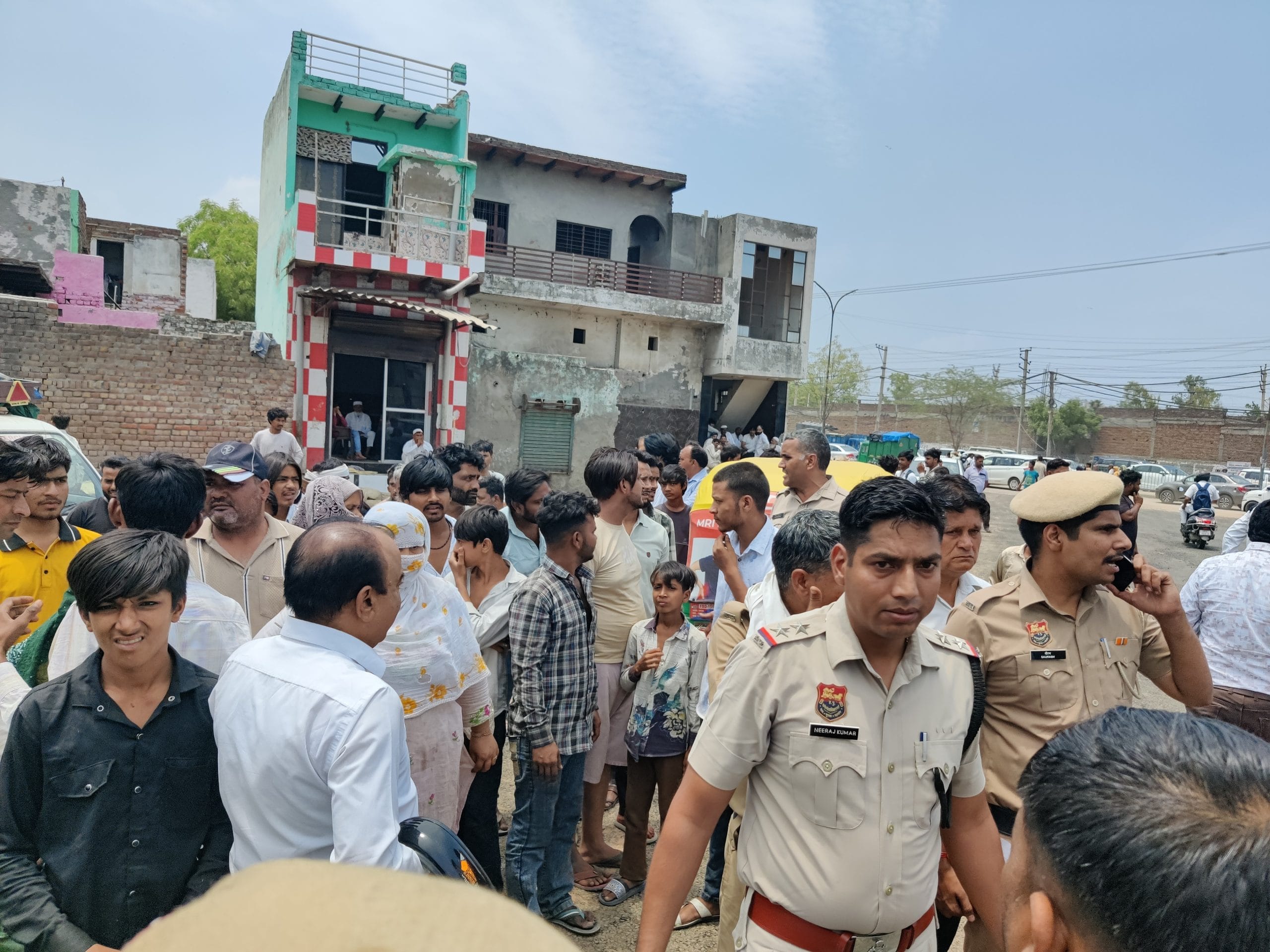
MCF maintains that the land was part of a green belt and that notices had been served repeatedly over the years. The date of demolition, however, was not disclosed in advance.
“The public notice was served last year. The date of demolition was not informed to avoid any gathering that could spiral into a law-and-order situation and obstruct the demolition work,” said a senior MCF official.
Residents contest this version, insisting that they were never notified and that the demolition came without warning.
For the civic body, however, the overnight operation has already produced visible results. Officials say the newly carved-out slip road has eased traffic for commuters travelling between Faridabad and Gurugram along a stretch that was previously prone to congestion and accidents.
Officials also point to another challenge: the role of land grabbers in the expansion of slum clusters.
“As soon as a poor man pitches a tent on a piece of land, others follow, and land grabbers see an opportunity,” said a senior MCF official. “They begin selling the land at cheap rates, turning it into a business.”
Critics argue that such encroachments rarely emerge without the knowledge of authorities.
It is this institutional inaction, says senior advocate Gagan Gupta, that places a responsibility on the state to rehabilitate residents who have spent decades living on such land.
“If people have been living there for 70 years, why didn’t the authorities take notice earlier?” Gupta asked. “You cannot simply ignite bulldozers. The government must provide appropriate relief, especially when its own inaction has led to the situation.”
“Rule of law,” he added, “must also mean that courts direct the government to frame and implement a clear rehabilitation policy in such cases.”
After the bulldozers leave
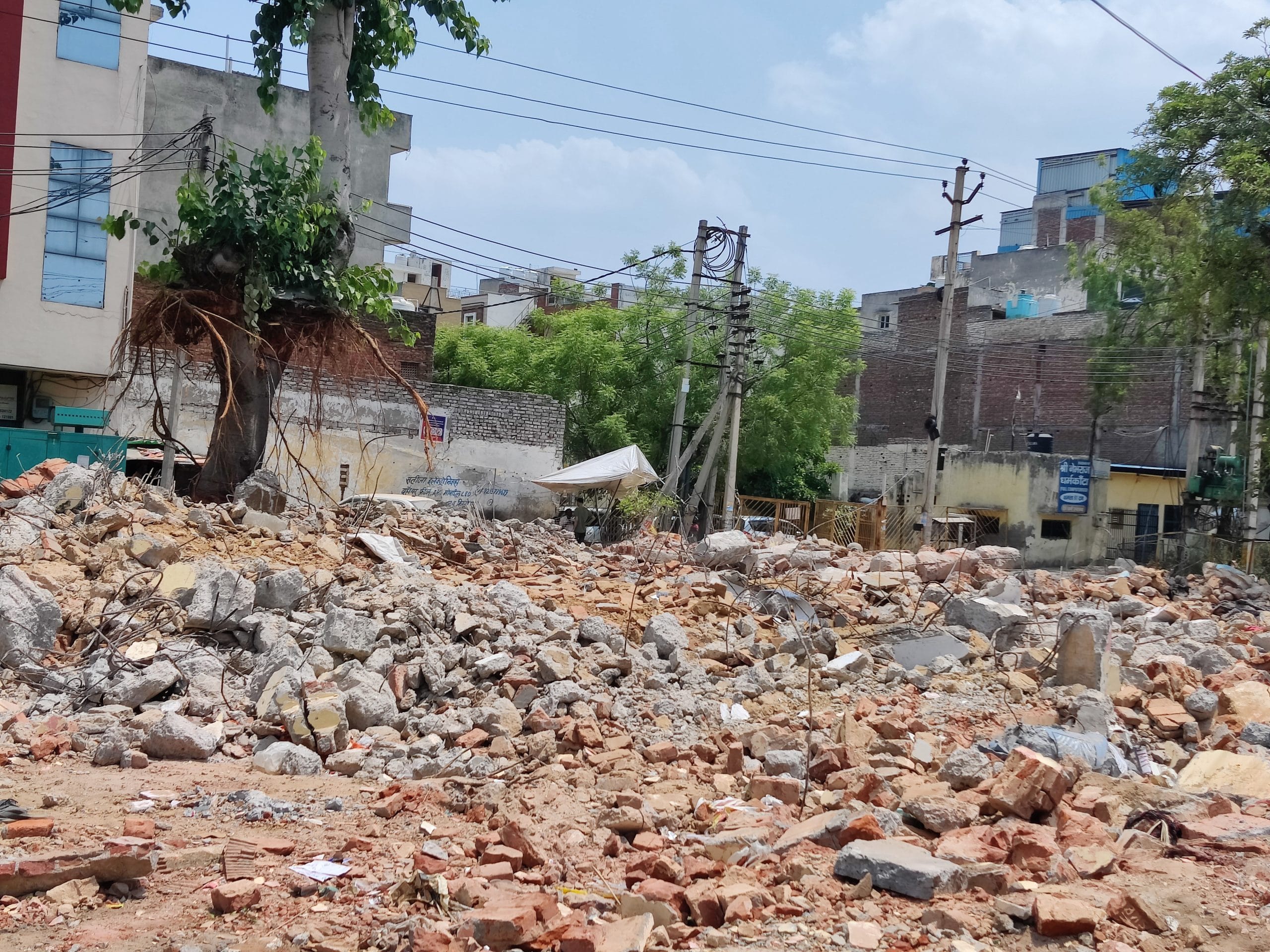
Nearly two kilometres away, the site of another demolition presents a stark contrast. Where a temple once stood, there is now only a mound of rubble and cement. The area is deserted – there are no crowds, no residents claiming the land.
Unlike the mosque, the temple stood in isolation outside a formal residential colony. There were no adjoining homes or shanties.
MCF officials said the demolitions were carried out in compliance with NGT orders concerning encroachments on Faridabad’s green belt.
Architect and urban planner Anil Dewan says this contrast points to a recurring pattern in informal settlements.
“In many such colonies, a temple or mosque comes up before the settlement itself,” he said. “A religious structure lends legitimacy to the settlement. These are largely poor communities, and authorities tend to think twice before demolishing such structures. It helps residents secure their claim.”
Demolition of slums, such as those around the mosque, does not always follow rehabilitation protocols until petitions are filed and courts intervene. Faridabad has witnessed such demolitions before. One of its largest drives took place in 2021 in Khori village at the foothills of the Aravallis. The scale of this drive, and the subsequent Supreme Court intervention, highlighted the need for a robust rehabilitation policy.
The demolition left more than one lakh people homeless, but only around 800 were rehabilitated. The eligibility criterion itself was arbitrarily defined: only those with an annual income of up to Rs 3 lakh were made eligible for Economically Weaker Section (EWS) housing in Dabua Colony and Bapu Nagar, even as the flats were yet to come up.
An MCF official associated with the Khori exercise said the demolition was carried out following a Supreme Court order directing the removal of encroachments from protected forest land within six weeks.
“After the Supreme Court intervened, we started rehabilitating eligible occupants,” the official said.
Five years later, that process is still ongoing. Officials say EWS flats in Dabua Colony and Bapu Nagar are being renovated before they are allotted to residents.
But in the New Industrial Township demolition case, MCF officials say no such rehabilitation or compensation is being planned.
“They have been encroaching on government land. So why should they be rehabilitated?” asked one official. “Unless there is government intervention, no rehabilitation will take place.”
Sitting outside her home, surrounded by neighbours from Nehru Colony, Shakuntala Devi sees a contradiction in that argument.
“If our land was illegal,” she asked, “why did they give us ration cards? Why did they install electricity meters?”
(Edited by Prashant Dixit)
Illegal encroachment is ILLEGAL. Doesnt matter if its a mosque or a church or a temple. The print is really trying hard to push its narrative.
I support this. I don’t care how hurt you feel but if it’s illegal then destroy it and that includes temples, mosques, churches and any religious structure.