





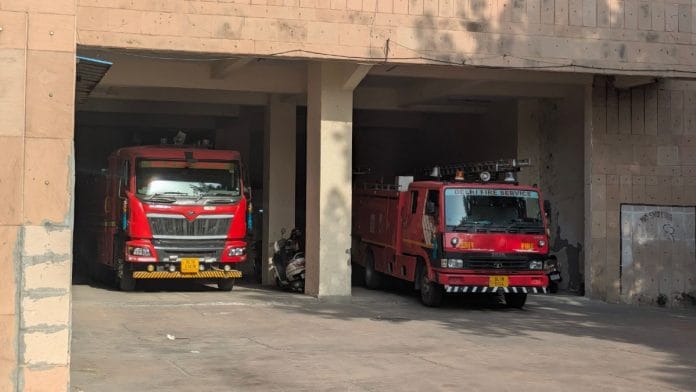


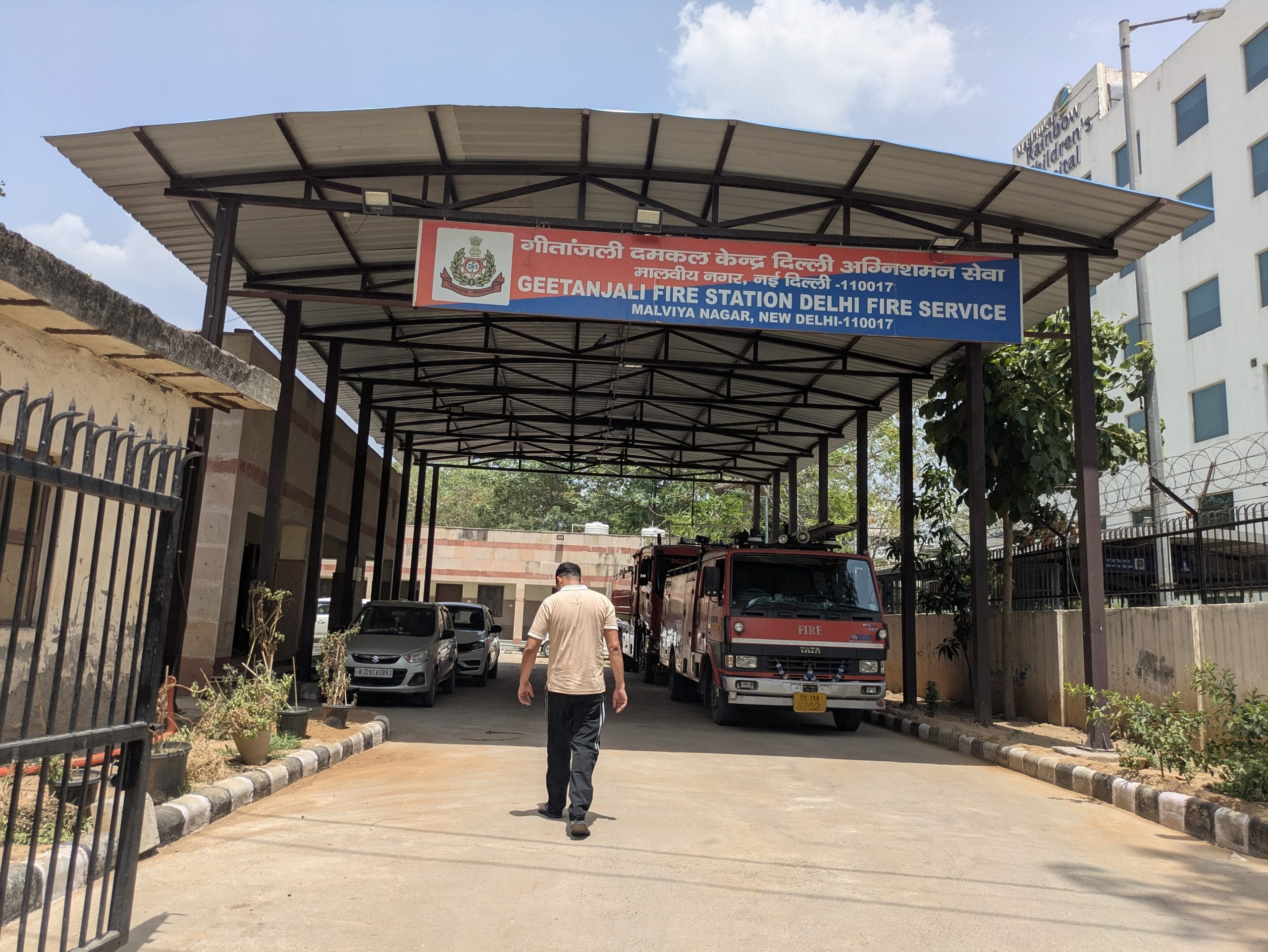
New Delhi: Merely 500 metres from the site of the hotel fire in Malviya Nagar stands the Geetanjali Fire Station—a distance traversable by foot in under 10 minutes. But when the fire broke out on 3 June, local residents said, the fire safety staff was late.
The team at Geetanjali Fire Station was tending to a garbage fire in Jaunapur, nearly 10 km away.
“We did not have enough people to respond to the Hauz Rani call. Had we been available, things would have been very different,” said a senior officer at Geetanjali Fire Station under the condition of anonymity.
On 3 June, units from Bhikaji Cama Place, roughly 7-8 km away, and Nehru Place, 6 km away, responded to the Hauz Rani call. Residents carried out desperate rescue operations before fire tenders arrived in strength. The tragedy claimed at least 22 lives, including several foreign nationals.
As per data available on the Delhi Fire Service (DFS) website, it operates approximately 71 stations—including headquarters and training facilities—of which four operate only during daytime. These stations handle about 98 emergency calls every day and thousands of fire and rescue operations annually.
The DFS’ total sanctioned strength stands at 3,633 posts. However, recent RTI responses from 2026 indicate around 1,030 total vacancies, including administrative roles.
We got another truck after the recent fire. We now have two trucks, one with a 4,500-litre capacity and another with 12,500 litres. But the personnel strength remains the same. We can use the secondary truck to provide assistance, but not to undertake independent operations.
—senior officer at Geetanjali Fire Station
Staff crunch, long shifts
AK Malik, deputy chief fire officer at DFS, stated that 9,223 additional posts are required overall.
“DFS has forwarded the proposal for additional manpower in December of last year,” he said. The government is yet to respond.
“There are 90 sanctioned posts for station officers. Only 29 are currently filled; 11 were hired recently, and four of the existing ones are set to retire within three months, which could reduce the number to 25,” said a station officer who has been working in DFS for over 10 years.
He called a station officer the backbone of a fire station, responsible for its smooth operation. However, not all fire stations currently have station officers.
“The force works as a whole. In the absence of an officer, other senior position members take up the responsibilities,” said Malik.
Certain stations are run by firemen.
A station officer works 72-hour shifts and remains bound to the station premises. These officers head the station, maintain administrative records, command teams during emergencies, coordinate with the control room, and ensure overall preparedness and discipline. In their absence, leading firemen or sub-officers step in, though protocol requires a station officer. Firemen, leading firemen, and sub-officers follow 24-hour duty cycles.
As per reports, 552 positions in the fire operator role remain unfilled, with many roles filled by contractual staff.
“We require a team of five people while responding to emergencies: one driver, one senior officer, and three personnel. During one shift, we only have six to seven people available. This number is even lower sometimes, when the staff takes personal leave,” said the senior officer.
He claims that the Geetanjali Fire Station was built in 2018, but 24-hour operations only began in December 2025, owing to staff shortage. In regions such as Anand Parbat, Dwarka Sector-03, Rohini Sector-03, Mahipalpur, and IFC Gazipur, land for fire stations has been allotted, but operations are yet to begin.
DFS has proposed a significant expansion, seeking over 6,600 additional personnel (part of the larger 9,123 additional posts sought), to move toward recommended eight-hour shift norms and reduce fatigue from the current 24-hour duty cycles.
Also read: Europe’s fashion waste ends up in Panipat. So do its consequences
One more truck, same old staff
The Standing Fire Advisory Council (SFAC) and National Disaster Management Authority (NDMA) guidelines prescribe clear benchmarks for manpower, response time, and appliances. In urban areas, the ideal response time is three to five minutes. Manpower norms recommend at least one leading fireman and six firemen per fire appliance, along with reserves for continuous operations. These needs are sparingly met.
Often at smaller fire stations such as Geetanjali, in the absence of a large workforce, firemen end up taking on additional responsibility to fulfil the deficit.
Infrastructure and equipment standards include vehicle bays, crew quarters, modern communication systems, water tenders, rescue vehicles, hydraulic platforms, breathing apparatus (SCBA), PPE, and specialised tools for high-rises and dense localities.
Malik claims that Geetanjali Fire Station has always had two trucks, out of which one was at another station at the time of the Hauz Rani fire.
“We got another truck after the recent fire. We now have two trucks, one with a 4,500-litre capacity and another with 12,500 litres. But the personnel strength remains the same. We can use the secondary truck to provide assistance, but not to undertake independent operations,” said the officer at Geetanjali Fire Station.
The city’s 71 stations are far fewer than the oft-cited ideal of 120. Recent reports and older CAG audits have repeatedly flagged outdated communication equipment (such as radios), insufficient modern vehicles, maintenance issues, and slow infrastructure expansion. City-wide, the DFS fleet stands at about 249-265 vehicles, but availability per station remains constrained, especially when multiple calls overlap.
Also read: Noida is building a deer park. Will Delhi’s mistakes follow?
A non-cooperative public
In the absence of personnel at the Geetanjali Fire Station, the call was redirected to Nehru Place and Bhikaji Cama Place. While DFS officials stated that seven units were mobilised, with some reaching within 19 minutes, eyewitnesses and opposition leaders alleged delays of up to an hour, exacerbating the tragedy. Traffic and narrow lanes added to the delay.
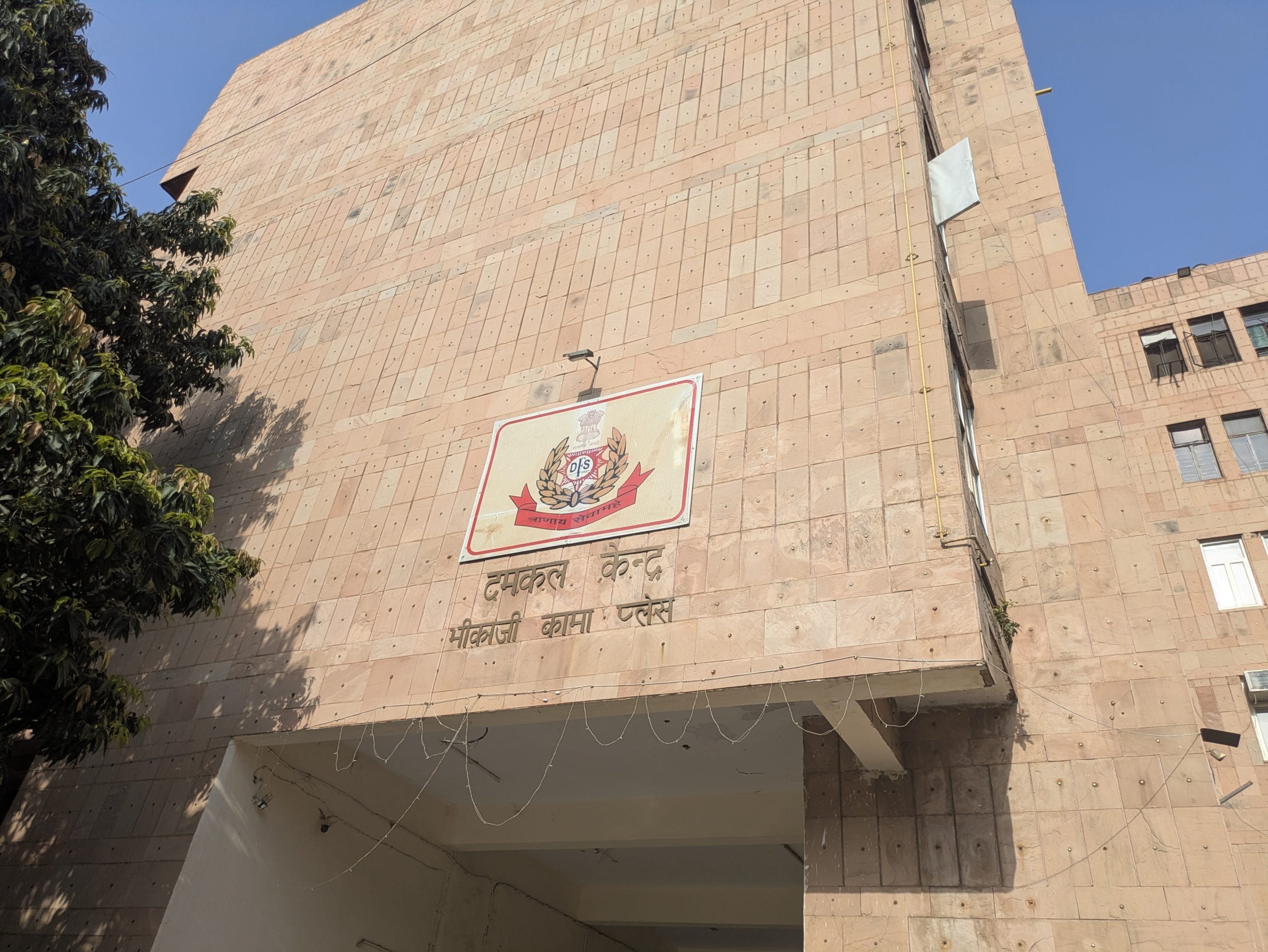
Bhikaji Cama Place Fire Station was among the units that responded. A firefighter from the station outlined the setup.
“We have three trucks, one of which is currently at the workshop for service. Living quarters are available for some staff,” said the firefighter, who didn’t wish to be named.
Infrastructure creates additional challenges: there used to be a gap in the street divider right outside the fire station, but it has now been closed. “To drive to places, we need to take a longer U-turn, which takes up a lot of time. Every second matters in this job.”
The firefighter also spoke about traffic-related delays, especially in the face of a non-cooperative public. “There is so much traffic, and there isn’t enough awareness in people. People hardly ever give way for fire trucks or ambulances.”
These challenges have persisted for years despite repeated flags in audits and internal proposals. Delhi’s rapid urban growth, encroachments, and rising emergency calls have only worsened the problem.
DFS has emphasised that teams were turned out promptly with the available resources. It asserts that efforts toward modernisation are ongoing, including procurement of new tenders and training initiatives. Recruitment drives are underway or planned through bodies such as DSSSB, alongside some contractual appointments.
The Malviya Nagar tragedy has triggered fresh political scrutiny and demands for faster filling of vacant positions, stricter building safety inspections, and full alignment with national norms.
Until systemic gaps are bridged, Delhi’s firefighters will keep delivering under enormous strain, while residents in high-risk areas live with the fear that proximity on the map does not guarantee speed on the ground.
(Edited by Prasanna Bachchhav)