







Chandigarh: The video first surfaced on Instagram.
A 14-year-old girl, filmed without her consent—the clip circulated online after a 22-year-old man she knew allegedly threatened her with it. By the time the case reached sub-inspector Asha Devi, it was no longer just about sexual assault, but had become a race to secure digital proof, trace its origin, and ensure the evidence holds up in court.
Months later, the case ended in a 20-year prison sentence.
That same year, another call came in, this time from a hospital. A minor girl had been admitted, pregnant. For Devi, cases like these often begin quietly, surfacing only when medical intervention becomes unavoidable.
But building them into convictions is far more complex—requiring statements, medical evidence, DNA analysis, and, often, navigating fear and pressure on the survivor and her family.
On 29 April, the Chandigarh Police awarded 136 Commendation Certificates First Class across a range of cases—from murder and sexual offences to drug recoveries—highlighting what officers describe as exceptional investigative work.
Some of these cases, senior officials told ThePrint, were unprecedented in scale or method, indicating coordinated tracking across state borders and complex evidence-building in sensitive crimes. Yet, within the force, there is also an acknowledgement that much of this work has long been part of everyday policing, rarely visible beyond case files.
That dissonance—between claims of exceptional performance and a public perception often marked by scepticism—forms the backdrop to these recognitions.
Asha Devi’s fight for justice
Asha Devi, 41, who has been in the force for over a decade, is among those officers whose work features in the 136 Commendation Certificates First Class awarded last week. She was awarded the certificates for securing convictions in these Protection of Children from Sexual Offences (POCSO) cases, both resulting in 20-year prison sentences.
But behind the citations is a process that rarely unfolds as neatly as the final verdict suggests. In many of these cases, the accused is someone the child knows—a neighbour, a relative, someone who builds trust before exploiting it.
“They call them over, threaten them, and sometimes even record videos,” Devi said.
What follows is often a fragile investigation. Statements must be recorded carefully, medical evidence secured in time, and in some cases, digital trails reconstructed. At every step, there is the risk of the case weakening—families withdrawing, victims drowning under pressure, or witnesses turning hostile.
“Many times, families say they want to settle it, or they stop cooperating. But if there is even a small gap, the case can be affected. Everything has to blend together,” Devi added.
In the Instagram case, the investigation quickly moved beyond the initial complaint. Screenshots of the video were secured, the account traced, and devices examined to establish who had recorded and uploaded the footage.
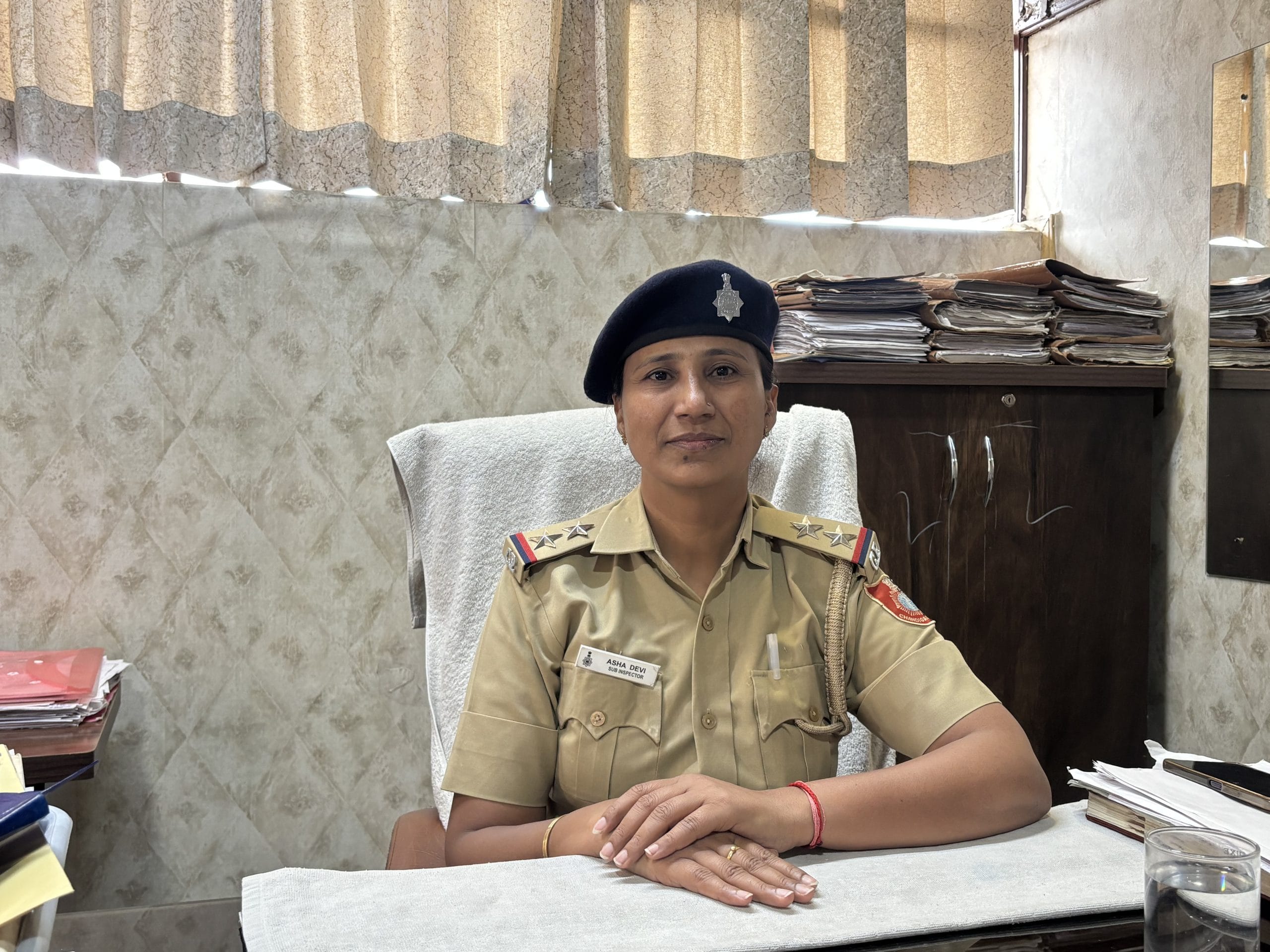
“We took screenshots immediately and preserved them. Then we linked it to the accused’s phone,” the sub-inspector recalled.
The survivor’s statement, recorded before a magistrate, became a crucial piece of evidence—corroborated by medical reports and digital proof.
“In such cases, the video becomes both the crime and the evidence. But it has to be proved properly—where it came from, who made it,” she said.
In the second case, the trajectory was different. The pregnancy meant the case rested heavily on medical examination and DNA evidence.
“We have to establish biological links, record statements, and ensure everything is documented properly,” Devi told ThePrint.
In several such POCSO cases, she added, the investigation also involves coordinating with child welfare authorities—especially when the pregnancy is detected late, and an abortion is not possible.
Each step is time-sensitive.
“If there is a delay in securing medical proof, or if statements are not recorded properly, it can later affect the case,” Devi said.
Chandigarh’s policing crisis
For cases under the POCSO Act, a woman sub-inspector is designated as the investigating officer. In Chandigarh’s south subdivision, which covers five key police stations, Asha Devi handles many such cases.
Director General of Police Chandigarh, Sagar Preet Hooda, awarded 136 Commendation Certificates First Class (CC-1st) to police personnel for achievements in investigation, detection and prevention of crime. The recognitions span cases involving murder, NDPS offences, and sexual crimes under the POCSO Act, along with recoveries made under local and special laws. Of the eight convicted cases, five were POCSO-related, two were under NDPS, and one was a murder case.
Just three days after the commendations were conferred, a video from outside Elante Mall began circulating on social media. Shot around midnight, it showed a violent scuffle escalating into a physical fight that left several injured.
Less than 100 metres away, a Chandigarh Police PCR vehicle was stationed. But no officer is seen stepping in while the fight was underway.
Only after it ended, bystanders allege, did personnel approach the spot.
The video triggered a fresh round of criticism, with questions being raised about the police’s responsiveness in real-time situations.
Among Chandigarh residents, such concerns are not new. For many, policing is now associated with increasing unnecessary enforcement, such as traffic challans, rather than intervention.
“It feels like the police act only after something has already happened. They are waiting for the offence, not preventing it,” said a Chandigarh-based lawyer, who practises at the district court.
Others point to a perceived gap between visibility and action.
“There are barricades everywhere, naka points (check points), but during peak hours, you rarely see active traffic regulation,” said another resident in his mid-50s, who has lived in Chandigarh all his life.
“Everything is automated now, but that also means less human intervention,” he added.
Incidents in the past three months have added to these concerns. On 18 March, a 31-year-old man was shot dead in broad daylight in Sector 9, raising questions about preventive policing in a city often seen as well-monitored as Chandigarh.
While the suspects were arrested within 30 hours, the fact that the crime could be carried out, and that the accused initially escaped, resulted in widespread public scrutiny and criticism of the police’s ability to deter such attacks.
Chandigarh has a police strength of around 6,000 personnel, nearly 50 PCR vehicles, and over 2,000 CCTV cameras linked to a centralised police command and control centre. Yet, residents say, this has not always translated into reassurance.
The concerns deepened further when, days later, a 16-year-old boy narrowly escaped death after a shot was fired at him in broad daylight, another incident that fed into a growing perception that policing on the ground is not keeping pace with expectations.
Also Read: Punjab farmer who climbed tower says, ‘Don’t want to get into politics, want to do Guru’s seva’
What the affected families say
In Chandigarh’s Rajiv Gandhi Colony, a cluster of jhuggi settlements, a young girl, around 12 years, hands over a Rs 10 coin and asks for two packets of chips.
“My daughter was just this old. What does a child this age even understand?” The shopkeeper watching her asks.
Last year, her 11-year-old daughter had stepped out to use a public toilet. When the shopkeeper went looking, she found a man assaulting her.
The Mauli Jagran Police Station is less than a kilometre away. Officers reached the spot quickly and apprehended the accused.

“The investigating officer stayed with us the entire time. From the medical tests to filing the FIR, everything was done the same day,” she recalled.
The accused was later sentenced to 20 years.
“I wanted the strictest punishment. But they explained to me what was possible. At least I know he will not come back anytime soon,” she added.
Four officers involved in the case, including Assistant Sub-Inspector Ramesh Kumar—who was among the first to reach the spot—were among those whose work was recognised through commendations this April. Kumar has served in the force for over three decades.

In another POCSO case from Mauli Jagran, involving an eight-year-old girl, the accused was sentenced to 30 years of imprisonment.
“There was not a single time they were not with us. The investigating officer kept reassuring us, telling us not to be scared and that we needed to see the process through,” Paras, the child’s father, said.
He added that not only did the police remain consistently supportive through the process, but they also offered help beyond the legal procedure.
“They helped counsel my daughter. I didn’t have to keep going to the police station again and again; they came to us. But now, we just want to move on and not relive it,” the father said.
Paras believes the commendations are justified.
“When officers actually work, they should be recognised. But yes, there is still a fear of the police in my daily life as a street vendor,” he added.
Also Read: ‘Guru sahib told me to risk my life’—Punjab farmer ends 18-month protest over sacrilege law
Naka duty, instinct and everyday policing
In Maloya, a village in southern Chandigarh, policing looks different. Narrow lanes cut through dense rehabilitation colonies, sitting close to the Punjab border—an area officers describe as sensitive, with a steady flow of movement in and out.
At the Maloya Police Station, 15 personnel are among those awarded commendation certificates this year. But not all of these recognitions are for high-profile investigations. Many stem from routine policing—hours spent on naka duty, tracking suspects, and acting on instinct.
At key entry and exit points across the city, police teams are stationed throughout the day, stopping vehicles, checking documents, and scanning for anything unusual. Officers told ThePrint that it is often in these seemingly routine checks that cases begin.

In one such instance, after a match in nearby Mohali, a police team stationed at the Jhampur border stopped a car purely on suspicion. A search led to the recovery of a pistol and live cartridges. Among those present was Maloya SHO, Inspector Jasbir Singh, who is also among this year’s awardees.
Several commendations have also been given for recoveries under the NDPS Act, ranging from drug busts to seizures of illegal liquor and injections. At Police Station Sector 36, officers recovered 30 grams of heroin from alleged narco offenders in Kajheri, acting on input from sources alone.
In another case from Sector 11, two separate NDPS cases from 2019, detected during naka duty, eventually led to convictions in 2025, with the accused sentenced to 10 years each. The seizures included 20 injections, including Pheniramine Maleate and Buprenorphine.
For officers, these cases highlight a different aspect of policing—where outcomes are not immediate, and convictions can take years. However, they also underscore how routine checks, often dismissed as mundane, can serve as the starting point of serious cases.
Following the trail to an organised bike network
Some cases begin at hospitals or checkpoints, others unfold over days of tracking patterns.
In Chandigarh’s southwest division, a series of bike thefts had started to stand out. Bullet and R15 motorcycles were repeatedly stolen from areas like Palsora and Dadu Majra—four or five in a single night. The pattern suggested something more sinister than local theft.
“The same faces kept appearing on CCTV,” said DCP Dhiraj Kumar, who oversees the area. What followed was a shift in approach. When CCTV trails went cold beyond Mohali, the team reversed direction—asking a different question: not where the accused went, but how they entered the city.
The answer came from a bus conductor. The suspects, Kumar said, were regulars on night buses coming in from Moga and Ferozepur. Acting on this, police teams tracked footage across bus stands in Punjab, eventually identifying the group.
Days later, when the conductor alerted them that the suspects were on their way again, the police were ready. Four members of the gang were picked up in Chandigarh. What followed was a recovery operation that stretched beyond the city.
In Punjab, officers traced the network further—eventually recovering 17 stolen motorcycles. Many had been fitted with fake number plates and mixed into large gatherings of vehicles, making identification difficult.

“They were selling within closed networks. The team had to physically scan and isolate vehicles from hundreds parked together,” he added.
According to Kumar, both the method of tracking—working backwards through transport routes—and the scale of recovery were unusual.
“We have not seen this kind of pattern before,” he said, referring to the way the gang operated across state lines and the volume of thefts linked to a single network.
The case, he added, was less about a single breakthrough and more about connecting small pieces—CCTV footage, transport routes, local inputs—into a larger picture. It is one of several cases from the southwest division that led to commendations this year.
What these awards mean to the officer
For many officers, the commendation certificates are less about formal recognition and more about acknowledgement of work that often goes unseen.
Sub-Inspector Asha Dev lights up when she speaks about them. This is not the first time she has been awarded the certificate, she scrolls through photographs on her phone, pointing to moments from previous ceremonies, each one carefully saved.
“I keep these at home. When I see them, I feel that the work is being noticed,” Devi said.
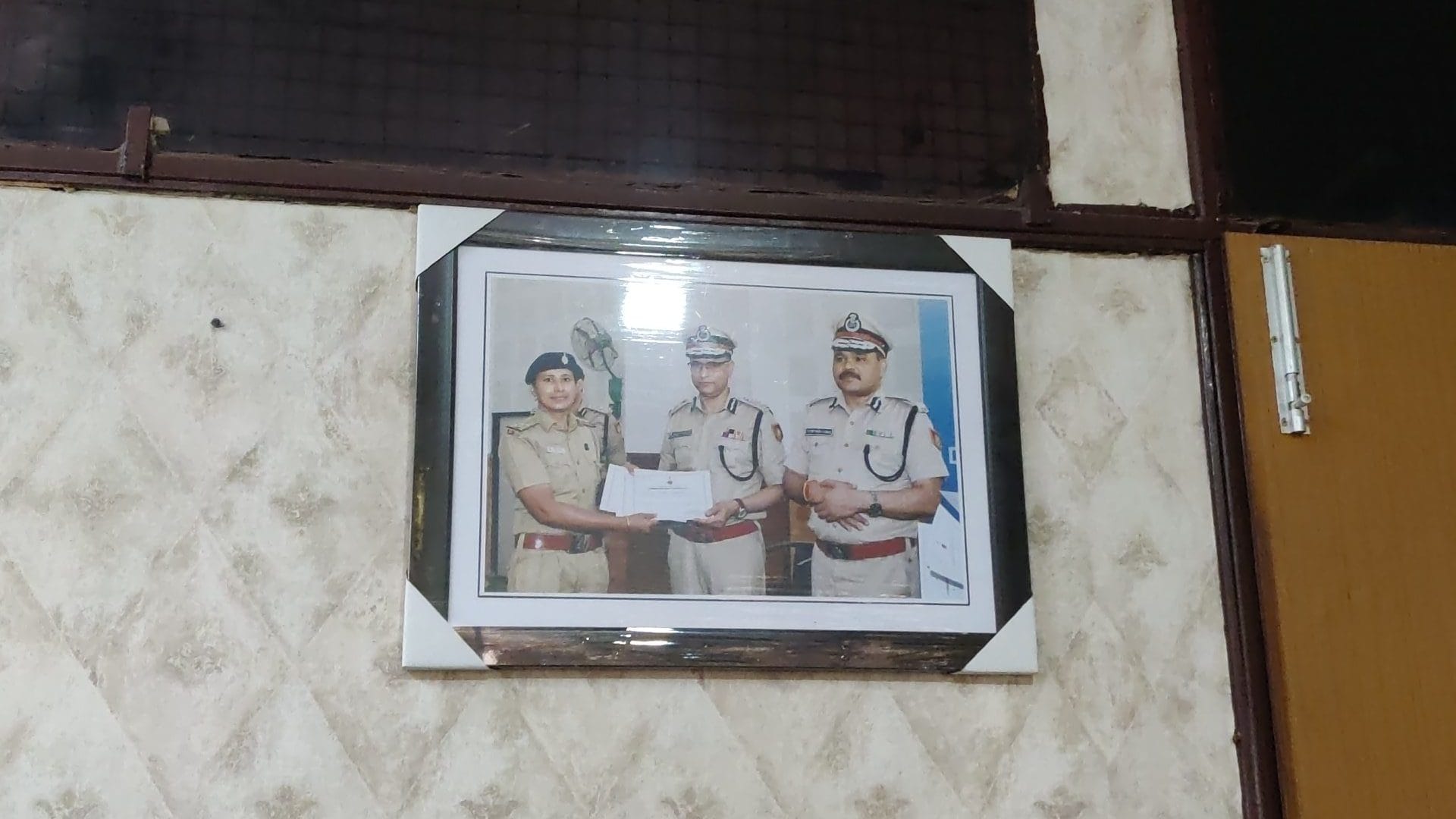
With over a decade in the force, Devi has handled dozens of such cases—many of them complex, involving multiple witnesses, medical procedures, and prolonged court processes. The nature of the work, for her, leaves little room for a life outside it.
“There is no fixed time in this job. Sometimes there is no personal life. But when you get a reward, it feels worth it,” she said.
For her, the recognition is a kind of reset: “No matter how much work there is, when you get a reward, you forget the fatigue for a while. It motivates you to keep going.”
Other senior officers echo this sentiment, describing the awards as both validation and incentive. DCP Dhiraj Kumar said that such commendations act as a “morale booster” not just for those who receive them, but for the wider force.
“When officers see that good work is being recognised, it encourages others to put in the same level of effort,” he said, emphasising that such rewards create a sense of aspiration.

He added that the significance extends beyond the force itself. “Such recognitions also help bridge the trust deficit between the police and the public. Our aim is not only to make the city safe, but to ensure that people feel safe as well.”
At the same time, however, officers acknowledge that much of the policing in the city does not culminate in awards or public attention. Investigations stretch over months, sometimes years, and many efforts remain confined to case files.
For Devi, however, the motivation remains steady. “I fight till the end. That is the job.”
Long nights, long cases
Not all of the cases that led to commendations were swift or high-visibility. Some stretched over years, outlasting the officers who began them.
At the Mani Majra Police Station, a murder case registered in 2023 hinged largely on the testimony of the victim’s wife, the sole eyewitness to her husband being killed by an intoxicated man. The case moved slowly through the courts, requiring sustained follow-ups and meticulous documentation. By the time the accused was sentenced to life imprisonment, the investigating officer, sub-inspector Amarjeet Singh, had already retired. His team, too, had been transferred across postings—a common reality in policing, where cases often outlive the officers handling them.
But at the same station, work can shift pace in an instant.
An incoming call states that a girl found in a Gujarat village claims she is from Mani Majra.
Within seconds, the room sharpens. Officers who were mid-conversation turn to their screens. Calls are made in an instant. Details are repeated and cross-checked. At the front desk, the receptionist listens closely and then intervenes. The face, she says, seems familiar. The girl may have come to the station before.
That one detail changes the search.
Records are pulled up, names matched, fragments pieced together. Within half an hour, the team identifies the girl, establishes contact with her family, and coordinates with Gujarat Police to ensure she is placed in a shelter. The case never makes headlines, but officers point to it as the kind of work that depends as much on instinct and memory as it does on systems.
Elsewhere, the pace is slower, but no less relentless.
By the time night settles over Sarangpur, the streets begin to empty, but inside the police station, the day is far from over. Files remain open, CCTV footage runs on a loop, and officers move between desks, retracing timelines and cross-checking details.
It was in such conditions that a POCSO case began to take shape. A girl, between 10 and 12 years old, had been picked up in an autorickshaw, assaulted in a secluded area, and left on the roadside. She walked back home, but could not identify the accused.
“It was like shooting in the dark,” assistant sub-inspector Ajesh Kumar recalled.

The team started from scratch—scanning CCTV footage across routes, identifying a vehicle that matched the timeline, and then tracking its movement across the city. Piece by piece, the chain began to emerge. Within three days, the accused were traced and arrested. The case later resulted in a sentence of 20 years of imprisonment.
For this case, along with another involving an e-rickshaw theft racket, multiple officers from the Sarangpur police station were awarded commendations. Among them was Kumar, who received two certificates for his role in the investigations.
(Edited by Insha Jalil Waziri)