



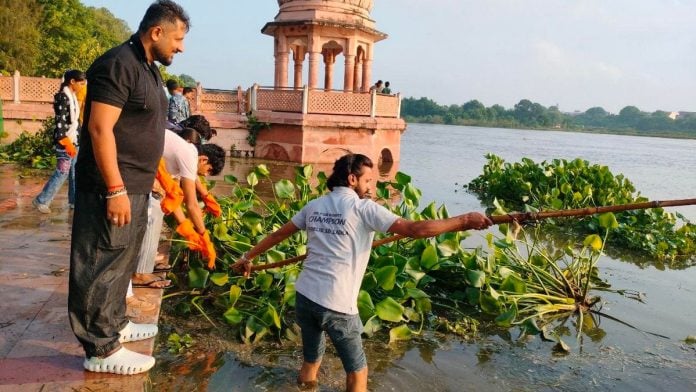
Lucknow: Radio jockey Prateek Bharadwaj gears up for the day just as the sun begins to hit the pink stone domes of Kudiya Ghat. Instead of headphones and a microphone, he snaps on orange rubber gloves and wields a large rake. Soon, some 10-15 people join him. Sometimes there are more, sometimes fewer. But this is the 177th such clean-up he has organised with his river clean-up initiative, Go For Gomti.
For Bharadwaj, it all started with a low point in his life. He was Lucknow’s number one RJ, hosting a morning show on Radio Mirchi focused on spirituality, but an accident forced him to stay home and away from his audience for a month. One day, he went to seek solace by the Gomti but found it littered with liquor bottles and trash.
“I used to come here with my Nana ji. Back then it was clean, fish were clearly visible. Earlier, people genuinely revered the Gomti as a mother. Today’s people couldn’t care less whether it is the Gomti, a sewer drain, or whatever,” he said. And so he decided to do something about it.
When Bharadwaj announced his first clean-up drive in 2023, not even 10 people showed up. Now Go For Gomti is an NGO with a network of nearly 8,000 people and a WhatsApp community of around 6,000 members. Every Sunday since the first drive, Lucknowites have been gathering at Kudiya Ghat to clean the Gomti river. Till now, they have not missed a single drive.
Used as de facto garbage dumps, urban India’s waterbodies have been in urgent need of rescue for a long time. But with help not coming from civic authorities, citizens have started taking matters into their own hands, driven by an ecological conscience and a sense of city pride. There is the Beach Man of India, Afroz Shah, hauling trash out of Versova Beach and Mumbai’s Mithi River; the Aquaman of Jodhpur, Caron Rawnsley, dredging medieval stepwells; the Lake Man of India, Anand Malligavad, reviving Bengaluru’s dying lakes; and 20-year-old Surendra Singh Chaudhary aka Bittu Tabahi, who went viral for clearing the Ajnar River in Madhya Pradesh with bare hands.
In the office itself, such talk used to happen, like, ‘Why are you roaming around acting like a sanitation worker over there?’ When I was made the ambassador for the Municipal Corporation, RJs from rival channels used to say ‘the ambassador of sweepers’.”
– Prateek Bharadwaj, founder of Go For Gomti
Most started completely alone. Bystanders called Rawnsley and Bittu pagal—mad. Bharadwaj said people would mock him and ask: “What kind of sweepers’ work are you doing?” But in the vacuum left by civic neglect, these individual crusades became full-blown citizen movements, with even municipal authorities eventually participating and praise being doled out from politicians.
When Bharadwaj launched Go For Gomti, the Lucknow Municipal Corporation under then commissioner Inderjit Singh did join in, sending sanitation workers and backing a Sunday clean-up drive. But the weekly grind has stayed with Bharadwaj and his volunteers.
Last Sunday, two or three Municipal Corporation workers were present at Kudiya Ghat, but the civic body does not take part in the river clean-up itself with Go For Gomti on Sundays. Its workers only collect the waste gathered by the volunteers during the drive.
Also Read: An Irishman came to India looking for his mother’s past. Now he is Jodhpur’s Aquaman
Sunday shift at the Gomti
Just after 6 am, people began trickling into Kudiya Ghat for the clean-up. They came from all ages and walks of life — a government college principal, a sales executive, an MBA student.
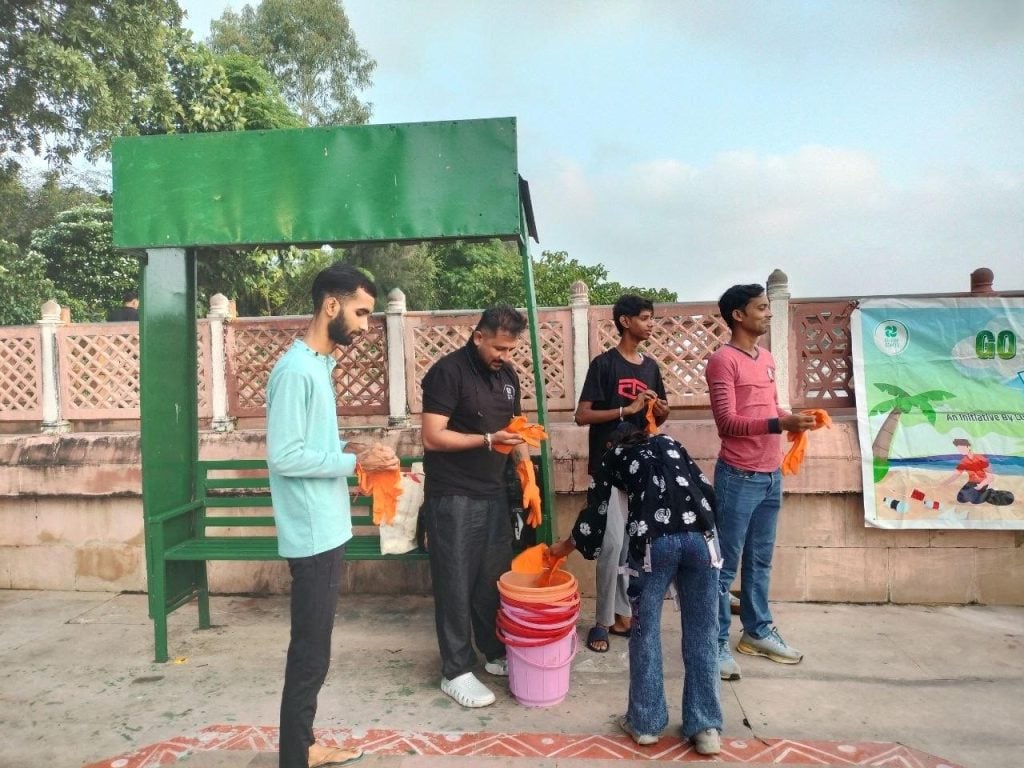
Once the whole group had gathered, they put up a “Go For Gomti” banner and started preparing for the clean-up. For the first two or three drives, they used surgical gloves, but soon realised they were creating more waste. Now, they wear orange reusable gloves. The rest of the cleaning equipment is stored at the home of whichever volunteer lives closest to the site and brought along for the drive.
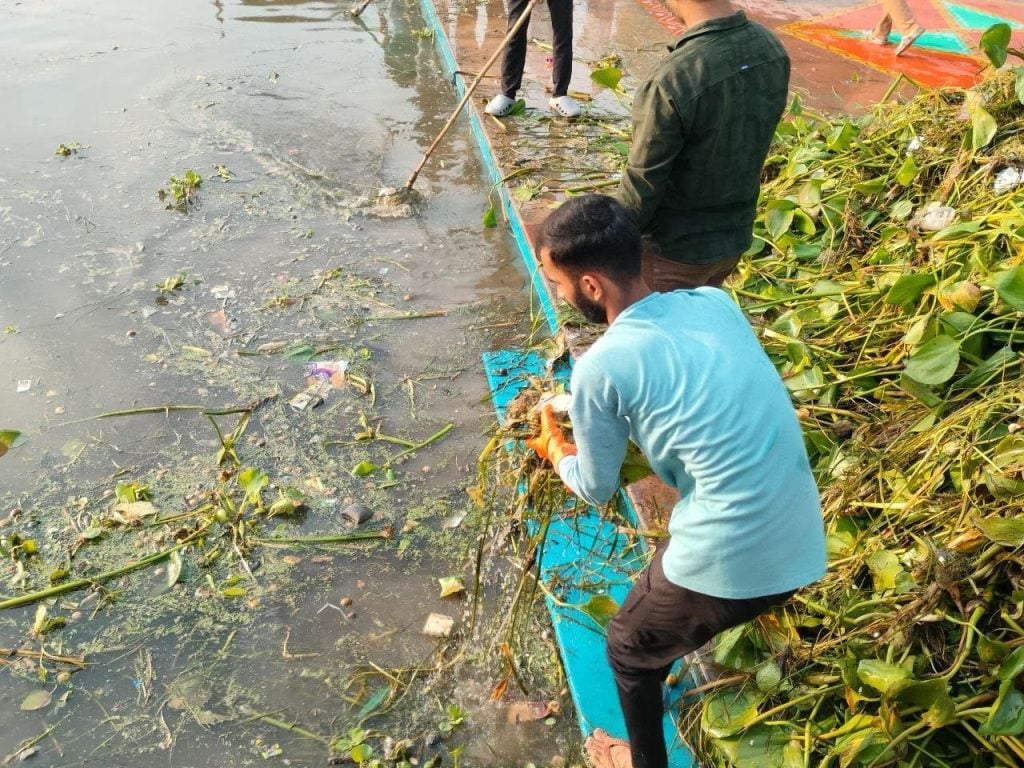
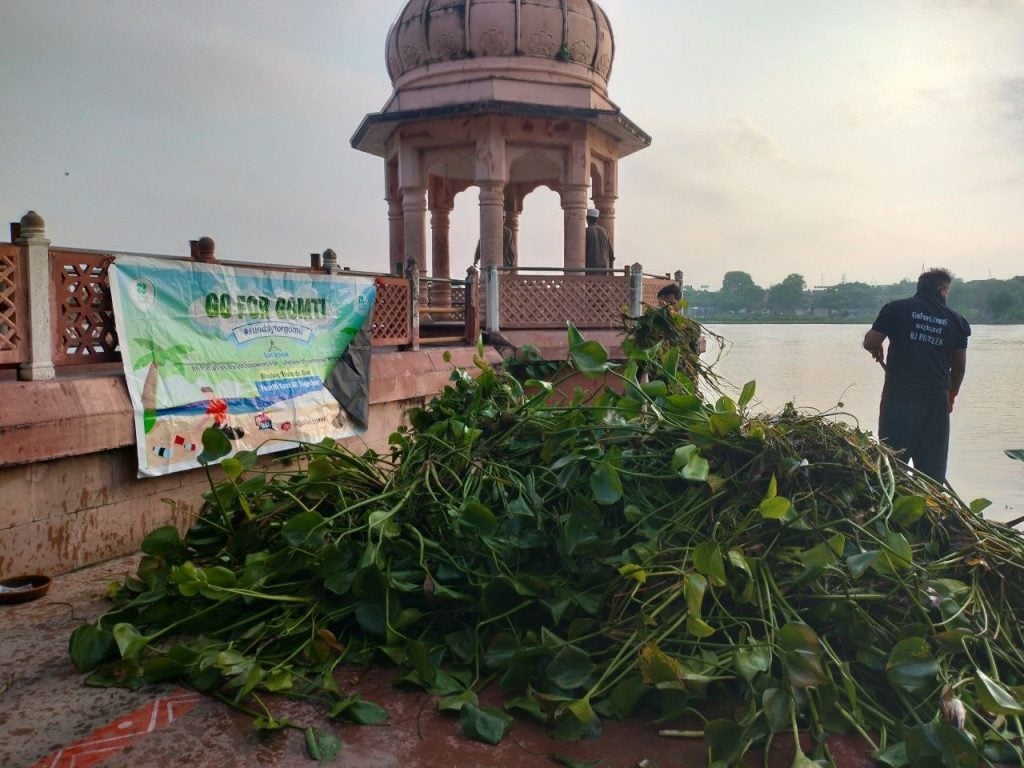
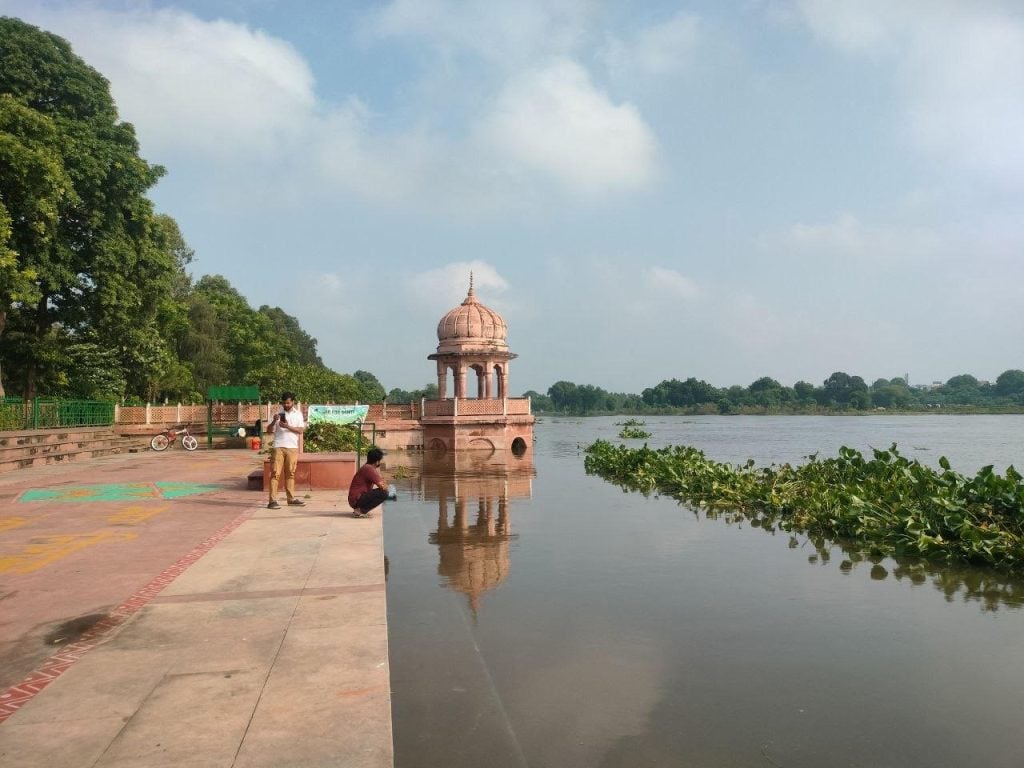
At the edge of the Gomti, the water is covered with thick patches of water hyacinth and other vegetation. Volunteers pull them out with their hands and long sticks, dragging them towards the ghat and piling them on the pavement. What initially looks like a mound of green plants soon reveals the waste trapped underneath, including plastic packets, bottles and other discarded material.
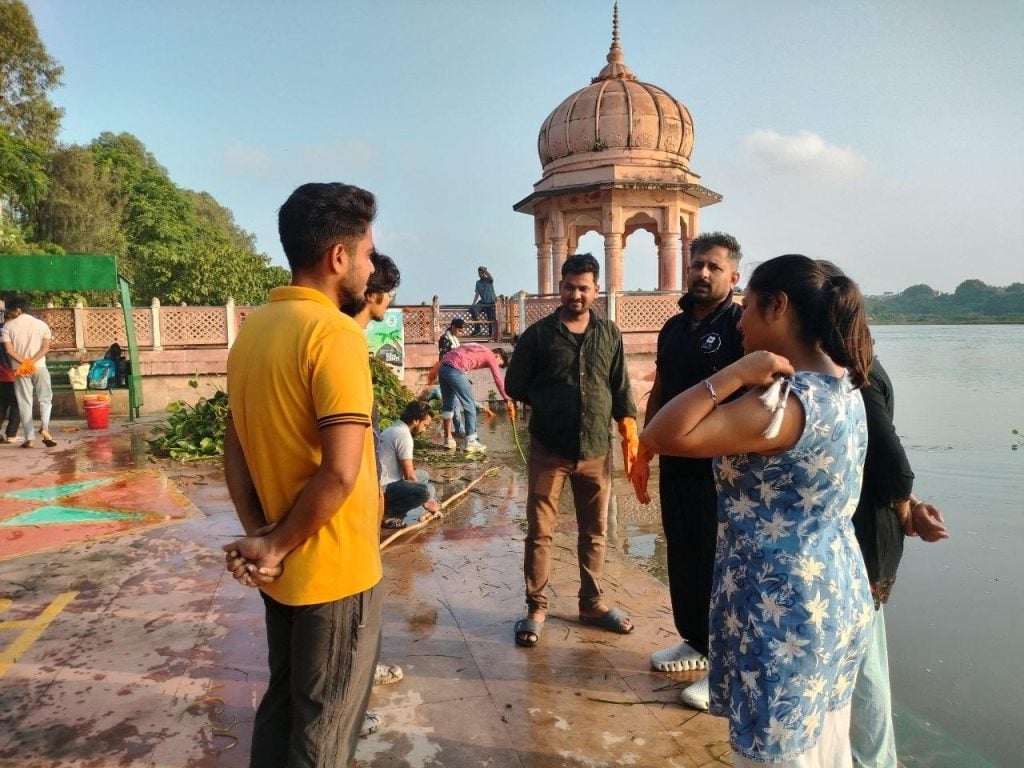
The first person to wade into the murky waters is Akash, a twenty-something sales executive who joined the group in April this year. In his hand is a long stick fitted with a rake-like head. He got to know about the clean-up through one of Bharadwaj’s Instagram posts.
“I sent a message and got added to the group. I’ve been coming ever since,” he said.
Before joining, he had misgivings about whether it was an NGO that “just runs on commissions and money”.
“From what I’ve seen, most operate on that basis. But once I saw how things actually worked here, I thought, ‘Alright, I can join now; I can do this,’” he said.
Go For Gomti is registered as an NGO, but Bharadwaj prefers to call it a community.
“NGOs often seem about turning black money into white money and vice versa,” he said.
For Neetu Mishra, the 50-year-old principal of a government college in Mohanlalganj, Go For Gomti is like “family”.
Back then, Gomti was truly a river—clean, vibrant, and alive with greenery. Many neighbourhood kids learned how to swim here. Today, the water has turned murky, and the younger generation cannot experience swimming or resting cleanly by the banks like we did
– Neetu Mishra, Go For Gomti volunteer
“Every single person coming here is family to us. Cleaning the Gomti is, of course, a motto. But along with that, for all the people connected with us, that their upbringing and development happen well, and they can become good human beings,” she said.
Mishra joined Go For Gomti on its third drive. Since then, she has tried to come every Sunday or stay involved in other ways when health issues hold her back. Last winter, she had a heart attack, but the team stayed in touch and she continued helping with social media and public outreach.
“Members would video-call me from the ghats every Sunday. That kept me connected. Even now, I have a knee issue that restricts me from bending down to clean, but I still make sure to come every Sunday to offer my presence and moral support,” she said.
Old memories, new hands
Like most people above 40, a clean Gomti is part of Neetu Mishra’s childhood memories. Born and raised in Lucknow, she recalled how her family lived in Yahiyaganj in the old city. Every Sunday, she and her grandfather would visit Nakhas Market before walking around the Imambara and Rumi Darwaza. Their long walks would end at the ghats of the Gomti.
“Back then, Gomti was truly a river—clean, vibrant, and alive with greenery. Many neighbourhood kids learned how to swim here. Today, the water has turned murky, and the younger generation cannot experience swimming or resting cleanly by the banks like we did,” she said.
Today, the team is largely made up of young people who enter the river and its banks to collect garbage. Many are ‘recruited’ by Bharadwaj, who studied at Lucknow University and is regularly invited back to conduct sessions with students. He never misses an opportunity to talk about the initiative, and several students have since joined the clean-up drives.
I have never felt like not going—never felt like abandoning this place. I’ve never felt that laziness. And if I don’t go, someone else from my team would step up
– Prateek Bharadwaj, founder of Go For Gomti
One of them is Asutosh Mishra, a first-year MBA student, who ventured deep into the river to collect waste that had accumulated in areas difficult to reach from the banks. Unlike some others, he does not have childhood memories of a clean Gomti. It’s just part of the cityscape. But he does want to see a cleaner river and a cleaner Lucknow in the future.
His family runs a kirana shop, where plastic bags are commonly used. But Asutosh tries to convince customers to bring their own bags when they come to buy groceries.
“At our shop, people buy a single packet of milk and demand a plastic carry bag. There is no real need for it. You can carry it without a bag,” he said. “If you avoid using even one plastic bag a day, that’s 30 bags a month, 365 a year—at least 5 to 6 kilos of plastic saved.”
‘Ambassador for sweepers’
Lucknow was ranked the third cleanest city in India in the latest Swachh Survekshan report and topped the Swachh Vayu index for tackling air pollution. But the city has a split personality when it comes to cleanliness, whether it’s the garbage-littered lanes of Chowk or the trash-choked waters of the Gomti beside pristine and beautifully maintained paved walkways.
Three years ago, when Bharadwaj came to find some peace by the Gomti—where he had learned to swim—he found people throwing bottles, beer cans and everything they could into the river. He also saw an elderly woman disposing of offerings directly into the water.
He recalled that when he questioned her, she told him: “Don’t preach to me. If we don’t do it here, where else will we do it?”
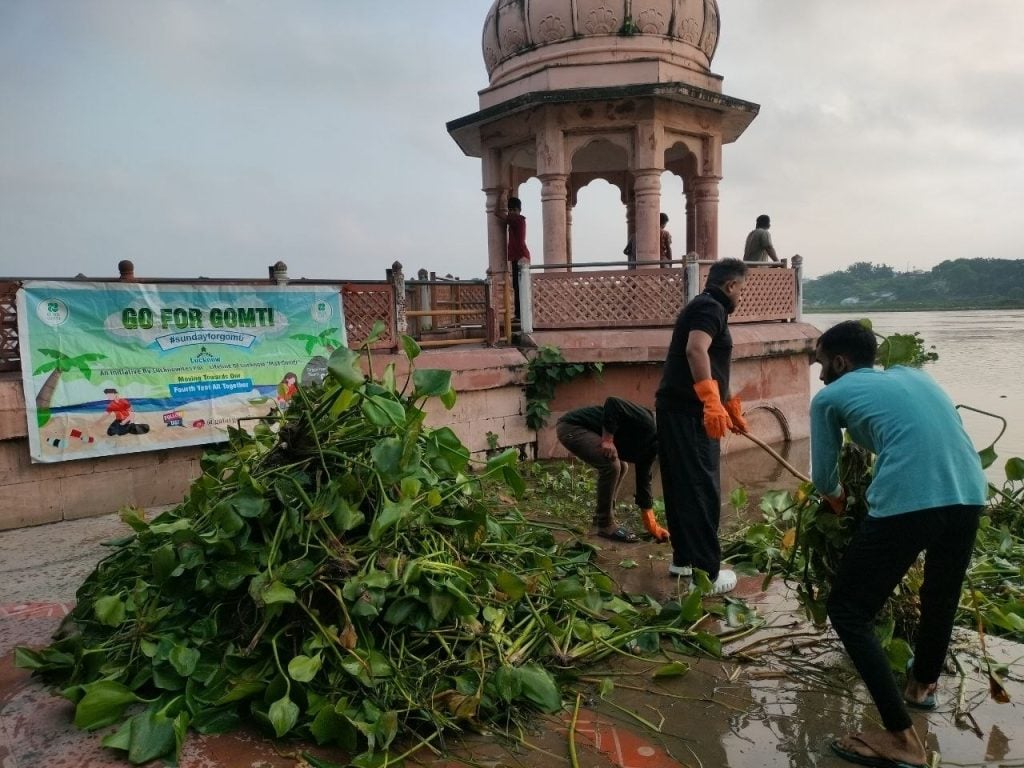
On 7 May 2023, Bharadwaj posted an Instagram story asking Lucknowites to join him in cleaning the Gomti. He had around 80,000 followers at the time and thought that, if not 800, at least 80 people would show up. Only eight did.
“Numbers were the challenge at that time. But I don’t get demotivated very easily. I am a very positive person, optimistic in my life,” he said.
Bharadwaj doubled down. He posted reels and put up posters showing people what was happening to the Gomti and why cleaning it was important. It worked. Seventy-three people turned up for the second drive, and the numbers kept growing. Radio Mirchi and the Lucknow Municipal Corporation got behind the effort too.
Not everyone was equally supportive. Bharadwaj recalled getting taunts from associates in the radio industry.
“In the office itself, such talk used to happen, like, ‘Why are you roaming around acting like a sanitation worker over there?’ When I was made the ambassador for the Municipal Corporation, RJs from rival channels used to say ‘the ambassador of sweepers’,” he recounted.
The initial plan was to run the cleaning drive for 150 days, as Bharadwaj anticipated his work in the media industry and with brands would make it difficult to continue forever. But the initiative took on a life of its own. Thousands of people have taken ownership.
“What matters is keeping that team charged, keeping them motivated, providing solutions, letting them know how much they mean to us,” said Bharadwaj. “Coming here, you meet people with diverse perspectives, and I feel the people I’ve met through Go For Gomti have been the best people of my life so far.”
Also Read: A Mumbai teen’s mission is helping workers register on e-Shram. Govt site is daunting
Khastas and Vande Mataram
By the time the volunteers finish, the change at the ghat is visible. The stretch where they had been working for the last couple of hours is no longer overrun by a tangle of vegetation and trash. The water that laps against the pink stone steps looks much clearer.
A large pile of invasive water plants, plastic wrappers, beer bottles and cans, chips packets, toffee wrappers and disposable tea cups has been collected. The clean-up finally comes to an end. Everyone washes their hands, some people change their clothes, while others appreciate those who did the most work. They then have a small meeting about what went well and what they can do better.
And then, it is time to rest and enjoy a live ‘performance’. For the past few months, another group has been coming to the grassy patch nearby every Sunday to sing 90s Hindi songs on karaoke. The whole team vibes to the music, eagerly waiting for khastas from Chowk. The crisp snacks are part of their ritual and nothing else will do.
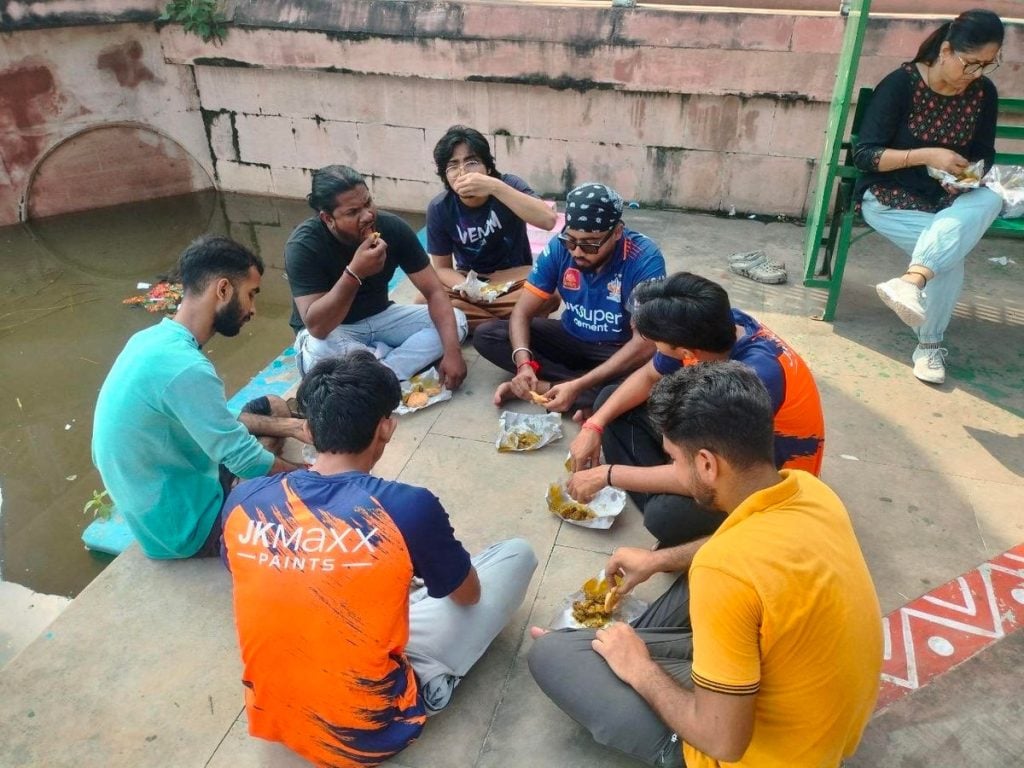
The responsibility of bringing bakse wale khasta falls to Pramod Tiwari, who runs a flower decoration business. He joined in 2024 after seeing one of Bharadwaj’s videos on social media. He has never seen a clean Gomti. Tiwari said the group initially considered bananas as their go-to snack but eventually decided they deserved more of a treat.
“Khasta represents the charm of Old Lucknow, right? Earlier it was Bakshi’s khasta, nowadays Chowpatia’s khasta is more famous and delicious. That is why we started the trend of having khasta,” he said.
Soon, the khastas arrive and everyone digs in. If there are extras, they invite passers-by to join them. It is another way for visitors to the ghat to hear about the initiative and maybe even join the drive.
At last, they sing ‘Vande Mataram’. Everyone shakes hands, and by around 8:30 am, the Sunday drive comes to an end until it is time for the next one.
It’s something Bharadwaj looks forward to despite his busy schedule.
“I have never felt like not going—never felt like abandoning this place. I’ve never felt that laziness. And if I don’t go, someone else from my team would step up,” he said.
(Edited by Asavari Singh)