





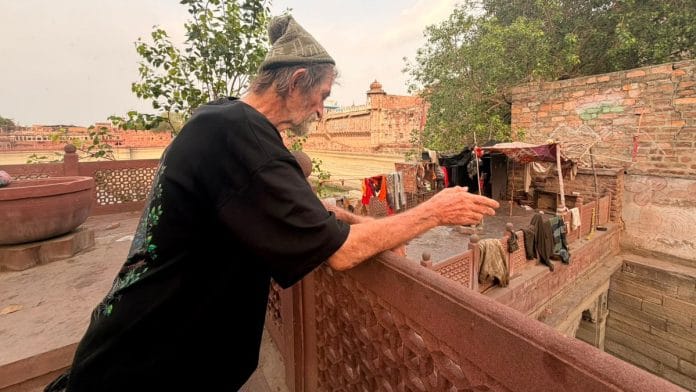


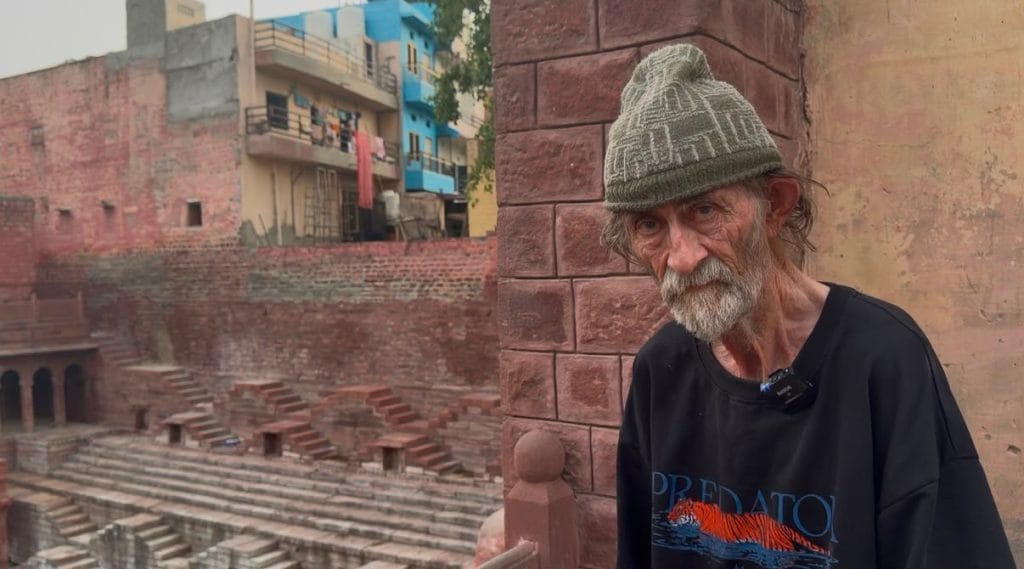
Jodhpur: In Jodhpur’s old city, nobody needs Caron Rawnsley’s address. Ask for the elderly Irishman who cleans the city’s centuries-old stepwells and even people who do not know his name will simply point. He is probably sitting on the steps of Toorji Ka Jhalra, some will say. If he is not there, then the chai-and-omelette stall nearby, or perhaps the ancient temple near the Sardar Market clock tower.
At eighty, Rawnsley has spent the better part of the last decade pulling plastic, silt and garbage out of Jodhpur’s historic baoris and jhalras. Local residents once called him Paagal Saab or the crazy sahib, because they couldn’t understand why someone who had travelled thousands of kilometres from London would choose to spend his retirement cleaning medieval water tanks in Rajasthan’s brutal heat.
Over a decade since he first arrived, he has now become part of the city’s everyday geography, and is known as Jodhpur’s Aquaman. The baoris were not merely decorative. For centuries, they served as the desert city’s main water supply, storing the annual monsoon rains deep underground where they would not evaporate. But many of Jodhpur’s 134 stepwells have for decades been reduced to dumping grounds and open latrines. Rawnsley has been trying to change that, one shovelful of muck at a time.
Women in purdah who rarely exchange words with unrelated men pause to greet him as he leaves the guesthouse room he now calls home. Some raise their hands, others manage a few hesitant words in English. “Ram Ram,” he says in an unmistakably foreign accent.
I think people are inspired by me because I’m not from India. If someone from outside can see the value of these stepwells, it sets a precedent for others to also take care of them.
– Caron Rawnsley
Rawnsley’s name—and nickname—has travelled well beyond Jodhpur now. Earlier this month, industrialist Anand Mahindra saluted “Paagal Saab Caron” on X, for his “love of Jodhpur and his selflessness and passion for our heritage”. He added that things have changed, and that it was no longer necessary to be “either ‘paagal’ or ‘phirang’ to devote yourself to reviving India’s stepwells”.
Mahindra pointed to others already doing this work—Rajendra Singh, who has spent four decades reviving johads in Alwar through Tarun Bharat Sangh, Kalpana Ramesh, who has brought back 25 stepwells in Telangana, and Project Bawri, a small Jaipur outfit restoring village bawris across Rajasthan. But in Jodhpur, Rawnsley has been the most persistent champion.
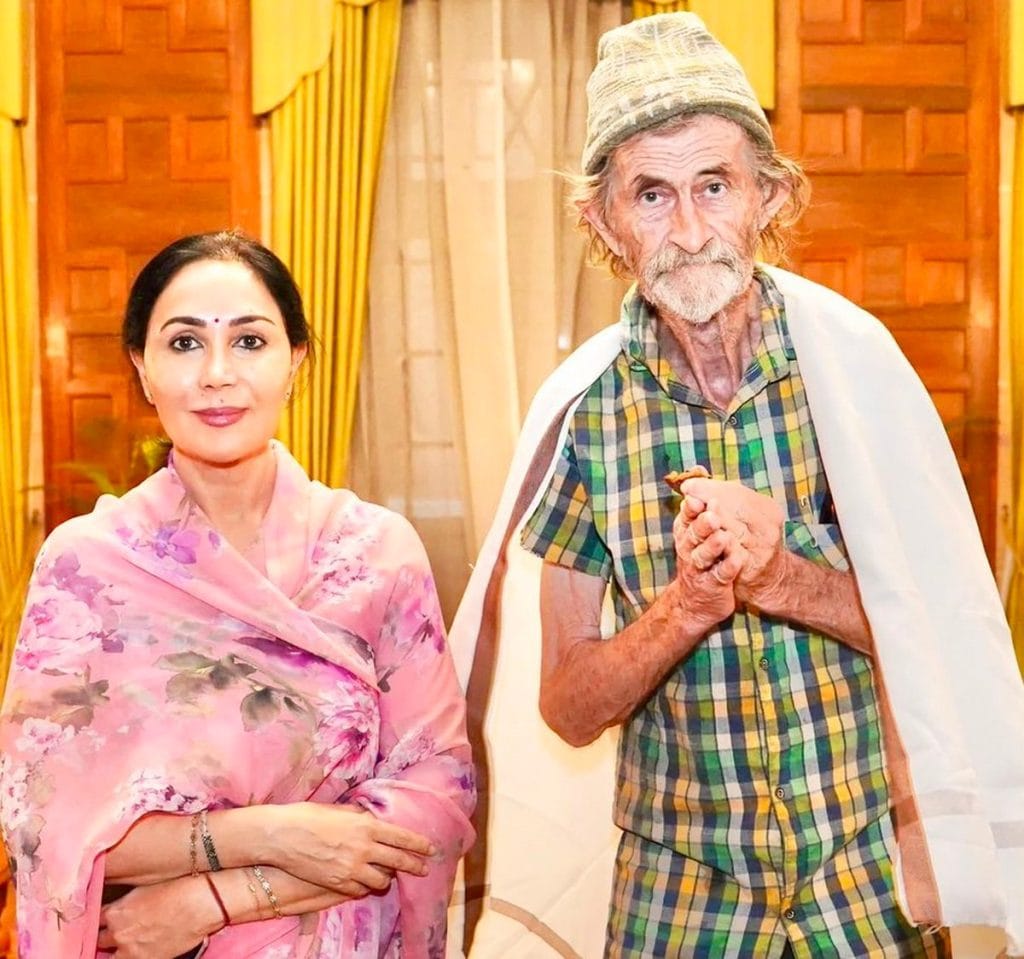
Days after Mahindra’s post, Rajasthan Deputy Chief Minister Diya Kumari met Rawnsley during a visit to Jodhpur. A reel of the meeting shows her praising his work and saying his efforts aligned with the government’s interest in restoring these old waterbodies. When Diya Kumari thanked him for leaving his country to work here, he quickly corrected her with a smile.
“My country is India. Now I’m a part of India,” he said.
Also Read: Bats are hanging out at India’s protected monuments. And ASI doesn’t know what to do
The winding road to Jodhpur
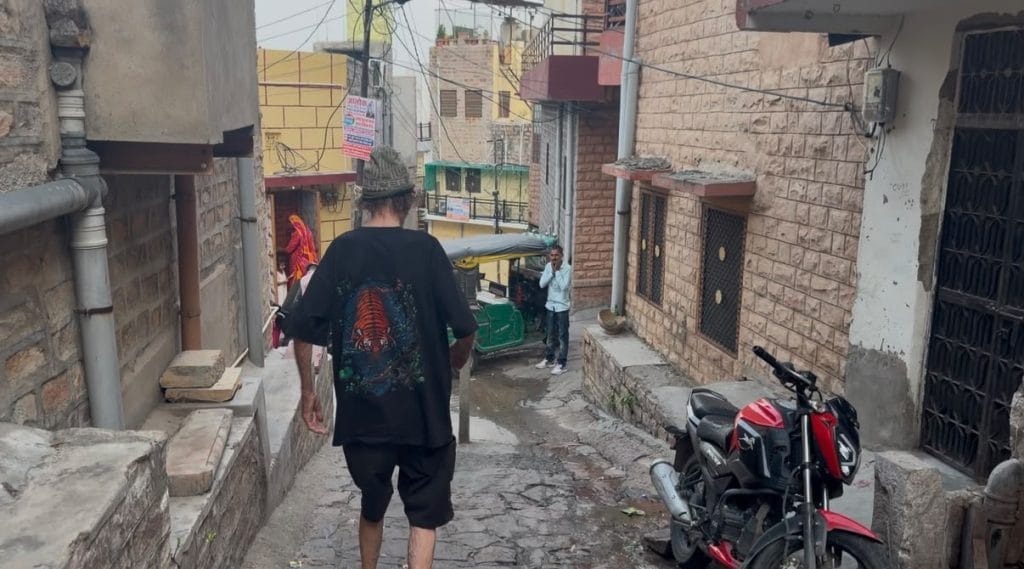
A hundred-metre climb leads to where Rawnsley lives, through lanes that grow steeper and narrower with every turn. It is a route so unforgiving that autorickshaw drivers refuse to take it.
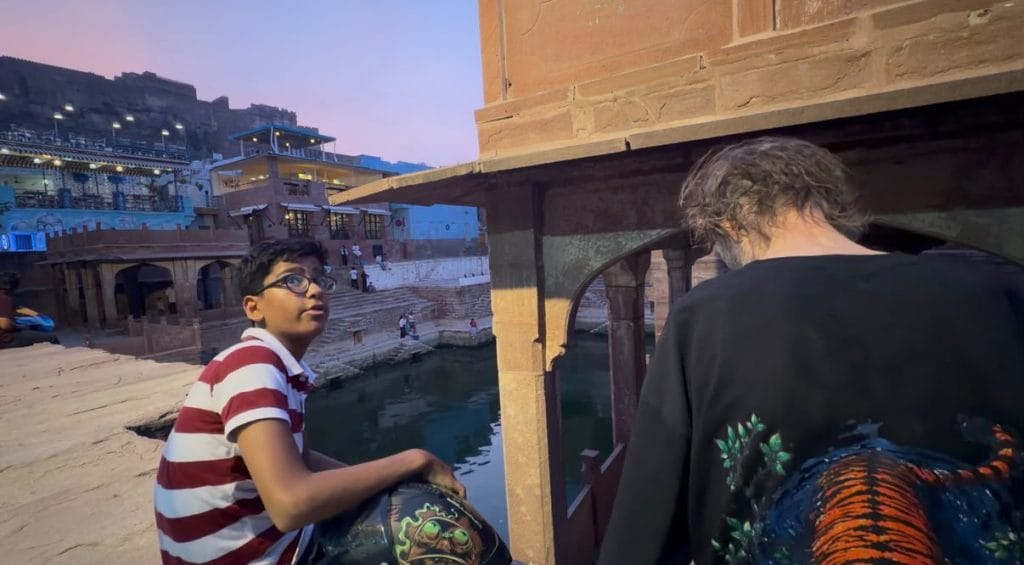
He occupies a room in a modest guesthouse, surrounded by homes stacked into the rocky terrain. From here, the ramparts of Mehrangarh Fort are visible in the distance. He stands outside on the narrow street, finishing a cup of chai and a rusk biscuit. He is tall, remarkably thin, and evidently in no hurry.
Rawnsley is no stranger to making a home elsewhere. Once a ceramics artist in Norfolk, he moved to Pakistan in 1989 expecting to stay for two or three years and remained for twenty. He taught in Karachi before moving to interior Sindh to work on schools and environmental projects. He later returned to England.
What brought him to India, by his own account, was his mother.
“I came looking for my mother’s past,” he said.
Her name was Elaine, though she later went by Caroline. She grew up in Kashmir, where her father worked as a railway officer under British administration.
“My mother’s youth was spent in Kashmir with her father and mother. They were very loving people. My mother had relatives in Jodhpur; this city was a place where she had spent a lot of her time,” Rawnsley said.
As an adult, Caroline returned to India more than once, and something of that early attachment never left her.
My daughter and my grandkids told me that the quality of life in Europe is declining… I hope to leave this planet in India
-Caron Rawnsley
In 2014, her son followed her footsteps. Rawnsley flew from England to Jodhpur to retrace the places his mother had mentioned from her childhood—the stepwells, the old city, the particular texture of a life she had described to him. He arrived expecting, perhaps, only to visit. He never really left.
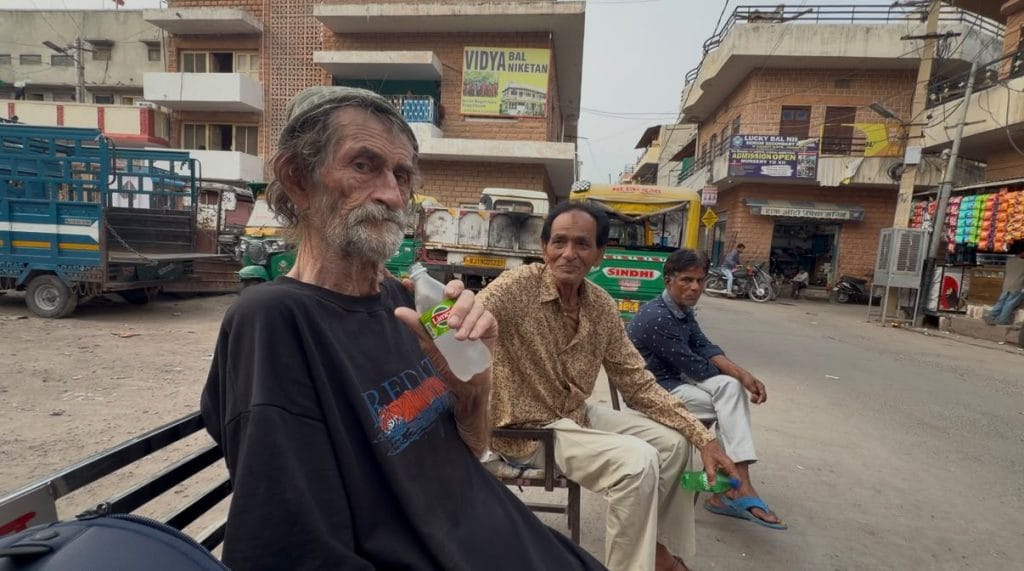
Rawnsley now survives on his savings and a simple life in the guest house.
When the subject of returning to England comes up, his daughter discourages him.
“My daughter and my grandkids told me that the quality of life in Europe is declining,” he said.
What began as a journey into his mother’s past has settled into a decision about his own future.
“I hope to leave this planet in India,” he said.
Uncovering hidden histories
As his Jodhpur visit solidified into a permanent stay, the stepwells started calling to Rawnsley.
He was struck by their condition — cracked stone, stagnant water, and years of debris nobody seemed to be clearing. After appealing to local municipal officials and receiving little response, he picked up a stick and started clearing the water bodies himself.
His first target was Mayla Bagh ka Jhalra. An article in The Nod magazine noted that the jhalra had become so degraded that many Jodhpur residents didn’t even know it existed. Its steps were slick with green moss, and the surrounding area had effectively turned into a dumping ground.
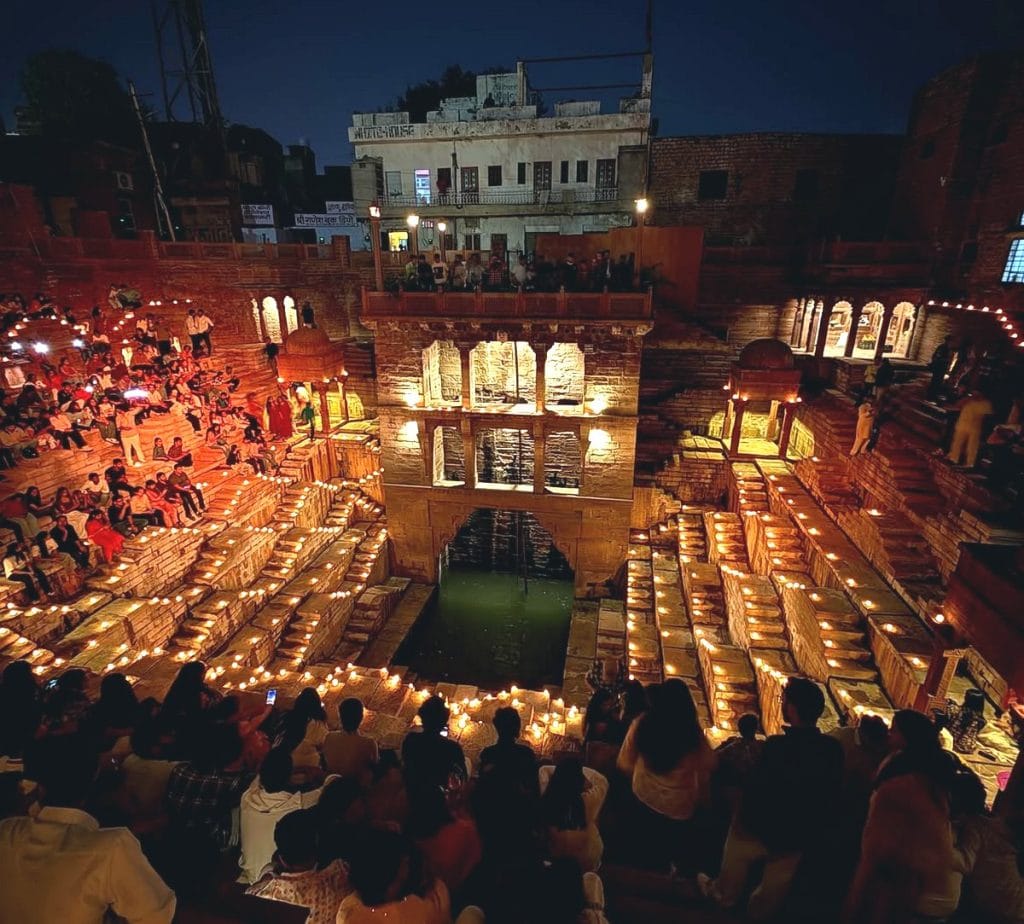
Commissioned in 1780 by Gulab Rai — a woman sold into slavery as a girl who rose to become a powerful royal confidante — the structure had suffered centuries of neglect. Artist Ayesha Singh, who created an installation at the stepwell for Jodhpur Arts Week 2025, noted in a blog that Gulab Rai built it partly as an act of public service and partly to etch her name into a history that seemed determined to erase her.
It was this buried history that Rawnsley began uncovering, without necessarily knowing it existed. In 2015, he restored the site to something closer to its former glory, with the work later continued by the Scwedia Foundation. Once the moss and debris were gone, the water reflected the clouds drifting in the sky once again.
In the years since, Rawnsley has helped revive 10 historic waterbodies across the city, including Ram Bawari, Govinda Bawari, Mahamandir Bawari, Mayla Bagh ka Jhalra, and Gulab Sagar. Over time, other volunteers have joined him and he has also received occasional support from the Mehrangarh Museum Trust, run by the erstwhile royal family of Jodhpur.
Why stepwells matter
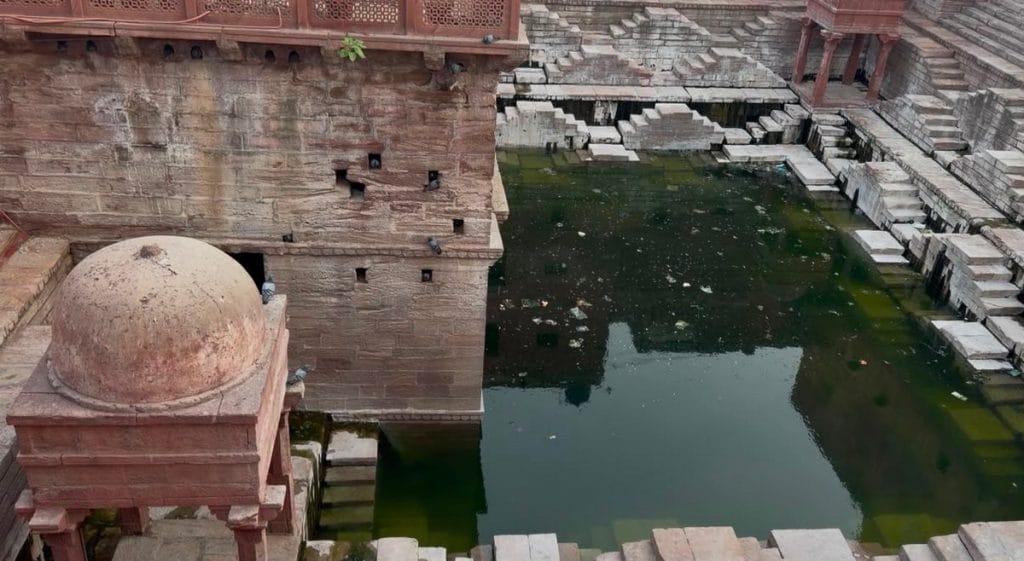
For Rawnsley, these heritage sites are also neglected public lifelines. He says that he loves the stepwells because of the drop in temperature near the water, the shade, and the stillness.
“The water here is actually very good in the desert areas…It’s lovely water and having clean water is very special. Water is a treasure,” he said, sitting in the tiny kitchen outside his room.
Scientists have now arrived at much the same conclusion. A 2024 study in Geoheritage surveyed 134 stepwells in Jodhpur and noted that the vast majority remain in a “pathetic” condition due to negligence.
“These are magnificent artefacts showcasing historical-cultural (archeological), Architectural and civil engineering geo-monumental heritage of India,” said the study, adding that these sites should be given protections similar to Monuments of National Interest (MNI) in India. “Further, the self-sustainable economic development through awareness and hydro-geotourism would be the best tools for their conservation, promotion and for socioeconomic developments of the region.”
I’m soon going to start a program through which young people are educated about the value of water in their lives… we should always remember that a gift like that should not be spurned
-Caron Rawnsley
Recent research highlights their environmental impact as well. In a 2025 study, IIT Jodhpur researchers Shreya Banerjee and Pooja Solanki modelled the microclimates around the city’s stepwells, demonstrating that these historic water bodies naturally cool their immediate surroundings, suggesting they could play a part in climate-resilient urban planning.
For Rawnsley, preserving these water bodies is ultimately about passing the torch to the next generation. He wants to take his message directly into Jodhpur’s schools and involve children in cleaning up stepwells.
“I’m soon going to start a program through which young people are educated about the value of water in their lives,” he said. “So they see water as an unmeasurable treasure that comes to us all as a gift of nature. And we should always remember that a gift like that should not be spurned.”
Also Read: Delhi villages and the rush to document their vanishing stories
‘It sets a precedent’
Rawnsley’s work has become harder with time. After breaking his leg a few years ago, he walks with the support of a wooden stick and no longer moves as easily as he once did. The Rajasthan summer, which he has never fully adjusted to, leaves visible rashes across his skin by the end of the heat season.
“I’m on the octogenarian ship now,” he said with a laugh. “I don’t take to the heat easily.”
Physical decline is not his only hurdle. The two men who once worked with him full-time retired during his medical treatment, and no permanent replacements have been found. Today, his clean-up drives depend largely on volunteers, most of them local women.
“Most of the cleaning work is being done by women. They should be given credit for this work,” he said.
But there’s only so much volunteers can do. Rawnsley says institutional support has always been in short supply.
“There’s a lack of support from organisations like NGOs and from government machineries. There is also a lack of funds,” he said. “I just don’t feel supported in the way that is needed to achieve the work we’re doing.”
Cleaning is one thing, but structural repair is another. Much of the stonework at Jodhpur’s jhalras and baoris urgently needs masonry work—a task volunteers with sticks cannot manage alone.
“Only if the government shows a little bit of interest and puts some funds down, can this work be done,” he said.
The Mehrangarh Museum Trust, he added, does not currently have the necessary resources. While Jodhpur possesses vehicles that vacuum up trash, the system around them lacks coordination.
“It’s affecting tourism, I’m sure. In a big way,” he noted.
Currently, the Nagar Nigam is using machinery to clear silt from Gulab Sagar and Sati Sagar—work Rawnsley argues would have been more valuable if scheduled after the monsoon rather than during it. The titular Maharaja of Jodhpur, Gaj Singh II, has offered his own pumps along with three to five hired labourers for upcoming efforts, according to him.
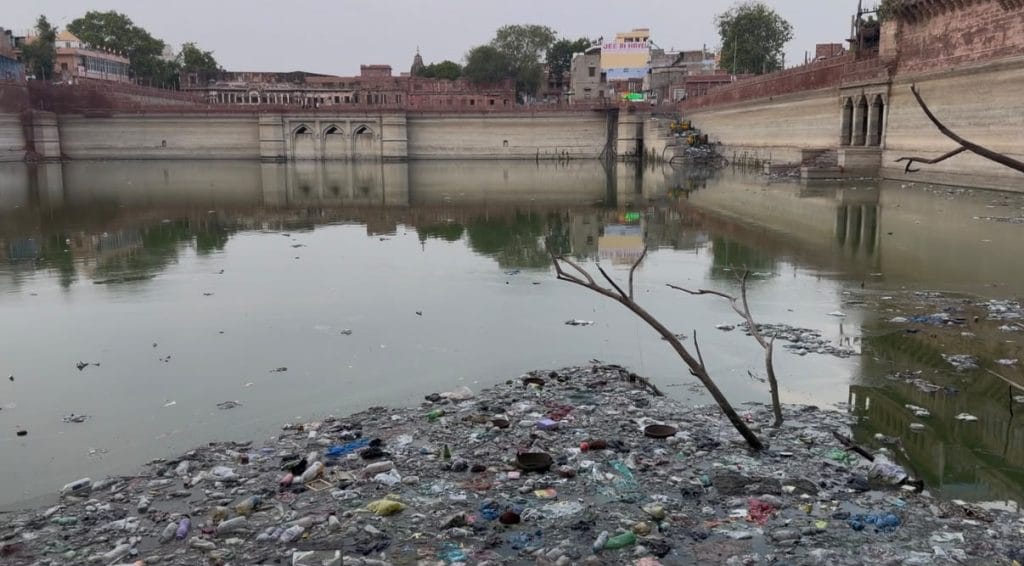
Plastic is his nemesis, with monsoon runoff continually sweeping bottles and bags into the baoris.
“Truly terrible substance,” he said, pointing toward plastic bags floating inside a stepwell.
The Irishman’s urge to protect nature extends beyond Jodhpur’s stepwells. He recently went out to Jawai, a wildlife conservation area outside Jodhpur, to help clear a lakeside choked with monsoon-washed plastic.
At heart, he is just a “nature lover”. On unbearably hot days, he swims in the cool waters of Mayla Bagh, which, as he animatedly points out, now has catfish thriving in it. When he isn’t working at a stepwell, he retreats to his books.
“I’m quite a studious person, I really like to read,” he said.
But he doesn’t sit still for long. Despite the toll it’s taking on his body, he climbs down into Jodhpur’s centuries-old baoris every day with a wooden stick in hand. He knows he cannot restore them all on his own, but he wants to lead by example.
“I think people are inspired by me because I’m not from India,” Rawnsley said. “If someone from outside can see the value of these stepwells, it sets a precedent for others to also take care of them.”
(Edited by Asavari Singh)
Story about elderly man of Irish descent caring about Indias Heritage is a heart warming feel good story, calling Indians both locally as well as overseas such as myself to see how this could become the springboarding opportunity for positive upward spiral moment of good initiatives.
Brilliantly covered story. Really moved me !