







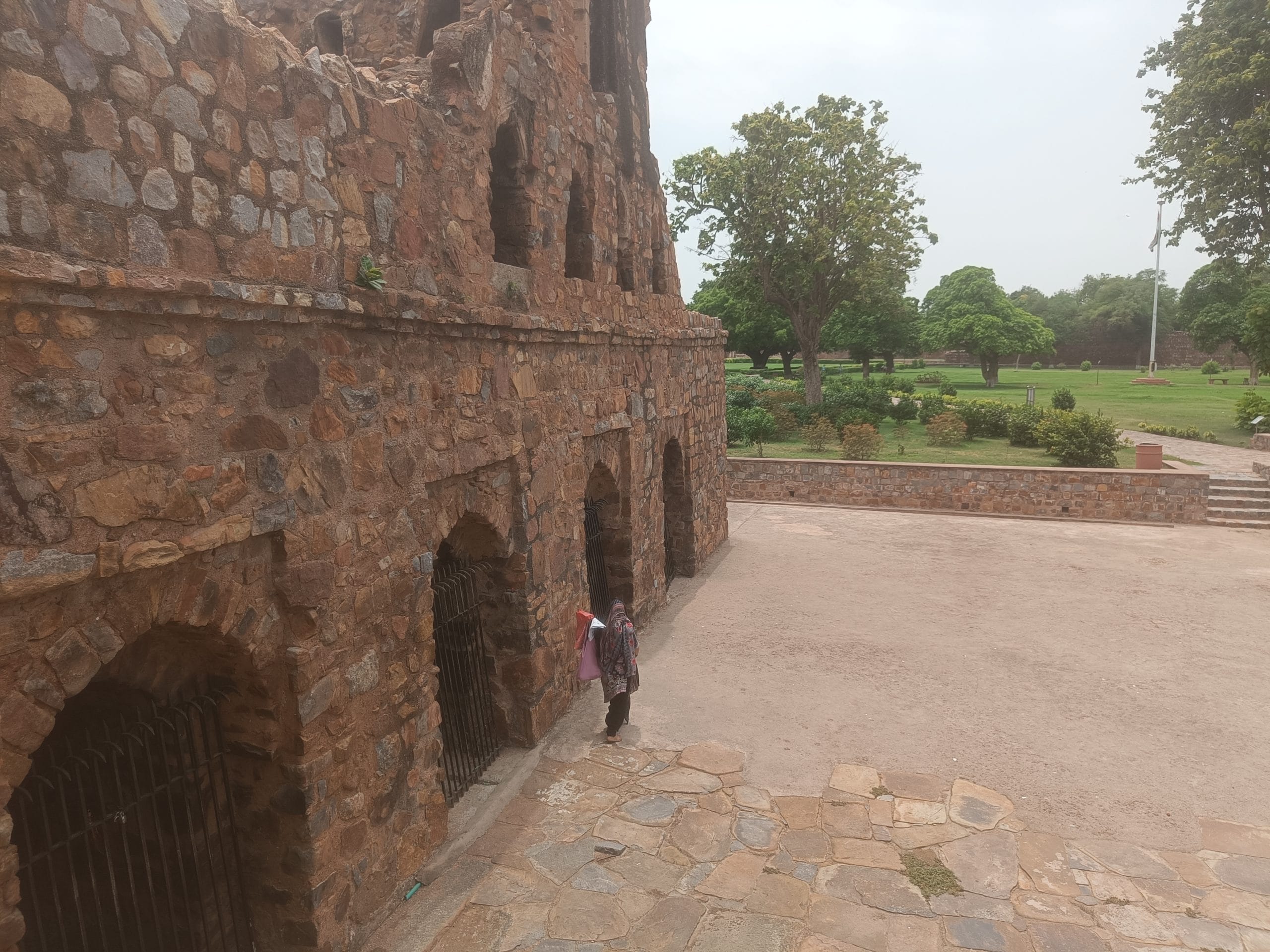
Gwalior, Narnaul, New Delhi: On a Jummah afternoon, Nasira Khatoon tightly clutched the locked iron gates below the Jami Masjid in Delhi’s Firoz Shah Kotla complex, whispering prayers to the jinns she believes reside within.
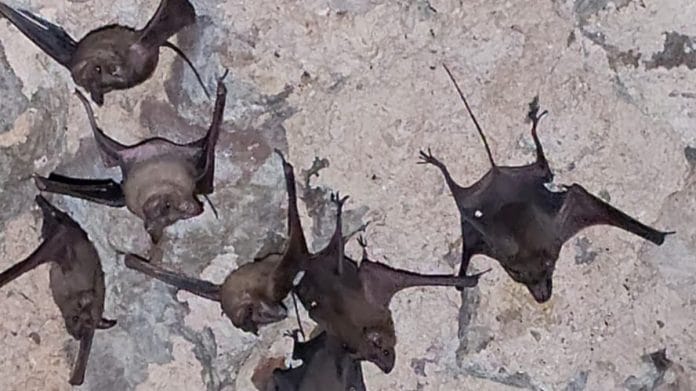
She is afraid of the bats, not the jinns. And Archaeological Survey of India (ASI) monuments are among bats’ favourite dwellings.
“Whenever there is trouble at home, I come to this place to pray. But it’s very difficult to sit and pray here as the pungent stench of bats makes me nauseous. ASI should do something to get rid of bats,” said Khatoon.
From Firoz Shah Kotla and Khirki Masjid in Delhi to the painted walls of Ajanta Caves in Maharashtra; from the carved ceilings of the Sun Temple in Gujarat’s Modhera to the Golconda Fort in Hyderabad — India’s monuments are locked in a quiet battle against one of their oldest occupants.
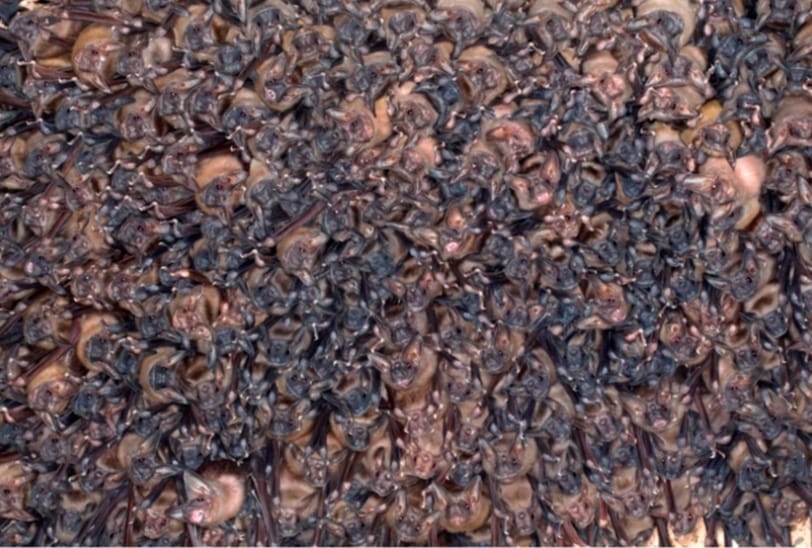
Yet, the 165-year-old organisation has no dedicated policy or budget to tackle bat-related damage – the acidic bat poop or guano causes long-lasting stains on monument walls, limestone and sandstone. Large colonies of bats hugging the walls of historical structures often deter and frighten tourists.
This has left individual ASI circles and officers on the ground to experiment with ad-hoc solutions ranging from herbal fumigation and mesh barriers to ultrasonic devices and chemical treatments.
What’s more, there is no consensus even within the ASI about how seriously the bats must be taken. Permanently removing them isn’t an easy solution either. Questions such as who the heritage sites belong to arise.
While archaeologists warn that bat poop is eating away at murals, paintings and stone surfaces at hundreds of protected sites, wildlife experts argue that evicting bats altogether could start a new ecological crisis.
“Bats have made colonies in dark nooks and crannies across Indian monuments and pose the biggest conservation challenge for ASI. Evicting them completely is not an easy task and there is no permanent solution to tackle them,” said Arun Malik, superintending archaeologist at ASI’s Aurangabad circle.
There are 3,686 centrally protected monuments and sites under the ASI’s jurisdiction across the country. For ASI, there is no dearth of budget. The Comptroller and Auditor General (CAG) reports and Parliament data show that ASI spends approximately 40 per cent of its total expenditure budget on conservation, maintenance and public amenities. The body spent Rs 2,371.4 crore on preserving monuments in seven years from 2014-21.
In its 2013 report titled Performance Audit of Preservation and Conservation of Monuments and Antiquities, the CAG had flagged the issue, yet ASI’s national policy for conservation released in 2014 found no mention of bats.
“Everything can’t be written in policy. Archaeologists on the ground have adopted several measures on their own to tackle bats. These days, SONAR (sound navigation and ranging) techniques are adopted but not widely used,” said Vasant Swarnakar, archaeologist and regional director (North), ASI. The technique uses sound propagation to navigate, communicate or detect objects. Bats use echolocation or biosonar to find prey in the dark.
Monumental loss
For 29-year-old Om Prakash, a road trip from Noida to the Gwalior Fort in Madhya Pradesh last year was supposed to be a journey into nostalgia. He had last visited the fort on a school excursion in 2013. Most memories had faded over the years. One had not — the bats.
“Back then, there were areas we couldn’t enter because of the bats. I hoped to see those places this time. I thought maybe things would have changed in the last 13 years,” said Prakash.
Mughal emperor Babur had described this 6th-century hill fort as a “pearl amongst the fortresses of Hind” and that “not even the winds could touch its masts” due to its grandeur and magnificence.
For centuries, however, bats have not only stained the ‘pearl’ but have also made the fort’s old prison area and Man Mandir Palace their permanent residence.
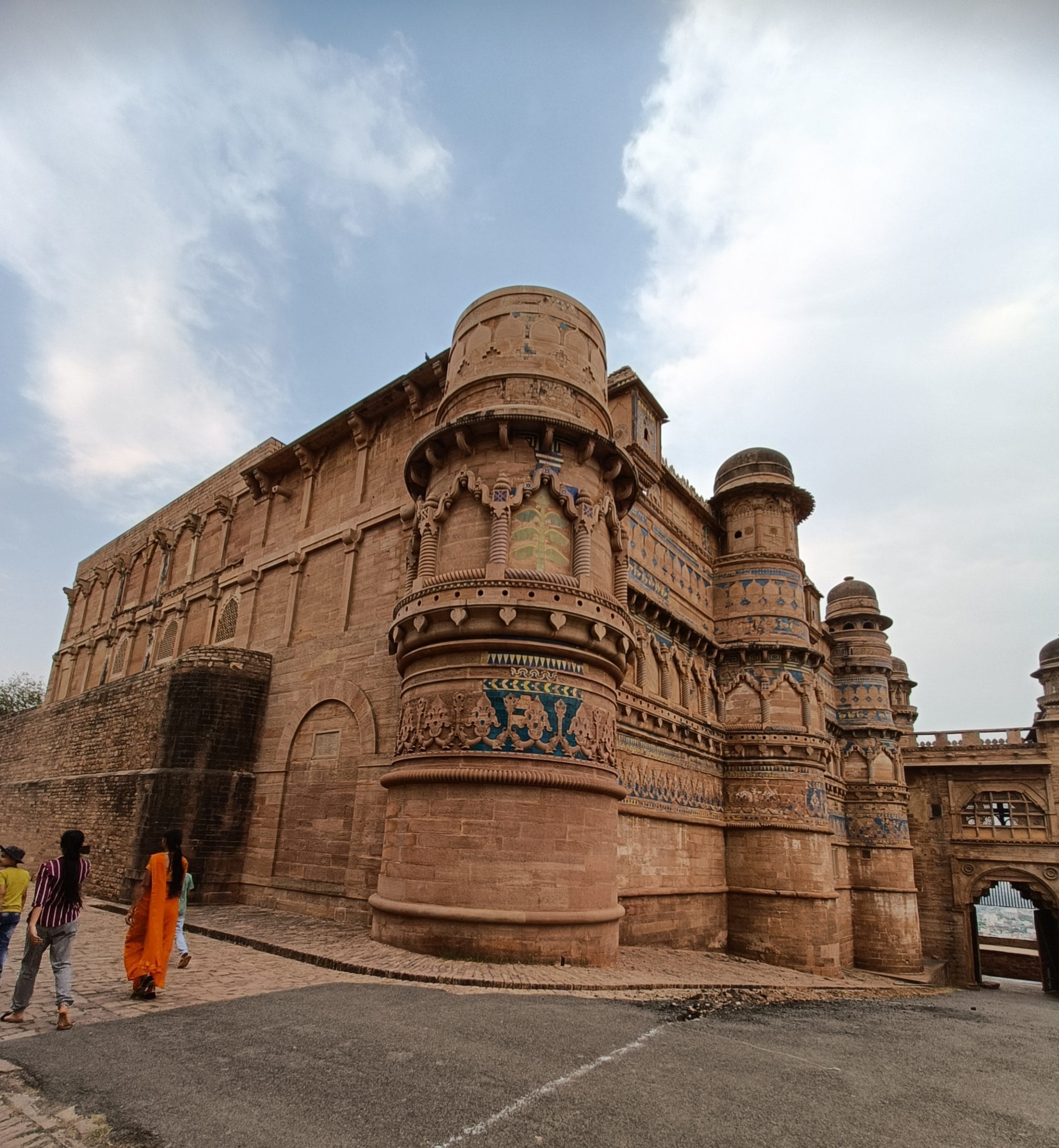
Bat colonies have been thriving in the fort’s deep, dark and damp dungeons and the 9th-century Teli Ka Mandir.
Even as India eyes the UNESCO World Heritage list tag for the Gwalior Fort, ASI officials are experimenting to keep bats at bay.
Manoj Kurmi, superintending archaeologist formerly at ASI’s Bhopal circle, said the organisation has installed safety nets and mesh barriers to prevent bats from swooping into the main tourist walkways at the fort.
“Bats make their colonies wherever there is darkness. It’s not a new thing; it has been their habitat for centuries. These are rare species. We should restrict their presence to public areas, but we must not destroy their homes,” Kurmi said.
The official now posted at ASI’s Chandigarh circle added that removing the bats is not ideal as they are important for ecological balance.
Also Read: ASI’s ghost campus in Noida—grand new Rs 289-cr facility, 15 students, no faculty
Bat menace everywhere
Across India, bats have quietly emerged as one of the most stubborn conservation challenges. Yet ASI has no uniform policy, mandate, budget or template to deal with them. Solutions often depend on the individual and indigenous ingenuity of archaeologists.
The 17th-century Jagat Shiromani Temple in Amer near Jaipur is known for its intricate architecture and the traditional murals and frescoes painted on its ceilings. But the bats have taken over the doorway. And the murals remain inaccessible to the public.
“I attempted to open the floor to the public but failed as bats had camped there in huge numbers,” an ASI official posted in Jaipur recalled. “Bat droppings are damaging the paintings,” he said on the condition of anonymity.
Others before him had tried as well, but none found a lasting solution.
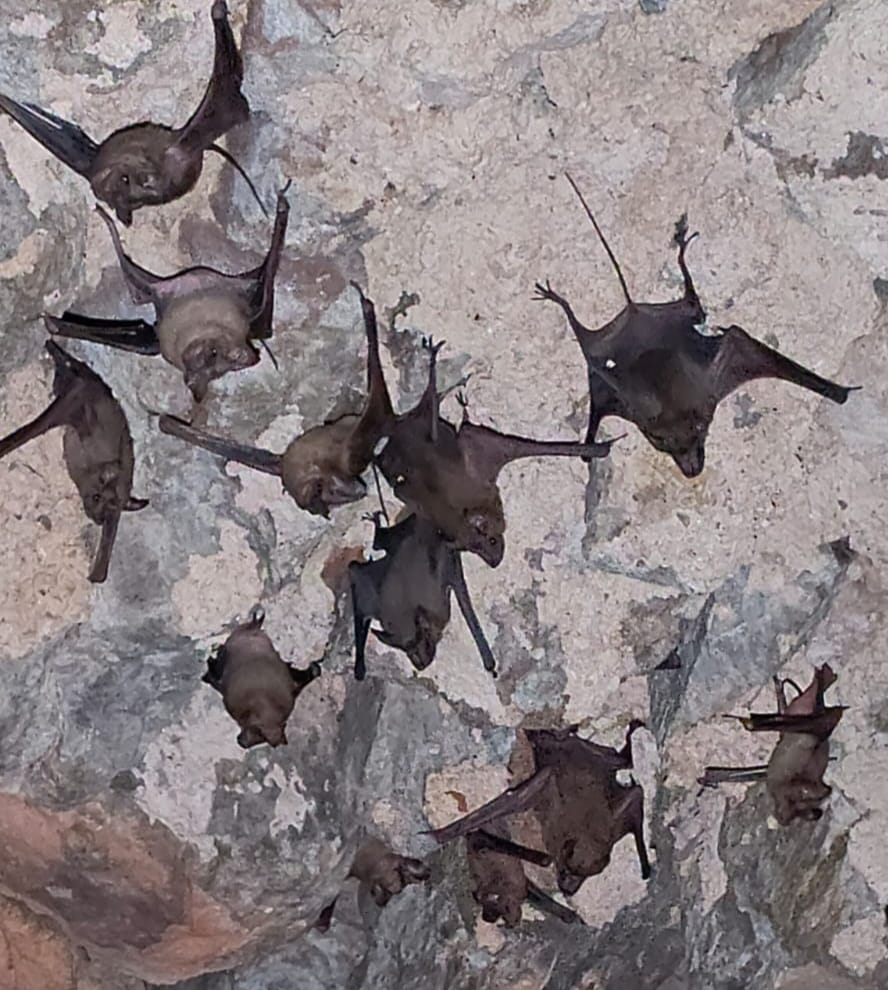
In 2017, the bat menace reached alarming levels at the 11th-century Sun Temple in Gujarat’s Modhera. With no established protocol to follow, officials improvised.
“For several months, we fumigated the temple with guggul herb smoke and used powerful flashlights to drive the bats away,” recalled Arun Malik, now superintending archaeologist at Aurangabad circle of ASI, earlier posted at Vadodara circle.
Malik said the indigenous solution successfully removed the winged mammals.
Jugaad but no guaranteed success
There is no formal process of training ASI circle officers in tackling the bat problem. Individual initiatives and ideologies come into play.
“ASI is using routine processes to tackle the bat menace at monuments — setting up a wire mesh, cleaning the stone surface, and sometimes fumigation,” said Nandini Bhattacharya Sahu, Joint Director General and spokesperson, ASI.
These, however, are not guaranteed techniques to remove bat colonies, Sahu asserted.
She contended that the problem “exists but has been minimised to a great extent by these methods.”
In the last few years, ASI experimented with ultrasonic sound devices that emit waves at frequencies above the human hearing limit. At the 19th-century Lepakshi Temple in Andhra Pradesh, an ASI official installed the device for a 10 square metre area along with netting on entrances and windows.
Successful experiments such as naphthalene bricks and halogen lamps were also carried out at the Taj Mahal in Agra in 2024 to chase bats away, Sahu added.
More tourists = less bats?
The battle shifted to Delhi a year later.
At the 14th-century Khirki Masjid, bats swarmed in through the monument’s four open courtyards and settled across its vaulted ceilings. In 2018, then superintending archaeologist NK Pathak ordered wooden structures and steel-wire frames to be installed in an effort to block their entry.
Pathak had hoped the intervention would eliminate the foul smell that had become synonymous with the mosque. It did not.
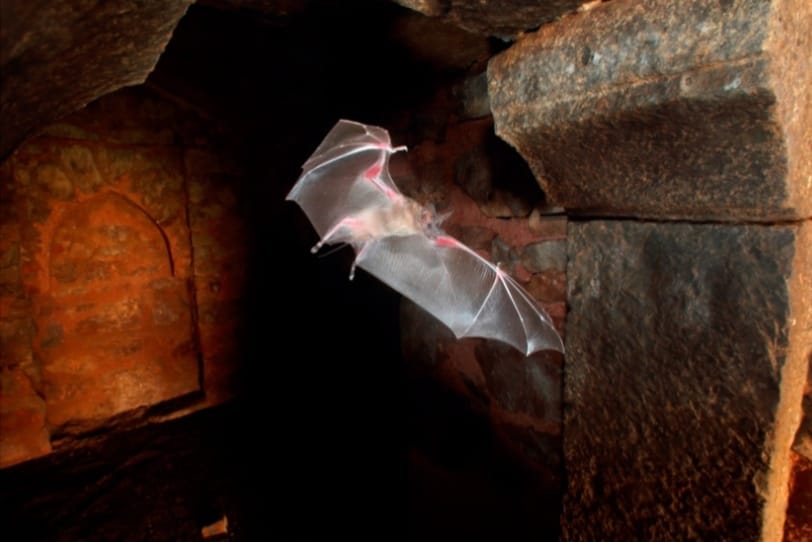
As years passed, Khirki Masjid got more bats than visitors — a phenomenon that caught the attention of history vloggers.
In April this year, vlogger Rahmat Ali said, “Ab ye ibadat ki jagah kam, chamgadaron ka basera zyada lagti hai (This looks less like a place of worship and more like a roost for bats).”
“Inside the mosque, the overwhelming feeling was of nausea because of the stupendous amounts of bat droppings,” wrote Jay Vardhan Singh, a PhD student at JNU, on X after visiting Khirki Mosque in 2024.
Archaeologist Phanikant Mishra headed several ASI circles across India and admitted that ASI never took serious measures.
“Bats are like a cancer for monuments and unfortunately we have no permanent cure for them,” he said. “Bats affect a monument’s life badly. Often, they bring plants along, which develop roots and cause cracks to appear in the walls and ceilings. It causes a major loss to our heritage. When the conservation policy was made, bats were not the focus area. It’s a serious gap.”
Mishra recalled that whenever he visited the monuments in Bhopal and Chandigarh for inspection, local officials instructed him, “Sir udhar mat jayiye, waha bats bahut hain (Sir, don’t go there, there are a lot of bats).”
Many ASI officials and conversation experts say that the best antidote to the bat habitat problem at historical monuments is tourism. The higher the tourists, the lower the bat population.
“On the basis of my observations, bats thrive at monuments where there are limited visitors. Humayun’s Tomb in Delhi is visited by thousands of visitors. As such, there were no bats occupying the tomb when we undertook the conservation,” said Ratish Nanda, conservation architect and Projects Director of Aga Khan Trust for Culture (AKTC) in India.
Nanda added that there is a growing awareness about bats being important for ecology.
“We at the Aga Khan Trust for Culture hope to embark on a research programme with Centre For Wildlife Studies to provide safe spaces for bats,” said Nanda.
However, a 2013 statement issued by the Tata Trusts, which had funded the restoration work, noted the presence of bats at the monument.
“The pigeon dropping-covered domes and bat and rat-rideen underground tombs were cleaned and restored, eroded doors were replaced and carvings and decorative work on the arches and plinths enhanced,” reads the statement.
’25 trolleys of bat poop’ at Haryana’s heritage site
Across India, the story repeats itself with the same sorry consistency.
Hundreds of kilometres away in Haryana’s Narnaul, officials encountered a similar scene when restoration began at the 17th-century Chhatta Rai Bal Mukand Das Palace in 2022. The building had fallen into such disrepair that bats had effectively taken over.
Narnaul has several medieval-era monuments from baolis (stepwells) and tombs to the majestic palace of Deewans, who were appointed by Mughal emperors to govern.
Most of these monuments were in ruins before the Haryana archaeology department started conservation work a few years ago.
However, the Mirza Alizan Baoli, Chhatta Rai Bal Mukand Das Palace, and the Pir Turkman Tomb in Narnaul have been overpowered by bats.
When Banani Bhattacharya, former deputy director of Haryana archaeology department, visited the Chhatta Rai Bal Mukand Das Palace in 2022, her foot got stuck in a massive pile of bat droppings.
“Twenty-five trolleys of poop were removed from the site,” said Bhattacharya.
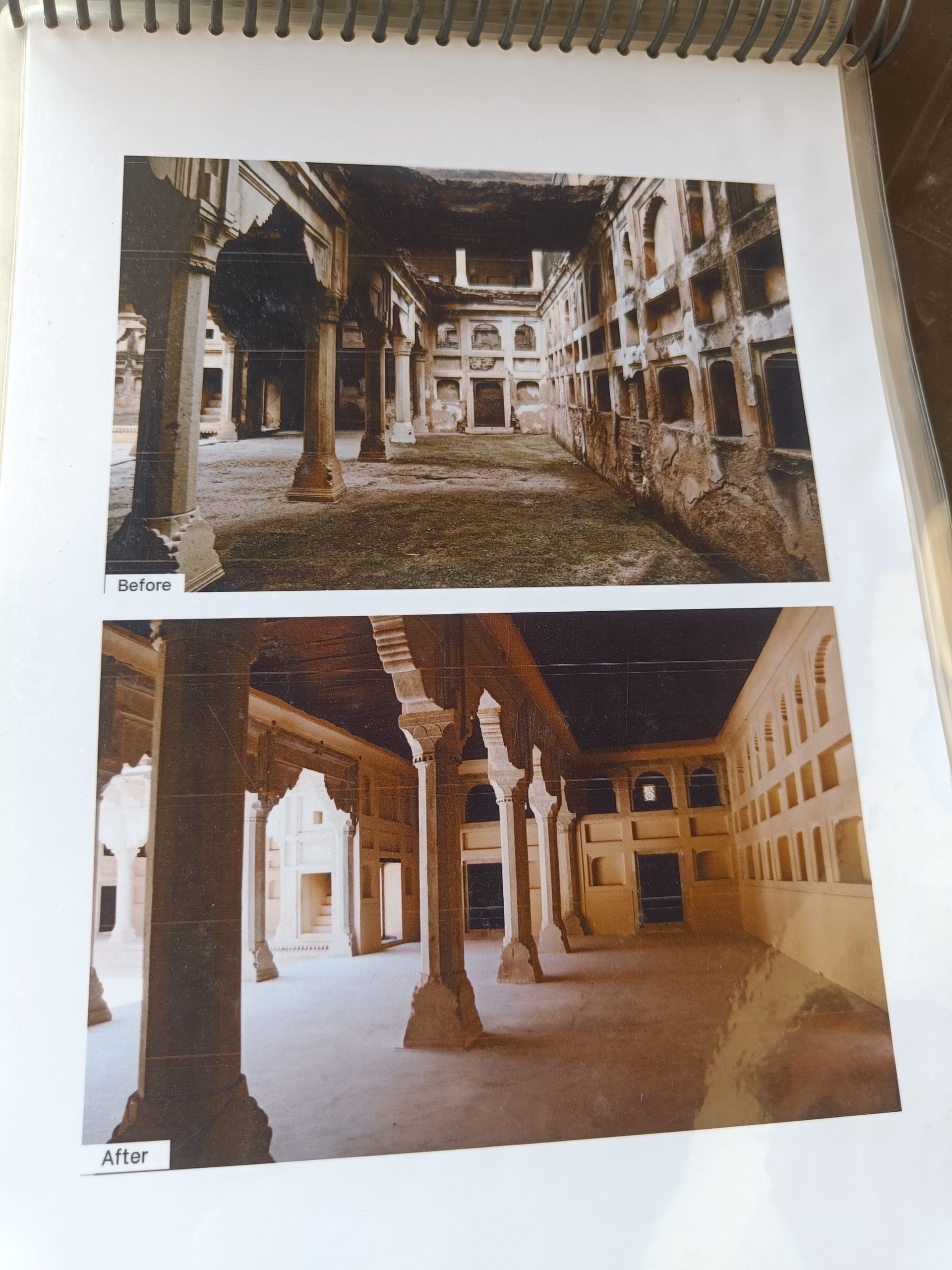
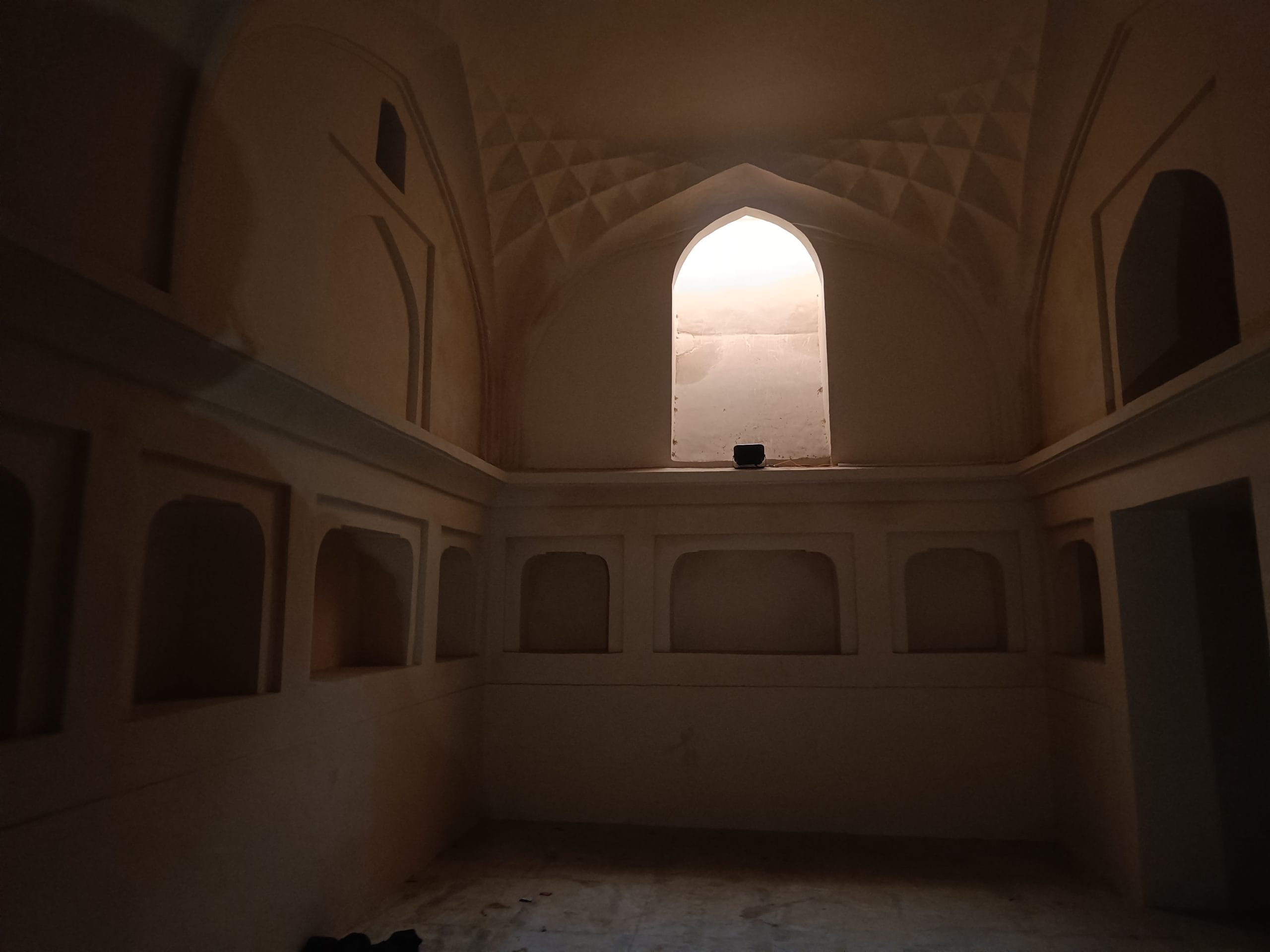
Danish, who has been recruited by Haryana’s archaeology department and is currently supervising the restoration work at Narnaul, recalled that the ground floor of the palace housed lakhs of bats, making entry into the area challenging. He rented strong halogen lights from a catering company and installed them in all bat-infested areas.
“Bats are averse to light and therefore they moved out,” said Danish, adding that the exercise was performed for several evenings.
Soon after the bats were evicted, ASI closed the monument’s doors but the pungent odour of their poop still lingers, Danish said.
Also Read: I’m guilty of not preparing Harshavardhana’s excavation site report, says ex-ASI official
Murals in Ajanta Caves scrubbed away by bat poop
A 2013 CAG report stated that Rs 7.19 crore was spent on the maintenance of Ajanta Caves at Aurangabad in Maharashtra.
But bats were still harming the valuable Buddhist murals of the ancient cave.
“The thick coat of protective layer, applied on the paintings by the earlier restorers, accumulated dust, soot, excreta of bats etc had created an obscuring haze over the murals,” reads the 2013 CAG report.
The bat infestation of India’s built history isn’t a recent post-Independence phenomenon.
Their impact on monument surfaces has been documented by historians and archaeologists since the 19th century.
Damage due to bat excreta was identified as one of the major conservation issues since the Ajanta Cave was discovered in 1819 by a British Army officer, Captain John Smith, during a tiger-hunting expedition.
Scholars who visited Ajanta Caves in different time periods have chronicled loss of painted material.
John Griffiths, the principal of JJ School of Arts, was dismayed to notice that much of the paintings he saw in 1872 had been lost by 1885.
“When I first visited the spot in 1872, blue rock-pigeons, mason-bees, swallows and bats in thousand were in undisturbed possession, contributing in no small degree to the destruction of the paintings, while water percolated through fissures in the rock,” Griffiths wrote in The Paintings in the Buddhist Cave-Temples of Ajanta (1896).
Griffiths recommended the erection of wooden doors and shutters to prevent the entry of bats and protect the cave paintings from further damage.
When he revisited the place in 1885, doors and shutters had been damaged, leaving the caves open for the bats.
“The bats – the most destructive agents were again in possession, many of the pictures were defaced beyond recognition, while the sepoys in charge seemed to consider they fulfilled their duty by merely going to the caves to sleep,” wrote Griffiths.
In 1920-21, during their work at Ajanta caves, Italian experts too attributed bat poop to the scarring of Ajanta paintings.
In 1953, when the cave was brought under the purview of ASI, wooden frames fitted with small wire mesh were installed at the doors and windows to prevent the entry of bats.
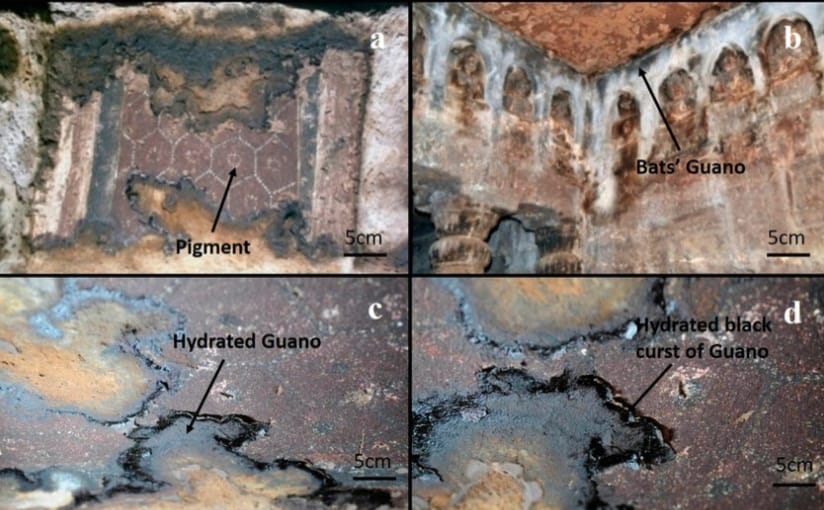
However, deposits of bat poop collected on the ceilings and its joints over the last few centuries were so heavy that they pose a problem even today. Recorded problems include detachment of painted plaster, damage to architectural elements, loss of paint layers on the walls close to the paintings and pungent stench.
“We have now installed nets at all entrances to the caves,” said Arun Malik.
“The bats’ excreta is slowly spreading side-ways and downwards during the rainy season and is a matter of great concern at Ajanta. The black deposits are rich in organic matters and served as nutrients to microbiological activities causing biodeterioration of the murals. The cleaning of bat guano from decorative surfaces of India’s Ajanta cave is a major conservation concern,” reads the paper titled Removal of Bats Excreta from Water-Soluble Wall Paintings Using Temporary Hydrophobic Coating written by MR Singh and DA Gupta, assistant SA Chemist at ASI and published in 2020.
To combat the problem, ASI chemists came up with ingenious cleaning methods. They used compounds such as ammonium carbonate and hydrogen peroxide to loosen hardened deposits without harming delicately painted surfaces.
“We used an enzyme-based solution to clean the surface which was badly affected by bats and then removed the waste with the brush,” explained S Vinodh, Deputy Superintending archaeologist (Chemist) at Aurangabad circle.
Also Read: New field guide spotlights Delhi’s 15 unique bat species, shifts focus from vermin to vital
But where will the bats go?
The war against the bats isn’t without contestation. Some within the ASI and outside say these monuments are bats’ natural habitat and should not be disturbed.
In November 2025, ecologist Sumit Dookia took nine people on a unique walk titled Behaviour of Bats at Saket’s Khirki Masjid.
“No one is talking about the role of bats in the ecosystem even as society continues to see this mammal in a negative light. We took people to the places where bats reside so that they know their ecological roles in the urban environment,” said Dookia, assistant professor (Animal Ecology and Wildlife Biology) at Guru Gobind Singh Indraprastha University, New Delhi.
He stated that bats help in insect control.
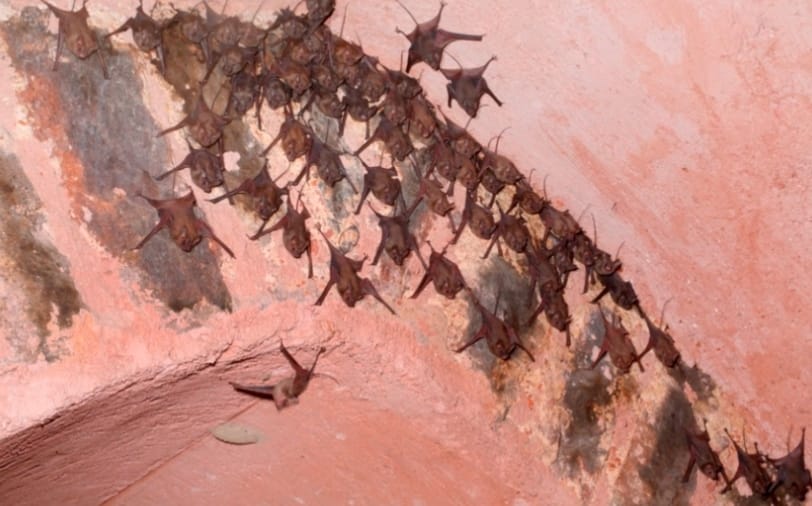
While Dookia acknowledged that bats are roosting in monuments and that their presence at heritage sites can be restricted, he warned against total displacement, saying it will disrupt ecological balance.
“Degradation and staining of monuments due to bat excretions certainly occur, but serious weathering effects are unusual and depend critically on the chemical composition of the building material,” reads Dookia paper titled The Monumental Mistake of Evicting Bats from Archaeological Sites – A Reflection from New Delhi.
Dookia claimed that after the completion of restoration work at the Humayun Tomb, a few species of bats were never spotted in Delhi again.
Dookia explained that at the Golconda Fort in Hyderabad, local officials left a chamber for bats where visitor movement was little. “Less frequented areas within monuments can be designated for housing bats. This solution can be adopted everywhere,” he argued.
Over the past two decades, ASI officials have made several efforts such as fogging, misting and even burning a mixture of dried neem leaves with turmeric to remove the bats from Rani Mahal in the premises of Golconda Fort.
“My predecessors also made an effort to remove bats at Rani Mahal but environmental activists objected. Rani Mahal still has a large population of bats,” said N Nihildas, superintending archaeologist at ASI’s Hyderabad circle.
Experts, however, say if bats are removed from the monument, they will have nowhere else to go.
“Archaeologists and bat ecologists must join hands to find win-win solutions. While short-term solutions could focus on mitigating damage caused to monument structures, long-term solutions could aim to build artificial bat caves so that the mammals have alternate homes, said Rohit Chakravarty,” bat researcher at Centre for Wildlife Studies.
Chakravarty pressed that any step to evict bats entirely will be a stop-gap measure unless their natural habitats are restored or artificial ones are installed.
Dookia said one problem is that India’s rich folklore arguably portrays bats in a bad light, equating them with demons, which naturally instills fears in people’s minds.
“This fear can be turned into excitement by making people aware about bats and their role in the ecosystem. Bat walks can be one such initiative where people can experience bats very closely,” said Dookia.
(Edited by Aakriti Handa)