







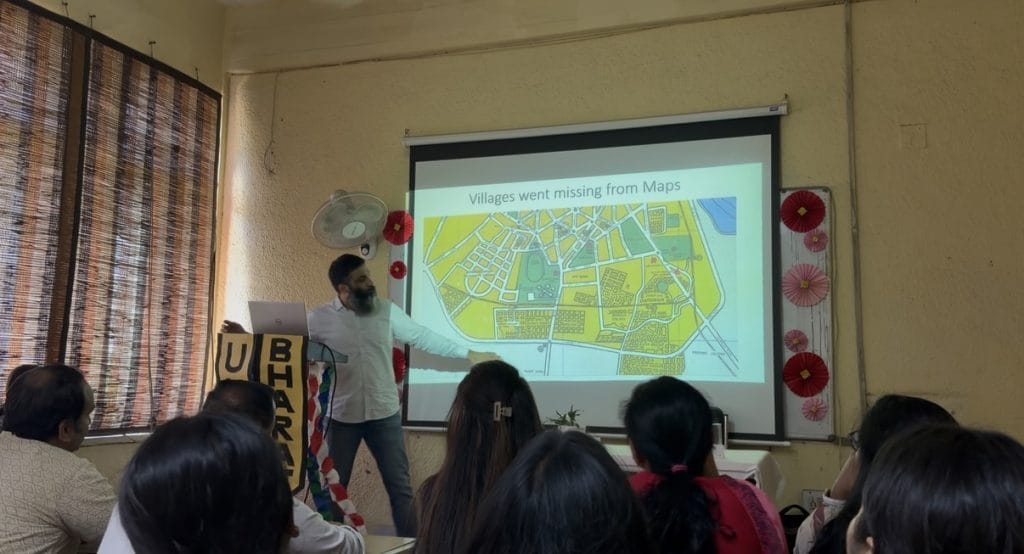
New Delhi: Silence fell inside a cramped classroom at Kamla Nehru College on a recent Wednesday, as a map of Delhi flickered onto the projector screen. Shekhar Tokas, Assistant Professor, Urban Studies, at Dr BR Ambedkar University Delhi, had just stumped his audience of 30 students and a handful of professors with his first question.
“On which village’s land was Kamla Nehru College built?”
Finally, a hesitant voice from the back offered: “Khel Gaon.” The professor laughed. “Khel Gaon is not a village at all. It was built during the Asian Games.”
A hush returned. After a moment, Tokas gave them the answer: “Your college stands on land that once fell partly under Shahpur Jat and partly under Hauz Khas village.”
What Tokas was pointing out was the inexplicable gap in understanding of Delhi among its proud residents. He was talking about Delhi’s history beyond empires, battles, or famous monuments. The over 300 villages that Delhi is built on and around. The question is twofold for Tokas: what’s left of Delhi’s villages as units, and how much of them now live in the city.
Now, even outside his classroom, new archiving and documentation efforts are underway.
A five-member survey team from the heritage cell of the Municipal Corporation of Delhi (MCD) has launched a project to document traditions and oral histories across 100 shortlisted villages, including birth and marriage customs, local devotional songs, and other everyday practices that rarely make it into official archives.
There are around 360 villages in Delhi, and each one has its own story. If I pick even one narrative from each, that’s hundreds of histories that remain largely untold.
Shekhar Tokas, assistant professor, Ambedkar University School
On the digital front, an Instagram page called Dilli Dehat, run by three men in their 20s, has been sharing stories, maps, before-and-after pictures, and anecdotes from Delhi’s villages. With more than 68,000 followers, it’s a walk down memory lane for some and a revelation for others.
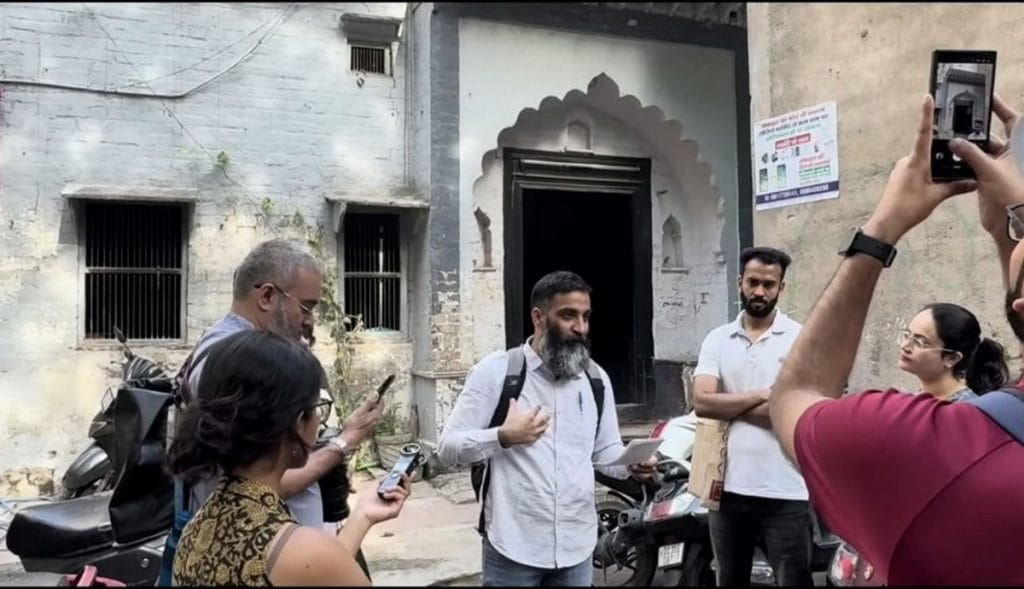
In March, Tokas started taking his lessons to the streets. His “Dilli Dehat walks” guide people through remains of old havelis and yellowing chaupals, many of them hidden in plain sight in city enclaves such as Munirka and Hauz Khas.
Beneath all these new efforts is a sense of urgency about knowing and disseminating what is being irreparably lost in the city’s frenzied growth and urban sprawl.
Old structures have been demolished or rebuilt, dialects have thinned out, and ways of life have transformed. What survives are the stories told by village elders, rituals still carried out at old shrines, and traces of brick and stone that once meant something.
Also Read: An IAS officer is bringing a golden era in Haryana archaeology. Narnaul is the crown jewel
The inner life of Jharoda Kalan
On an April morning, three members of the MCD team arrived in Jharoda Kalan, a village in southwest Delhi’s Najafgarh belt, which comprises around 70 villages. They carried little more than a file, a pen, and a notebook marked “MCD.” It had been two months since they began field visits, and it was their second trip to Jharoda Kalan.
About 4 kilometres from Dhansa metro station on the grey line, the village still bears vestiges of the landscape that gave it its name: “jhar” means scrub or forest, and “kalan” means large.
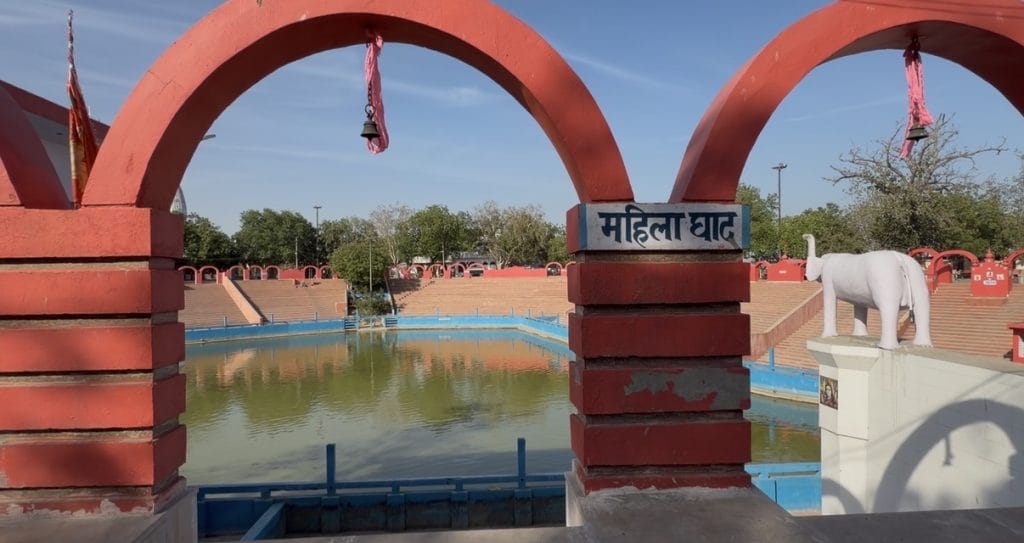
While many urban villages have been swallowed by concrete, Jharoda Kalan still opens out into space. The air feels cleaner, the paved roads are clean, the settlement is ringed by farmlands and trees, and, occasionally, a koel’s call pierces through the air. At the centre of the village is a large stepwell, freshly painted sky blue and crimson, its walls lined with idols of gods and goddesses.
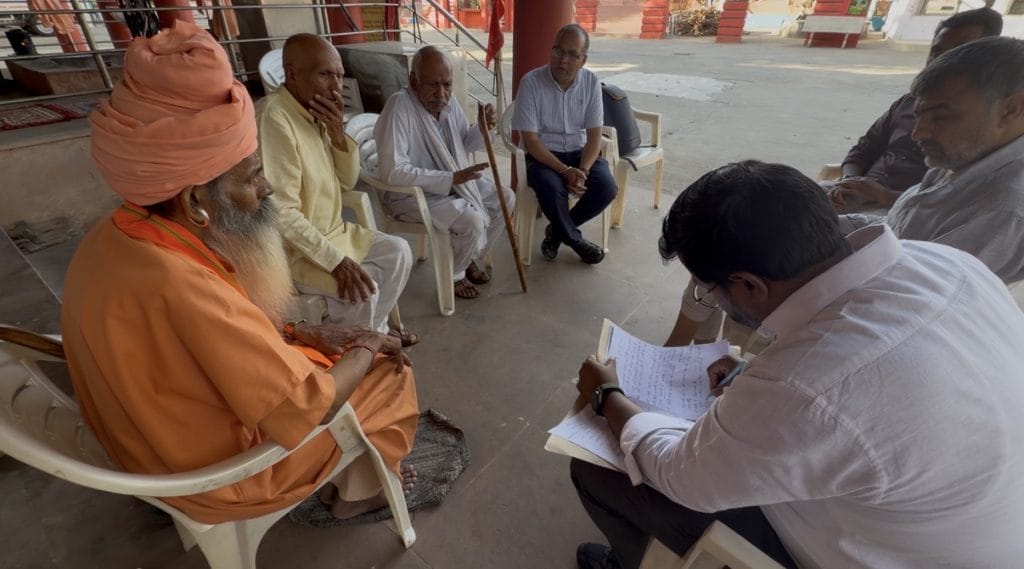
Across from it stands the shrine of Baba Haridas, where a group of elderly men gather each afternoon to sit with the temple priest. A saint who is believed to have lived in the 16th century, Baba Haridas is kept alive here through stories and traditions. His shrine is both a religious and social anchor.
The MCD officials start their work with the elders at the shrine.
“We are visiting from the MCD. We want to sit with you and understand the history and traditions of your village,” said Umesh Kumar, who leads the team.
The conversation unfolds over hours, covering everything from childbirth rituals and marriage customs to caste composition.
“All castes live in harmony here,” one resident said earnestly. But some strictures do apply to daughters-in-law from ‘outside’.
We know many old folk songs and bhajans by heart, but for many others we do not remember the tunes.”
Elderly woman, Jharoda Kalan
“When a new bride comes to our village, she first bathes at the stepwell or the Mallah Ghat and then offers prayers to Baba Haridas,” a weathered old-timer said. “But she cannot enter the temple premises. She must pray from outside. This has always been the rule.”
“But daughters can enter?” an official asked.
“Yes, daughters can enter,” several voices responded at once.
Another elderly man, dressed in a cream khadi kurta with a scarf wrapped around his head, said his daughter-in-law, from a neighbouring village, would visit the temple before marriage but knew it was out of bounds now.
“From the day she became a daughter-in-law of this village, she began offering prayers from outside,” he added.
When a retired Ayurvedic doctor, walking with a wooden stick, joins the group, the officials ask him about past epidemics.
“There was a cholera outbreak so severe that by the time I isolated one patient, another would already be infected,” he recalled.
The village’s sense of history is a blend of memory and belief. Residents trace their origins to four brothers, the sons of a woman called Jado Devi. But true prosperity, said the temple priest, came only after the birth of Baba Haridas.
Even today, aarti is performed at the shrine every morning and evening. Biannual fairs dedicated to the saint draw nearly 50,000 devotees from across India— from Bengal to Gujarat to Himachal— and even members of the diaspora come specially for it. To maintain the rhythm of devotion, smaller one-day fairs or gatherings are mandatory every month.
The four gaushalas of Jharoda Kalan are another fulcrum of social and economic activity. The village is divided into four zones, called pannas, that compete over donations to their gaushalas.
“During Shakraat, when cows are worshipped, we raise up to Rs 3 to 4 crore through these donations,” said one resident.
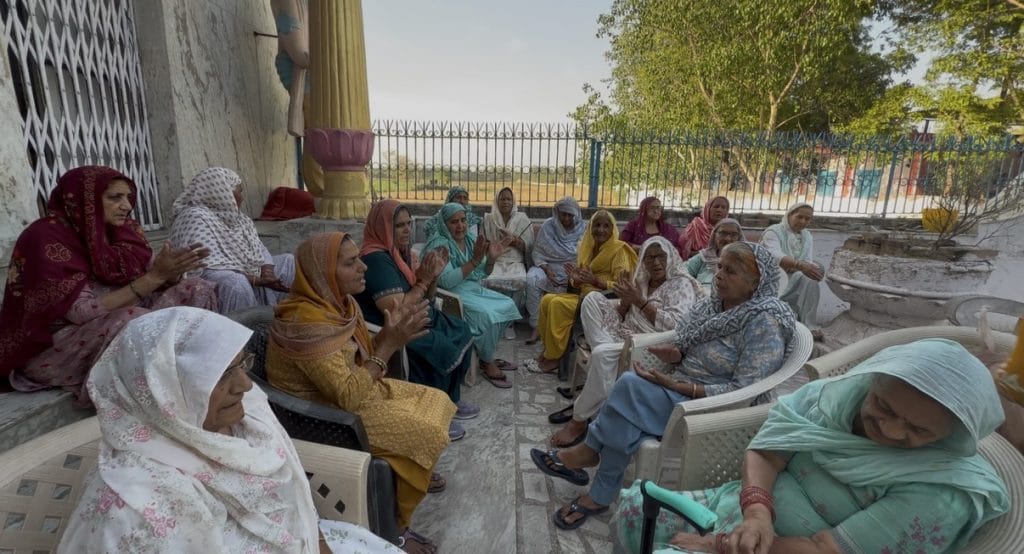
In another part of the village, 20 to 25 elderly women sit outside a marble-tiled temple, singing bhajans in the local dialect as evening approaches. There is an uneasy awareness of what is slipping away.
“We know many old folk songs and bhajans by heart, but for many others we do not remember the tunes,” one of the women said.
“But the wordings are written in a book, I have kept it safe,” another added, promising to show the book to the MCD official on their next visit.
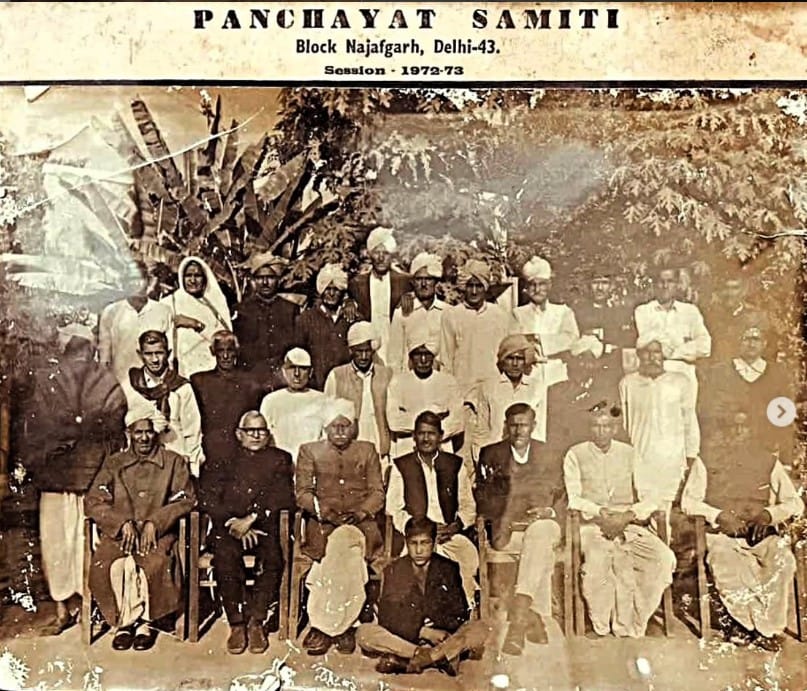
Little about Jharoda Kalan has been formally documented, but fragments surface in unexpected places. A 2025 paper on village names in Najafgarh also included personal reflection from its author, Ajmer Singh, on Baba Haridas.
“My journey to becoming a devotee of Baba Haridas began in a serendipitous way with a professional milestone,” wrote Singh, a PhD candidate at the Department of Geography at NIILM, Kaithal.
In the 2012-13 academic year, Singh recounted, he joined a government school in Najafgarh’s Dharmpura village as a mathematics lecturer, but also discovered spiritual riches along the way.
“The atmosphere of the temple, the stories of the Baba, and the palpable sense of peace and spiritual energy resonated with me immediately. I was not just near the site; I was attracted to it—a pull that felt less like a choice and more like a spiritual necessity,” he writes.
There are not many comprehensive books on Delhi’s villages, though the city has been studied endlessly through its empires, monuments, and planned colonies. In 1997, Charles and Karoki Lewis wrote Delhi’s Historic Villages, focusing on the historical and architectural significance of eight shortlisted villages with medieval monuments in their midst, even as the expanding city encroached relentlessly on settlements that date back centuries.
A more recent publication is Ekta Chauhan’s Sheher Mein Gaon: Culture, Conflict and Change in the Urban Villages of Delhi, whose back cover describes Delhi as a place “where centuries-old traditions coexist with cafés and startups, and where the past is never quite the past.”
Muscle and mutiny
Like Jharoda Kalan, there are hundreds of villages in Delhi, each with their own mythologies, mysteries, and losses.
At the edge of South Delhi district, a few kilometres away from the Chhatarpur metro station, lies Fatehpur Beri — a Gujjar-dominated village that’s known as “India’s strongest village” because it’s reportedly home to some 300 bouncers working in Delhi’s bars and clubs. The trend started with Vijay Tanwar who, after missing a spot on the Olympic wrestling team, became a bouncer and inspired many other young men.
But beneath this brawny, modern identity is a history of 1857 resistance that still burns in the village chaupal.
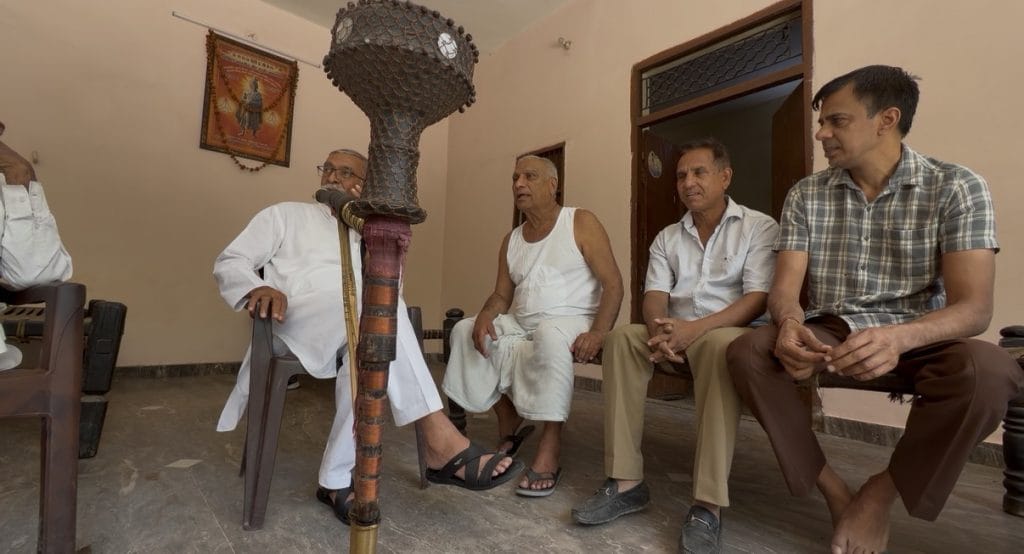
On a hot afternoon, as a desert cooler hums against the heat, elderly men sit smoking chillams and sifting through the stories that were handed down to them. They say this village was settled by their forefathers around the year 1510. And for the last 170 years, Basant Panchami has been a black day for them.
“What people don’t know is that we don’t celebrate Basant Panchami here. During 1857, the British surrounded the village from all four sides and shot every adult male. Only boys under 14 or 15 were left alive. That had happened on Basant Panchami,” said one of the old men.
There was a passion to fight. Because of that, they [the British] branded Gujjars a ‘criminal tribe’
-Village elder at Fatehpur Beri
The violence of the Revolt redefined the village and the Gujjar community as a whole, according to villagers.
“There was a passion to fight. Because of that, they branded Gujjars a ‘criminal tribe’,” he added.
Another member of the gathering, however, noted with satisfaction that villagers found ways to get their own back at the British.
“Our elders once made two British officials plough fields after they misbehaved with villagers,” he chortled.
But some villagers admit that this lore comes with a rider. Stories are fading and being forgotten.
“Much of what my father told me comes and goes,” said another elderly resident, prompting a ripple of laughter among the group.
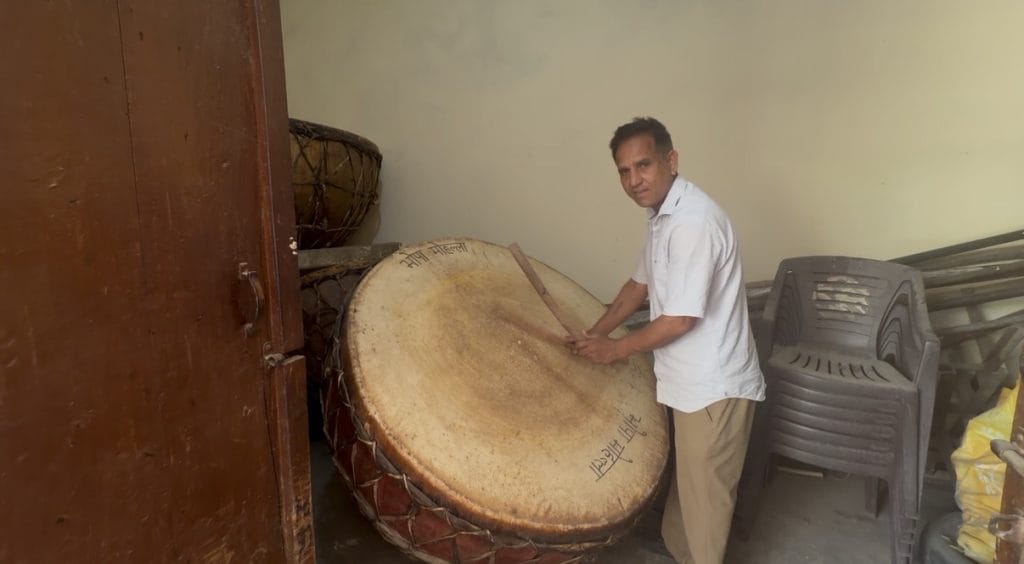
Villagers trace their ancestry to Baba Dhanna — a 15th-century Bhakti mystic — and his four brothers, who came here after a dispute drove them out of an earlier settlement called Lalwa. In the village, though, Dhanna is remembered less as a saint than as a shared ancestor.
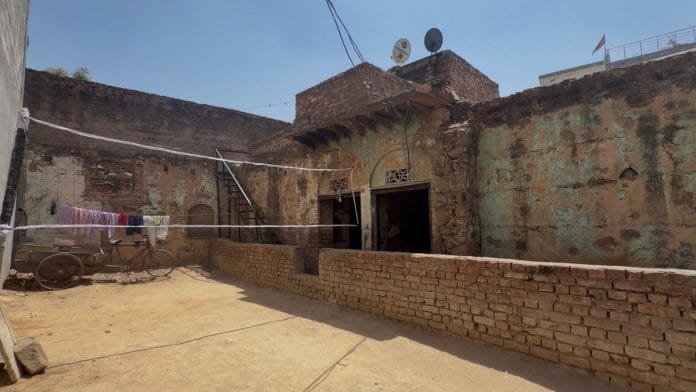
But the physical evidence of the 500-year history of the village is vanishing. The village pond, once central to daily life, is a choked dumping ground. The primary well, once famous for its “sweet water” and said to be beneficial especially for boys, has been filled and levelled. Almost all the original havelis are gone, replaced by modern concrete, except for two belonging to an influential local family.
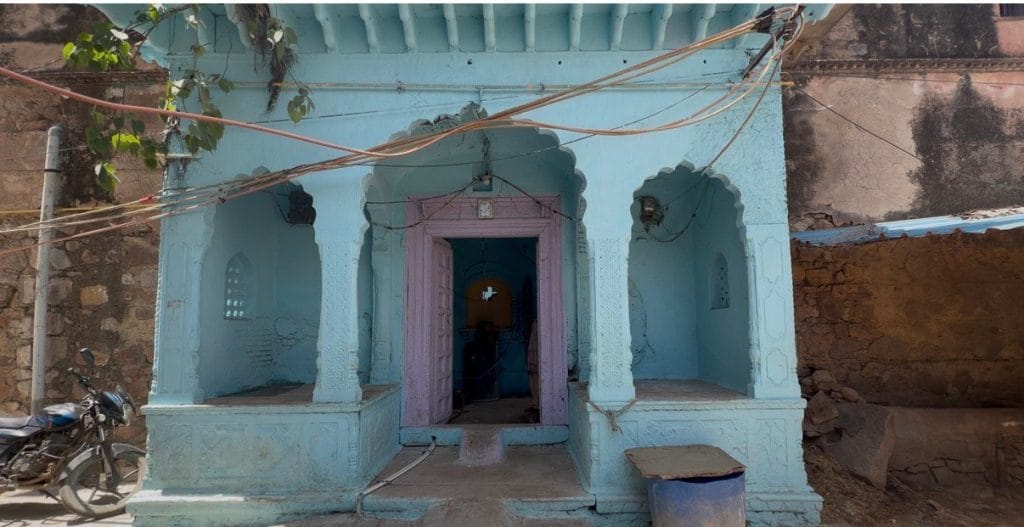
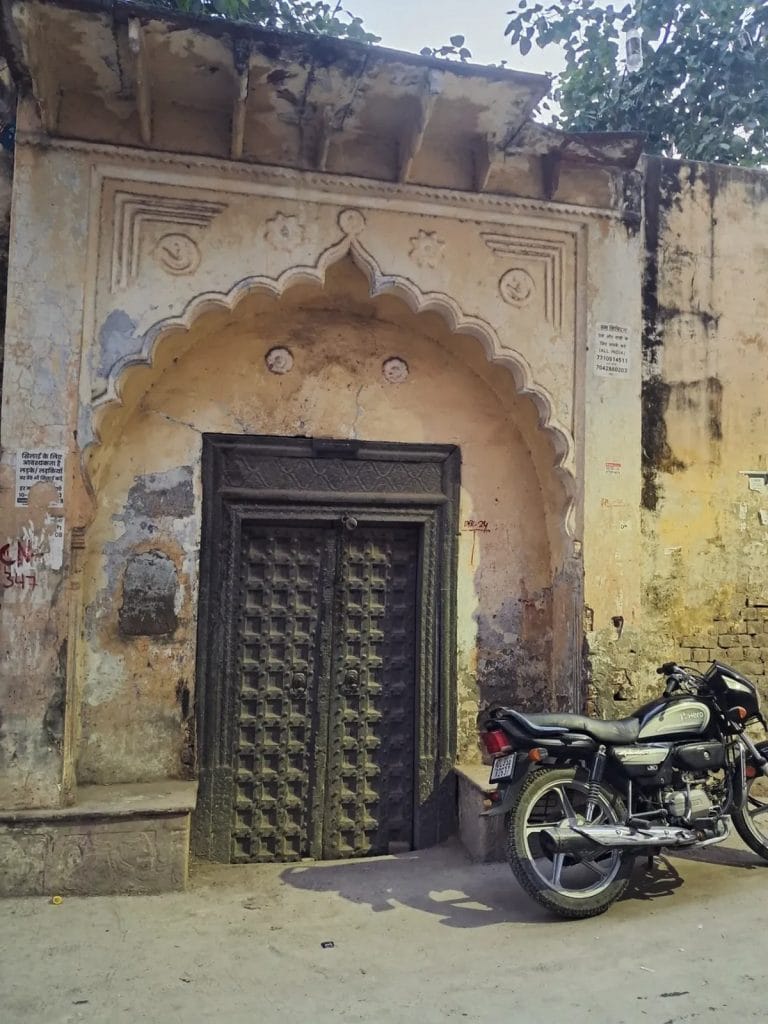
One of the surviving havelis, associated with BJP MLA Kartar Singh Tanwar’s family, stands out for its powder-blue Lahori bricks and a weathered wooden door painted pastel purple.
“This haveli was built by my ancestor, Baba Dongar,” Tanwar said. “He was the lambardar, the head of eight Gujjar villages. Later, his sons lived here. But over time, people moved away to other parts of the city where they had land. Now, two families from outside the village live here. If they pay rent, it’s fine. If they don’t, that’s also fine.”
An Instagram archive
By day, Puneet Singh Singhal works as a disability rights activist. But in his free time, he builds Dilli Dehat. The idea came to him in 2018, which he calls a time of “absolute silence” around Delhi’s rural past.
“I had started this on Twitter. It was initially a policy-oriented platform where we were raising issues about basic amenities like drainage, streetlights, and the discrimination villages and their residents were facing,” he said. Singhal soon found two others who shared the same passion for Delhi villages — journalist Parth Shokeen and lawyer Gagandeep Singh — and they joined forces to create Dilli Dehat.
All three come from villages in Delhi: Singhal from Devli in South Delhi, Shokeen from Nilothi in West Delhi, and Singh from Madanpur Khadar in South East Delhi. And they shared a similar unease: the landscapes they had grown up around were changing visibly and irreversibly.
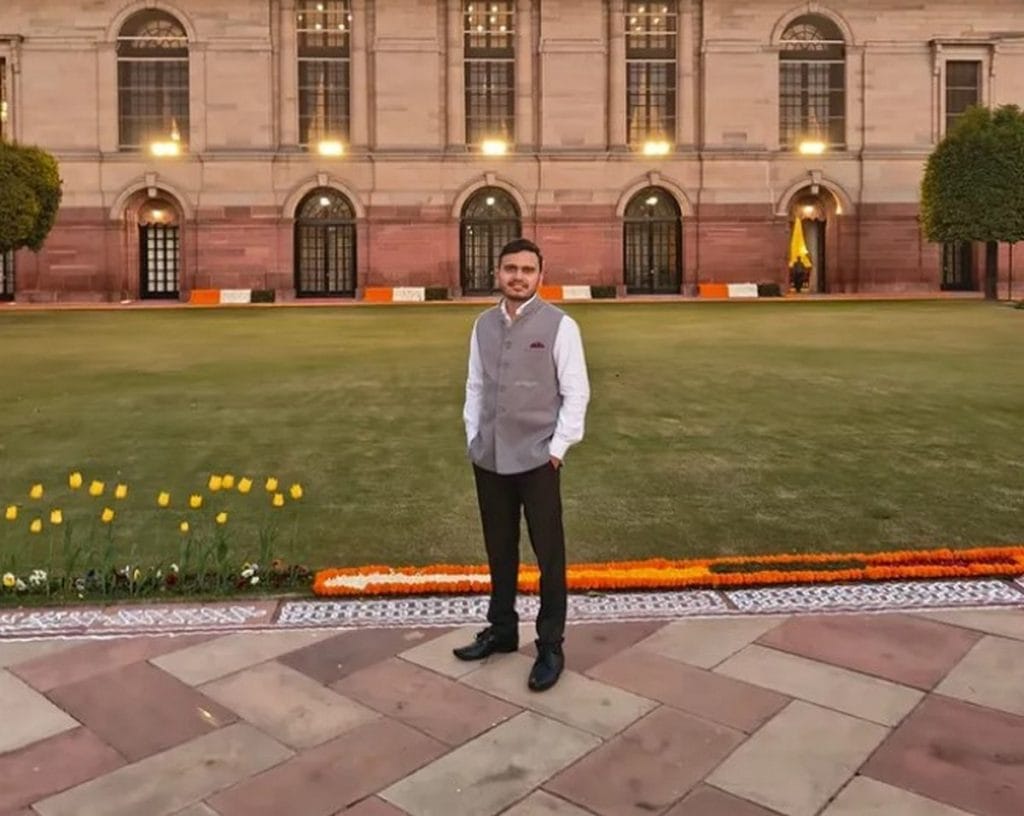
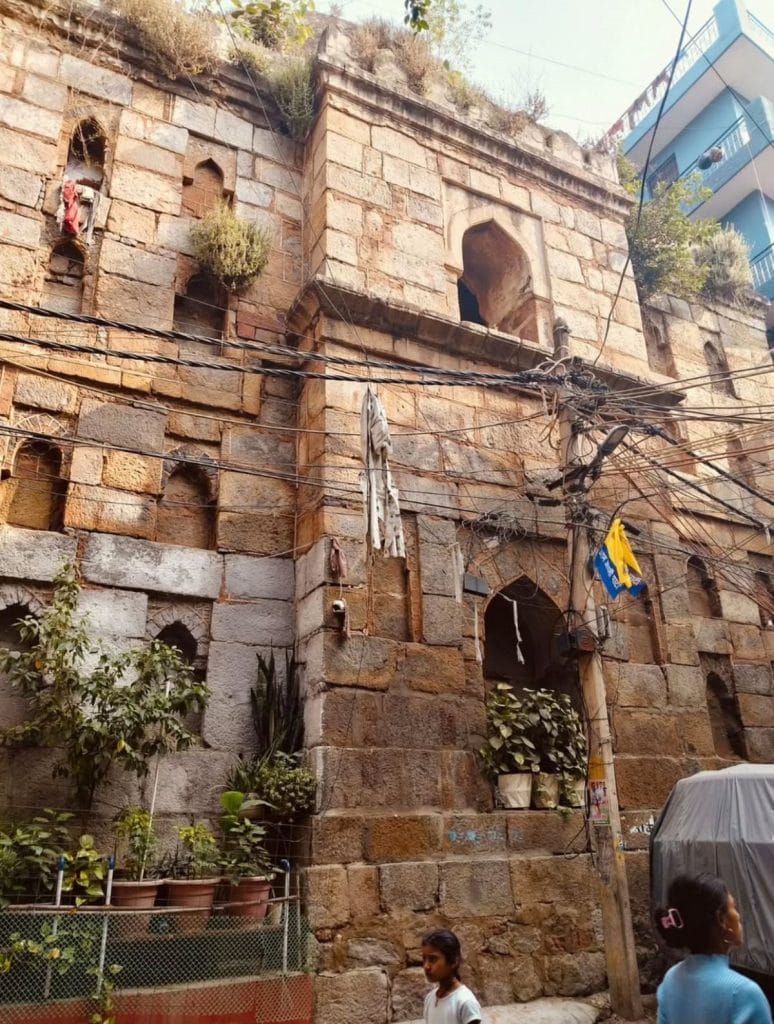
“It was heartbreaking to see that rural settlements in Delhi had turned into slum-like spaces. These were once green, open places with havelis. Now you see potholes, poor drainage and an imposed kind of ugliness. I wanted to show that these villages had beauty, history, and identity,” he said.
Watching people elsewhere in the world use social media to document their cities, he began to see Instagram as both archive and intervention.
“I saw people using it as a form of visual activism. Cities across the world were using the medium to talk about their past, including certain aspects of Delhi. So I thought, why not our villages? We have our own architecture, traditions, and histories. There is so much that is undocumented,” he added.
It was heartbreaking to see that rural settlements in Delhi had turned into slum-like spaces. These were once green, open places with havelis. Now you see potholes, poor drainage and an imposed kind of ugliness
-Puneet Singh Singhal, co-founder of Dilli Dehat
As the project grew, it began to outpace its founders. Residents from across Delhi started sending photographs, recounting stories, and sharing fragments of memory. What began as an individual effort gradually turned into what Puneet describes as a “community-driven archive.”
But the persistent invisibility of these spaces still grates on him.
“It’s strange that people in Delhi don’t know about these villages,” he said. “South Delhi is full of villages, West Delhi is full of villages, everywhere you go, they exist. Yet people say they don’t know about them. It’s all right in front of our eyes.”
He argues that there is nothing accidental about this.
“Certain histories were given preference, while the histories of our villages were ignored,” he said.
The project, for him, is a race against the bulldozer.
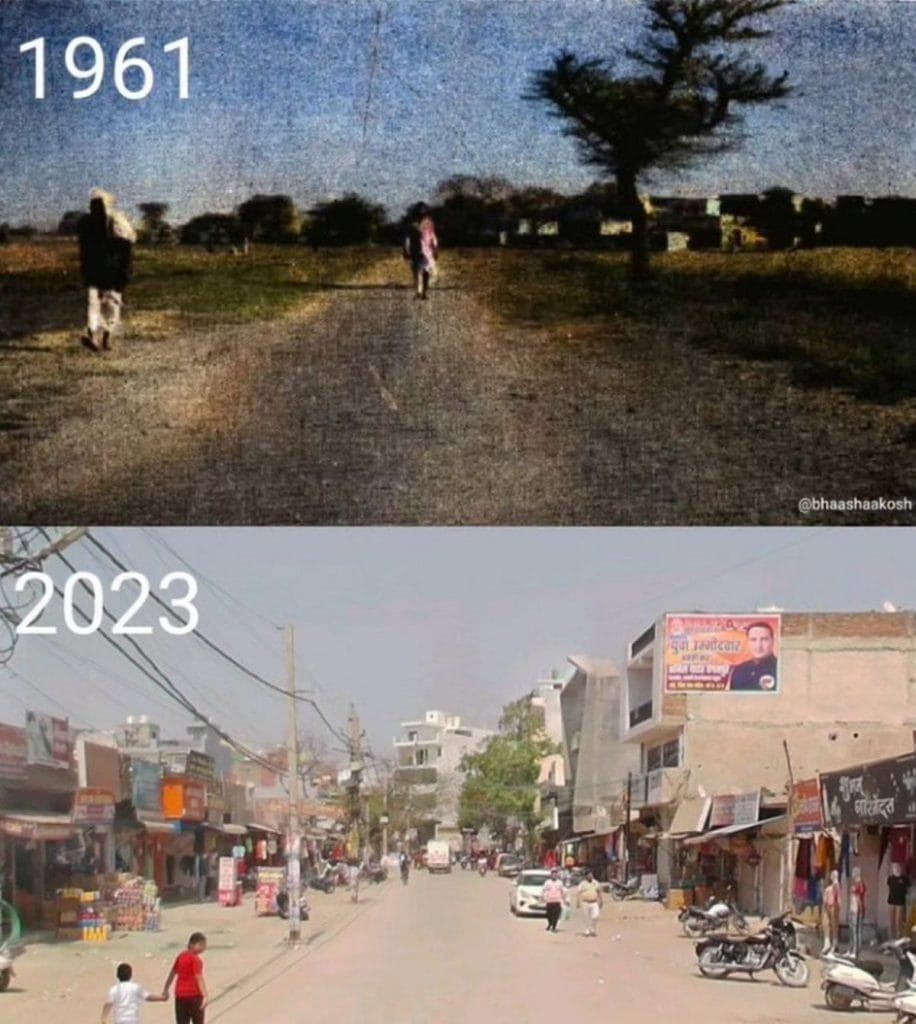
“We are losing a lot. Havelis are being rebuilt because people don’t have as much land anymore and need income. We are running out of time. There is a lot that is already gone,” he said.
Village historians
Journalist Parth Shokeen was pulled into Delhi Dehat after Singhal read an article he had written about the city’s villages.
“I wrote my first article on Delhi’s villages while working at a newspaper. Puneet saw it and reached out. He said, why not bring everything together on one platform?” Shokeen said.
Once the three men banded together, they confronted the scale of what remained undocumented.
“We started posting things that we felt were crucial and things that were building a narrative around Delhi’s villages,” Shokeen said.
Not all of Delhi’s villages have been treated the same way, he pointed out. Some have received more care than others based on their ‘heritage’ associations.
For me, this project is about retaining my identity. It’s about telling my younger self and maybe my future child that Khadar is not what people said it was. It’s about understanding what changed, and showing others what has been lost.”
Gagandeep Singh, co-founder of Dilli Dehat
“There are different types of villages in Delhi,” he said. “The urban villages of South Delhi like Khidki, Shahpur Jat, Hauz Khas were acquired [by the government] around Independence and are closer to Sultanate and Mughal sites. So their heritage monuments and structures are preserved and protected.”
Apart from the old disappearing havelis, some of these structures once held administrative importance.
“There was a concept of ‘jail towers’ within havelis. They functioned as administrative centres. Imagine what heritage work could look like if those still existed, but very few remain now,” Shokeen said.
Equally precarious, he says, are the intangible archives — folklore, oral histories, lineage records.
“There is something called kursi nama, a lineage document maintained over generations. Some of these records are in Persian. They exist, but accessing them is difficult. For most villagers, this history is not easily available,” he said. Most of these documents are kept in local courts, which are not open to the public.
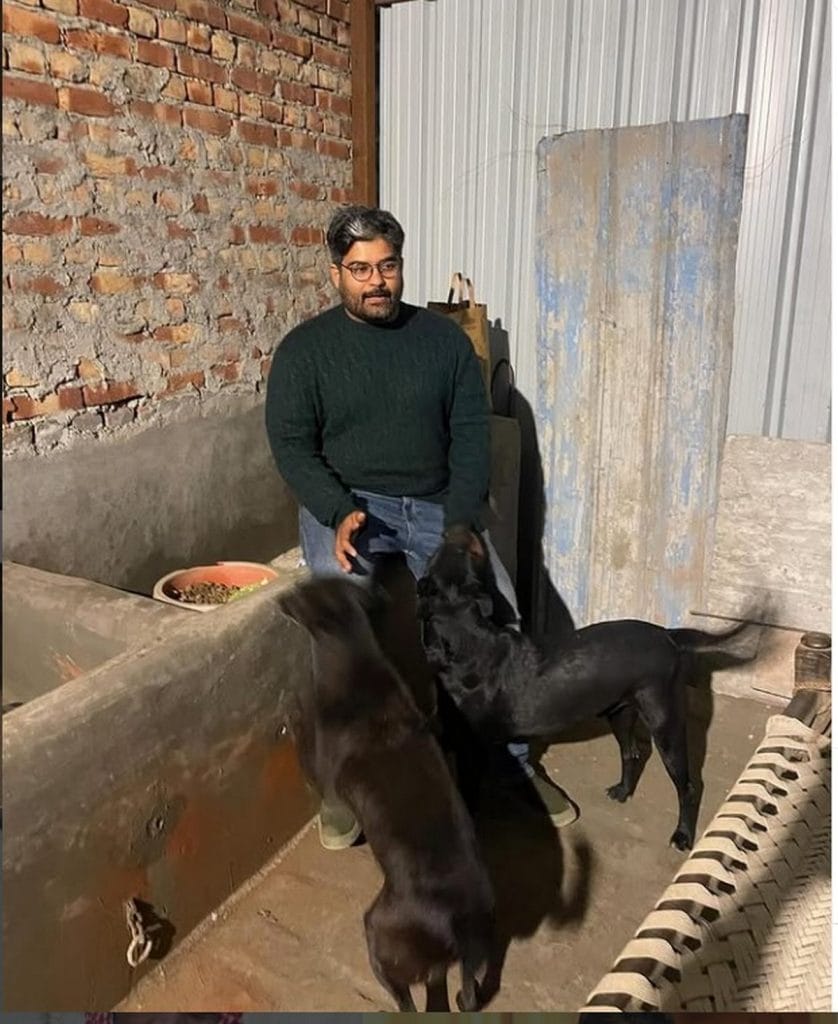
If for Singhal and Shokeen the project is about documentation, for Gagandeep Singh — who was raised in Madanpur Khadar village in South East Delhi — it is also about reclaiming identity.
Growing up, Singh found that the term “Khadar” was used by outsiders as shorthand for a slum.
“In reality, we were land-owning villagers,” he said. “Our houses were larger than the city flats, yet we were the ones being othered.”
That othering was shaped by both geography and caste, according to him.
“I come from the Gujjar community, and there was a sense of criminality attached to it—people judged how we looked, how we spoke,” Singh added.
Working on Delhi Dehat became a way of confronting that narrative.
“For me, this project is about retaining my identity,” he said. “It’s about telling my younger self and maybe my future child that Khadar is not what people said it was. It’s about understanding what changed, and showing others what has been lost.”
The work does something for him as much as for the village he is rehabilitating in Delhi’s story.
“In some ways, this project is like therapy,” he said. “It’s reclaiming a sense of self. It’s also a bridge between the villages and the city, between perception and reality.”
Also Read: Now, 10-minute delivery of fresh air, escape. Delhi’s affair with hidden lakes, secret trails
‘Hundreds of untold histories’
For Shekhar Tokas, these villages are not peripheral to Delhi’s story. He sees them as central to the making of the city.
An urban studies professor, Tokas also conducts heritage walks through Delhi’s villages.
“There are around 360 villages in Delhi, and each one has its own story,” he said. “If I pick even one narrative from each, that’s hundreds of histories that remain largely untold.”
Tokas himself comes from Munirka village, which he has also revisited in his heritage walk.
“Growing up, there was always this question on where are you from? And everyone who stays in ‘Delhi’ says that they’re from Delhi. But then, they all have their ancestral roots somewhere else, so who is actually from Delhi?” he asked.
For Tokas, the answer lies in untangling the city’s layered past, and the historical record is one way in.
“When the British took over Delhi from the Marathas in 1803, they began revenue mapping and documented around 360 villages. Even earlier sources like the Ain-i-Akbari or the travel accounts of Ibn Battuta refer to settlements across Delhi,” he said.
Those references complicate the idea of Delhi as a purely imperial city.
“Many of these villages are 400, 500 or even 900 years old. Mahipalpur, for instance, is believed to be around 900 years old,” he said.
But it was the 20th century — the colonial and post-Independence phases — that transformed these landscapes most dramatically.
After the capital shifted from Calcutta to Delhi in 1912, large-scale land acquisition began under the 1894 Land Acquisition Act, and around 150 villages lost land to the construction of Lutyens’ Delhi, he pointed out. The process intensified after Partition.
If we speak in our local dialects today, there is often stereotyping. Many feel hesitant to speak their own language in public spaces. Over time they have stopped teaching it to their children… in an urban environment that does not fully accept these identities
-Shekhar Tokas
“In 1941, Delhi’s population was around 7 lakh. Then about 4.5 lakh refugees came in, so there had to be resettlement,” he said, adding that village land was acquired again in areas such as Karol Bagh, Lajpat Nagar, Tilak Nagar, and Moti Nagar. “My father was a Congressman, and many people like him ended up voluntarily donating their land for the refugees to settle.”
What followed was not just spatial transformation, but something that eventually led to a deeper rupture.
“Many urban villages today resemble dense, unplanned settlements. Some reports even compare their conditions to slums,” Tokas said.
There has been a cultural fallout as well. The Jats, Gujjars, and Yadavs inhabiting these villages— whose dialects and customs were closer to those of Haryana and Rajasthan— have succumbed to the pressure to assimilate. Language is the first casualty.
“If we speak in our local dialects today, there is often stereotyping. Many feel hesitant to speak their own language in public spaces. Over time they have stopped teaching it to their children,” he said. “It’s not always direct discrimination, but a kind of discomfort in an urban environment that does not fully accept these identities.”
Throughout the city, meanwhile, an unintentional violence is being done to many of these sites. They’re there one day, and not the next.
“In Munirka, there was a chaupal built in the 1950s. We went there for a heritage walk and within a few months, it was gone,” he recalled. Even heritage structures in these areas are victims of neglect. “There are local tombs like the Tughlaq-era and Lodhi-era structures in places like Munirka or Hauz Khas, but many others are not mapped properly. Even the Archaeological Survey of India does not always have clarity on them.”
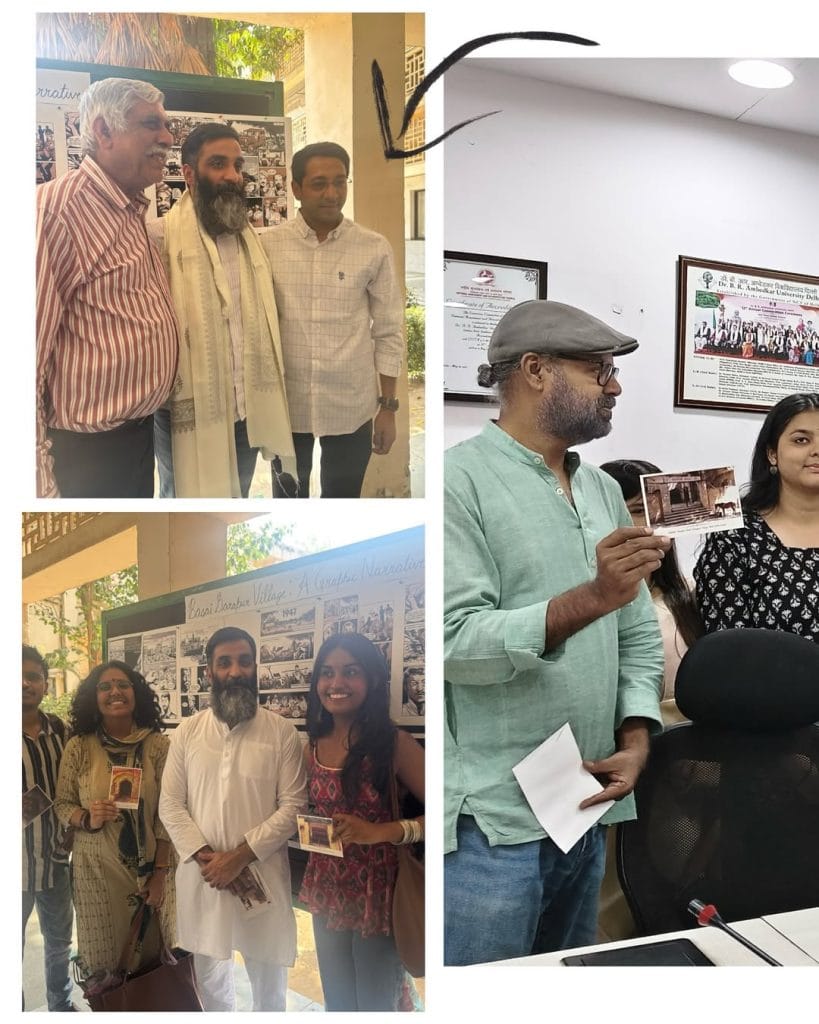
Tokas is now mentoring students to document these sites before the memory fades. He plans to publish short booklets on individual villages, with one on Munirka already in circulation, and to expand his walks into Katwaria Sarai, Vasai Darapur, and other villages. He also hopes to mount exhibitions on what they find.
Each site, he says, offers a different lens into Delhi’s past and present. Even the land where some of India’s most prestigious institutions now stand once belonged to Katwaria Sarai village.
“Large parts of farmland were lost to institutions like Jawaharlal Nehru University and IIT Delhi, creating a lingering sense of displacement,” Tokas said.
(Edited by Asavari Singh)