





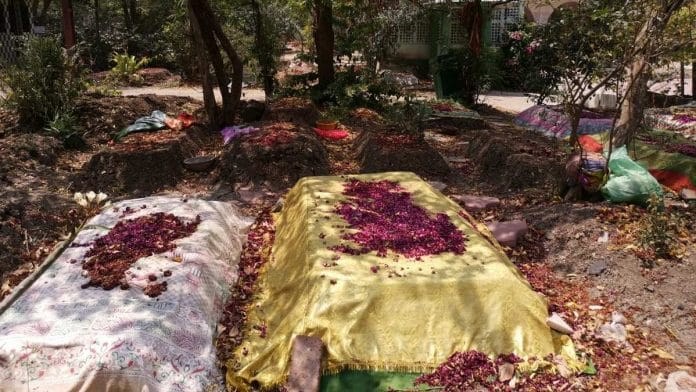


New Delhi: In Pakistan, even the dead are not spared from taxes. A massive increase in taxes across several provinces has increased the cost of burial shrouds and other funeral elements. Pakistanis are now taking loans to bury their dead.
A basic burial shroud and other essentials now costs between PKR 8,000 and 10,000, according to a report in The Express Tribune. A burial in Pakistan could now cost anywhere between PKR 50,000 and PKR 1 lakh.
“Funeral supplies alone cost around Rs 10,000, washing the body and related services about Rs 5,000, obtaining a grave between Rs 15,000 and Rs 25,000, grave digger charges around Rs 5,000, while meals for mourners after the burial commonly cost between Rs25,000 and Rs50,000,” the report said.
To make matters worse, graves in Rawalpindi have reportedly run out of burial spaces, which has led to grave plots being sold illegally at exorbitant rates.
An earlier May report in Express Tribune also found that, in Rawalpindi, the tradition of voluntarily digging graves has all but disappeared. There are also signboards declaring ‘no graves available’ across the city’s oldest cemeteries.
The customary post-funeral meals have been done away with, due to additional costs.
According to the report, low- and middle-income households have gone into debt over funeral prices leading local charities to call for the public to redirect money spent on traditional occasions like weddings toward helping families in need.
Apart from burial shrouds, even graves have become exorbitantly priced. According to the report, a brick-and-cement grave costs PKR 15,000 and low quality marble graves cost PKR 25,000. Customised marble graves cost up to PKR 30,000.
Also read: Pakistan gives life sentence to Baloch activist—some call it funeral of democracy
Blame the economy
Pakistan’s problem arises from its economic condition. The country’s annual inflation rate eased slightly to 11.07 per cent in June 2026, down from 11.7 per cent in May—a two-year high. It’s still higher than 10.9 per cent in April. While the decline offers some relief, the cost of living remains high, with housing, utilities, and transportation continuing to drive inflation.
The surge in inflation was largely fueled by rising global energy prices following the West Asia war.
Higher energy costs have also placed additional strain on Pakistan’s external finances. The strain prompted the State Bank to raise its benchmark interest rate in April for the first time in nearly three years in an effort to contain inflation and stabilise the economy.
The underlying problem remains largely unchanged. Year after year, the government avoids broadening the tax base, reforming inefficient state-owned enterprises, or reducing wasteful spending. As revenues fall short, it finances the gap by borrowing more from commercial banks, offering returns that exceed inflation.
The burden falls disproportionately on ordinary Pakistanis. Salaried workers, small shopkeepers operating on cash, individuals who avoid interest-bearing savings for religious reasons, and nearly 100 million adults without access to banking services have effectively financed this system through declining purchasing power and persistently high inflation, according to a Dawn report.
The government’s latest Economic Survey in June presented an optimistic picture. Finance Minister Muhammad Aurangzeb described Pakistan as an economy moving “from stability to growth,” citing lower fiscal deficits, stronger foreign exchange reserves, and a declining debt-to-GDP ratio as evidence of progress.
However, many economists, opposition politicians, journalists, and independent analysts remained unconvinced. Their reading of the survey points to a far less encouraging reality for ordinary Pakistanis. Despite improvements in macroeconomic indicators, poverty and unemployment have worsened. The unemployment rate increased from 6.3 per cent to 7.1 per cent during fiscal year 2025–26, while the number of unemployed people rose sharply from 4.5 million to 5.9 million.
(Edited by Theres Sudeep)