





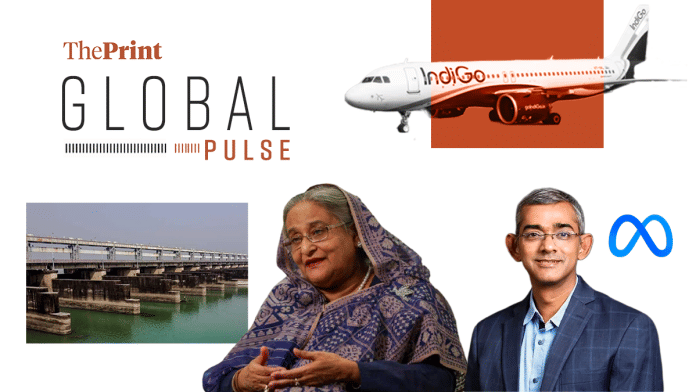


New Delhi: Ousted Bangladesh Prime Minister Sheikh Hasina’s planned virtual address from the Indian soil has drawn a sharp reaction from Dhaka.
In a report titled ‘Don’t allow Hasina to use Indian soil for politics’, The Daily Star mentions Bangladesh seeking India’s cooperation to ensure that not a single individual associated with the now banned political party in Bangladesh, Awami League, including the former PM Sheikh Hasina, use Indian territory “to deliver political speeches or engage in activities aimed at creating instability in Bangladesh.”
The article added that the Bangladeshi Prime Minister’s adviser on foreign affairs Humayun Kobir expressed this request to Indian High Commissioner Dinesh Trivedi after reports came out that Hasina might address the media on 5 August from India. Trivedi responded saying that India will take “due consideration”.
It added that for Dhaka if this happens, it can risk the progress that was made between India and Bangladesh recently in their bilateral ties.
Another article in The Daily Star titled ‘Why India and Bangladesh need a new approach to transboundary rivers’ suggests that the two neighbours should first adopt a climate focused approach to manage the shared rivers reports even as they prepare to renegotiate the 1996 Ganges Water Treaty before it expires in December.
In this article, Dr Md Sarwar Hossain, Alamgir Kabir and Sheikh Rokonuzzaman write that climate vulnerability is now being compounded by “water scarcity, and transboundary water conflicts.”
The authors write that rivers should be seen as “social-ecological systems” in which all three, environmental, economic and also governance challenges, are interconnected.
The article warns that when the treaty is renewed, it should account for factors including climate change, upstream dams. With China planning its mega dam on the Brahmaputra, this could also further strain regional water security, it adds.
The trio note that cooperation is essential as “the solution to transboundary water challenges is neither simple nor straightforward” and urge governments to prioritise “human wellbeing, water security, and climate resilience at the centre of their policy agendas.”
Operational challenges of India’s largest airline IndiGo have caught the global media’s attention. The Gurugram-headquartered airline is reducing its international expansion of routes due to many operational and financial pressures, says an article titled ‘India’s IndiGo struggles to emerge from turbulence’ in a newsletter by Financial Times (FT).
The airline, it says, will “discontinue its wide-body operations from October 25 and end its lease agreement with Norse Atlantic Airways by October 31” due to a “shifting operating environment” marked by “airspace constraints, elevated fuel costs and currency pressures” that have affected “route efficiency, schedule integrity and overall competitiveness.”
Despite this, the article reports that the airline remains to maintain its long-term plans intact with the management telling “analysts in June that the airline intended to raise its share of international operations to 40 per cent by 2030, from about 30 per cent at present.”
Separately, Meta is facing regulatory scrutiny after police in Telangana registered a case against the tech giant and its Indian operation head, Arun Srinivas, over videos that users posted allegedly depicting Prime Minister Narendra Modi “in an abusive manner”, reads the FT article in the newsletter titled ‘Meta in hot water’.
This case also follows an earlier dispute in which the Ministry of Electronics and Information Technology (MeitY) summoned Meta after Modi’s posts were restricted for a brief moment, but Meta said the restriction was “an error in its automated moderation and restored the videos”. The government, however, had asked the company to “come in at the highest level” to explain the incident.
When these developments are taken together, it indicates the multiple challenges lie ahead for India, from having delicate ties with Bangladesh to water diplomacy along with climate change as a major factor to also facing domestic discontent to the tightening of digital platforms and to navigating economic uncertainty in the country.
(Edited by Tony Rai)
Also Read: Global media writes on man who ‘humbled India’s PM’ & human cost of NEET paper leak