


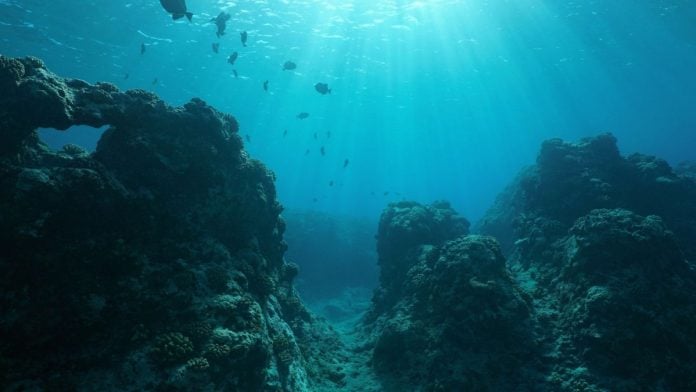
New Delhi: The United States under President Donald Trump completed its first-ever offshore critical minerals lease sale, auctioning two large tracts of seafloor near American Samoa. The decision came amid strong opposition from local communities and environmental groups, and a federal court’s ruling that the process violated the Endangered Species Act.
The Marine Minerals Administration (MMA), under the Department of the Interior, sold two 20-year leases covering approximately 31.5 million acres of federal waters 150 to 240 miles east of Pago Pago. The tracts sold for the minimum bid of $3 million each, for a total of $6 million. According to a spokesperson for the MMA, the only bidding company, Wetstone US Ventures was the provisional winning bidder. Wetstone ventures is a New York-based deep-sea mining company.
“This is the first time the United States has held an offshore critical minerals lease sale in the Pacific and a historic step for America’s energy and mineral security,” said Interior Secretary Doug Burgum in a statement.
Acting MMA Director Mike Olsen referred to it as advancing “the responsible development of America’s offshore critical mineral resources,” noting that critical minerals are essential for electronics, clean energy technologies, national defense, and reducing reliance on foreign suppliers, particularly China. Trump passed an Executive Order in April 2025 to unleash offshore critical minerals.
The leases initially authorise only limited preliminary activities such as bathymetric and geophysical mapping, biological sampling, and oceanographic measurements. Commercial mining or testing would require additional environmental reviews, technical approvals, and permits. The areas are adjacent to the Rose Atoll Marine National Monument and are believed to contain polymetallic nodules rich in nickel, cobalt, copper, and manganese.
On 16 November, US District Judge Jill Otake in Hawaii ruled that the National Marine Fisheries Service violated the Endangered Species Act by failing to adequately consider the potential effects of post-leasing exploration and mining activities on protected species. The judge vacated the agency’s letter of concurrence, however the judge did not issue an injunction blocking the auction.
Earthjustice attorney Chris Eaton, representing local groups, called the decision to proceed “a renegade, unlawful act” and said in a statement, “We will use the full extent of the law to vigorously push for the leases to be voided.”
The MMA acknowledged the ruling and said it had initiated further consultation with the fisheries service.
Also read: Reporters out, bots in? Crypto journalism goes AI with layoffs, fake bylines, piles of slop
Opposition has been intense
“More than 76,000 public comments, repeated calls for meaningful consultation, and now a federal court ruling that the government violated the Endangered Species Act. Yet here we are, watching our ocean being auctioned to the highest bidder.” Sabrina Suluai-Mahuka, founder of the American Samoan youth and environment group Finafinau, said to the Guardian.
Guam Senator William Parkinson told the Guardian that the move was treating the ocean as “a corporate commodity and Pacific Islanders as expendable.”
Groups including Fa‘asao Amerika Samoa and the Conservation Council for Hawai‘i, represented by Earthjustice, have filed multiple lawsuits challenging the process on cultural, environmental, and legal grounds, emphasising the ocean’s role in Samoan identity, food security, and stewardship of sacred species.
Proponents, including some local voices, argue the industry could create economic opportunities and support the energy transition. However, scientists and critics highlight significant uncertainties and risks. They note that the deep-sea ecosystems are poorly understood and mining could generate sediment plumes, destroy habitat for unique species, contaminate the food chain with heavy metals, and cause irreversible biodiversity loss.
Finafinau has filed another lawsuit asking the court to nullify the lease sale.
“Despite venturing into largely uncharted territory, MMA recklessly accelerated environmental review,” its court filing states. “With this lease sale, the federal government has rushed to open the ocean floor to commercial mining for the first time, despite its limited understanding of the significant environmental consequences.”
No commercial-scale deep-sea mining currently operates anywhere in the world.
(Edited by Ratan Priya)