



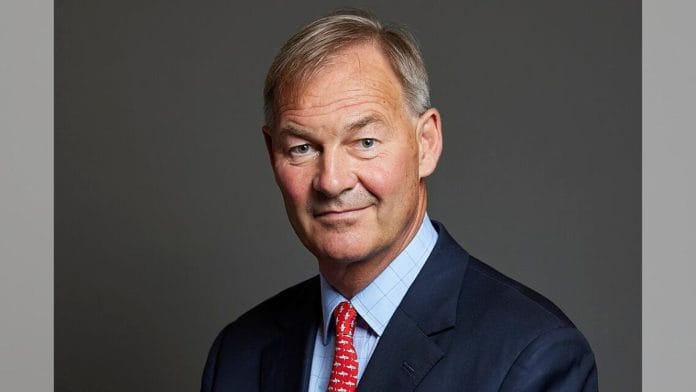
New Delhi: British politician Rupert Lowe’s report on grooming gangs has reignited one of the most divisive debates in British politics, drawing attention not only to its harrowing accounts of abuse but also to the way it frames the scandal politically. The document presents itself as a sweeping examination of child sexual exploitation, yet its language, claims, and conclusions make clear that it is also an argument against immigration, multiculturalism, and Muslim communities.
Lowe, who was originally associated with Reform UK before leaving the party in 2025 to launch Restore Britain, a new political party positioned on the Right to far-Right of the spectrum, released ‘The Rape Gang Inquiry Report’ on X on 16 June. The report says the inquiry was established to examine the “systematic targeting of vulnerable girls, overwhelmingly White British, by predominantly Muslim Pakistani gangs across towns and cities up and down the nation.” It argues that police, social services, schools, the NHS, licensing authorities, and governments allowed these gangs to operate “with impunity.”
The report says it is “survivor-led” and was headed by Sammy Woodhouse, a survivor-turned-activist who has long campaigned on grooming gang abuse. According to Lowe, the inquiry was publicly funded, with more than 20,000 people contributing over £600,000.
Much of the document is built around testimony of survivors, relatives, and whistleblowers. It says organised networks of perpetrators transported victims between locations, supplied them with drugs and alcohol, recorded abuse for blackmail and passed girls between multiple adult men. It claims these crimes have been taking place since the 1950s and that the same patterns were found in at least 149 local authority districts, or nearly 40 per cent of all such districts across the UK.
According to the report, the grooming method typically followed the same route: young girls were befriended by Muslim men, given alcohol, drugs, and cigarettes, and then collected from school gates, care homes, and streets before being taken away and raped repeatedly by groups of men.
The report repeatedly argues that the abuse was not simply a series of isolated local failures, but part of a national pattern. One of its most striking claims is that, “at the very least, 250,000 young white girls have been subjected to repeated rape, gang rape, trafficking, torture, pregnancy, forced Islamic conversion and lifelong trauma.” The figure is not presented as new data from the inquiry itself, but is attributed to a 2019 House of Lords debate. The report says the “true number is probably higher”.
Later, however, the report acknowledges that “the 250,000 figure is not a precise count. No such count exists because the British state has failed to record it. But we may regard it as a conservative estimate that accounts for the organised, repeated nature of the abuse.”
Using an analysis of 264 convictions for group-based child sexual exploitation from 2005-2017, based on a 2017 Quilliam research paper, the report states that 84 per cent of offenders were South Asian, with the vast majority Pakistani Muslim. Only 7 per cent were white and 8 per cent black. It concludes that “rape gangs are a specific ethnoreligious phenomenon, with Muslims — especially Pakistani Muslims — significantly overrepresented.”
It also cites material from Christian Concern, an evangelical advocacy group, to claim that around 87 per cent of those convicted in group-based child sexual exploitation cases bore distinctly Muslim names. The report further argues that the overwhelming majority of the gangs consisted of men from Muslim backgrounds, predominantly Pakistani but also Somali, Iranian, Syrian, Turkish and others.
Going further, the report correlates the increase in rape cases in the UK with large-scale immigration, contrasting it with Poland, which it says maintained relatively low levels of immigration during the same period and experienced a decline in reported rapes.
Also read: Taliban’s family law makes divorce harder, child marriage easier in Afghanistan
Polarising claims?
The report’s scale claims are among its most disputed features as it does not present original data to establish those figures, instead drawing on court records, earlier inquiries, and advocacy material.
Its central argument is that the abuse was driven not only by individual criminals but also by demographic and cultural factors. The report says Pakistani Muslim and other Muslim-background perpetrators operated under an “honour- and shame-based clan code” that treated non-Muslim girls, especially white working-class girls, as property available for sexual use. It also says this was reinforced by theological and legal aspects of Islam. Those claims are likely to intensify criticism that the document moves beyond documenting abuse into broad religious and ethnic generalisation.
Lowe’s own remarks after the report’s release further sharpened the controversy. In a post on X, he wrote that migrants had “colonised large parts of our country” and that authorities were “too frightened of being called racist to challenge them.” He added: “A Restore Britain Government will remove millions of foreign nationals who hate our way of life and have no reason to be in our country. Gone, and never allowed back.”
Elon Musk has also repeatedly posted about grooming gangs and advocated tougher action. Sharing a video of Lowe, Musk wrote: “The politicians who turned a blind eye to the Rape of Britain must go to prison.”
The report’s recommendations are far reaching. It states that “every foreign national convicted of group-based child sexual exploitation must at the very least be deported,” adding that British citizens holding dual nationality should automatically lose their citizenship upon conviction and become liable for deportation. It further recommends that family members who have “supported, harboured or failed to report the offending” should also face deportation proceedings unless they can prove active cooperation with authorities or no prior knowledge.
In the end, the document seeks to force a reckoning over abuse and institutional failure, but does so through language and conclusions that have already ensured fierce debate over whether it illuminates a scandal or deepens Britain’s polarisation around it.
(Edited by Aamaan Alam Khan)