





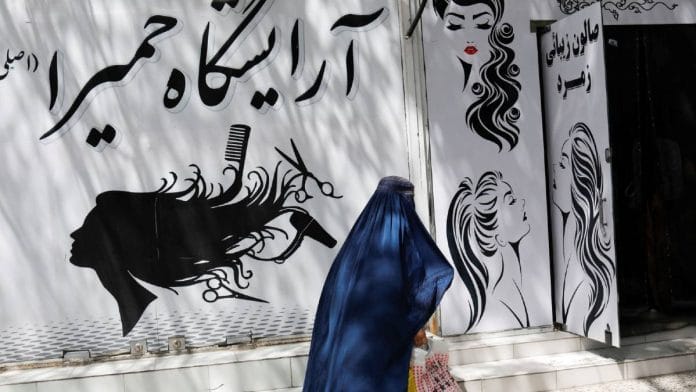


New Delhi: Little Afghan girls are being sold in marriage. Taliban’s new family law has normalised child marriage and made it impossible for women to divorce their husbands.
In a country where women are kept away from education, jobs, or any public life, most citizens are struggling for basic needs. It makes sense because half of the population isn’t allowed to work. Beaten down by the state of the economy, parents have had to sell their children, mostly daughters.
“If they have to sell one child for the sake of the rest, they always pick a girl,” Zahra Nader, editor-in-chief of Zan Times, was quoted as saying. “And the most common way that a girl can be sold is in marriage.” Nader is an Afghan woman exiled in Canada.
She added that by introducing the new law, Taliban is trying to remove women from society and normalise child marriage. By making them create families so young, the regime is also making sure that these women never escape their homes. The new law makes divorce impossible for women without the husband’s consent. The young girls in forced marriages have also reportedly been dealing with domestic violence at an increasing rate. Then they are forced into staying in the marriage by society. According to the authoritative regime, a child stops being a child after the age of nine. This way, she can be married off any time after that.
Also read: 7 tech founders made $210 billion in America in just 24 hours, says Bernie Sanders
Forever in the lock up
Since Taliban banned education for girls above the age of 11, over 70 per cent of women have been forced into marriage, and 66 per cent of them are under the age of 18, according to a Guardian report. In May this year, many Afghan women staged a protest against the new family law. Women’s rights activists said that it is a form of systemic violence against women and children. Predictably, it made no impact on the regime.
Apart from taking gender equality further back by decades, the new decree is also expected to increase poverty in Afghanistan.
“Taliban restrictions on women are likely to increase the country’s dependence on humanitarian assistance even as international aid budgets continue to shrink,” a Nikkei Asia report said. Women, who account for half of the population, aren’t able to participate in the country’s economy. Experts also said that it will amount to larger families and more pressure on the healthcare system.