





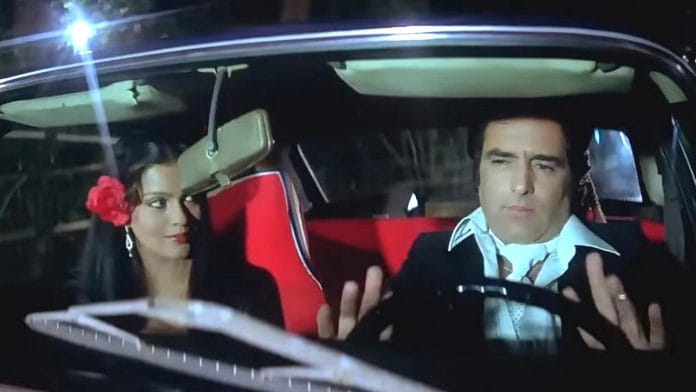


More than four decades after Qurbani became the biggest hit of 1980, Aap Jaisa Koi, Laila O Laila and Qurbani Qurbani are still reliable ways to up the tempo at flagging dance parties and sangeets. With its disco swagger, big-hearted bromance and messy love triangle, the film showed Bollywood a new kind of cool that has somehow never become dated.
By the end of the 1970s, the Angry Young Man formula was beginning to get saturated, as were themes of rage and social justice. Feroz Khan had already been looking West for inspiration: first with Apradh in 1972, and then the hit Dharmatma in 1975, modelled on The Godfather. But with the multi-starrer Qurbani, he gave Bollywood a brash new dose of global glamour.
Starring Khan, Zeenat Aman and Vinod Khanna, the film supplied plenty of fresh ingredients to the world of Hindi cinema, including sultry vocals by a 15-year-old Pakistani schoolgirl named Nazia Hassan; a Mercedes-Benz being cheerfully wrecked on screen; and a story that swept its lovers and assorted villains from Bombay to London.
Not just remixes, Qurbani has recently found itself back in the news. Amid the row over Dhurandhar‘s political messaging, Khan’s opening voiceover tribute to Indira Gandhi (“iron lady of our nation”) and Sanjay Gandhi (“the prince sleeps in peace”) recently resurfaced online, leading to much discussion.
Also Read: Gulzar’s ‘Maachis’ is a relic of an India that could sit with uncomfortable history
Love, loot and sacrifice
Made on a then lavish budget of Rs 1.55 crore, Qurbani was among the most expensive Hindi films of its time. Khan spared no expense on new camera equipment, elaborate sets, custom props and extensive UK schedules. The gamble paid off: the film reportedly earned Rs 13.8 crore and became a blockbuster.
The film’s plot is a masterclass in classic Hindi commercial melodrama. Rajesh (Feroz Khan), an expert safe-cracker, is in love with Sheela (Zeenat Aman), a refreshingly unapologetic nightclub singer who somehow knows nothing about his criminal life.
When an arrest lands Rajesh in prison for two years, a devastated Sheela is left behind until a new suitor Amar (Vinod Khanna) comes along. A widower trying to clean up his act after a checkered past in Rakka’s (Amrish Puri) gang, Amar rescues Sheela from a biker gang. The two bond over his young daughter and eventually fall in love, despite her lingering feelings for the incarcerated Rajesh.
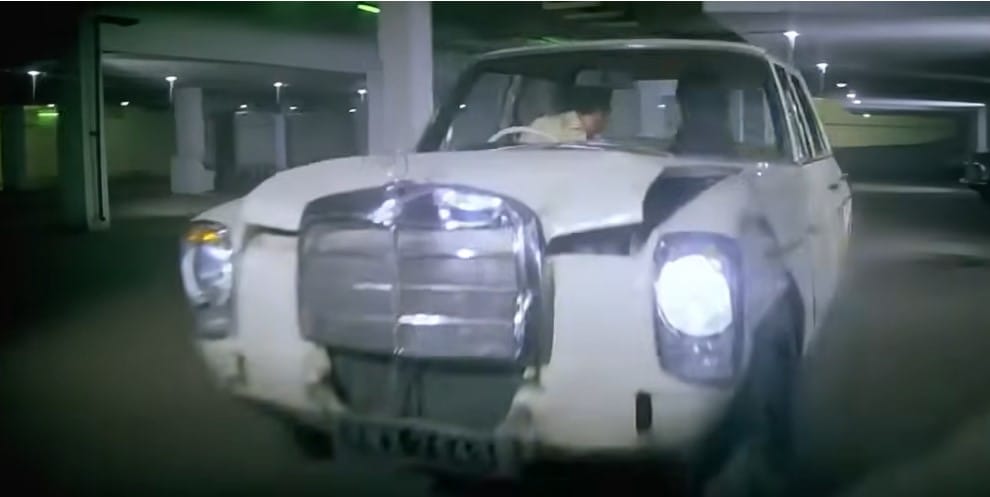
Early in the film, Khan sets the tone for the movie’s sleek ethos when Rajesh encounters Rakka in an underground parking lot. Irked by the gangster’s arrogance, Rajesh goads him into a bet and systematically wrecks Rakka’s luxury car. At a time when few people in India had ever seen a Mercedes-Benz, intentionally destroying one on camera reinforced Feroz Khan’s reputation for uber-cool, high-roller style.
The qurbani (sacrifice) aspect of the film plays out when Rajesh is released from prison and unknowingly befriends his romantic rival, even saving Amar’s life. But it’s not quite a tearjerker with the duo of Vikram (Shakti Kapoor) and Jwaala (Aruna Irani) managing to combine humour and villainy and plenty of action, complete with theft, framing and international crime syndicates.
The film also cemented Zeenat Aman’s position as one of the decade’s defining style icons. It was later remade in Turkish as Çare Sende Allah’ım in 1984 and in Tamil as Viduthalai in 1986, starring Sivaji Ganesan and Rajinikanth.
Behind-the-scenes drama
The theme of ‘qurbani’ echoed in the making of the film too. Initially Feroz Khan wanted to sign up Amitabh Bachchan for his magnum opus, but the star reportedly declined due to a conflict with the dates. And so the role went to Vinod Khanna, the only star of the era matching Bachchan’s smouldering screen presence.
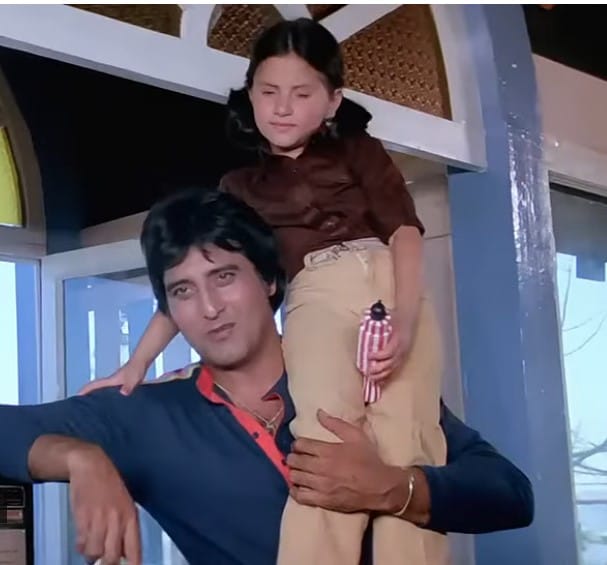
The story goes that to seal the deal Khan offered Khanna an unprecedented remuneration: the entire distributor’s share of the Bombay territory.
However, Khanna was edging toward a qurbani of his own. A devotee of Osho and questioning the whole point of money and glamour, he left the film industry for several years. He also reportedly donated all his earnings from the film to Osho. According to journalist and YouTuber Abhisar Sharma, Khan was bitter about this, saying he could have used that money to make “ten Qurbanis”.
The casting of Shakti Kapoor as the villainous Vikram was pure serendipity. Driving around Linking Road in Bandra, Feroz’s Mercedes rear-ended an old Fiat at a traffic signal. Out stepped an aggressive Delhi boy, furious over the damage to his first big car purchase in Bombay. The young man was Shakti Kapoor. The moment Kapoor recognised the owner as Feroz Khan, his anger morphed into networking; he immediately pitched himself as an aspiring actor. Khan tracked him down later and signed him for the film.
Also Read: Roti Kapada Aur Makaan captured India’s crises in the 1970s
Disco revolution
All the songs were huge hits. In the 1980 Binaca Geetmala year-end rankings, Aap Jaisa Koi came in at No. 4, Laila O Laila at No. 6, Tujh Pe Qurban Jaoon at No. 25 and Kya Dekhte Ho at No. 26. The soundtrack became one of the year’s biggest-selling albums and achieved platinum sales.
The music has proved remarkably durable, with numerous remixes over the years. Laila O Laila was also recreated for Shah Rukh Khan’s Raees in 2017, with Sunny Leone dancing to the song and turning it into a chartbuster all over again.
Most of Qurbani’s music was composed by Kalyanji-Anandji, including Laila O Laila, Kya Dekhte Ho and the title song. But Feroz Khan wanted one track with a radically different, international sound.
While visiting the UK, Khan attended a dinner with the family of a young Nazia Hassan. Her parents asked him to listen to her sing. Impressed by the “nasal quality” of her voice, he promised to give her a break.
Around this time, Khan approached Biddu, the Indian-born, London-based composer and producer behind international disco hit Kung Fu Fighting, recorded by Carl Douglas. Biddu wanted little to do with Bollywood, but Khan coaxed and cajoled him—appealing to their shared Bangalore roots—until he agreed on the condition that the song would be recorded entirely in London. Nazia auditioned with a rendition of Biddu’s Dance Little Lady Dance and bagged the job.
Biddu composed a new song, and Khan paired it with lyrics that some accounts say Indeevar had originally penned for Dharmatma but which went unused. The track revolutionised South Asian pop music, bringing Western disco-synth rhythms to mainstream Bollywood. At just 15 years old, Nazia Hassan became the youngest recipient of the Filmfare Award for Best Female Playback Singer—a record that stands unbroken to this day.
On the film’s 44th anniversary in 2024, Zeenat Aman paid tribute to Hassan, who died in 2000: “Qurbani had a star-studded cast… but to me there is only one breakthrough performance in the film. And that’s Nazia’s.”
(Edited by Asavari Singh)