



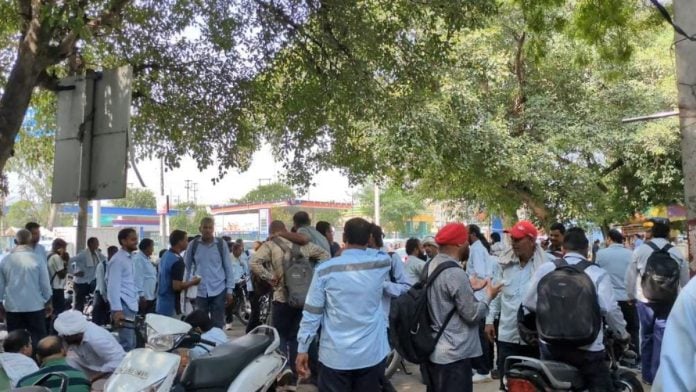
New Delhi: For 15 years, Chandra Hashmi has driven a Delhi Transport Corporation bus through the capital’s traffic. In that time, his pay hasn’t moved.
“The daily wage that a brand-new recruit is offered today is the same one I was offered fifteen years ago. There has been no real progression,” he said.
Hashmi is one of hundreds of drivers who have brought Delhi’s bus network to a standstill for the fourth straight day, the city’s first DTC strike since 2018.
Around 700 to 900 DTC bus routes operate in Delhi-NCR daily, linking roughly 5,000 mapped bus stops and carrying millions of commuters. For the past four days, the entire network has stood silent.
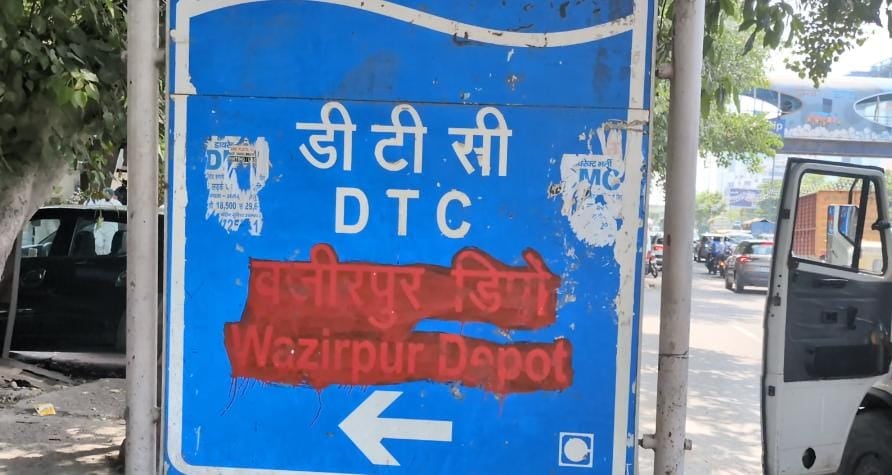
“Our main issue is with the wage,” said Hashmi, one of the protesting workers at the Wazirpur depot. “We get paid only Rs 862 for a whole day of work. Considering 26 working days, that adds up to only Rs 22,000 for the entire month.”
Hailing from Sonipat, Haryana, Hashmi started with great hope for his livelihood. Over the years, his responsibilities and expenses in the city have gone up; his income has not.
On top of the meagre pay, deductions are taken out — provident fund, fines, damage to the vehicle. There is no paid leave and no medical cover.
“We only receive the wage if we come to work,” said Sumit, another driver. “If we fall sick and stay home, we get nothing. There is no medical facility, no paid leave. If you get a fever, there’s no ESI.”
‘Equal pay for equal work’ — turned back on the govt
The bitterest comparison drivers draw is with the men who used to drive the very same buses before the current contract system took over: DTC’s permanent staff. Before the contractual system, they say, permanent drivers took home anywhere between Rs 80,000 and Rs 1,00,000 a month for the identical job.
“We are driving the exact same buses, and we get only Rs 22,000,” a driver said, almost bewildered by his own sentence. Hashmi invoked the prime minister’s own language back at the protest.
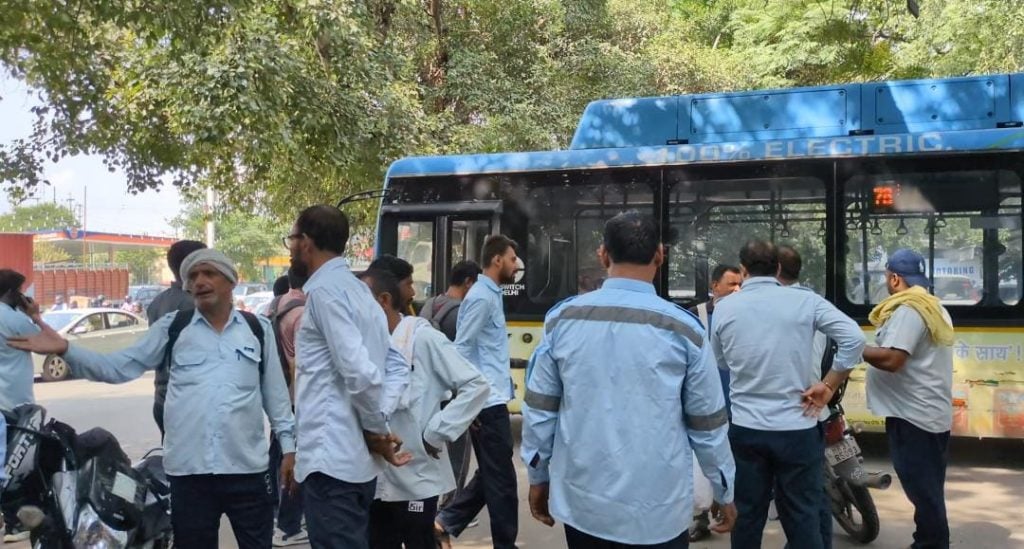
“PM Modi said, ‘Equal pay for equal work.’ But it is just words. Our basic starting salary should be at least Rs 37,000 to Rs 40,000. We aren’t even asking for what permanent workers get. What are we asking that is wrong?”
Gurmukh Singh, one of the drivers leading the protest, listed five key demands, reading off a charter on his phone: Rs 1,500 as the daily wage; an insurance policy for drivers; free refreshments and rest spaces at the depots; and employee benefits, including medical cover for families and bonuses.
Also read: Ahmedabad or Constructionabad? Gujarat city is all dug up
Bribes and intermediaries
Layered on top of the wage complaint is a grievance drivers describe with more anger than the salary itself: the annual “badge”, or special permit, that any driver from outside Delhi must renew every year to legally drive a bus inside the capital. The official fee, drivers say, is around Rs 400. What they are actually asked to pay, routed through brokers who drivers allege are in league with RTO staff, runs to Rs 4,000 or more.
“If we take our documents directly, they reject them. They start finding fault with our Aadhaar card,” Hashmi said. “But if we process it through these brokers, the same Aadhaar card suddenly becomes valid.”
Hashmi, whose documents were verified once already when he was hired years ago, called the yearly renewal “just a way to extract money from us, nothing else.”
Drivers also singled out the private companies DTC brings in to run and staff its electric bus depots, arguing that these intermediaries are where much of the money meant for wages disappears. One name came up repeatedly at Wazirpur: BVG India. The company, formally called Bharat Vikas Group, was founded in 1997 with a stated aim of creating rural employment and has since grown significantly, with a workforce spanning housekeeping, facility management, waste management, logistics and integrated services contracts across the country.
The company handles the contractual drivers, acting as a middleman between DTC and the workers. Drivers say it now stands between them and DTC, taking a cut while pushing risk and low pay down to the men on the road.
“We want all these intermediary private companies removed,” Singh said. “Doesn’t the government have its own system? They have ATIs, DEOs, workshops, washing facilities — everything. Yet look at the scam — they handed control over to private contractors, doubling the cost.”
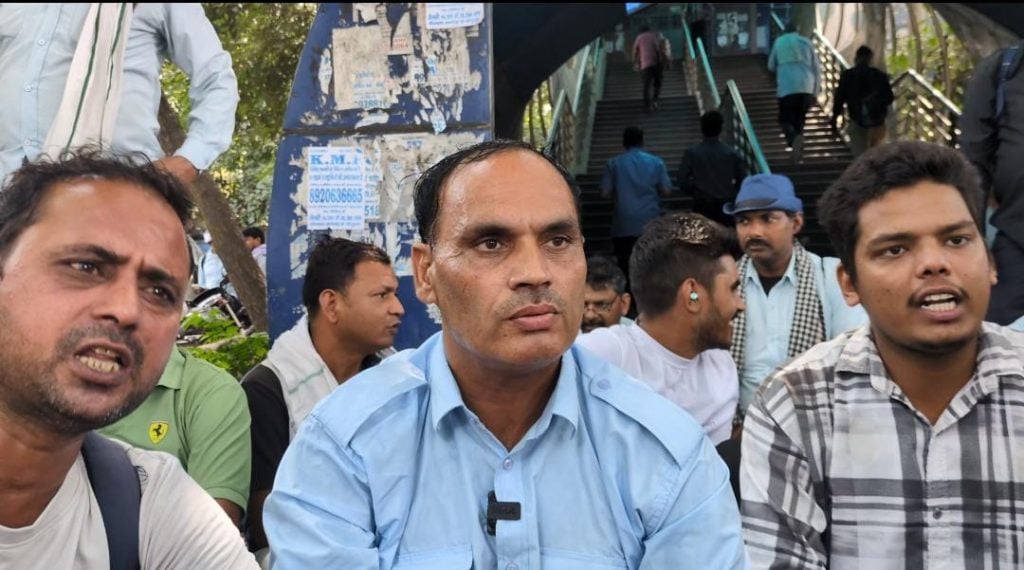
Drivers allege the company deducts wages over any damage to the buses.
“If anything happens on the road, it becomes our responsibility. Any tyre puncture, any dent, any challan. It is upon us,” Hashmi said.
He described being fined Rs 2,000 on a day at work simply because he was out of uniform.
“My uniform shirt had gotten drenched in the rain, and I had to change out of it. I was carrying the uniform with me as proof, and yet they fined me,” he recalled.
Hashmi and his peers question how they are supposed to earn a living when fines cost more than their daily wage.
“I haven’t been able to save any money for the past seven years,” Singh said. “I have a house to pay the rent of, a family to feed and children to educate. How do I make any profits in these conditions?”
If a driver is injured or killed on the road, the cost of treatment falls on the driver. Colleagues often step up for each other more than the authorities do.
“A driver got injured recently at Nagloi. He was getting treated at Jaipur Golden Hospital, and then he was at AIIMS,” Hashmi said. “He gave all the bills to the DTC, but no claims or insurance were issued. They see us as replaceable.”
The injured driver has since resumed work, after shouldering a hefty treatment bill himself; his colleagues chipped in what little they could to help.
Duty officers
A little distance from the striking workers, duty officers and conductors go about a version of their normal day — a subdued one. None have joined the drivers, and none are expected to: service rules and the risk of departmental action keep them from openly declaring support. Privately, though, they have expressed sympathy.
“We sympathise with their problems, of course,” one duty officer at the spot said. “But we cannot stand with them because it could cost us our jobs.”
Duty officers hold worker benefits the drivers do not share. Drivers allege that even shift allocation among duty officers isn’t free of the same culture of small bribes they describe around the badge system.
“If you bribe them or buy them drinks, they give you good shifts; otherwise, they don’t,” Hashmi said.
It may explain why solidarity, however quiet, extends more easily downward than upward through the depot’s hierarchy.
Also read: From art walls to urban forests—New Delhi’s Lodhi Colony gets its first Miyawaki Forest
A history that keeps repeating
Wazirpur’s sit-in is not without precedent. In 2018, contractual drivers and conductors mounted what union leaders at the time called the first major DTC strike since 1988, demanding equal pay for equal work and regularisation. That walkout ended within days after the Delhi government invoked the Essential Services Maintenance Act, banning strikes across the corporation for six months.
The 1988 precedent runs deeper still. In March that year, seven trade unions at DTC served strike notices, demanding the corporation extend the benefits of the Fourth Pay Commission to its staff, and went on an indefinite strike from 17 March.
It dragged on for weeks and ended only after the government declared it illegal and dismissed 3,125 DTC employees — most of whom were reinstated more than a year later.
Government response
Wazirpur and other depots on strike have stayed occupied even as the government has begun edging toward the drivers’ demands — if not all the way.
On Thursday, Delhi’s transport minister Pankaj Singh appealed to the striking workers to call off their protest.
“We held a meeting with the drivers and the private concessioners. Most of their demands have been approved. Only the issue related to a salary hike remains, and the government will have to take it forward after consultation with the labour department,” Singh told reporters. “I would appeal to the drivers to call off their strike now and not get misguided.”
He said medical insurance for drivers had been agreed to, that extending the same cover to family members was under consideration, and that a proposal for four weekly offs, along with the wage hike itself, had been forwarded to the labour department for a decision.
The union was not persuaded.
“They are threatening us, asking us to return to work. 17 of us have been blacklisted only because we protested,” Sumit said. Hashmi alleged that a duty officer confiscated his bag to “punish” him for protesting.
“They have also threatened us with police action and lathi-charge, but none of it will work,” Hashmi declared. “We will protest until all demands are met.
(Edited by Prashant Dixit)