



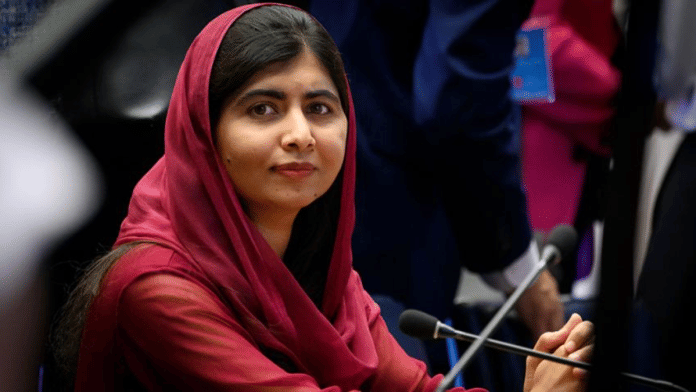

New Delhi: Nobel Peace Prize laureate Malala Yousafzai has shared her hurt and disappointment with the European Union’s decision to invite the Taliban government to Brussels to discuss a migration deal.
In a video shared on Instagram, the 28-year-old human rights activist said that she was “shaken and deeply disturbed by this.”
Yousafzai went on to list the Taliban’s growing, strict and regressive laws and treatment of women.
“This is the same Taliban that banned girls from secondary schools and forced them into marriage. The same Taliban that, earlier this month, arrested dozens of women in Herat for how they were dressed. The same Taliban that detains, beats and executes women who dare to speak out or break their rules,” she said.
She added that what the Taliban regime had done to Afghan women was essentially a “gender apartheid.”
Since assuming control as a de facto government in 2021, the Taliban has imposed a strict interpretation of Sharia Law. Through its orthodox view of the Islamic personal law, the regime has stripped women of all rights and imposed draconian morality laws. Despite widespread calls by activist groups, the Taliban’s treatment of women has mostly lacked formal recognition from most of the international community.
Over the past five years, the Taliban has erased women and girls from public life.
“Europe must not legitimise a regime responsible for one of the worst human rights crises in the world,” Yousafzai urged.
She also said that all and any engagement with the Taliban “must begin and end with the rights of Afghan women and girls.”
A migration deal
Taliban officials will be arriving in Brussels on 23 June to discuss the return of failed asylum seekers. Belgium issued the Afghans one-day visas for their talks to curb illegal migrations and increase deportations.
Al Jazeera reported that the EU was looking into ways to return persons who have committed serious crimes and who are possibly a security threat.
“This is the initiative that the Commission is now following up on,” European Commission spokesman Markus Lammert told reporters on Monday.
However, spokespersons for the Commission also said that the meeting does not mean that Brussels has formally recognised the Taliban as a legitimate ruler.
Fereshta Abbasi, Afghanistan researcher at Human Rights Watch, said that the priority should be to protect human rights in Afghanistan and not “deporting people to danger there.”