



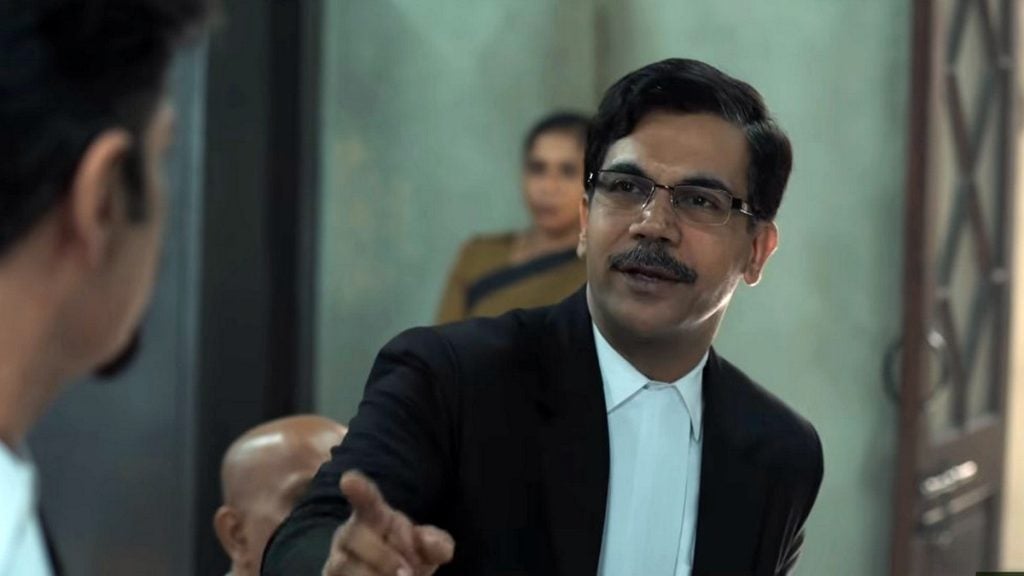
Mumbai: Rajkummar Rao had never watched Ujjwal Nikam argue in court or even met him before shooting began for Prahaar: The Untold Story of Ujjwal Nikam. All he had to go on were conversations with Nikam’s son Aniket and videos of the prosecutor in court. They met for the first time on set when the actor was already dressed as Nikam, down to his trademark glasses. The resemblance wasn’t the only thing that floored the public prosecutor and Rajya Sabha MP.
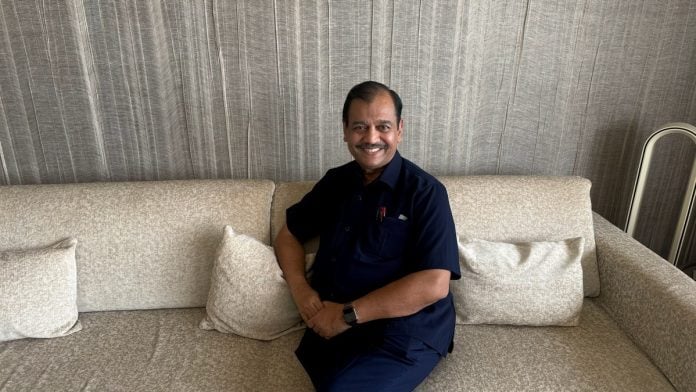
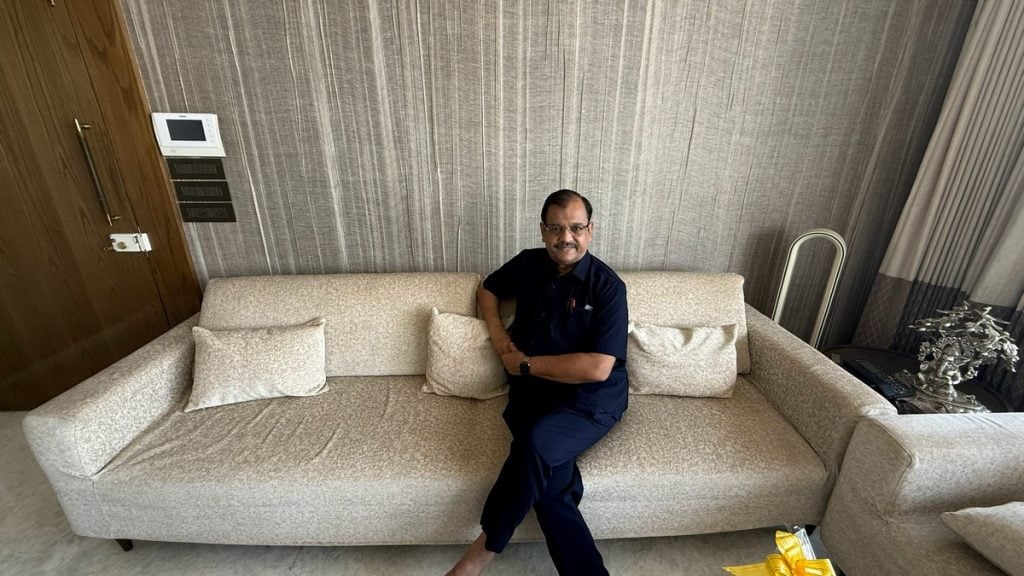
“Rajkummar has given a marvellous performance. Many of the lawyers who have watched me argue in court with that force, that emotion, that body language and action will say, ‘This is Ujjwal Nikam’,” he told ThePrint in an interview, seated on a plush sofa in his spacious 29th-floor Mumbai apartment, overlooking the Bandra-Worli Sea Link and the open waters beyond it.
Rao was not the first actor considered to play the swashbuckling lawyer. Aamir Khan had also been approached, according to Nikam.
“Aamir Khan had shown much interest in the film. But he said it would take another five to seven years, and the makers did not want to wait that long,” Nikam added.
Nikam has prosecuted some of India’s most closely watched criminal cases—the 1993 Mumbai blasts, the Gulshan Kumar murder, the Shakti Mills gang rape and the trial of Ajmal Kasab after the 26/11 attacks. The cases brought him national recognition, including a Padma Shri in 2016 and a seat in the Rajya Sabha last year. But he is still practising law. He told ThePrint that he now spends little time in Mumbai because his cases take him all across Maharashtra.
Now, the Kasab trial is at the centre of Prahaar, a biopic on Nikam’s life directed by Avinash Arun and produced by Dinesh Vijan’s Maddock Films. The film releases on 16 October. In his conversation with ThePrint on Saturday morning, Nikam was expansive and quick to smile even as he discussed some of the harrowing crimes he had prosecuted.
The case that gave him the greatest satisfaction was neither the 1993 Mumbai blasts, which propelled him to national prominence, nor the Kasab trial. It was the Kolhapur child-murder case against sisters Renuka Shinde and Seema Gavit. When the two women were sentenced to death, children arrived at the court carrying sugar to distribute as prasad.
Nikam recounted matter-of-factly what the children had told him: “Ujjwal Nikam has killed these demonesses.” But his demeanour changed when he explained what the moment had meant to him.
“That was when I felt I had been born for this,” he said, with unmistakable pride. “I was born on Hanuman Jayanti. This was what I had to do in life.”
Also Read: Mona Singh looks for the X factor in every script she picks. From Jassi to Happy Patel
‘I do not want anyone to make a mockery’
When producer Dinesh Vijan and director Avinash Arun first met Nikam at Mumbai’s Residency Hotel, where he has taken meetings for years, the conversation lasted four to five hours. Three or four more long sittings followed.
The filmmakers were interested in the cases, but also in the life Nikam had built around them.
“The terror attack of 26 November was not a new subject. And I told them, ‘There is nothing unusual in my life that you can capture’,” Nikam recounted.
But the filmmakers had done their homework. They reminded him of his own journey to Mumbai.
“They told me, ‘You were not a resident of Mumbai. You came here in 1993 for the Bombay blasts case, stayed in one room in a hotel in Fort and kept returning to Jalgaon’,” he said.
Before the Mumbai blasts case, Nikam had been based in his home town Jalgaon, where he started out as a civil lawyer before switching to criminal law and becoming a district public prosecutor. He had also handled the 1991 Kalyan railway bombing case. The Mumbai blasts trial ended up stretching on for over a decade.
For 13-and-a-half years, Nikam spent the working week in Mumbai and returned to Jalgaon for the weekend. He would leave Mumbai on Friday night, reach home early on Saturday and set off for the city again on Sunday night.
Nikam saw very little of Mumbai during those years. His life in the city ran between the Residency Hotel, the courtroom and the high-security court inside Arthur Road Jail.
“I spent 13 years in Arthur Road Jail,” he said.
The weekly commute has ended, but the travel has not. Nikam said he is rarely in Mumbai even now because his cases take him to Pune, Satara, Sangli and Solapur, among other places. That is also why he does not maintain an office and continues to take meetings at the Residency Hotel.
He said he was candid with the filmmakers about his life.
“I disclosed everything—my life as well as the case,” he said. “Whatever they liked, they picked up. Whatever they didn’t like, they didn’t pick up.”
But he had one condition: they had to stay close to the facts and not turn judicial proceedings into a conventional Bollywood courtroom drama.
“I told them, ‘Do not add any cinematic embellishment. You are making a film about a public prosecutor, and I do not want anyone to make a mockery of it tomorrow’,” he said.
When the filmmakers asked what guarantee he wanted, Nikam told them to use real names.
“Avinash asked me, ‘Why do you want the real names?’ I told him, ‘There must be authenticity. Even the judge’s name should be real’.”
Only two people did not permit the filmmakers to use their names, Nikam said. Everyone else, including trial judge ML Tahaliyani, appears under their real name.
Arun then travelled to Jalgaon and spoke to people who knew Nikam. He also attended court hearings to watch him work.
“Avinash saw my style of arguments in court. He went to Jalgaon and met people who knew me. He collected the material,” Nikam said.
Also Read: Lalit Modi’s biopic set for big-screen adaptation, Sajid Nadiadwala backs the film
‘I am my family’s gunehgaar’
Kasab was the only one of the ten 26/11 terrorists caught alive. His year-long trial is a major part of Prahaar, which also explores why it was necessary despite the unquestionable evidence of his guilt.
“Had Kasab been killed immediately, people would have been happy to know that the terrorist has been killed. Why this legal battle? What was the reason for it?” Nikam said. “There was overwhelming evidence against Ajmal Amir Kasab, but proving his links with Pakistan was a really difficult task for us.”
The trial had to establish more than Kasab’s guilt. The prosecution examined over 600 witnesses between May 2009 and May 2010, and the proceedings were open to the media so the international community could see that Kasab had received a fair trial.
“Pakistan has never raised any question about Kasab not being fairly tried,” Nikam emphasised.
Nikam also had to prove that Kasab was acting on instructions from Pakistan-based terrorist handlers, a task made harder by his changing statements.
“It’s a legal prahaar (strike) not only on Kasab but on Pakistan.”
Kasab claimed to be 17, denied participating in the attacks, and said he was a fan who had come to Mumbai to see Amitabh Bachchan. Later, he admitted arriving with his fellow attacker Abu Ismail but maintained he hadn’t opened fire.
Each time Kasab changed his account, the prosecution had to counter his new claims.
“Every breath of time was toughest,” Nikam said. “He’s not a pawn. He was a very sharp man.”
He was also impressed by Lalit Prabhakar, who plays Kasab. One line in particular was taken from Kasab’s behaviour in the real courtroom.
“Lalit says, ‘You are the badshah here.’ Kasab used to say that to me,” Nikam recalled. “He would see police officers salute me. He would see the way witnesses come when I called them. That is why he thought I was the badshah.”
But watching Prahaar also made Nikam look differently at the family he had left behind in Jalgaon.
His wife Jyoti was unwell during the Kasab trial. Their two children were still in school, and she was also helping to manage the joint family while Nikam spent most of the week in Mumbai and attended to other cases on the weekends.
“Jyoti had to face one illness after another, but she never made me feel it,” he said. “She looked after the entire family. I could not give my children the attention they needed.”
For decades, Nikam’s work had been about proving the guilt of others. The film made him think about his own.
“I have always punished the guilty,” he said. “But I am my family’s gunehgaar.”