



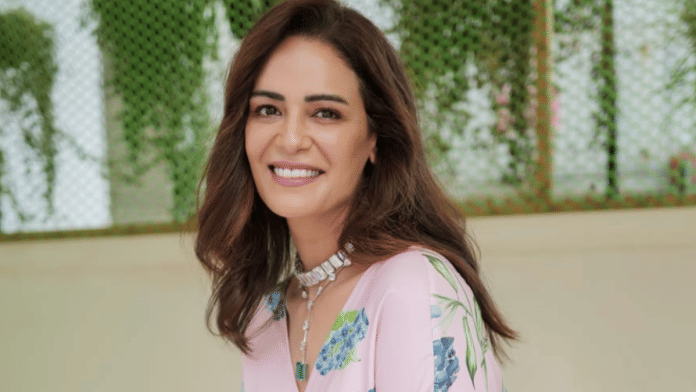
New Delhi: Mona Singh has spent 23 years trying to make audiences forget the character that cemented her in popular imagination: the braces-and-glasses-wearing Jassi.
Over the years, she has fought hard to be un-boxable. And Bollywood is not the easiest industry for that mission.
When Jassi Jaissi Koi Nahin began in 2003, Singh was a wide-eyed 21-year-old and so new to the industry that she didn’t quite understand what the makers meant when they kept telling her she was joining a “huge” show. She only knew she wanted to act.
Getting there had already required a kind of stubbornness that would become a feature of her career. Singh recounted travelling from Pune to Mumbai by bus, getting off at Dadar, going to Famous Studios and then taking a bus back home. She now recounts giving roughly 100 auditions before she was cast as Jassi.
More than two decades later, Singh is in an oddly reversed position.
From 3 Idiots (2009) and Laal Singh Chaddha (2022) to Made in Heaven (2019-), Bads of Bollywood (2025-), Happy Patel (2026) and Border 2 (2026), Singh has now moved away from the image that made her famous.
“My goal is to keep surprising people,” Singh told ThePrint.
“At this stage in my career, that’s what excites me the most, doing something where the audience watches me and says, ‘Oh, I didn’t expect Mona to do this.’”
At 21, she desperately wanted to be chosen. At 44, she is increasingly interested in being unrecognisable – ironic for an actor whose first ticket to fame was all about getting an unrecognisable makeover. This year alone, she has played six different roles that show off her acting abilities.

A granny-core Goan gangster in Vir Das’s spy comedy Happy Patel: Khatarnak Jasoos, a fauji wife and mother in Border 2, a grieving mother in Raju Hirani’s cyber-crime dramedy Pritam and Pedro (2026), and a ruthless sand-mining mafioso in Subedaar (2026). In Kohrra 2 (2023-), Singh plays a sub-inspector carrying both the pressures of the job and the grief of a mother. The reviews have again and again singled her out while marking the series down.
She wants to be difficult, funny, cruel, exhausted and quiet. And she seems to be enjoying that freedom.
“My list keeps getting longer. I would love to play a really dark character, maybe a serial killer or a completely grey antagonist. I have played mothers, wives, cops and many emotionally layered characters, but I still feel there are so many shades I haven’t explored,” Singh said.
So, in terms of just the sheer volume of releases in a year, if Bollywood had an Anne Hathaway (who had five movies released in 2026), it might just be Mona Singh. The familiar face who has been around for decades, until one day you realise she has entered her peak, no longer held back by the role that made her famous.
A powerhouse set to implode
Mona Singh’s journey is unlike that of many of her contemporaries. While many faces from the early 2000s era faded from the mainstream, she was there through the saas-bahu era, rode the reality-show wave, survived the TV-to-nowhere transition, and then found a whole new lease of life with OTT.
In 2026, Singh had six releases and one recurring review. Even when the film gets a shrug, she inevitably gets the praise.
For Kohrra 2, critics called Singh “a powerhouse ready to implode.”
Her own account of the character is about holding back. She has said Dhanwant Kaur’s authority comes from her history and the trauma she carried in her body language, and not just from dialogue.
“When the mood of the show is so heavy, switching off isn’t easy. I have learned acting on the go, so I was finding it a little difficult to break away from the character because it is so intense and multi-layered. I tend to overthink,” she said.
After working with a dialect coach and spending almost three months shooting for the Netflix series in Punjab, she found it difficult to leave the character behind. Singh described herself as someone who tends to overthink, and said the emotional weight of the character lingered after the day’s work.

But before long, she had to don the role of Babli Didi.
Kohrra 2 opened with 1.6 million views and 7.7 million hours on Netflix. It charted in the top ten in 11 countries. Showrunner Sudip Sharma calls her easygoing in real life but sensitive to the world around her, and says she surrendered completely to the part of Dhanwant Kaur. When the role meant taking repeated falls and hits for action scenes, he said she was “a sport about it.”
On the other hand, her Happy Patel opened to a split verdict: some found it gleeful and good-natured, while others called it a messy fever dream where Singh’s character was underused.
Then there was Border 2, which was the commercial peak for her this year. It opened at Rs 30 crore and made Rs 59 crore on Republic Day, reaching about Rs 180 crore net in four days.
This year she has framed her career as waiting not for the next script but for the right one, and in her 24th year in the industry she has built a “bridge of trust” with audiences.
“For me, a character is always the starting point. I ask myself, ‘Have I done this before? Can I bring something new to it? Is there something in this character that excites me?’ I don’t want to repeat myself. That’s why I have consciously taken risks throughout my career. Sometimes they work, and sometimes they don’t, but I would rather take that chance than do the same thing again,” she added.
In 2012, Singh was nervous about a comeback. By 2024, she was saying, “The next step is always forward, the past is gone.”
Her interviews also have the discipline of someone who has been famous since 21, and it is why her quotes read so polished.
Singh’s life, too, now has a second centre. Apart from being an actor, she, like many of her peers, has become an entrepreneur.
She opened the restaurant Kona Kona in Mumbai’s Andheri West. Her Instagram bio even reads “Actor & Restauranteur” where she has over six lakh followers.
Also Read: The unputdownable Sunidhi Chauhan. From playback to live stage show star
Long walk from TV to big screen
When Jassi Jaissi Koi Nahin ended in 2006, Singh did something strategically unusual. Rather than immediately trying to establish herself as a film actress, she moved sideways.
Later that same year, Singh won the inaugural season of Jhalak Dikhhla Jaa. She returned the following year as its host, and also hosting Femina Miss India. In 2008, she won the reality show Ek Khiladi Ek Haseena. Hosting became another way of allowing audiences to see her without asking them to forget Jassi overnight.
On Entertainment Ke Liye Kuch Bhi Karega (2009-2014), she became a familiar presence alongside Anu Malik and Farah Khan. Malik even calls her “one of the best hosts” he has ever worked with. The singer applauded Singh’s ability to make people comfortable ahead of performances.
“I was very curious to meet her,” Malik recounted.
“If I have to describe her, she was just full of life. We would laugh all the time. She was a great host. She uplifted the spirits of the contestants. She would often ask me to do shayaris to lighten the mood,” he added.
Their camaraderie extended beyond the cameras. Malik remembers Singh bonding with the cast and crew over food, particularly his wife’s “aloo vadi.”
“She would feed us all with Punjabi Sikhni food. Farah and I were like Tom & Jerry, and she complicated us in the best way possible,” he said.
Singh’s co-host Vishal Malhotra said he expected her to be a “nerdy girl who was very subtle”, but she turned out to be “vam boom bam.”

“Mona was like a ball of energy, her laughter was infectious, and someone who was very non-pretentious. She always kept the child in her alive. We hit it off in the first meeting at the Yash Raj Studios,” Malhotra said, adding that they were inseparable for almost three years.
The actor, who spent years being discussed as a victim of typecasting, was not, apparently, living like a solemn person determined to reinvent herself.
She was loud, sociable, food-obsessed. Someone who could make a room comfortable.
The career was changing before the roles did. Then came 3 Idiots.
Singh’s part as Mona Sahastrabuddhe was small, but significant. It put her in a new medium and on a set with Aamir Khan, Kareena Kapoor Khan, Raju Hirani, Sharman Joshi and R Madhavan. It was also a very large room to debut in. 3 Idiots grossed about Rs 460 crore worldwide and was the highest-grossing Indian film ever until Dhoom 3 overtook it in 2013.
“3 Idiots was a very special film for me. I remember being very new to the film process. There were so many rehearsals, and I wasn’t used to that kind of preparation,” Singh said.
The delivery sequence, she recounted, remains one of her favourite memories: “It was chaotic and hilarious at the same time. Everyone had their own stories, and we were all laughing.”
The problem with playing mothers
There is a pattern to Singh’s later filmography that could easily be mistaken for another form of typecasting. She mostly plays mothers.
She played a young Aamir Khan’s mother in Laal Singh Chaddha. And over the years, she has repeatedly played wives and mothers. Four of her six releases in 2026, by her own count, put her in maternal roles.
But the women are increasingly unlike the reassuring mothers television once required.
She defended the casting by pointing out that she was playing Laal’s mother, not the lead actor’s. Her character, Gurpreet Kaur, had to run from raging mobs in the film’s recreation of the 1984 anti-Sikh riots, a physically and emotionally demanding sequence.
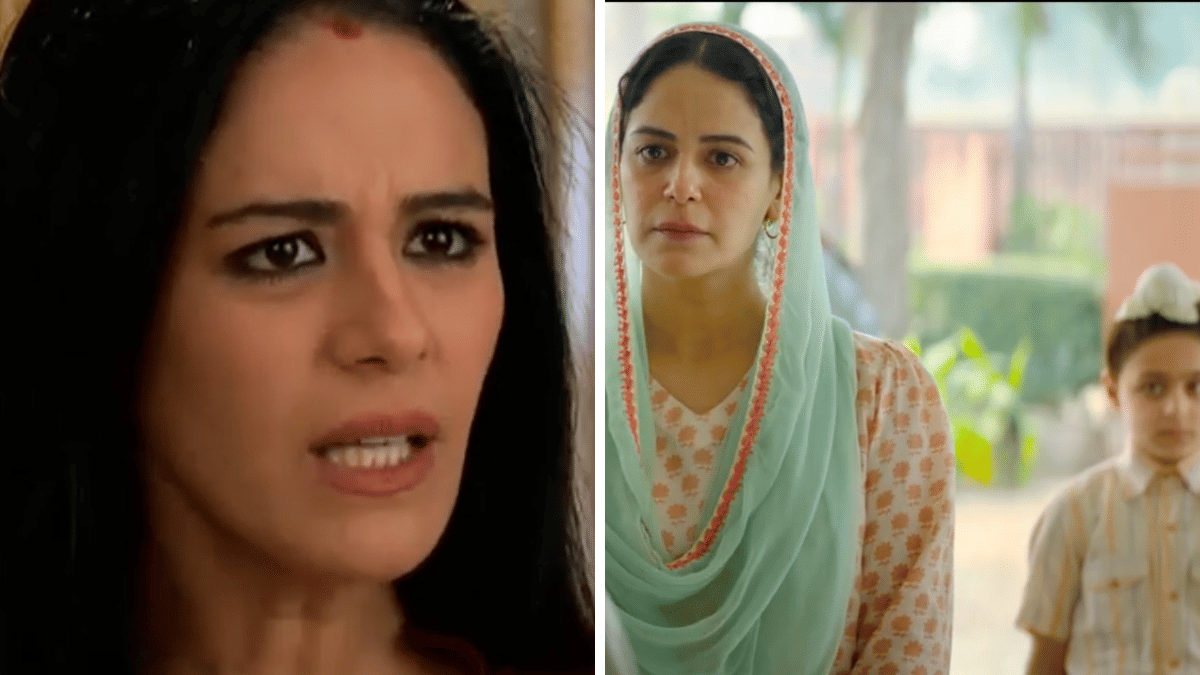
However, she first stepped into the role of a mother back in 2012, when she returned to TV as the lead of Kya Huaa Tera Vaada. Returning to soaps after a six-year gap, Singh said she was sceptical about a second innings, recalled that during Jassi she “had no personal life,” and that she was happy to play a mother of three, joking that maybe one day she could play Mother India.
In 2012, motherhood was a challenge she was glad to take on. Singh is still playing mothers, but the roles themselves have changed. They are no longer simply there to dispense wisdom, push the hero forward or serve as the story’s moral compass.
“My problem is they are often no more than the moral compass, the motivational speaker for the hero. I don’t want to do that,” she said.
Also Read: ‘Indian children can learn about Battle of Basantar from Border 2’ — director Nidhi Dutta
The class of the 2000s
The women who defined 2000s television took very different roads after the soaps ended. Smriti Irani left acting for politics before returning as Tulsi Virani in 2025; Sakshi Tanwar moved from television to films and streaming. Others, including Manini Mishra and Rupali Ganguly, remained tied to the medium.
Singh’s route was less linear and, ultimately, more durable. She walked away from television when it narrowed her choices to the “good girl or villain”, even considering a career as cabin crew before returning to acting.
“I thought, this is the next thing. Maybe there is not enough money in it right now, but let’s experiment,” she had told The NodMag earlier this year.
According to her, early-2000s serials were more progressive than much of what airs now, and she warned that streaming risks repeating television’s mistakes by chasing formulas.
She added that with television, one of the biggest challenges was that one didn’t always know where the character was going because the story could change according to the ratings. But with OTT, Singh found that the larger arc of the character was already written and so she was prepared for any curveballs along the way.

“Television actors are already very exposed to audiences because they are constantly present on screen, but OTT allowed us to take that familiarity and show people completely different sides of ourselves. You could suddenly play complex, grey, dark or mature characters, and audiences were willing to accept you in those spaces. I think it gave actors a chance to break away from the image people had associated with them,” Singh added.
She told The Hollywood Reporter India that the careers she admires most belong to Tabu and Kareena Kapoor Khan, women who keep changing, and that “OTT has given us those wings.”
Becoming Jassi
When Singh first walked into filmmaker Tony Singh’s office in Andheri West for the first time in 2003, she stumbled and almost fell.
“That is the moment I told myself, ‘we have got our Jassi’,” Tony recalled. He had already interviewed a few hundred people for the role. But it was Singh’s natural behaviour, innocence and just the “way she carried herself” that got her the part.
“It wasn’t easy to play Jassi. Like she had to wear braces every day, and at that time you just had the steel ones, which used to hurt. In fact, Sony didn’t allow her to be seen in any other way; she was supposed to be seen in Jassi’s getup only. It was challenging; she was just 21,” he said.
“She would often say, ‘You don’t want me to look pretty’ haha. But the best part was, Mona never fought ‘looking ugly’,” the filmmaker added.
He may admire Singh’s filmography, but for him, there is still one character that stands above the rest: Jassi. And perhaps no role better captures just how much Singh had to go through to become a household name.
She was only 21 when Jassi Jaissi Koi Nahin changed her life. She estimates she gave around 50 auditions before finally landing the part.
“When I heard Deeya and Tony Singh were making a show, I went for the audition and kept getting called back,” she recalls. After several rounds, she finally asked them, half in frustration and half in disbelief: “Are you actually going to cast me? I’m spending so much money coming here.”
When the call finally came, she was stunned. “All those journeys and rejections suddenly felt worth it,” she recalled.

Her commitment didn’t end with getting the role. Co-star Gaurav Gera remembers an incident on set when a light fell on Singh, leaving her seriously injured and requiring stitches. She was rushed to the hospital but, rather than calling it a day, she returned to the set and finished her shoot.
“That says everything about her professionalism,” Gera said.
And there was more. Tony Singh recalls a particularly frightening period when Singh began receiving threatening calls. Sony eventually stepped in and provided security.
“She was just a kid, but she handled it with remarkable maturity,” he added.
Her success was almost immediate. There was no Instagram or X to track the show’s popularity in real time. Instead, Singh would return from shoots and hear Jassi Jaissi Koi Nahi playing in almost every house in her society. Her parents would receive calls and messages from people telling them how much they loved the show.
It was also formative. The show taught her something about fame before she had even had the time to process becoming famous.
“It was overwhelming. Jassi changed how I saw roles and made me realise that the characters I choose can shape how people see me as an actor,” Singh said.
Now, she is much clearer about the difference and chooses her roles accordingly and unabashedly.
“I have no qualms in saying no to people,” she said.
(Edited by Insha Jalil Waziri)