





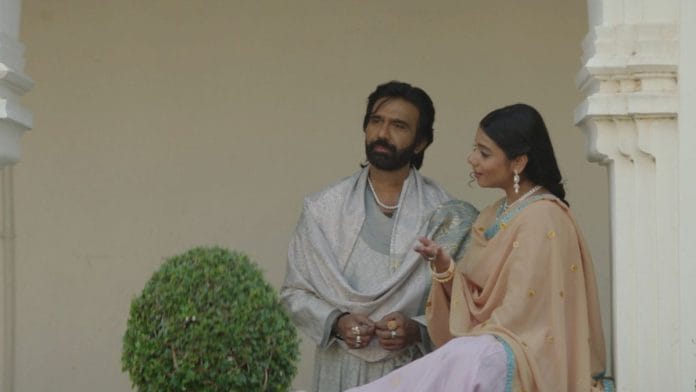


New Delhi: Hyderabad-born theatre maestro Mohammad Ali Baig is now stepping into the world of cinema with his film Chand Tara, slated for release across India on 3 June. The movie’s trailer is set to premiere at the Cannes Film Festival, taking place from 12 May to 23 May.
“My first international theatre festival was in France. Now my first international film festival is also in France. Maybe that’s destiny,” Baig told ThePrint.
For him, Cannes is not simply about international recognition. It is the continuation of a lifelong artistic journey that began backstage at his ancestral home in Hyderabad, Ahmed Bagh Palace, under the influence of his father, legendary theatre pioneer Qadir Ali Baig.
From theatre to cinema
Baig, who carried the soul of Indian theatre across continents, is one of India’s youngest Padma Shri awardees in theatre. He has produced over 500 ads, delivered performances at the University of Oxford, and even earned recognition at the Edinburgh Festival. He has also acted in Tamil and Telugu blockbusters like Sardar (2022), Aruvui (2016), Cobra (2022) and Aha Na Pellanta (2022).
However, his new film, Chand Tara, blurs the line between theatre and cinema. Inspired by the tale of 17th-century singer-dancer Taramati and Sultan Abdullah Qutub, Baig brings the Qutub Shahi Era alive on screen. Along with portraying Sultan Abdullah in the film, Baig also wrote and directed the film with the help of actors Ranjana Srivastav, Mohan Agashe, Anupam Kher and Masood Akhtar.
The film has also brought together several nationally acclaimed artists. The music has been composed by Karthik Raja, while singers Lucky Ali and Vasundhara Das have lent their voices to the soundtrack.
Baig has already performed Chand Tara as a theatrical play. At a time when most period dramas prioritise scale over story and portray characters larger than life, Chand Tara leans into heritage, poetry, performance traditions and the humane nature of the story, which is rarely explored in contemporary Indian films.
Produced by Telangana Tourism, the film has received recognition from the National Film Development Corporation. The Ministry of Information and Broadcasting also praised the film for its aesthetics, poetry, moving performances, and screenplay.
Also read: Jackie Shroff’s Great Grand Superhero goes where Bollywood doesn’t dare: children’s cinema
The story of two creative souls
Baig said the film is neither a conventional historical romance nor another lavish period drama. Instead, it explores a deeply artistic and emotional bond between two creative souls.
“Historically, it’s never been proven that they were married or even in love; this is about two artists respecting each other,” he said.
The story follows Sultan Abdullah Qutub Shah, grandson of Hyderabad’s founder, Muhammad Quli Qutub Shah, and Taramati, the singer who refused to become a court performer despite being invited by the Sultan himself.
“Any singer of that time would have considered it the greatest honour to sing in the Sultan’s court. But Taramati believed her art was sacred. She says in the film that “My art is my worship. I do not want my art to become a slave to any court,” said Baig.
According to Baig, the film also attempts to humanise historical rulers instead of glorifying or demonising them.
“You cannot approach history with rosy admiration or hatred. Kings were not entirely saints or villains. They were human beings… Sultan Abdullah was deprived of a normal childhood and adolescence as he was crowned at the age of 12. So, in place of toys, he was given armour, and instead of friends, he had guards and soldiers around him.”
Baig explains that even the nightly mehfils said to take place in the palace were not an indulgence. They were organised because the Sultan had trouble sleeping.
Also read: King does a Diljit Dosanjh. Acting debut in musical crime drama ‘Lukkhe’
A tribute to female protagonists
Beyond politics and poetry, Chand Tara also carries Baig’s long-standing fascination with strong women characters. Most of his theatre productions, including works on Bhagmati and Hayat Bakshi Begum, place women at the centre of history.
“A hero does not have to be male, I’ve always been interested in women who change history through dignity, intellect and inner strength. My mother (Begum Razia Baig) was my role model with these qualities and inherent values,” said Baig.
He describes Taramati as a woman far ahead of her time, independent, spiritually connected to her art, and unwilling to compromise her identity even before a Sultan.
(Edited by Janaki Pande)